Volcanic Repeating Arms

The lever-action pistols and carbines of 1854–1860 that became the Winchester: Hunt's loaded ball and the Jennings rifle, Smith & Wesson's toggle action, the Volcanic company and Oliver Winchester, the self-primed ball and why it failed, every model and barrel legend with comparison plates, the auction record, the law on originals and copies, and a machinist's path to building one.

Firearms

Volcanic Repeating Arms · Deep Dive

Volcanic Repeating Arms

The 1854 patent stamped on every Volcanic barrel was drawn for a copper cartridge the guns never fired; the ball they did fire was patented in 1856, and the arm's name was in the newspapers five months before the company that took it.

The lever-action pistols and carbines of 1854–1860 that became the Winchester: Hunt's loaded ball and the Jennings rifle, Smith & Wesson's toggle action, the Volcanic company and Oliver Winchester, the self-primed ball and why it failed, every model and barrel legend with comparison plates, the auction record, the law on originals and copies, and a machinist's path to building one.

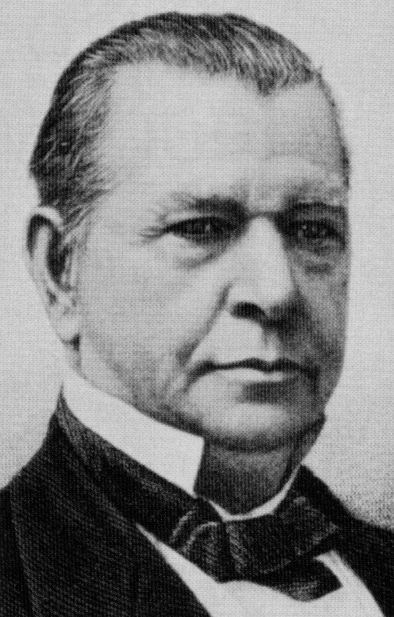
Photo: Gun display - Men who made the gun - Huntington Museum of Art - DSC05503 by Daderot · CC0

Search every volume:

?

How to search

sten gun
pages with both words
"sten gun"
the words together, as a phrase
sten OR sterling
either one (| works too)
sten -replica
leave out pages that mention “replica”

Without quotes, the last word also matches longer words that start with it (sten finds Stenophylla), and close word forms count (rifle finds rifles). Tick Exact words to match whole words only.

Whole deep dives are listed first, then the pages inside them.

    Volumes

    1. Vol 1 Hunt, Jennings and Robbins & Lawrence — the Repeater Before the Volcanic, 1847–1852 A New York inventor's loaded ball and Volition Repeater, the model-maker who simplified it, the Vermont armory that tried to build five thousand, and the machinist who replaced its rack and pinion with a finger lever
    2. Vol 2 Smith & Wesson, the Volcanic Repeating Arms Company and Oliver Winchester, 1852–1857 A Norwich workshop on Central Wharf, a patent that drew the wrong cartridge, a name in print before the company existed, an $80,000 sale, a shirt-maker on the board, and a suspension notice in February 1857
    3. Vol 3 The Rocket Ball and the Volcanic Ball — What It Was, Who Patented It, and Why It Failed Hunt's primerless ball of 1848, two cased cartridges Smith and Wesson patented and never made, the copper-cup primer of 1856 that the guns actually fired, a hundred grains on six and a half of powder, and the seven ways it let its shooters down
    4. Vol 4 Models, Markings, Serials and Identification Iron against brass, part-octagon against full octagon, three makers' barrel legends, two serial systems, the pistol-carbine and its mismatched stocks, and a table for telling a Smith & Wesson from a Volcanic from a New Haven
    5. Vol 5 How It Works — Toggle Links, a Carrier, and a Magazine Loaded from the Muzzle The 1854 patent part by part: a trigger guard that is also the lever, a knee joint that locks when straight, a breech slide the hammer strikes from behind, a carrier that lifts each ball to the bore, and a front section that swings aside for loading
    6. Vol 6 Collecting, Condition, Fakes, Care and Taking One Apart Fifty-odd auction results dated and sourced, what moves the price, a correctly marked modern copy that sold for $7,000, mismatched stocks, museum conservation guidance for brass and iron, and why no disassembly sequence is printed here
    7. Vol 7 Firing One Today, Reproductions, and the Law Why an original should not be fired, the absence of any commercial Volcanic ammunition, Uberti's 2026 prototype in .380 ACP, a half-scale copy that fires BBs on percussion caps, Italian copies of the 1870s, and what federal and Michigan law make of an original and of a newly made copy
    8. Vol 8 Building One — A Machinist's Path to an Antique-Pattern Repeater Three build paths and what each makes in law, the data that exists and the data that has to be measured, frame, barrel, magazine, toggle and lockwork in a shop with CNC mills, printers and a laser, the ammunition problem stated honestly, and why a copy should never carry an original's legend
    9. Vol 9 Legacy — New Haven Arms, the Henry Rifle and the Winchester 1866 How a failed pistol's action carried a .44 rimfire into the Civil War, what Henry's 1860 patent says it improved, Nelson King's loading gate, the company that took Oliver Winchester's name, and the other line of descent through Smith & Wesson