MP7 Light Gun: Printed Build

A 1:1 printed MP7 shell designed around the electronics, solenoid and motors.

Firearms

MP7 Light Gun: Printed Build · Deep Dive

MP7 Light Gun: Printed Build

Designing the gun around the electronics, not the other way round.

A 1:1 printed MP7 shell designed around the electronics, solenoid and motors.

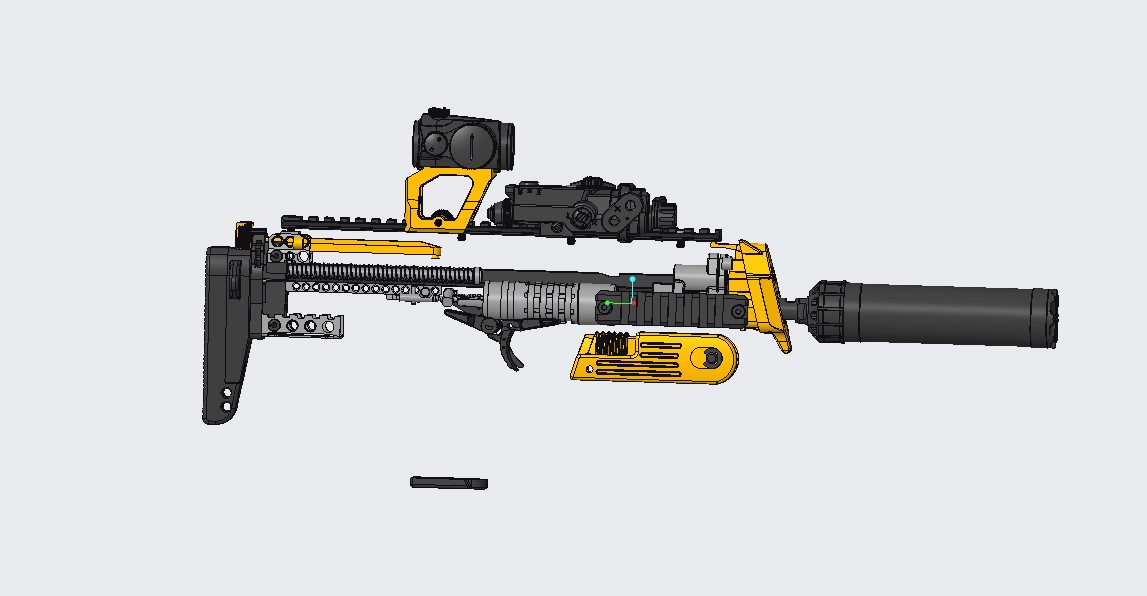
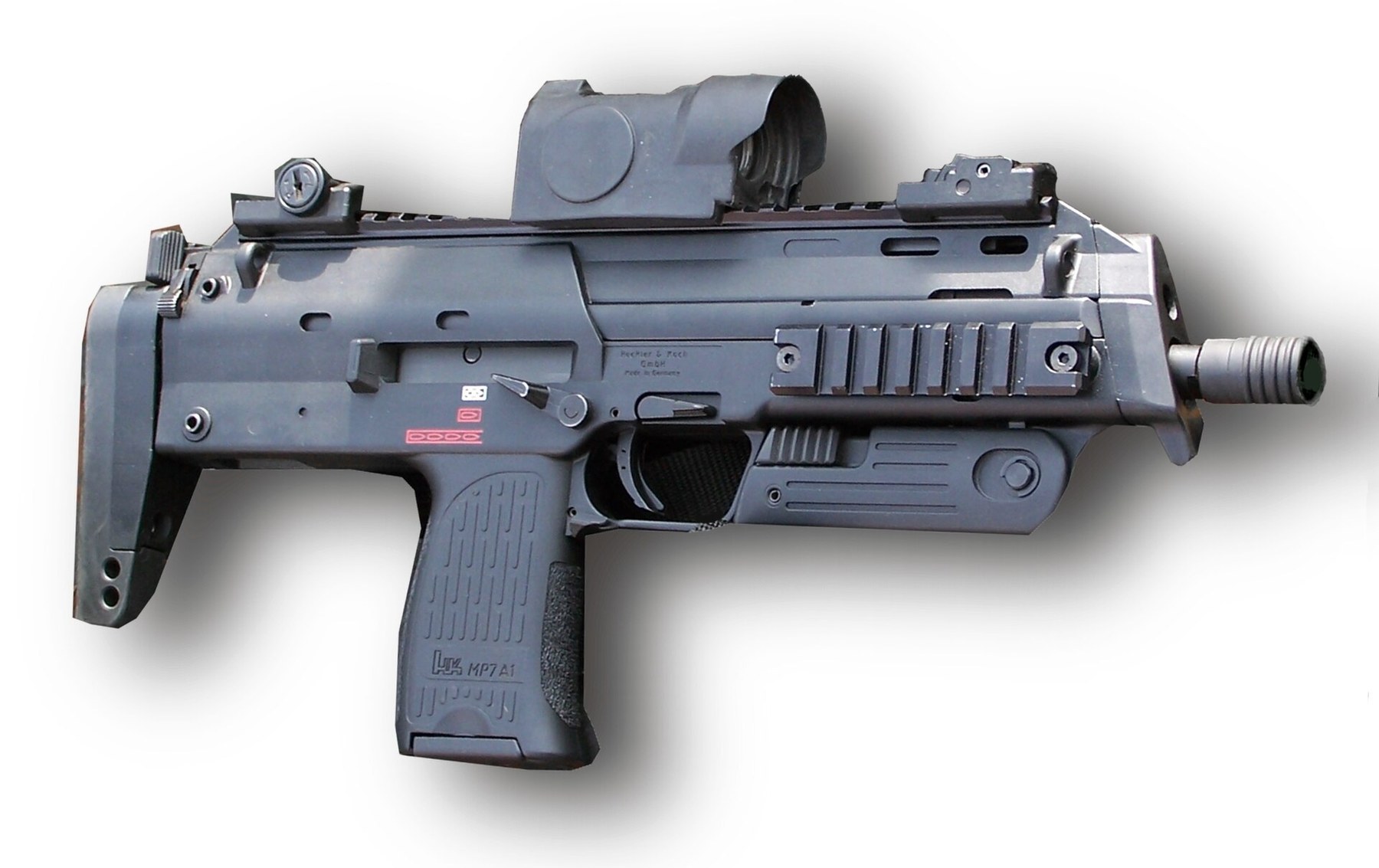
Photo: HK MP7 CAD model — the STEP starter file's left-side preview (MP7A1 assembly in CAD) by practitioners (Cults3D designer)

Search every volume:

?

How to search

sten gun
pages with both words
"sten gun"
the words together, as a phrase
sten OR sterling
either one (| works too)
sten -replica
leave out pages that mention “replica”

Without quotes, the last word also matches longer words that start with it (sten finds Stenophylla), and close word forms count (rifle finds rifles). Tick Exact words to match whole words only.

Whole deep dives are listed first, then the pages inside them.

    Volumes
    1. Vol 1 Why Print First — the Gun This Build Has to Be The first MP7 light gun is printed, not converted: what it must hold and do, what printing buys against the airsoft donors at dated prices, why it starts from someone else's editable CAD file, the order of work, and which sibling dive owns each part of the problem
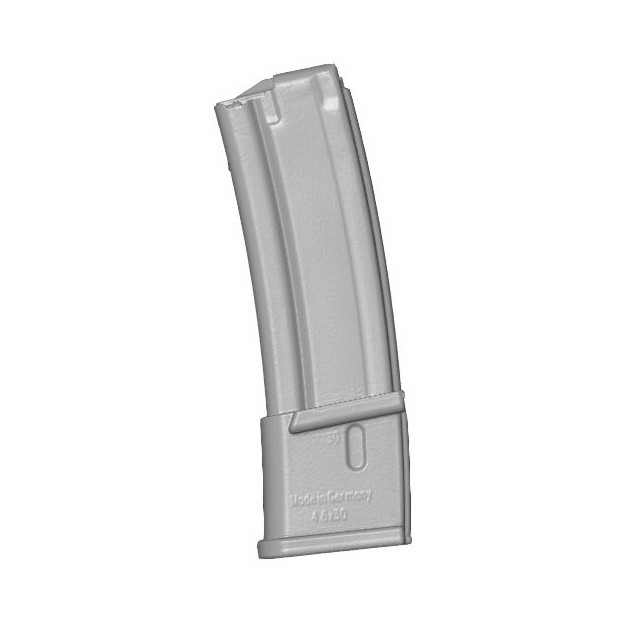
    2. Vol 2 Finding a Starter File — Every MP7 Model Findable, and Which One to Start From Eleven model sites and the commercial stores searched on 19 October 2026 for an editable, realistic, full-size MP7: what each listing offers in formats, licence, scale and completeness, the one whole-gun STEP that exists, the meshes worth keeping as references, a ranked shortlist with the reasons, what to check when the file arrives, and what to ask its designer
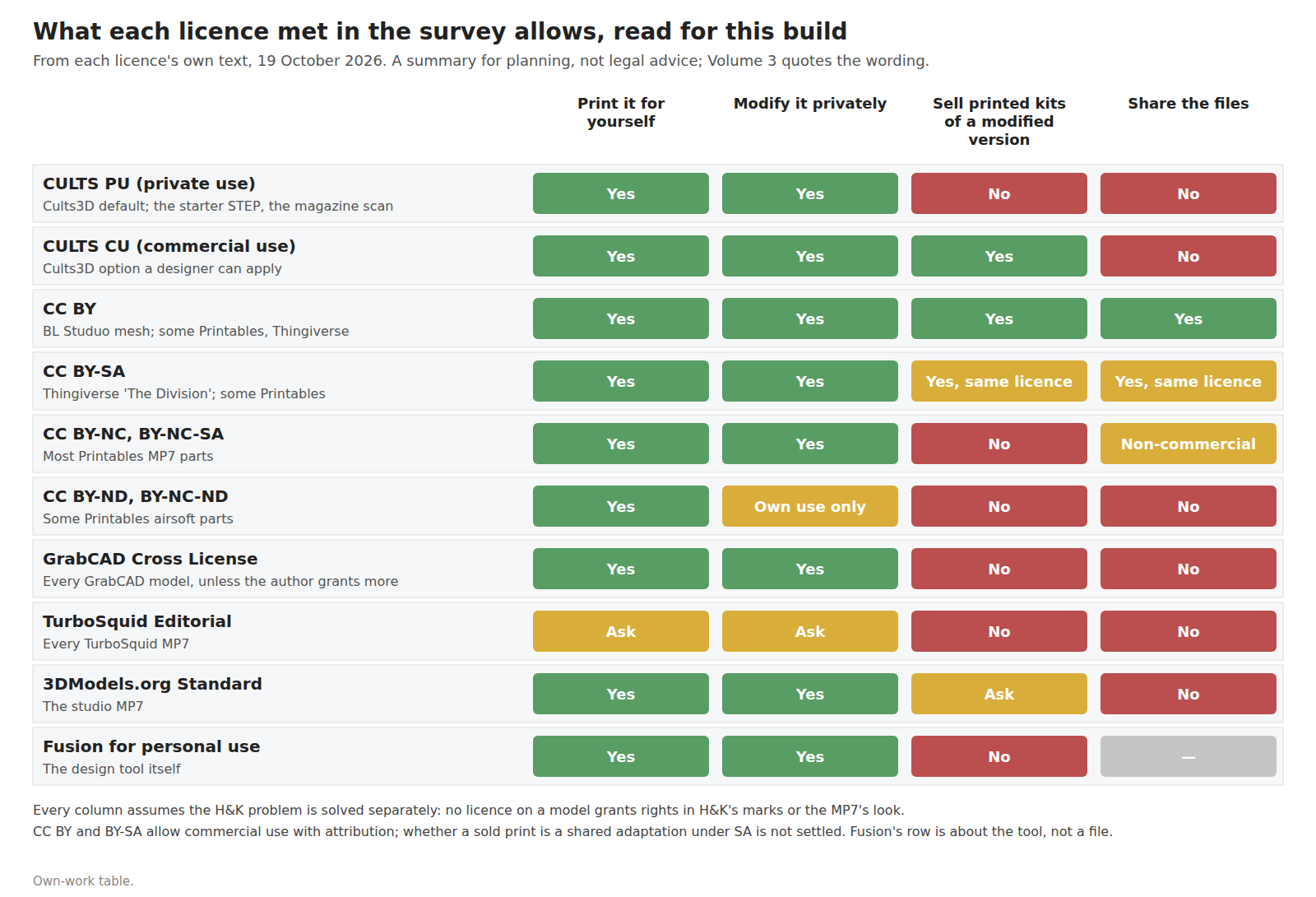
    3. Vol 3 Licences, Marks and the Kit Question Why a $3 private-use STEP is the right start for the first gun and the wrong base for a kit: the licences met in the survey in their own words, what personal-use, non-commercial and remix terms mean for a modified file sold as printed parts, the design tool's own licence, H&K's marks and the MP7's look, keeping our files private, and two clean routes to a kit
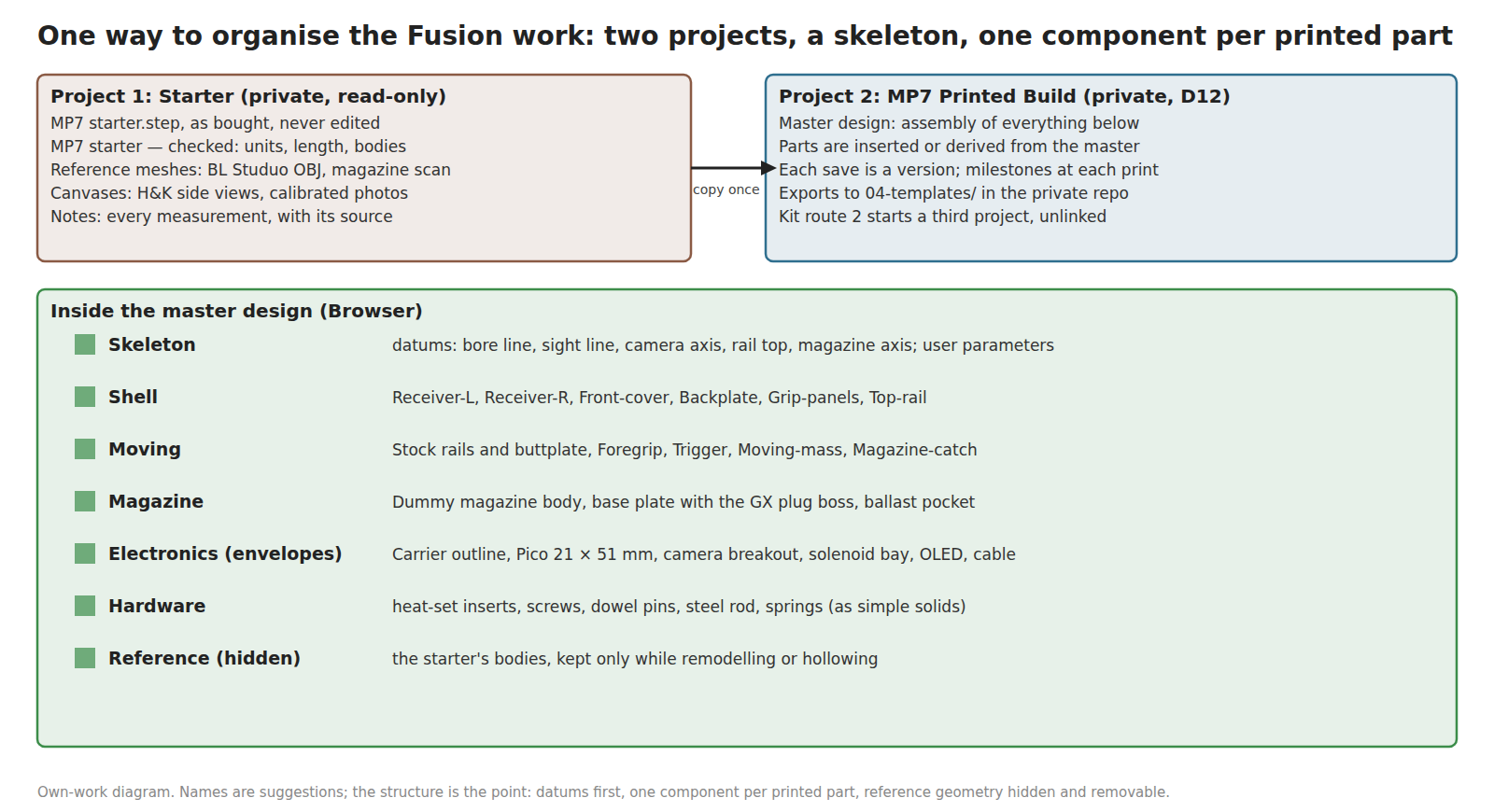
    4. Vol 4 Into Fusion 360 — Turning a Bought MP7 Model into a Private Design An intermediate Fusion user's path from a bought STEP to a private, parametric design: importing without a timeline, organising projects and components around a skeleton of datums, the direct-editing tools that work on imported solids, what to do when only a mesh exists, calibrated canvases, user parameters, versions, and keeping the derivative files in order
    5. Vol 5 Designing the Inside — Camera, Board, Kick, Trigger and Magazine What goes where inside the printed MP7 and why: the camera on the bore line or near the sight line and what each costs in aim, the carrier mounted rigid and square for the IMU, a kick module on a metal plate behind the ejection port, the Hall trigger, the dummy magazine as cable exit and reload sensor, a place for the ammo-count OLED, the stock and foregrip mechanisms, and the cable runs between them
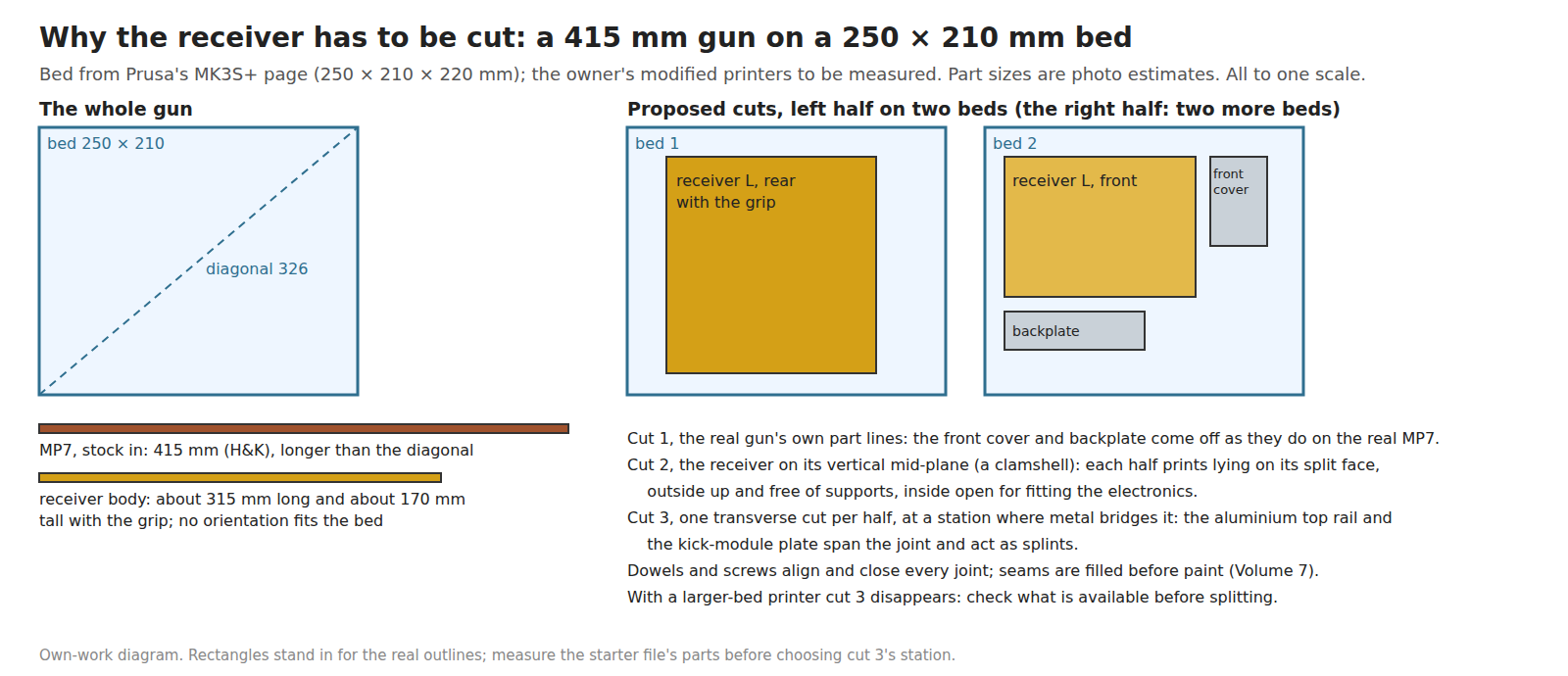
    6. Vol 6 Splitting, Joining and Printing the Shell Getting a 415 mm gun off a 250 × 210 mm bed: where to cut the shell and why, keys, dowels, screws and heat-set inserts sized from the maker's table, walls and infill that survive a solenoid, a material for each part with the reasons, orientation and supports, test coupons before parts, and the post-processing that turns prints into an assembly
    7. Vol 7 Making It Real — Dimensions, Weight, Balance, Finish and Marking What separates a printed MP7 from a convincing one: checking the outside against H&K's own figures, an estimated weight budget and where ballast goes without spoiling the kick, a finish that reads as H&K's polymer, the markings a private gun and a kit should and should not carry, the orange band, and the checklist before the first game