IR Point Tracking

IR LEDs at the screen and a camera in the gun: the Wii, Gun4IR, Samco and OpenFIRE way, with cameras, layouts and interference.

Firearms

IR Point Tracking · Deep Dive

IR Point Tracking

Four points of light are enough to know where a gun is pointing.

IR LEDs at the screen and a camera in the gun: the Wii, Gun4IR, Samco and OpenFIRE way, with cameras, layouts and interference.

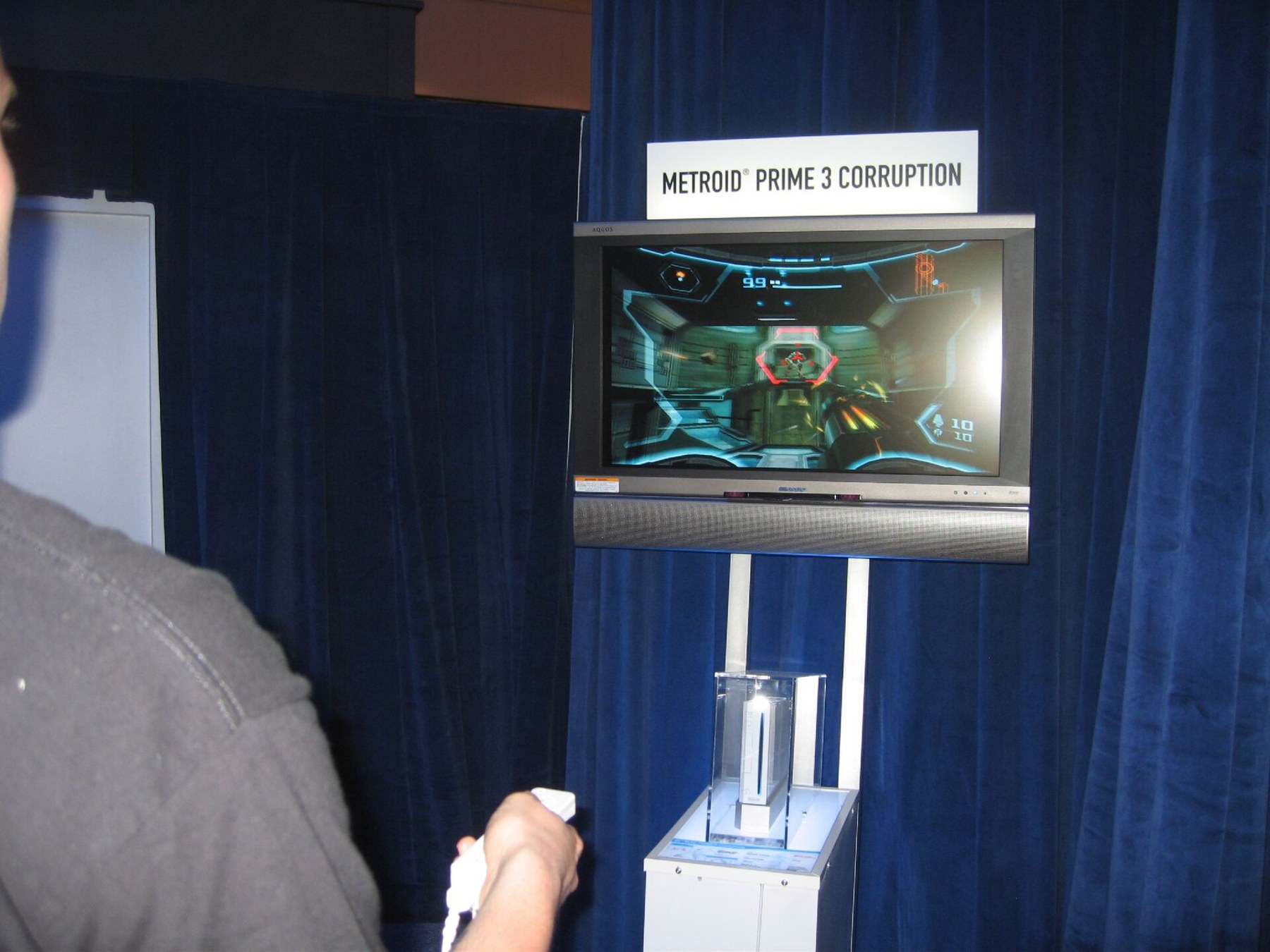
Photo: A Wii Remote aimed at a television at E3 2006; the Sensor Bar's two infrared clusters show as faint purple points under the picture by Alex Hansen · CC BY 2.0

Search every volume:

?

How to search

sten gun
pages with both words
"sten gun"
the words together, as a phrase
sten OR sterling
either one (| works too)
sten -replica
leave out pages that mention “replica”

Without quotes, the last word also matches longer words that start with it (sten finds Stenophylla), and close word forms count (rifle finds rifles). Tick Exact words to match whole words only.

Whole deep dives are listed first, then the pages inside them.

    Volumes
    1. Vol 1 The Camera That Sees Only Dots — How a Multi-Object Tracking Sensor Works Markers at the screen and a camera in the gun: what happens on the sensor die every frame, what the Wii-class camera and the PixArt PAJ7025 actually report, how 128 pixels become 1,024 coordinates, and the frame-subtraction feature no light gun uses yet
    2. Vol 2 The Emitters — Wavelength, Radiant Intensity and the Link Budget Why the camera's filter, not preference, picks 850 or 940 nm; what sunlight and a tungsten lamp put in each band; how many milliwatts per steradian reach the gun at 1 to 5 m; why a point is a cluster of LEDs that must stay one blob; and why the wide-angle PixArt R3 collects a thirty-ninth of the R2's light
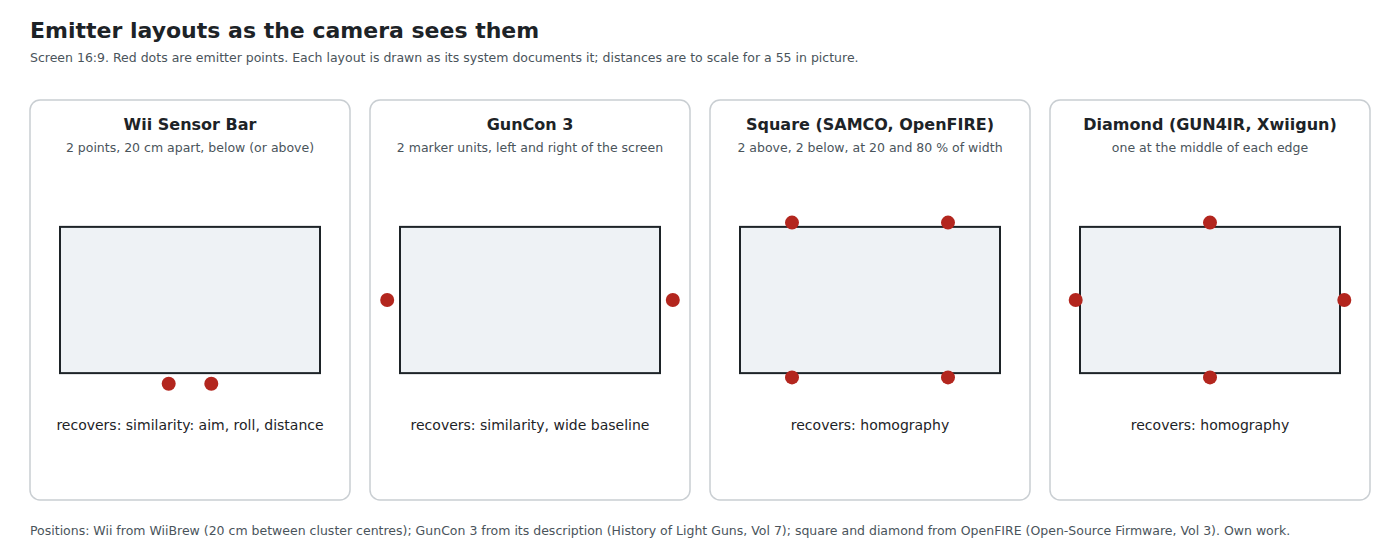
    3. Vol 3 Geometry — How Many Points, and Where to Put Them Each point fixes two numbers: two points give aim, roll and distance; four give a full perspective map of a flat screen. A simulation of the error each leaves, the Wii bar, GunCon 3 markers, square and diamond layouts read as geometry, and the layout proposed for this build
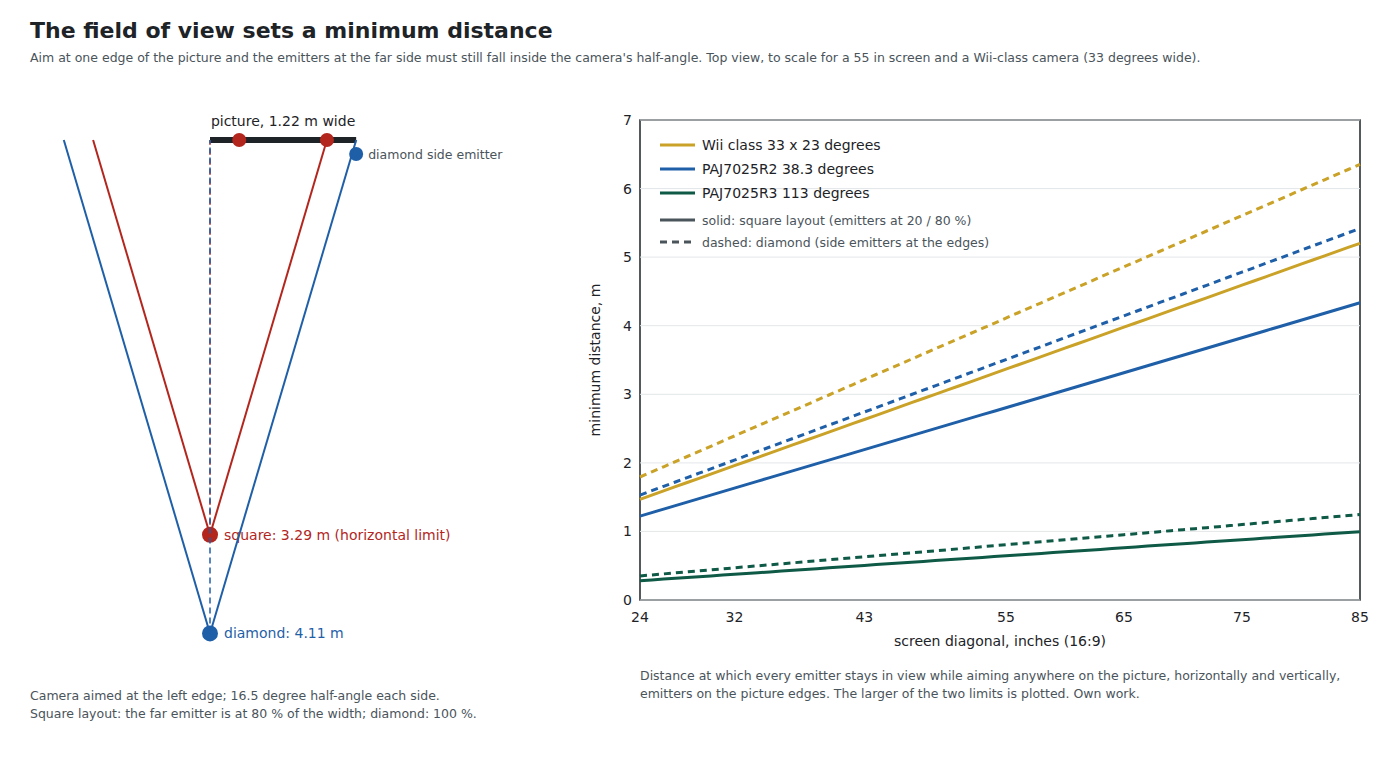
    4. Vol 4 Field of View, Distance and Screen Size — The Playing Envelope How close the player can stand before emitters leave the camera's view, square against diamond; how far before the points grow too dim, too close together or too coarse; what the wide lens and the LED beam each cost at close range; and three living rooms worked through for the Wii-class camera, the PixArt R2 and the R3
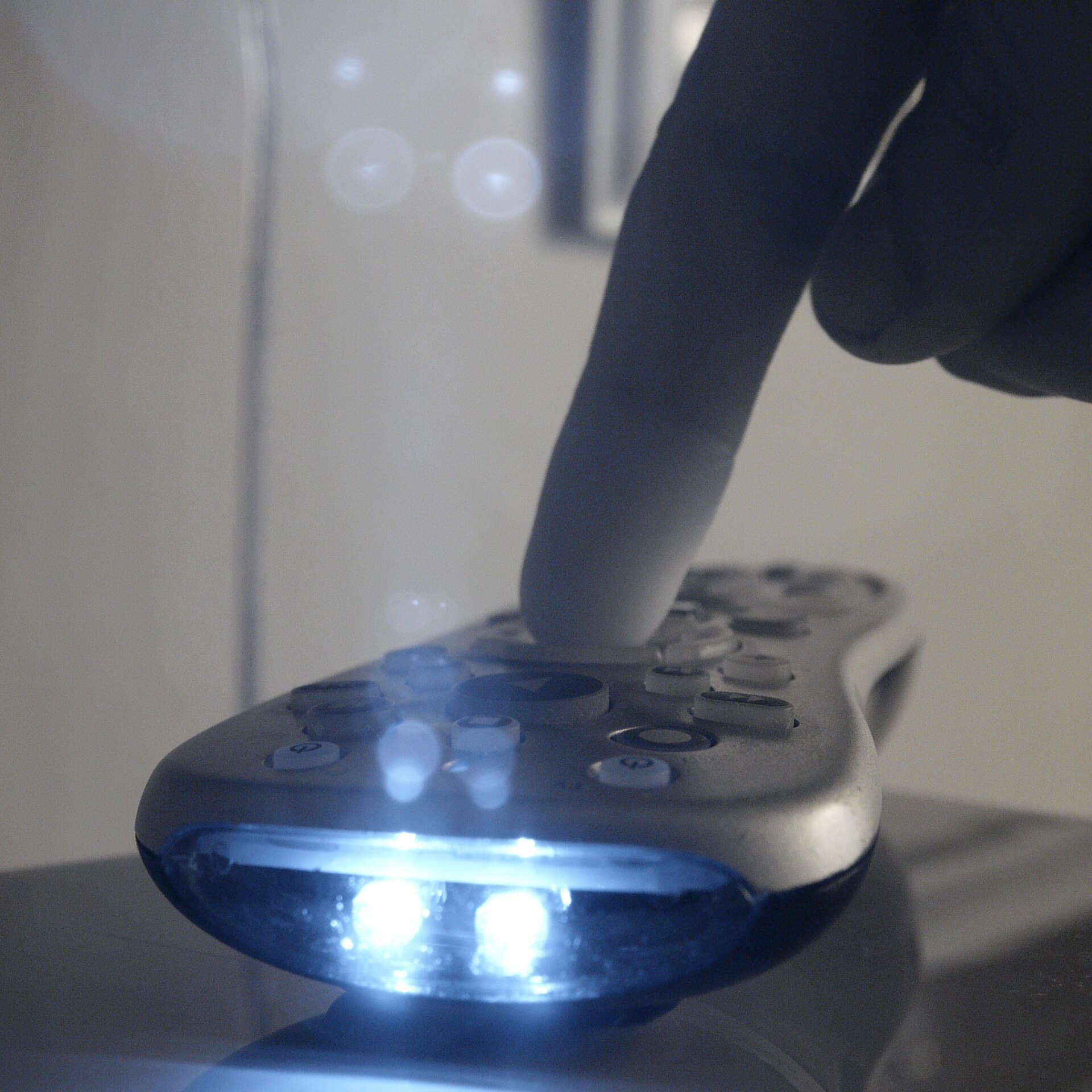
    5. Vol 5 Interference and Failure Modes — Sunlight, Lamps, Remotes, Reflections and Points That Misbehave Per pixel, a sun glint off glass outshines an emitter nine to thirty-six times, and a sunlit wall comes within a factor of five for the wide-angle R3; filament lamps, remote controls, a second gun system and glossy furniture; the ways a point merges, splits, swaps or vanishes; and a symptom-to-fix table
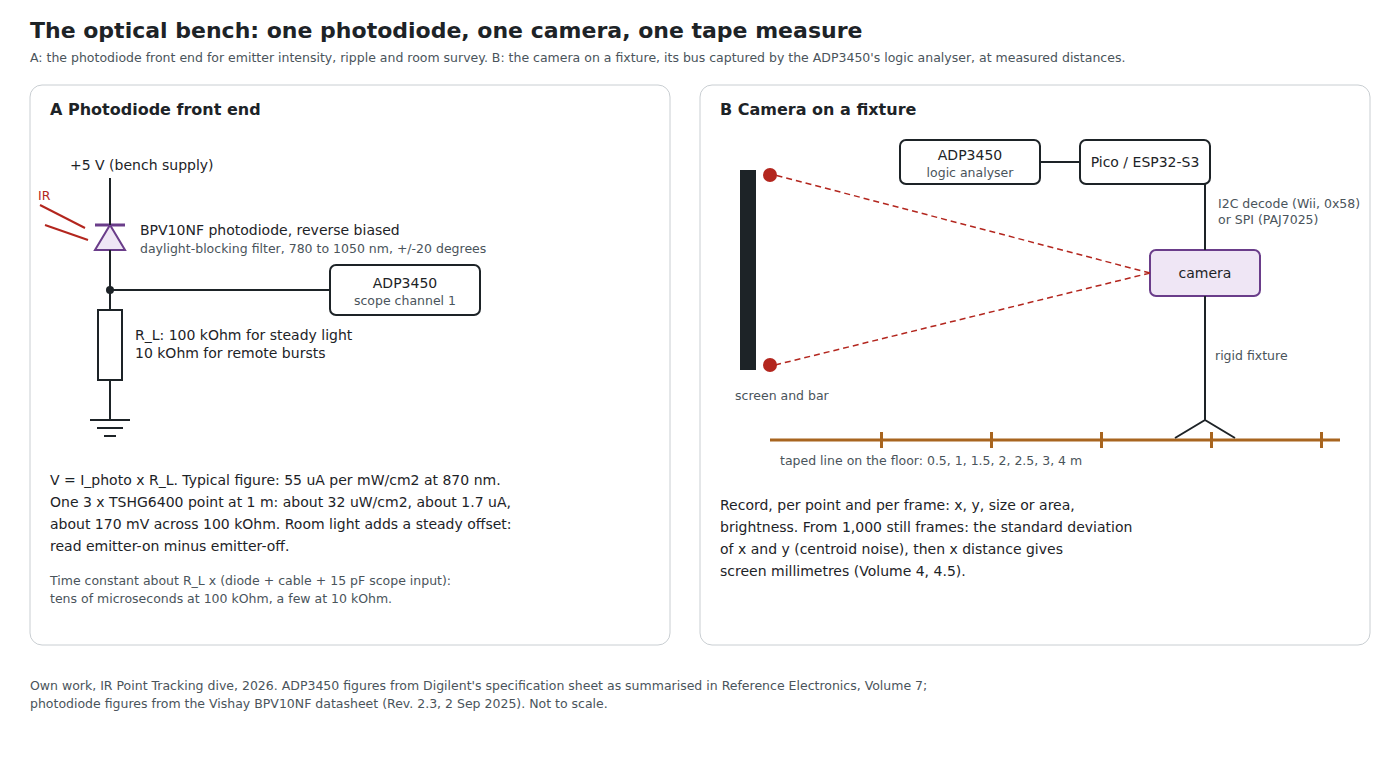
    6. Vol 6 Measuring It — An Optical Bench Procedure with the ADP3450 Seven tests that turn this dive's arithmetic into numbers: each emitter's intensity and match, the bar's steadiness, what the camera actually reports, centroid noise in screen millimetres, range and the dropout map, a survey of the room, and the 940 nm bar the PixArt camera should not see