The History of Light Guns

From the 1936 Ray-O-Lite to Sinden and OpenFIRE: ninety years of shooting at screens.

Firearms

The History of Light Guns · Deep Dive

The History of Light Guns

Every light gun died with the CRT, and then came back.

From the 1936 Ray-O-Lite to Sinden and OpenFIRE: ninety years of shooting at screens.

Photo: Namco GunCon, GunCon 2 and GunCon 3 by Chinpokomon5 · CC BY-SA 3.0

Search every volume:

?

How to search

sten gun
pages with both words
"sten gun"
the words together, as a phrase
sten OR sterling
either one (| works too)
sten -replica
leave out pages that mention “replica”

Without quotes, the last word also matches longer words that start with it (sten finds Stenophylla), and close word forms count (rifle finds rifles). Tick Exact words to match whole words only.

Whole deep dives are listed first, then the pages inside them.

    Volumes
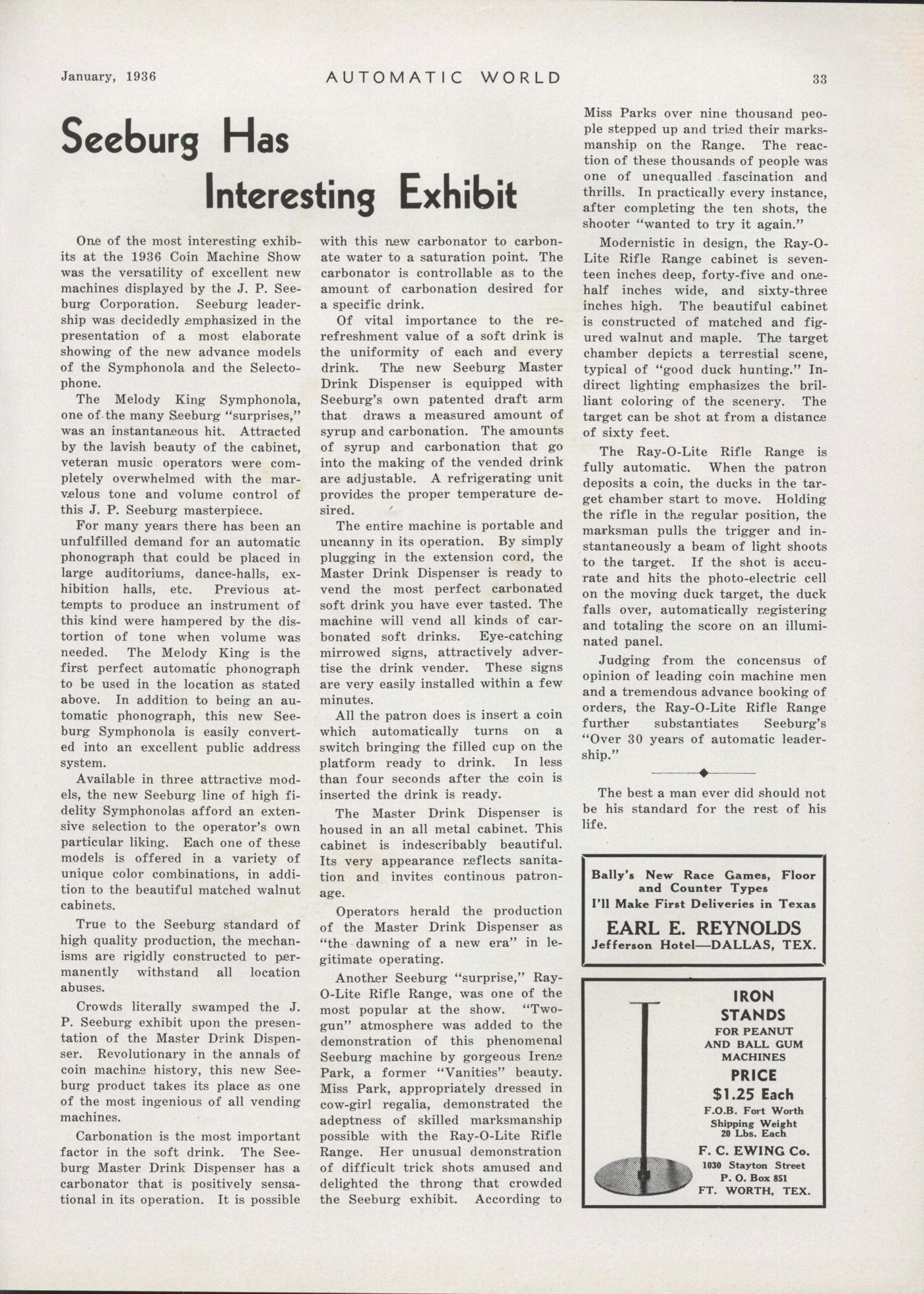
    1. Vol 1 Before Video — Bulbs, Photocells and the Rifle Ranges of 1934 to 1974 Charles Griffith's two Tulsa patents, the Rayolite company and its Seeburg licence, the coin-machine boom they started, and Nintendo's solar-cell guns: forty years of shooting light at a target before anyone shot at a television
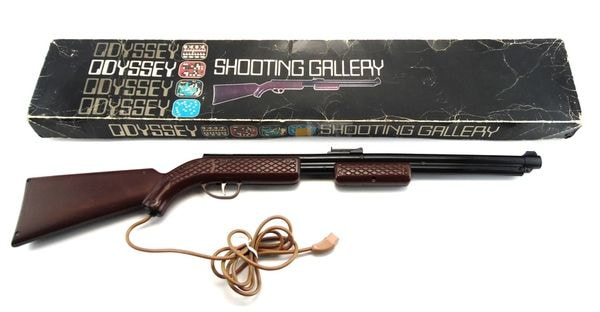
    2. Vol 2 Shooting the Television — Ralph Baer's Light Guns, the Odyssey Rifle and the First Arcade Duck, 1967 to 1979 The moment the target stopped carrying the sensor: a photoresistor in a Sears toy rifle, the 1968 patents, Magnavox's $25 Shooting Gallery that a desk lamp could beat, Atari's Qwak!, and the pong chips that put a rifle input on a single IC
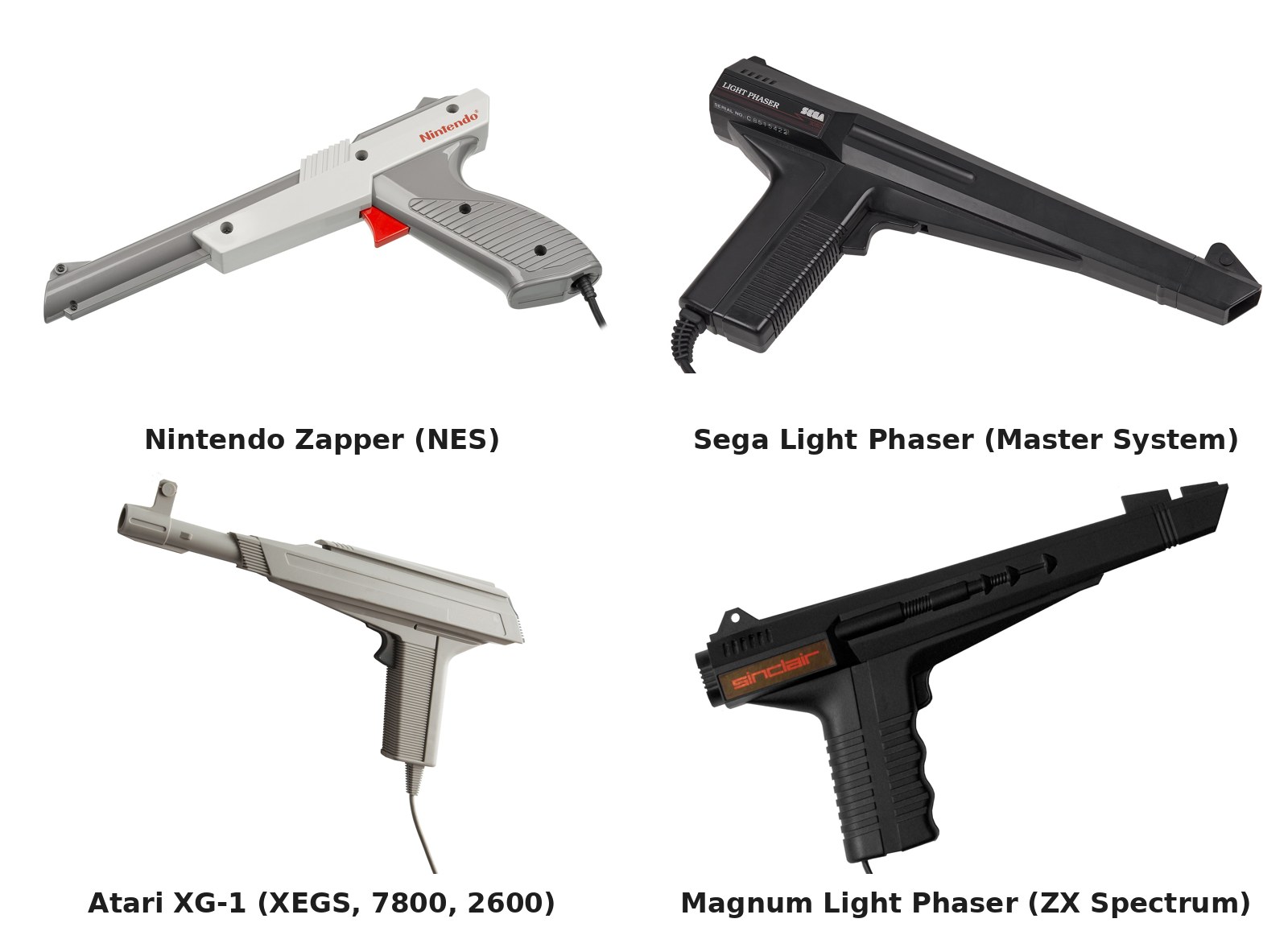
    3. Vol 3 The 8-Bit Boom — Zapper, Light Phaser, XG-1 and the Home-Computer Guns, 1984 to 1990 Two ways of reading a CRT that every later console gun copied: Nintendo's black frame and white box, decided in software, and Sega's and Atari's latched beam position, decided in silicon
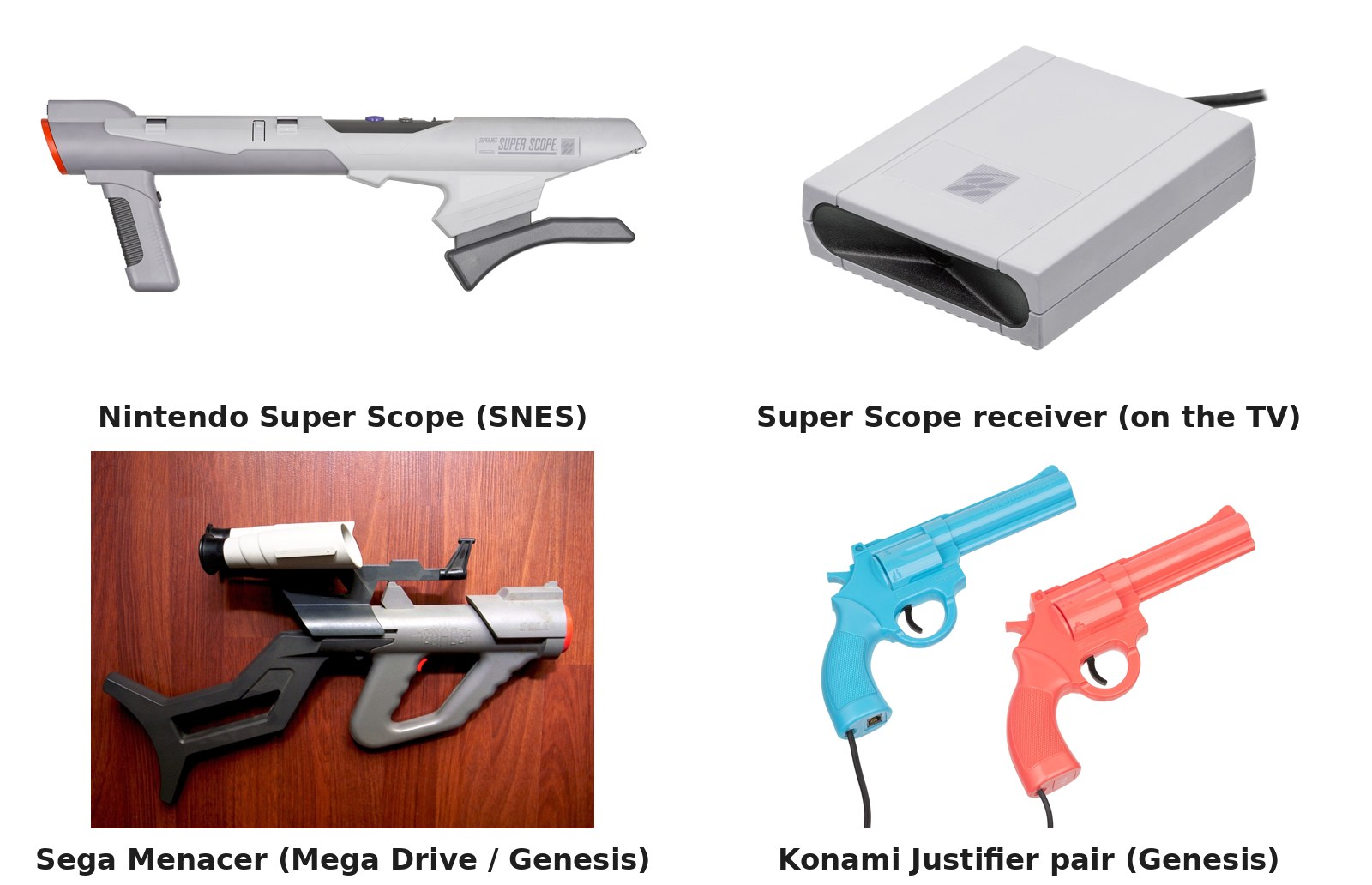
    4. Vol 4 The 16-Bit Guns — Super Scope, Menacer and Justifier, 1992 to 1994 Nintendo's own development manual explains the Super Scope: a pin photodiode, a 4-bit CPU, raster pulses relayed by infrared to the console's counter latch, 180 ns a pixel, and a calibration screen that every game had to carry
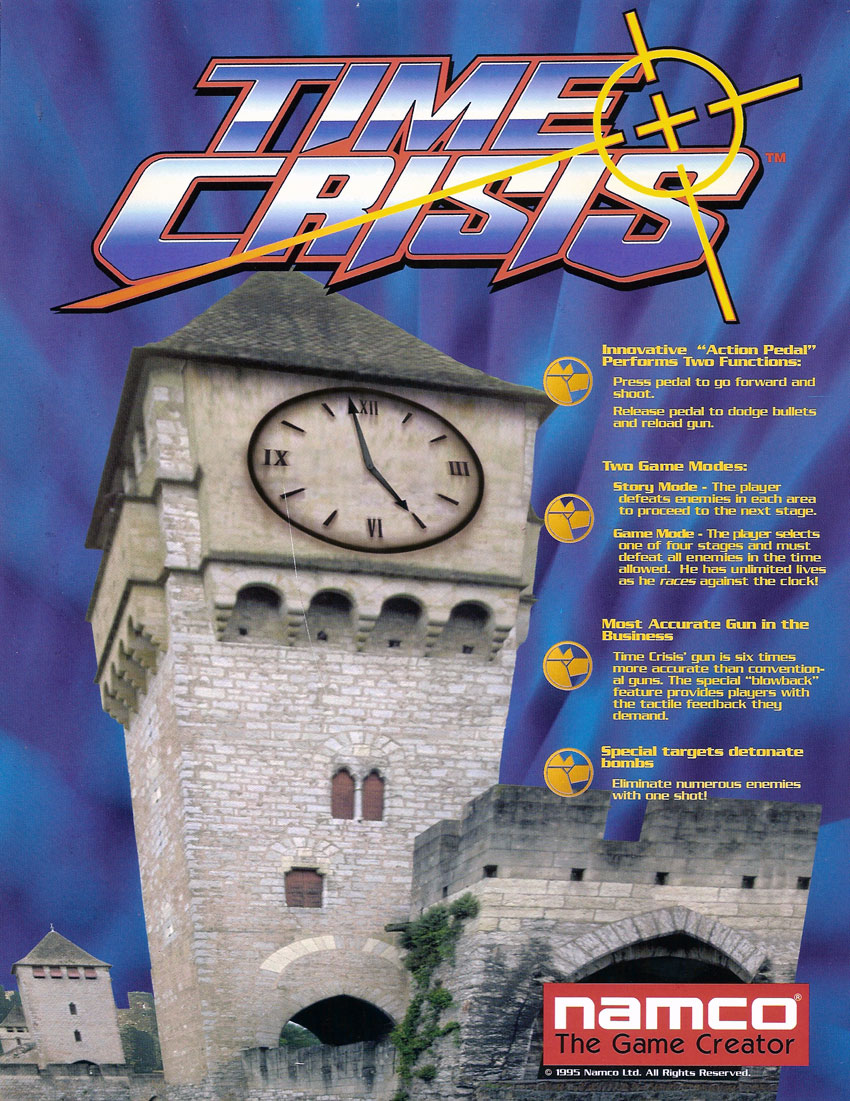
    5. Vol 5 The GunCon Era and Arcade Recoil, 1992 to 2006 Polygon arcades, the action pedal and the blowback slide; the offscreen reload that turned a sensor's blind spot into a button; and Namco's GunCon, which stopped trusting the console and timed the video signal itself
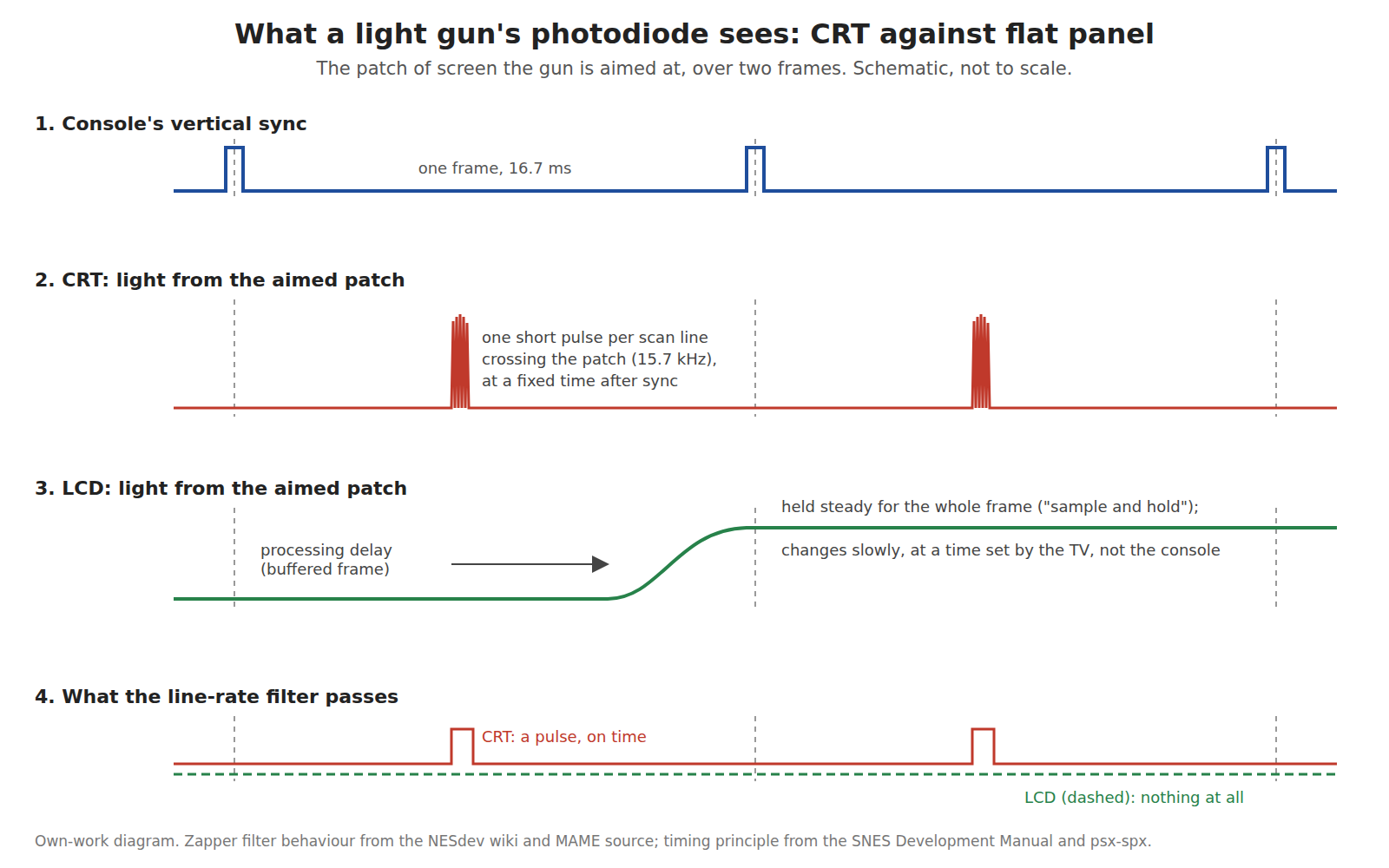
    6. Vol 6 The Flat-Panel Crisis — Why Every CRT Light Gun Died With the CRT Scan-line timing at engineer depth: what the photodiode actually measured, the three things a flat panel takes away, why no firmware patch could bring them back, and what the industry did instead
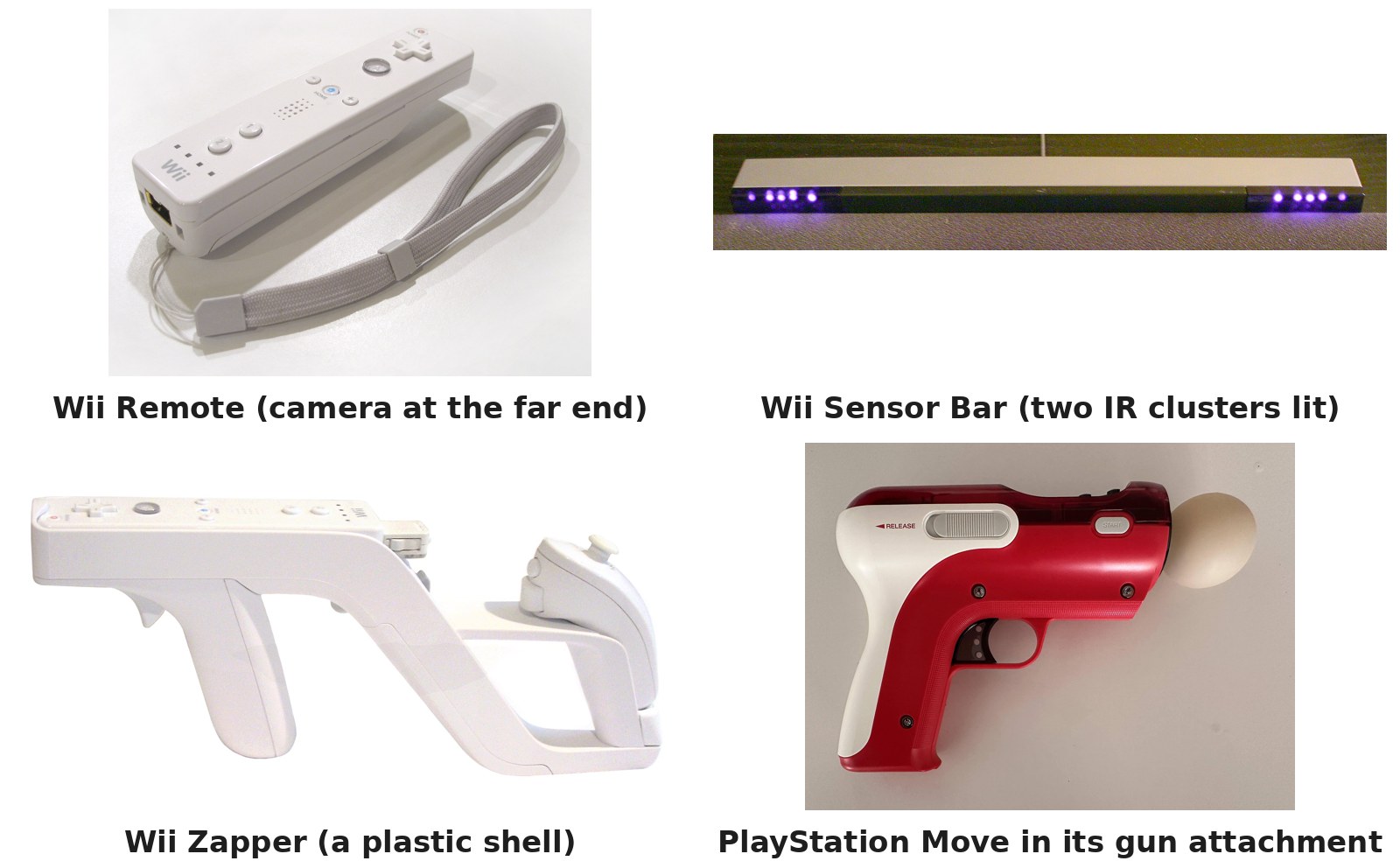
    7. Vol 7 Infrared and Motion — The Wii Remote, GunCon 3, PlayStation Move and Top Shot Elite, 2006 to 2012 How the industry answered the flat panel: put infrared markers by the screen and a blob-tracking camera in the controller, or turn it round and watch the controller from the screen; and why the gun became a plastic shell
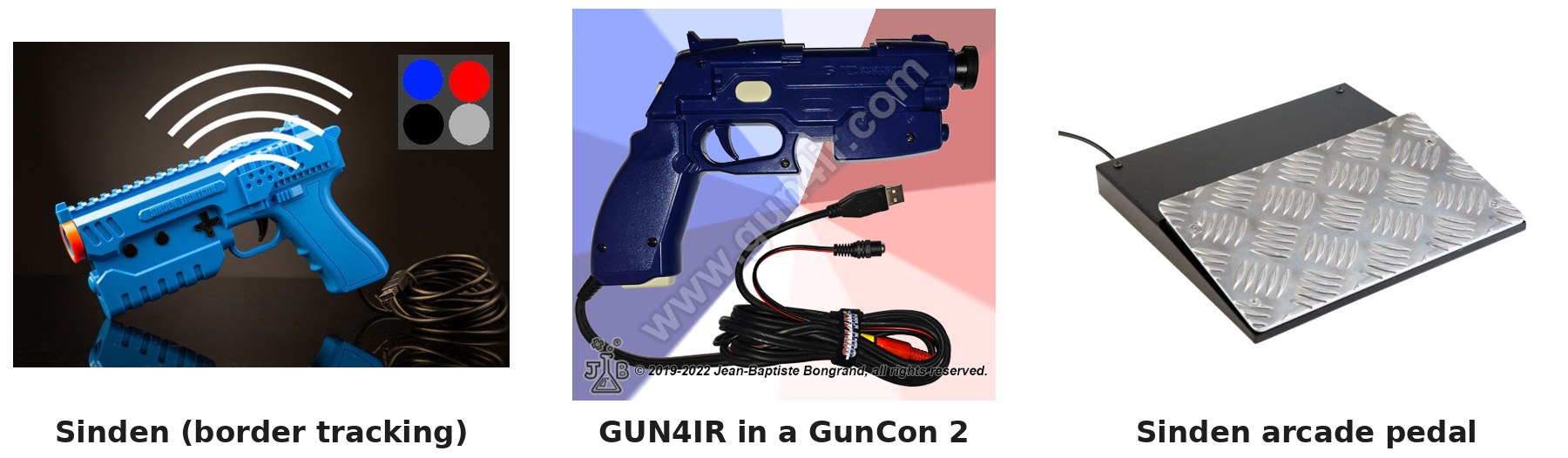
    8. Vol 8 The Do-It-Yourself Revival — AimTrak, Sinden, GUN4IR, SAMCO, OpenFIRE, RetroShooter and Blamcon After the console makers walked away, small makers and hobbyists rebuilt the light gun for flat panels: a camera in a GunCon shell, a white border round the picture, an open firmware on a Raspberry Pi Pico, and the recoil the home guns never had