Solenoid Recoil

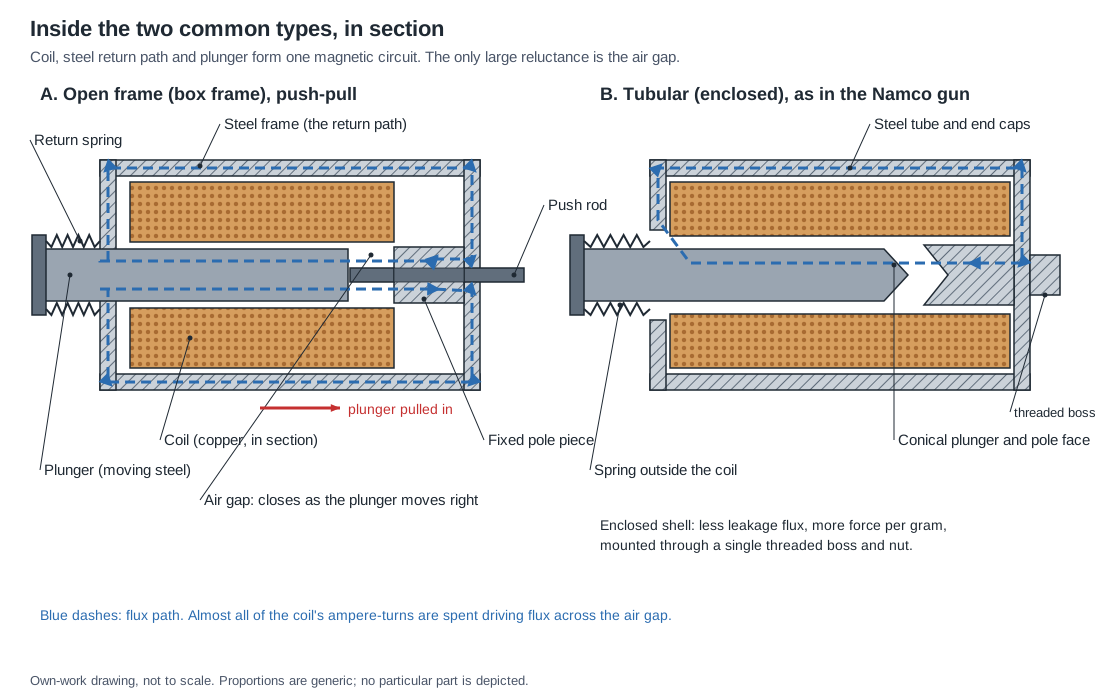
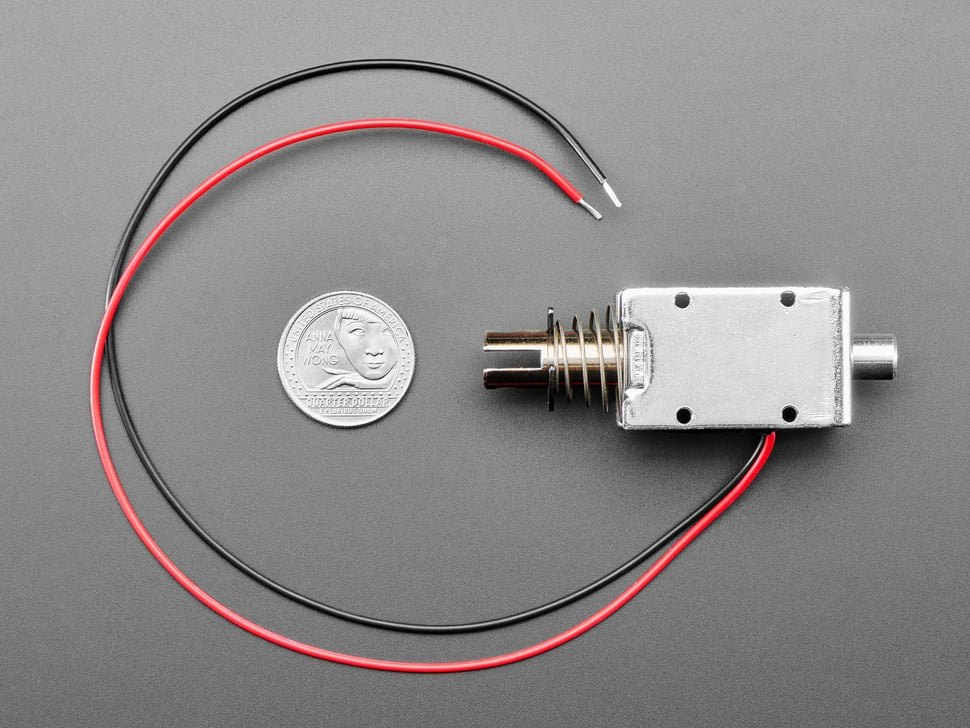
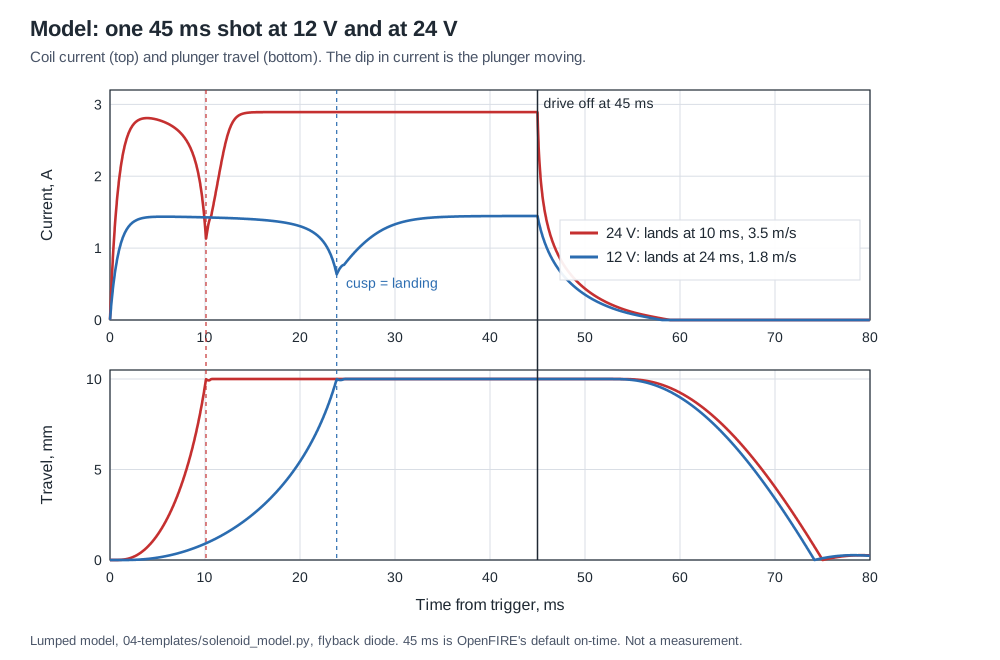
Solenoid physics, the parts DIY guns use and why they vary, pulse timing and heat, mechanical design, and measuring the kick.

Firearms

Solenoid Recoil · Deep Dive

Solenoid Recoil

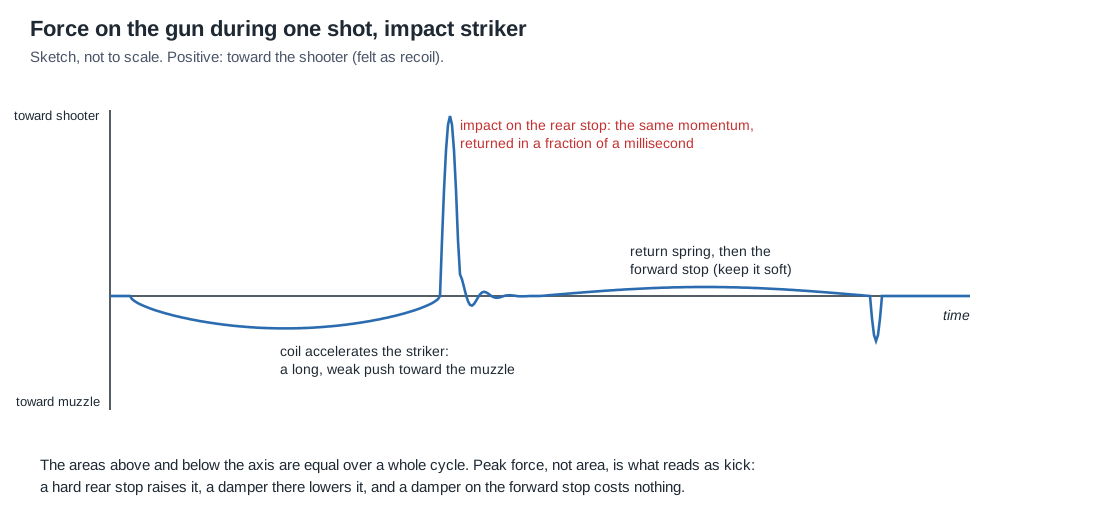
Recoil is an impulse, and a solenoid delivers almost all of it at the end of its stroke.

Solenoid physics, the parts DIY guns use and why they vary, pulse timing and heat, mechanical design, and measuring the kick.

Photo: Time Crisis II, Spain, 2017 by Benjamín Núñez González · CC BY-SA 4.0

Search every volume:

?

How to search

sten gun
pages with both words
"sten gun"
the words together, as a phrase
sten OR sterling
either one (| works too)
sten -replica
leave out pages that mention “replica”

Without quotes, the last word also matches longer words that start with it (sten finds Stenophylla), and close word forms count (rifle finds rifles). Tick Exact words to match whole words only.

Whole deep dives are listed first, then the pages inside them.

    Volumes
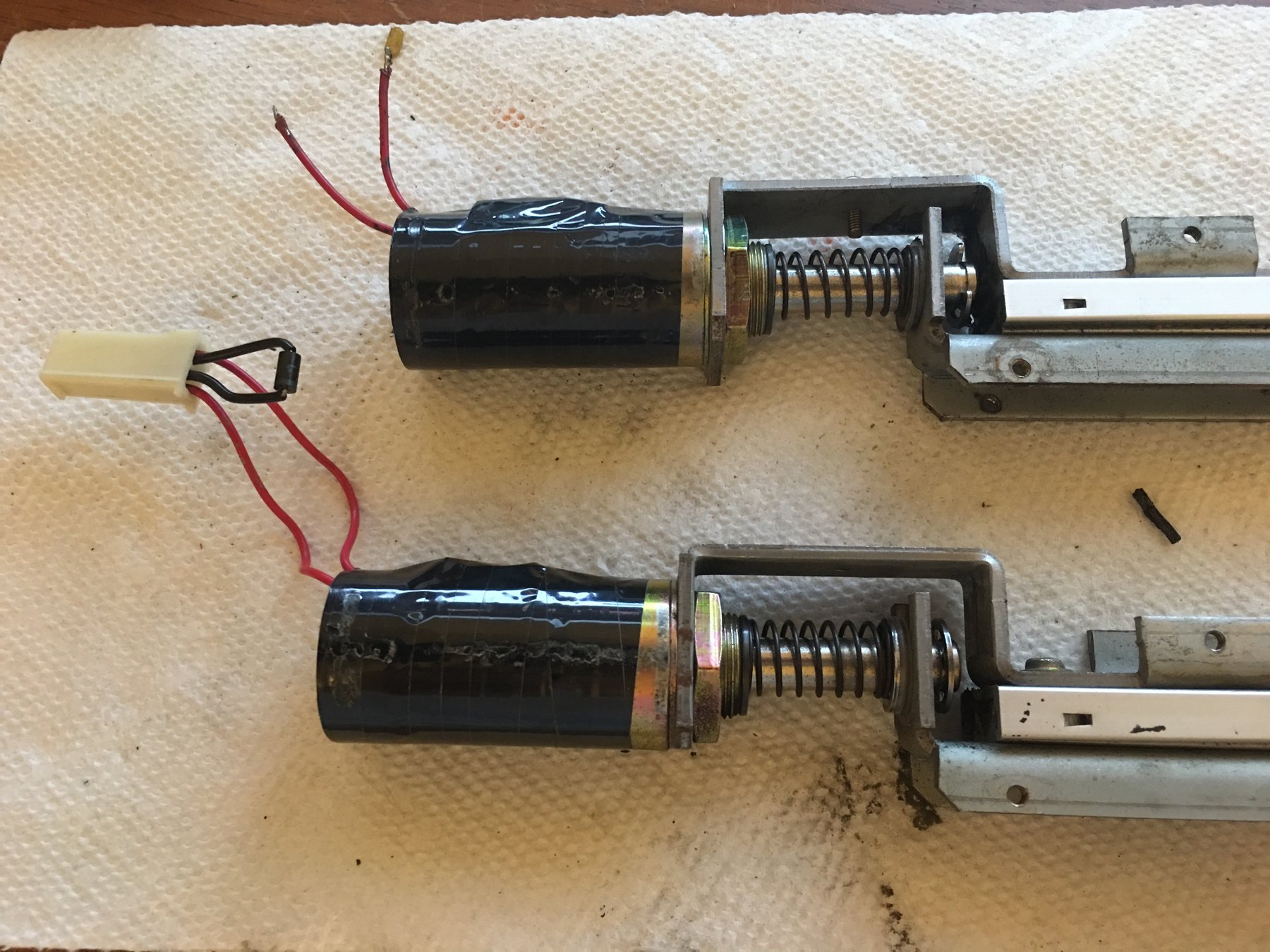
    1. Vol 1 Why Solenoids — Recoil in Arcade Guns and the DIY Revival How Namco, Sega and the home-built light guns that followed them made a plastic pistol kick, what the service manuals show inside, and what the modern kits ask of their power supplies
    2. Vol 2 Solenoid Physics — The Magnetic Circuit, the Force-Stroke Curve and the Voltage That Is Really a Duty Cycle Why the pull is weak at the start of the stroke and enormous at the end, why one coil can honestly be sold as a 12 V and a 38 V part, and what push, pull and impact arrangements change
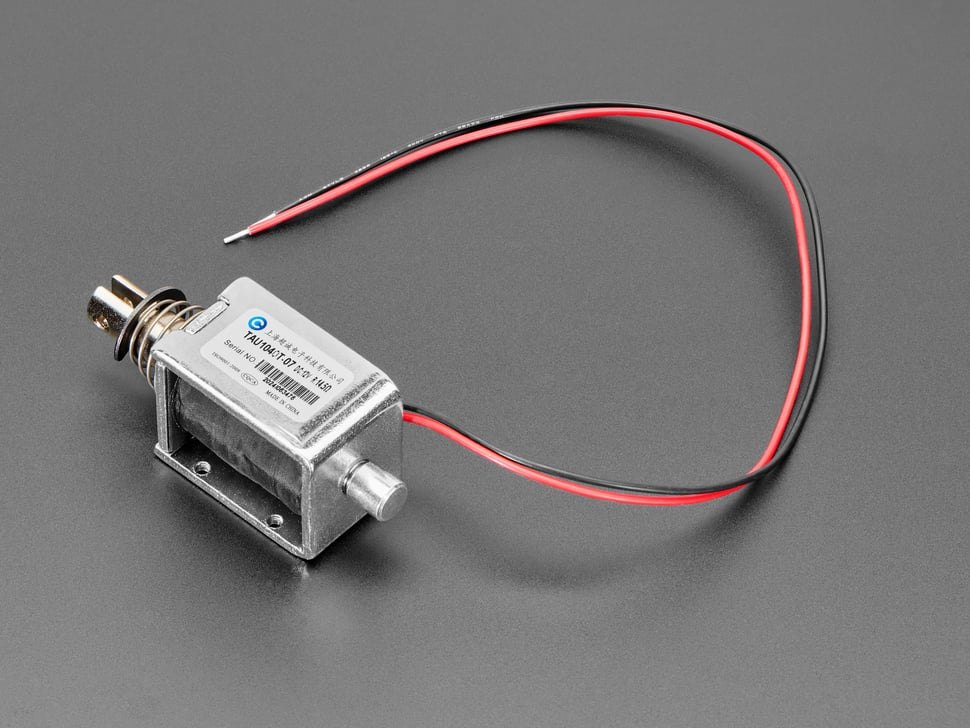
    3. Vol 3 The Parts Actually Used — Generic Open-Frame Solenoids, What Their Listings Get Wrong, and Why No Two Kick Alike The JF-0530B and JF-0826B families and their retail cousins, one honest Chinese specification sheet, the sources of unit-to-unit spread, and a bench procedure that turns a nameless part into a characterised one
    4. Vol 4 Driving It — Pulse Width, Heat, Overdrive, Regulated Current and the Flyback Clamp What a fixed-voltage pulse actually does to a moving plunger, how long a recoil coil can be fired before it cooks, why regulating current removes most of the unit-to-unit spread, and how the turn-off clamp sets the release
    5. Vol 5 Mechanical Design — Moving Mass, Stops, Springs, Dampers, Noise, and Making It Feel Like a Long Gun Why the hand feels the stop and not the coil, how a heavier striker buys momentum, what a damper does at each end of the stroke, and where to put the whole mechanism in a carbine-sized shell
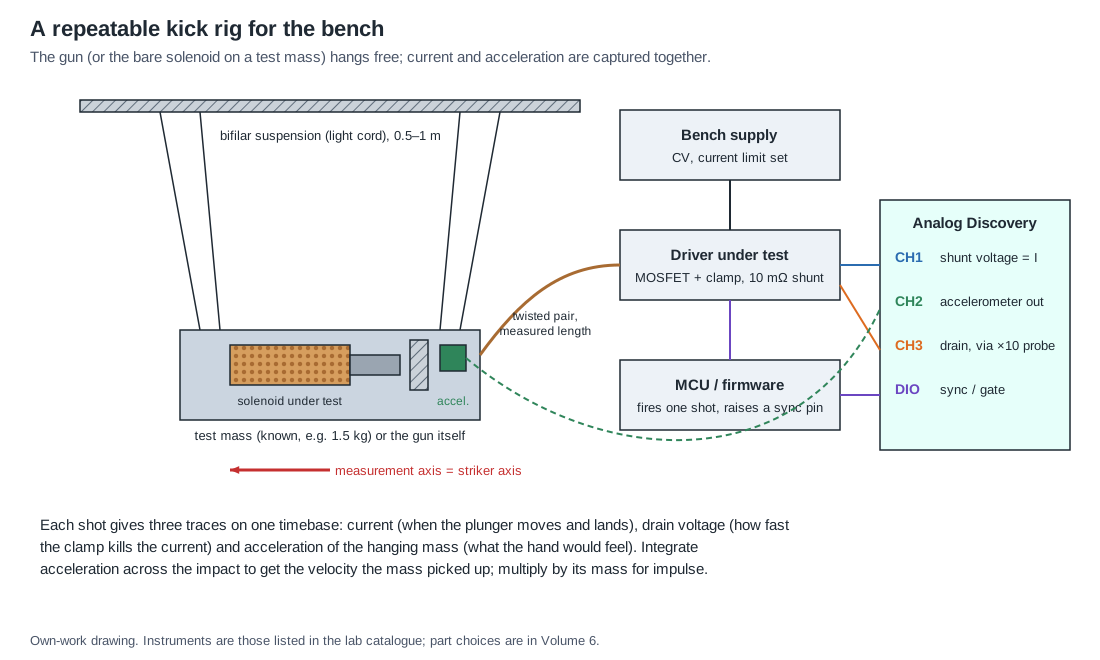
    6. Vol 6 Measuring Kick — Current Capture, Accelerometers and a Repeatable Bench Rig What to measure, with which instrument, what the traces should look like, and why the obvious ballistic-pendulum test measures almost nothing
    7. Vol 7 Selection, Purchase and Upkeep — Choosing a Recoil Solenoid, Where to Buy It, and Keeping It Working A decision table for the gun being built, the parts whose sellers' pages could be read on 18 October 2026 with their prices, and the failure modes, diagnoses and protections that keep a kicking gun alive
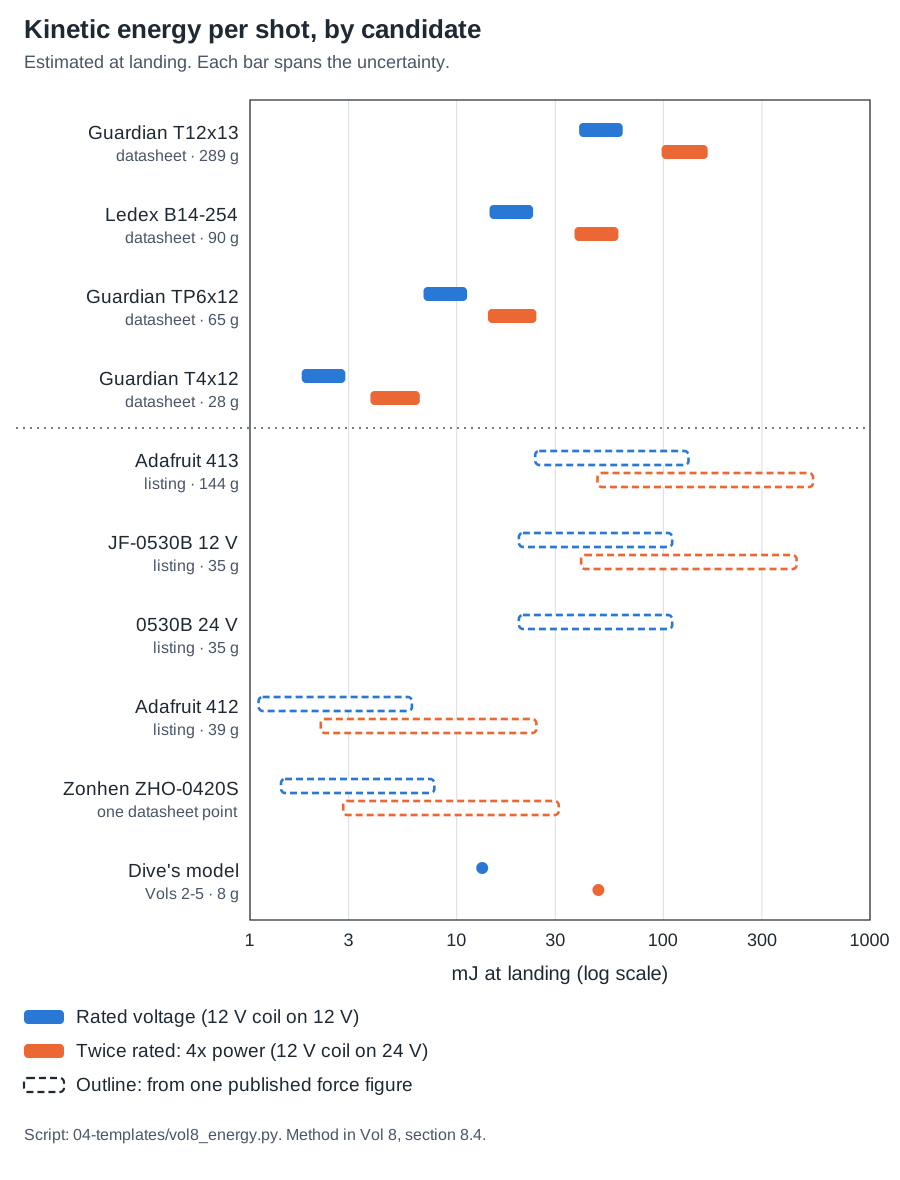
    8. Vol 8 Choosing the Solenoid — Candidates, Kinetic Energy, and the Voltage Question Real parts with their published figures, the energy each can put into a plunger at its rated voltage and at the light-gun habit of twice that, why a higher-voltage coil is not a stronger coil, and the shortlist to buy and rank on the bench