Controls and Inputs

Trigger, reload, D-pad, side buttons, pump and pedal: what each is for, switch types, debounce and an input map.

Firearms

Controls and Inputs · Deep Dive

Controls and Inputs

Every button on a light gun, and what the games expect it to do.

Trigger, reload, D-pad, side buttons, pump and pedal: what each is for, switch types, debounce and an input map.

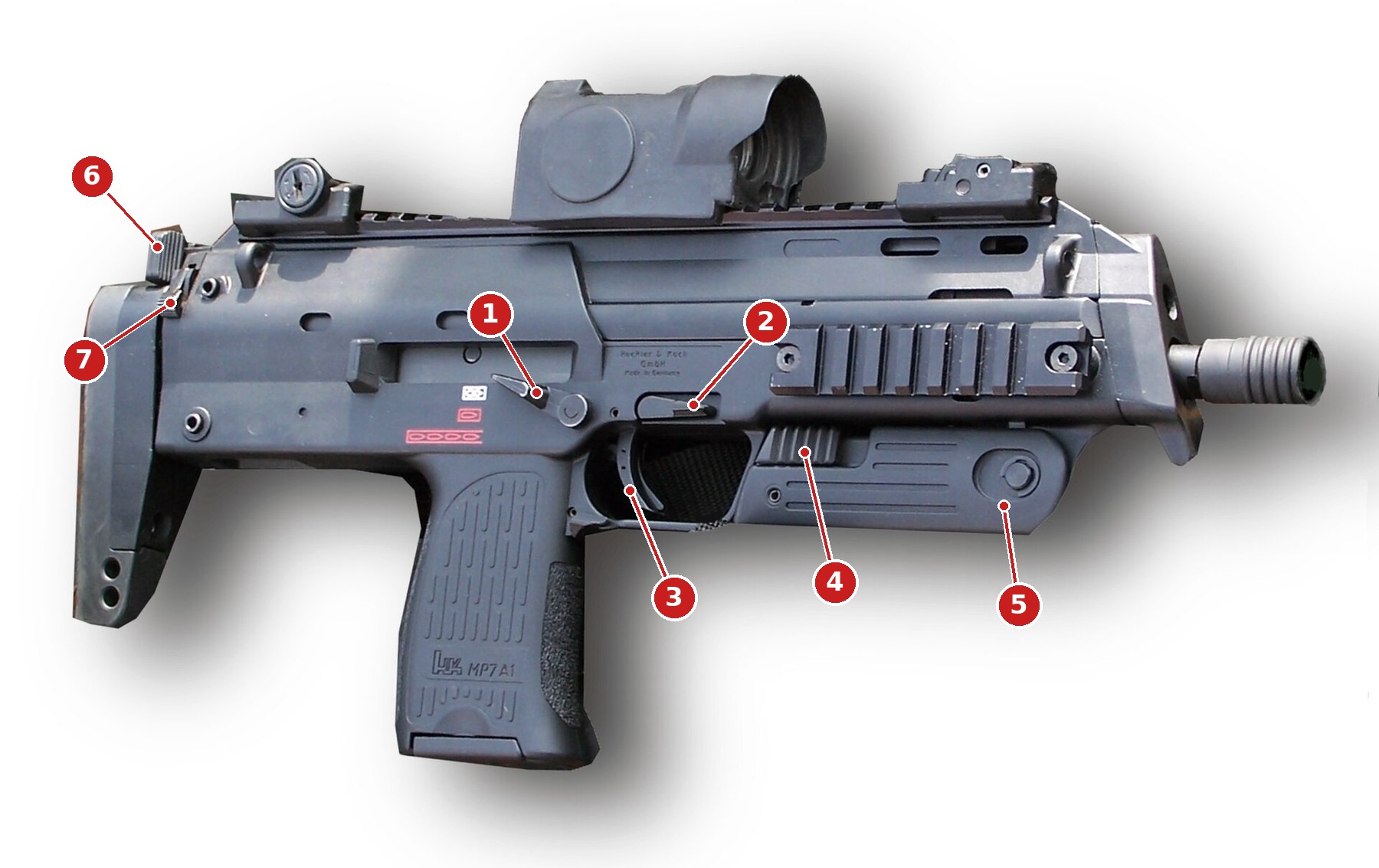
Photo: Heckler & Koch MP7A1, left side: selector, bolt-catch lever, trigger and folding grip by KrisfromGermany

Search every volume:

?

How to search

sten gun
pages with both words
"sten gun"
the words together, as a phrase
sten OR sterling
either one (| works too)
sten -replica
leave out pages that mention “replica”

Without quotes, the last word also matches longer words that start with it (sten finds Stenophylla), and close word forms count (rifle finds rifles). Tick Exact words to match whole words only.

Whole deep dives are listed first, then the pages inside them.

    Volumes
    1. Vol 1 What a Light Gun Needs — Every Input, by Game, Genre and Platform A trigger and a way to reload are the whole interface of most arcade light-gun games; everything else on a modern gun exists for menus, consoles, emulators and a handful of games. What each input is for, who needs it, and the input set for the printed MP7
    2. Vol 2 Where the Controls Go — the Real MP7 as the Reference, and a Layout for the Printed Gun H&K placed every MP7 control where one hand can work it without letting go. A light gun built in that shell inherits the placement for free: the magazine catch becomes the reload, the selector becomes the recoil and autofire switch, and only three inputs need a new hole
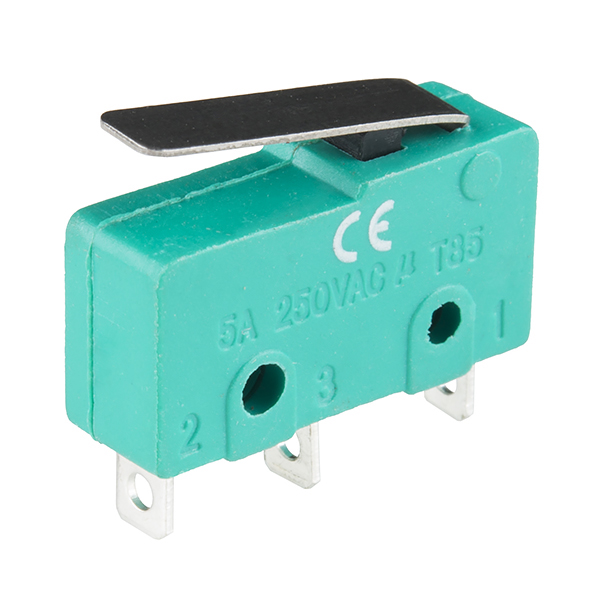
    3. Vol 3 Switches Compared — Microswitches, Tact Switches, Navigation Switches, Rubber Domes and Hall Sensors, by the Datasheet Force, travel, life and bounce from the makers' own sheets, and the number nobody checks: the minimum current a contact needs. A Pico's pull-up gives 41 to 66 µA; the 15 A microswitch a popular OpenFIRE build uses for its trigger asks for 160 mA
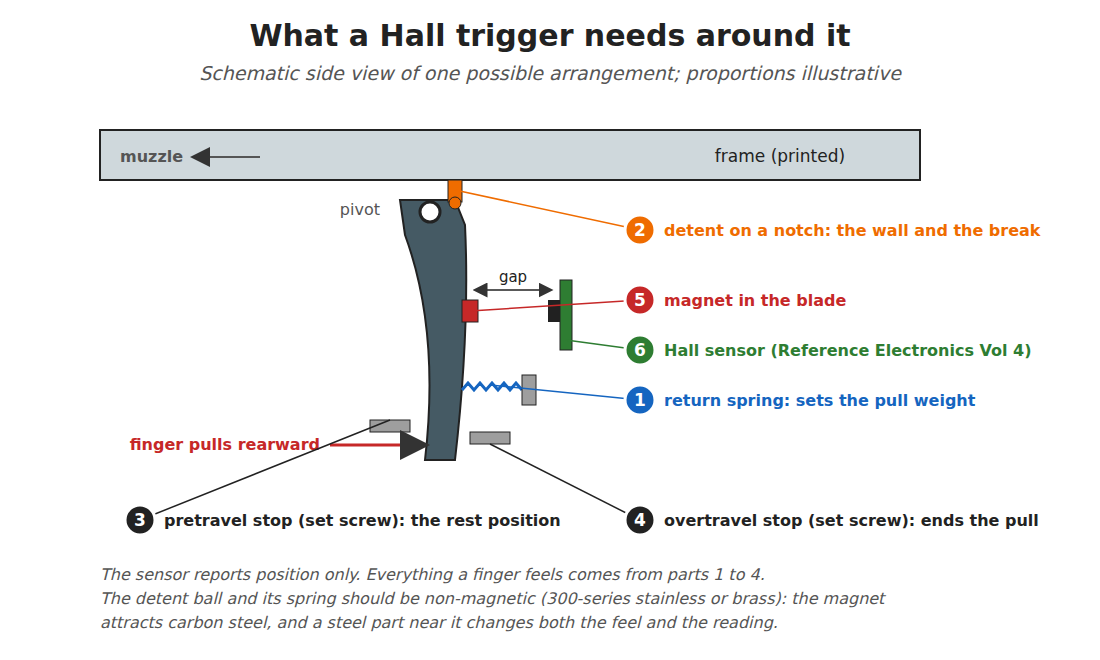
    4. Vol 4 Trigger Feel — Pull Weight, Take-Up, the Break and the Reset, for a Trigger With No Contact in It A Hall sensor reports where the trigger is and nothing else. The wall, the break, the overtravel and the reset that a gunsmith would recognise all have to be built around it, and the firmware's firing point should be set to the felt break, not to a percentage
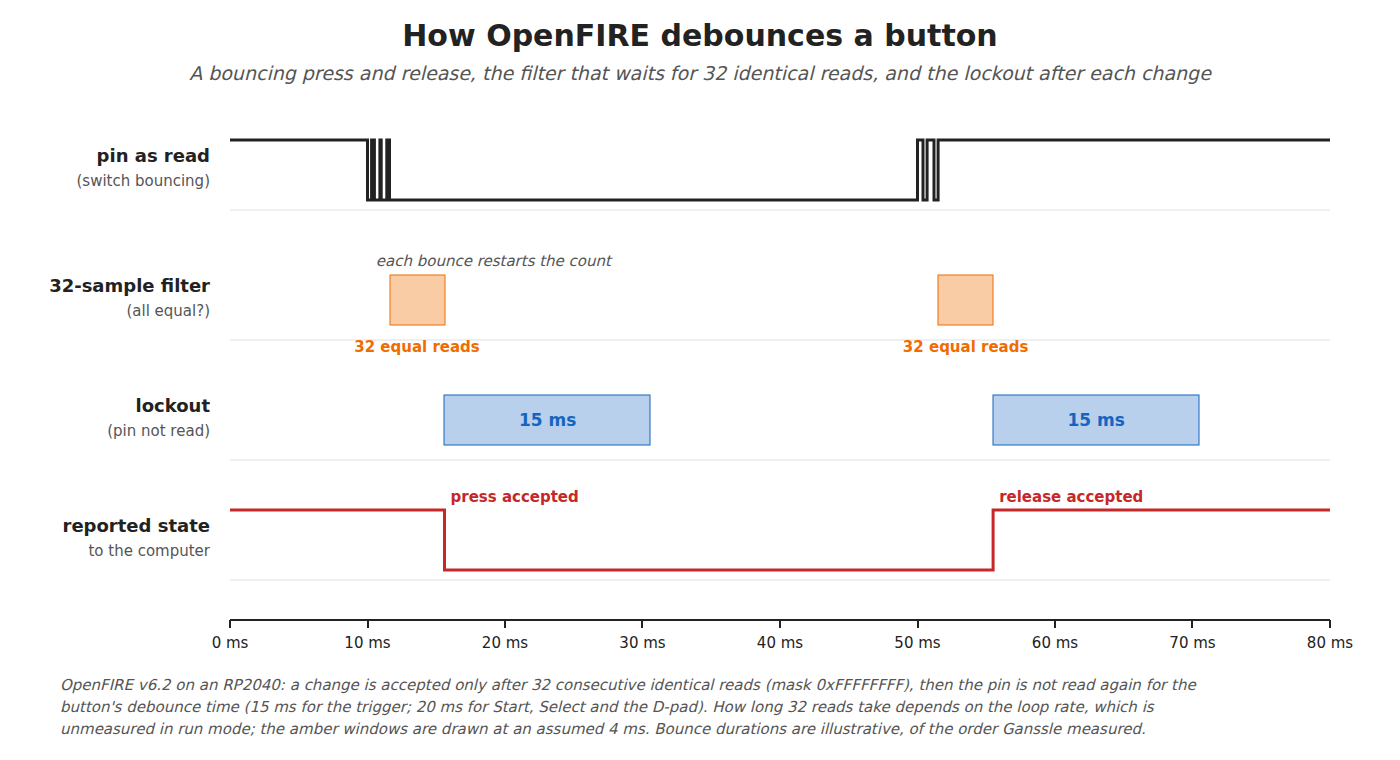
    5. Vol 5 Debounce and Timing — What the Contacts Do, What OpenFIRE Does About It, and What It Costs OpenFIRE waits for 32 identical reads and then ignores the pin for 15 or 20 milliseconds. The lockout limits the repeat rate, not the latency; the 32-read filter is the delay, and nobody has measured how long it takes in run mode. A Hall trigger can skip both
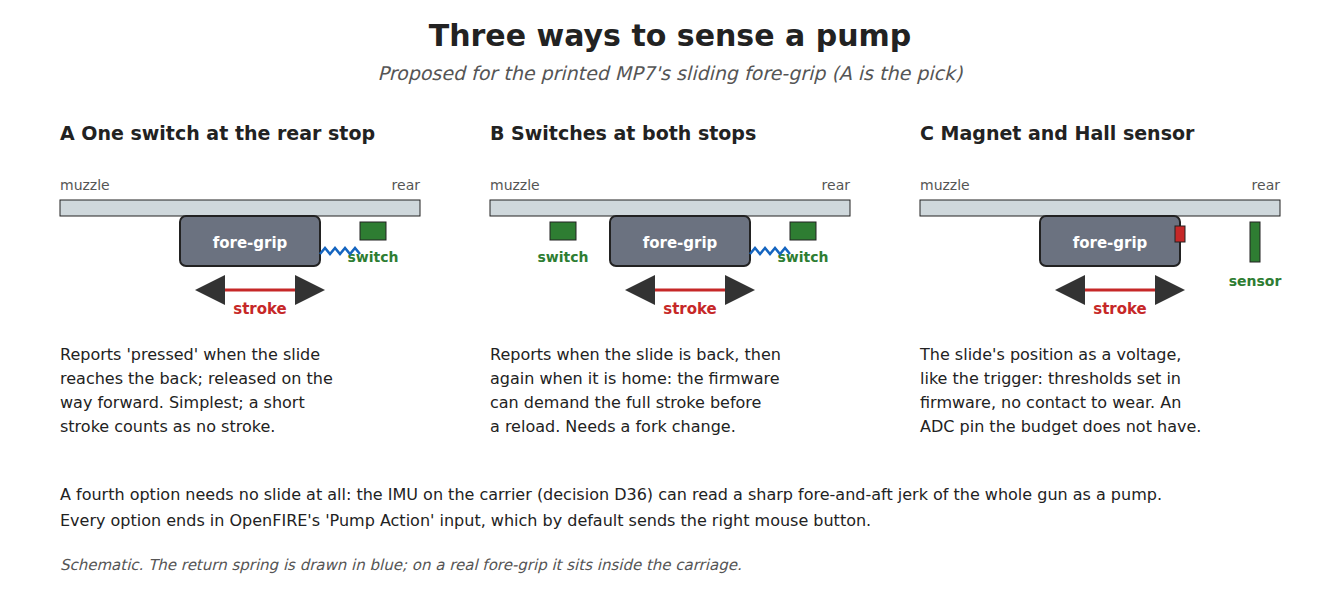
    6. Vol 6 Pedals and Pumps — the Time Crisis Pedal, a Shotgun Slide on an MP7, and How Each Is Sensed Namco's pedal is a spring-returned plate pushing a plunger onto a microswitch, greased every six months. A home pedal can be a $7.50 foot switch with a better switch inside it, wired to a 3.5 mm jack that every assistive switch also fits. A pump on an MP7 is a compromise, and the options for sensing one
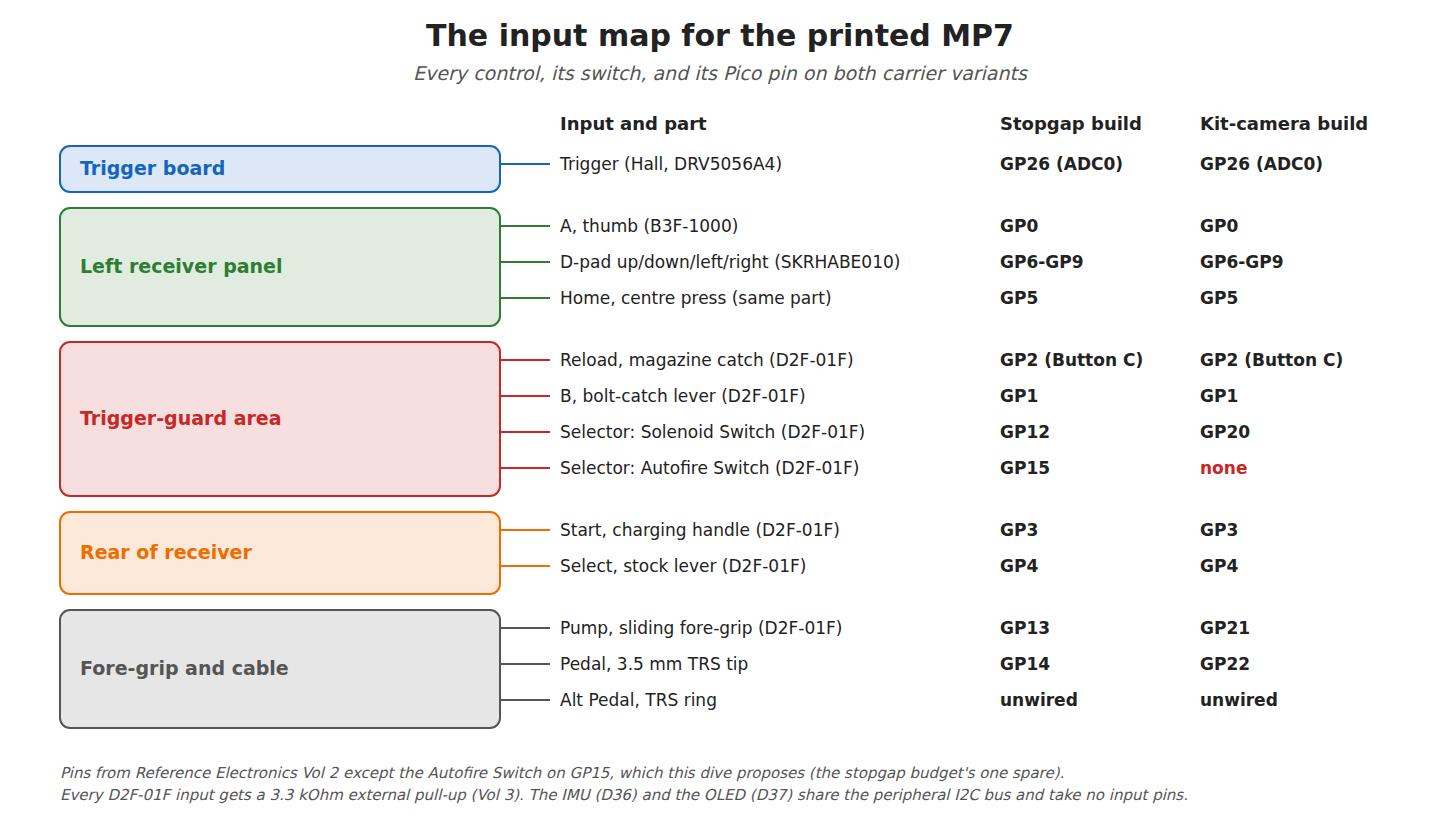
    7. Vol 7 Feedback, Accessibility and the Input Map — What the Gun Tells the Player, Who Else Can Play It, and Every Control on One Page Kick, rumble, light and an ammo count close the loop from game to hand. A light gun is also unusually easy to open up to players a gamepad shuts out: a lighter trigger, a hold-to-fire selector, a pedal jack that takes any assistive switch. Then the whole input map, and the decision rows this dive proposes