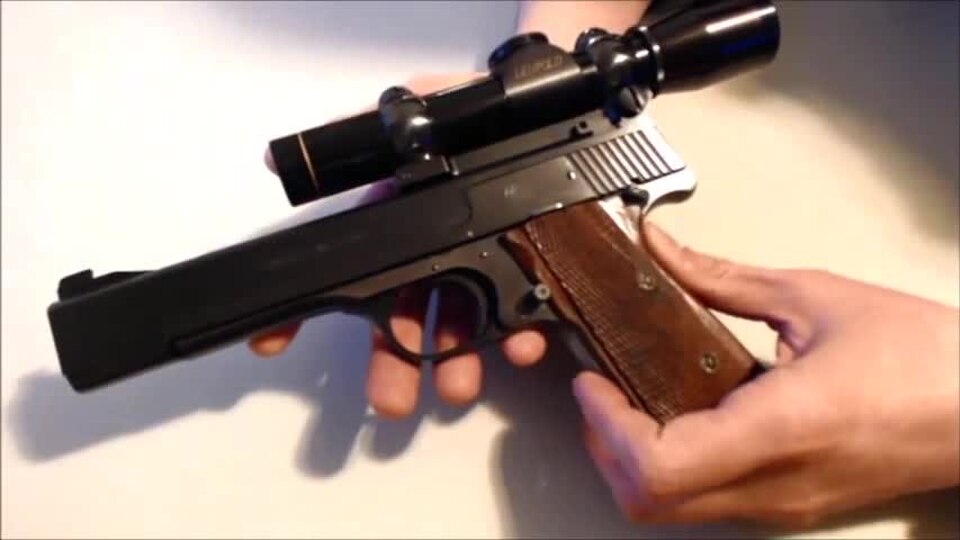
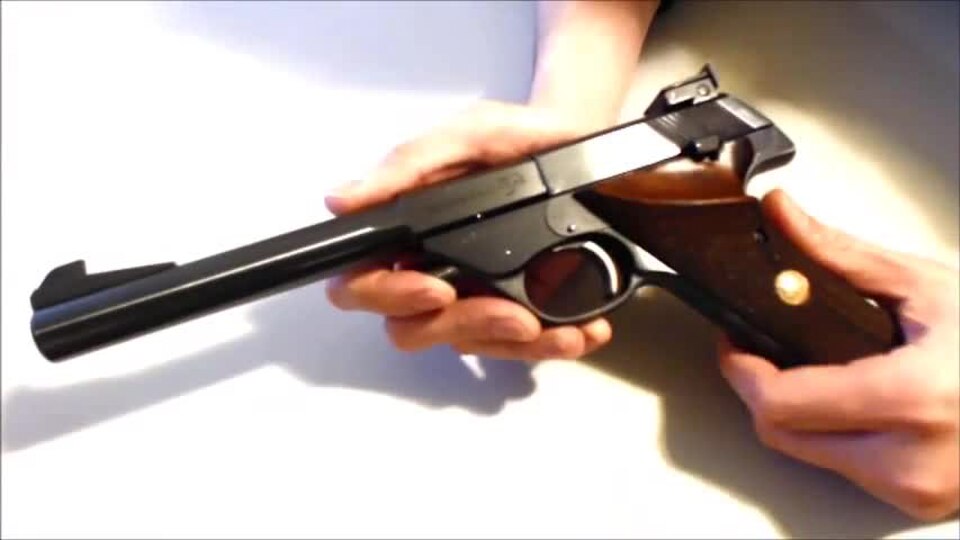
Smith & Wesson Model 41

The .22 target pistol Smith & Wesson made for American bullseye shooting from 1957 to 2025, told from the maker's own manuals and 1957 patents rather than the retellings: every production change with the source for its date, how to date a gun from its markings, a mechanism whose sights never move, and an accuracy reputation measured against the target it was built for.

Firearms

Smith & Wesson Model 41 · Deep Dive

Smith & Wesson Model 41

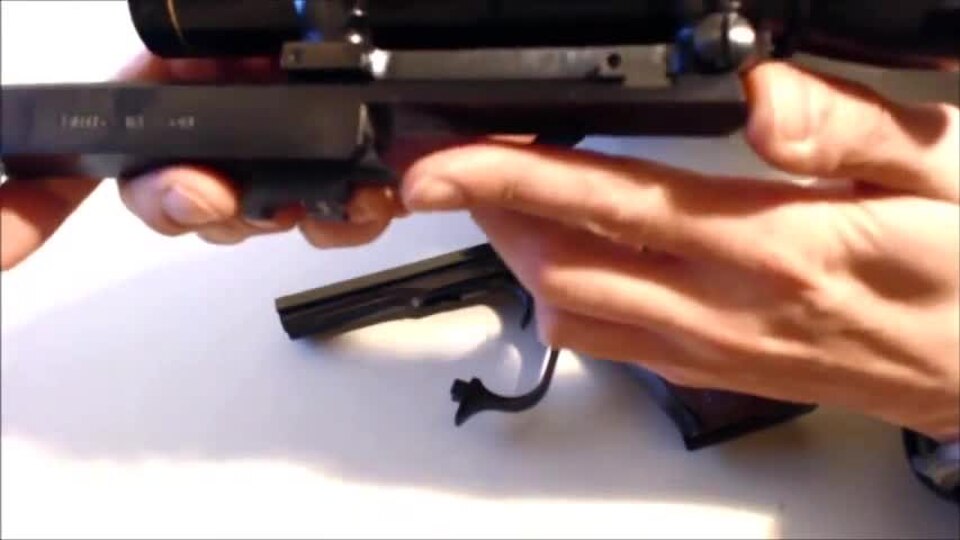
The Model 41 manual's famous ban on hyper-velocity ammunition is not in any of the three editions checked — and the pistol's barrel is held on by its trigger guard, as patented in May 1957.

The .22 target pistol Smith & Wesson made for American bullseye shooting from 1957 to 2025, told from the maker's own manuals and 1957 patents rather than the retellings: every production change with the source for its date, how to date a gun from its markings, a mechanism whose sights never move, and an accuracy reputation measured against the target it was built for.

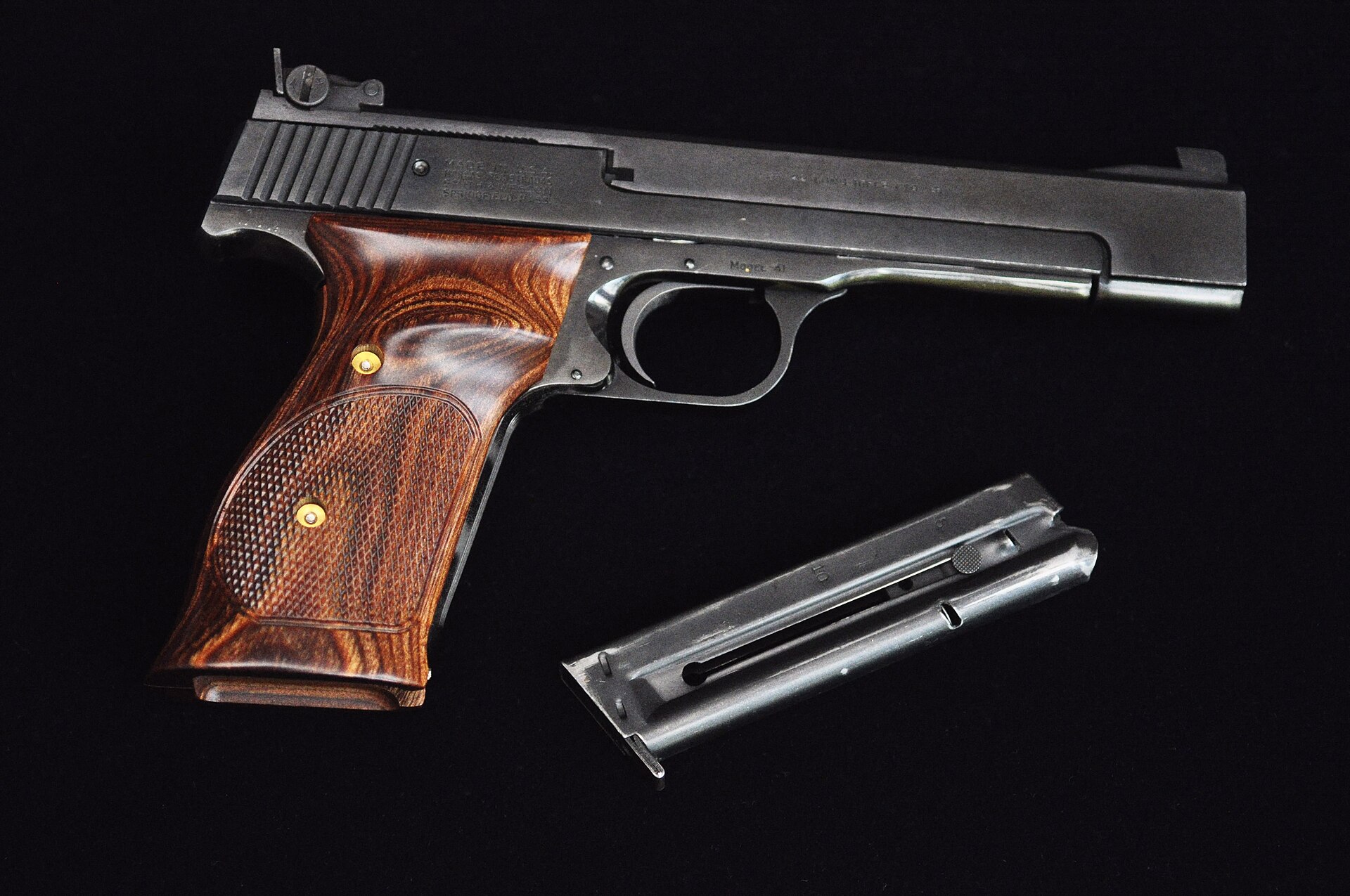
Photo: Smith and Wesson Model 41 (1972) by Mightymoo01 · CC BY-SA 3.0

Search every volume:

?

How to search

sten gun
pages with both words
"sten gun"
the words together, as a phrase
sten OR sterling
either one (| works too)
sten -replica
leave out pages that mention “replica”

Without quotes, the last word also matches longer words that start with it (sten finds Stenophylla), and close word forms count (rifle finds rifles). Tick Exact words to match whole words only.

Whole deep dives are listed first, then the pages inside them.

    Volumes
    1. Vol 1 Origins: Ten Years in the Toolroom, and the Game It Was Built For Why Smith & Wesson built a .22 target pistol after the war, what it had to beat, and what the record actually says about 1947 to 1957
    2. Vol 2 Production History, and How to Date One Every change with its date and whose date it is; the barrels, the .22 Short gun and the Model 46; the gaps; the 2025 end; and how a reader places a Model 41 in its era
    3. Vol 3 How It Works: an Exposed Barrel, a Short Slide, and a Trigger Guard That Holds the Barrel On Straight blowback, why both sights ride on the barrel, the 1957 barrel-latch and trigger-spring patents read part by part, and what the trigger, safety and stop actually do
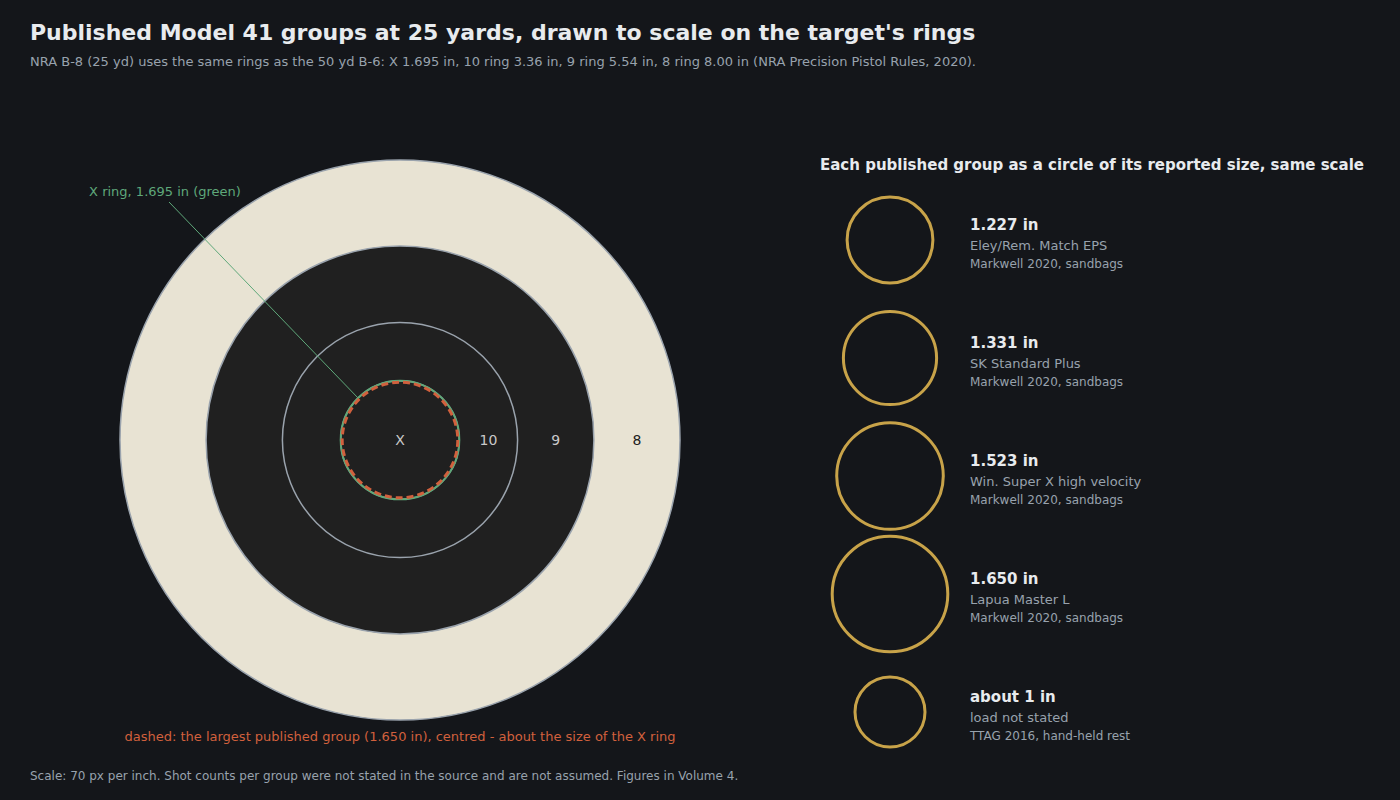
    4. Vol 4 The Reputation, Tested: Accuracy, Popularity and Value What the published groups show against the size of the target, what the popularity evidence is and is not, and Model 41 prices from 1966 to 2026 with a date and a source on every figure
    5. Vol 5 Against Its Rivals: High Standard, Ruger and the Plain Smith The pistols the Model 41 was measured against, compared on the figures printed in a 1959 service manual and the maker's current specification, and what actually separates them
    6. Vol 6 Owning and Maintaining the Pistol Documented Here The unit as recorded in September 2026, what its markings will say about its era, what Smith & Wesson's manuals actually say about ammunition, and the maker's own field-strip, lubrication, trigger-stop and cleaning procedures
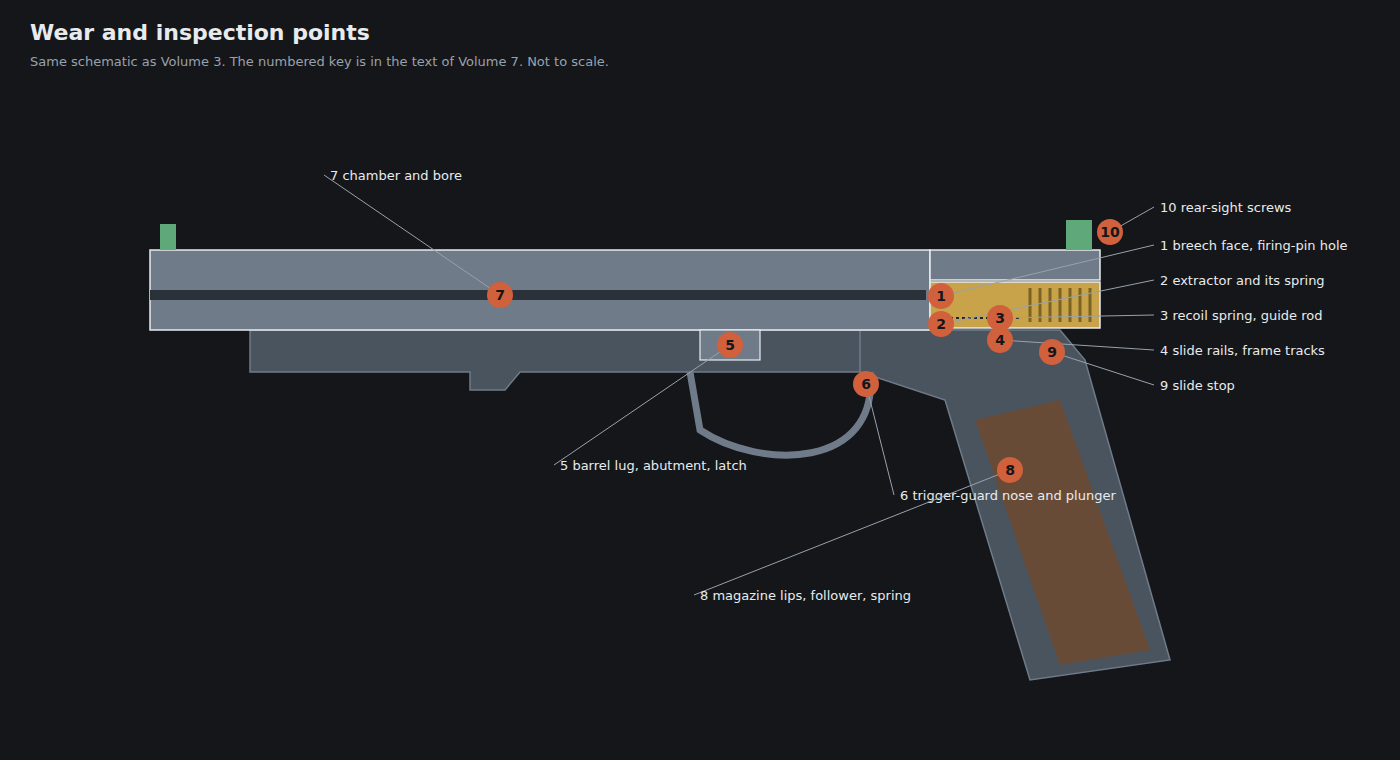
    7. Vol 7 Keeping It Working: Diagnosis, Wear, Repair and Parts What goes wrong on a 1957 target-pistol design, how to tell which part is at fault, what the owner may touch, what a gunsmith or the factory must do, and what can still be bought now that production has ended
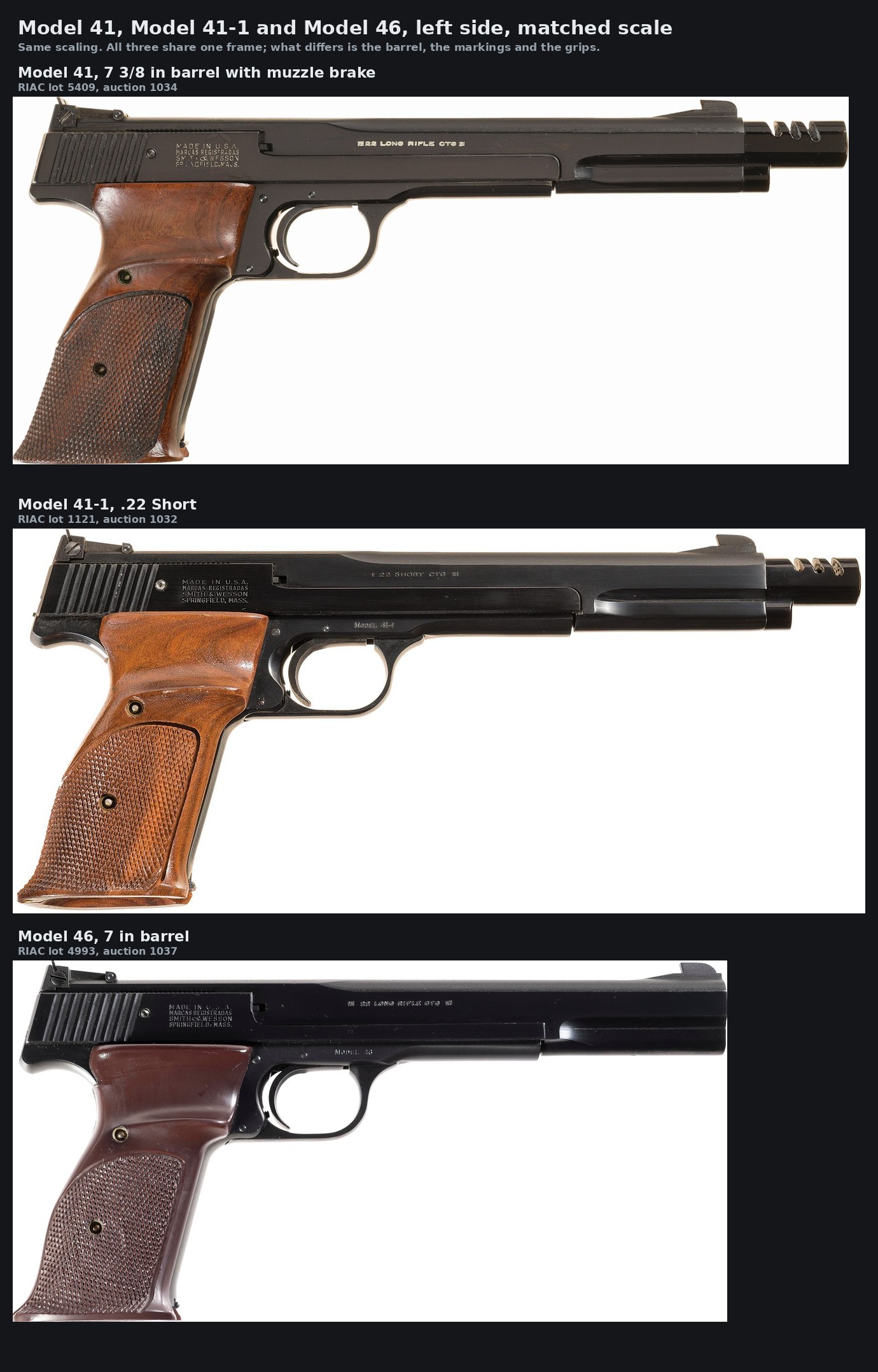
    8. Vol 8 Telling Them Apart: a Photographic Identification Guide Model 41, Model 41-1 and Model 46 side by side at matched scale, the four barrels drawn to scale, the markings close up, and a table that says where to look