Positional and Inertial Aiming

Potentiometer guns, IMU aiming and optical-inertial fusion.

Firearms

Positional and Inertial Aiming · Deep Dive

Positional and Inertial Aiming

Aiming without seeing the screen.

Potentiometer guns, IMU aiming and optical-inertial fusion.

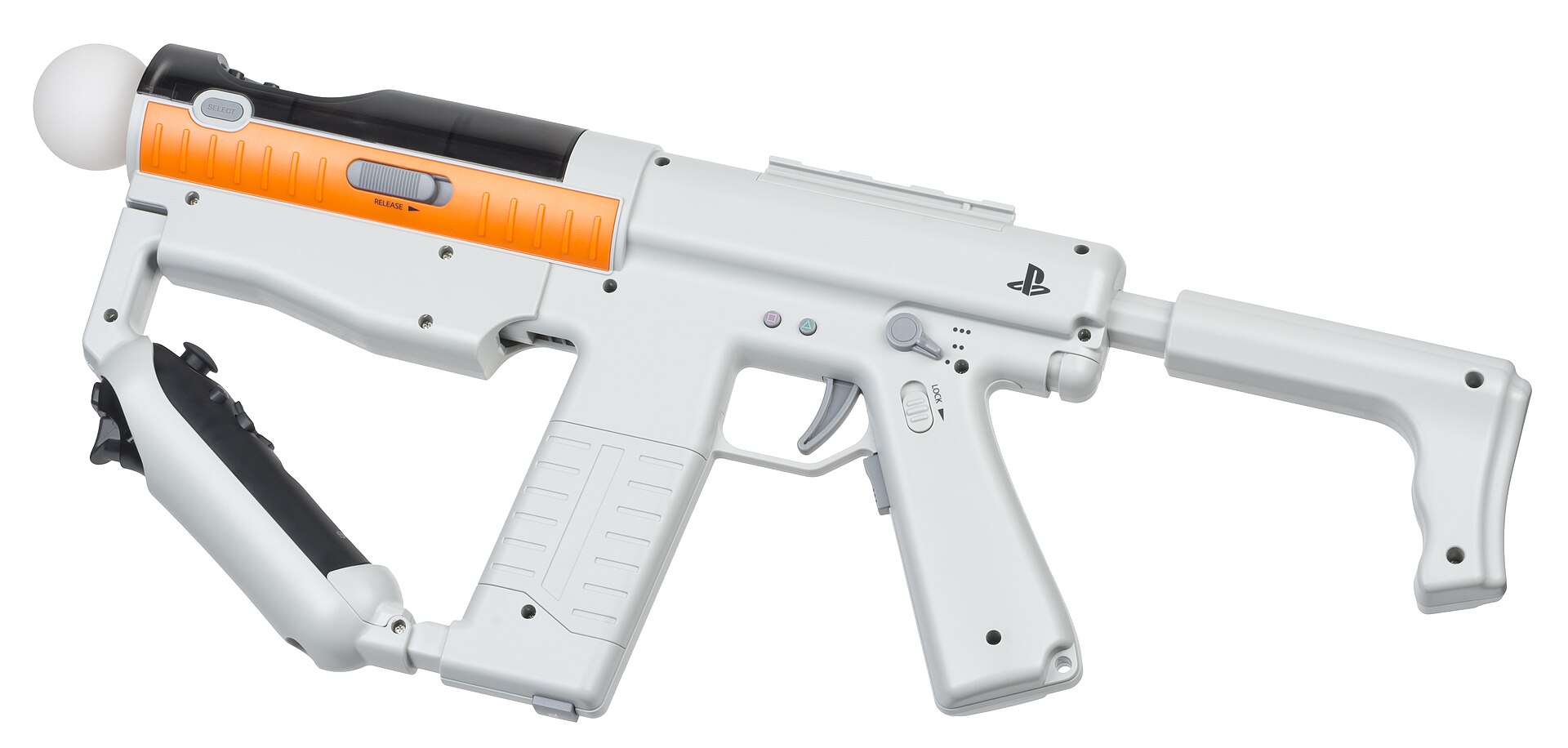
Photo: PlayStation Move Sharp Shooter by Evan-Amos

Search every volume:

?

How to search

sten gun
pages with both words
"sten gun"
the words together, as a phrase
sten OR sterling
either one (| works too)
sten -replica
leave out pages that mention “replica”

Without quotes, the last word also matches longer words that start with it (sten finds Stenophylla), and close word forms count (rifle finds rifles). Tick Exact words to match whole words only.

Whole deep dives are listed first, then the pages inside them.

    Volumes
    1. Vol 1 Aiming Without Looking — What Position and Motion Sensors Actually Measure A light gun needs one number pair: where on the screen the barrel points. A camera in the gun measures it; angle sensors, gyroscopes, accelerometers, magnetometers and room trackers each measure something else and have to infer it. The map of the methods, the geometry that turns an angle into a pixel, and why every one of them ends up needing an absolute reference
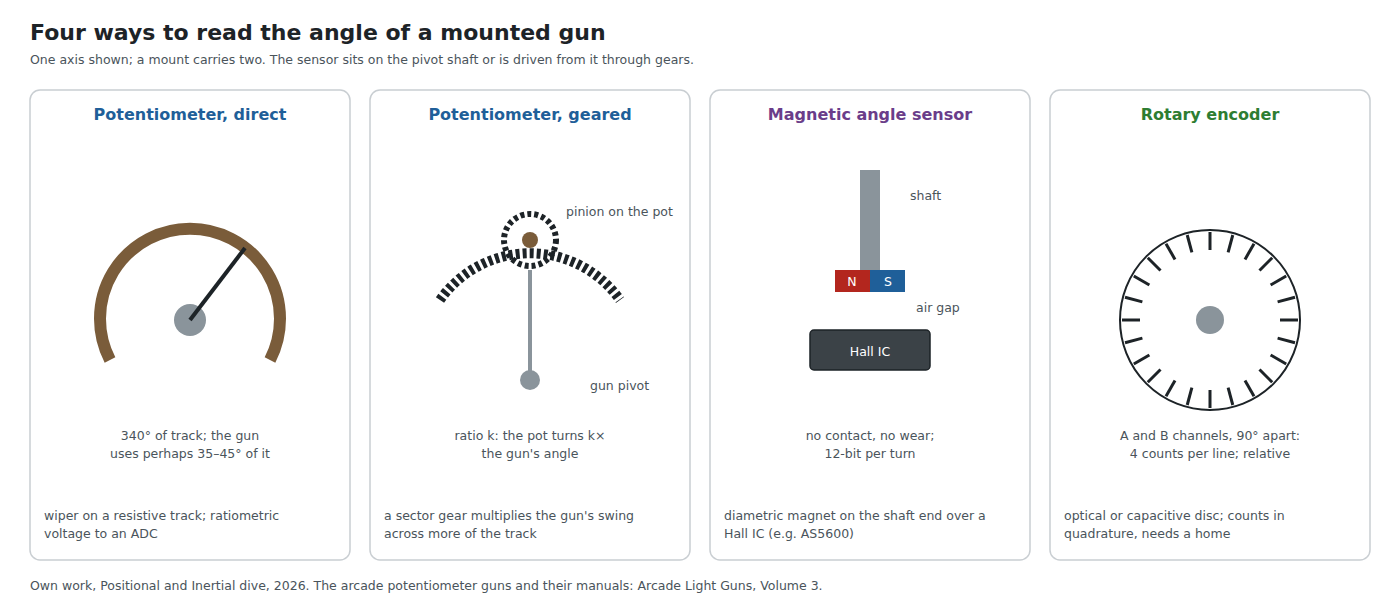
    2. Vol 2 Angle Sensors on a Mount — Potentiometers, Gears, Magnets and Encoders The engineering under the arcade's fixed guns: how many distinct readings each sensor gives across a screen, why the arcade geared its pots, what a 12-bit magnetic angle sensor really resolves when its range is narrowed, why the angle-to-screen map is a tangent, and which sensor a mounted gun built today should use
    3. Vol 3 Gyroscopes, Accelerometers and Magnetometers — What the Datasheets Say, in Pixels How a MEMS gyroscope senses rotation; three current six-axis parts compared from their datasheets; why bias, not noise, is what drifts, worked through in pixels on a 55-inch screen; what an accelerometer can and cannot tell a gun; and why a magnetometer inside a gun with a 24-volt solenoid is no reference at all
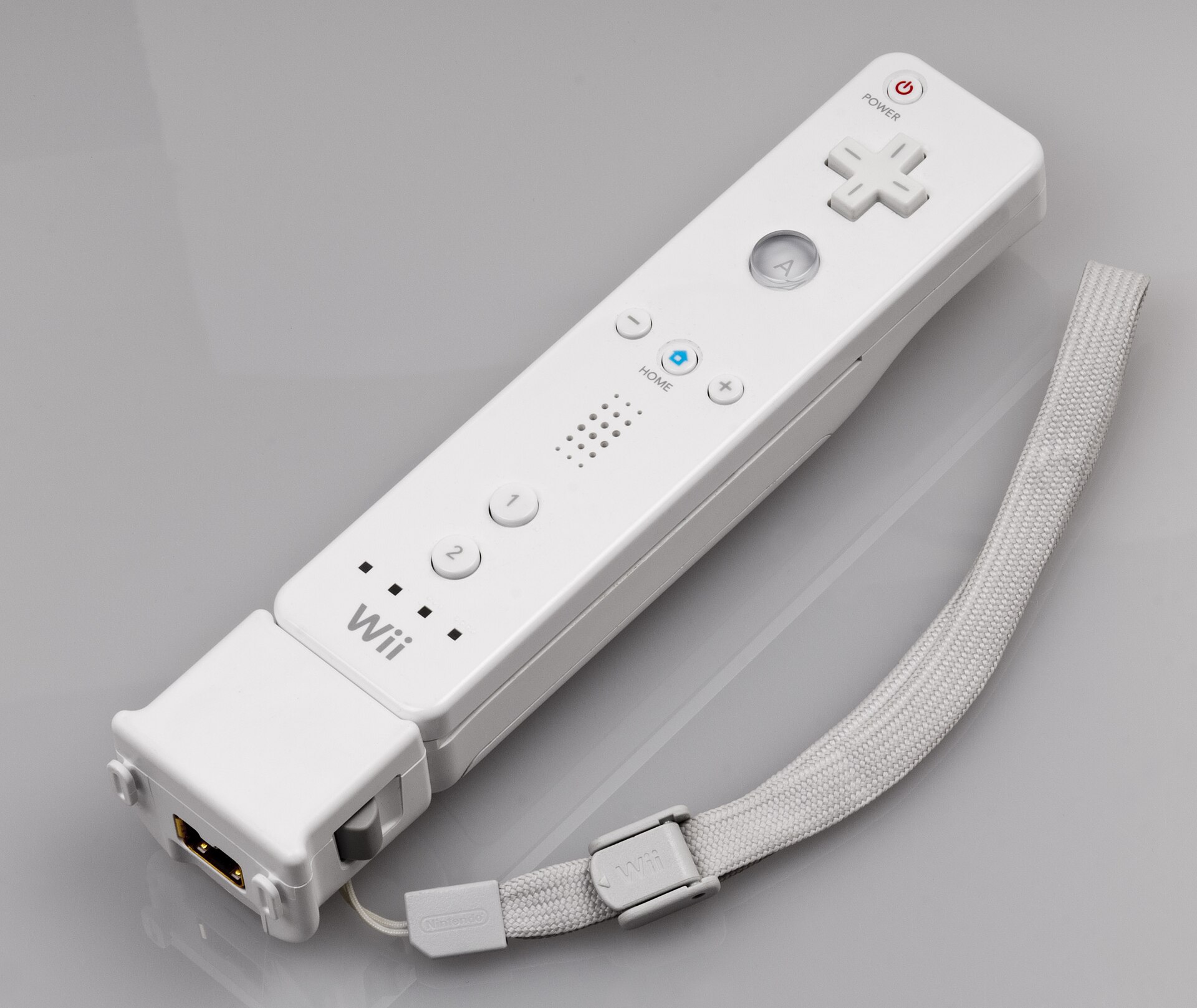
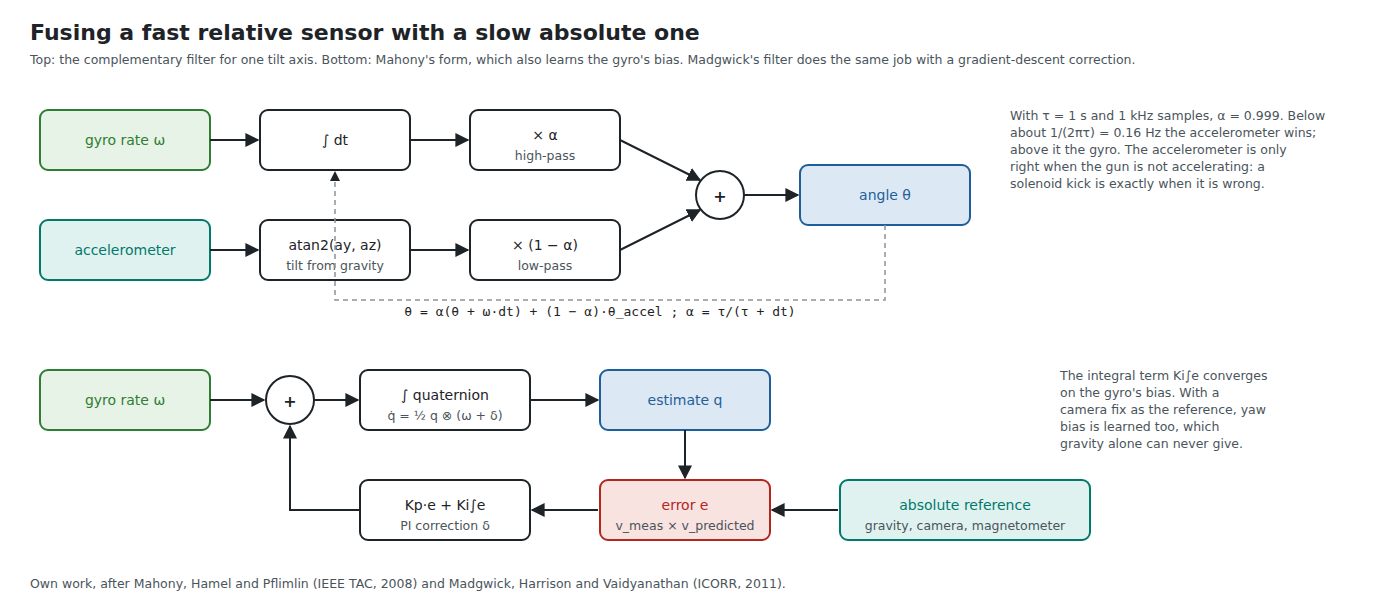
    4. Vol 4 Sensor Fusion — Complementary, Mahony and Madgwick Filters, and the Gyro over an Optical Fix How a fast sensor that drifts is tied to a slow one that does not: the complementary filter and its one parameter, Mahony's integral term that learns the gyro's bias, Madgwick's gradient step; how the Wii MotionPlus, PlayStation Move and Freespace pointers used gyroscopes beside an absolute reference; and why a light gun needs far less than a full orientation filter
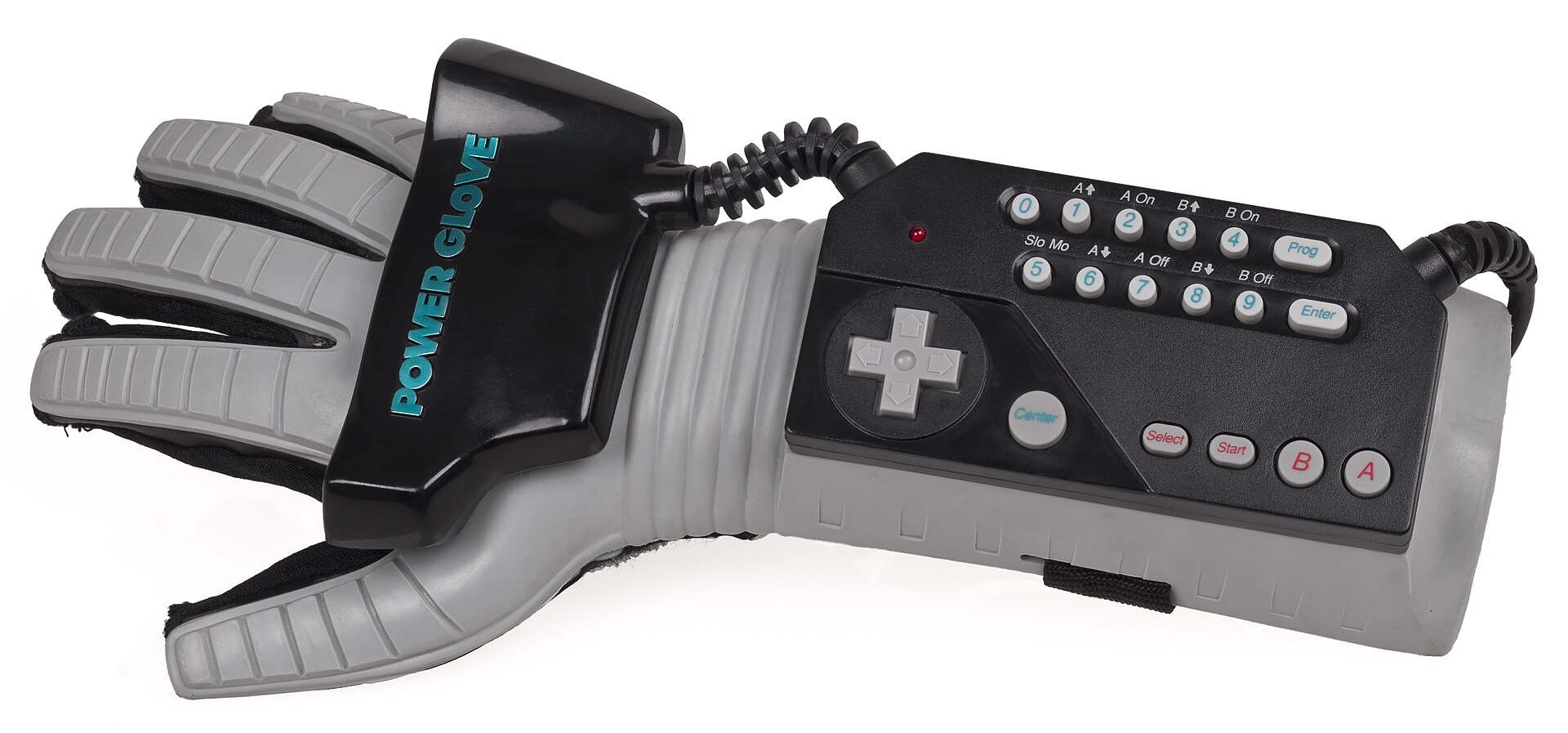
    5. Vol 5 Other Ways to Find a Gun in a Room — Cameras at the Screen, Ultrasound, Magnetic Fields, UWB and Optical Flow The position half of the aiming problem, and every published way of measuring it that is not a camera in the gun: what the PlayStation Move, the Power Glove, the Razer Hydra, ultra-wideband radios and mouse-type flow sensors actually measure, how good their makers say they are, and what that accuracy is worth at 2 m from a 55-inch screen
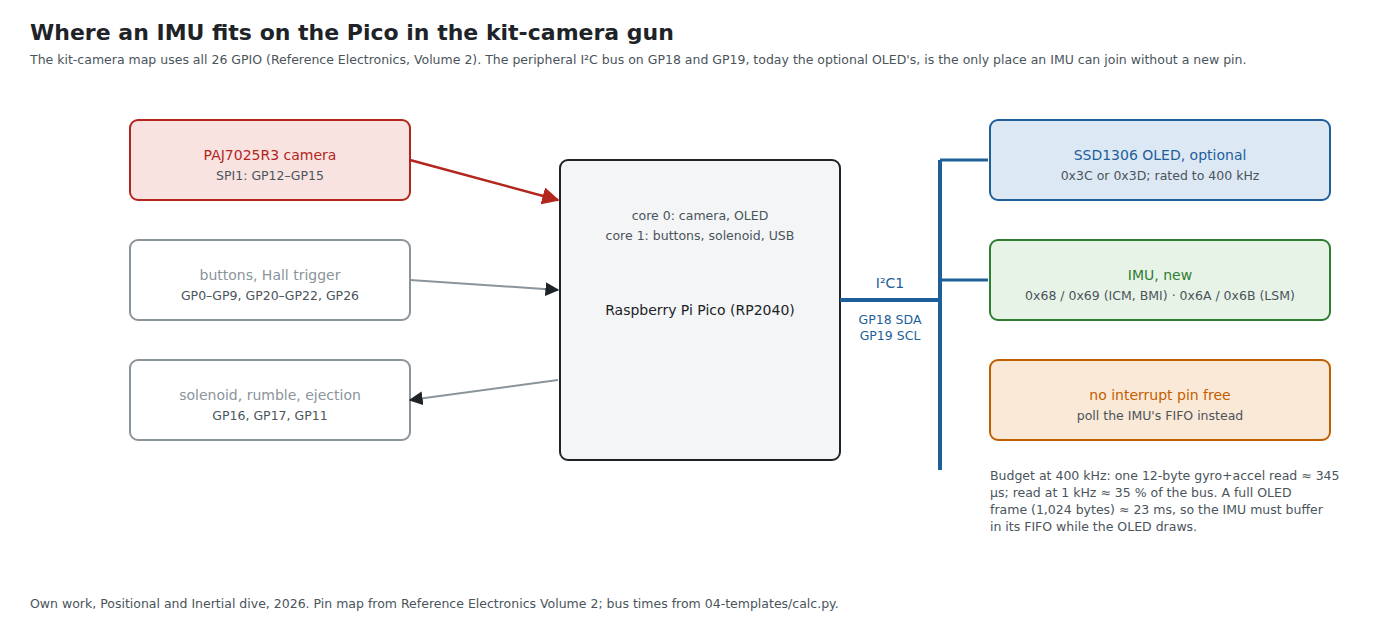
    6. Vol 6 An IMU for This Gun — What It Adds, Which Part, and What It Costs on the Pico Nobody has shipped a light gun with a gyroscope in it. What one could add to the OpenFIRE gun with the PAJ7025R3 camera — bridging lost markers, telling off-screen from lost, gesture reloads, seeing the recoil kick — ranked by value; four candidate parts compared, with why and why not; where it fits on a Pico with no free pins; a firmware sketch; and the bench tests that decide it