Experimental Sensing

Event cameras, ToF, UWB, screen-embedded patterns and other aiming ideas not yet built or not yet common, each rated and bench-tested.

Firearms

Experimental Sensing · Deep Dive

Experimental Sensing

Ideas nobody has put in a light gun yet.

Event cameras, ToF, UWB, screen-embedded patterns and other aiming ideas not yet built or not yet common, each rated and bench-tested.

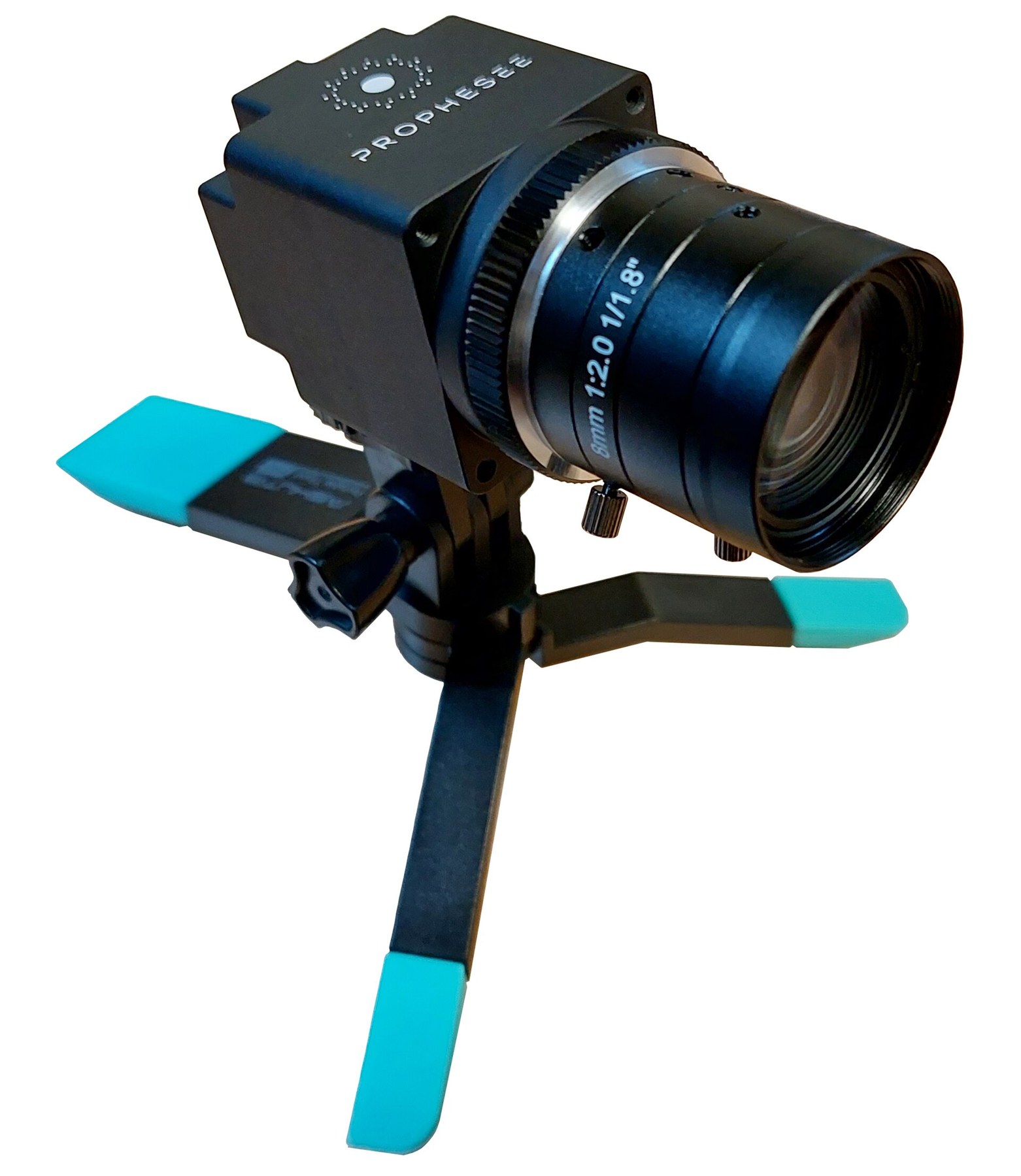
Photo: An OptiTrack motion-capture camera with its ring of infrared LEDs lit round the lens — the light-at-the-camera, passive-target arrangement this dive considers by yoggy0 (Yokohama, Japan) · CC BY 2.0

Search every volume:

?

How to search

sten gun
pages with both words
"sten gun"
the words together, as a phrase
sten OR sterling
either one (| works too)
sten -replica
leave out pages that mention “replica”

Without quotes, the last word also matches longer words that start with it (sten finds Stenophylla), and close word forms count (rifle finds rifles). Tick Exact words to match whole words only.

Whole deep dives are listed first, then the pages inside them.

    Volumes
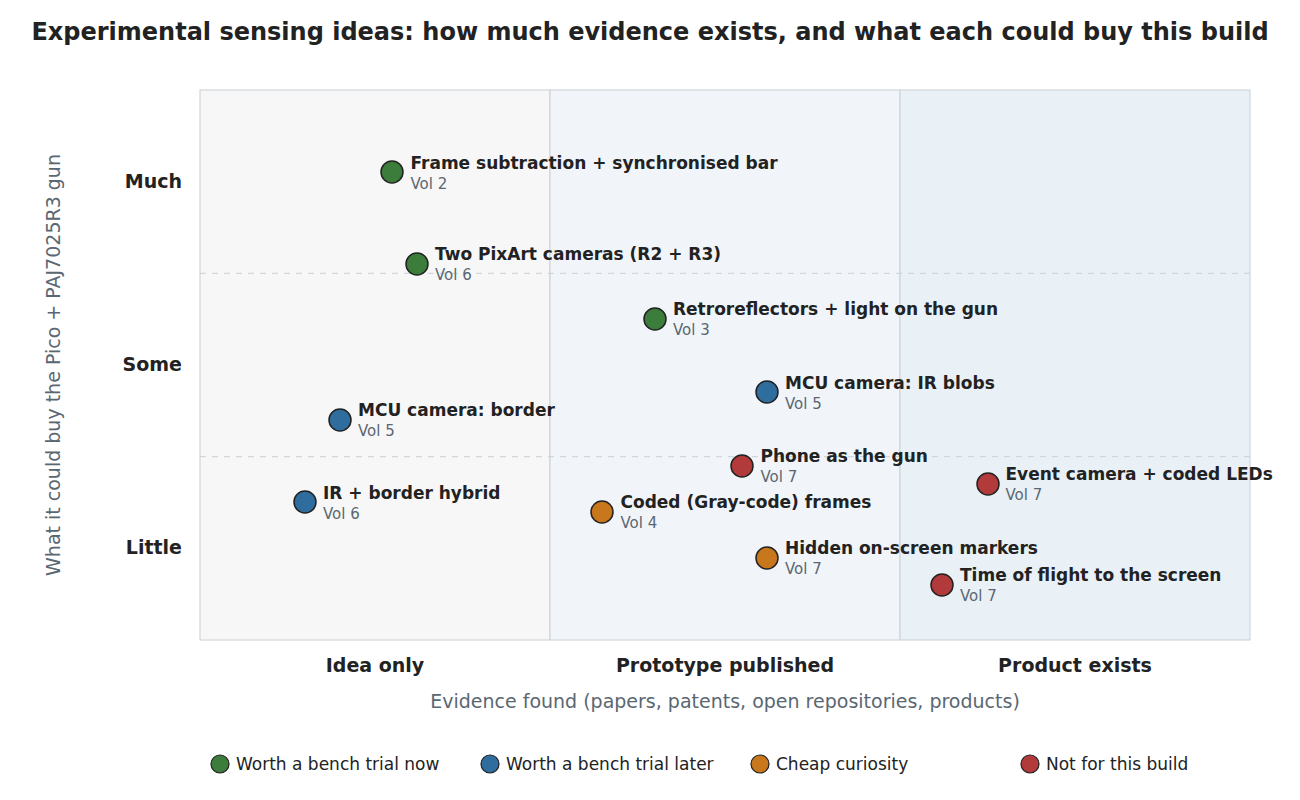
    1. Vol 1 Ideas at the Edge — What Counts as Evidence, and How Each Idea Is Judged The sensing ideas the other Sensing and Aiming dives handed on, plus the ones research turned up: what each could buy a Pico gun with a PixArt PAJ7025R3 camera, what has actually been published or sold, and the yardstick every later volume uses
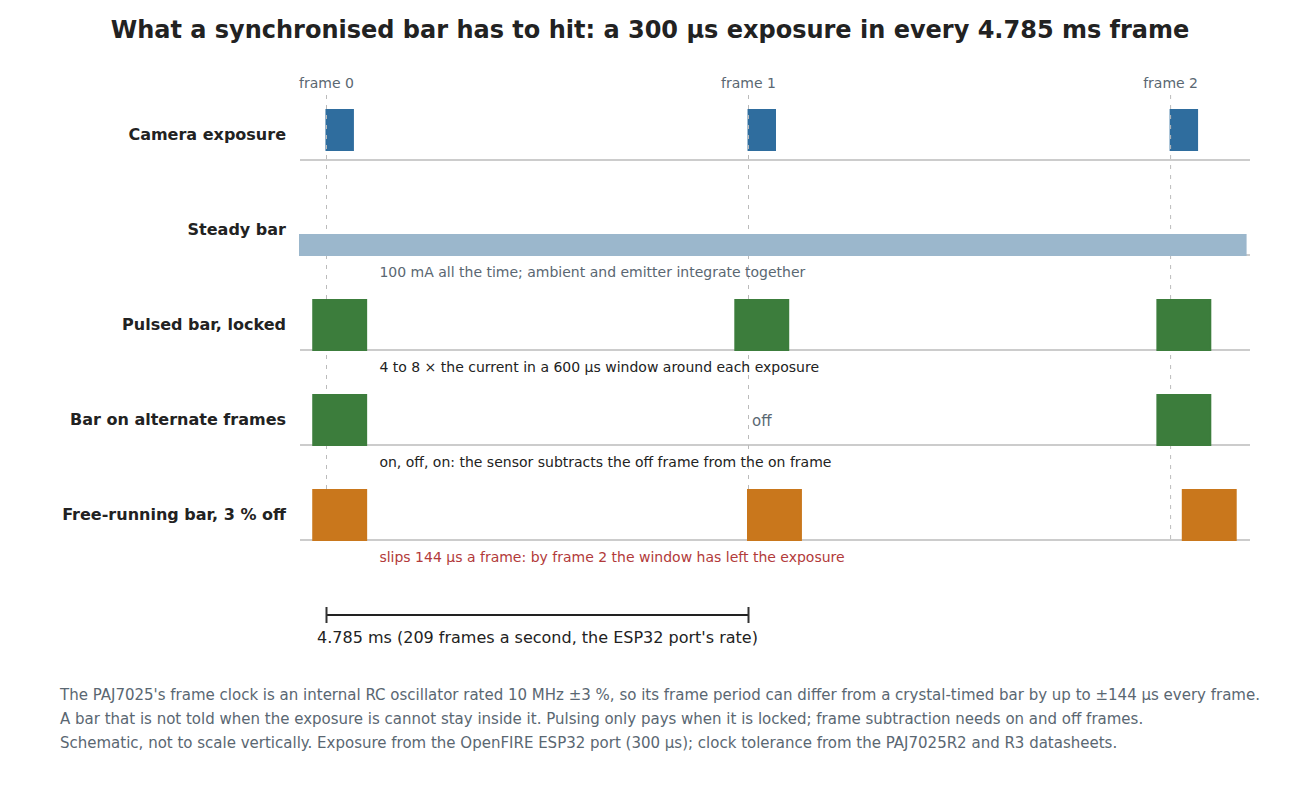
    2. Vol 2 Frame Subtraction and the Synchronised Bar — Using the Features PixArt Built In The PAJ7025 has a frame-subtraction register and LED pins rated for 130 to 170 mA that no light-gun firmware touches. What the datasheets actually say, what pulsing and subtraction could buy an R3 gun, three ways to tell a bar when the camera is looking, and the bench tests that settle it
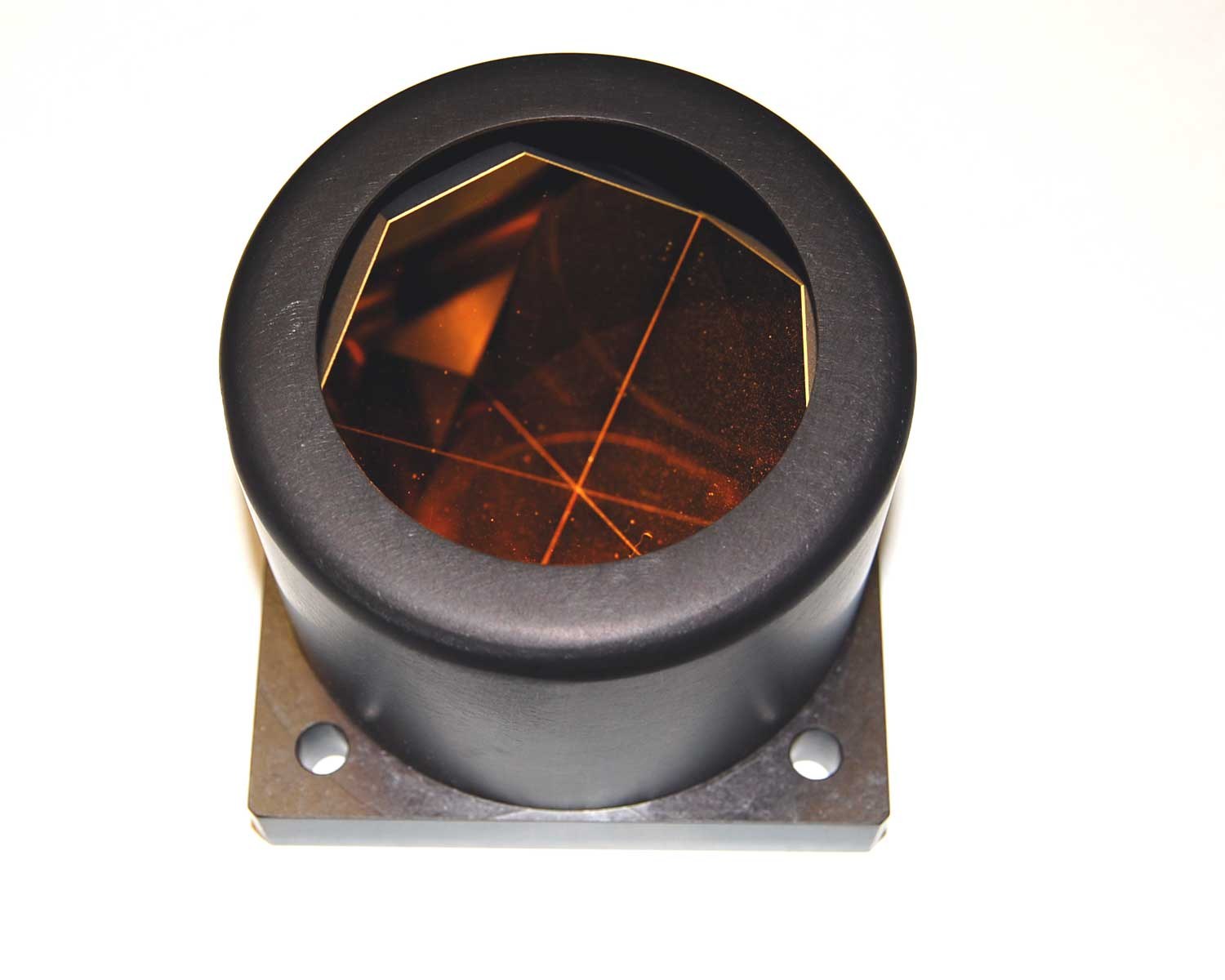
    3. Vol 3 Retroreflectors and a Light on the Gun — Passive Targets at the Screen Turn the bar round: put the infrared source beside the camera and four corner-cube reflectors on the bezel. Who has done it, how much light comes back, why the LEDs must sit within a few millimetres of the lens, the glint a glossy screen returns, and the industrial trick that removes it
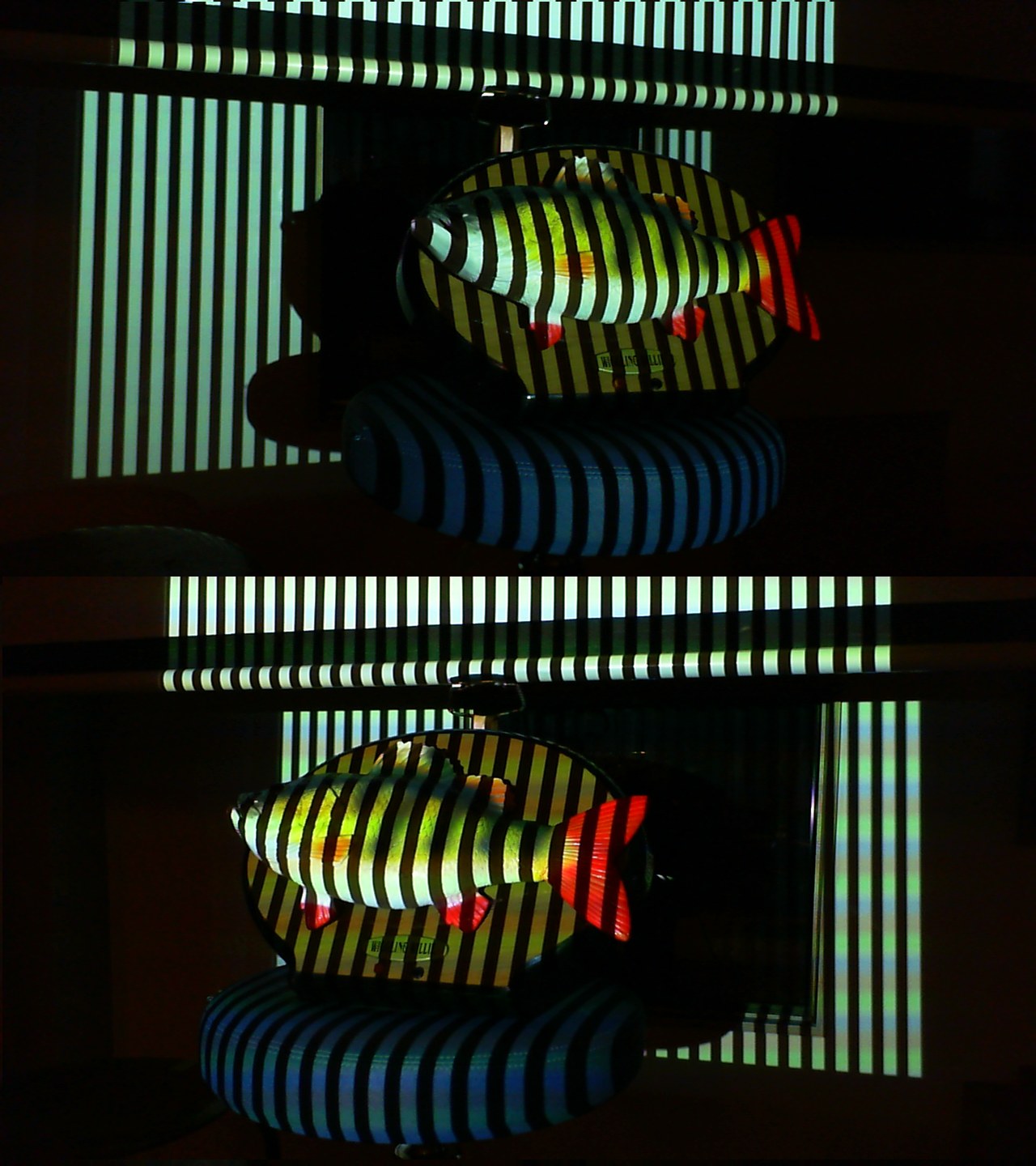
    4. Vol 4 Coded Frames on a Modern Display — The Zapper Generalised, and Its Ceiling Flash a short sequence of Gray-code patterns and a photodiode can tell where on any screen it is pointing. The projector researchers who did it in 2004, why a gun at two metres is a harder problem than a sensor on the screen, how phase-shifted patterns get past the optics, and what each shot would cost in frames and flicker
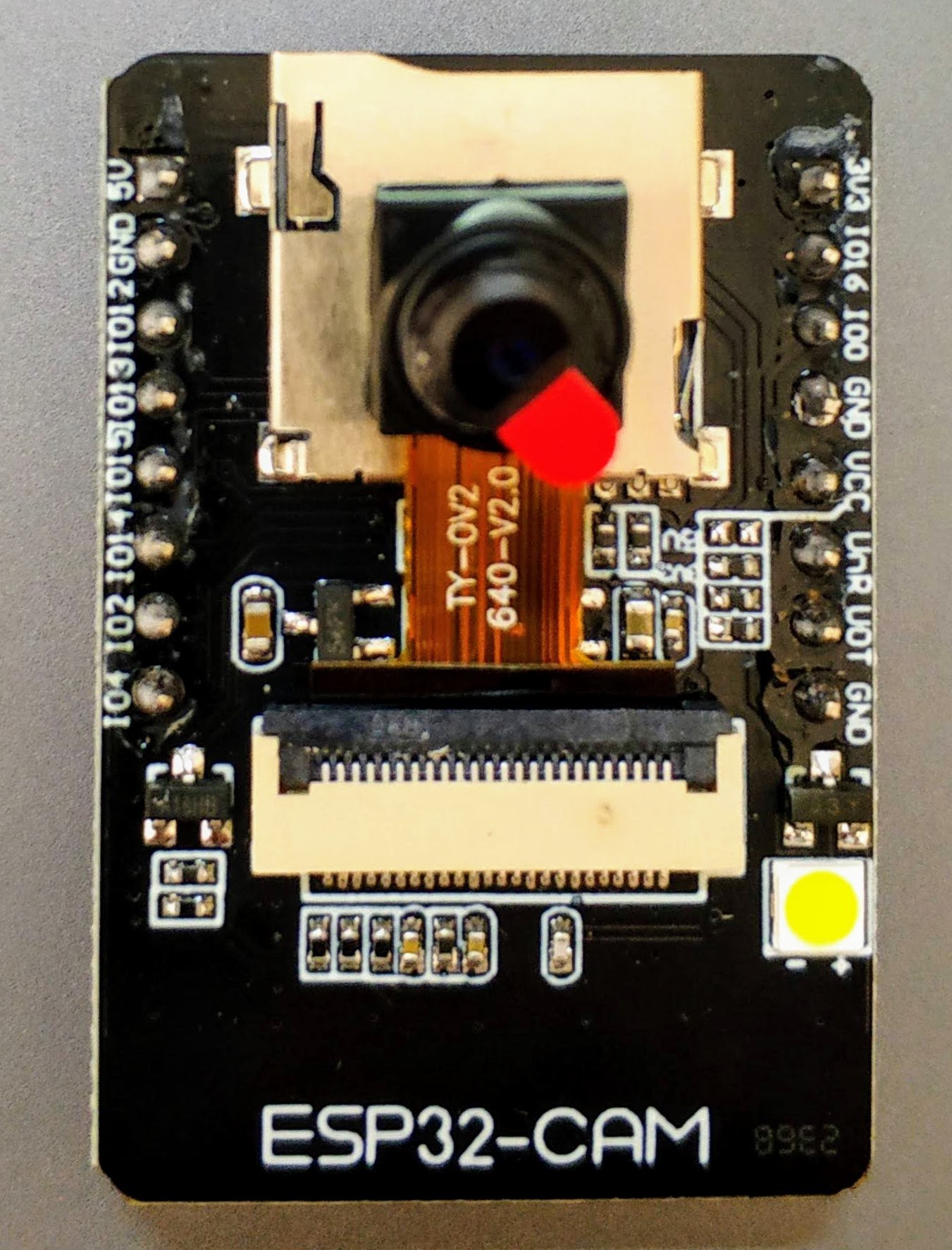
    5. Vol 5 A General Camera in the Gun — Infrared Blobs and a Border on a Microcontroller An OV2640 on an ESP32-S3 has already been made to find infrared points at 136 frames a second. What that would mean as a second source of camera, what a rolling shutter costs a moving gun, the Himax sensors made for the Pico, and whether the same hardware could track a Sinden-style border inside the gun
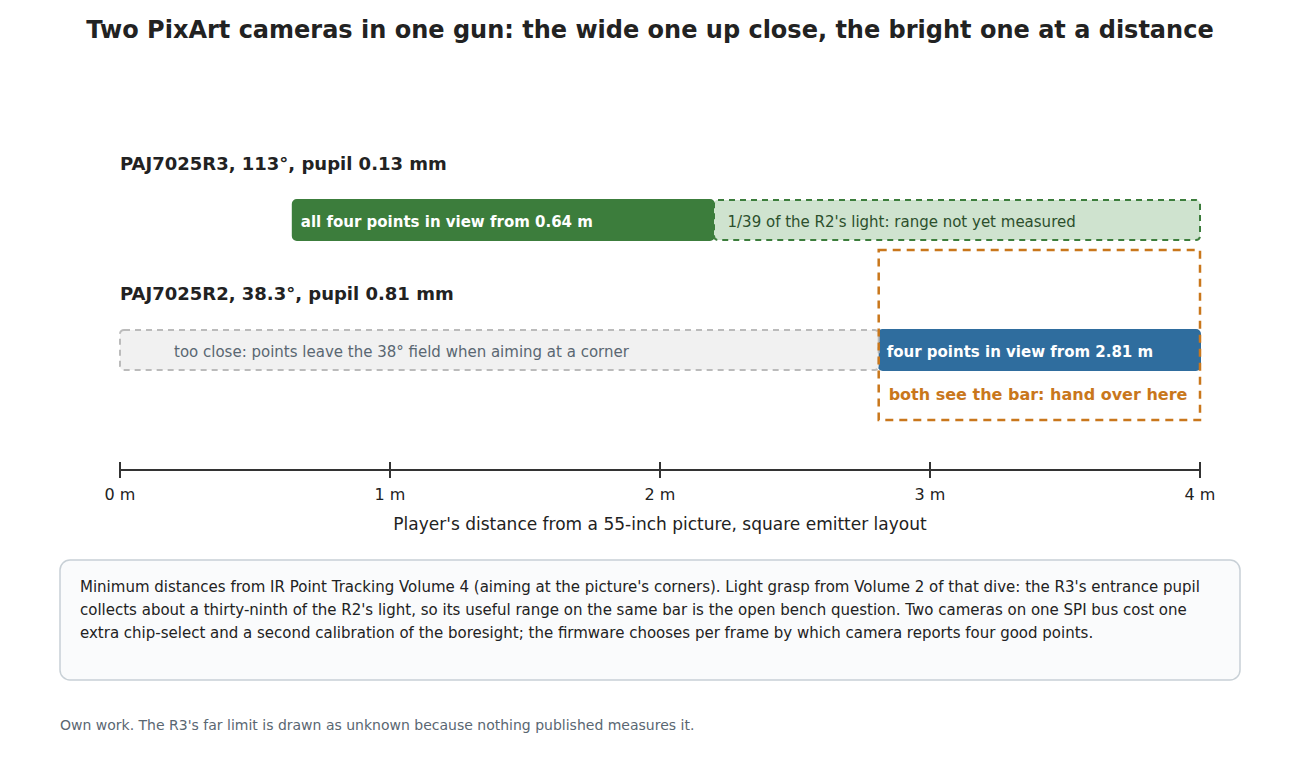
    6. Vol 6 Hybrids and Two Cameras — The Wide Lens and the Bright One, Infrared and Border The PAJ7025R3 sees the whole bar from 0.64 m but collects a thirty-ninth of the R2's light; the R2 needs 2.81 m. A gun with both, what the handover costs, and the harder case of a gun that tracks infrared points and a drawn border
    7. Vol 7 Further Out — Event Cameras, Time of Flight, Hidden Markers and the Phone The ideas research turned up beyond the siblings' hand-offs: what each is, what has been published or sold, what it could and could not do for a Pico gun with a PixArt camera, and why none of them is the next experiment
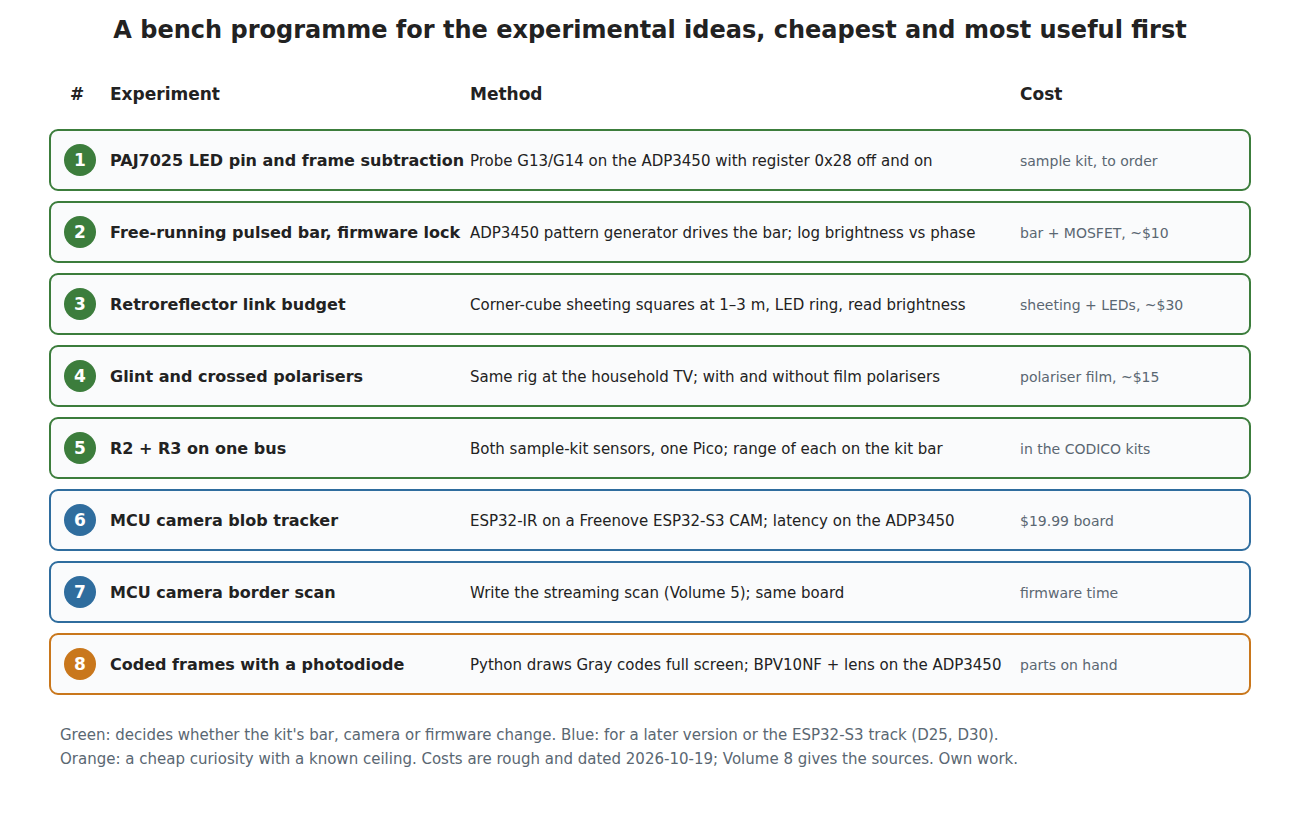
    8. Vol 8 Verdicts and a Bench Programme — What to Try, in What Order, and Why Every experimental idea ranked against the gun being built, with its cost, its risk and the bench test that settles it; eight experiments in order on the ADP3450; and the decision rows proposed for the category's log