Motors and Rumble

ERM, LRA, voice-coil and motor-driven bolt mechanisms for light-gun feedback.

Firearms

Motors and Rumble · Deep Dive

Motors and Rumble

The buzz, the thump and the moving bolt.

ERM, LRA, voice-coil and motor-driven bolt mechanisms for light-gun feedback.

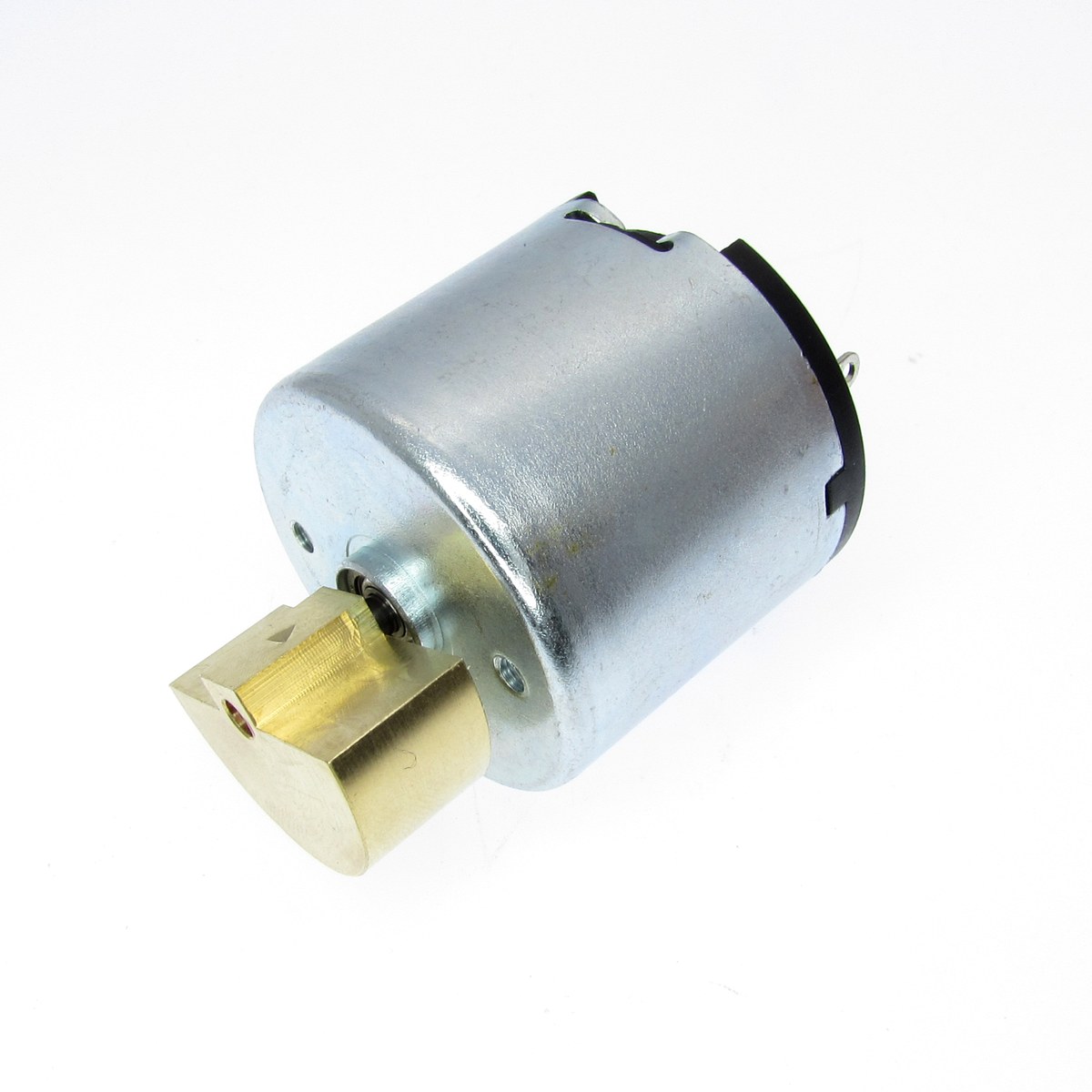
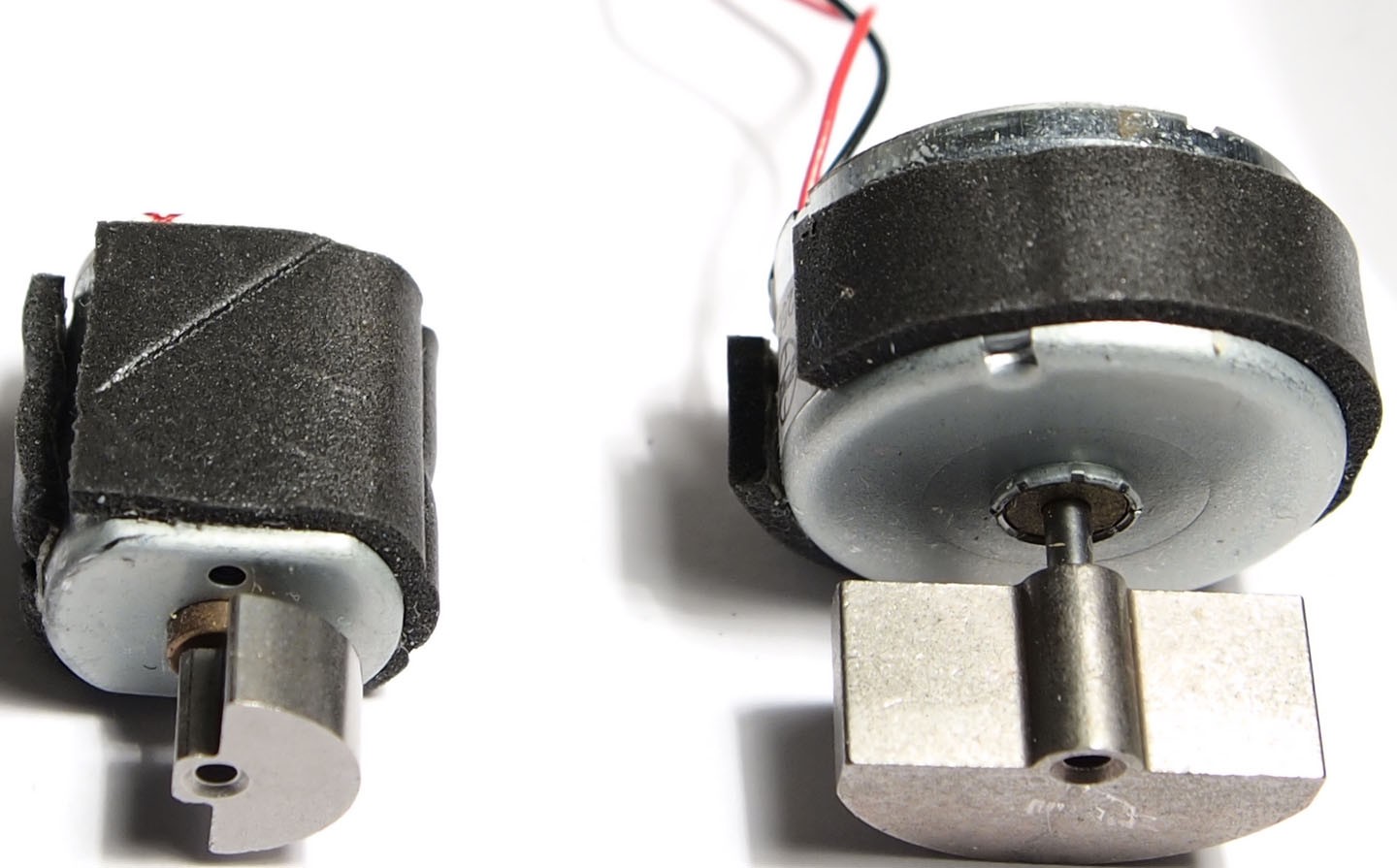
Photo: Vibration motors separated from a PlayStation controller by Tiia Monto (User:Kulmalukko) · CC BY-SA 3.0

Search every volume:

?

How to search

sten gun
pages with both words
"sten gun"
the words together, as a phrase
sten OR sterling
either one (| works too)
sten -replica
leave out pages that mention “replica”

Without quotes, the last word also matches longer words that start with it (sten finds Stenophylla), and close word forms count (rifle finds rifles). Tick Exact words to match whole words only.

Whole deep dives are listed first, then the pages inside them.

    Volumes
    1. Vol 1 What a Motor Adds — Rumble, Its Jobs in a Light Gun, the Four Actuator Families and the Hand That Feels Them Why a gun that already kicks still wants a motor, what eccentric masses, resonant actuators, voice coils and cranks each do, and the two facts about the gripping hand that decide which of them is worth fitting
    2. Vol 2 Eccentric Rotating Mass Motors — Force, Frequency, Start-Up and the Parts on Sale How an off-centre weight on a brushed motor shakes a gun, why its strength and frequency move together, what the makers' sled figures mean for a 1.3 kg shell, how long it takes to start and stop, how long the brushes last, and which motors are worth putting on the bench
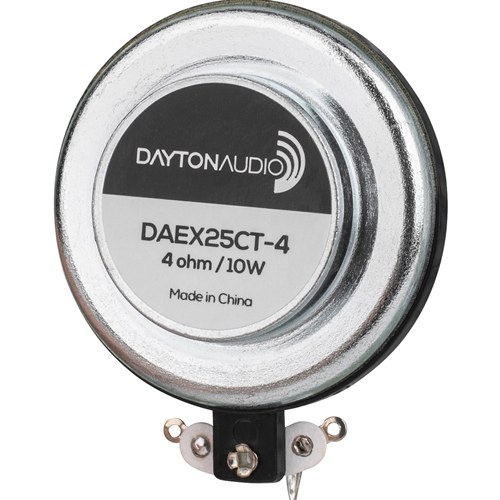
    3. Vol 3 Linear Resonant Actuators and Voice-Coil Exciters — Crisp, Quiet, and Sized for Something Smaller Than a Gun How a spring-mounted magnet makes vibration, why a resonant actuator is strong only at one frequency and an exciter only above one, what the published parts deliver on a 1.3 kg shell, and the case for using one on a floating grip panel rather than on the whole gun
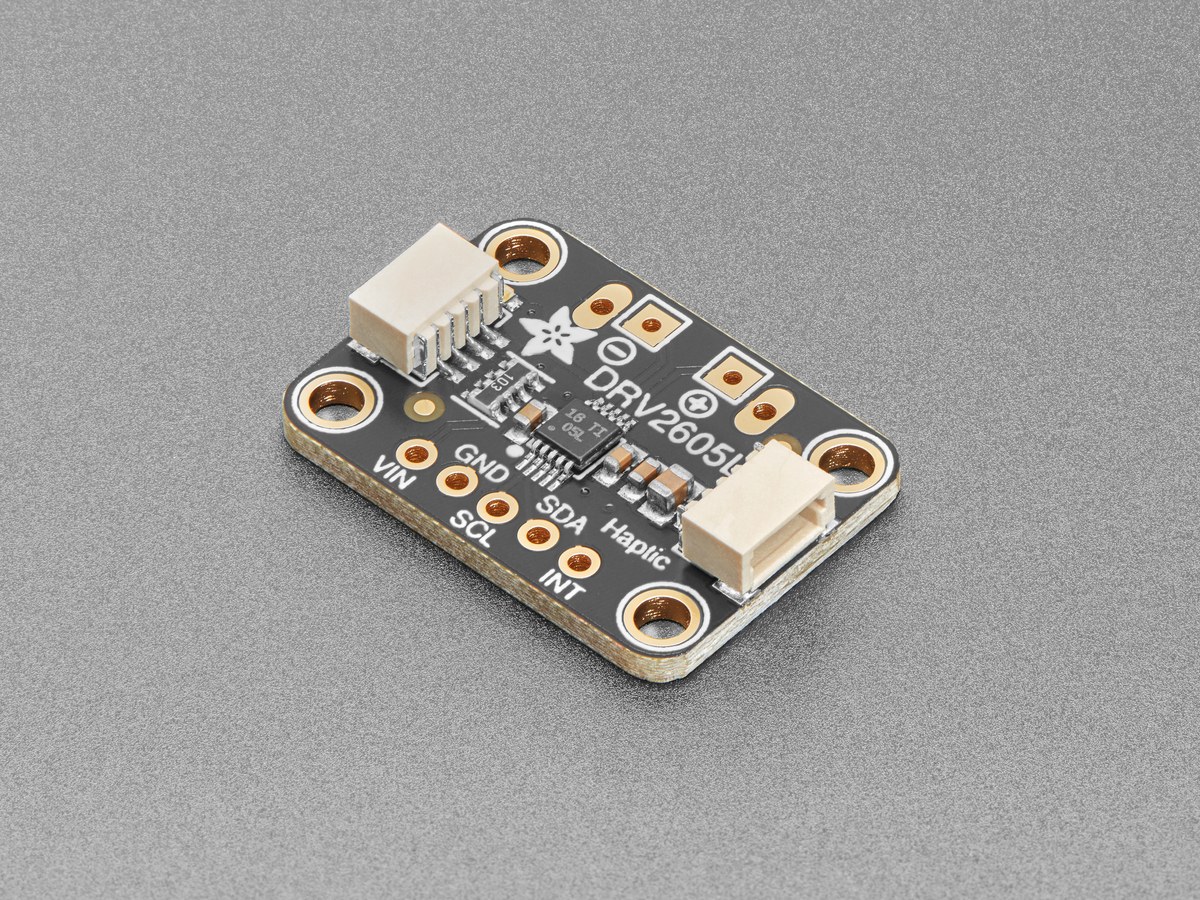
    4. Vol 4 Driving a Haptic Motor — the MOSFET Stage, the PWM Frequency, Haptic Driver ICs and an H-Bridge on the 24 V Rail What the reference board's one-transistor stage does and does not do, why OpenFIRE's 1 kHz PWM whines, how overdrive and active braking fix an ERM's slow start and stop, what TI's and Renesas' haptic drivers offer and where their limits fall, and a third DRV8251A that runs a 12 V motor from the recoil rail with braking and a current cap
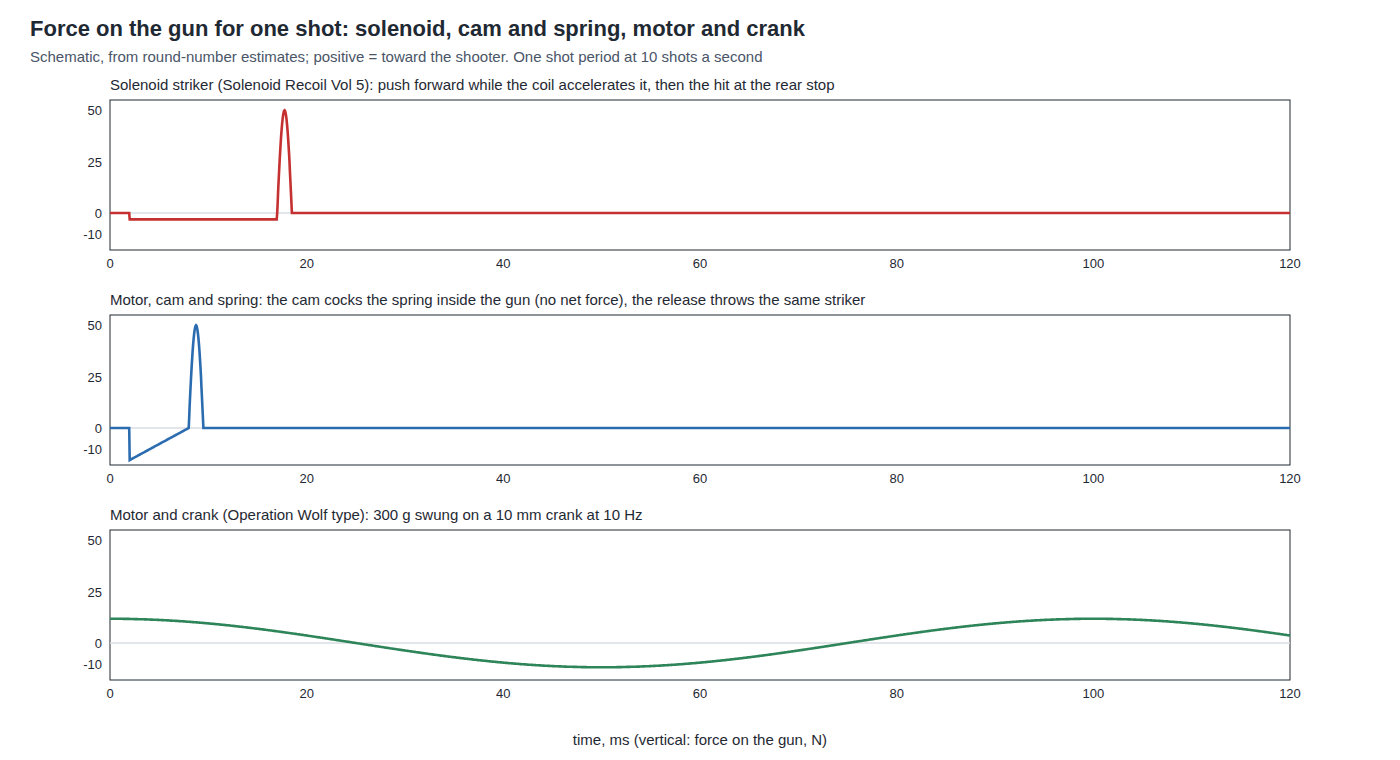
    5. Vol 5 Motor-Driven Recoil — Crank and Weight, Cam and Spring, and the Airsoft Recoil Engine What a motor can do that a vibration cannot: a one-way hit. Why a crank gives a rhythmic shove rather than a kick, why a cam and spring gives the same hit as a solenoid for a twentieth of the electrical energy, what that costs in latency, noise and parts, and why it is not the first build's mechanism
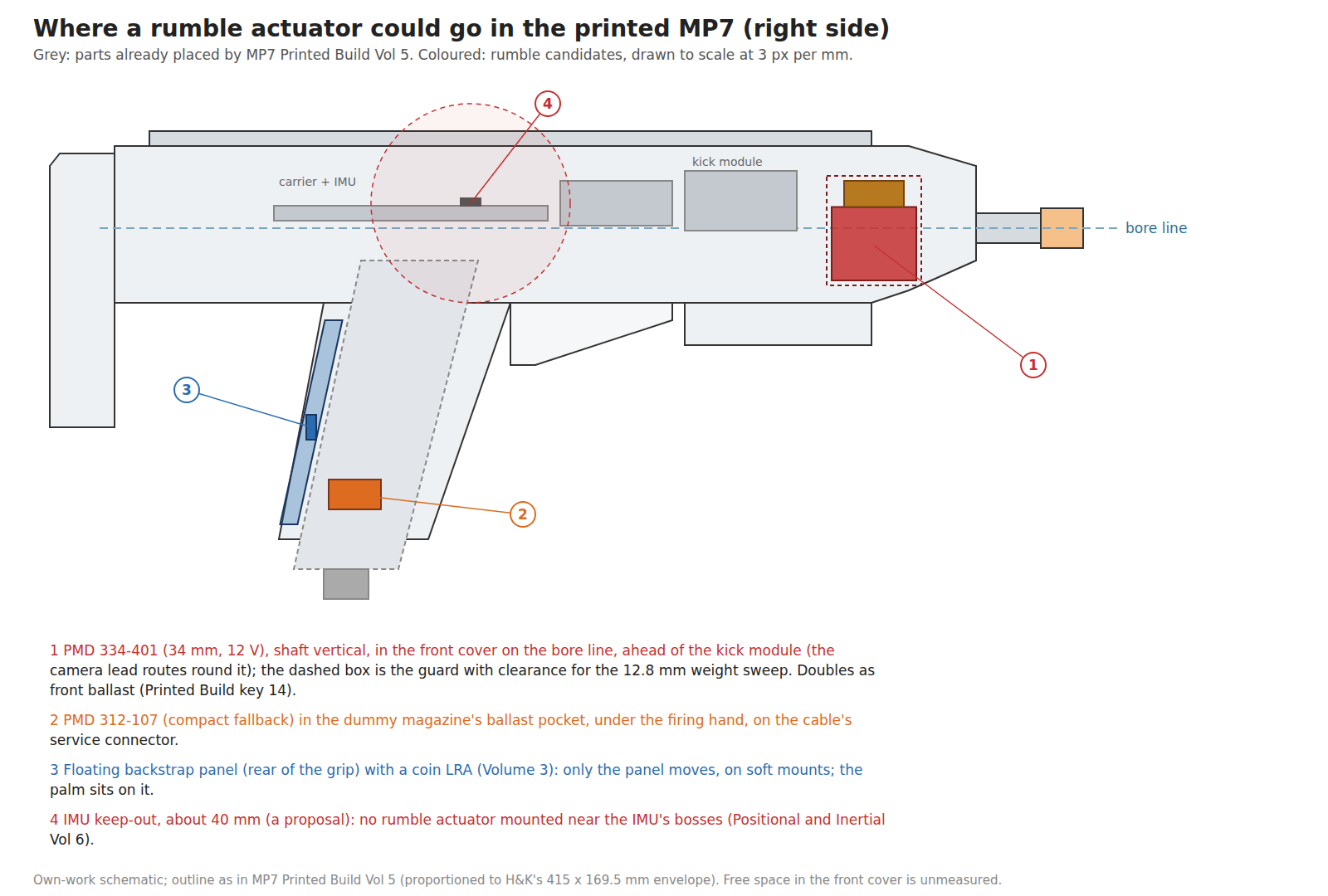
    6. Vol 6 Rumble in the Printed MP7 — Where It Goes, How It Is Held, What It Draws, and Living Beside the Kick Three places a rumble actuator fits in the first build's shell, the guard and the mount, the IMU and the camera as victims of the shaking, noise, the USB and 24 V budgets checked against the brick's trip band and the one-stage rule, the firmware changes, and what rumble adds alongside a solenoid kick
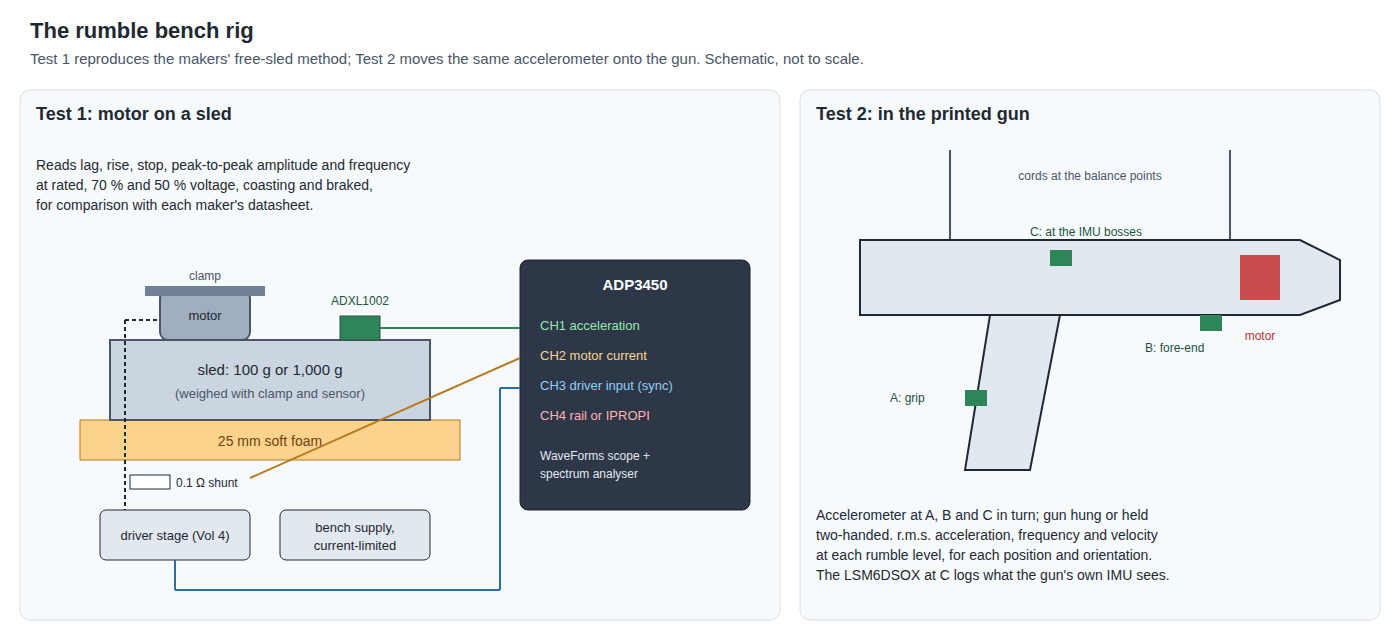
    7. Vol 7 Measuring It and Keeping It Working — an Accelerometer on the Shell, a Sled Test, and the Wear and Failure of Vibration Motors The bench procedure with the Analog Discovery Pro ADP3450 that turns Volumes 2 to 6's estimates into measurements: acceleration and frequency at the grip, lag, rise and stop, start and running current, the rail during a kick, the IMU and the aim during rumble, and a blind ranking by hand; then how a motor wears, how it fails, how to diagnose it and how to replace it