CRT Timing

How flash-frame and beam-timing guns read a CRT raster, the photodiode circuits redrawn, and why flat panels killed them.

Firearms

CRT Timing · Deep Dive

CRT Timing

The gun never sees the target; it sees the clock.

How flash-frame and beam-timing guns read a CRT raster, the photodiode circuits redrawn, and why flat panels killed them.

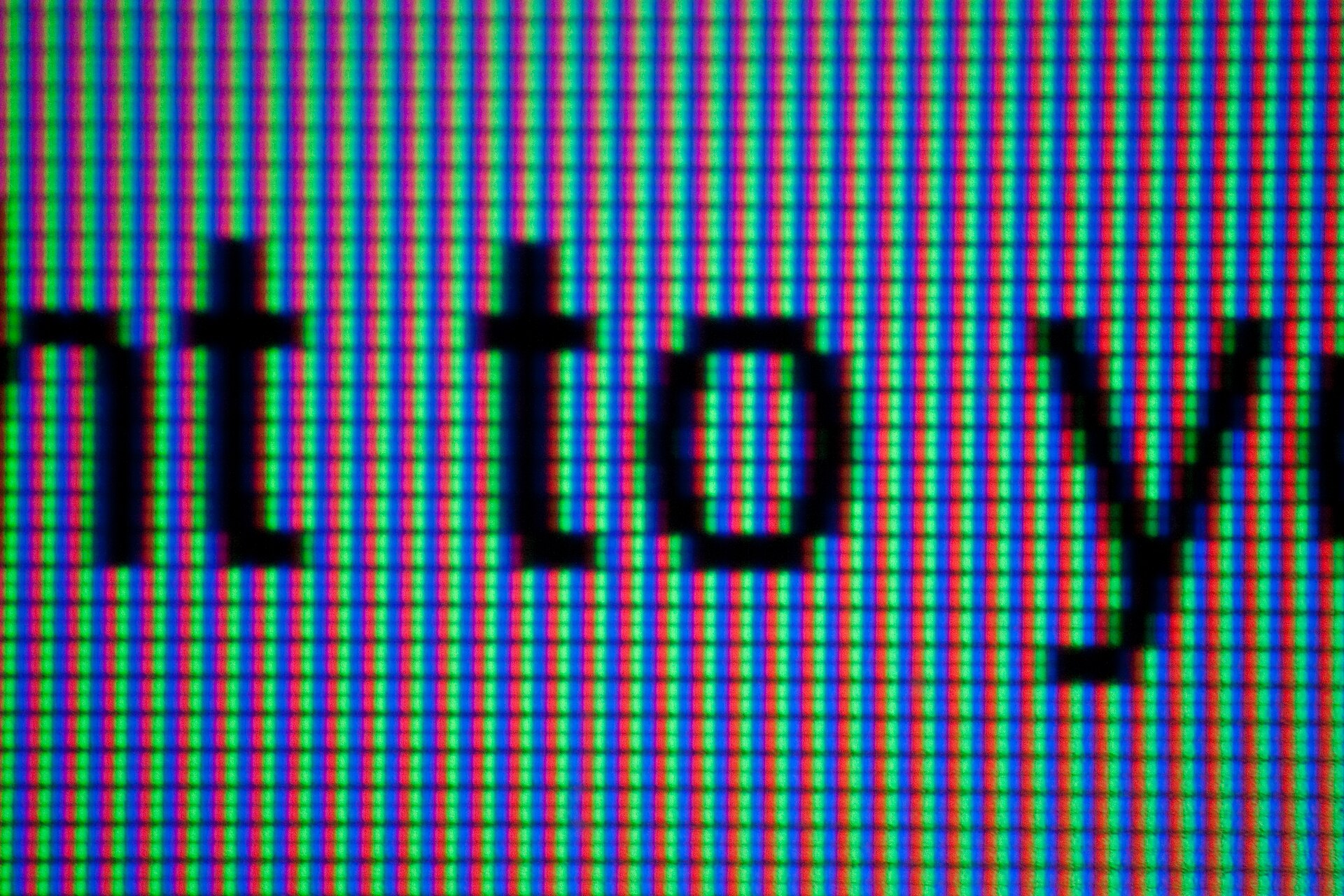
Photo: Macro of a CRT screen's red, green and blue phosphor stripes by Greg Hume · CC BY-SA 3.0

Search every volume:

?

How to search

sten gun
pages with both words
"sten gun"
the words together, as a phrase
sten OR sterling
either one (| works too)
sten -replica
leave out pages that mention “replica”

Without quotes, the last word also matches longer words that start with it (sten finds Stenophylla), and close word forms count (rifle finds rifles). Tick Exact words to match whole words only.

Whole deep dives are listed first, then the pages inside them.

    Volumes
    1. Vol 1 The Raster as a Clock — What a CRT Light Gun Measures, With the Numbers Line and frame timing for broadcast NTSC and PAL and for the consoles' 240p, the pixel clocks, how fast the spot moves across a real tube, and what the patch of screen a gun looks at turns into in time
    2. Vol 2 The Phosphor — What the Gun Is Actually Looking At The P-designation system, P22's three materials, their spectra, how fast they light and how slowly they fade, what a silicon photodiode makes of each, and why a light gun is nearly blind to red
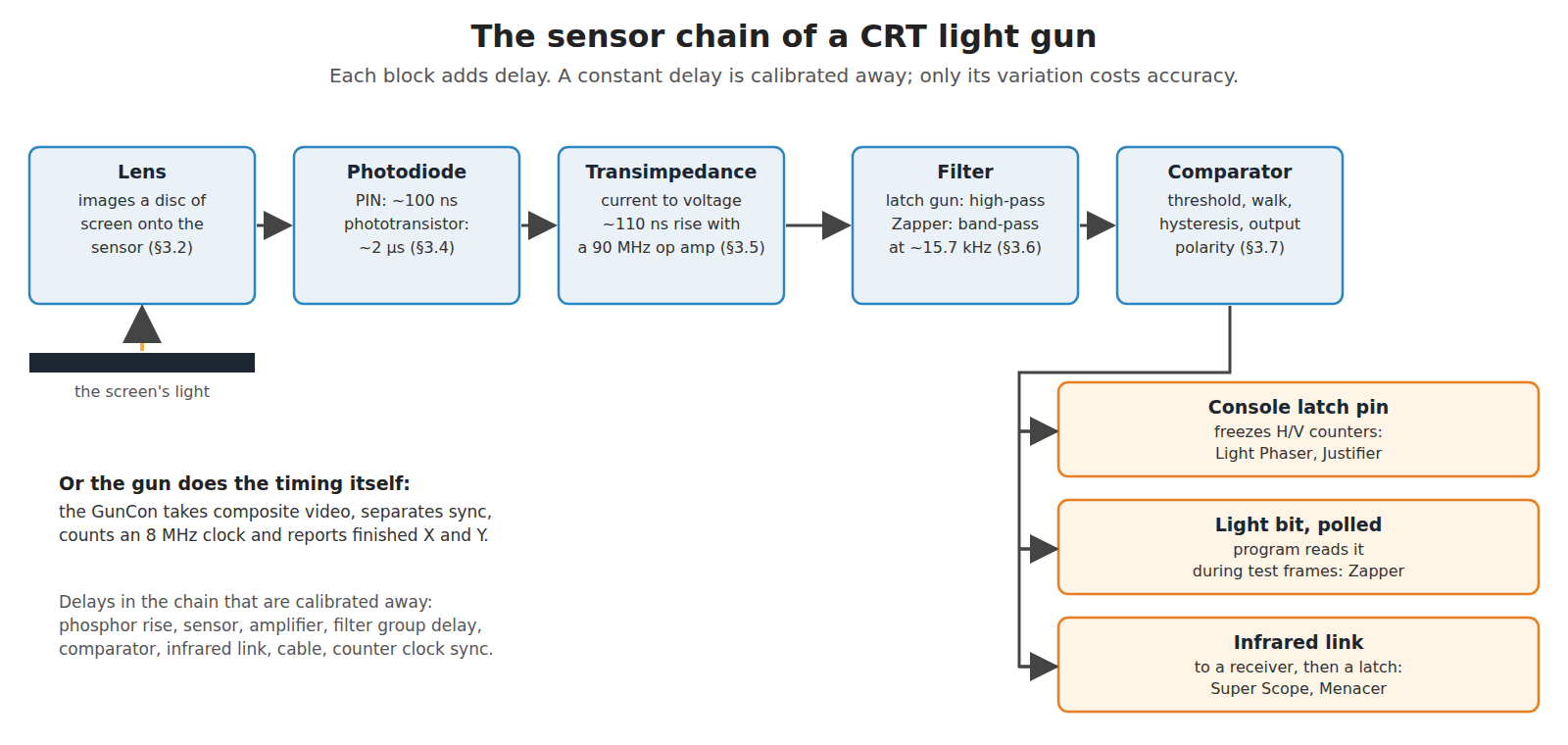
    3. Vol 3 The Front End — Lens, Photodiode, Amplifier, Filter and Threshold How big a patch the lens sees and how much light it gets, photodiode against phototransistor, transimpedance bandwidth, the line-rate filter, threshold walk, and the classic guns' sensor chains redrawn
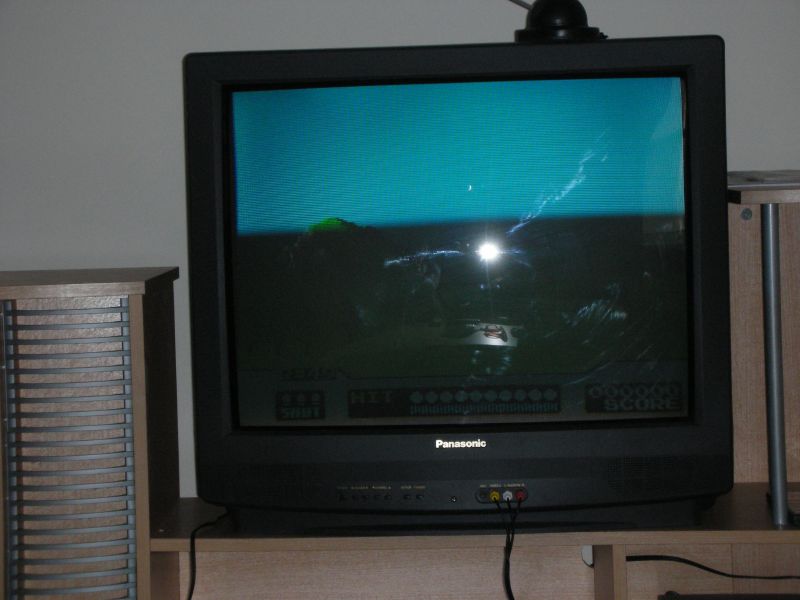
    4. Vol 4 Flash-Frame Detection — The Zapper Method in Timing Detail What a test frame actually asks, the frame budget per target, why the light must drain out during vertical blanking, the hit zone a box and a patch make together, the scan-line hybrid that recovers Y, and the property that lets this method survive a lagging display
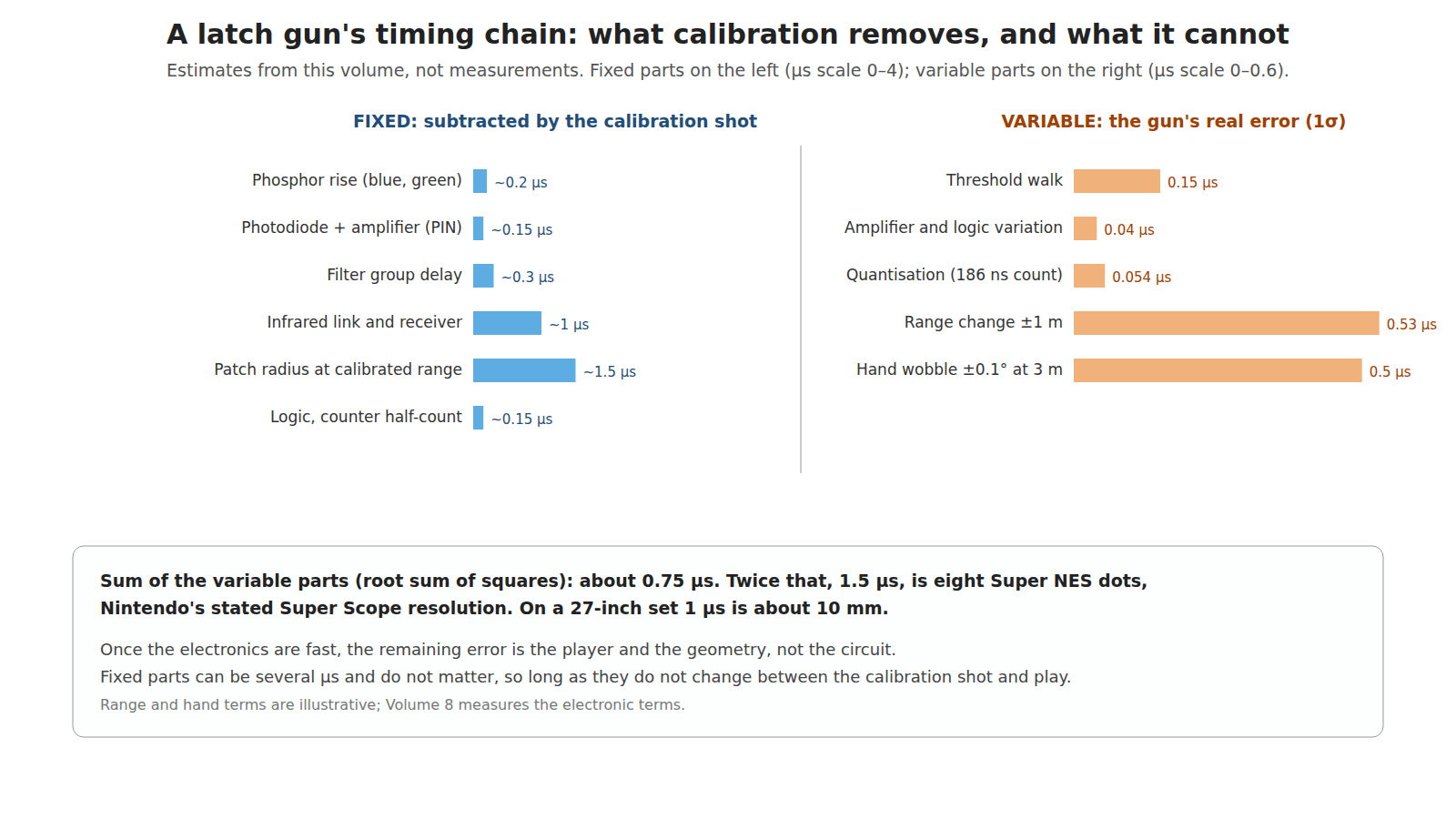
    5. Vol 5 Raster Latching — Counters, Latches and the Jitter Budget What each console freezes and in what units, quantisation, every delay between phosphor and counter sorted into fixed and variable, the left-edge bias and the Menacer's eighth-line trick, the PlayStation's software latch, and a budget that reproduces Nintendo's eight-dot figure
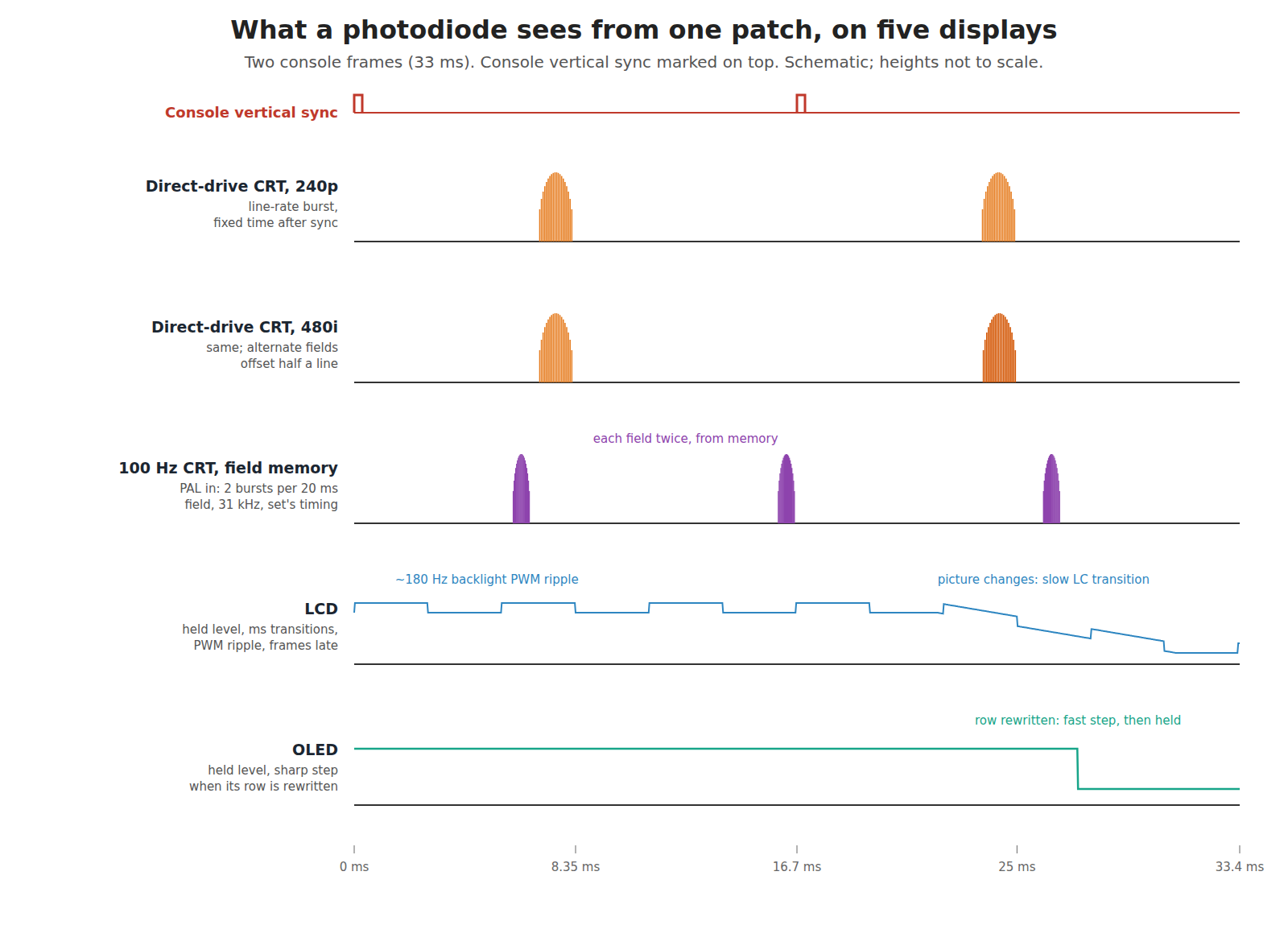
    6. Vol 6 What Breaks It — Interlace, 100 Hz Sets, Line Doublers, LCD and OLED The four things a CRT gun needs from a display, and which of them each later display takes away: 480i's half-line offset, field memories and doubled line rates, sample-and-hold panels, scaler lag, and why no calibration can bridge the gap
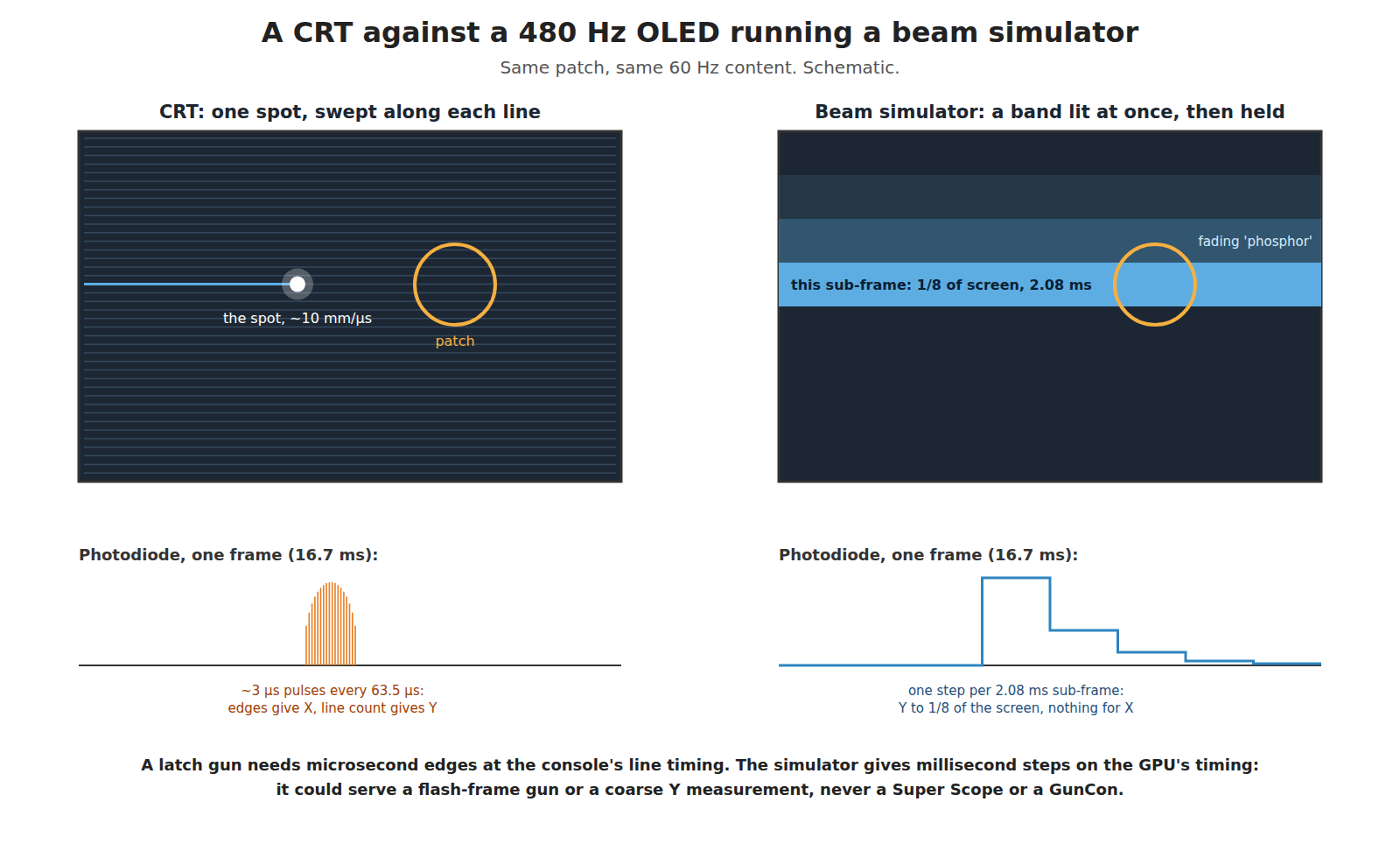
    7. Vol 7 What Does and Does Not Work — Rescuing CRT Guns on Modern Displays Keeping a tube, flash-frame play on a lagging LCD and what it costs, why a beam-racing CRT simulator on a 480 Hz OLED cannot bring back a latch gun, what a display would need to, and the coded-frame idea that generalises the Zapper
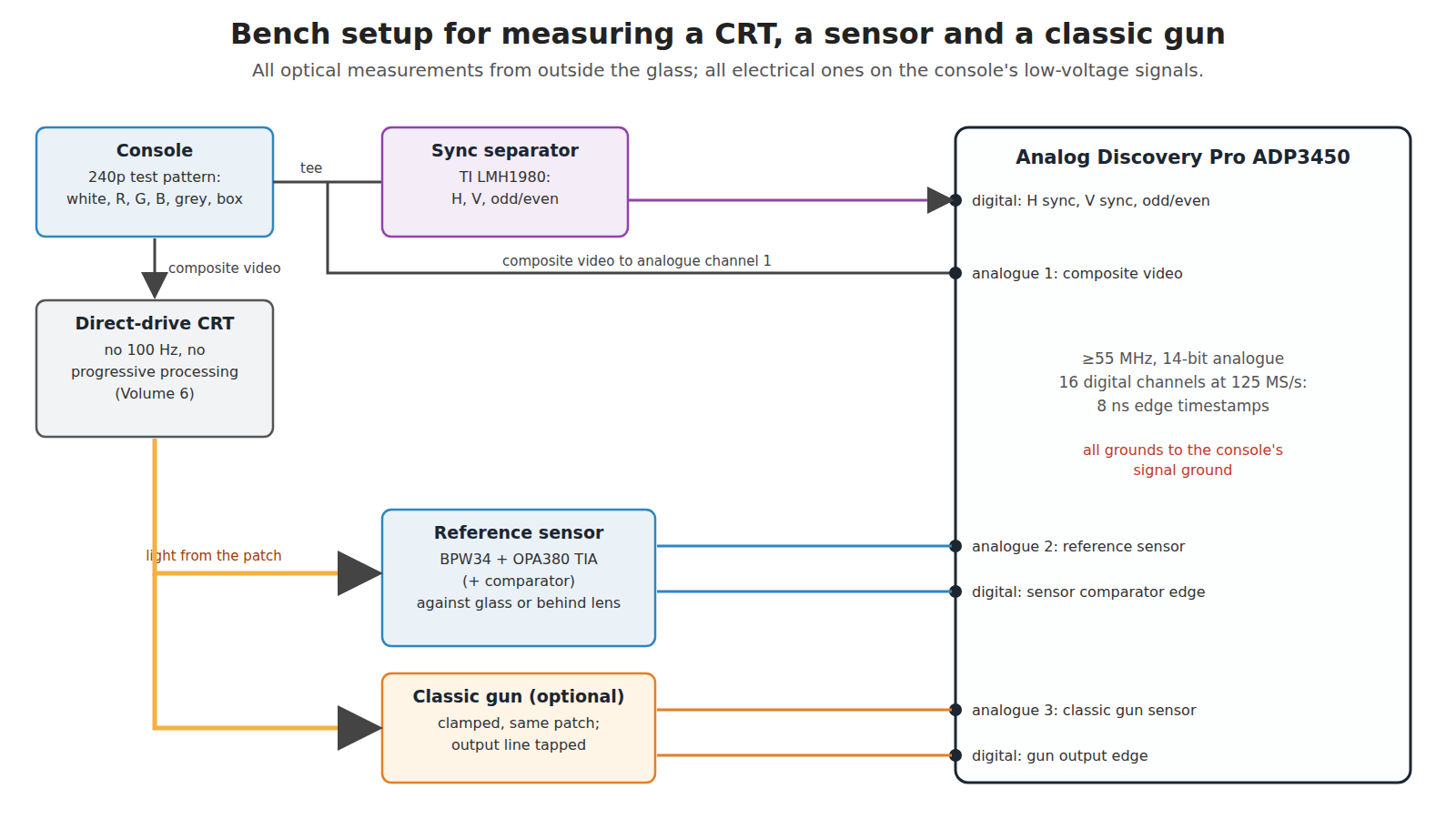
    8. Vol 8 The Bench — Measuring a CRT, a Sensor and a Classic Gun Procedures for the Analog Discovery Pro ADP3450 that replace this dive's estimates with measurements: phosphor pulses by colour, the patch burst and photocurrent at range, sync-to-edge delay and jitter histograms, the Zapper's envelope, and the same sensor on a flat panel; plus a fault-finding order for a classic gun