The History of Light Guns · Volume 8
The Do-It-Yourself Revival — AimTrak, Sinden, GUN4IR, SAMCO, OpenFIRE, RetroShooter and Blamcon
After the console makers walked away, small makers and hobbyists rebuilt the light gun for flat panels: a camera in a GunCon shell, a white border round the picture, an open firmware on a Raspberry Pi Pico, and the recoil the home guns never had
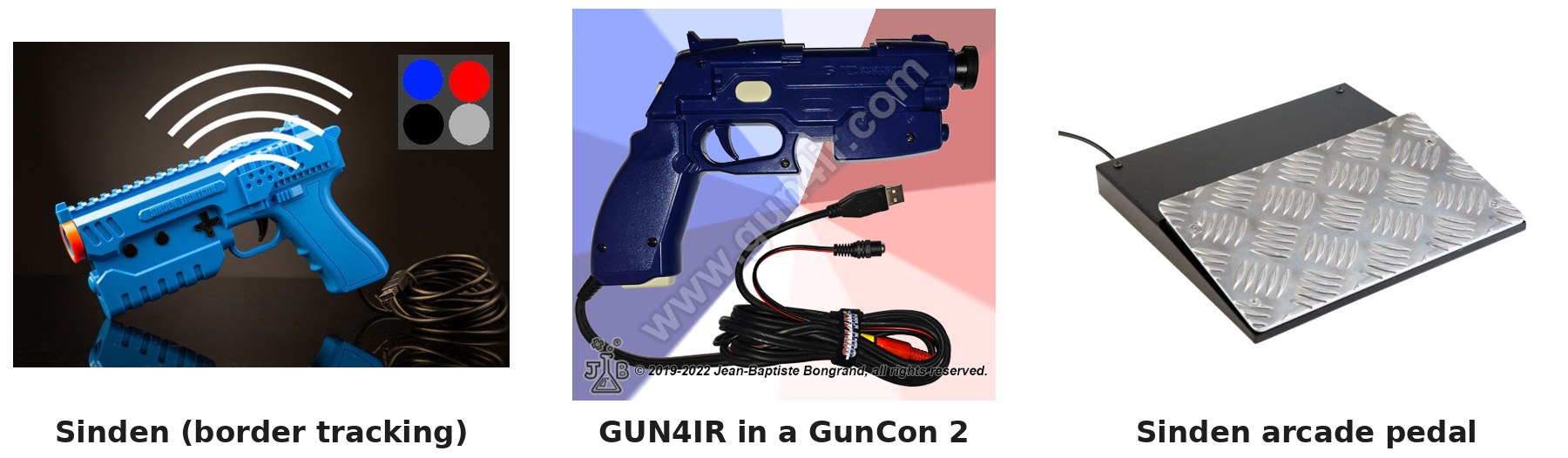
8.1 The gap
By the early 2010s the light gun had no console maker behind it. The CRT guns of Volumes 3 to 5 were dead on flat panels (Volume 6); the motion-control generation’s guns were plastic shells round controllers whose games stopped being made (Volume 7). What remained was a large library of light-gun games — arcade boards running under emulation on PCs, and the home versions on consoles that still worked if a CRT could be found — and players who wanted to play them on the screens they now owned.
The revival that followed came from small companies and from hobbyists, and it used both of the flat-panel methods that the 2000s had established: infrared markers with a camera in the gun, and a newer one, a camera that finds the screen itself. Almost every product of the revival talks to the computer the same way — as a USB mouse, keyboard or gamepad, with a serial channel that lets emulators fire its recoil — and that shared language is described in Open-Source Firmware, Volume 6. This volume is the history; the products’ licences, prices and internals are already set out in Open-Source Firmware, Volume 1 and Solenoid Recoil, Volume 1, and are linked rather than repeated.
8.2 AimTrak: one bar above the screen
Ultimarc, a British maker of arcade-cabinet controls, sells the AimTrak, an infrared gun built for the home-arcade market: a USB gun that “emulates a USB mouse and game controller” and needs a single infrared LED bar placed “within 1-2 inches (10cm) from the top of screen”, which also means it “will not work if the bar is located on the top of a cabinet which has a marquee”.1 It is the Wii’s arrangement (Volume 7) packaged for MAME cabinets, with a recoil version whose solenoid needs its own 24 to 36 V supply. When the AimTrak first went on sale could not be established for this dive; it predates the open projects of §8.5 and was the default arcade-cabinet gun for years.
8.3 Sinden: the screen tells the gun again
The most original idea of the revival came from Andrew Sinden in Britain. His website, as first captured by the Internet Archive in November 2018, introduced it in one sentence: “The Sinden Lightgun is the world’s first true LCD Lightgun, providing all the functionality and game experience of the original CRT Lightguns without requiring additional hardware such as infra red sensor bars.”2 The game list on the same page — Duck Hunt, Time Crisis, Virtua Cop, The House of the Dead, Point Blank — is the CRT canon of Volumes 3 to 5.
The method: a camera in the gun, and software on the PC that draws a white border round the game picture. The camera finds the border and works out where in that rectangle the barrel points. Nothing is mounted at the screen, because the screen itself carries the reference, exactly as it did for a CRT gun — not in its timing, which a flat panel has lost, but in its geometry. Of all the post-CRT methods it is the one closest in spirit to the original light gun, and the hardest to build: it needs a real camera and real image processing, not a blob tracker that reports four points. Whether an open version is feasible on small hardware is the subject of Border Tracking.
The path to market was not smooth. A 2018 Kickstarter campaign “fell well short of its goal”, in Hackaday’s account, partly because of scepticism about the technology; a 2022 Guardian profile, titled with Sinden’s line “I just wanted to play Duck Hunt with my kids”, told the rest of the story, and by then the gun was on general sale.3 Its arcade pedal, in the plate above, is a direct descendant of Namco’s 1995 Action Pedal (Volume 5), and its optional recoil uses a capacitor bank behind a solenoid, a design taken apart in Power Supplies, Volume 4.
8.4 GUN4IR and the GunCon as donor
GUN4IR, by Jean-Baptiste Bongrand (JB Game Lab, in Tokyo), took the marker route and made the GunCon the gun of the revival. The maker sells replacement boards for the GunCon 1 and GunCon 2 shells, complete modification kits and pre-modified guns; the firmware is licensed for personal use only and is explicitly not open source.1 The pre-modified GunCon 2 in the plate is Namco’s raster-timing shell of Volume 5 with new insides, a USB plug and a separate power lead for its recoil.
There were good reasons the GunCon became the standard donor. Namco built the GunCons as arcade-quality pistols for the home: solid shells, good triggers, room inside for a camera behind the muzzle and a solenoid in the grip, and plenty of them on the second-hand market because the guns had become useless on flat panels. A board that replaced the electronics turned a dead CRT gun into a working flat-panel gun with the original feel. That modification is the subject of Modding Classic Light Guns.
8.5 The open line: SAMCO to OpenFIRE
The open-source line began with SAMCO, Sam Ballantyne’s Arduino light gun, published on GitHub in 2019 with carrier boards that let a builder drop a small microcontroller board into a GunCon shell. It used the DFRobot SEN0158 infrared positioning camera, a Wii-class blob tracker sold as a module. Mike Lynch’s Prow Enhanced fork (2021) rewrote the camera driver and much of the maths; That One Seong’s IR-GUN4ALL (2023) added force feedback and game-driven recoil; and OpenFIRE (2024) consolidated the line on the Raspberry Pi RP2040, with an ESP32 port following in 2025. Each project states its ancestry in its own documents, and every one carries, credited, the perspective maths from Johnny Lee’s 2008 Wii Remote whiteboard — the hobbyist inheritance of Volume 7.1
The open line also inherited the Wii’s supply problem. Every one of these projects was built round a camera class that came from the Wii Remote: the DFRobot module, or a sensor taken out of a Remote. By October 2026 DFRobot’s module showed only a “Notify Me” button, and the only light-gun-class tracking cameras still in a maker’s catalogue were PixArt’s.4 For anyone building more than one gun, the history of the camera is now a supply-chain question, and it is answered in Reference Electronics, Volume 3.
8.6 RetroShooter and Blamcon: recoil as the product
The home light gun of the 1980s and 1990s almost never kicked; the arcade gun did (Volume 5). The revival’s commercial guns made recoil their selling point. RetroShooter’s RS3 Reaper drives a sliding top with a 24 V solenoid; Blamcon, from Props 3D Pro, sells printable gun designs round its own RP2040 board, some with solenoid-thrown hammers and slides, and publishes its firmware as binaries under a non-commercial, no-derivatives licence.15 Both, like the AimTrak and the Sinden, need a power supply that USB alone cannot provide for full-strength recoil, which is why Power Supplies exists in this category.
8.7 What the revival restored, and what it could not
Table 1 — 8.7 What the revival restored, and what it could not
| CRT-era feature | Restored? | How |
|---|---|---|
| Works on the screen people own | Yes | Infrared markers, or border tracking |
| Accurate aim | Mostly | Camera resolution and calibration; four-point layouts correct for angle |
| Offscreen reload | Yes | Synthesised by firmware from the camera’s view (Volume 5, §5.5) |
| Recoil | Yes, and better than most home guns ever had | Solenoids with their own supply; game-driven through the emulator’s output channel |
| Pedal | Yes | USB pedals |
| Nothing to mount at the screen | Only with border tracking | Sinden |
| Sub-frame latency | No | A camera frame, processing and the television’s own lag are all added |
| Playing original consoles on original guns | No, except on a CRT | FPGA and emulated systems instead: Platform Support |
The last two rows are the CRT’s permanent advantage. A raster-timing gun knew where it pointed within a microsecond of the beam passing; a camera gun knows a frame or more later, and the player sees the result after the television’s own delay on top. The latency budget, and what can and cannot be recovered, is in Aiming Maths and Calibration.
8.8 Where this project comes in
This category of the site exists because of the revival. Jeff and his son Michael are building a light gun now, starting from the route Michael chose: OpenFIRE on a Raspberry Pi Pico, an infrared camera in the barrel and infrared emitters at the screen, with solenoid recoil, in an airsoft MP7 as the first shell. Every choice in that build, with the reasons each alternative lost, is logged in the category’s decision record and argued in the dives that make them: Open-Source Firmware for the firmware, Reference Electronics for the hardware, Solenoid Recoil and Power Supplies for the kick, and MP7 Donor Build for the shell.
Seen against this history, the build sits in the third generation and knowingly inherits the first two. It aims by markers, like the Wii and the GunCon 3. It reloads offscreen, like Virtua Cop. It kicks, like Time Crisis. It calibrates, because the Super Scope taught everyone that sight lines and sensor axes meet at one distance only. And, like Charles Griffith’s 1934 rifle with its star wheel, it has to make sure that the only way to score a hit is to be aimed when the trigger breaks.
8.9 Ninety years in one picture
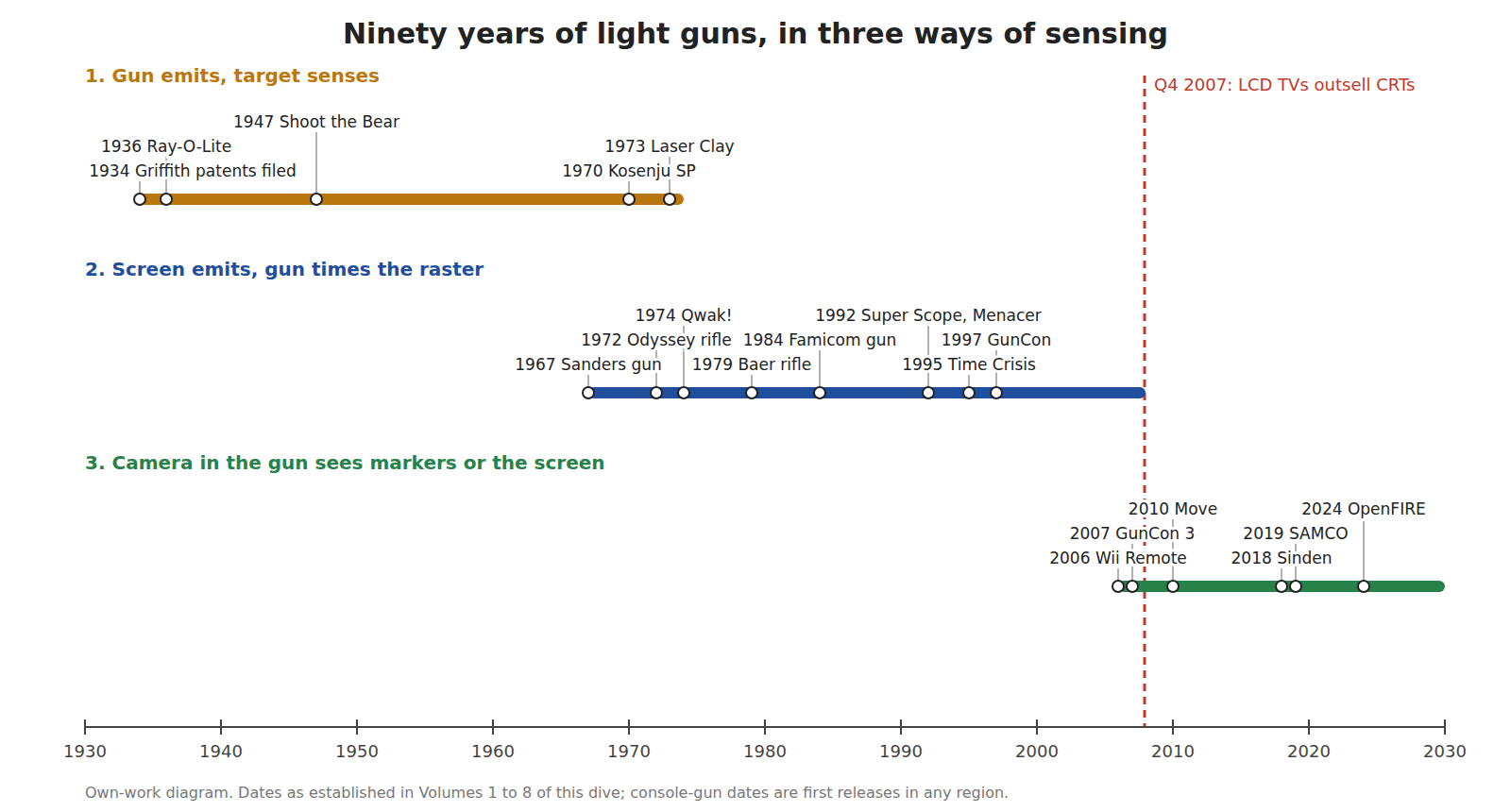
Table 2 — 8.9 Ninety years in one picture
| Generation | Years | Signal the gun reads | Defining products | What ended it |
|---|---|---|---|---|
| Gun emits, target senses | 1934 – 1970s | The gun’s own flash, at a photocell on the target | Rayolite and Seeburg ranges; Nintendo Kōsenjū, Laser Clay | Television: a picture cannot carry a photocell |
| Screen emits, gun times the raster | 1967 – c. 2008 | When the CRT beam lights the aimed patch | Odyssey, Zapper, Light Phaser, Super Scope, Menacer, Justifier, GunCon | The flat panel: no raster, no timing |
| Camera sees markers or the screen | 2006 – today | Where markers or the screen border appear in the gun’s view | Wii Remote, GunCon 3, AimTrak, Sinden, GUN4IR, SAMCO, OpenFIRE | — |
8.10 What could not be verified
- When the AimTrak first went on sale, and when RetroShooter began (its website is archived from 2013, but what it sold then could not be read).
- The Guardian profile of Andrew Sinden (7 March 2022) could not be retrieved; it is cited here through Hackaday’s summary.
- The date and outcome of Sinden’s crowdfunding after the 2018 campaign.
Sources
Footnotes
-
Open-Source Firmware, Volume 1 of this category, which quotes each project’s repository, licence and maker’s page (read 2026-10-18), including Ultimarc’s AimTrak product page, gun4ir.com, the SAMCO, Prow Enhanced, IR-GUN4ALL and OpenFIRE repositories, and blamcon.com. ↩ ↩2 ↩3 ↩4
-
Sinden Lightgun, home page, sindenlightgun.com, Internet Archive capture of 21 November 2018, http://web.archive.org/web/20181121031332/http://www.sindenlightgun.com/, read 2026-10-19. ↩
-
Tom Nardi, “The Little Lightgun That Could: Sinden Makes Good”, Hackaday, 22 June 2022, https://hackaday.com/tag/lightgun, read 2026-10-19; citing Lewis Packwood, “‘I just wanted to play Duck Hunt with my kids’: the man on a mission to bring back the light gun”, The Guardian, 7 March 2022 (not read). ↩
-
Reference Electronics, Volume 3 of this category (DFRobot SEN0158 page read 2026-10-18; PixArt PAJ7025R2/R3). ↩
-
Solenoid Recoil, Volume 1 of this category (RetroShooter RS3 Reaper and Blamcon build guides, read 2026-10-18). ↩
Comments (0)