The AK-47 · Volume 8
The AK-74 and 5.45×39 — Conceding the Argument
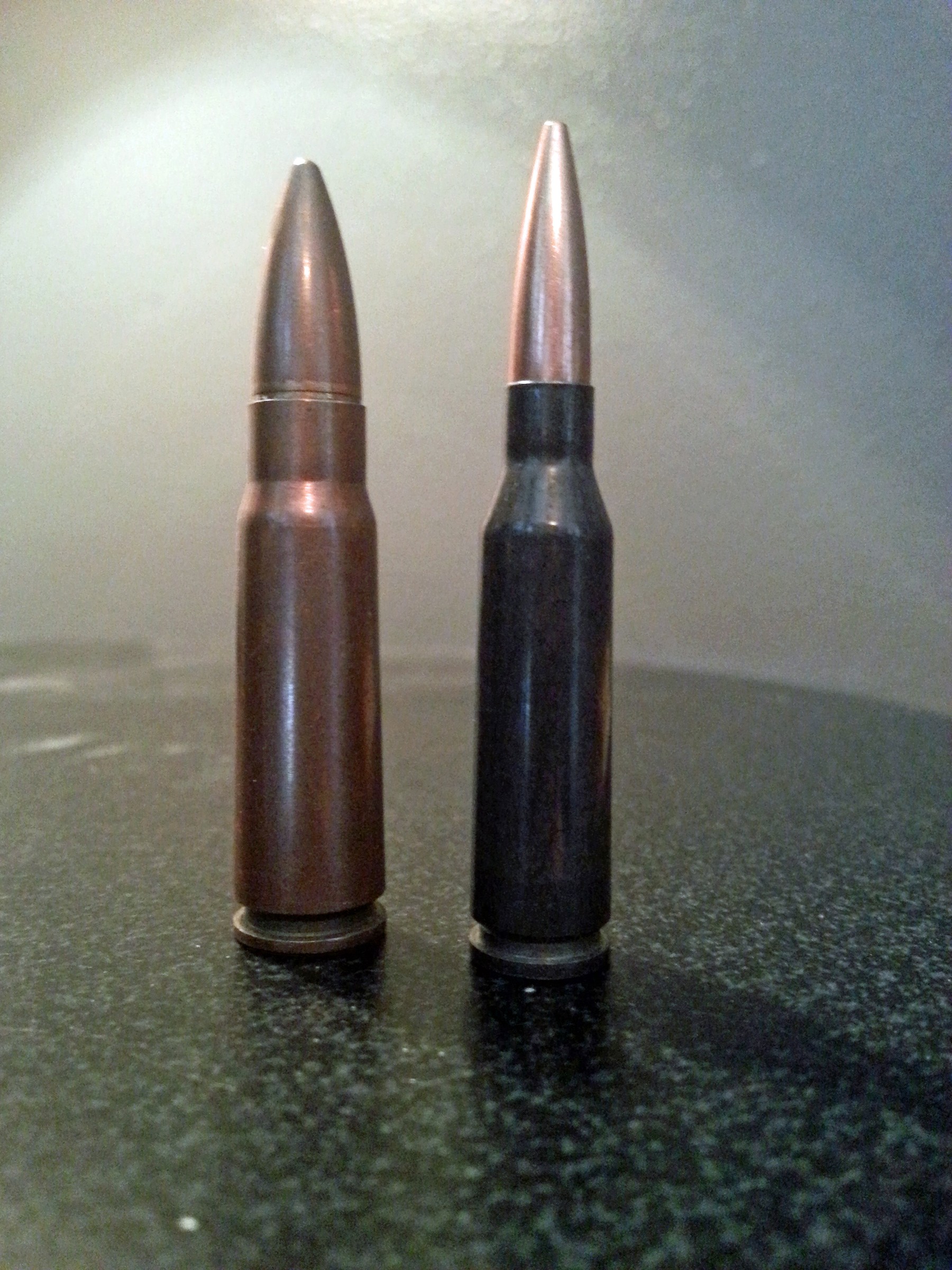
In 1943 the Soviet Union decided that the future of infantry small arms was a short, fat, moderate-velocity intermediate cartridge. It was right, it was ahead of everyone, and the rest of the world spent fifteen years catching up.
In 1974 it adopted a small, fast, light cartridge of the kind the Americans had been fielding since Vietnam — and in doing so conceded an argument it had been publicly winning.
That reversal, and what it did and did not change about the rifle, is the subject of this volume and the close of the platform arm of the dive.
8.1 What Drove It
Soviet interest in small-calibre high-velocity ammunition dates from around 1960, when Soviet specialists became aware of American work on the AR-15 and the broader Small Calibre High Velocity concept. American experience in Vietnam, where the M16 and its 5.56×45 cartridge were fielded in quantity from the mid-1960s, made the case harder to dismiss.
The attraction of a small, fast bullet is straightforward arithmetic:
- A flatter trajectory, which reduces the range-estimation error that dominates field shooting.
- Less recoil, which means a more controllable weapon in automatic fire — precisely the AK’s documented weakness (Volume 7).
- More rounds for the same weight, because a lighter cartridge means a soldier carries more of them for the same load.
Between 1960 and 1963 the Soviets evaluated calibres of 4.5 mm, 5.6 mm and 6.5 mm. The 5.45 mm was selected, and around 1966 a new, smaller-diameter case was developed for it. Formal weapon trials began in 1968. The Kalashnikov entry — the A-3, developed by A. D. Kryakushin’s group under Kalashnikov’s supervision at Izhmash — prevailed over Konstantinov’s SA-006 from Kovrov. The rifle was adopted by the Soviet Army in early 1974.
The cartridge itself was developed by a team under M. Sabelnikov, with L. I. Bulavsky, B. B. Semin, M. E. Fedorov, P. F. Sazonov and others — Semin’s name connecting this programme directly back to the M43 team of 1943.
8.2 The Numbers
Table 1 — The Numbers
| 7.62×39 M43 | 5.45×39 7N6 | |
|---|---|---|
| Bullet weight | 7.9–8.0 g | 3.43 g |
| Muzzle velocity (415 mm barrel) | about 715 m/s | 880 m/s |
| Muzzle energy | roughly 2,000 J | 1,328 J |
| Bullet length | about 26.8 mm | 25.55 mm, boat-tailed |
| Case capacity | — | 1.75 mL |
The 5.45 gives away about a third of its muzzle energy and buys a much flatter trajectory, far less recoil, and a considerably lighter round. The ammunition weight saving is the point of the whole exercise: the same load-bearing equipment carries substantially more rounds.
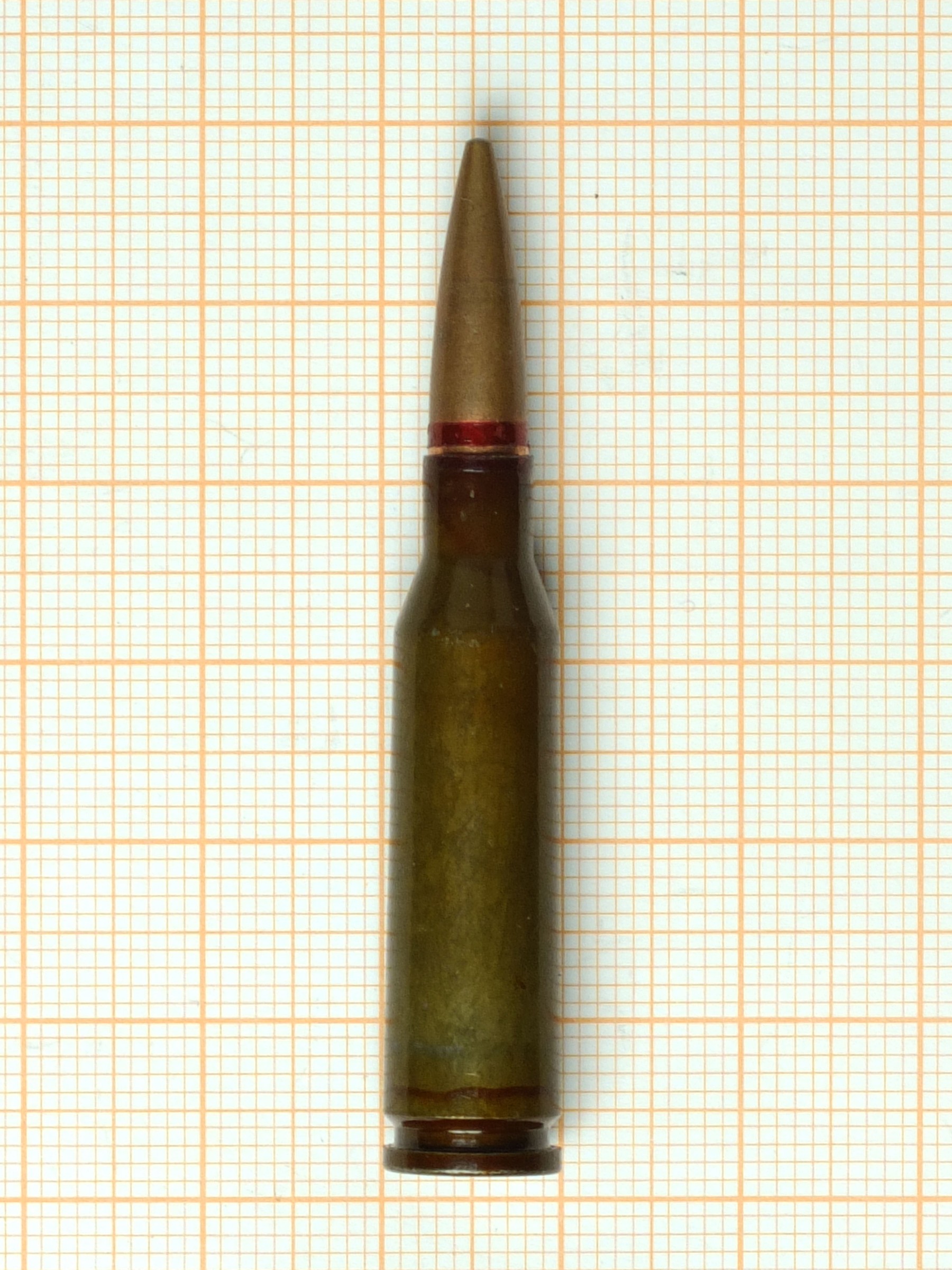
8.3 The 7N6 Bullet and the “Poison Bullet”
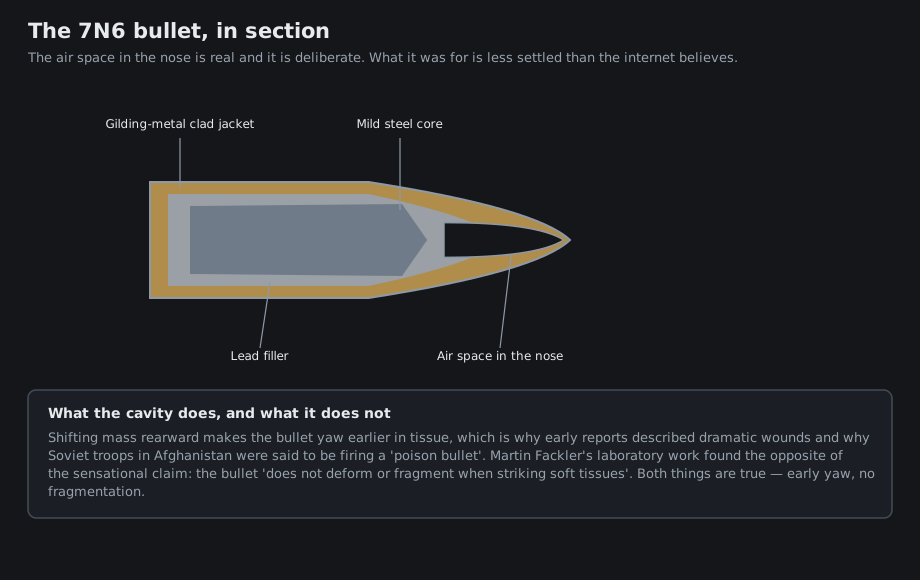
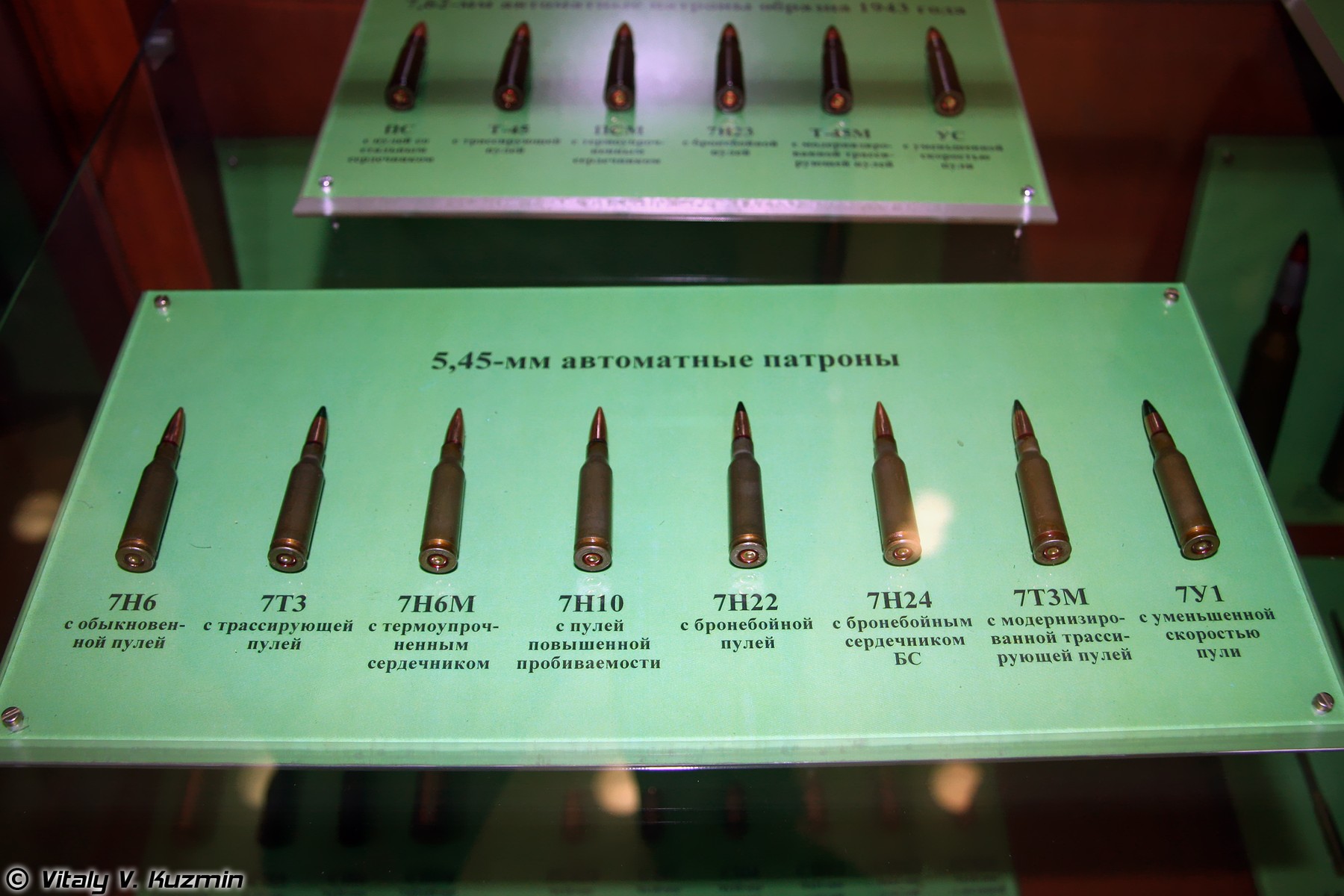
The 7N6’s projectile has a mild steel core, a lead filler, a gilding-metal-clad jacket, and — the feature everything is written about — a hollow air space in the nose.
During the Soviet–Afghan War, which began in 1979 and was where the AK-74 first saw sustained combat use, reports circulated of unusually severe wounds, and the round acquired the nickname “poison bullet”. The explanation offered was that the cavity had been engineered to make the bullet tumble and maim.
What the laboratory work found is more specific and less lurid. Early testing did show a pronounced yaw — the bullet turns sideways earlier in tissue than a conventional full-metal-jacketed bullet does, which is a consequence of mass being distributed rearward. But Martin Fackler’s wound ballistics work concluded that the round behaves as ordinary military ammunition: “the AK-74 bullet acts in the manner expected of a full-metal-cased military ammunition — it does not expand or fragment when striking soft tissues.”
Both findings hold together. Early yaw, no fragmentation, no poison, nothing outside the laws of war. The nickname records how the wounds appeared to people without laboratory equipment, not what the bullet does.
8.4 What Changed in the Rifle — and What Did Not
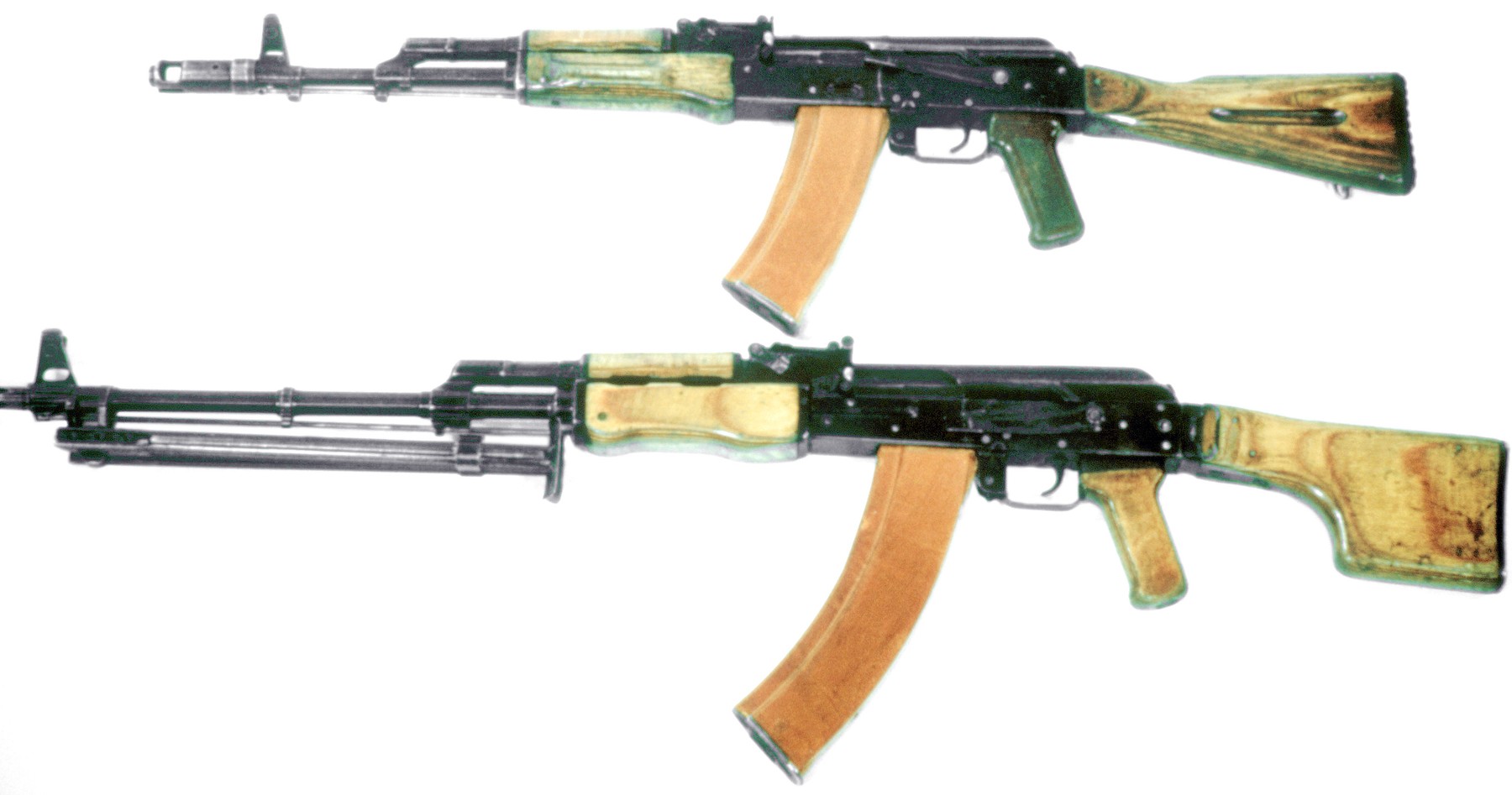
The most important thing to understand about the AK-74 is how little of the AKM it changed.
The receiver is the AKM’s stamped receiver. The bolt and carrier are the AKM’s, scaled. The trigger group, the rate reducer, the safety-and-dust-cover lever, the top cover, the field-strip procedure and the manual of arms are all the AKM’s. A soldier trained on an AKM needs no retraining.
The changes are these:
- Barrel chambered for 5.45×39, chrome-lined, four right-hand grooves with a faster twist for the lighter bullet.
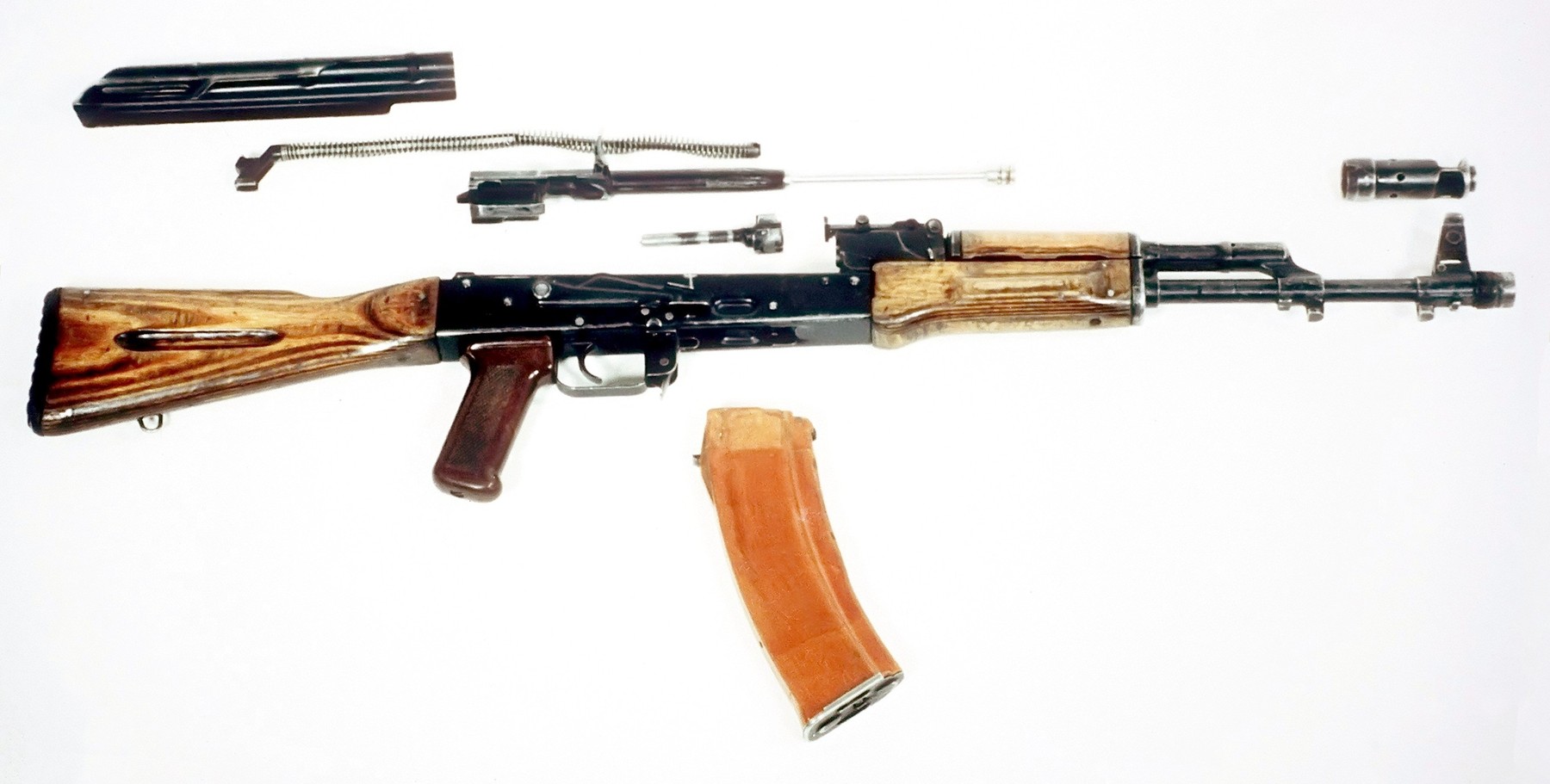
- A large muzzle brake, with an expansion chamber, two symmetrical vertical cuts at the forward end and three asymmetrically placed vent holes, to counteract both recoil and muzzle climb.
- Enlarged extractor claw for improved reliability.
- Redesigned front sight base and gas block.
- New magazine — a smaller-diameter case means a new, differently curved magazine, deliberately shaped so that 7.62 ammunition cannot be loaded into it.
- Buttstock with two oval lightening cuts in the sides, and a rubber, serrated shoulder pad.
- Gas cylinder with a spring washer, and a revised handguard.
Weight came out at about 3.07 kg for the AK-74 and 2.97 kg for the folding-stock AKS-74, with the same 415 mm barrel and a cyclic rate of about 600–650 rounds per minute.
8.5 The Muzzle Brake
The brake is the AK-74’s visual signature and it is unusually effective — the rifle is often described as feeling like a .22 by comparison with an AKM, and in automatic fire the muzzle stays remarkably flat.
It is not free. A brake works by redirecting gas sideways, and everything it takes off the shooter’s shoulder it gives to the people beside him as blast and noise. The AK-74’s brake has a substantial signature and a large flash. In a squad firing line, and particularly indoors, this is a real cost.
8.6 What the Change Actually Means
Three readings of the 1974 decision, all defensible, in increasing order of interest.
The narrow reading: the Soviets copied the Americans. This is the popular version and it is too simple. The 5.45 is not a 5.56 and the development programme was a decade of independent work with its own calibre trials.
The technical reading: the M43 cartridge’s weaknesses — steep trajectory, heavy round, more recoil than automatic fire wanted — were exactly the weaknesses that had shown up in the AK’s own trials in 1947 and in its service since. The 5.45 addresses every one of them.
The reading this dive prefers: the 1943 intermediate-cartridge decision and the 1974 small-calibre decision are the same decision made twice. Both say: work out what infantry weapons actually do at the ranges they actually do it, and stop paying for performance beyond that. In 1943 that reasoning produced a cartridge weaker than a rifle round. In 1974, applied again with thirty more years of data, the same reasoning produced a cartridge weaker than the 1943 one. The Soviets did not abandon their doctrine. They applied it to its own output.
8.7 Where the Platform Arm Ends
The AK-74 is where the rifle documented in these eight volumes reaches its mature form. The receiver was settled in 1959, the mechanism was settled in 1947, and the cartridge question was settled — for the Soviet Army at least — in 1974.
Everything after that is refinement and proliferation: the AK-74M, the 100-series export rifles in every calibre a customer might want, the AK-12, and the enormous family of foreign derivatives that have long since outnumbered anything Russia has built. Those, and the manufacturing, the national variants and the rest of the story, belong to the volumes that follow.
Comments (0)