The AK-47 · Volume 1
Overview — The Most-Produced Rifle in History
More rifles of this pattern have been made than of any other design in history. That single fact carries most of what people believe about the AK, and a surprising amount of what they believe is wrong — including, frequently, which rifle they are looking at.
This dive is twenty-four volumes. Volumes 1 through 8 are the platform: where it came from, what it fires, how it is built, how it works, and what it is actually good at. The claims made about the AK are unusually far from the record, so a running theme of these eight volumes is the correction rather than the legend. Where the sources genuinely disagree, they are shown disagreeing.
1.1 What an AK Is
Mechanically the rifle is four decisions, all of them conservative and none of them original to Kalashnikov:
- A long-stroke gas piston, screwed to the front of the bolt carrier so the whole assembly moves as one piece.
- A rotating bolt with two large lugs, locking into a trunnion rather than into sheet metal.
- A hammer-fired trigger group with a selector that doubles as a dust cover over the charging-handle slot.
- Generous internal clearance, so that the working parts can be dirty and still move.
Table 1 — What an AK Is
| Designation | Avtomat Kalashnikova; adopted 1949 simply as the AK |
| Designer of record | Mikhail Timofeyevich Kalashnikov, with a design team |
| Adopted | 1949 (trials December 1947 – January 1948) |
| Cartridge | 7.62×39 mm M43 |
| Operation | Gas, long-stroke piston, rotating bolt, selective fire |
| Barrel | 415 mm (16.3 in) overall; 240 mm rifling twist |
| Muzzle velocity | about 715 m/s (2,350 ft/s) |
| Magazine | 30-round detachable curved box |
| Weight | 3.47 kg (7.7 lb) for the milled Type 3, without magazine |
| Length | 880 mm (35 in) with a fixed stock |
| Sights | Hooded post front; tangent rear, 100–800 m, 378 mm sight radius |
| Cyclic rate | about 600 rounds per minute |
1.2 The Name Is Already a Correction
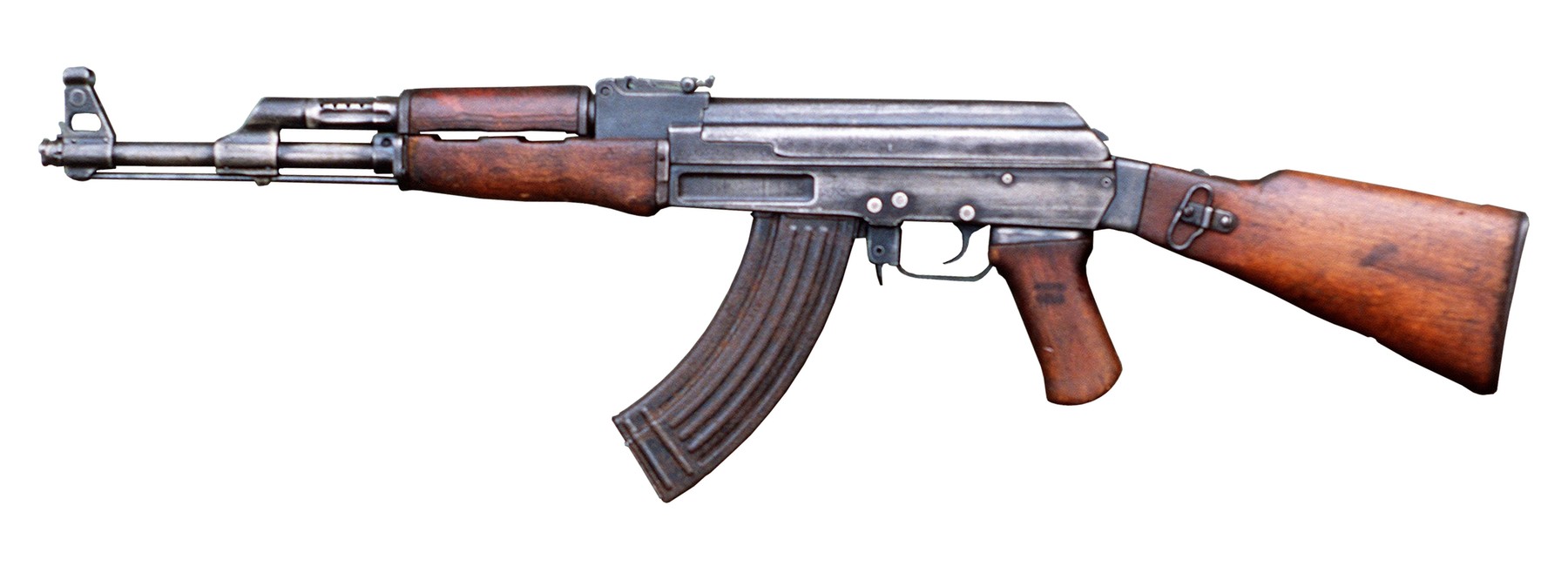
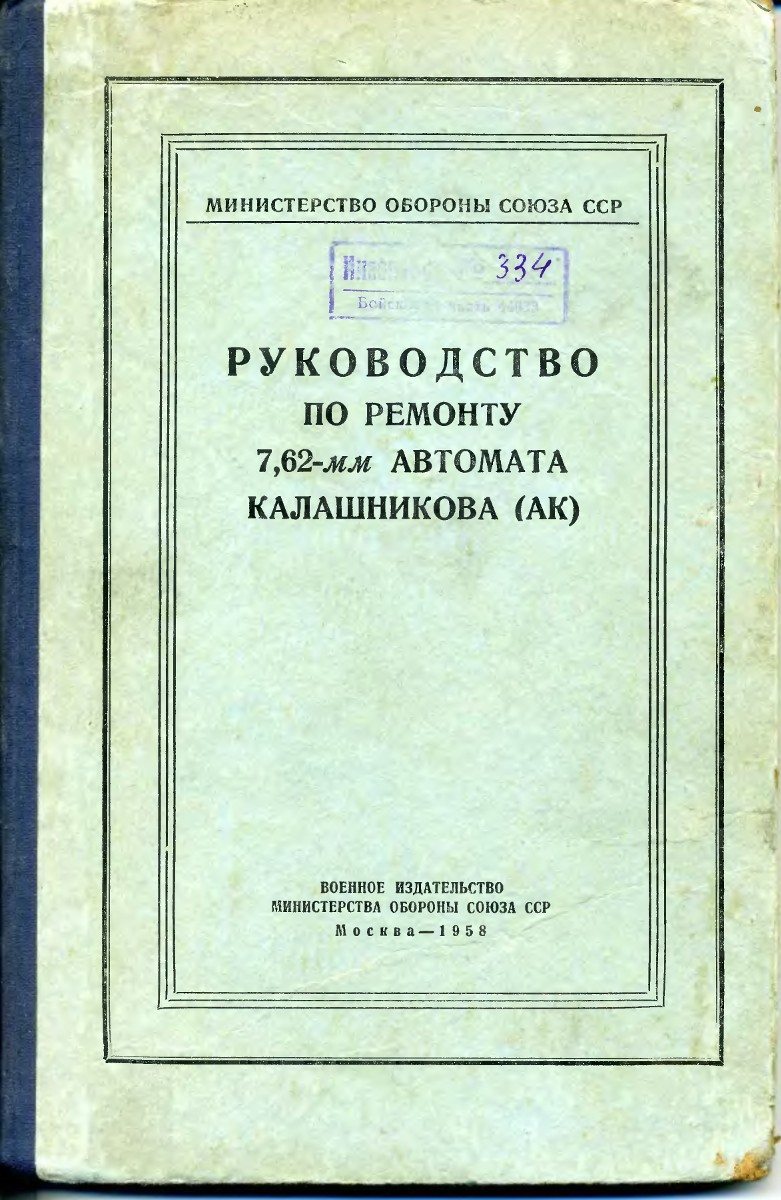
“AK-47” is the term everyone uses and it was never quite the rifle’s name. The weapon that entered Soviet service in 1949 was designated the AK — Avtomat Kalashnikova, the Kalashnikov automatic. The “47” refers to the 1947 model year of the prototype that won the trials, and it did appear in Soviet correspondence for some years afterwards, but the service weapon was the AK, and from 1959 the far more numerous weapon was the AKM, the modernised version.
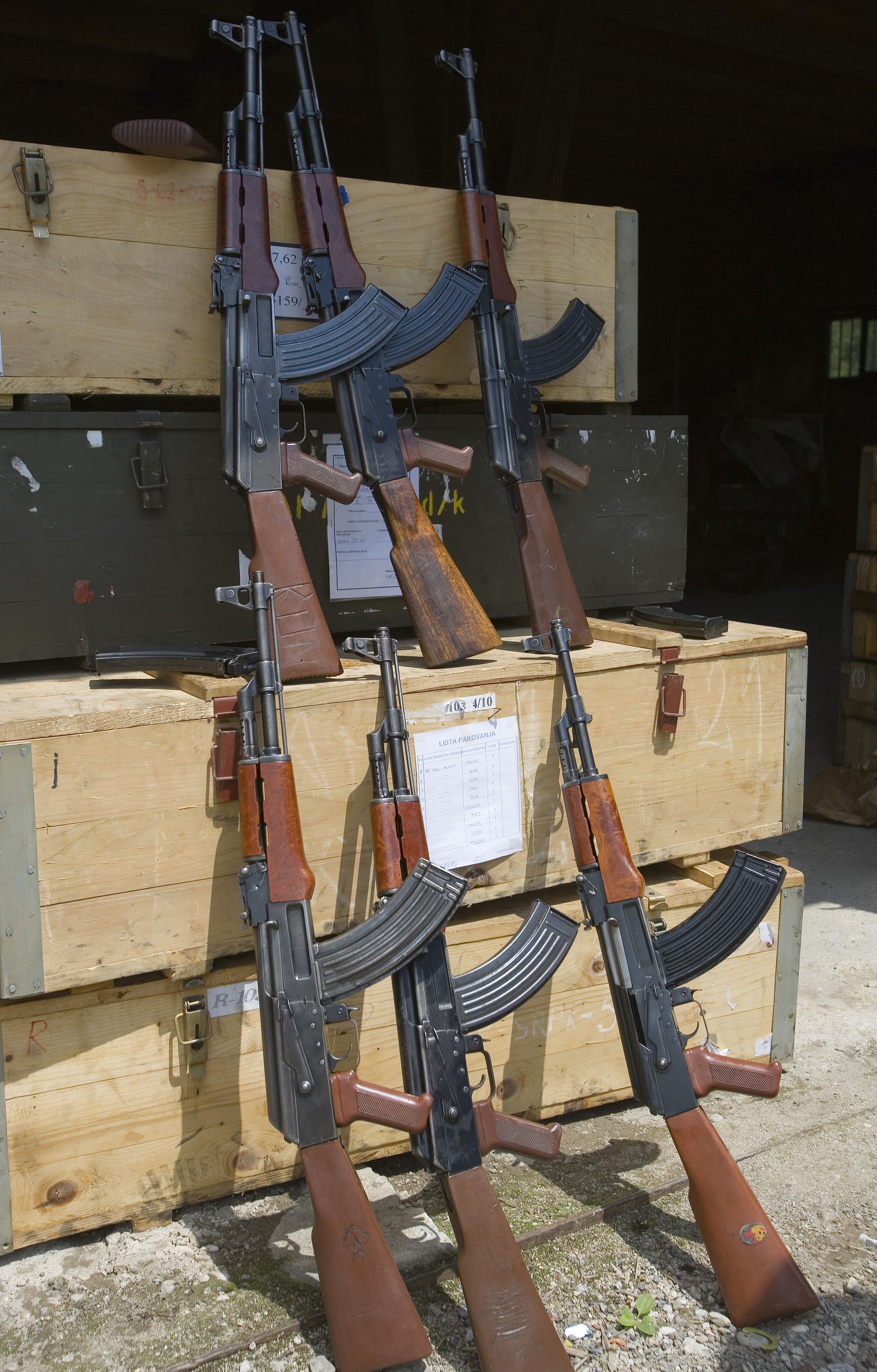
This matters more than pedantry usually does, because most rifles photographed and described as AK-47s are not AK-47s. They are AKMs, or Chinese Type 56s, or one of several dozen national derivatives. The genuine 1949–59 Soviet AK — milled receiver, no slant compensator — is a comparatively rare object. Volume 4 covers the receivers and Volume 5 the AKM, which is where the great majority of the world’s “AK-47s” actually belong.
1.3 How Many, Really
The production figure is the most-quoted number in small arms and the least well-supported.
The commonly cited claim is that about 75 million AK-47s and perhaps 100 million Kalashnikov-pattern rifles of all types have been built. The Small Arms Survey has published a range of 70 to 100 million for the family. Research by Armament Research Services for the Survey arrived at at least 76 million AK-type rifles including variants, copies and derivatives — which is closer to the lower end, and which counts the whole family rather than the AK-47 specifically.
The “75 million AK-47s” formulation therefore does something the underlying research does not: it attaches a family-wide figure to one early model. The defensible statement is that something in the region of 70 to 100 million Kalashnikov-pattern rifles have been manufactured, the large majority of them AKM-pattern or foreign derivatives, and that nobody knows the number precisely because a substantial share was made under licence, without licence, or in workshops that kept no records anyone can consult.
Even the survival rate is unknowable. Rifles have been destroyed, deactivated, worn out and buried; others have been passed down for seventy years and still work.
1.4 Why It Spread
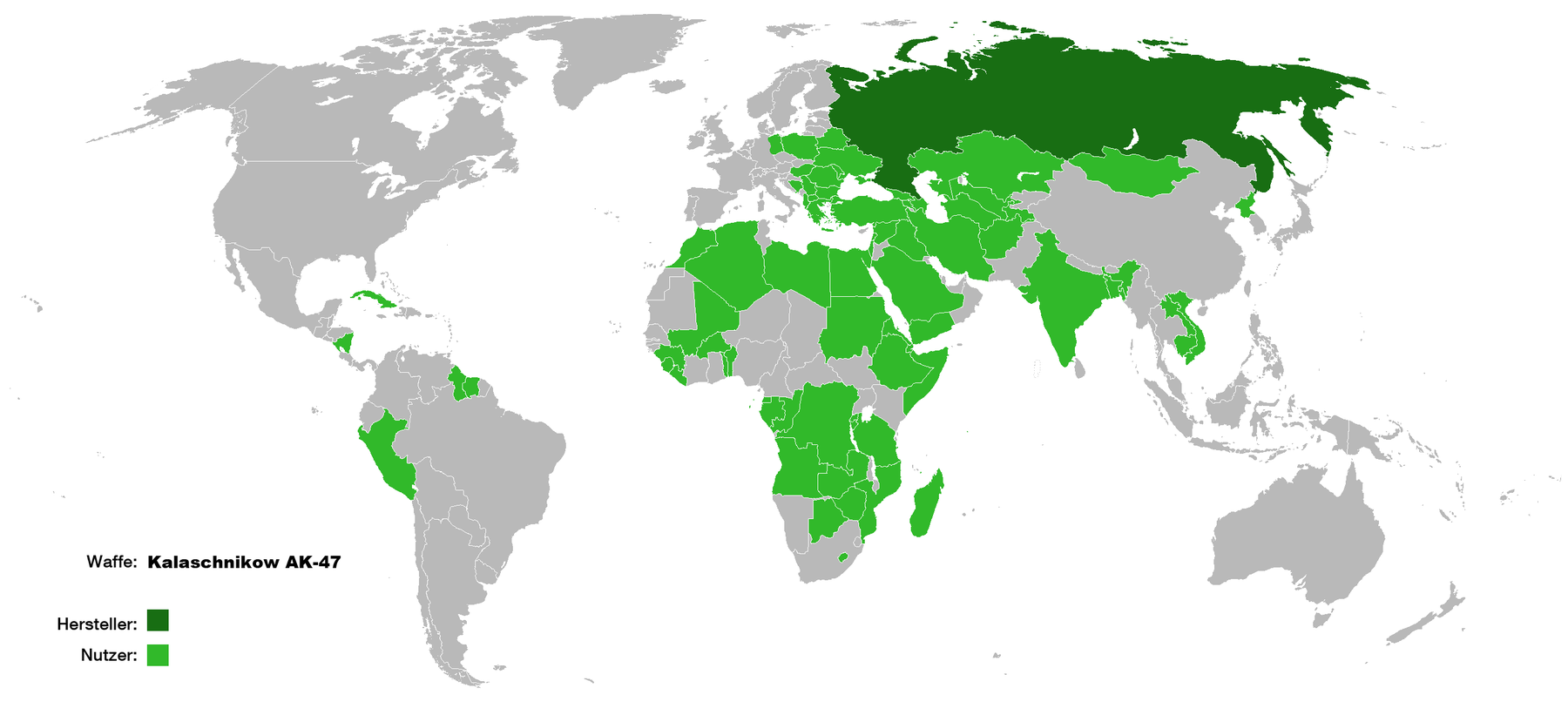
The rifle’s distribution is not really a story about the rifle. It is a story about licensing policy.
The Soviet Union transferred production rights, tooling, drawings and technicians to allied and client states as a matter of foreign policy — to China, Poland, Hungary, Romania, Bulgaria, East Germany, Yugoslavia in its own way, North Korea, Egypt, Iraq and others. A design that is simple to make, tolerant of variation in materials, and handed over with the machinery to make it will end up everywhere, and it did.
Three properties of the design itself did the rest. It is cheap in machine time once stamped construction was working. It is easy to teach, with a manual of arms a conscript can learn in a morning. And it is tolerant of neglect in a way that matters enormously to armies without maintenance cultures — a claim that Volume 7 examines properly, because the popular version of it is considerably stronger than the evidence.
1.5 The Myths This Arm of the Dive Corrects
Five claims recur constantly and all five are wrong, or at least far more contested than they are usually presented:
“The AK-47 is a copy of the StG 44.” It is not, and the mechanical differences are fundamental rather than cosmetic. The influence is real but it is conceptual. Volume 2.
“Kalashnikov designed it alone in a hospital bed.” He was wounded in 1941 and began designing during convalescence, which is true and is where the story starts. The rifle that was adopted was the work of a team, and one of its most important features was proposed by somebody else. Volume 2.
“Hugo Schmeisser designed the AK for the Soviets.” Schmeisser was in Izhevsk. The AK was designed at Kovrov, hundreds of miles away, and the surviving Soviet assessment of Schmeisser’s work is witheringly negative. Volume 2.
“The AK-47 was used in the Second World War.” It was not. The war ended in 1945; the winning prototype was completed in November 1947. Volume 2.
“It always works, no matter what.” It works remarkably well when badly treated, and it has a documented failure point that is reached more easily than the legend allows. Volume 7.
1.6 Reading Order for Volumes 1 to 8
Volume 2 is the origin and the myths, and it is the one to read first if only one gets read. Volume 3 is the cartridge, which changed shape after the rifle had been designed around it. Volume 4 is the receiver story — stamped, then milled, then stamped again — and it is the best single illustration of the gap between a good idea and an industry that can execute it. Volume 5 is the AKM, which is what most people actually mean when they say AK-47.
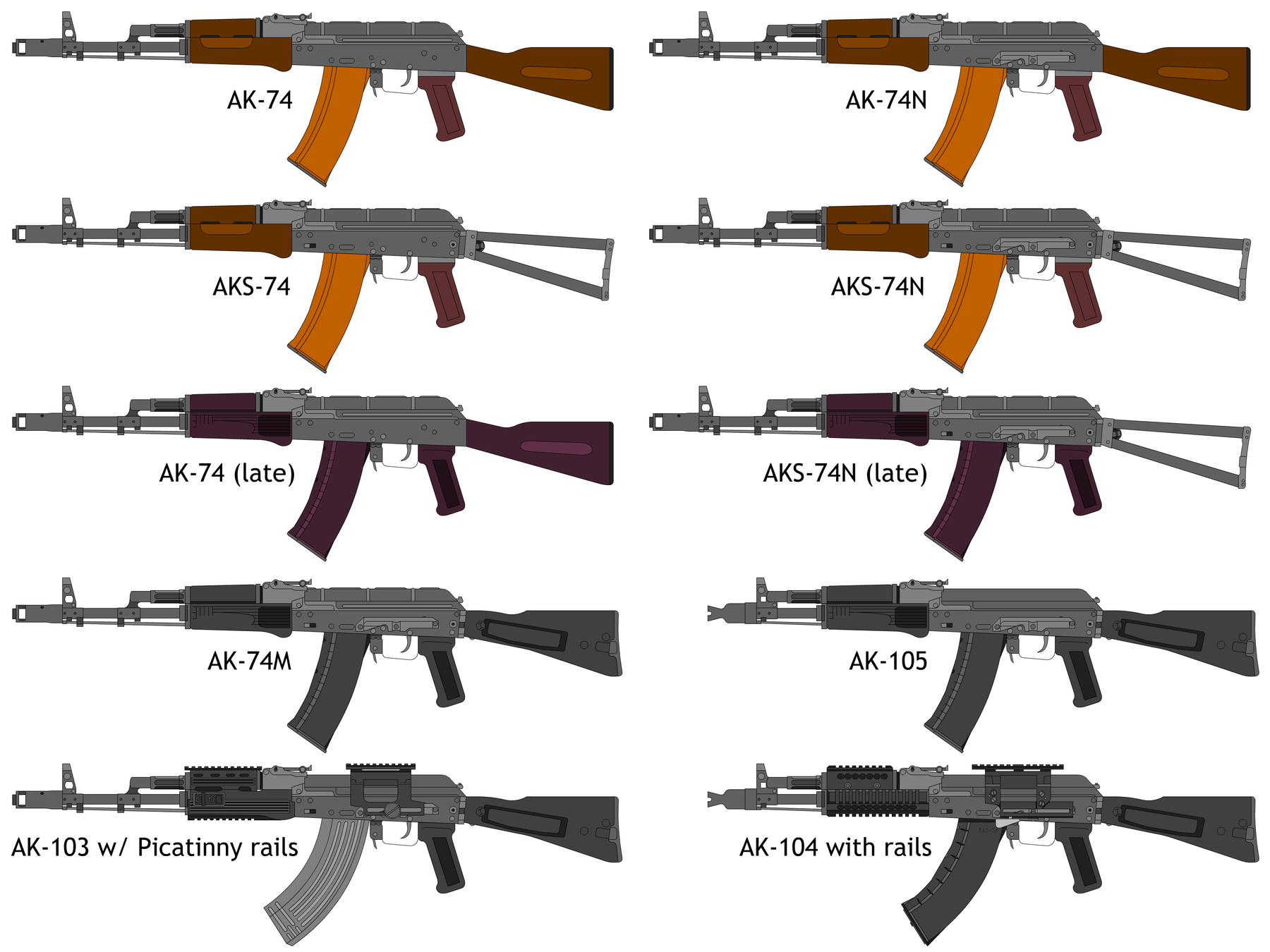
Volumes 6 and 7 are the mechanism and its consequences: how the rifle works, and what its famous looseness buys and costs. Volume 8 closes the platform arm with the AK-74 and the move to 5.45×39, which is the point at which the Soviets conceded an argument they had been making since 1943.
Volumes 9 onward take up the variants, the manufacturing, the national derivatives and the rest.
Comments (0)