The AK-47 · Volume 14
Hungary, Poland and East Germany
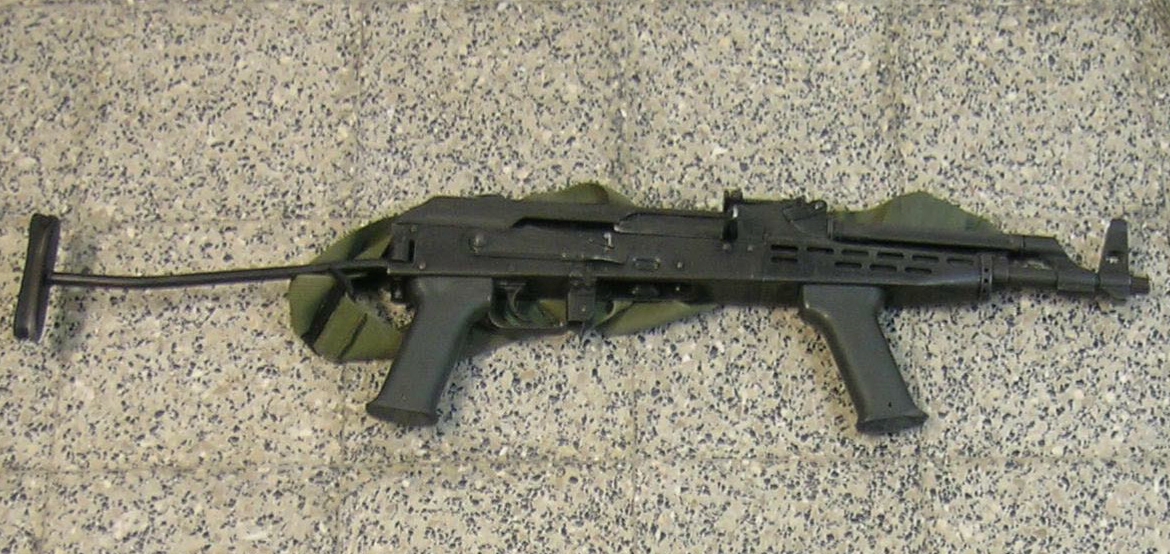
These three countries produced Kalashnikovs that are unmistakable, well made and — in Hungary’s case — the most visually divergent rifles in the whole Warsaw Pact. They are grouped here because each made the same two-step transition from a milled first-generation rifle to a stamped AKM-pattern one, and because each left a signature that survives restocking and refinishing.
14.1 Hungary
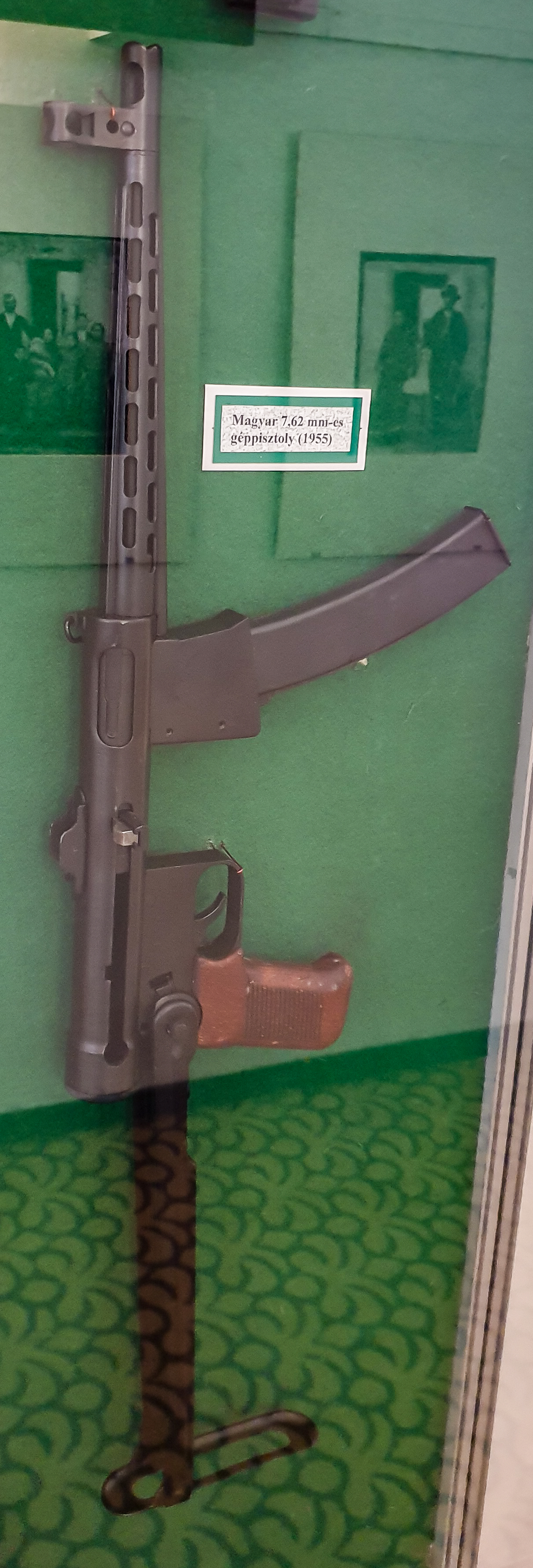
Hungarian production began with the AK-55, a licence-built copy of the Soviet milled rifle. It is the conventional first-generation Hungarian Kalashnikov and looks the part.
What followed did not. The AKM-63 is a stamped AKM-pattern rifle with two Hungarian features that change its whole appearance: a perforated sheet-metal lower handguard in place of wood, and a vertical foregrip — normally grey plastic — hanging below it. The foregrip serves the same stated purpose as the Romanian one in Vol 13, control in automatic fire, but the two are not related designs and should not be confused: the Romanian grip is wood below a wooden handguard, the Hungarian is plastic below sheet steel.
The AMD-65 is the AKM-63 cut down for troops who fight from vehicles and aircraft — Automata Módosított Deszantfegyver, loosely “automatic modified paratrooper weapon”. Its features follow from that job:
- A much shorter barrel.
- A two-port muzzle brake, needed because of the short barrel. Sources note that it does its job at a cost: it reduces flash but makes the weapon markedly louder.
- A side-folding steel stock.
- No wood anywhere on the rifle.
One mechanical point is worth recording because it is a genuine engineering difference rather than a styling one: the AMD-65 achieves reliable function with its short barrel without the muzzle-mounted gas expansion chamber that the Soviet AKS-74U requires, using its specially designed brake instead.
The later AK-63 returned to a conventional AKM configuration with ordinary furniture, and is the Hungarian rifle that looks most like everyone else’s.
14.2 Poland
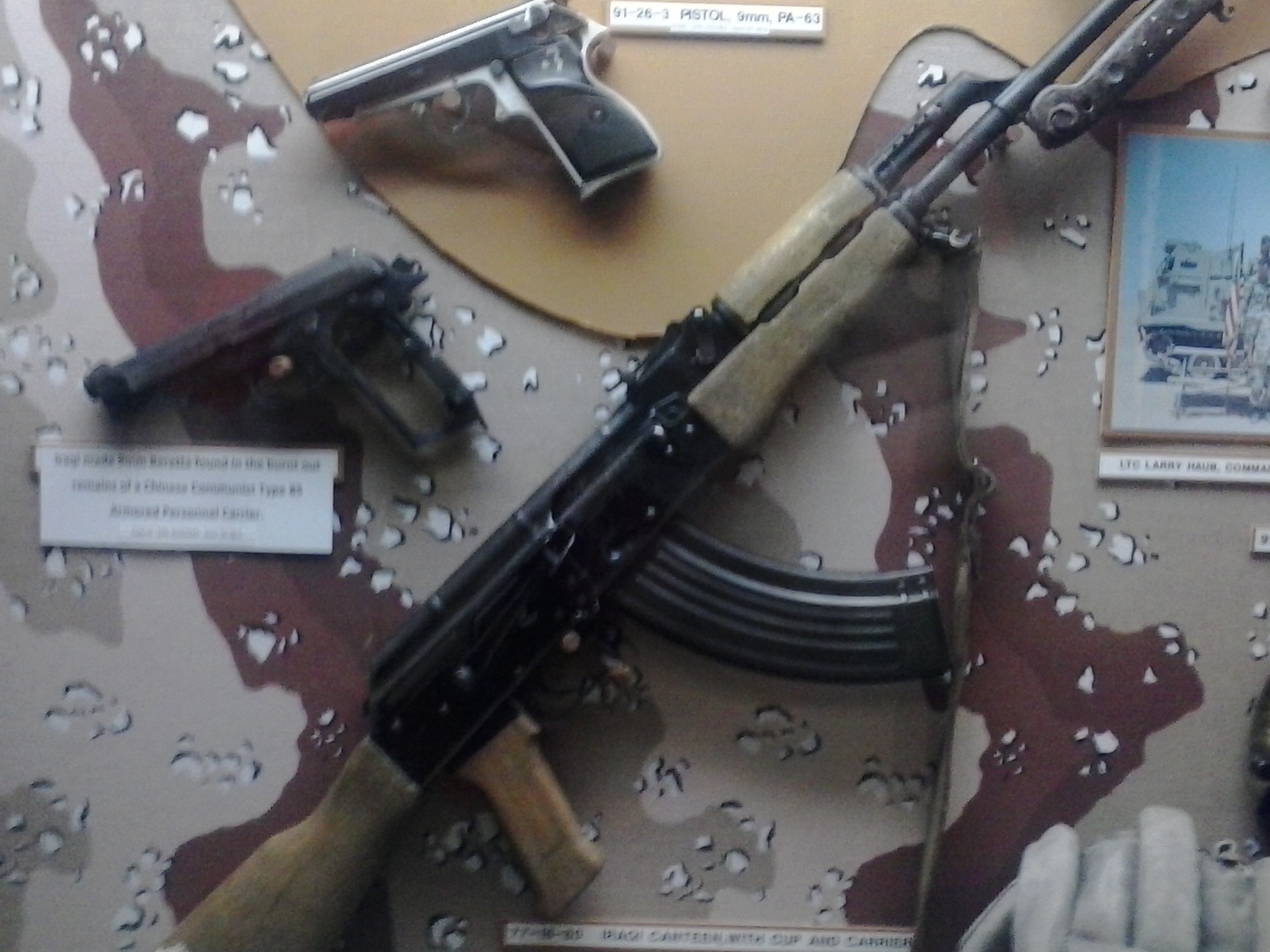
Polish Kalashnikovs were built at the Radom works — Fabryka Broni “Łucznik”, founded 1922 — and the factory mark is “11” in a circle. The circle is not decoration: Radom was assigned factory code 11, and the number was enclosed in a single circle specifically to distinguish it from an earlier Factory 11. That is an unusually well-explained marking, and it means the enclosure carries information rather than style.
The naming needs care, because two sets of names are in use for the same rifles:
- The Polish service designations are kbk AK (the milled first-generation rifle) and kbk AKM (the stamped AKM-pattern rifle) — karabinek, carbine.
- The names under which these rifles and their parts sets are sold in the United States are PMK and PMKM. These are the terms an American reader will meet on a parts-kit listing, and they are best understood as market usage rather than Polish military nomenclature.
Polish production later moved to the 5.45×39 Tantal (kbk wz. 88) and then to the 5.56×45 Beryl family, which is where the Polish line leaves the scope of this arm.
Polish rifles carry no single distinguishing silhouette feature. Like Bulgarian ones, they are identified by the mark.
14.3 East Germany
East German rifles are the ones collectors most often single out for build quality, and they carry the most recognisable furniture in the survey.
Production ran at two plants: first at Wiesa in the south, and later at Suhl, at the works named for Ernst Thälmann.
The designation series is MPi — Maschinenpistole — followed by the Kalashnikov letter:
- MPi-K, the milled first-generation rifle, with MPi-KS as the folding-stock version.
- MPi-KM, the AKM-pattern stamped rifle.
- MPi-KMS-72, the folding-stock development introduced in 1972 and fitted with an improved muzzle brake in place of the AKM’s slant cut.
A naming caution: “MPi-KM72” is collector usage, and where the designation is used properly it refers only to the folding-stock variant.
14.3.1 The Pebble-Grain Furniture
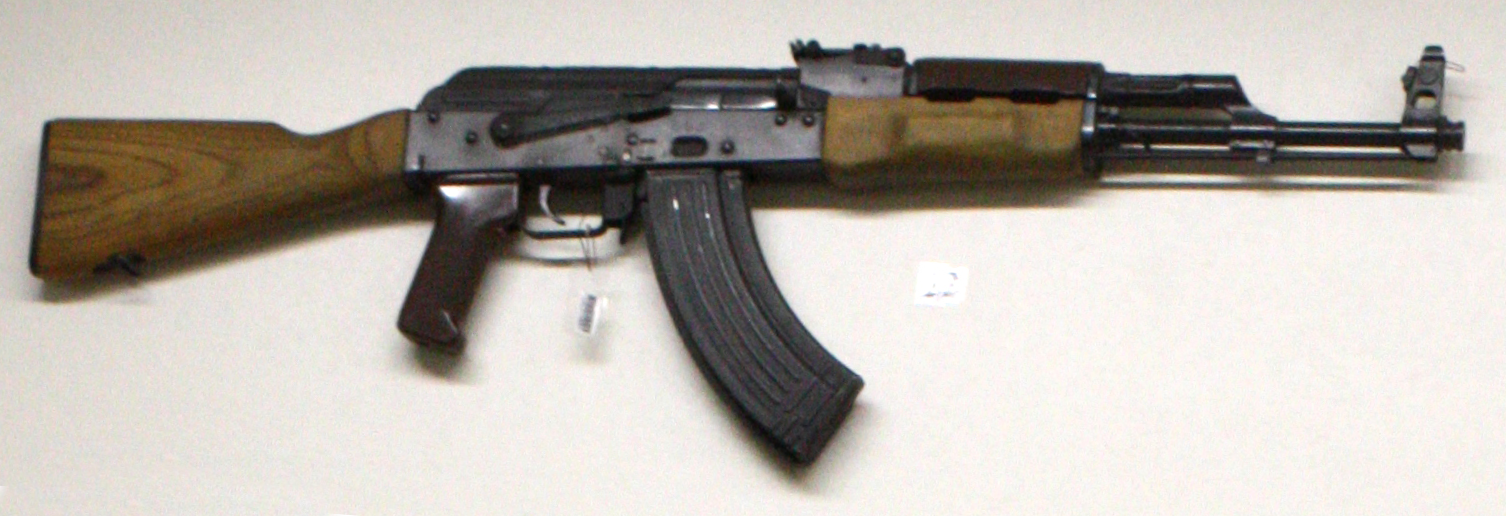
The hallmark is a stippled or “pebble-grain” plastic buttstock and pistol grip in a distinctive brown. It is the single fastest identification in this volume — nothing else looks like it.
The detail that makes the furniture genuinely interesting is the lower handguard, and it is a manufacturing story rather than a styling one. On earlier production the lower handguard is beech wood, not plastic, because the plastics then available would not survive the heat at that position. From around 1981 a resin handguard appears, along with the slanted muzzle brake.
So an East German rifle with plastic furniture and a wooden lower handguard is not a mismatched parts gun — it is the earlier configuration, and the wood is there because the plastic melted. This is a good example of a feature that looks like evidence of tampering and is in fact evidence of a date.
One material note, since the term is used constantly: the East German and Soviet “bakelite” furniture generally is not bakelite. It is usually a resin-impregnated paper or fibre laminate. The distinction matters for repair and refinishing, and the build arm of this dive addresses it.
14.4 Identification Summary
Table 1 — Identification Summary
| Hungary | Poland | East Germany | |
|---|---|---|---|
| Plant | FÉG | Radom (Łucznik) | Wiesa, then Suhl |
| Mark | — | “11” in a circle | — |
| Signature | Sheet-metal handguard; plastic foregrip; AMD-65 brake and wire stock | None visual | Pebble-grain plastic furniture |
| Designations | AK-55, AKM-63, AMD-65, AK-63 | kbk AK, kbk AKM (PMK/PMKM in US trade) | MPi-K, MPi-KS, MPi-KM, MPi-KMS-72 |
Two of these three are identified by looking at the rifle and one by reading its markings, which is the recurring lesson of this arm: the variants that announce themselves are the exception, and the ones that do not are the reason Vol 9 exists.
Comments (0)