The AK-47 · Volume 17
What a Parts-Kit Build Is, and the Law It Sits Under
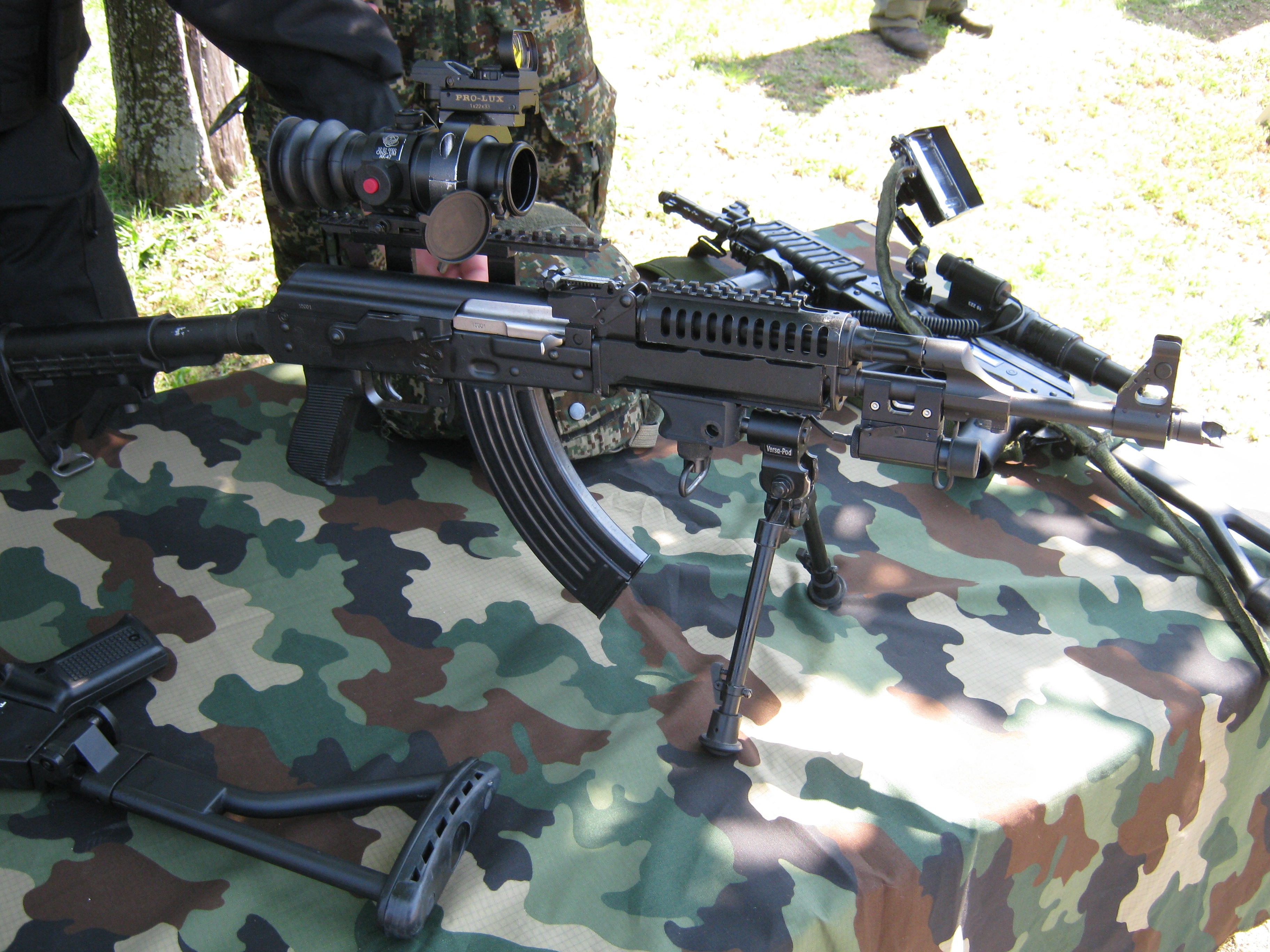
The eight volumes that follow document one rifle being built, and they are written at the depth the bench actually requires: dimensions, interference bands, spindle speeds, gauge figures, and the arithmetic behind them. Vols 1 to 8 cover the platform and how it works; Vols 9 to 16 cover the national variants, including the Yugoslav M70 family that this build belongs to. Vol 16 in particular covers US-made AKs, the import history and the parts-kit era — how these kits came to be on the market at all. This arm picks up where that volume leaves off, at the bench. What follows here is what a parts-kit build is and the legal frame it sits in, because that frame determines which parts go on the rifle before any of the machining questions arise.
Two things should be said plainly at the start. The first is that this is documentation of one lawful build, written after the fact from the builder’s own notes and calculations. It is not a workaround for any regulation, and nothing appears here whose only use would be to get around one. The second is that none of it is legal advice. The regulations quoted are quoted because they determine parts selection; the reader’s own configuration, and the reader’s own state, are the reader’s problem to check.
17.1 What Comes in the Box
A parts kit is a military rifle that has been taken apart and had its receiver destroyed. Surplus rifles are imported into the United States as parts, not as firearms, and the condition of that import is that the receiver — the serialised component that federal law treats as the firearm itself — has been cut up, usually with a torch, into pieces that cannot be reassembled. Everything else survives: barrel, bolt, carrier and piston, trigger components, front and rear sight bases, gas block, handguards, stock, and the small parts.
What arrives, then, is a complete rifle minus the one part that is legally a rifle. Building it back into a working firearm means supplying that part. On the build documented here it is supplied the simplest way available: a serialised receiver made commercially by a licensed manufacturer, bought as a firearm, transferred through a dealer, and carrying a serial number and a maker’s marking. Under federal law an individual may assemble a rifle from such a receiver for personal use. The receiver is the firearm; it was made by someone licensed to make firearms; the assembly is the fitting of parts to it.
That choice removes a whole category of questions from the rest of these volumes. There is no receiver to form, heat-treat or serialise, no question about who made the firearm, and no ambiguity about what the rifle is. What remains is entirely mechanical, and Vols 18 to 24 are about the mechanics.
17.2 Section 922(r), and the Ten-Part Count
The one federal rule that reaches into parts selection on a build like this is 18 U.S.C. § 922(r), implemented at 27 CFR § 478.39. It reads, in the regulation’s own words:
No person shall assemble a semiautomatic rifle or any shotgun using more than 10 of the imported parts listed in paragraph (c) of this section if the assembled firearm is prohibited from importation under section 925(d)(3) as not being particularly suitable for or readily adaptable to sporting purposes.
Three things in that sentence do the work.
It is about assembly, not possession. The rule attaches to the act of putting the rifle together in the United States, and to the configuration that results. A rifle lawfully imported in a given configuration is not retroactively made unlawful by the section; what the section governs is what an assembler builds.
It is a count, not a ban. Up to ten imported parts from the list may be used. Most parts kits arrive with well over ten of them, so the practical effect is that a builder substitutes American-made parts until the imported count is ten or fewer.
It only bites when the assembled rifle is one that could not be imported under § 925(d)(3)‘s sporting-purposes test. A rifle configured so that it would be importable is outside the rule’s reach entirely. Since the sporting-purposes determination is an administrative judgement rather than a dimension, the working practice among builders is to count parts and stay under ten regardless, which is what the build documented here does.
The regulation also carries exemptions at paragraph (b): assembly for sale to a government entity, assembly for testing or experimentation authorised by the Director, and repair or replacement of a firearm imported or assembled before 30 November 1990. None of them apply to a personal build of a current rifle, and they are noted here only so the reader is not surprised to find them in the text.
17.3 The Twenty Parts
Paragraph (c) is a closed list. It names twenty parts, and nothing outside the list counts, however obviously imported it may be. Springs, pins, rivets, dust covers, gas tubes, recoil assemblies, sight leaves and screws are all absent from it, and all of them may be imported without touching the count.
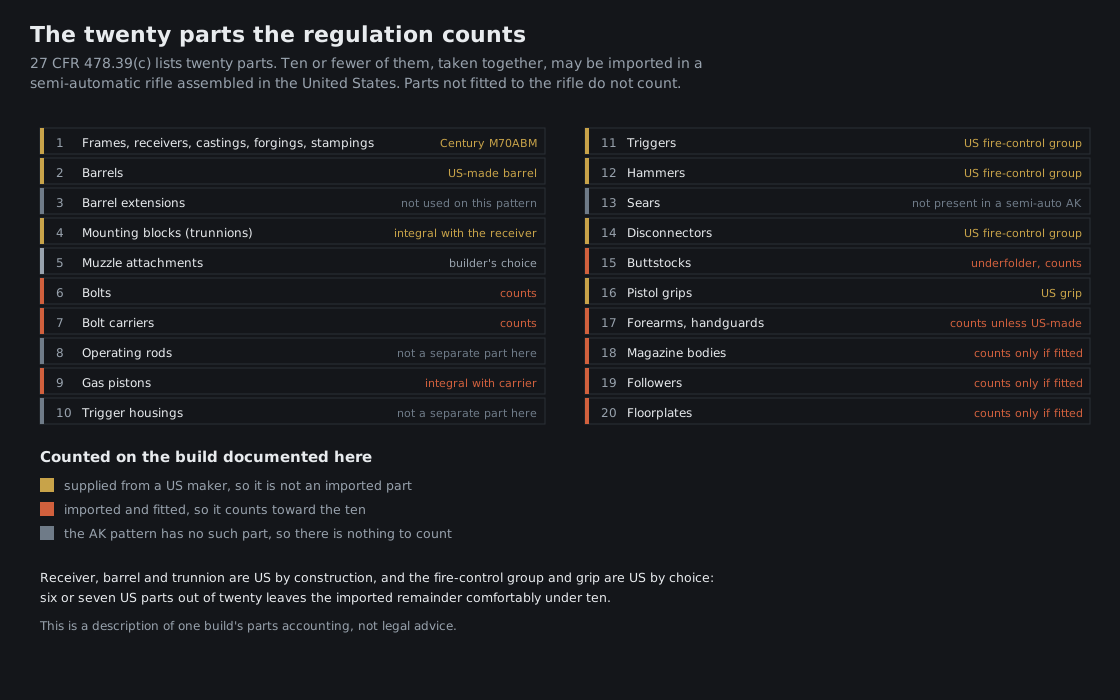
Several entries on the list simply have no counterpart on this pattern of rifle, and a part that does not exist cannot be counted. An AK has no separate barrel extension — the trunnion performs that function. It has no separate trigger housing, because the receiver is the housing. A semi-automatic AK fire-control group is a trigger, a hammer and a disconnector, with no separate sear. The gas piston is not a separate component either; it is fixed to the bolt carrier and comes off the rifle as one piece with it.
On the build documented here, the arithmetic falls out as follows. The receiver is American-made, which also settles the trunnion entry, because on a milled receiver the trunnion is part of the receiver — Vol 18 is about exactly that. The barrel is American-made. The fire-control group is an American set, which is three parts. The pistol grip is American. That is six or seven parts on the American side of the ledger before the imported remainder is even counted, and the imported remainder — bolt, carrier with its piston, buttstock, handguards, and the magazine’s three listed parts when an imported magazine is fitted — sits comfortably under ten.
17.4 The Count Is a Property of the Rifle as It Stands
The single most common error in this area is treating the count as a property of the build rather than of the assembled rifle. It is not fixed at the moment the rifle is finished. Fitting a different handguard, or snapping in an imported magazine, changes the number of listed imported parts in the assembled firearm at that moment.
The magazine entries are the ones that catch people, because a magazine contributes three separate listed parts — body, follower and floorplate — and a rifle assembled with a comfortable margin can be pushed over the line by fitting a surplus magazine from the same crate the parts kit came in. The counting practice that avoids the problem is to leave enough headroom that no accessory swap can breach it, and to use American-made magazines where the margin is thin.
17.5 What Is Deliberately Not Here
These volumes document a semi-automatic rifle assembled from a commercially made, serialised receiver. They contain no information on converting any firearm to fire automatically, no dimensions for machining restricted components, and no method for defeating a serialisation or import requirement. That is a deliberate boundary and not an oversight: the machining content that follows is about holding a barrel in a receiver concentrically and at the right headspace, which is a fitting problem, and it has no application to any of the above.
Vol 24 returns to this from the other end, with an honest accounting of what has and has not been proved on the rifle documented here. The short version, stated now so that no one reads the volumes in between as a set of instructions: it has never been fired.
Sources
- 18 U.S.C. § 922(r); 27 CFR § 478.39 (T.D. ATF–346, 58 FR 40589, 29 July 1993), text as published by the Office of the Federal Register.
- 18 U.S.C. § 925(d)(3), the sporting-purposes import test referenced by § 478.39(a).
- The builder’s own project notes and build reference for this rifle, for the parts selection recorded here.
Comments (0)