The AK-47 · Volume 16
US-Made AKs, Imports and the Parts-Kit Era
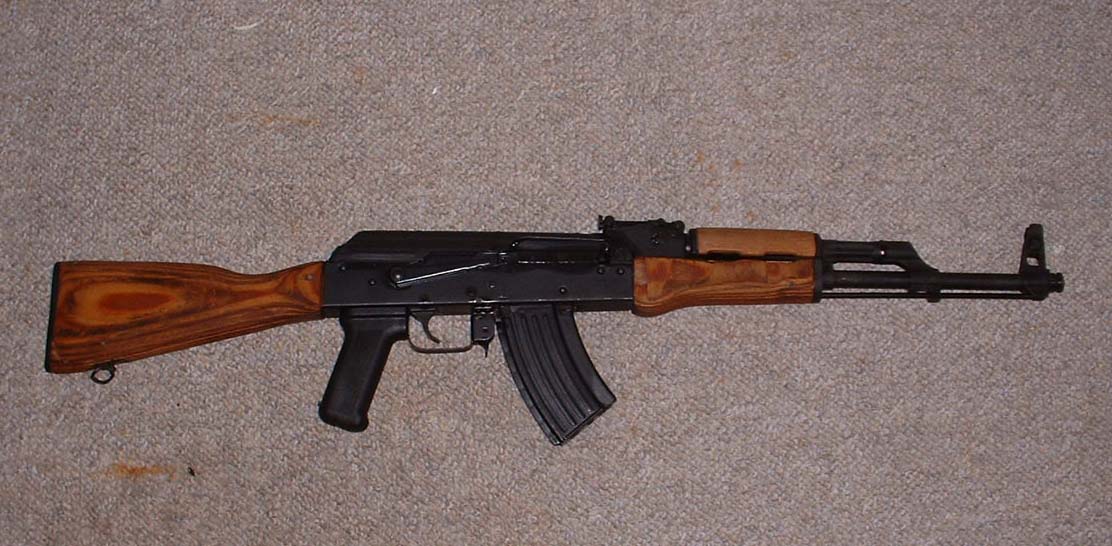
The American Kalashnikov is a legal artefact. Its receiver, its parts count, its magazine, its muzzle, sometimes its stock, and even its name are shaped less by what Izhevsk or Cugir designed than by a sequence of American import decisions made between 1968 and 2014. A reader who does not know that sequence will find the American AK market incomprehensible: rifles that look wrong, rifles built from cut-up rifles, and a whole industry devoted to putting American parts into foreign guns.
This volume explains the law well enough to identify the rifles. It hands off to the build arm of this dive, which does the work.
This is a reference description of how a body of law and regulation shaped a market. It is not legal advice, it is not a compliance guide, and the details have changed repeatedly and may change again. Anyone building or modifying a rifle needs current authority, not a history volume.
16.1 The Sporting-Purposes Test
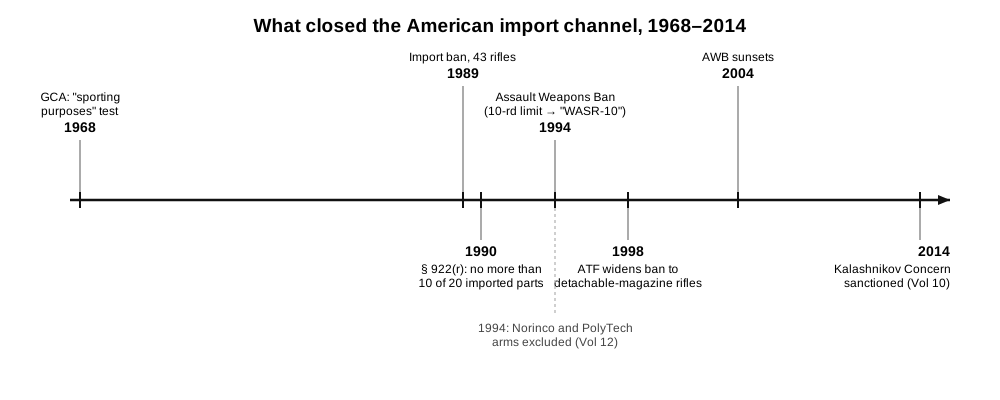
The foundation is the Gun Control Act of 1968, which conditions the importation of a firearm on its being “particularly suitable for or readily adaptable to sporting purposes.” The statute does not define sporting purposes, and the whole of what follows turns on how that phrase was read.
16.2 1989
In July 1989 the Bush administration made permanent an import ban covering 43 types of semi-automatic rifles, the Chinese AK among them. ATF had examined some fifty imported rifles and concluded that all but seven failed the sporting-purposes test.
The reasoning drew heavy criticism at the time and still does. Critics argued that ATF read “target shooting” to mean only organised marksmanship competition, and that it disregarded the statute’s alternative limb — rifles “readily adaptable to” sporting purposes — which on its face is a much easier standard to meet.
The market’s response was immediate and is the origin of a whole class of odd-looking rifles: importers brought in sporting-configured versions — thumbhole stocks in place of pistol grips, no bayonet lug, no flash hider, sometimes a single-stack magazine well — that passed the test as imported, and which buyers then reconfigured.
16.3 and Section 922(r)
That reconfiguration is what 18 U.S.C. § 922(r) addresses. The provision is generally attributed to the Crime Control Act of 1990, and its effect is to prohibit assembling from imported parts a semi-automatic rifle that could not itself lawfully be imported.
The implementing regulation supplies the arithmetic that everyone actually works to: no more than 10 imported parts from a list of 20. The list:
frames/receivers and receiver castings, forgings or stampings · barrels · barrel extensions · mounting blocks (trunnions) · muzzle attachments · bolts · bolt carriers · operating rods · gas pistons · trigger housings · triggers · hammers · sears · disconnectors · buttstocks · pistol grips · forearms and handguards · magazine bodies · followers · floorplates.
This is the single most consequential fact about American AK construction. It is why American-built rifles carry American triggers, hammers, disconnectors, pistol grips, stocks, handguards, gas pistons, muzzle devices and magazine components — not because those parts are better, but because they are the cheapest ten to count.
Two points that are widely misunderstood belong here. The rule applies to rifles assembled from imported parts; a rifle made entirely of American parts has nothing to count. And the rule is about assembly, not about ownership of a factory-imported rifle left as it came.
16.4 1994
Two separate things happened in 1994 and they are routinely conflated.
The Assault Weapons Ban, in force from 1994 until its sunset in 2004, restricted new manufacture by a features test and limited new magazines to ten rounds. It was not an import provision and had nothing to do with § 922(r).
Its most visible surviving legacy is a name. WASR stands for Wassenaar Arrangement Semi-automatic Rifle; the “-10” is the ten-round magazine limit of the ban era, carried forward on rifles that have taken standard thirty-round magazines for twenty years.
Separately, in extending China’s most-favoured-nation trading status, the administration excluded arms and ammunition from Norinco and PolyTech — the action that ended Chinese Kalashnikov imports (Vol 12).
16.5 and 2014
In 1998 ATF widened the import ban to reach any semi-automatic rifle capable of accepting a detachable magazine holding more than ten rounds, closing much of the sporting-configuration workaround.
In 2014 the sanctions designation of Kalashnikov Concern closed the Russian channel (Vol 10).
The cumulative result is that the legal supply of foreign-made Kalashnikovs into the United States has been closing for thirty-five years, one country and one configuration at a time. That is the pressure that created the parts-kit industry.
16.6 What a Parts Kit Actually Is
A parts kit is a rifle that has been destroyed to the point where it is no longer a firearm, sold as components.
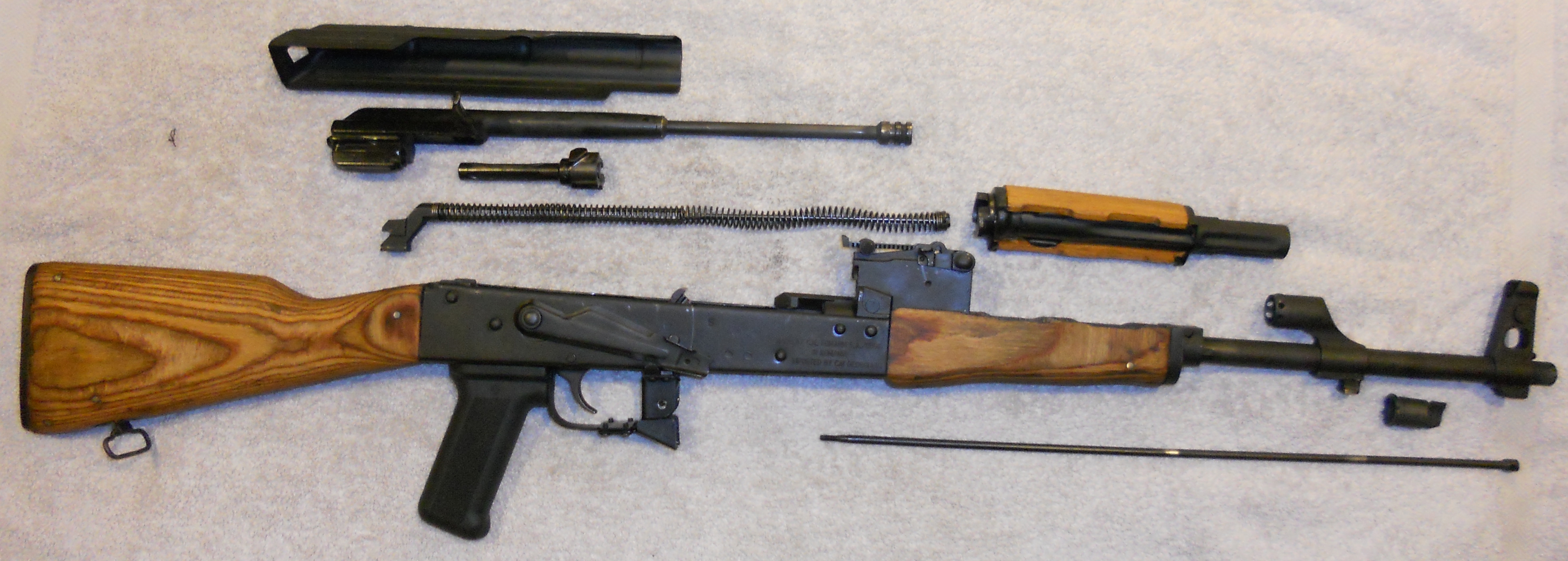
The receiver — which is the firearm in American law — is cut, typically into several pieces. The barrel is usually cut as well. Everything else goes in a box, generally still greasy: trunnions, bolt and carrier, trigger group, gas system, furniture, sights, small parts.
Two routes have supplied the market:
- Sporterised complete rifles. An exporter reconfigures surplus rifles into an importable configuration; they arrive as firearms and are then rebuilt in the United States, which brings § 922(r) into play the moment they are changed back.
- Demilled kits. An exporter strips a rifle, cuts the receiver and barrel, and ships the parts. These are not firearms on arrival. A new American receiver is then made or bought, and the kit is built onto it.
The second route is why the American market is full of rifles that are Romanian, Yugoslav, Polish, Hungarian or Bulgarian in every part that matters and American where the serial number is.
16.7 Why American AKs Are Built the Way They Are
Three consequences follow, and together they explain nearly every oddity a reader will meet:
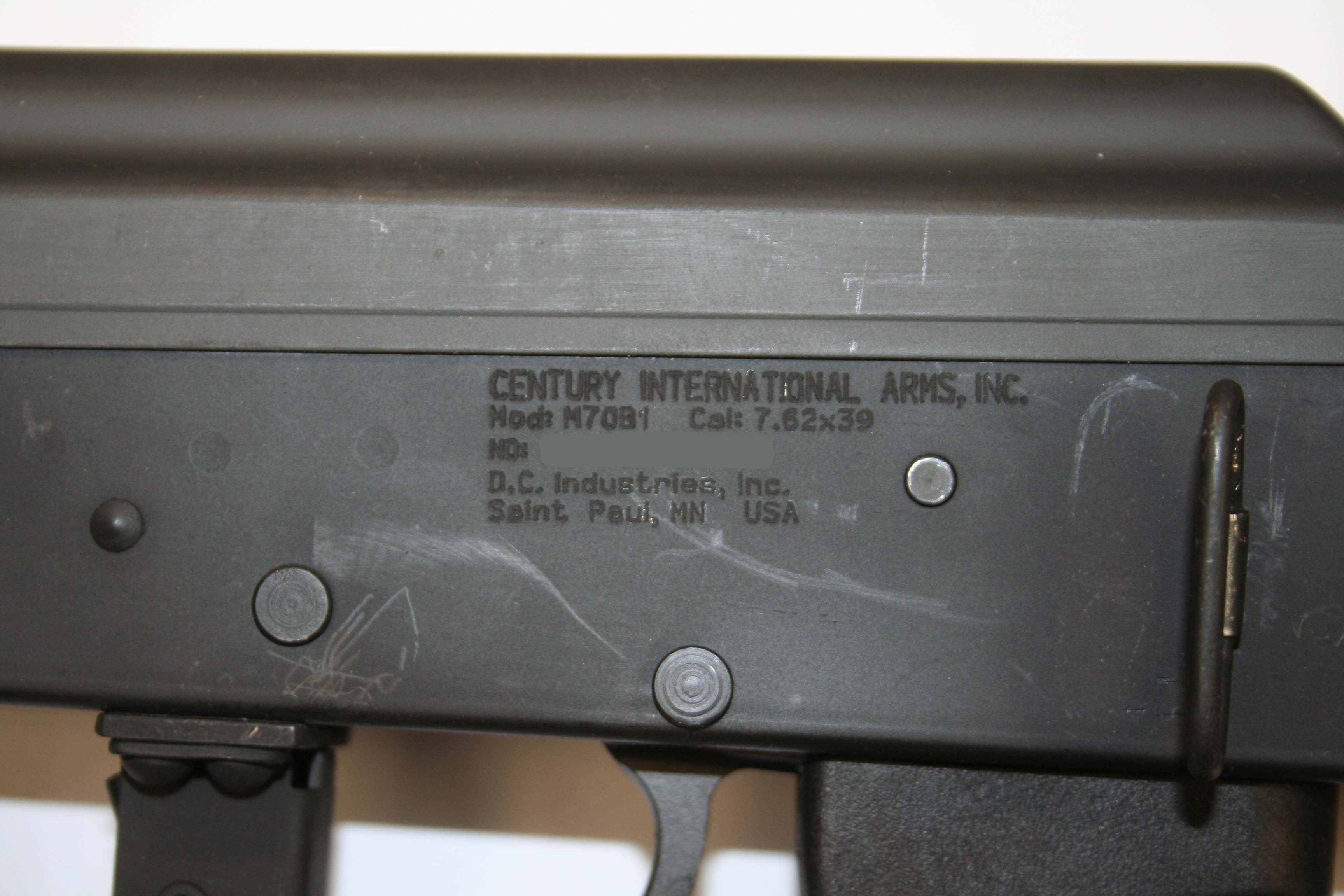
The receiver is the American part. It is made domestically from a flat or a blank, or bought from an American maker. So the receiver’s rivet pattern, finish and markings describe an American shop, not the rifle’s national origin — the point Vol 9 makes and the reason rivet-pattern identification fails on these guns.
Ten parts are American for a legal reason. A US trigger group in a Bulgarian rifle is not an upgrade or a repair; it is arithmetic.
Import marks sort the market. An imported firearm must be marked with its importer’s name and city. A rifle marked by an importer came in as a rifle; a rifle with no such mark and foreign parts was built here on an American receiver. That single distinction, more than any feature, tells a reader what they are holding.
The market’s present shape follows: importers bringing in complete rifles where a channel remains open — Zastava’s American operation and its M70-pattern rifles are the clearest case (Vol 11) — alongside wholly American manufacture, for which § 922(r) simply does not arise.
16.8 Handing Off to the Build
Everything above is background to a practical question the next volumes take up: what it takes to turn a box of foreign parts and an American receiver into a rifle. That is a fabrication problem — receiver preparation, trunnion riveting, barrel pressing and headspacing, and the parts-count arithmetic done deliberately rather than accidentally — and it is the subject of the build arm that follows.
The identification method of Vol 9 is worth carrying into it. A parts-kit rifle is the one case in this arm where the evidence is guaranteed to be mixed, because the law requires it to be.
Comments (0)