The AK-47 · Volume 10
Soviet and Russian Production
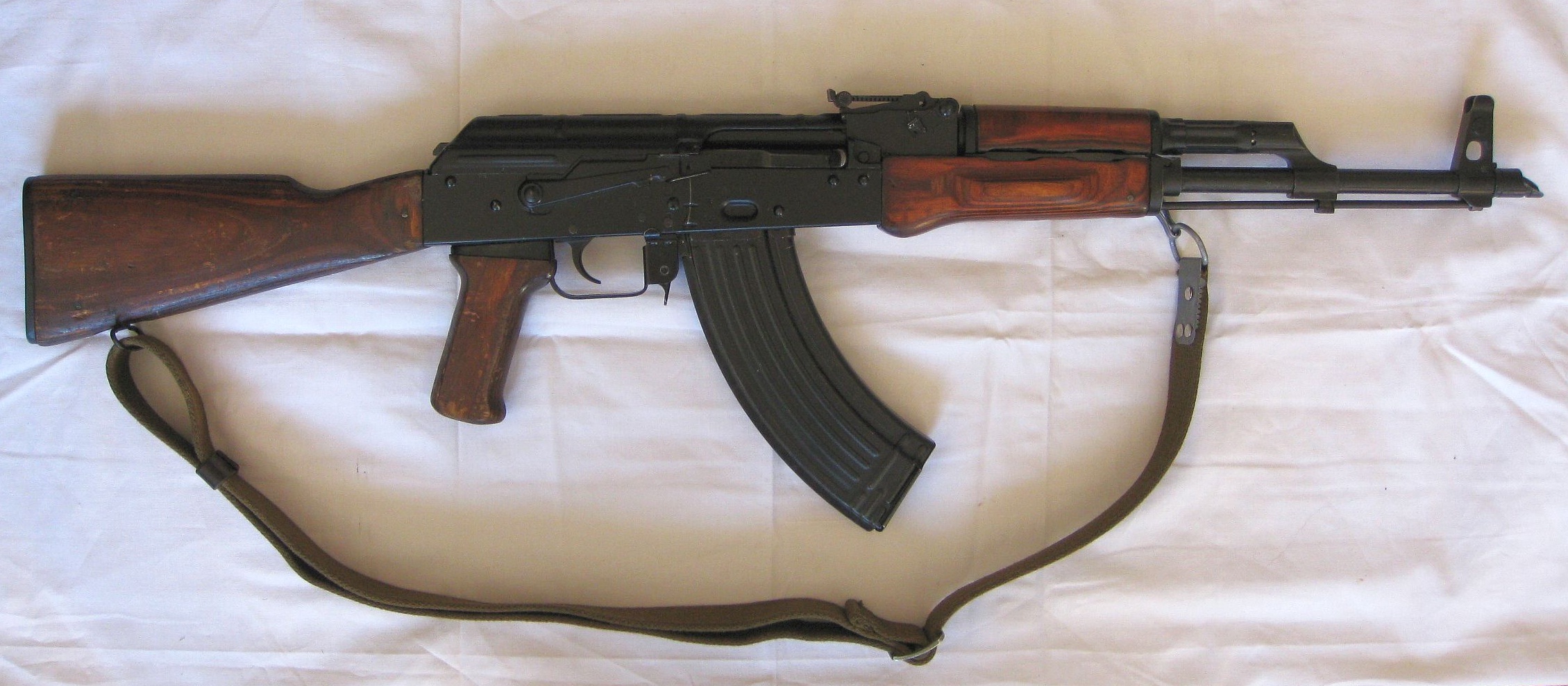
Two plants built the Kalashnikov for the Soviet Union, and between them they set the standard that every other country in this arm copied, adapted or diverged from. Identifying Soviet production is in one sense the easiest job in the survey — the marks are consistent and legible — and in another sense the hardest, because genuine Soviet rifles are the ones least likely to be in front of an American reader, and the ones most likely to be misattributed.
10.1 Izhevsk and Tula
Izhevsk — the Izhevsk Machine Building Plant, universally called Izhmash — was the original home of the Kalashnikov and the plant that carried out the original 1948 production. Its factory mark is a feathered arrow inside a triangle.
Tula — the Tula Arms Plant, an arsenal whose history long predates the Soviet Union — is the second source. Its mark is a five-pointed star. Collector references place Tula’s AKM production as beginning around 1960; that date is widely repeated in the collector literature and this arm has not been able to trace it to a primary document, so it is recorded here as unconfirmed.
Both marks predate the Kalashnikov: the arrow-in-triangle and the star were in use as plant marks before the end of the Second World War, which is why the same symbols appear on Mosin-Nagants, SVTs and on the SKS documented in the sibling dive in this project.
10.2 What the Left Side of the Receiver Says
On most Soviet production the identifying block sits on the left side of the receiver, forward of the rear sight, and reads in a consistent order: factory mark, then a four-digit year of production, then the serial number.
That is as clean a dating system as this family offers, and where it is present it should be believed over any inference from features. Two documented exceptions matter:
- Rifles from the earliest Izhevsk production, roughly 1949–1951, may carry no manufacturer’s mark at all.
- Rifles produced from roughly 1956 to 1960 may use an alphabetic index for the year rather than a four-digit date.
Both exceptions come from the collector reference literature rather than from a Soviet primary document, and neither could be confirmed against an original source for this arm. They are recorded because a reader confronted with an unmarked or letter-dated receiver needs to know the phenomenon exists; they should not be used to date a rifle to a year with confidence.
10.3 The Production Sequence, as a Marking Problem
The lineage itself — why the receiver changed twice — belongs to the mechanism volumes earlier in this dive. What matters here is that each change left a physical signature that is still the fastest way to place a Soviet rifle in a decade:
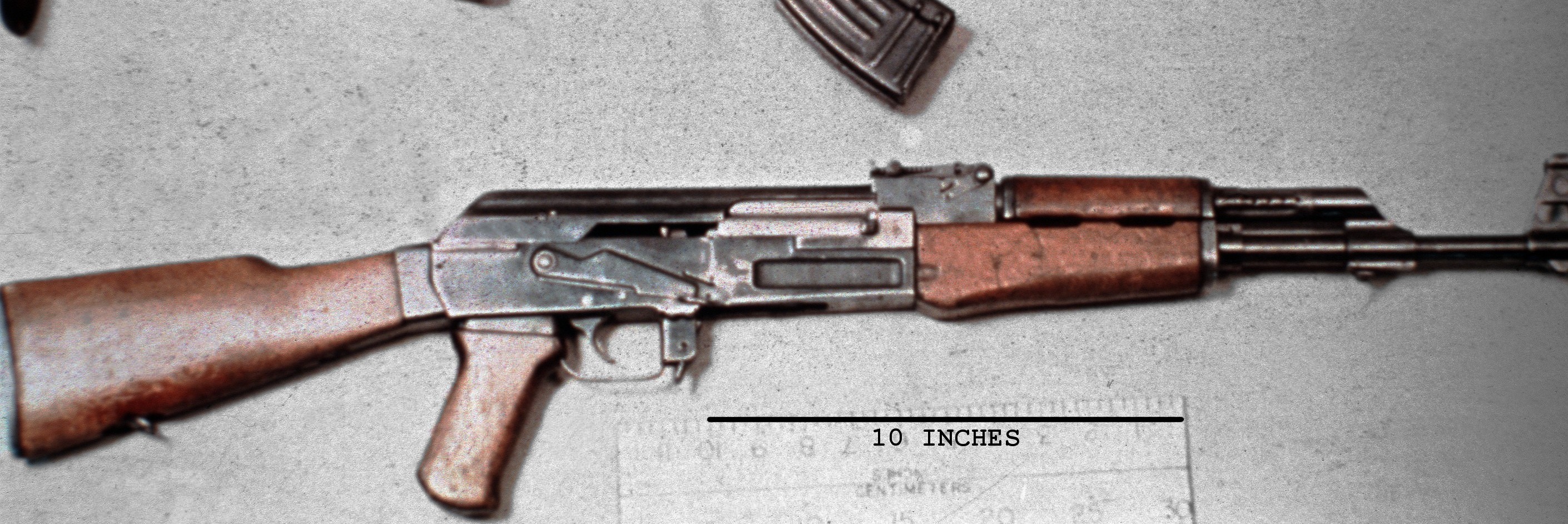
- The 1948-pattern stamped receiver (Type 1), adopted 1949, produced only briefly. Genuinely rare.
- The first milled receiver (Type 2), from 1951, with lightening cuts parallel to the bore and a distinctive machined socket for the buttstock.
- The second milled receiver (Type 3), from roughly 1953–54 until the end of milled production, with lightening cuts slanted to the bore. This is the milled AK most people have actually handled, and the pattern most often copied abroad.
- The AKM stamped receiver, from 1959, riveted, dimpled above the magazine well, and lighter than any of them.
A Soviet rifle can therefore be bracketed by its receiver before its markings are read, and the two should agree. When they do not, the receiver is usually telling the truth about the pattern and the markings about the rifle’s later life.
10.4 Refurbishment, and Why Numbers Do Not Match
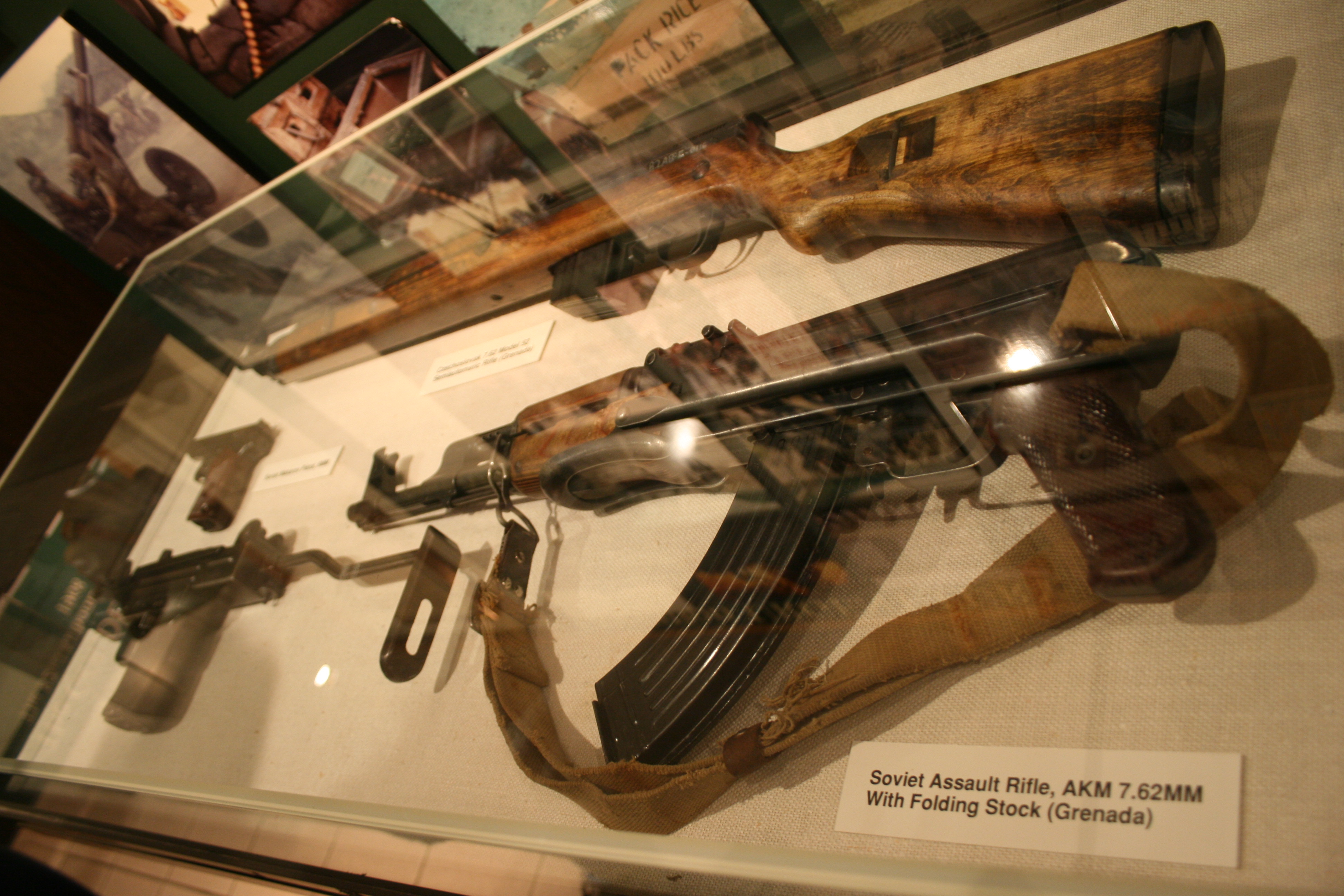
Soviet practice was to overhaul rifles in bulk at arsenals rather than to retire them. A refurbished rifle typically came back refinished, with worn parts replaced from stores and with no attempt to preserve the original serial across every component.
The consequence for identification is direct and frequently misread: non-matching numbers on a Soviet-pattern rifle are ordinary. They indicate an overhauled service weapon far more often than they indicate a fake or a parts build. The inverse error is also common — an all-matching rifle is sometimes assumed to be untouched when the numbers have in fact been re-applied. This arm takes no position on individual rifles; the point is that the matching-numbers heuristic, imported from the collecting culture of other service rifles, transfers to this family badly.
10.5 The Russian Federation, and Why So Few Reach America
Izhmash continued after 1991 and was reorganised into what is now the Kalashnikov Concern. Its output reached the American market through commercial channels — sporting-configured rifles and shotguns built on Kalashnikov actions, imported and then reconfigured domestically.
That route closed. On 16 July 2014 the US Treasury’s Office of Foreign Assets Control designated Kalashnikov Concern under the sanctions imposed in response to Russian action in Ukraine, blocking new transactions by US persons. Treasury’s own guidance is clear that the designation was not retroactive against property already bought and paid for: a rifle purchased before the designation date was not blocked, and could still be resold, provided Kalashnikov Concern had no interest in the transaction.
The practical effect on identification is worth stating, because it shapes what an American reader is likely to encounter. Genuinely Russian-made Kalashnikovs are a small and now closed population in the United States. The overwhelming majority of rifles described casually as “Russian AKs” are not: they are Romanian, Bulgarian, Chinese, Yugoslav, Hungarian, Egyptian or American-built, and the identification method of Vol 9 exists largely to sort them. Vol 16 covers the import framework in full.
10.6 Reading a Soviet Rifle in Practice
The order that works:
- Receiver construction — milled or stamped, and if milled, which lightening cut.
- The marking block on the left of the receiver — factory mark, year, serial, read in that order, with the 1949–51 and 1956–60 exceptions in mind.
- Trunnion and rivets — consistent with the receiver pattern, or not.
- Finish and part numbers — consistent with a service life, or with a refurbishment.
- Import marks — present or absent, which determines whether the rifle is even being asked the right question (Vol 9).
The last step is the one most often skipped and the one that most often changes the answer.
Comments (0)