The AK-47 · Volume 3
The Cartridge — 7.62×39 mm M43
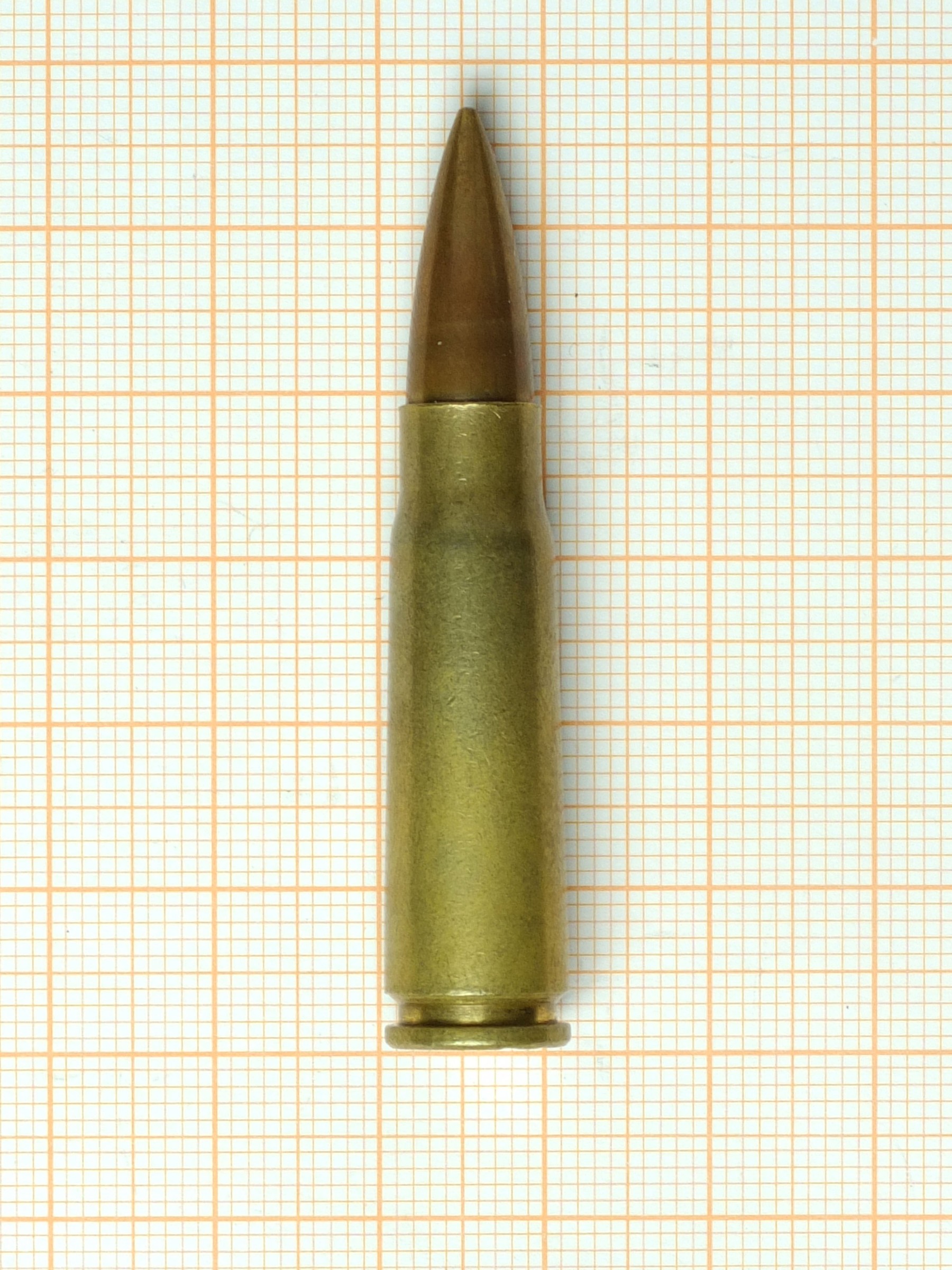
The cartridge came first. The AK was designed around it, the SKS was designed around it, the RPD was designed around it, and by the time the AK was adopted the cartridge had already changed shape once underneath all three.
Understanding the M43 is understanding what the Soviet Army was actually asking for in 1943, which was not a better rifle round. It was a deliberately worse one.
3.1 Why Make a Weaker Cartridge
The Soviet Union entered the Second World War with the 7.62×54R, a rimmed full-power rifle cartridge designed in 1891, and finished the war with the same round still in service. Everything built around it fought it. A self-loading rifle in a full-power cartridge is heavy, recoils hard, needs a strong and therefore complicated lock, and if allowed to fire automatically produces results that are not useful past very short range.
The counter-case was in German hands. An intermediate cartridge — shorter and less powerful than a rifle round, far more capable than a pistol round — allowed a controllable selective-fire shoulder weapon. German intermediate-cartridge weapons had been encountered on the Eastern Front from early 1942, notably in the Cholm fighting, and a captured Sturmgewehr was demonstrated to the People’s Commissariat of Armament on 15 July 1943.
The reasoning behind the intermediate round rests on an observation about how infantry combat actually happens: the overwhelming majority of rifle engagements occur well inside 400 metres, while rifle cartridges are designed for performance out to a kilometre and more. Everything paid for beyond the real engagement distance — recoil, weight, cartridge bulk, receiver strength — is wasted, and it is paid for on every round a soldier carries.
3.2 Who Designed It
Development went to OKB-44, shortly renamed NII-44, under a committee led by N. M. Elizarov and including P. V. Ryazanov, B. V. Semin and I. T. Melnikov.
The scale of the work is worth recording: about 314 cartridge designs were considered on paper, narrowed to eight that were physically built and tested. This was not an improvisation. It was a state cartridge programme running at full speed in the middle of a war.
The first variant completed range trials and was adopted in December 1943, with the GRAU index 57-N-231 and the service designation M43.
3.3 The Version Nobody Shoots: 7.62×41
The cartridge adopted in December 1943 had a 41 mm case. It is known retrospectively as the 7.62×41, and it differs from the round sold today in more than length:
- Case 41 mm long.
- Bullet about 22.8 mm long, with an all-lead core.
- No boat tail — a flat base.
- A short, blunt ogive, which is why period photographs of it look stubby beside a modern round.
Between 1947 and 1948 the cartridge was reworked, with refinement work attributed to the Ulyanovsk Machine Building Plant aimed at improving accuracy and penetration. The case came down to 39 mm — more precisely about 38.7 mm, and both figures appear in reputable references, which is a drawing-tolerance difference rather than a genuine dispute. The bullet grew longer, gained a boat tail, and its core changed from lead to mild steel clad in lead, the steel accounting for roughly half the core volume. The final form went into series production from 1947 onward.
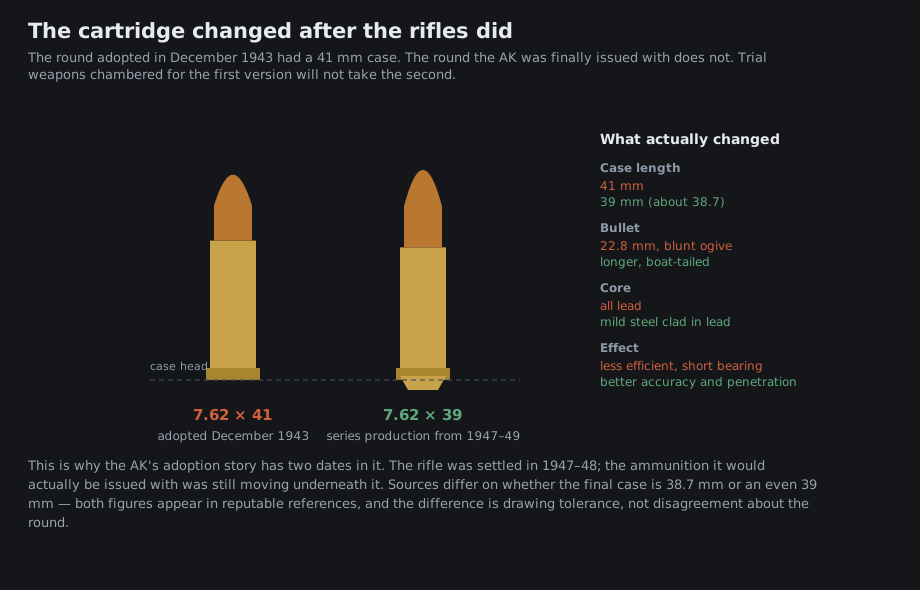
This is why the AK’s adoption dates look untidy. The rifle was settled in 1947–48; the ammunition it would actually be issued with was still moving.
3.4 Is It a Copy of the 7.92×33 Kurz?
This question is usually answered too confidently in both directions.
What is well supported: the German intermediate round demonstrated the concept, German weapons firing it were the immediate prompt for the Soviet programme, and the July 1943 demonstration is a documented trigger. In that sense the influence is real and undisputed.
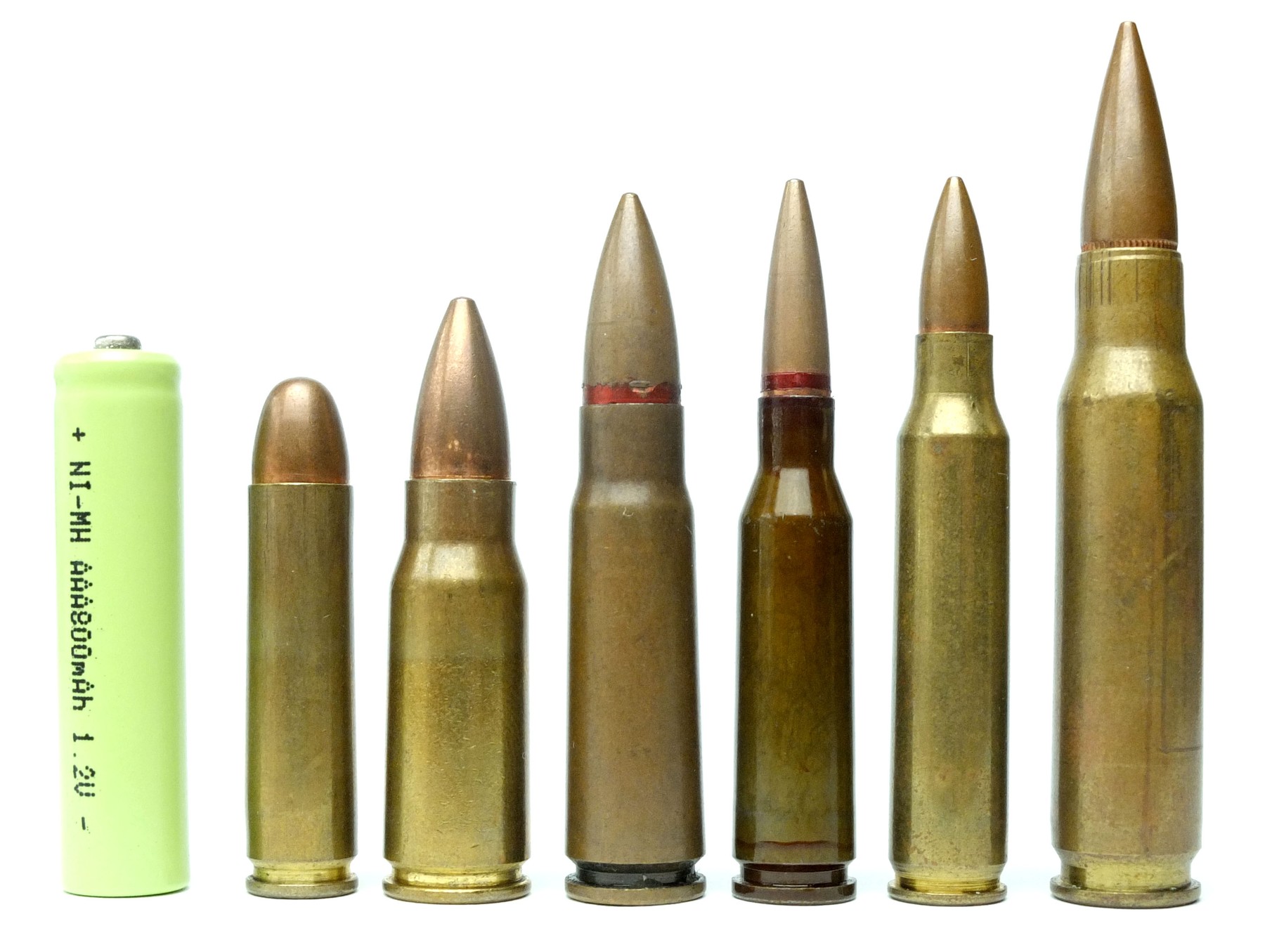
What is contested: whether the M43 is derived from the Kurz as a design. Anthony G. Williams has argued that the Soviet round is dimensionally so different from any German cartridge then in existence that the idea of it being a copy can be dismissed. A separate observation, also in circulation, is that the design the Soviets selected has more dimensional similarity to the GECO cartridge used in the Vollmer M35 than to the Polte round used in the Sturmgewehr — which, if correct, points to a different German ancestor than the obvious one, and one the Soviets may have encountered as early as 1940.
The position taken here is that the concept was borrowed and the cartridge was not. The case is tapered far more steeply than the Kurz, the bullet is a different diameter, the case head is different, and 314 candidate designs is not the work of a bureau copying a specimen.
3.5 What It Does
Figures vary with the source, the loading and the test barrel, and the most common error in quoting them is to ignore the barrel length. Most published M43 ballistics come from a 520 mm test barrel — the SKS length. The AK’s barrel is 415 mm, and it produces lower numbers.
Table 1 — What It Does
| Bullet weight | 7.9–8.0 g (122–123 gr) for standard ball |
| Muzzle velocity | 730–738 m/s from a 520 mm barrel; about 715 m/s from the AK’s 415 mm barrel |
| Muzzle energy | roughly 2,036–2,179 J depending on loading |
| Maximum pressure | 355.0 MPa (51,490 psi) C.I.P.; 310.3 MPa (45,010 psi) SAAMI |
| Effective range | commonly given as about 350 m for the AK |
The pressure line deserves attention because it is a genuine trap. C.I.P. and SAAMI assign this cartridge materially different maximum pressures, and they measure pressure differently as well. A figure quoted without its standard is not a specification, it is a number. The same trap waits in the accuracy figures, where Soviet and Western practice measure different quantities entirely (Volume 7).
3.6 The Bullets
The M43 case has been loaded with a wide family of projectiles, and the ones a shooter is likely to meet are:
- PS ball — the standard postwar service round, mild steel core clad in lead inside a copper-plated steel jacket. Not armour-piercing by design, but its steel core gives it more penetration against hard cover than a pure lead-cored bullet of the same weight.
- Tracer, 57-N-231P — green tip, burning to about 800 m.
- API 7N23 — introduced in 2002, black tip, with a 3.6 g sharp-pointed penetrator of U12A steel.
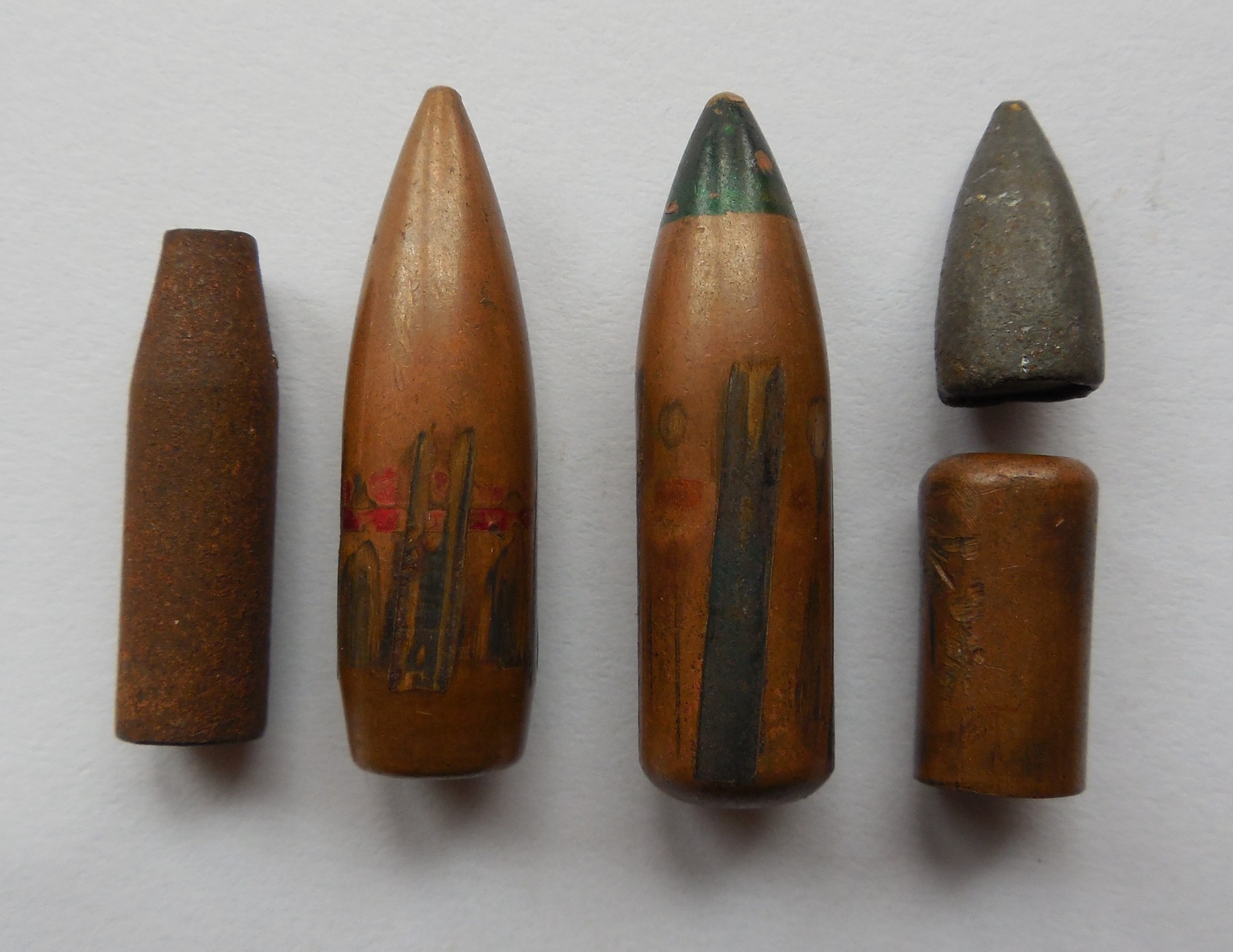
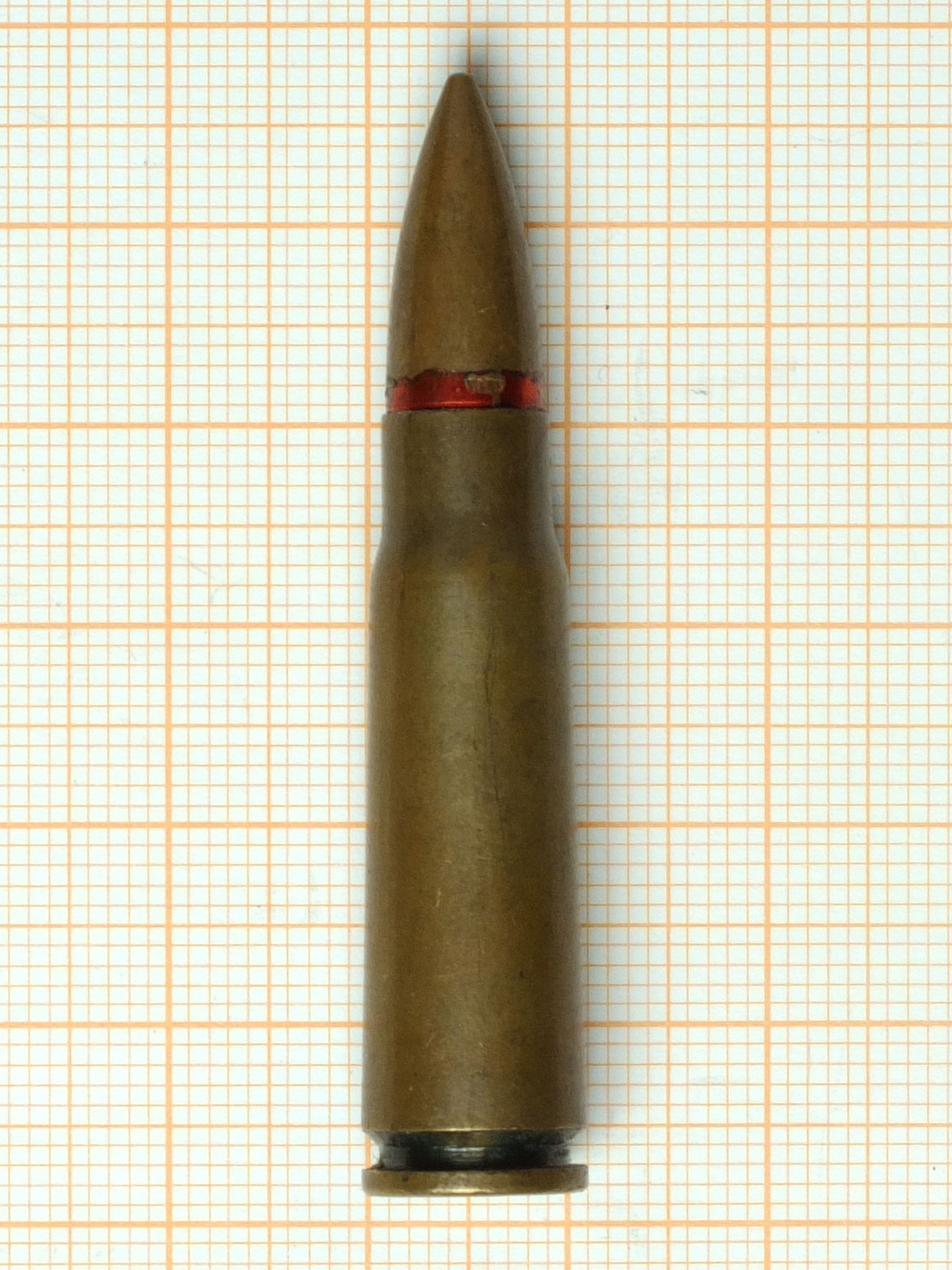
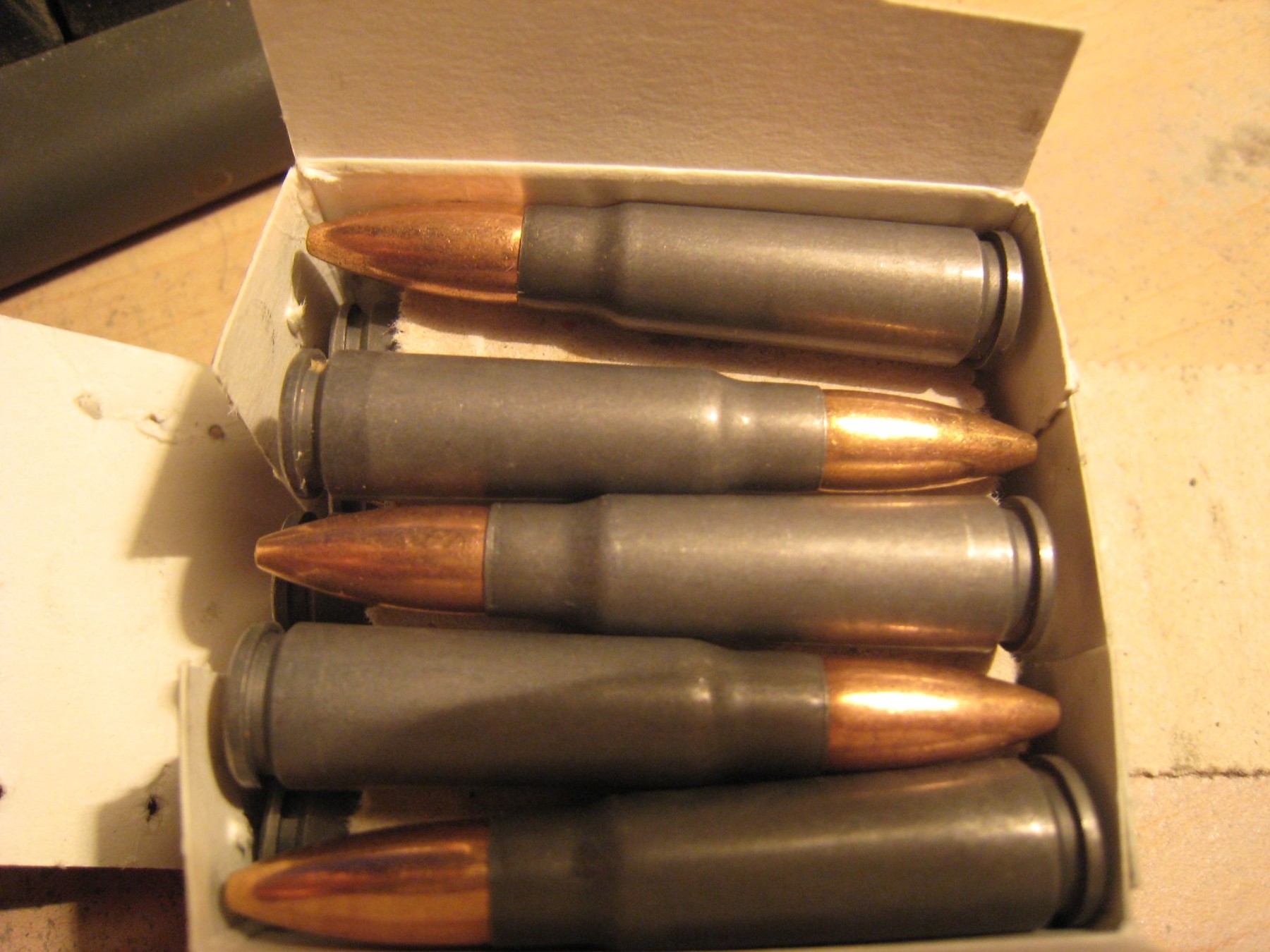
A note on terminology, since it causes constant confusion: a steel core and a steel case are different things and neither makes a cartridge armour-piercing. Steel cases are an economy measure — lacquered or polymer-coated steel instead of brass, chosen because the Soviet Union had more steel than copper. Steel cases do not damage a chrome-lined AK barrel and are what the rifle was designed to eat.
3.7 What the Cartridge Bought, and What It Cost
What it bought was a rifle a conscript could fire on automatic and still hit something with, at the ranges where infantry actually fight; a lighter ammunition load; a lighter, simpler action; and one cartridge feeding the carbine, the rifle and the squad machine gun.
What it cost shows up beyond 300 metres. The M43’s bullet is short, blunt and slow by later standards; its ballistic coefficient is poor, its trajectory drops steeply, and its wind drift is substantial. The rifle’s own dispersion (Volume 7) is only part of the reason an AK is a mediocre performer at distance — a meaningful share of it is the round.
That deficiency is exactly what the Soviets set out to fix in the 1960s, and the answer they arrived at was to abandon the calibre entirely. That is Volume 8.
Comments (0)