The AK-47 · Volume 11
Yugoslavia — the M70 Family
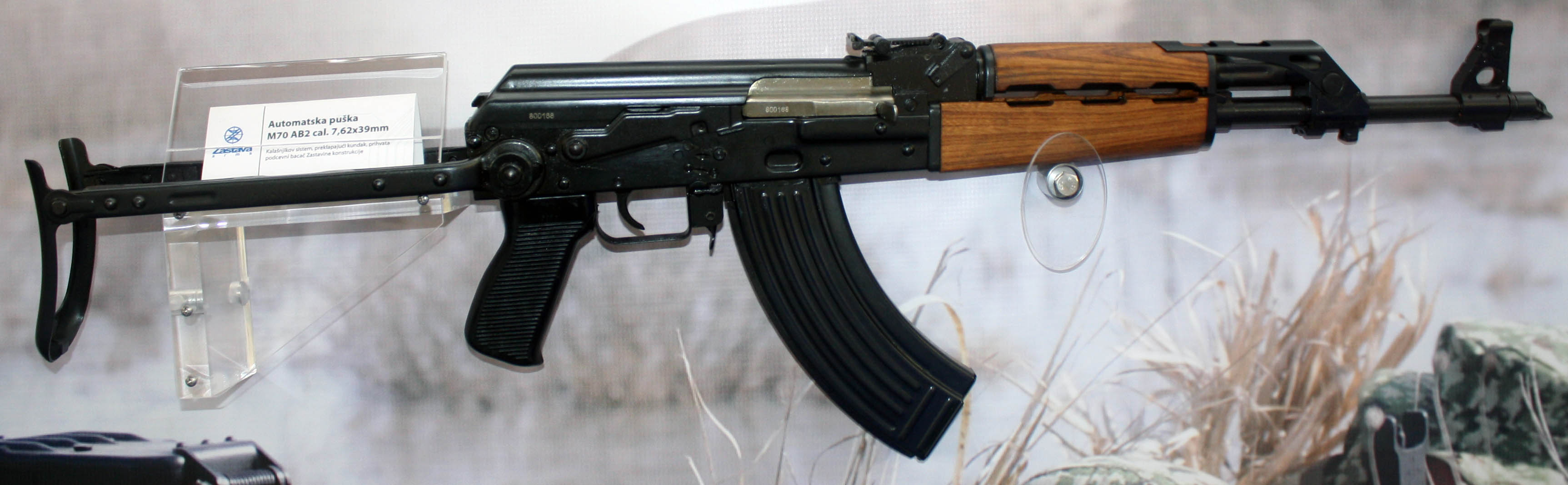
Of all the national Kalashnikovs, the Yugoslav rifles are the ones that differ for a reason that can be stated in a sentence: the Yugoslav People’s Army expected its riflemen to launch grenades from the rifle as a routine matter, and the rifle was built heavier so that they could. Almost every distinctive feature of the M70 family follows from that doctrine, and once it is understood the family stops looking like an assortment of designations and starts looking like one design decision worked through over twenty-five years.
This matters beyond Yugoslavia. The reinforced Yugoslav pattern was exported as tooling to Iraq (Vol 15), it is the basis of a large share of the American parts-kit market (Vol 16), and the build arm of this dive is a milled-receiver underfolder from this family. This volume is the reference those depend on.
11.1 Why the Yugoslav Rifles Are Heavier
Rifle grenades are launched by trapping gas that would otherwise drive the action, and the shock loading that follows is carried by the barrel, the front trunnion and the receiver. A rifle expected to do this frequently, rather than occasionally, needs more metal in exactly those places.
Zastava’s answer had three parts:
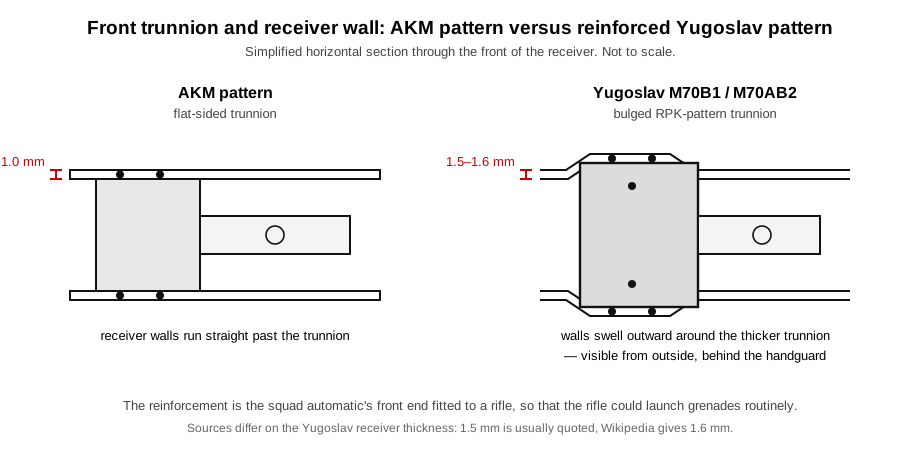
- A bulged front trunnion of the RPK pattern, thicker through the barrel boss than the AKM’s flat-sided trunnion, so that the receiver swells visibly around it.
- A thicker stamped receiver. The figure usually given is 1.5 mm against the AKM’s 1.0 mm; the Wikipedia article on the rifle says 1.6 mm. The discrepancy is small and unresolved, and both figures appear in otherwise careful sources, so this arm reports the range rather than picking one.
- A gas cut-off on the gas block, worked by the folding grenade-launching sight, so that gas is diverted from the piston while a grenade is launched.
A published account of the design history adds a fourth element: that the reinforcement was driven partly by the properties of the Yugoslav steel available, which was softer than the Soviet equivalent and needed more section to do the same job. That explanation is widely repeated in the enthusiast literature and this arm has not traced it to a Zastava or JNA document; it is recorded as plausible and unconfirmed.
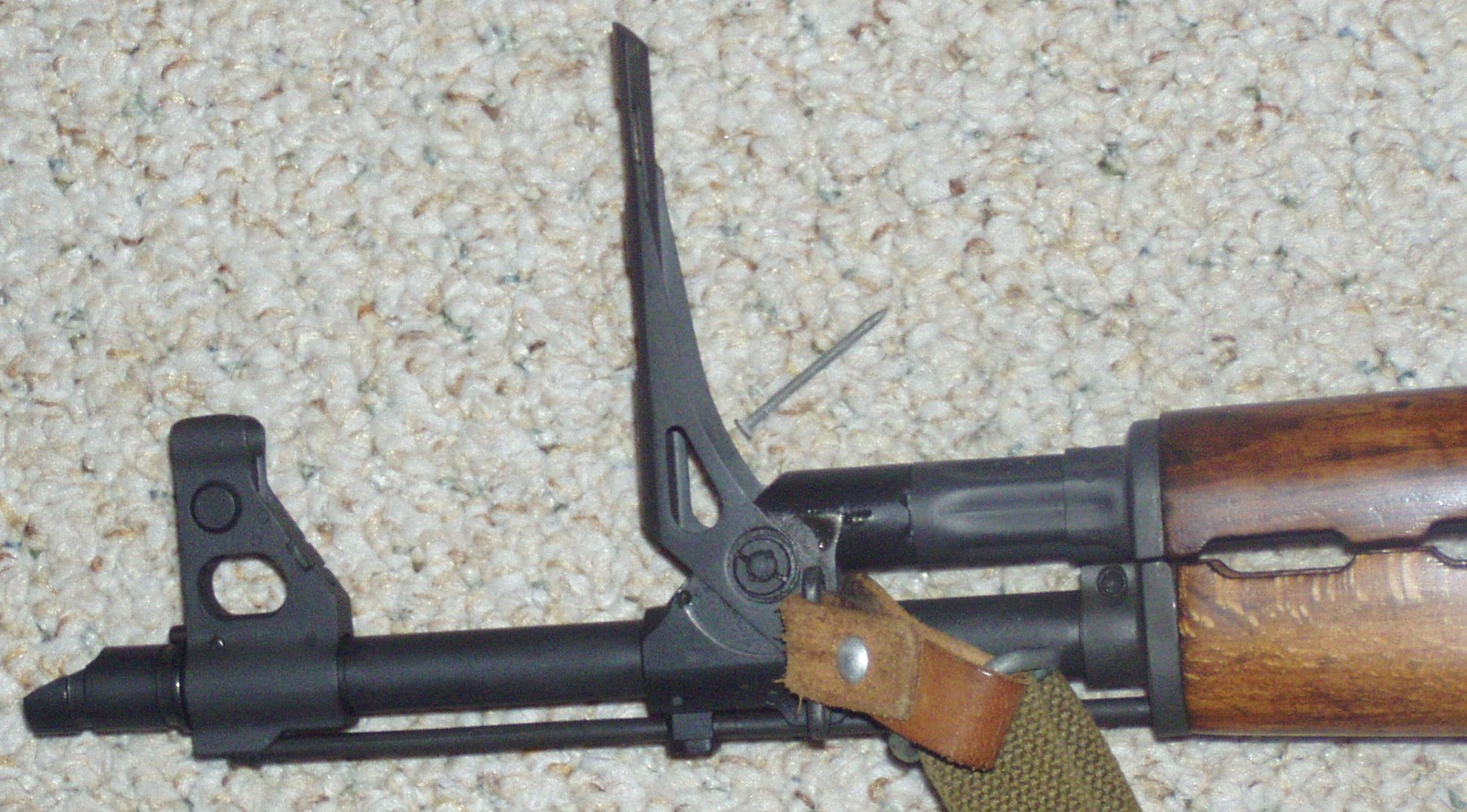
The consequence for anyone handling one of these rifles is practical and is the same trap the Yugoslav SKS sets in the sibling dive in this project: a Yugoslav rifle that will not cycle very often has its grenade sight up. The sight and the gas valve are the same control.
11.2 The Milled Rifles
The family opens with milled receivers, and the early designations are the ones most often garbled.
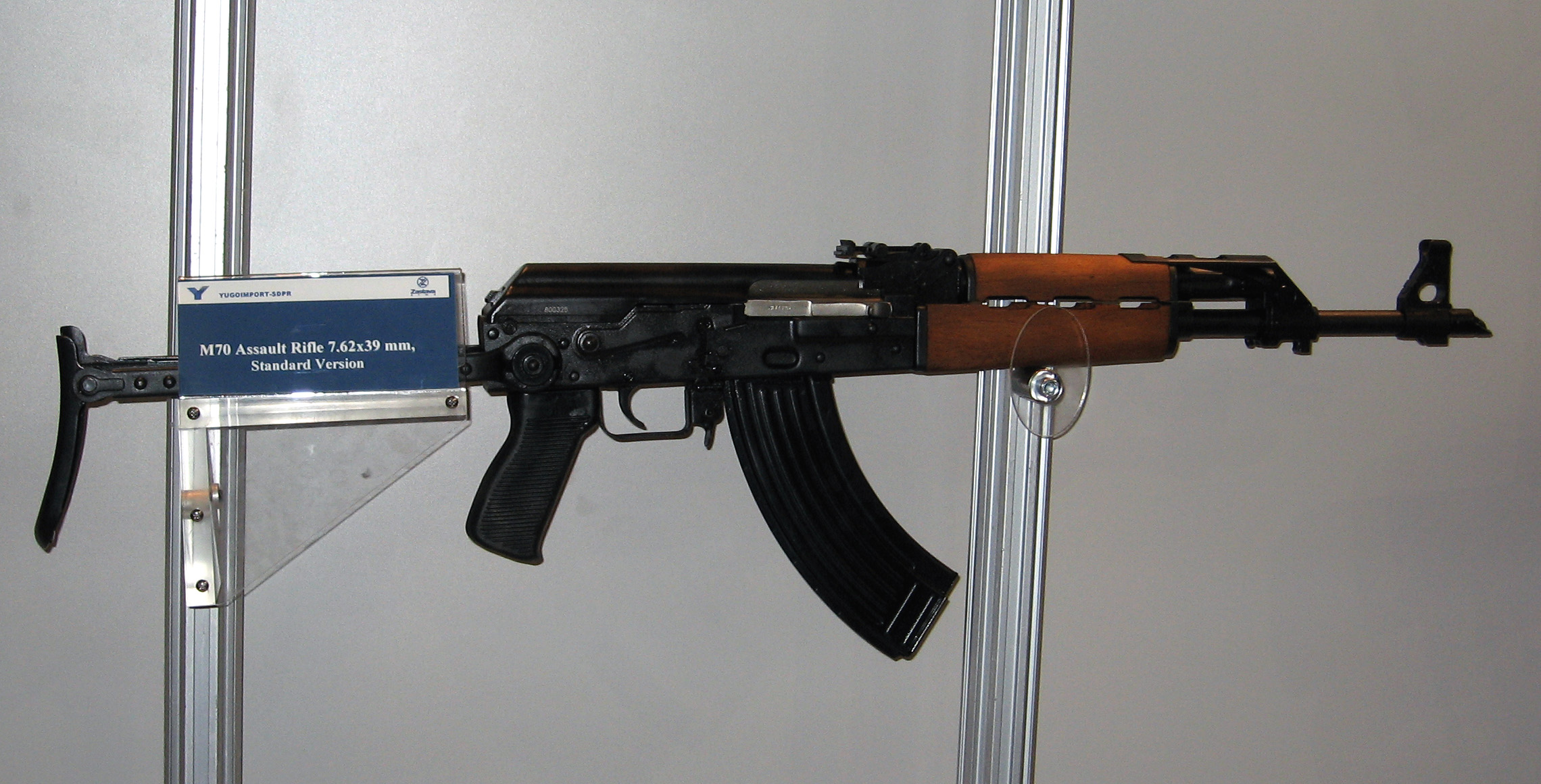
M70, adopted in 1970, is a milled-receiver rifle built on the pattern of the Soviet Type 3 receiver, with a fixed wooden stock and a barrel of about 16 inches. M70A is the same rifle with an underfolding stock.
M70B followed with a milled receiver of so-called “slabside” form — that is, without the lightening cuts in the receiver walls that the Soviet Type 3 carries. M70AB is the slabside receiver with the underfolding stock.
A naming caution belongs here, because this arm’s build volumes use one of these rifles. American retailers and parts dealers routinely advertise milled-receiver Yugoslav underfolders as “M70AB M”, “M70ABM” or “M70AB milled”. Those labels are useful and they describe a real and identifiable rifle — a milled-receiver, underfolding-stock Yugoslav Kalashnikov. What could not be established for this arm is that M70ABM is a Zastava factory designation rather than a market label distinguishing milled parts sets from the far more common stamped M70AB2. Until that is settled from Yugoslav documentation, the honest description of such a rifle is “a milled-receiver M70AB-pattern underfolder”, and the commercial name should be treated as a trade description.
11.3 The Stamped Rifles
Stamped production is where the family’s logic is clearest, because the first stamped attempt did not have the reinforcement and the second one did.
M70AB1 is the transitional rifle. Accounts of it describe an essentially AKM-pattern stamped receiver — about 1.0 mm, conventional rivet pattern, flat-sided trunnion. It is the Yugoslav rifle that looks most like everyone else’s.
M70B1 (fixed stock) and M70AB2 (underfolding stock) are the reinforced rifles and the ones that define the family: the thicker receiver, the triangular rivet pattern, and the bulged RPK-pattern trunnion. A commonly cited date for the reinforced pattern entering production is 1974. These two are, by a wide margin, the most numerous M70s in service and in the export market.
M70B1N and M70AB2N are the optics-capable versions, carrying a side rail for a night or day sight. Night sights — tritium or luminous inserts — are described as standard fitment on the later rifles.
M70B3 and M70AB3 close the sequence. On these the folding grenade sight is gone, replaced by a BGP 40 mm underslung grenade launcher. The doctrine did not change; the hardware for delivering it did.
11.4 The M72 and Where the Trunnion Came From
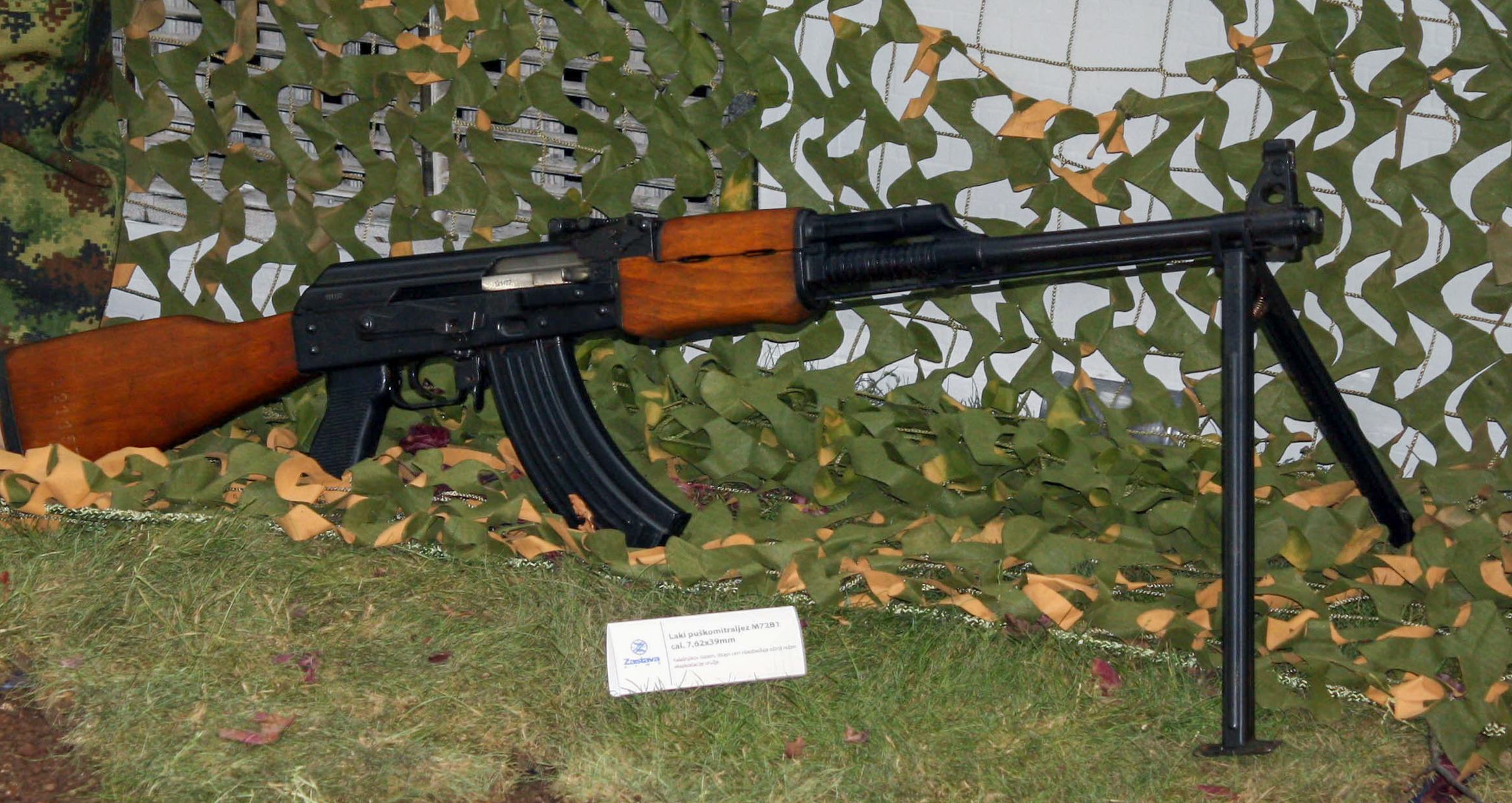
The bulged trunnion is called RPK-pattern for a reason. Zastava’s squad automatic, the M72, is the Yugoslav equivalent of the Soviet RPK: a heavy-barrelled, bipod-fitted light machine gun on a Kalashnikov action, with the reinforced receiver and trunnion that such a weapon needs.
The M70 family’s reinforcement is therefore not a bespoke invention but the adoption of the squad automatic’s front end onto the rifle. That is worth stating precisely because it explains a feature that otherwise looks like over-engineering: the rifle is built to light-machine-gun tolerances at the front because the JNA wanted it to survive a duty the Soviet AKM was not asked to perform.
11.5 Other Yugoslav Differences, With Their Confidence Levels
Several further claims are made about these rifles routinely. They vary a great deal in how well they are supported.
Bores are not chrome-lined. This is stated consistently across sources for the original Yugoslav military rifles, is usually explained as consistent with Yugoslav practice on other Soviet-pattern arms, and is credited with slightly better accuracy at the cost of much worse corrosion resistance. It is well attested and it has a direct maintenance consequence: a rifle with an unlined bore shooting corrosive surplus ammunition must be cleaned promptly. Note that this does not transfer to current commercial production — modern Zastava export rifles are advertised with chrome-lined, cold-hammer-forged barrels, which is the opposite specification.
Magazines and the bolt hold-open. Yugoslav magazines are of a distinct pattern, and a last-round bolt hold-open is one of the features most often attributed to this family in the American market. The sources consulted for this arm disagree: the Wikipedia description of the early rifles explicitly says there is no bolt hold-open, while retail and enthusiast descriptions present one as a selling point of the family. This could not be resolved, and it is flagged rather than asserted — it is a good example of how quickly a variant feature becomes “common knowledge” in one market.
Press-fit barrels. The barrel is described as pressed into the trunnion rather than pinned in the usual AKM manner. This bears directly on the build arm, since it changes how a barrel is removed and installed, and the build volumes address it.
11.6 Identifying a Yugoslav Rifle
In rough order of reliability:
- A folding grenade sight and gas cut-off on the gas block. Where present, decisive. Absent on the B3/AB3 pattern, which has a launcher instead.
- The bulged trunnion, read as the swelling of the receiver walls behind the handguard, on the reinforced stamped rifles.
- The rivet pattern — a triangular arrangement is cited for the reinforced rifles. Useful, and subject to the general warning in Vol 9 that rivets identify a receiver rather than a rifle.
- Furniture and handguard form, which are recognisably Yugoslav but are also the most-replaced parts on any rifle.
The first of these is the one to learn. A grenade ladder on the gas block says Yugoslavia — or, as Vol 15 explains, says Iraq, which bought the whole design.
Comments (0)