The AK-47 · Volume 12
China — the Type 56
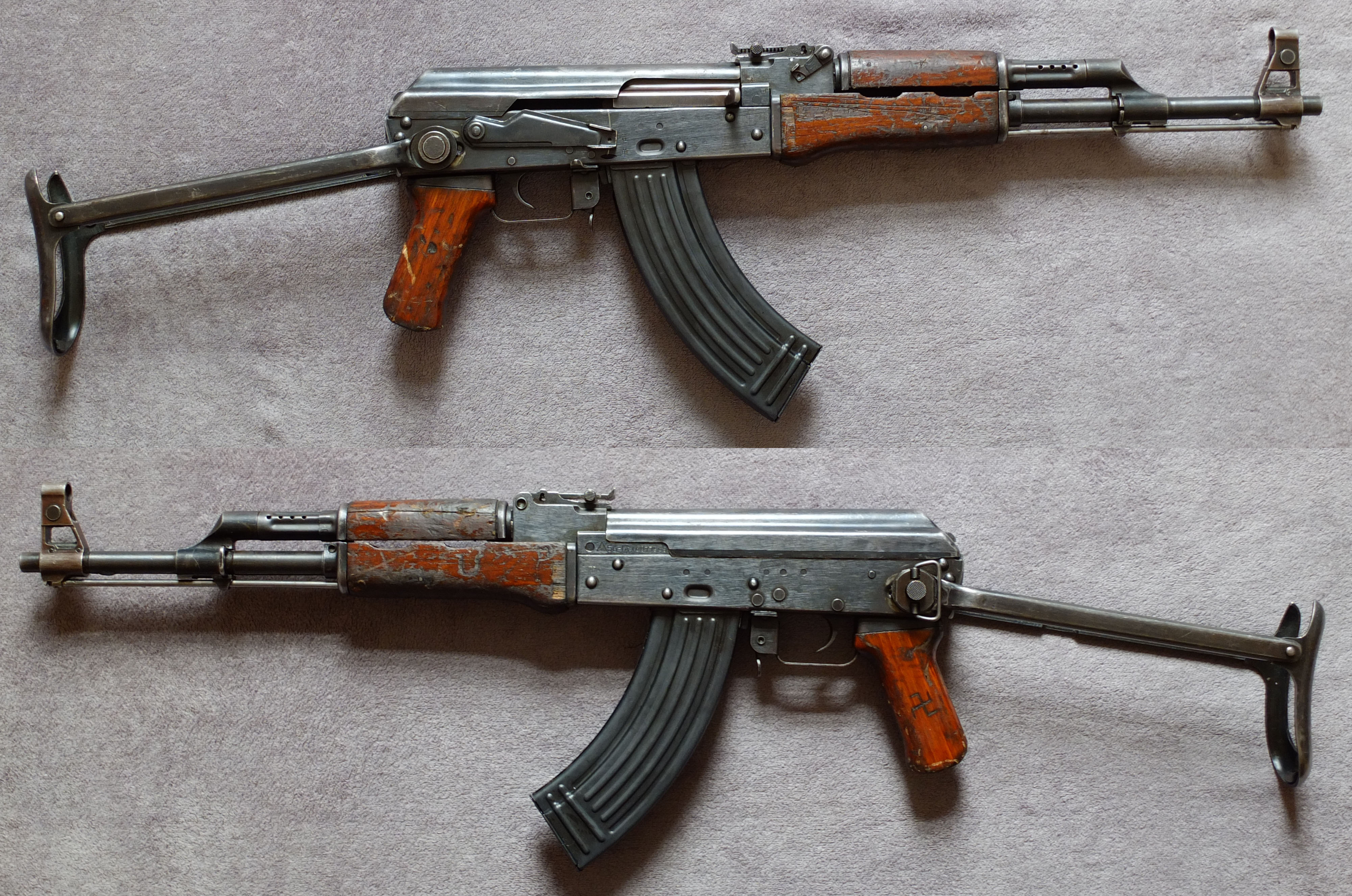
China built more Kalashnikovs than anyone except the Soviet Union, exported them to more places, and produced the variant most Americans have actually handled. The Chinese rifle is also the one where identification runs into the most confidently repeated error in the entire variant literature — an error about a factory number that turns out to name a factory that may never have existed.
12.1 Production
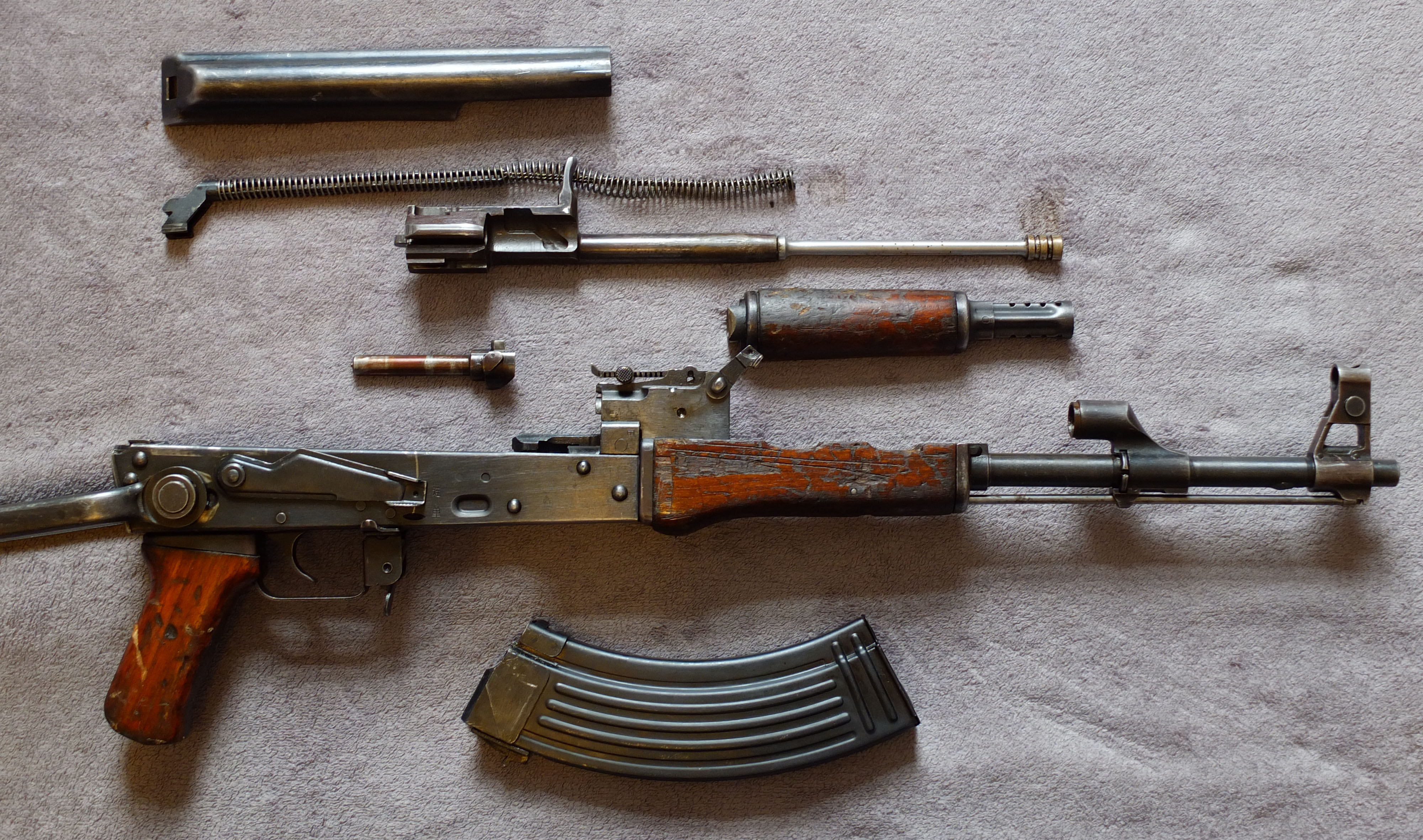
Production of the Type 56 began in 1956, under licence, at a Chinese state factory. The first rifles were direct copies of the Soviet milled-receiver pattern — the Type 3 receiver described in Vol 9 and Vol 10 — and from the mid-1960s Chinese production moved to stamped receivers, following the Soviet move to the AKM.
Later production and export passed to Norinco (China North Industries Corporation) and to PolyTech, the two names under which most Chinese rifles reached the American market. Other state factories joined the programme; Factory 386 and Factory 416 are the ones most often named.
12.2 The Factory 66 Problem
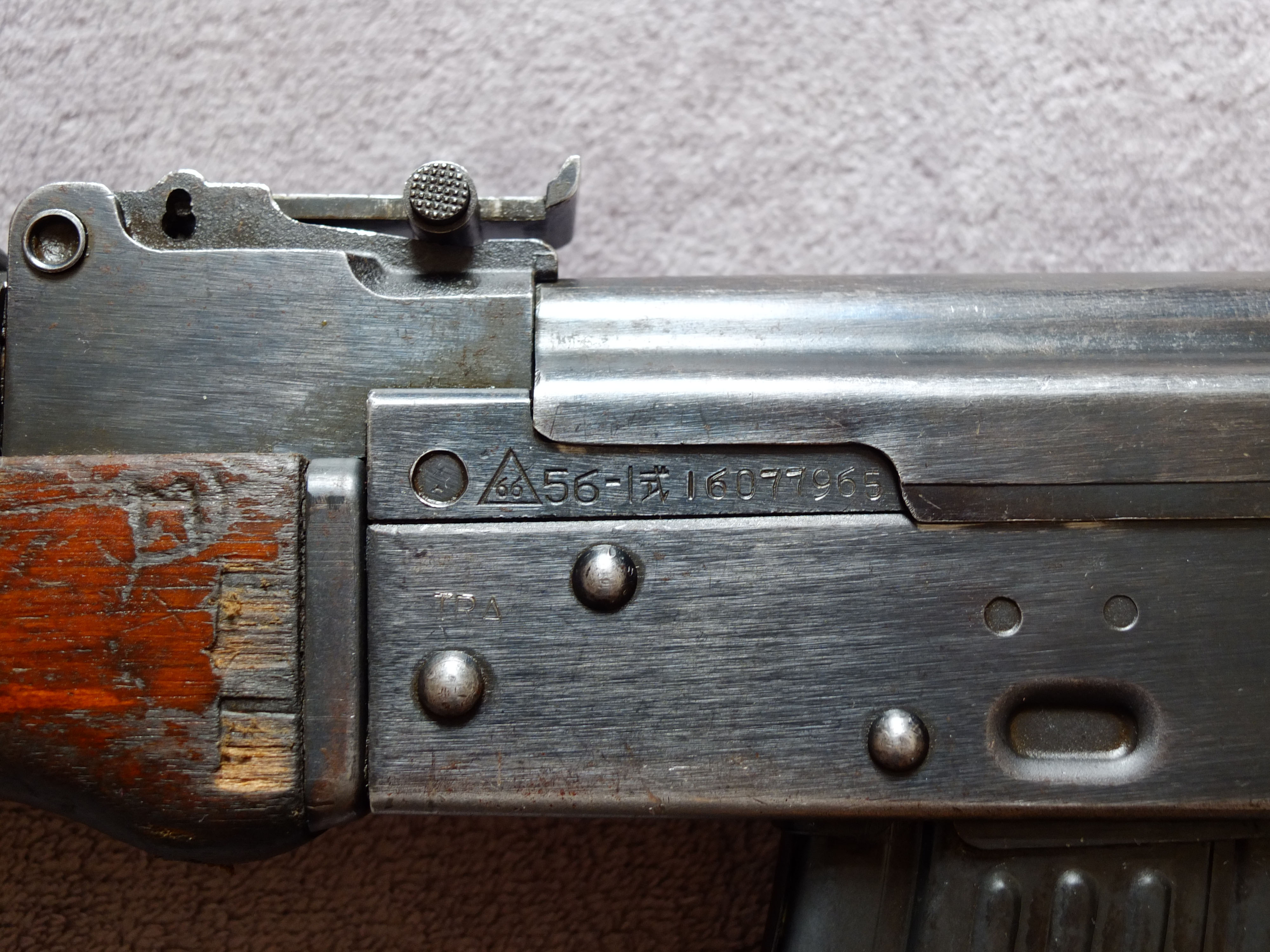
The best-known Chinese marking is “66” inside a triangle, rolled onto the receiver. It is nearly universal on the rifles Americans encounter, and it is conventionally read as the mark of State Factory 66.
There is a serious and specific challenge to that reading. An account encountered in researching this arm holds that most Type 56 production came from Factory 626 in Heilongjiang, and that Factory 626’s mark was the triangle-66 — so that the marking “confusingly suggests that they were manufactured by the nonexistent ‘Factory 66’.”
This arm cannot resolve it. Both readings appear in sources that are otherwise careful, the Chinese factory-numbering system is not well documented in English, and no primary Chinese source was available. What can be said with confidence is narrower and still useful:
- The triangle-66 mark is Chinese, and on a Kalashnikov it is a reliable indicator of Chinese manufacture.
- What it says about which plant built the rifle is genuinely unsettled, and any confident statement in either direction — including the common one — is running ahead of the evidence.
This is worth dwelling on because it is the shape of a great deal of variant folklore: a marking is correctly associated with a country, an explanation of the marking is invented or inferred, and the explanation then circulates with the same confidence as the observation.
12.3 How Chinese Rifles Differ
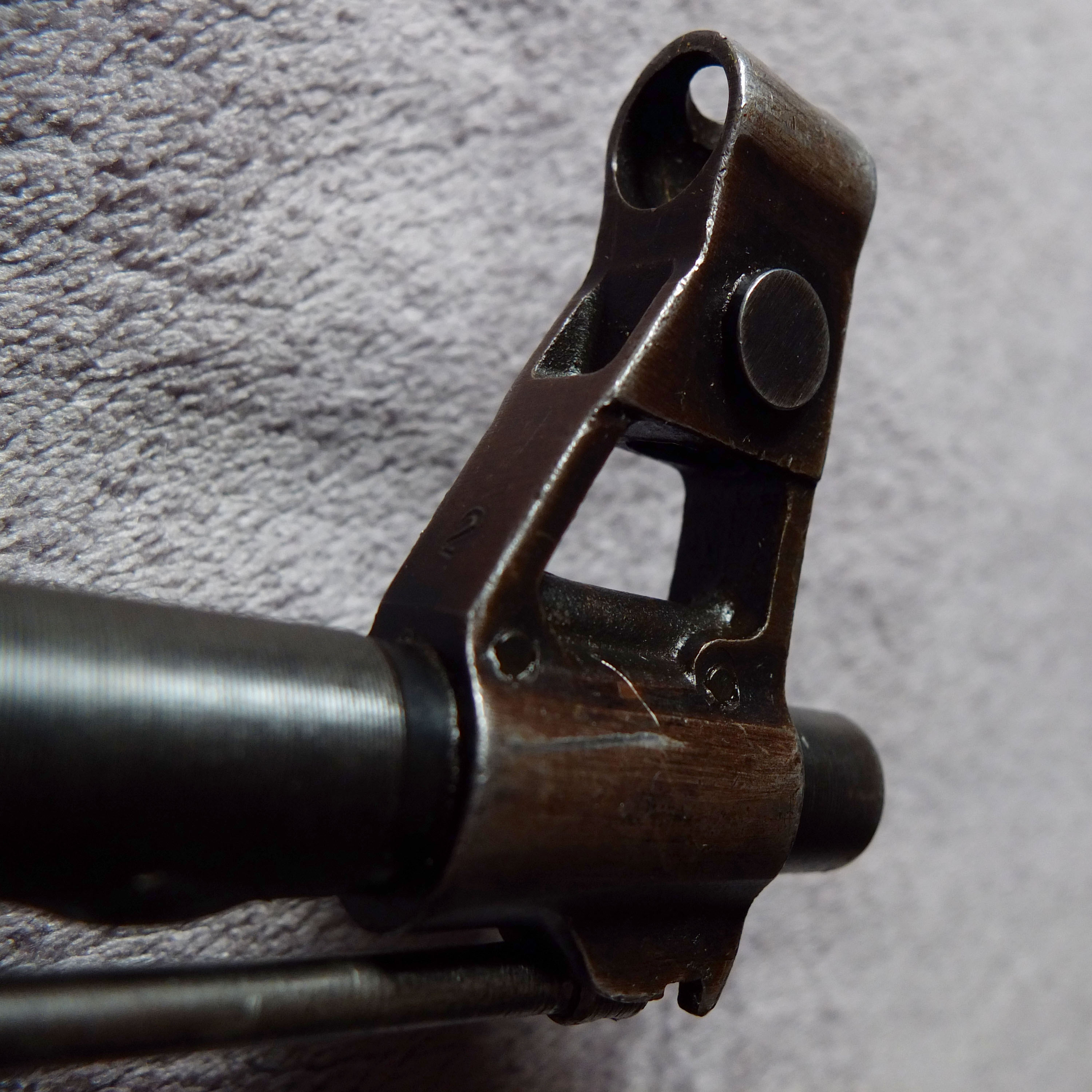
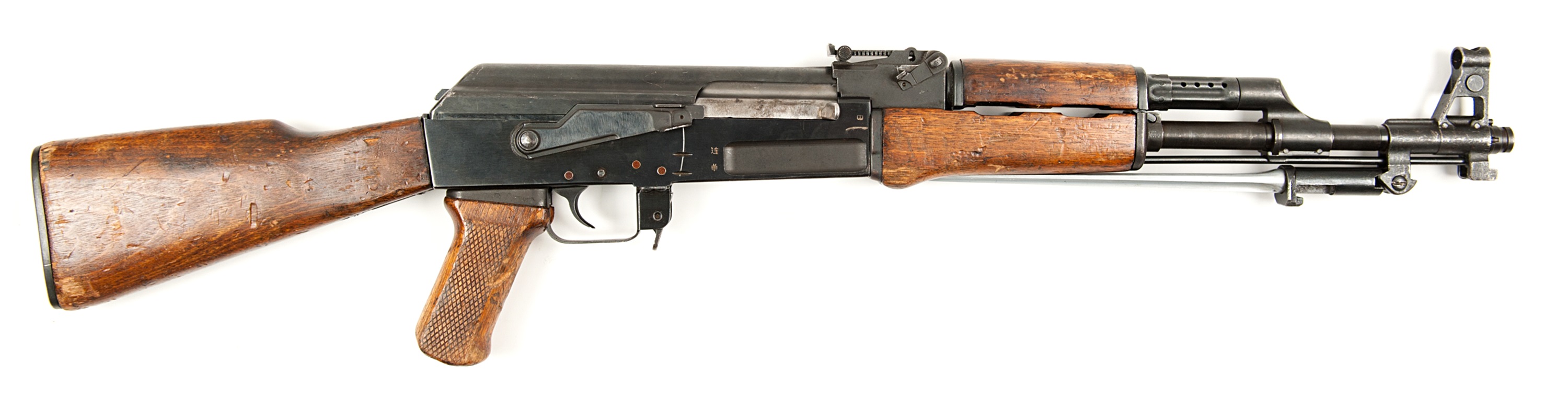
The front sight is the reliable tell. Most versions of the Type 56 carry a fully enclosed hooded front sight — a complete ring around the post — where Soviet, Russian and essentially all other national patterns use a partially open hood with the top left unclosed. This is visible from across a room, survives refurbishment and restocking, and is the first thing to look for.
The bayonet is the second. Chinese rifles characteristically carry a folding spike bayonet, permanently attached, hinged under the muzzle and swung back along the barrel when not in use — where the Soviet pattern used a detachable knife bayonet. It is the silhouette most people picture when they picture a Chinese AK. It was not universal: as stamped production came in, the attached bayonet became optional, and more than one pattern of bayonet was made for these rifles.
Receiver and barrel. Chinese stamped receivers are frequently described as 1.5 mm sheet against the 1.0 mm of Soviet and European production, with a correspondingly heavier barrel. If correct this makes the Chinese stamped rifle a heavier and stiffer weapon than its Soviet equivalent, and it puts it in the same structural class as the Yugoslav rifles of Vol 11 while arriving there by a different route. The claim is widely repeated in the enthusiast literature and is recorded here as reported but not confirmed against a primary source.
Markings are in Chinese characters rather than Cyrillic, which settles the country instantly even when the factory mark does not settle the plant.
12.4 The Stock Variants
The naming is simple and worth keeping straight, because it maps onto the Soviet pattern exactly:
- Type 56 — fixed wooden stock; equivalent to the AK/AKM.
- Type 56-1 — underfolding steel stock; equivalent to the AKS/AKMS.
- Type 56-2 — side-folding stock, a Chinese design rather than a copy of a Soviet one.
Each went through the same milled-to-stamped transition in the mid-1960s, so a Type 56-1 may be either.
12.5 The Chinese Rifle in America
Chinese rifles were, for a period, the cheap and plentiful Kalashnikov in the United States, imported in semi-automatic form under a range of designations — Type 56S, MAK-90, NHM-91 among them — by Norinco and PolyTech.
That ended in two stages, and the second was unusual. The 1989 import restrictions on semi-automatic rifles caught Chinese rifles along with everything else, and were worked around by modified, sporting-configured models. Then in 1994, in the course of extending China’s most-favoured-nation trading status, the Clinton administration carved out arms and ammunition from Norinco and PolyTech specifically. Reporting from the period ties that action to an enforcement matter: Norinco was accused by ATF of exporting rifles to the United States with muzzles threaded for suppressors and with grenade-launcher mountings.
The effect was to end Chinese Kalashnikov imports as a category, and it is why Chinese rifles occupy an odd position in the American market — common enough to be familiar, closed off for three decades, and increasingly collectable as a result. Vol 16 sets this in the wider import framework.
12.6 Reading a Chinese Rifle
- Front sight hood — fully enclosed says Chinese.
- Bayonet — a folding spike under the muzzle, or the lug and hinge where one was.
- Character markings, and the triangle-66 if present, remembering what it does and does not establish.
- Receiver type, milled or stamped, which brackets the rifle either side of the mid-1960s.
- Import marks, which on an American-market rifle will name Norinco, PolyTech or their importer, and will date it to before the 1994 cut-off.
Comments (0)