The Reloading Bench · Volume 11
Cleaning and Polishing
Three functional requirements, one cosmetic one, and the folklore that grew up around the difference
Shine is cosmetic. That is the sentence most of this volume exists to support, because almost every piece of published advice on cleaning brass optimises for appearance and then attaches functional-sounding justifications after the fact. A case that comes out of a tumbler looking like jewellery has not been improved in any way a chronograph or a target can detect. What cleaning actually has to deliver is narrower, and worth stating before any machine is discussed.
There are three functional requirements, and they are the whole brief.
Grit removal, to protect the dies. The most-cited functional reason, and mechanically sound: abrasive grit carried into a sizing die on a case body will scratch the die, and a scratched die marks every case that follows it. The forum formulation states the priority correctly — the real reason for polishing brass is to remove grit to protect the dies, and the shine is secondary.
A readable surface, so the case can be inspected. This is the strongest functional argument for cleaning and it is usually left unstated entirely. A case cannot be checked for a bright stretch ring near the web, a hairline crack at the shoulder or a starting split at the neck if it is black with soot. Volume 10’s rejection criteria and Volume 15’s retirement criteria both assume a surface that can be looked at. Cleaning is what makes inspection possible, and inspection is the safety-critical part.
A pocket clean enough that the primer seats fully. Seating depth affects ignition consistency, and crust in the bottom of a primer pocket can stop a primer reaching the floor. That is the entire functional requirement for primer-pocket cleanliness.
Anything past those three is preference. A fourth item sits just outside them, because it is not a cleanliness question at all: interior neck carbon is a variable, not dirt.
11.1 What Each Method Actually Removes
The three methods are not three grades of the same operation. They remove different things, and the honest comparison says so plainly.
Dry vibratory with corn cob removes light tarnish, dust and surface grit, and absorbs oil and moisture. It does not remove heavy carbon, primer-pocket crust or interior carbon.
Dry vibratory with walnut removes the same plus heavier surface deposits, being a more aggressive cut. It still does not touch primer-pocket crust or most interior carbon.
Wet tumbling with stainless pins removes essentially everything — exterior, interior, primer pockets, flash-hole debris. There is nothing meaningful it leaves behind, which is both its selling point and, for the neck interior, its problem.
Wet tumbling with solution only, no pins removes exterior tarnish and loose soot, and leaves primer-pocket crust and bonded interior carbon.
Ultrasonic is good at the two things dry media is worst at — interior carbon and primer-pocket residue — and poor at the one thing dry media does best. It does not polish; brass comes out clean and dull.
The corn cob versus walnut distinction is real rather than marketing: corn cob is the choice when the priorities are gentle cleaning, drying and oil absorption, while untreated black walnut is more aggressive and is used for dirtier brass. Neither polishes on its own — bright brass requires treated media or an added polish, which matters because a loader who buys plain media and expects shine will conclude the machine is faulty.
Additives are where the evidence thins. Treated media is sold pre-charged; the common home additive is a car polish, with mineral spirits appearing in the same folk literature. No manufacturer specifies a car polish, and no test data was located showing that any additive changes anything but appearance. That is practice, not established fact.
11.2 Dry Vibratory
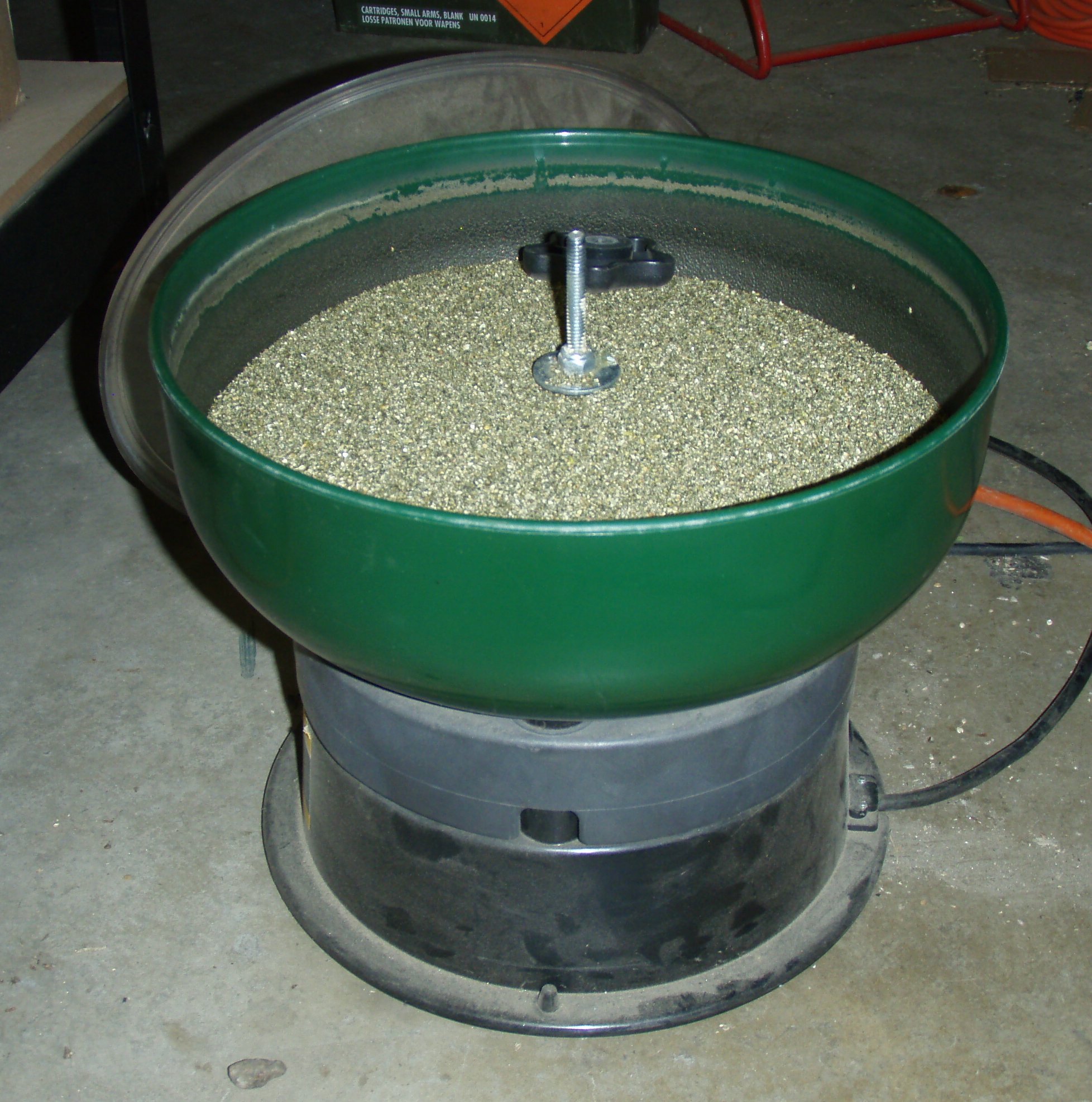
The dry vibratory tumbler is the cheapest per cycle, the simplest, and the only method that runs with spent primers still in the cases — worth more than it looks, because a primer in place plugs the flash hole and nothing can lodge in it.
Prices checked 2026-09-17 on the makers’ own sites. Dillon’s CV-2001 is $295.00 and the smaller CV-750 starts at $250.00, with cleaning kits at $345.00 and $425.00. Dillon media: walnut, 12 lb, $29.95; corn cob, 10 lb, $24.95; brass polish, 8 oz, $13.95. Frankford Arsenal’s Quick-n-EZ vibratory is $85.99 and its kit $145.99.
Dillon’s marketing claims an 8.5-quart bowl for the CV-2001 and capacity to polish up to 1,300 .38/.357 or 550 .30-06 cases per hour — figures that appear in retailer copy reproduced from Dillon rather than on the fetched product page, and that should be read as marketing rather than measured throughput.
The two real drawbacks are that no dry method will ever clean a primer pocket, and that media eventually loads up with lead and combustion residue and becomes a disposal question rather than a consumable.
11.3 Wet Tumbling With Stainless Pins
Wet tumbling with pins is the only method that returns a case to as-new condition inside and out. It also imposes three process steps the dry route does not have: depriming first for the pockets to benefit at all, a drying stage afterwards, and pin accountability.
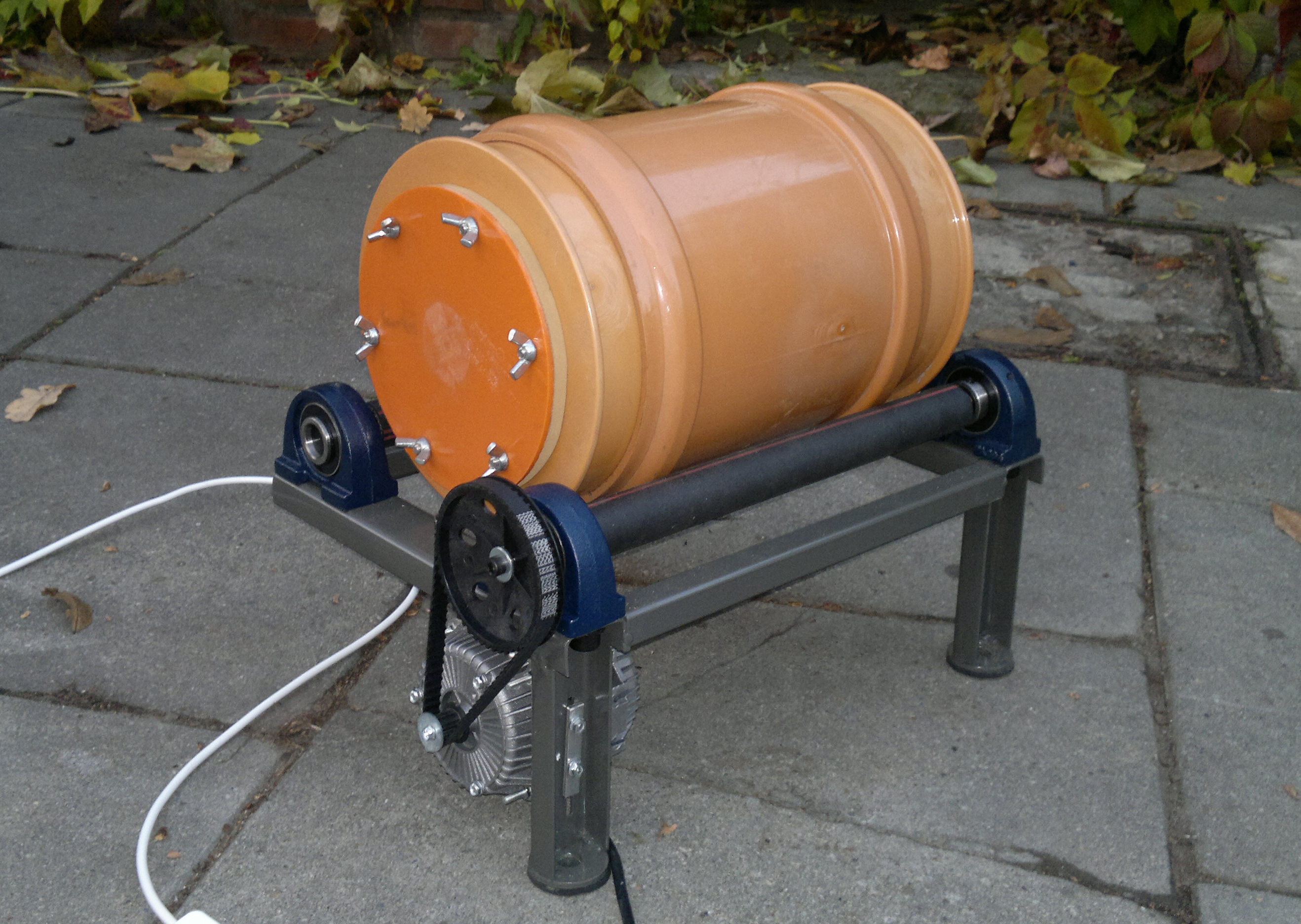
Prices checked 2026-09-17. The Frankford Arsenal Platinum Series Rotary 7L is $336.99 — a 7-litre drum rated for up to 1,000 .223 cases, shipping with 5 lb of 304 stainless pins and a solution sample, a geared drivetrain with no belt, a three-hour timer with auto shutoff, and a noise-lined dual-layer drum; it can run pins-free with solution only. The Rotary Tumbler Lite is $185.99, and the Lyman Cyclone Rotary $314.95, also rated to 1,000 .223 cases and including pins and sifter pans.
11.4 The Thumler’s Model Trap
One purchasing error here is common enough and specific enough to deserve its own section, because the vendor states it outright and the reloading literature repeats the wrong model anyway.
Thumler’s sells two Model B tumblers and only one of them is for brass. The standard Model B runs at 1,550 rpm and is the rock-polishing machine: a 15 lb barrel, thermally protected motor, quarter-inch rubber liner and watertight gasketed lid, at $339.99 checked 2026-09-17. The Model B High Speed runs at 3,000 rpm and is the one designed for brass, quoted by the vendor as holding 250 .30-30 cases and processing that load in about three to four hours.
The vendor’s own comparison is explicit: the high-speed Model B is designed for polishing brass, and its 3,000 rpm is too fast for tumble-polishing rocks. A dive, a forum post or a shopping list that recommends “a Thumler’s Model B” without specifying High Speed has recommended the rock machine. The High Speed version’s price could not be confirmed — the vendor page read “Temporarily Unavailable” when checked on 2026-09-17 — so no figure is given for it.
One further brand, appearing in discussion as “STM”, could not be located at all and is therefore not described here; the name may simply be wrong.
11.5 Ultrasonic
Ultrasonic cleaning occupies a real niche and is frequently bought for the wrong reason. It excels at interior carbon and primer pockets, and it does not polish.
Prices checked 2026-09-17. The Lyman Turbo Sonic 2500 is $184.95: a heated 2,500 ml tank, claimed to clean inside and out in under ten minutes, with a published capacity of roughly 900 9mm, 400 .223 or 250 .30-06 cases per cycle; its frequency is not published. The Hornady Lock-N-Load Sonic Cleaner 2L carries a $136.99 suggested price against street prices of $159.99 to $169.99 — retailer figures, since Hornady publishes none.
Reported cycle times cluster at eight to thirty minutes depending on how dirty the brass is and what solution is used. The common home chemistries are citric acid or a vinegar, water and dish-soap mix, ten minutes reported as enough for spotless pockets. That is practice rather than established fact — and it carries a caution connecting directly to the chemistry section below: acid concentration is the same dial that causes dezincification. The tool and the hazard share a control.
One catalogue note: Frankford Arsenal’s pages showed no ultrasonic product at the time of the research pass, so that line appears to have been dropped.
11.6 Separation, and the Pin That Goes Down the Bore
Media separation is a small purchase with one genuinely serious failure mode attached. Prices checked 2026-09-17: Dillon’s CM500 separator is $110.00 and CM2000 $165.00; Frankford’s wet/dry separator $67.99 and a media transfer magnet $26.99.
The magnet exists for a reason. Stainless pins can double up and lodge in a flash hole, or sit crosswise inside a case. The consequence, in the words of the threads that document it, is the line to carry: pins will go down the bore, and clean brass is not worth messing up a barrel. The countermeasures are unglamorous and non-negotiable — rinse in clean water, shake every case out, rap the brass on the pan, and account for the pins by volume or by magnet rather than by assumption. This is the one hard requirement distinguishing the wet-with-pins workflow from every other cleaning method.
11.7 Drying
Wet cleaning creates a drying problem, and the drying problem creates a metallurgical worry that is unfounded in one direction and real in the other.
The Frankford Arsenal Platinum Series Brass Dryer is $95.99 as checked 2026-09-17: 500 W, circulating air up to 160 °F, rated to dry up to 1,000 .223 cases inside and out in under an hour. A food dehydrator is the standard substitute.
The common fear is that oven drying will accidentally anneal the brass. At drying temperatures that fear is unfounded, and the metallurgy says why: 160 °F is nowhere near any transformation in cartridge brass, where the stress-relief window for 70/30 brass begins around 250–350 °C and recrystallization around 300 °C under cold-work conditions. Forum guidance to keep oven drying at or below roughly 200–300 °F is consistent with that.
The real caution runs the other way, and Volume 14 develops it. A heat source hot enough to dry brass fast is a heat source capable of softening a case head — and head softening, unlike neck softening, is a safety failure rather than a performance one. That asymmetry is why annealing is treated as a precision operation with a temperature and a dwell, rather than as a matter of getting the brass hot.
11.8 Interior Neck Carbon Is a Variable, Not Dirt
This is the one place where “cleaner” and “better” come apart, and it is the honest centre of the dry-versus-wet argument.
Dry tumbling leaves a thin carbon film inside the case neck. Wet tumbling with pins strips it completely. Multiple reloaders report that squeaky-clean necks raise and destabilise seating force, and some deliberately retain neck carbon for that reason. The evidence is practice — widely reported, consistent, with no controlled test located — but the mechanism is straightforward: seating force is a friction measurement, and removing a lubricious film changes the friction.
The consequence is procedural rather than doctrinal. Switching cleaning methods mid-programme changes seating force, which changes neck tension, which is a load variable. A batch cleaned one way is not interchangeable with one cleaned the other for a load record, and Volume 23’s feedback loop needs the cleaning method recorded alongside everything else. The mitigations used by precision shooters are a dry-lube or graphite treatment of the neck interior, or a deliberate partial clean that leaves the neck alone.
So the dry-versus-wet decision favours neither side cleanly. Wet with pins gives a case that can be inspected everywhere and a pocket that will definitely take a primer; it costs a drying step, pin discipline, and a change to neck friction. Dry gives a simpler workflow, no primer-pocket cleaning, and leaves the neck as it was.
11.9 Three Chemistry Claims, Sorted
The cleaning literature carries three claims about chemistry damaging brass. They are routinely merged in forum arguments, and they have three entirely different evidentiary statuses.
Stainless pins embrittle brass. This is folklore. No source located supports hydrogen embrittlement of cartridge brass from pin tumbling; the hydrogen-embrittlement literature the search returns is about stainless steels, not copper-zinc alloys. The mechanical effect that is documented is peening of case mouths by the pins, with little evidence of brass hardening worth concern. Peening is real and is a reason to watch mouth condition; embrittlement is not.
Aggressive wet chemistry dezincifies brass. This is established as a mechanism and conditional in practice. Dezincification is the selective leaching of zinc, and it presents as a rose or pink cast. The reported trigger is excessive acid — too much citric additive, too long, water too hot — or excessive alkalinity, and the same discussions note that normal contact times cause minimal dezincification unless the solution is particularly acidic or chlorinated. The practical rule is the one to print: pink brass is a chemistry error, not a pin error. Blaming the pins sends the loader to fix the wrong variable.
Ammonia causes stress-corrosion cracking of cartridge brass. This is established, and it has the best pedigree of the three. It is season cracking, identified in 1921 by Moor, Beckinsale and Mallinson after British cartridges stored in Indian stables cracked — ammonia from horse urine acting on the residual tensile stress of cold-drawn cases. Cracks initiate at stress levels well below yield, and the residual drawing stress then drives them open until the case can fracture suddenly. The industrial countermeasure is stress relief at roughly 250–300 °C, which is precisely what annealing a case neck does.
That third claim yields a rule this volume has not found stated anywhere in the handloading literature, a strange omission given how well established the metallurgy is: no ammonia-bearing cleaner goes anywhere near brass destined for reloading. That excludes household glass cleaner and any brass polish with ammonia in it — both otherwise plausible things to reach for when a case looks dull. Brass in storage should be kept away from ammonia as well.
There is a diagnostic corollary most handloading writing misses. A case that cracks at the neck or shoulder with very few firings on it, or that cracks in storage rather than at the range, is not a work-hardening failure — it is a season-cracking suspect. Work hardening takes cycles; stress-corrosion cracking takes only time and a contaminant.
11.10 Primer Pockets, and Whether Shine There Matters
Whether a polished primer pocket does anything is, on the available evidence, unanswerable — and that is the finding rather than a hedge. No test data was located showing that a polished pocket, as opposed to an unobstructed one, changes velocity, standard deviation or group size.
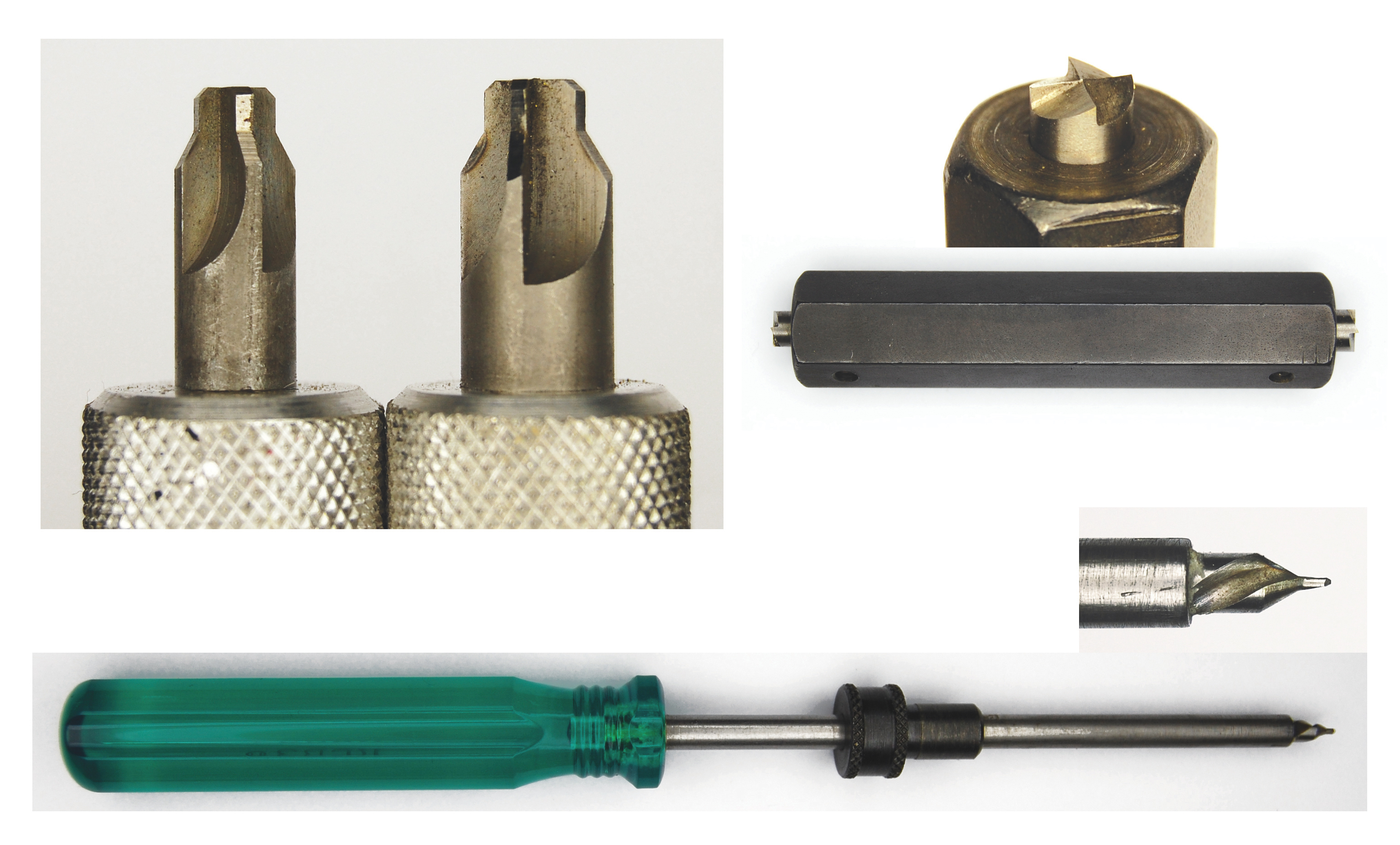
What is defensible is the third functional requirement from the opening: a pocket must be clean enough to let the primer seat fully to the bottom, because seating depth affects ignition consistency and crust can prevent it. Beyond “seats fully”, shine in a primer pocket is decoration. Pocket uniforming — cutting the pocket to a consistent depth — is a different operation with a different argument behind it, and Volume 12 handles it.
11.11 Choosing, for This Bench
For the two-machine bench this dive is written around, the split follows from the three functional requirements rather than from preference.
Bulk pistol brass — 9mm, .40 S&W, .45 ACP — is well served by dry vibratory: tumbled with primers in place, removing the flash-hole hazard entirely; no need for clean pockets, since no pistol case on this list has a crimped one; and inspection for mouth splits and bulges needs a readable surface and nothing more.
Rifle brass destined for load development — .308, .30-06 for the Garand, .300 Blackout — has a stronger case for wet with pins: military brass needs genuinely clean pockets before swaging, and formed .300 Blackout brass needs to be inspectable everywhere. The cost is the drying step, pin accounting, and a change to neck friction that must then be held constant.
Bulk .223/5.56 for plinking is where the labour argument dominates: dry tumbling, primers in, no drying step, and the pockets left uncleaned because for that ammunition it does not matter. Ultrasonic earns a place on a bench processing crimped military brass in quantity — as a pocket and interior-carbon tool rather than a general cleaner, with the acid concentration watched, because that is the dial that turns brass pink.
Comments (0)