The SKS · Volume 7
China — The Type 56 and the Eighty Factories
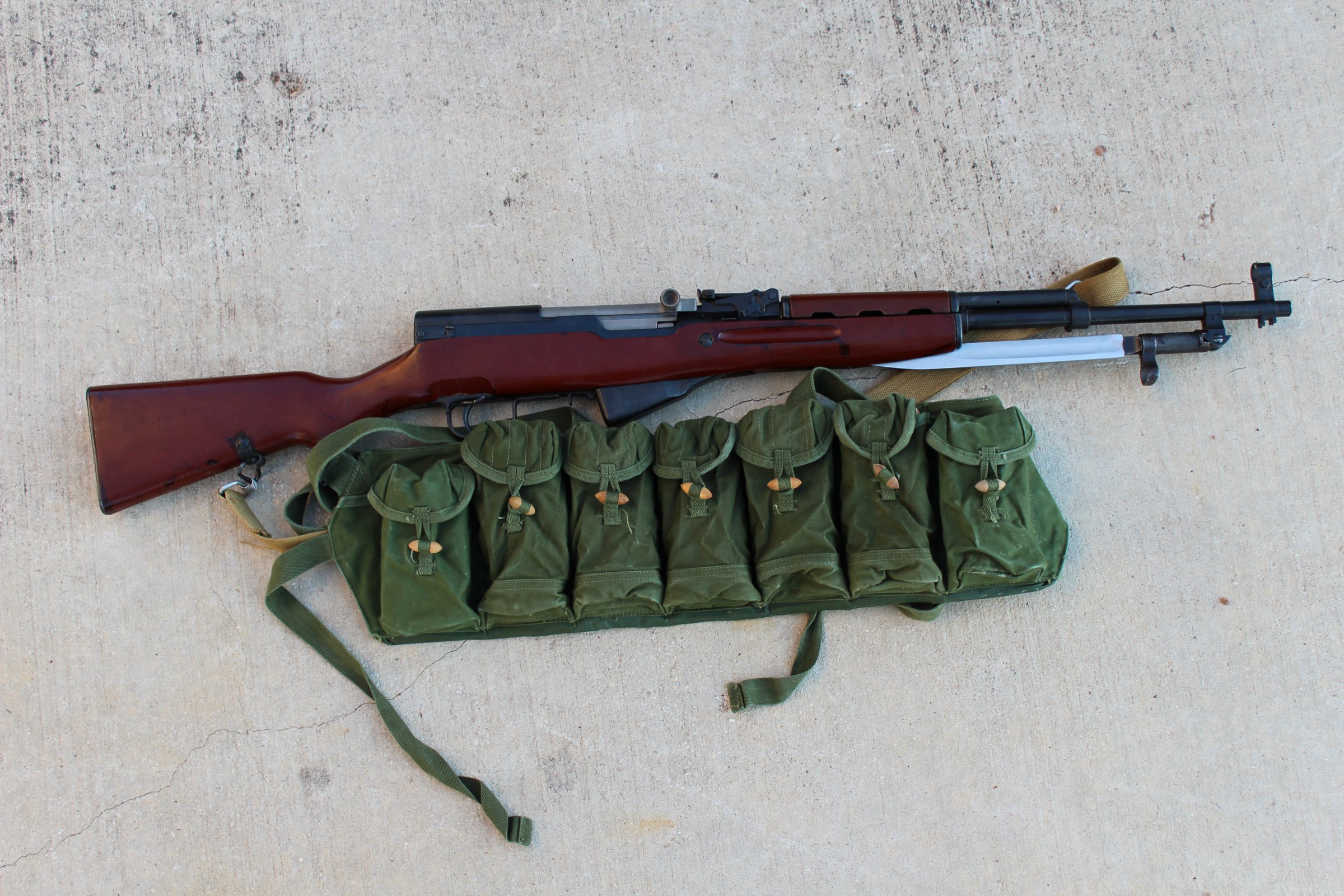
China built more SKSs than the Soviet Union did, by a factor of three or more, and kept building them for thirty years after Tula stopped. If you own an SKS in the United States, the odds are overwhelming that it came from a Chinese factory, that it arrived between about 1988 and 1994, and that it originally cost its importer less than a tank of fuel.
The Chinese story is also where the identification gets genuinely complicated, because “Type 56” covers rifles built in something like eighty different factories across three decades, with running changes that were not synchronised between them.
7.1 The Sino-Soviet Beginning, 1956
The earliest Chinese guns were not really Chinese. Production began in 1956 with rifles “assembled under the supervision of Soviet technicians, using parts and materials imported from the Soviet Union.” Collectors call these Sino-Soviet rifles. They have milled receivers, blade bayonets, and Soviet-grade materials, and they are the best-made Type 56s that exist.
The transition away from that happened in stages, and each stage is a dating marker:
- Materials. Soviet nickel-chrome alloy steel gave way to domestic Chinese carbon steel.
- Process. A larger proportion of stamped rather than machined small parts.
- The barrel joint. The threaded barrel-to-receiver joint of the Soviet rifle was replaced by a pressed and pinned barrel. This is the single most consequential Chinese change: it is faster and cheaper, and it means replacing a Chinese barrel is a press job rather than a wrench job.
7.2 Reading a Chinese Receiver
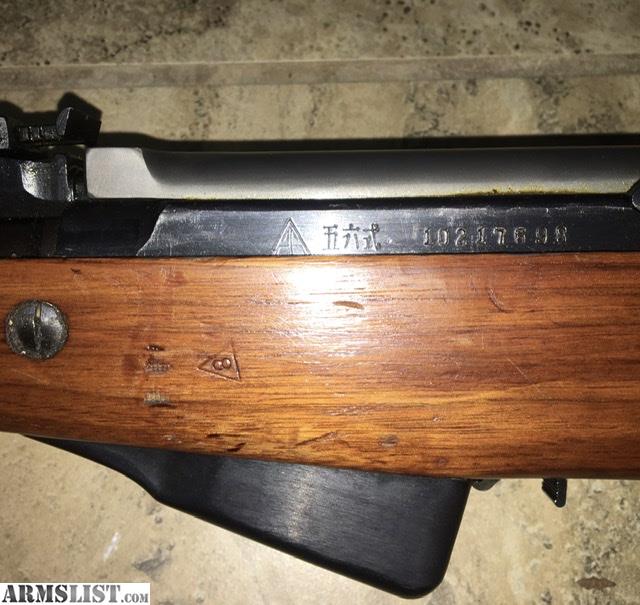
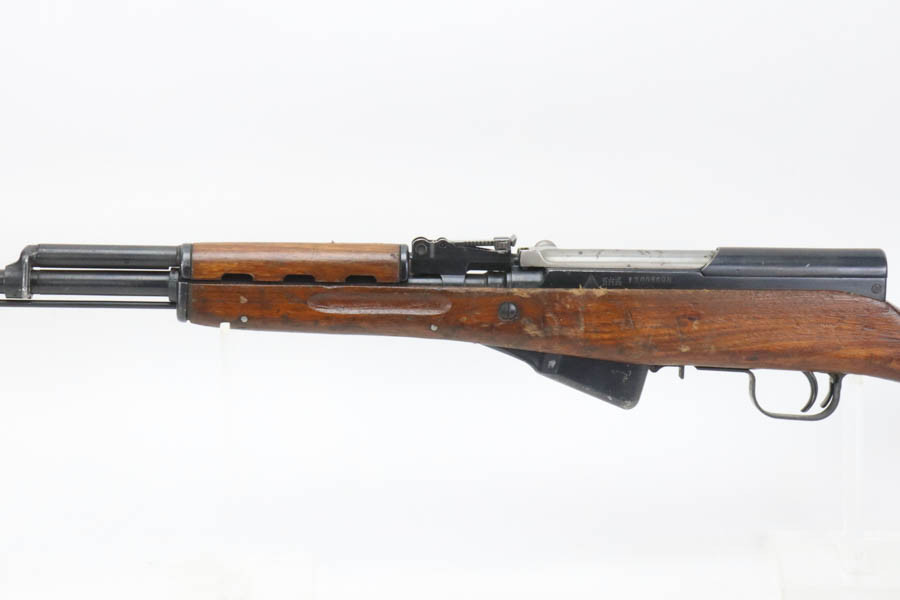
Three things are stamped on the left side of the receiver: a factory code, the model designation, and the serial number.
The factory code is a number inside a geometric frame — a triangle, a square, a circle, a diamond or an oval. The most famous is /26\ — 26 inside a triangle — which is the Jianshe arsenal, adopted around April 1957 when that factory transitioned to state ownership. Square-framed four-digit codes are also common: 0129, 0134, 0135, 0136, 0138, 0140, 0141, 0142, 0144, 0145, 0146, 0147 and many others.
The serial number encodes the year, but the scheme depends on the factory and the era:
Table 1 — The serial number encodes the year, but the scheme depends on the factory and the era
| Period | Scheme |
|---|---|
| 1956–57 | Sino-Soviet serials from 0001; then a large “ghost gun” range; then six-digit /26\ marked rifles from early 1957 |
| 1957–69 | The millions digit is the year index, counting 1956 as year one. A 2-million serial is 1957, 3-million is 1958, and so on to 14-million in 1969 |
| 1970s–80s, high-output factories | Three-digit decimal prefixes — 1.5 million is 1970, 1.6 million is 1971 |
| 1970s–80s, low-output factories | A two-digit year prefix — 70, 71, 72 |
| 1988–94, export | The year directly — 88 through 94 |
That is a lot of schemes for one designation, and it is why dating a Chinese SKS is a question that needs the factory code answered first.
Physical transitions reported consistently in the collector literature give a second set of dating handles:
- 1958 — a sling swivel added to the side of the stock.
- 1964 — the spike bayonet and a short barrel lug first appear. This is the big visual change: early Chinese rifles have the blade, later ones the spike.
- 1966 — a stamped trigger group, a two-piece gas tube, and the deletion of the lightening cuts in the bolt carrier.
- 1978 — Bakelite handguards, known in the trade by a nickname not printed here.
7.3 The Milled Receiver, and the Stamped One
The overwhelming majority of Chinese Type 56 carbines have a milled receiver, machined from a steel forging exactly as the Soviet rifle is.
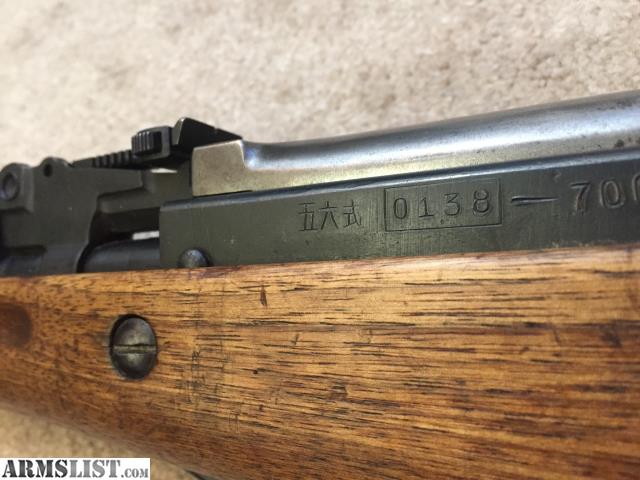
There was one attempt to change that. Around 1970–71, in a cost-reduction programme, a small number of Type 56 carbines were built with sheet-metal stamped receivers. Figures on the order of twelve thousand are cited, from a single factory — 0138 is the one usually named — and the programme was cancelled after large-scale field trials because the stamped receiver was not durable enough in use.
Be careful with this one. It is a real thing, and it is also the single most over-claimed feature in the SKS market. Sources disagree on the factory and on whether the years were 1968–70 or 1970–71, the total is an estimate rather than a record, and a stamped receiver is worth enough money to make a hopeful description profitable. If you are told a rifle has one, the burden of proof is on the receiver, not on the seller.
The Soviet Union never tried a stamped SKS receiver. It went straight to a stamped-receiver AK instead, which is the correct answer to the same problem.
7.4 The Bayonet Question
Early Chinese: blade. Later Chinese, from about 1964: spike — a triangular or quadrangular cruciform spike, which is what most Americans picture when they picture an SKS bayonet.
The irony is that the Soviets went the other direction. Soviet 1949 production started with a spike and moved to the blade within the year. So a blade bayonet on a Soviet rifle means late, and a blade bayonet on a Chinese rifle means early.
7.5 The Vietnam Rifles
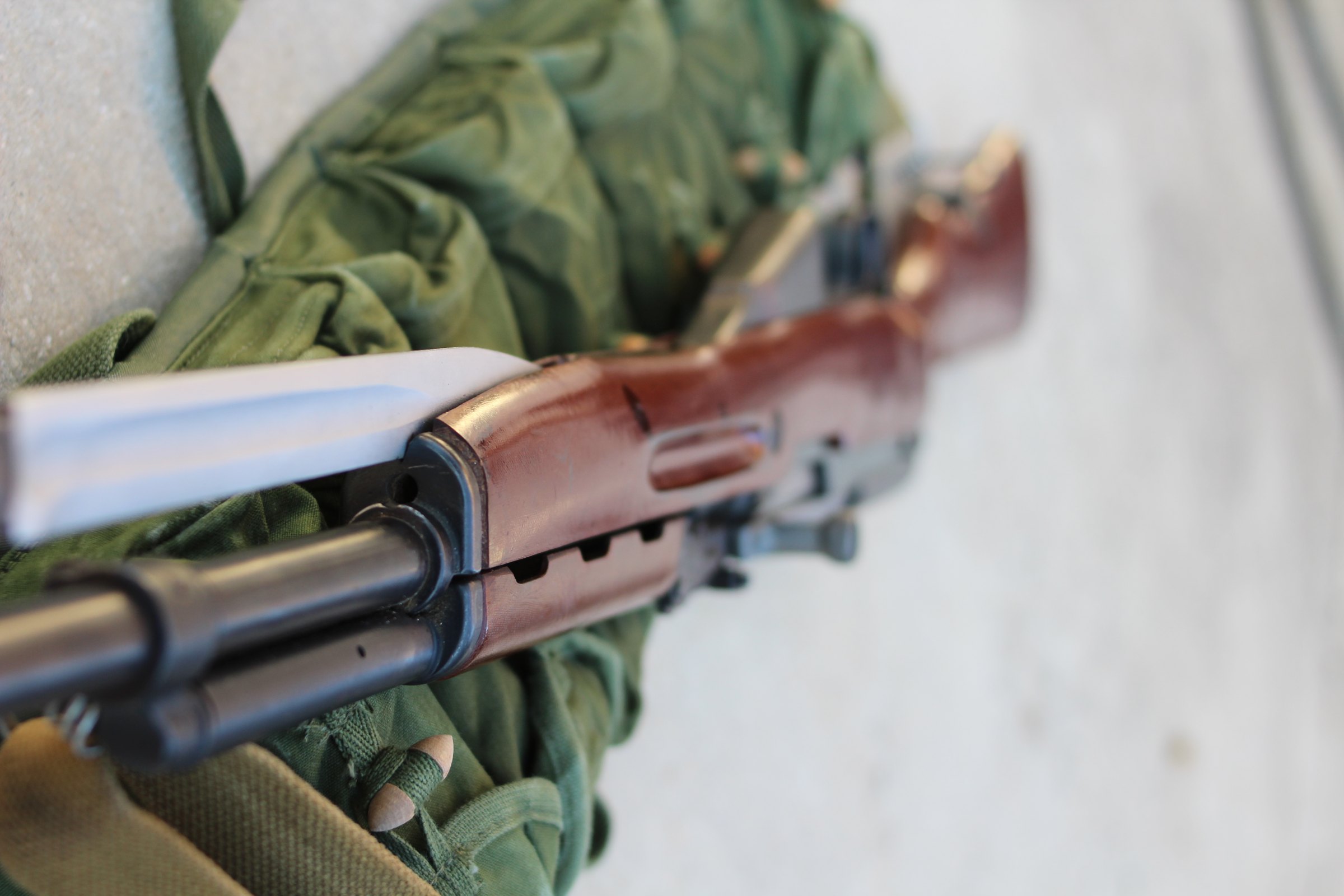
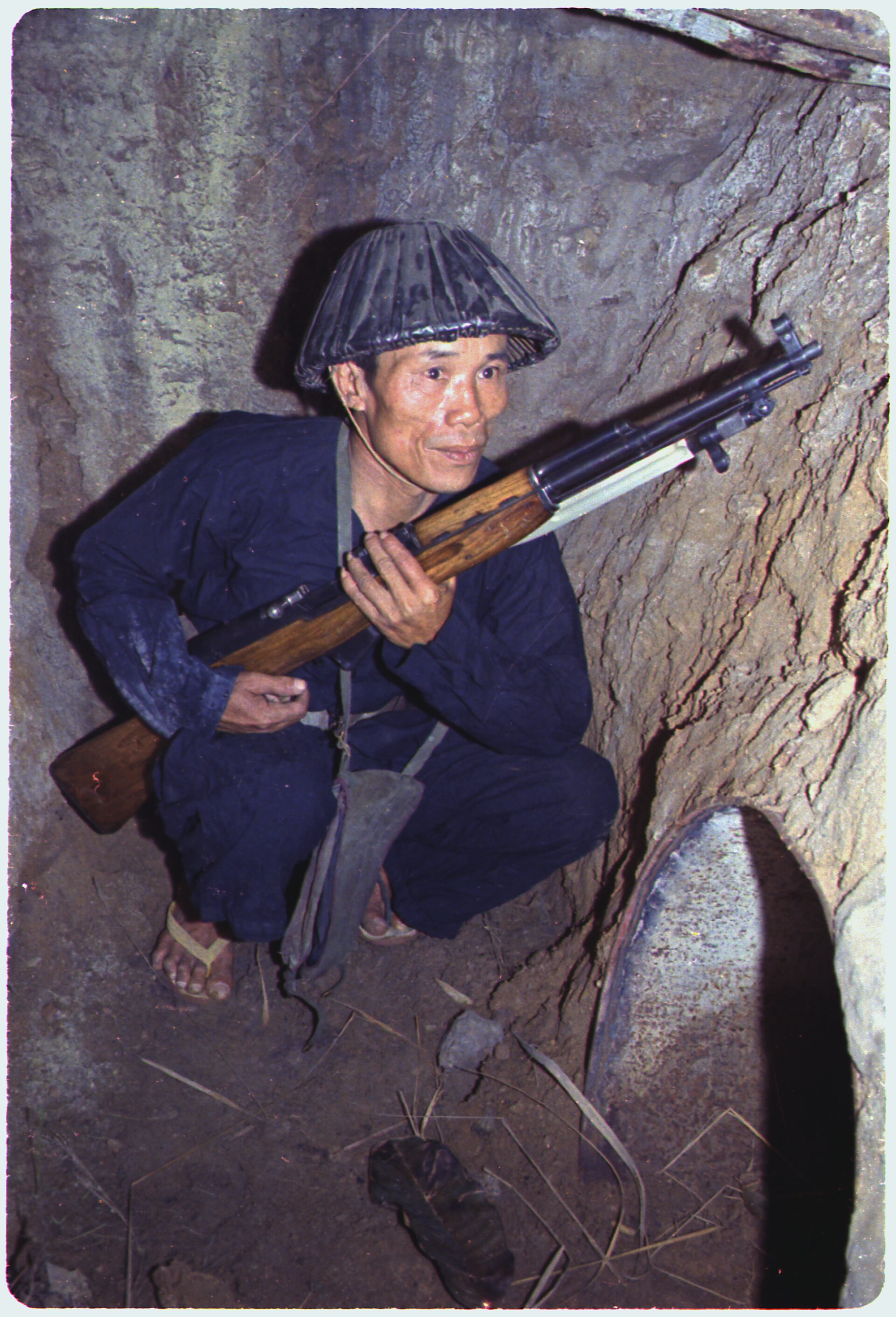
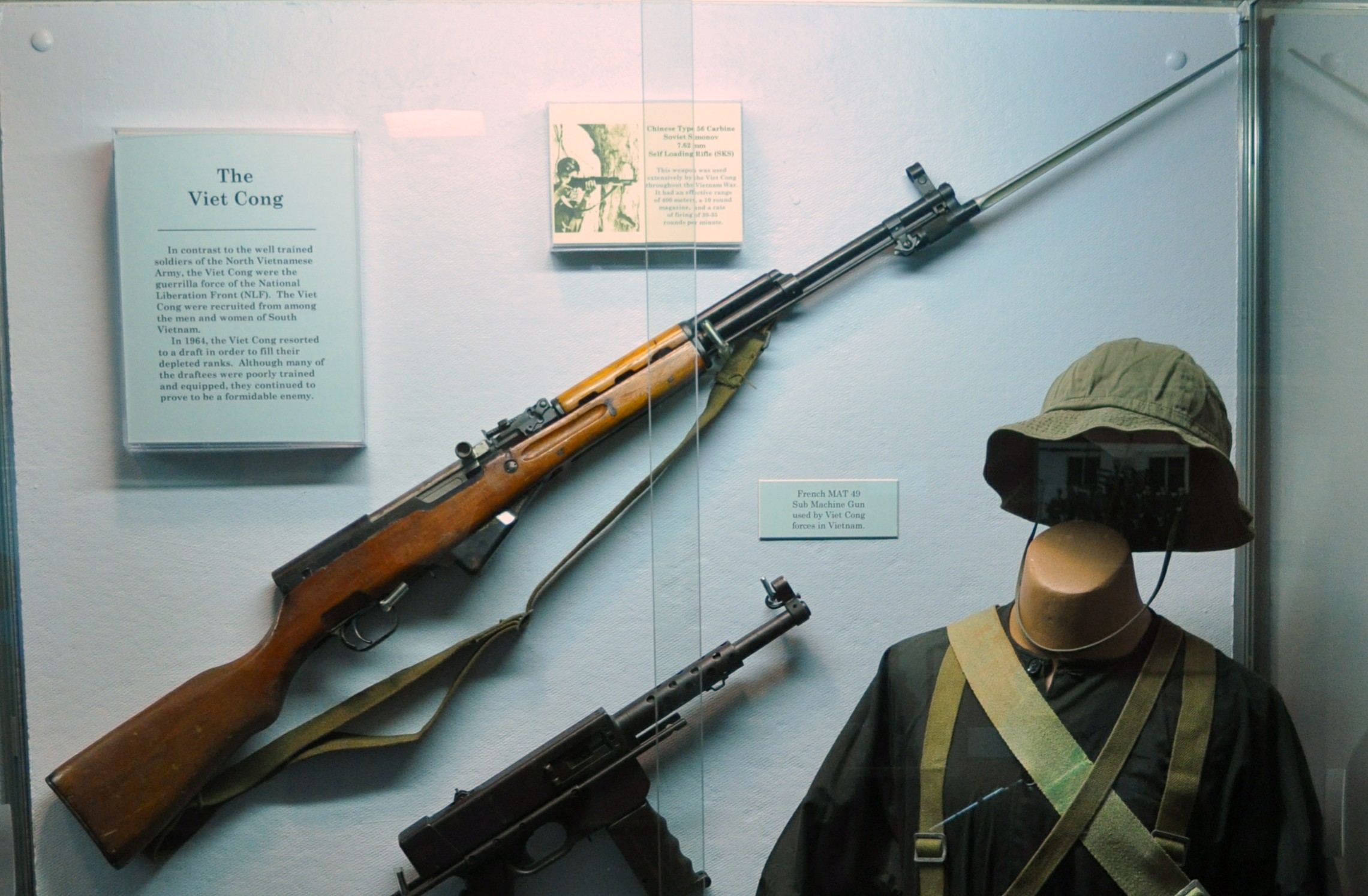
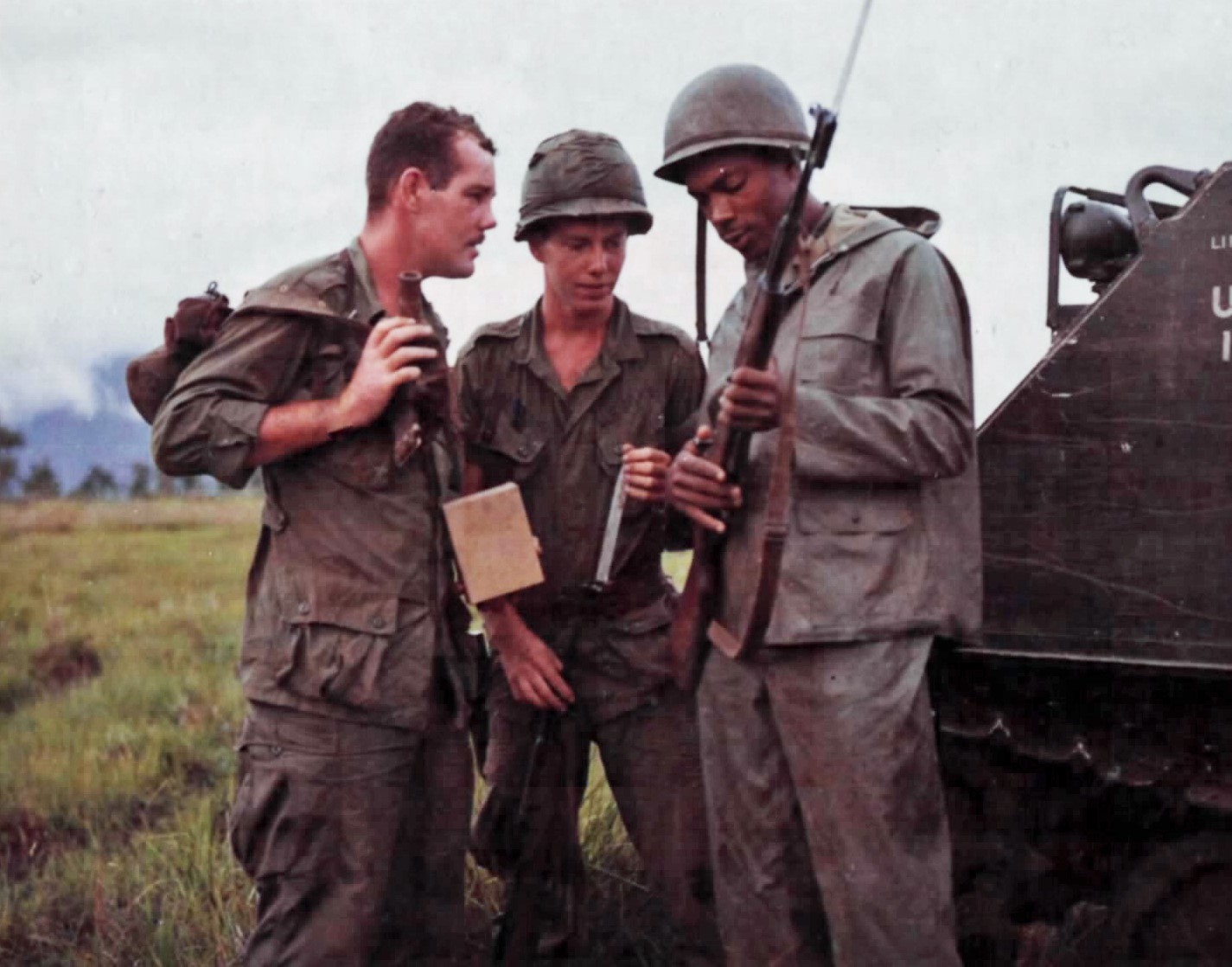
Chinese Type 56 carbines were the standard rifle of the North Vietnamese Army and the Viet Cong, and the SKS is the rifle most American veterans of that war brought home. Until the commercial imports of the late 1980s, bring-backs were essentially the only SKSs in the United States.
One production detail belongs to that war specifically. In the 1960s China made Type 56 carbines with fibreglass stocks for North Vietnam and the Viet Cong, known in the trade as “Vietnam stocks” or “jungle stocks,” because wood rots and termites eat it and neither of those things happens in a Southeast Asian dry season. That is, as far as can be established, the first synthetic-stocked SKS — which is worth remembering before dismissing a plastic-stocked SKS as a modern indignity. The idea is sixty years old and it came from the factory.
7.6 The Export Variants
When Norinco and Polytech began selling into the American market in the 1980s, several purpose-built commercial variants appeared. These are the ones worth knowing:
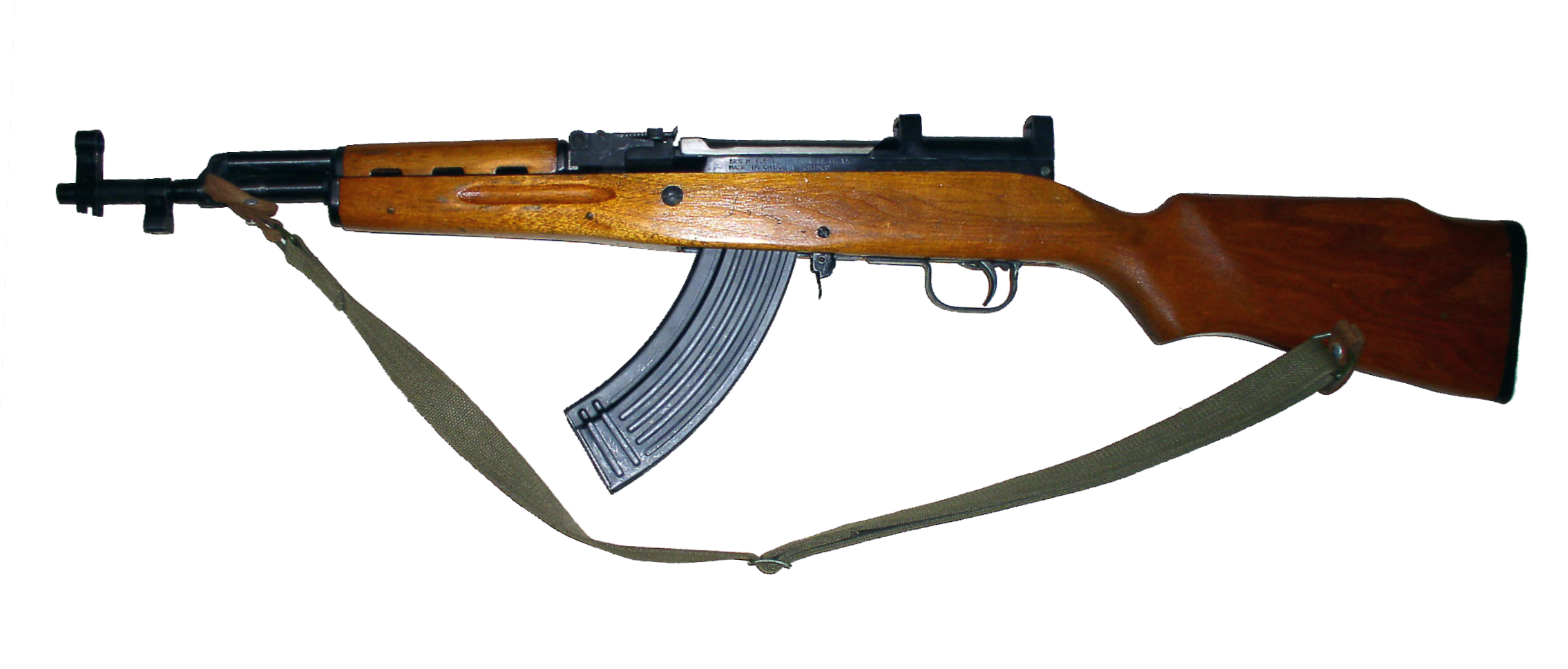
Type 56 Model 84 — a short-barrelled variant with a detachable magazine that resembles an AK magazine but is not interchangeable with one without modification.
Type 56 Model D (SKS-D) — built to take genuine Kalashnikov magazines. This is the factory answer to a modification thousands of Americans have since attempted badly. A Model D feeds from AK magazines because its magazine well and feed geometry were designed for them, which is exactly what a bolt-on conversion cannot change.
Type 56 Model M (SKS-M) — a Model D derivative with the bayonet lug removed and a different stock, configured to satisfy US import law. If you see an SKS with an AK magazine and no bayonet, this is probably what it is.
There are also genuine short-barrelled Chinese rifles — variously called paratrooper or carbine models — with barrels around 16 inches. Genuine ones exist. So do a great many American-made ones, produced by cutting a full-length barrel and re-installing the front sight, and those are considerably less valuable and occasionally less safe. Measure the barrel, look at how the gas block and front sight sit, and be suspicious of a “paratrooper” whose gas system geometry does not look factory.
7.7 The Import Window, and Why It Closed
Millions of Chinese Type 56 rifles came into the United States between roughly 1984 and 1994, sold by Norinco (North Industries Corporation, a state-owned trading body established in 1980) and Polytech. Retail prices went as low as about $70.
A former ATF firearms analyst gave the plainest explanation of that price on record: “A firearm of that quality could not be made for the price it was being sold.” The sellers were not manufacturers recovering a cost. They were disposing of state stockpiles, and the marginal cost of a rifle already sitting in a warehouse is the shipping.
It ended on 26 May 1994. The Clinton administration extended China’s Most Favoured Nation trading status but carved out most arms and ammunition produced by Norinco and Polytech. Chinese SKS imports stopped and have not resumed.
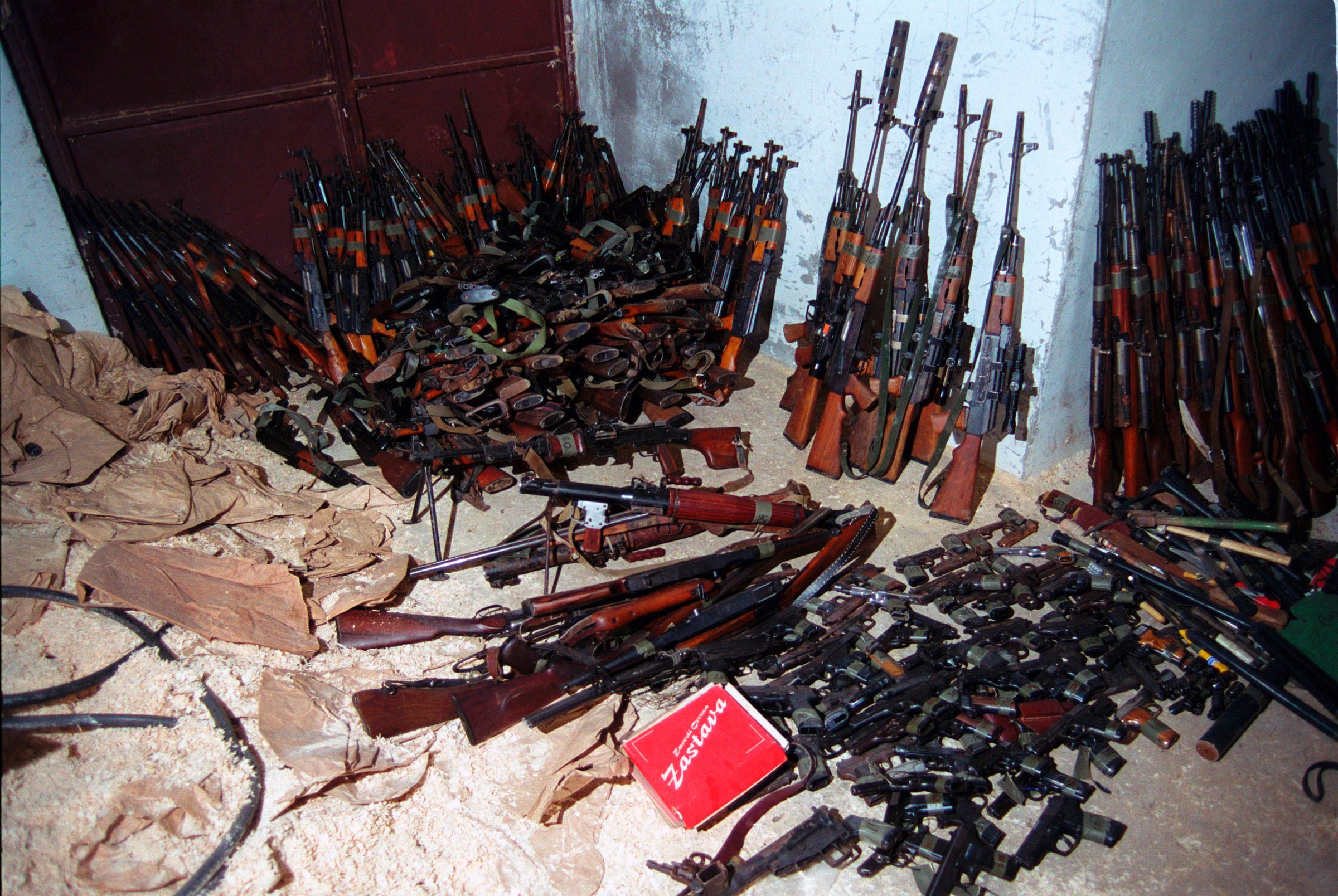
What followed was a neat piece of historical timing: the Soviet Union had just collapsed, and Russian rifles filled the gap from 1994 to 1998, when that channel closed too. Almost every Russian SKS in the United States came through that four-year window. After 1998 the surplus came from Yugoslavia, Romania and Albania — which is Vol 8.
Comments (0)