The SKS · Volume 6
Soviet Production — Tula, Izhevsk, and How to Read One
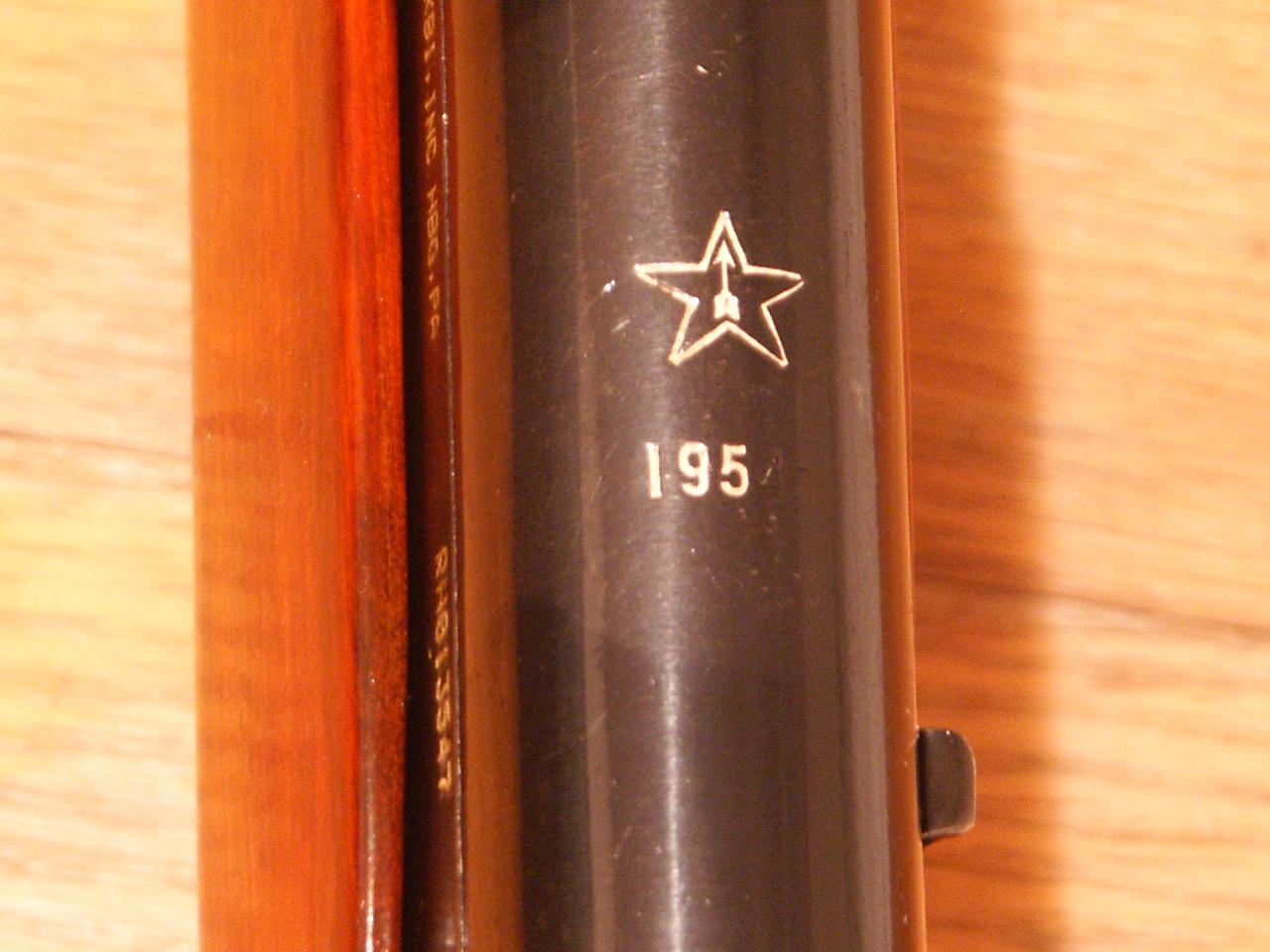
Soviet SKS production is a short story with a long tail of collector detail. Nine years, two arsenals, about 2.7 million rifles, and then it stopped. Everything after 1958 that looks Soviet is either a refurbishment, a foreign copy, or a fake.
That scarcity is why a Russian SKS costs three to five times what a Chinese one does, and it is why the identification detail in this volume is worth knowing before you hand over money.
6.1 The Two Arsenals
Tula (TOZ) — 1949 to 1958. The only arsenal making SKS-45s for the first four years, and the source of the overwhelming majority of Soviet production. Arsenal mark: an arrow inside a star.
Izhevsk — 1953 to 1954 only. Two years. Arsenal mark: an arrow inside a triangle inside a circle. Because the production window was so narrow, Izhevsk rifles are genuinely uncommon and carry a real premium over Tula.
The trials batch of “more than a thousand” built in 1946 and 1947 also came from Tula, and those are 7.62×41 rifles per Vol 3 — museum pieces, not something that turns up at a gun show.
6.2 Reading the Date
Soviet SKSs are dated on the receiver cover, alongside the arsenal mark. The 1955 CIA report records the practice from the other side of the fence: date and serial number “stamped in at least three places: (1) On rear top of barrel (2) On trigger mechanism (3) Receiver cover. It was also etched onto the side of the bolt.”
That four-place marking is why “matching numbers” means something specific on this rifle. A fully matching Soviet SKS has the same serial on the receiver, the bolt, the bolt carrier, the trigger group, the magazine and the bayonet. Refurbished rifles — and most of what came into the United States between 1994 and 1998 was refurbished — very often have force-matched or electro-pencilled numbers, which is not fraud, it is just what a Soviet arsenal did when it rebuilt a rifle from parts bins.
The same source also gives a useful datum for dating the introduction: rifles in his Austrian unit in 1954 were stamped 1951 and 1953, and the first Soviet issue he could point to was to an infantry battalion at Barnaul in Siberia, in the summer of 1953, where “the weapon was in the hands of the cadre, while trainees used the M1944 carbine.”
6.3 The 1949 First-Year Rifle
The first year of production is a different rifle in several respects, and 1949 Tula guns are the blue-chip collectible of the family. Very few came into the United States. What distinguishes them:
- A four-lobed spike bayonet, blued, rather than the blade. The switch to the blade happened later in the same year.
- A spring-loaded firing pin. This is the important one and it gets its own volume — Vol 12. Soviet production from 1949 to about 1950 had a sprung firing pin, which was deleted in favour of the free-floating pin around 1951 as a simplification.
- A 90-degree gas block.
- A looped takedown lever on the receiver cover retainer.
- Hand-etched receiver cover markings rather than stamped.
The bayonet transition is independently corroborated by the 1955 CIA report, which lists “two types: Permanent, folding, knife; and permanent, folding, four-edged prong-type,” with the prong-bayonet rifle 150 grams lighter. A conscript in Austria in 1954 was still being issued rifles from both sides of that change.
6.4 Stocks
The 1955 source describes the stock as “two pieces, wooden, unlaminated stock proper and upper hand guard,” and adds that they came in “yellow or black wood” and that his unit had both.
That is a soldier’s description of what collectors call blonde (light birch or beech) and dark Russian stocks. Later Soviet production and refurbishment also used laminate, which is heavier, far more stable, and distinguishable by the visible glue lines at the toe of the butt. Laminate on a Soviet SKS is not automatically a refurb marker, but on a rifle otherwise dated to the early 1950s it usually means the stock was replaced.
The buttstock carries a trapped compartment for the cleaning kit — rod stop, brush, jag, handle and pin, and an oil can — and there is a cleaning rod under the barrel. Both of those are absent from the East German variant, which is Vol 8.
6.5 Fit and Finish, Honestly
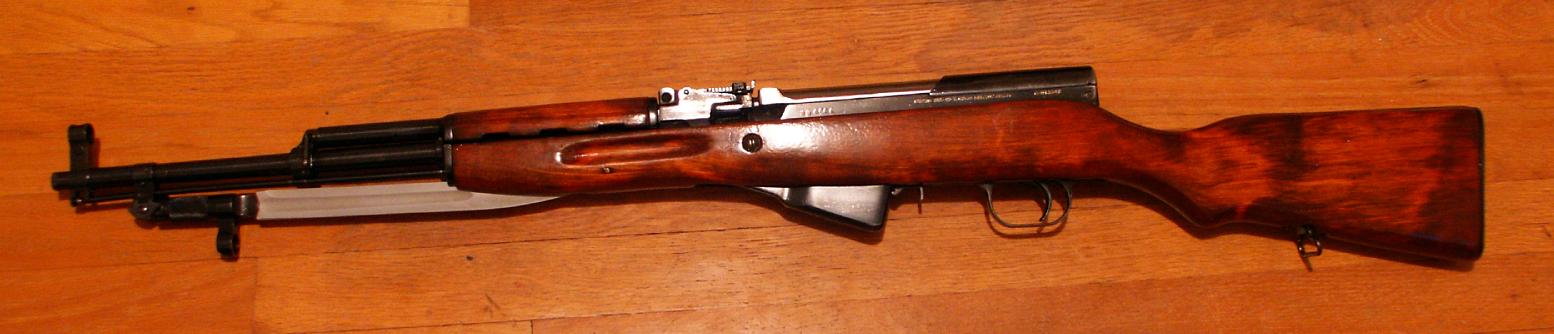
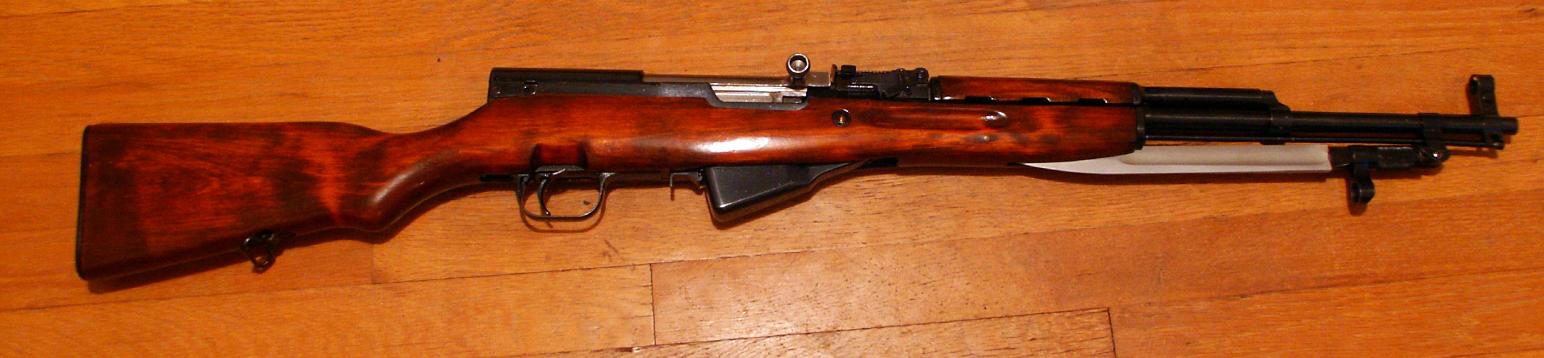
Soviet SKSs are better made than Chinese ones and it is visible without measuring anything. Machining marks are finer, the bluing is deeper and more even, the wood-to-metal fit is closer, and the barrel is threaded into the receiver rather than pressed and pinned.
That last point is functional rather than cosmetic. A threaded barrel joint can be indexed and torqued; a pressed-and-pinned joint is a production shortcut. It does not make a Chinese rifle unsafe — millions of them have been fine — but it does mean a Chinese barrel is a much bigger job to replace, and it is one of the reasons the Russian rifles are worth more than rarity alone would justify.
The Soviet bore is chrome-lined. So is the Chinese. The Yugoslav is not, which matters enormously with corrosive ammunition and is covered in Vol 8.
6.6 What a Russian SKS Costs, and Why
Rough recent figures: a Soviet SKS in good condition runs $1,000 to $2,000 and up, with Izhevsk rifles and 1949 Tulas well above that. A generic Chinese Type 56 in good condition sits around $400 to $450.
Three things drive the gap:
- Volume. 2.7 million Soviet rifles worldwide against nine million-plus Chinese, and only a four-year import window (1994–98) through which Russian rifles reached the United States at all.
- Build quality, as above.
- Provenance. A Russian SKS is the SKS. Everything else is a copy of it, however good.
If you want a shooter, buy Chinese or Yugoslav and re-stock it. If you want the rifle Simonov designed, buy Russian and leave it alone. Both are sound choices, and the mistake to avoid is doing the second thing to a rifle you bought for the first reason — a matching-numbers Tula is worth considerably less with its wood in a box in the garage, and Vol 13 says more about that.
6.7 Ceremonial Life
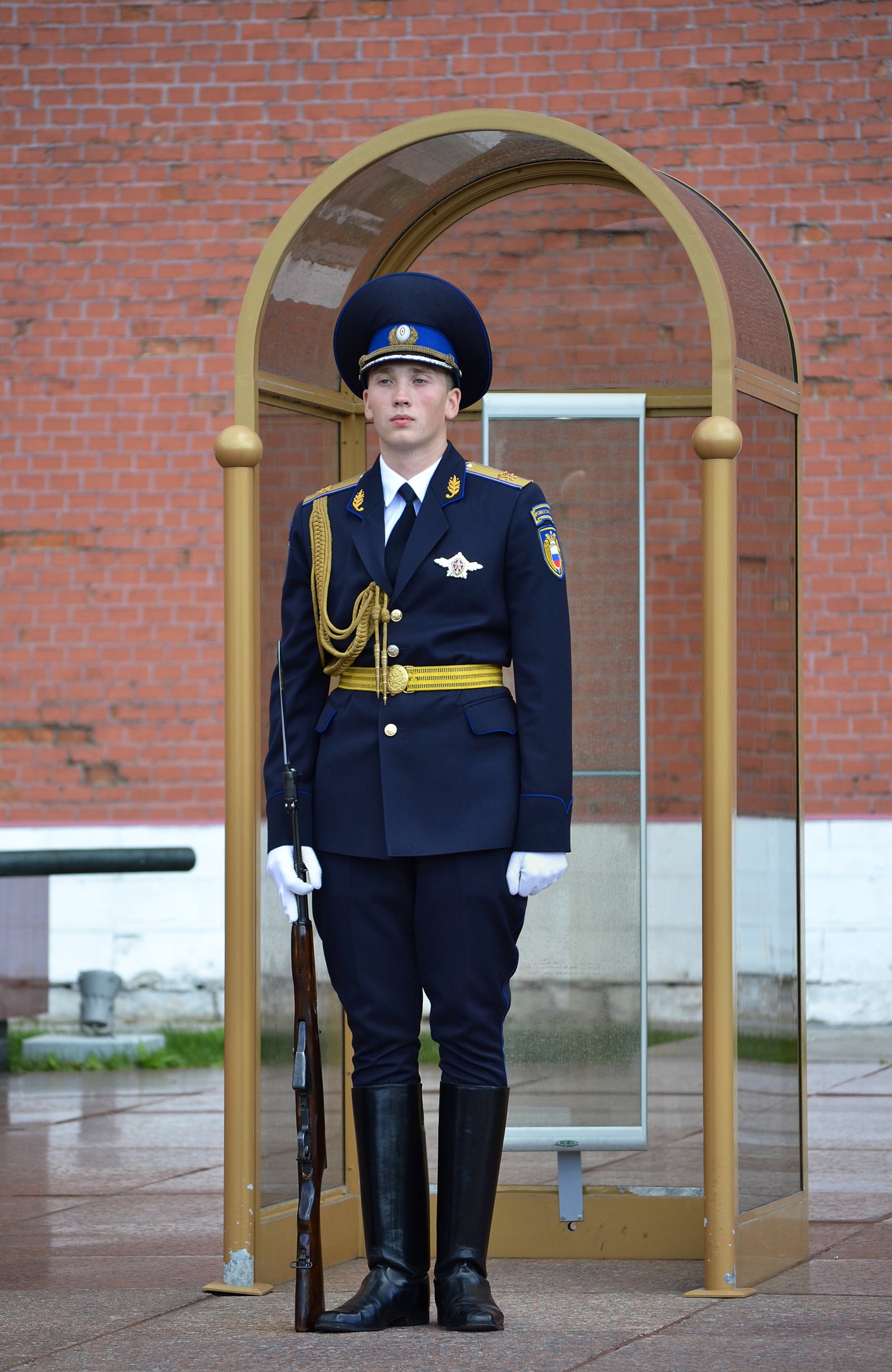
The SKS never really left Russian service; it just stopped being a fighting rifle. It is the drill rifle of the Kremlin Regiment, the honour guard at the Tomb of the Unknown Soldier, and the Victory Day parade, and it has been for decades.
There is a mechanical reason as well as an aesthetic one. The SKS is a long rifle with a fixed, spring-loaded bayonet, a straight-line stock and a lot of weight forward — which means it balances for the hand and hangs on the shoulder in a way an AK never will, and the bayonet cannot come off during the manual of arms.
Comments (0)