The SKS · Volume 4
Adoption, and the Second World War Combat Myth
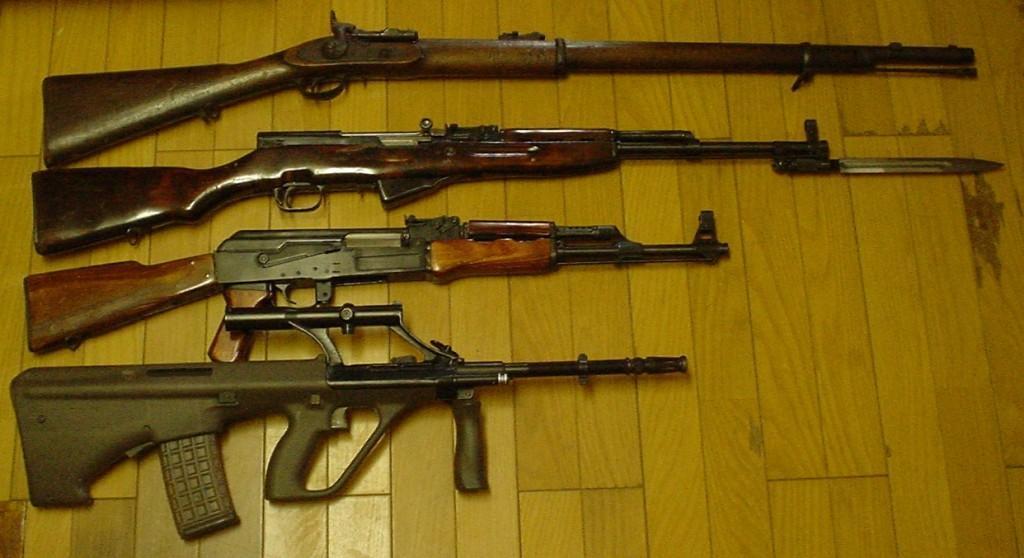
Ask about the SKS’s combat debut and you will be told, confidently and almost everywhere, that pre-production carbines were issued to the 1st Belorussian Front in 1944 or early 1945 and fought in the closing battles of the war. Some tellings put them at the Battle of Berlin.
It is a good story and there is a real event underneath it. But what the trial documents actually record is narrower, less romantic, and considerably more useful, because it explains why the rifle needed another five years.
4.1 What Was Actually Built
The first few samples of the intermediate-cartridge carbine were made at the end of 1943. The full trial order — fifty carbines — was completed in May 1944.
Fifty. That is the entire pre-production run.
Of those, thirty-seven went forward to the Belorussian Front and five went to the Vystrel officers’ training school. The remainder stayed for factory and proving-ground work.
4.2 What the Trial Found
The final report is dated August 1944. It is not a good report.
The troops who tried them logged numerous stoppages: failures caused by dust ingress, failures to extract, and feed problems. Those are the three failures that matter most in a self-loader, and they are the same three that had killed the 1944 full-power Simonov carbine described in Vol 2.
Because of those problems, the carbines were not issued to front-line units. The trial was conducted by second-line troops in defensive positions — which is precisely what you do with fifty experimental rifles you cannot yet trust.
Bolotin’s Soviet Small Arms and Ammunition, the standard Russian-language reference, records the first batch going to Vystrel and to the 1st Belorussian Front and describes the front as having battle-tested the carbine with positive feedback. That is where the popular version comes from. The trial-report account and Bolotin’s account are not easy to reconcile, and honest sourcing says so rather than picking the more exciting one.
What can be said without argument: fifty rifles existed, thirty-seven reached a front, they were carried and fired in field conditions by troops in defensive positions, the report that came back listed serious reliability defects, and there is no documentation of them being used in combat.
So: field-tested at the front, not fought with. If you own an SKS, it is not a Second World War rifle, and no SKS you can buy is one — the fifty trial guns were chambered in 7.62×41 and are museum objects.
4.3 Why the Distinction Is Worth Making
Not out of pedantry. Because the reliability complaints in that August 1944 report are the reason the SKS is the rifle it became.
A design that had just been told it jams in dust, fails to extract, and mis-feeds does not get refined by tightening it up. Simonov’s answer — and this is well attested — was to build it looser. Deliberately generous clearances, parts that do not fit closely, a mechanism with room in it to be dirty. That is the philosophy the AK inherited, and the SKS is where it was worked out under pressure.
Every one of the SKS’s characteristic virtues is a response to that report. It is why the rifle rattles slightly when you shake it, and why that rattle is not a fault.
4.4 The Road to 1949
Table 1 — 4.4 The Road to 1949
| Date | Event |
|---|---|
| End of 1943 | First samples in the new cartridge |
| May 1944 | Trial order of 50 complete |
| Mid 1944 | 37 to the 1st Belorussian Front, 5 to Vystrel |
| August 1944 | Trial report: dust stoppages, non-extraction, feed failures. Not issued to front-line units |
| 1945 | Design designated SKS-45 |
| 1946 | Selected as the winner over at least half a dozen competing carbine designs |
| 1946–47 | More than a thousand built at TOZ (Tula) for extended field trials |
| 1947–48 | The cartridge is shortened from 41 mm to 39 mm |
| 1949 | Adopted. GAU index 56-A-231 |
Note the shape of it. The rifle was chosen in 1946, and then a thousand-rifle trials batch ran for two more years while the ammunition changed underneath it. The Soviet Union did not dawdle over the SKS; it refused to standardise a rifle around a cartridge in flux, which is the correct decision and one that a lot of procurement systems have failed to make since.
4.5 What It Replaced
In the units where it arrived, the SKS replaced the Mosin-Nagant M1944 carbine — a bolt-action with a side-folding bayonet, itself only introduced in 1944.
The 1955 CIA report quoted in Vol 5 catches the changeover happening in a specific unit at a specific moment: in March 1954, enough SKSs arrived to replace 156 M1944 carbines issued to the privates of a signals battalion, and “the M1944 carbines being turned in and sent out of the unit to an unknown destination.”
That is the transition in one sentence: a bolt-action carbine designed in the middle of the war, swapped one-for-one for a self-loader, ten years later, in a radio battalion in occupied Austria.
4.6 And Then It Was Replaced
The SKS’s own service life as the Soviet rifleman’s weapon was about a decade. Production ended in 1958 at Tula, and Izhevsk had already stopped in 1954 after only two years.
The reason is not that the SKS was bad. It is that the AK did everything the SKS did, plus automatic fire, plus a detachable thirty-round magazine, in a package that was shorter and cheaper to make. Once AK production could meet demand, there was nothing left for the SKS to do.
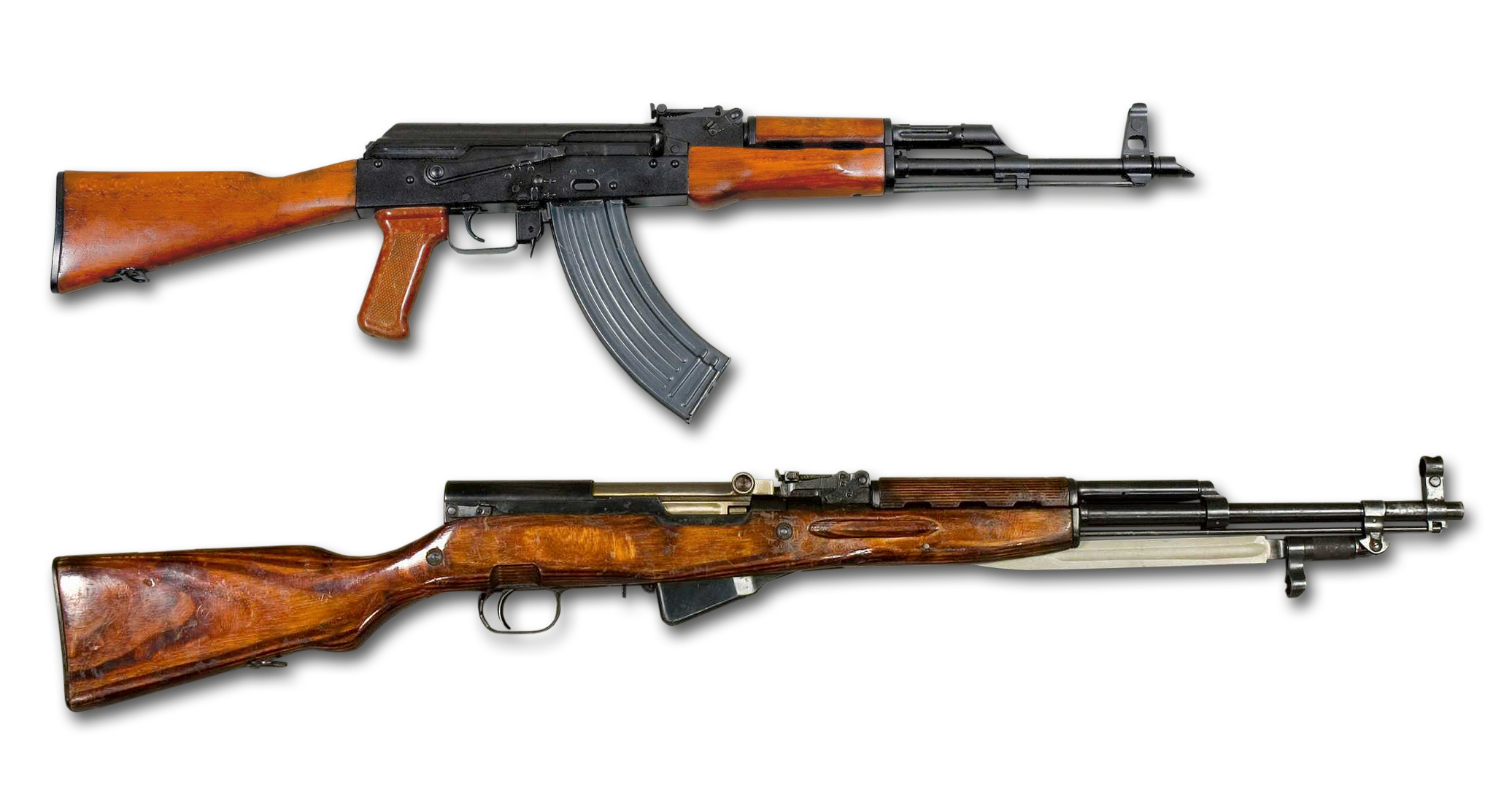
What is genuinely interesting is how long the two overlapped in service, and how carefully both were hidden. The 1955 report catches a single company holding both — SKS carbines for the privates, twenty-four of the new submachine guns for the squad and platoon sergeants — and treating both as classified. That is Vol 5.
Comments (0)