The SKS · Volume 14
Sights and Optics — The Zero-Retention Problem
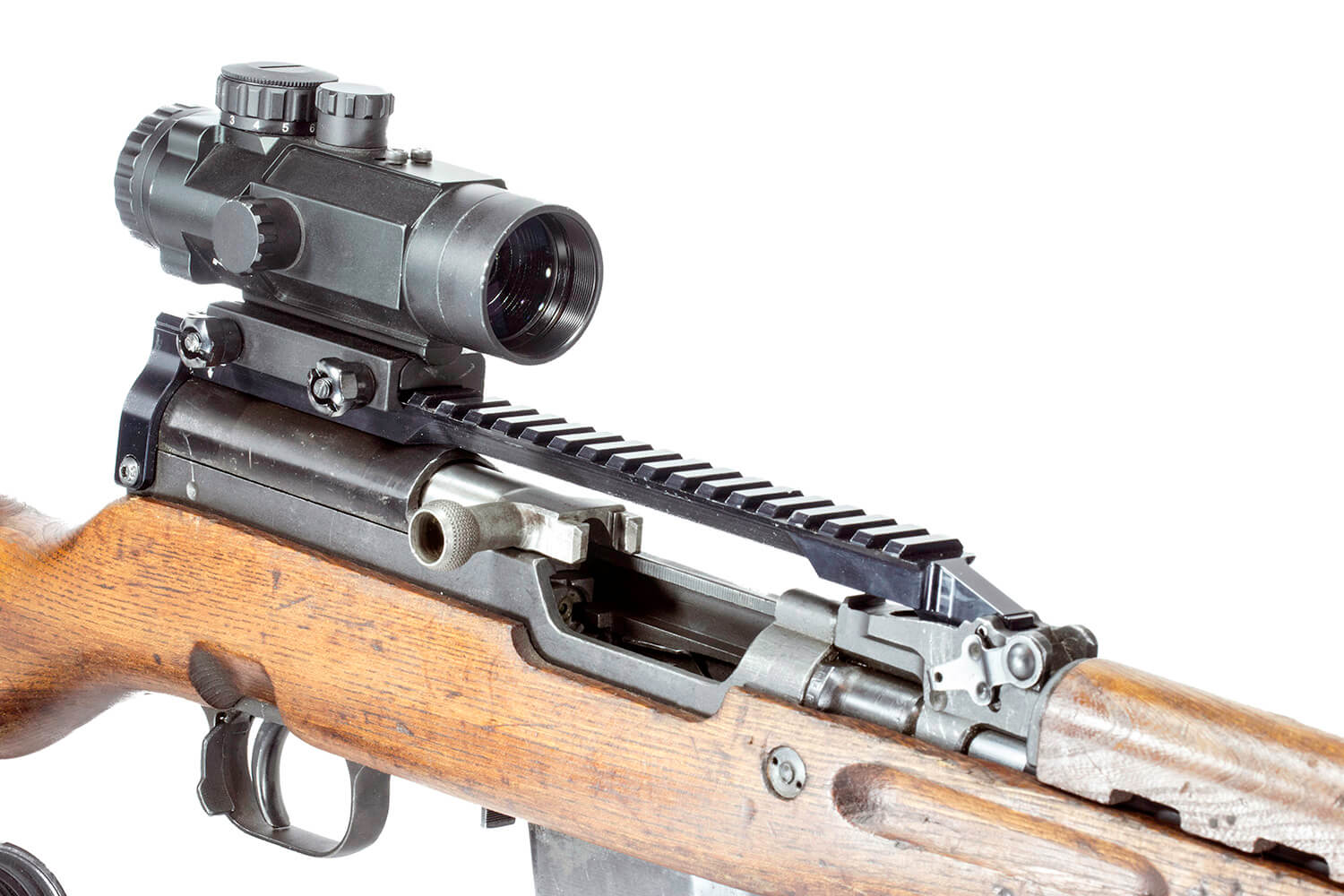
Putting glass on an SKS is where most people’s project goes wrong, and the reason is structural rather than a matter of taste. The rifle has no provision for an optic anywhere, and the surface that most cheap mounts clamp to is the one part of the rifle that is designed to come off.
This volume is mostly about that single problem. Fix it and everything else is easy.
14.1 Why the Dust Cover Is the Wrong Place
The receiver cover is a stamped sheet-metal part. It is held on by one rotating retainer at the rear and by the pressure of the recoil spring pushing it up from underneath. Vol 10 § 10.2 — the reason you keep a thumb on it during the field strip is that the spring is trying to throw it at you.
That part has to come off every time you clean the rifle.
A scope mount that clamps to the cover therefore has three problems, all fatal:
- It moves. The cover is located by a spring and a pin, with clearance in both. It is not indexed to the bore in any repeatable way.
- It comes off. Every cleaning removes the optic from the rifle, and it does not go back in the same place.
- It flexes. It is thin stamped steel with a scope’s mass cantilevered off it.
Rifles wearing these mounts are the reason “you can’t scope an SKS” is such a common thing to hear. You can. You just cannot scope the dust cover.
14.2 Mounts That Actually Hold Zero
There are three approaches that work, and they work for the same reason: each of them locates against something that does not move relative to the barrel.
14.2.1 Receiver rails that pin to the takedown pin
Matador Arms SKS Optics Rail — roughly $72 to $80. This is the best general answer. It replaces both the dust cover and the rear sight with a full-length Picatinny rail, and — this is the part that matters — it pins at the rear takedown pin.
The takedown pin is a machined feature in the receiver. Locating the rail there means the rail’s relationship to the bore is set by receiver geometry, not by how a stamped cover happened to sit. You still remove it to clean, but it goes back to the same place.
The cost is your iron sights. The rail replaces the rear sight, so you are on the optic or on nothing unless you fit back-up irons to the rail.
14.2.2 Gas-tube scout mounts
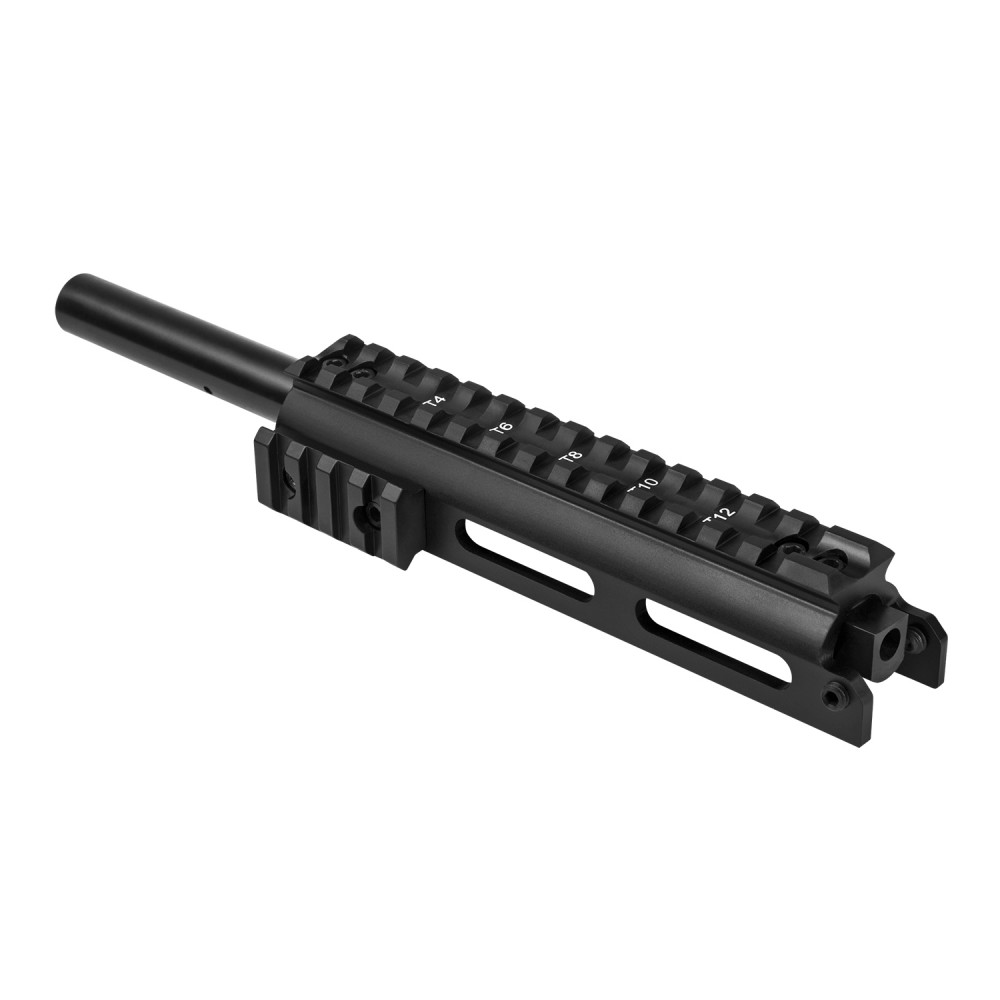
NcSTAR MSKSV2 and similar — replaces the gas tube with one carrying rails. The good ones have a channel down the centre so the original iron sights still line up through the mount.
Advantages: no permanent modification, keeps the irons, and puts the optic in a forward scout position where a long-eye-relief scope or a red dot lives happily.
Limitation: the gas tube is a part that is removed at every field strip and it is located by a lever rather than a machined fit, so this is a better mount than a cover clamp but not as repeatable as a receiver rail. For a red dot at 25 to 100 yards it is entirely adequate.
BadAce no-drill scout mount (Gen 2) — around $89, direct order only. Forward scout position, no permanent modification, and it fits every variant including the Yugoslav M59/66, which not everything does.
14.2.3 Side rails
Some Chinese and Eastern-bloc rifles were fitted with an AK-pattern side rail. On a rifle that already has one this is the best mount available — it is welded or riveted to the receiver and it is indexed. On a rifle that does not, adding one is welding on a receiver, which is a gunsmithing job with permanent consequences and is not worth it on a $400 rifle.
14.3 Better Irons, Which Is Usually the Right Answer
Before spending money on glass, consider that the SKS’s iron sights are good and their weakness is specific and fixable.
The weakness is the rear notch. It is an open V on a tangent leaf, no windage adjustment, and it sits well forward of the eye. The front post is fine; the sight radius is fine — about 480 mm, considerably better than an AK.
Tech-Sights TS200 — $82. A receiver-mounted aperture rear sight, adjustable for both elevation and windage, mounting on the factory rear sight base with no drilling. It fits Russian, Chinese and Yugoslav rifles.
Two things happen when you fit one. The sight moves rearward, closer to the eye, which lengthens the sight radius substantially. And the notch becomes a peep, which the eye centres automatically.
Tech-Sights TS100 — $68. A dual flip aperture, windage adjustment only.
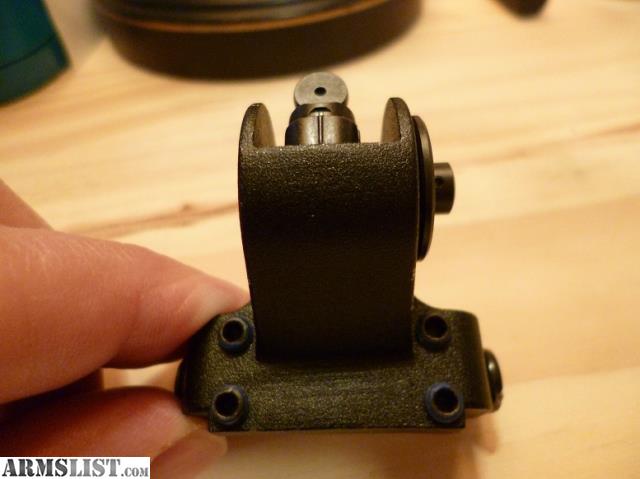
This is the highest return per dollar on the rifle. An aperture rear and the original front post will out-shoot the factory notch for most people, it costs less than a mount, and it does not add an optic to clean around.
14.4 Windage Is at the Front
Worth restating because it catches people. The factory rear sight has no windage adjustment. None. Windage is set by drifting the front sight post in its base, sideways.
That needs a front sight pusher — a small tool that clamps over the sight base and screws the post across. It is the same job the 1955 CIA report describes the company armourer doing with “a special vise-like tool” for conscripts who could not group.
Elevation at the front is by screwing the post up or down, which needs a different tool that engages the post’s flats. Most combination SKS/AK sight tools do both.
Do not drift a front sight with a punch and a hammer if you can avoid it. The base is soft, the post is small, and you will mark both.
14.5 Which Optic
Given a mount that holds zero, the choice follows from what the rifle is:
A red dot is the natural fit. The SKS is a 100-to-200-yard rifle with 2 to 4 MOA of inherent accuracy; a red dot costs it nothing and gains speed. On a gas-tube scout mount, a dot is ideal.
A low-power variable or a fixed 2–4x on a receiver rail is the choice if you want to use the rifle’s full range. Do not go past about 6x; you will be magnifying group size and mirage, not extracting accuracy that is not there.
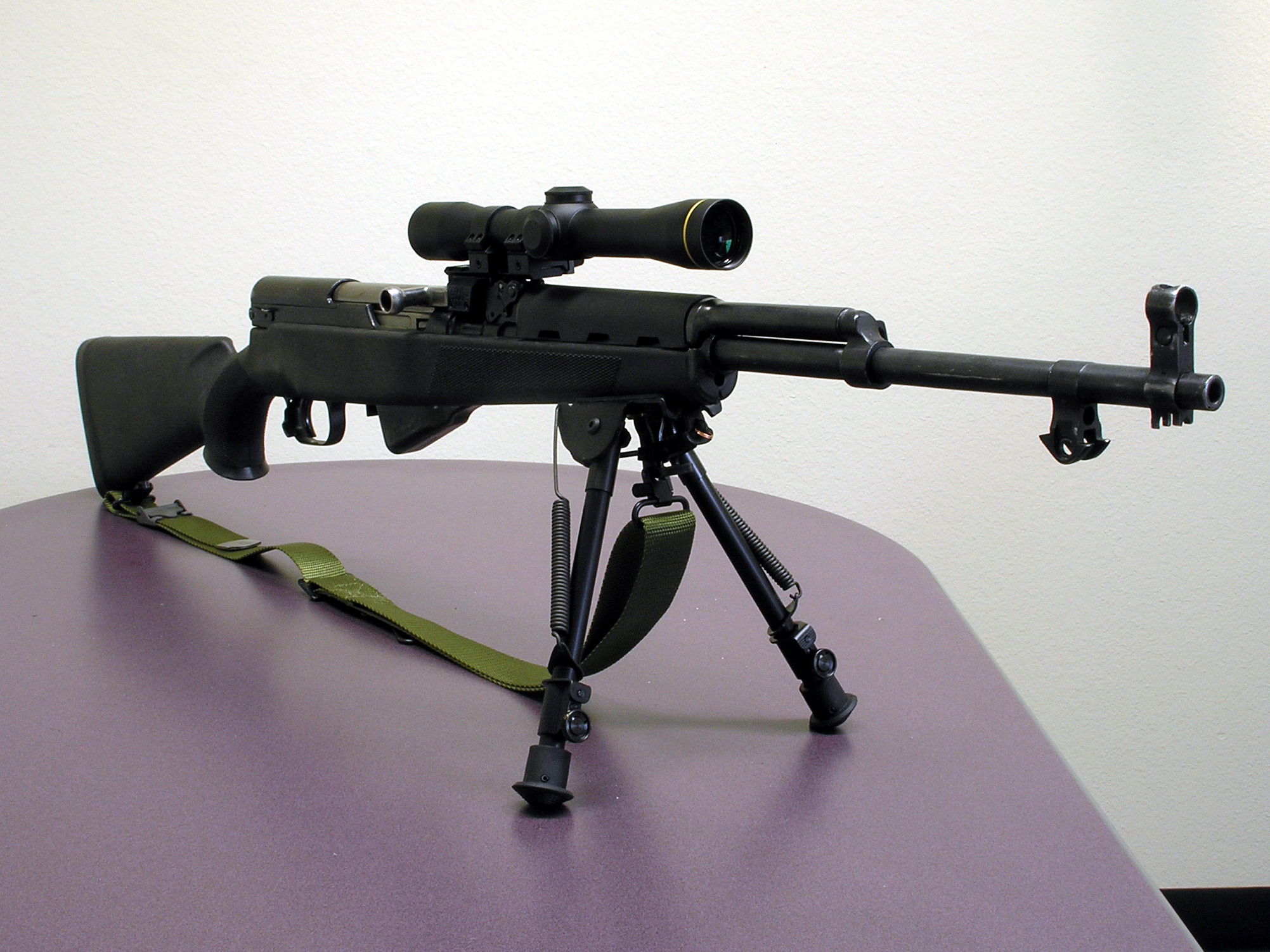
A long-eye-relief scout scope on a forward mount keeps the action open for stripper clips, which matters — a conventional scope over the receiver blocks the clip guide. That is a real functional loss on a fixed-magazine rifle. If you scope the receiver, you are hand-feeding rounds one at a time or fitting a detachable magazine, and the second of those brings Vol 15 and Vol 17 with it.
14.6 The Clip-Guide Conflict, Stated Plainly
This is the design tension nobody mentions until they own the rifle:
- The SKS is loaded from stripper clips, through the top of the open action.
- A receiver-mounted optic sits over the top of the open action.
You cannot have both unless the mount is far enough forward or high enough to clear a thumb pushing ten rounds down. Most are not.
So the honest decision tree is:
Table 1 — So the honest decision tree is
| What you want | Mount | Loading |
|---|---|---|
| Irons, better | Tech-Sights TS200 | Stripper clips, unaffected |
| Red dot, keep clips | Gas-tube scout mount | Stripper clips, unaffected |
| Magnified optic, keep clips | Forward scout scope | Stripper clips, awkward but possible |
| Magnified optic, best zero | Matador-type receiver rail | Hand-feed, or detachable magazine |
14.7 Zeroing
- Fit the mount. Torque it, and if the manufacturer gives a figure, use it.
- Bore sight at 25 yards. On an SKS this is easy: field strip to the barrelled action, look through the bore at a target, and adjust the optic to match without moving the rifle.
- Confirm at 25, then move to 100.
- Zero at 100 yards for a magnified optic; 50 for a red dot is a reasonable alternative given the trajectory.
- Re-check after a field strip. Not once — three times, stripping between each. That is the only way to know whether your mount actually returns to zero, and it is the test that separates the good mounts from the ones people complain about.
That third step is the one to insist on. A mount that shoots a good group and a mount that shoots the same good group after three cleanings are different products, and the price difference between them is about forty dollars.
Comments (0)