The SKS · Volume 16
Making It Shoot Better
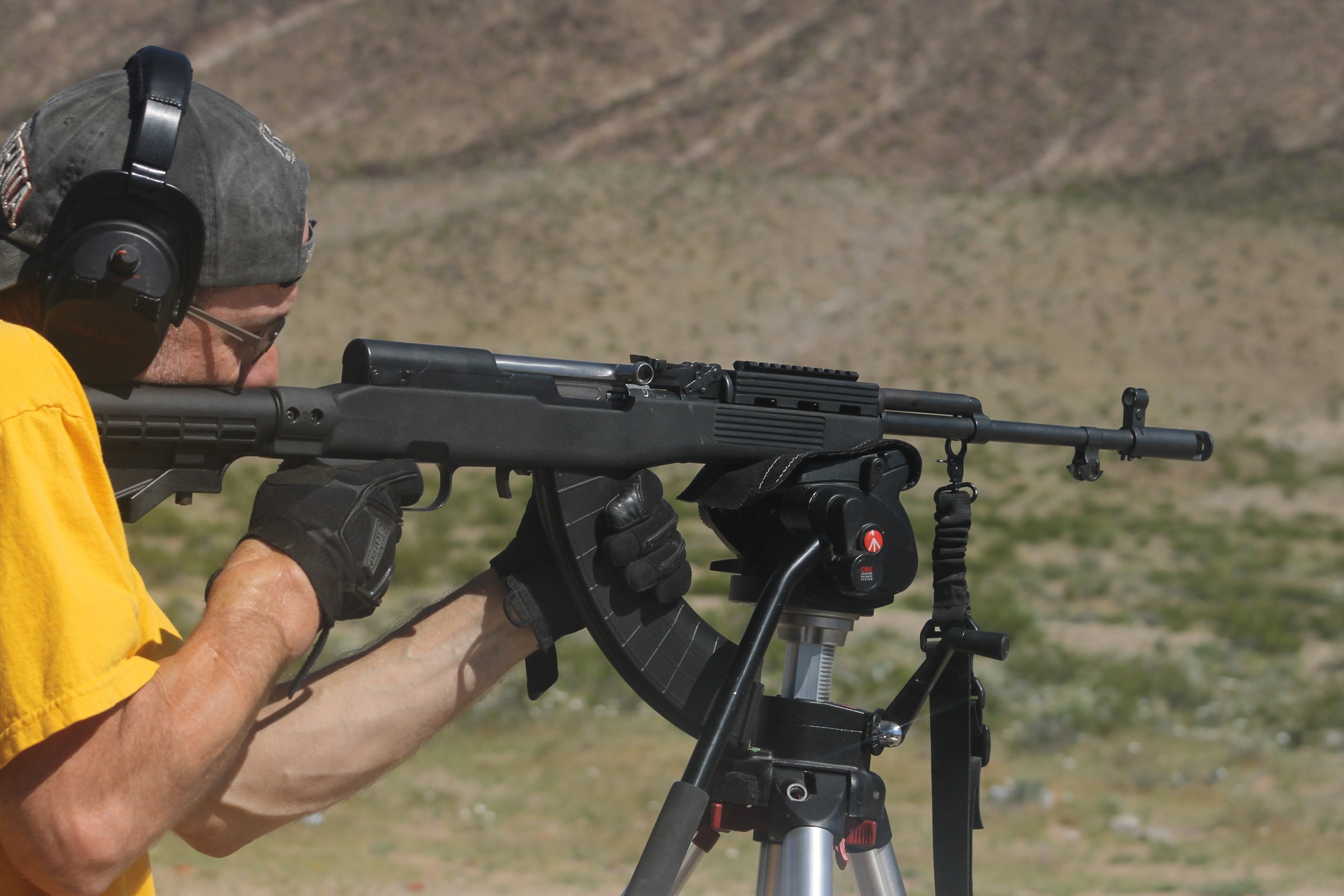
Realistic expectations first, because the rest of this volume depends on them. A service-condition SKS with decent ammunition shoots somewhere between two and four minutes of angle. A very good one with ammunition it likes might do a bit better. A tired one with pitted rifling and surplus ammunition will do considerably worse.
That is a 100-to-200-yard rifle. It is not a precision rifle, it was never asked to be, and the honest ceiling on improvement is real but modest. What follows is ordered by return on effort.
16.1 Zero It Properly. Most Are Not.
The single largest accuracy improvement available on most SKSs is that the rifle has never actually been zeroed.
Surplus rifles come zeroed for somebody else, or for nobody, or for a battle setting at a range you will never use. And because the rear sight has no windage adjustment (Vol 3 § 3.6, Vol 14 § 14.4), a rifle that shoots six inches left cannot be corrected by any control the shooter has to hand — which means a great many of them never were.
Do this:
- Get a front sight tool — a pusher for windage and a post wrench for elevation. This is not optional equipment on this rifle.
- Shoot a group at 25 yards with the rear sight on “П”, off a solid rest, five rounds.
- Drift the front sight for windage. The front sight moves the group the same direction it moves — push the post left, the group goes left. This is the opposite of the rear-sight rule and it catches everyone once.
- Move to 100 yards, confirm, and adjust elevation by screwing the front post up (group moves down) or down (group moves up).
- Zero with the rifle configured the way you will shoot it, including the bayonet folded or extended — pick one and stay with it.
16.2 Find the Ammunition It Likes
The second-largest gain, and it is free apart from the ammunition.
SKS rifles are more ammunition-sensitive than their reputation suggests, mostly because bore dimensions across seventy years and eighty factories are not consistent. Soviet and Chinese bores are frequently a little over .311, and standard American .308 bullets in commercial 7.62×39 can be a loose fit in them.
Practical approach: buy three or four different loads, shoot five-shot groups off a rest with each at 100 yards, and keep the one that wins. The differences are usually larger than people expect — an inch or more between the best and worst on the same rifle.
Two specifics:
Steel-cased ammunition is fine. It is what the rifle was designed for. The lacquered and polymer-coated cases people worry about are closer to the original specification than brass. Steel does not expand and seal quite as well as brass, which means slightly dirtier chambers, which means clean it.
Corrosive surplus needs same-day cleaning. Vol 3 § 3.7. And the Yugoslav rifles have no chrome lining, which turns “should clean it” into “must clean it today” — Vol 8 § 8.1.
16.3 The Trigger and the Comb
These are shooter-interface improvements and they are where the real gains are after the first two.
The trigger — Vol 15 § 15.2. Cleaning and de-burring is free. Reduced springs are cheap and carry a light-strike risk on hard primers.
The comb height — Vol 13 § 13.7. The military stock’s comb is low, set for iron sights, and it gives you no repeatable cheek weld with anything else. If you have put an optic on the rifle and your groups did not improve, this is very often why: your head is in a different place shot to shot. An adjustable comb is worth more to a scoped SKS than any part of the mount.
The sights — an aperture rear (Vol 14 § 14.3) is the best value modification on the whole rifle. A peep at the eye beats an open notch at arm’s length for almost everybody, and it costs $82 and no drilling.
16.4 The Mechanical Things That Are Actually Wrong
Before assuming a rifle is simply inaccurate, check the things that make a good rifle shoot badly:
The crown. A dinged or worn muzzle crown will destroy accuracy and nothing else you do will fix it. Look at it with a light and a loupe. Surplus rifles were cleaned from the muzzle with a steel rod, thousands of times, by people who did not care, and it shows. A recrown is a cheap lathe job and it can be transformative.
The bore. Pitting from corrosive ammunition, especially in a non-chromed Yugoslav barrel. This is the thing to inspect before buying. A dark, pitted bore is not repairable.
The gas system. A short-stroking rifle is inconsistent, and inconsistency reads as inaccuracy. Clean the port, the piston and the tube (Vol 11 § 11.4).
The bolt fit and headspace. If a rifle has a mismatched bolt — different serial to the receiver — it needs to be gauged before it is trusted. The bolt is fitted to the receiver, which is why the serial is etched on it. The hub’s headspace dive covers how to measure it, and its central finding applies here directly: the makers disagree about where a “field” gauge belongs, so knowing an actual number is worth more than knowing which gauge it passed.
The recoil spring. A tired spring gives inconsistent bolt return and unreliable feeding. Cheap to replace.
16.5 The Things That Do Not Help
Worth stating so money does not get spent on them.
Bedding the stock. There is nothing to bed. The SKS has no action screws; the barrelled action drops into a channel and is retained by the trigger group and magazine. There is no clamping force to control and no stress to relieve. Changing the stock does not change how the barrel is supported in any way that shows on paper. Vol 13 § 13.7.
Free-floating the barrel. The gas tube and upper handguard are structural parts of the gas system and clamp to the barrel by design. You cannot free-float an SKS barrel without disabling the rifle.
A heavy chassis. Weight steadies a rifle in the hands, which is real. It does not tighten the mechanical group.
A muzzle brake. Vol 15 § 15.5. On a 7.62×39 carbine there is nothing to brake, and threading the muzzle is a risk to the crown, which is the thing that does matter.
16.6 A Realistic Improvement Plan
In order, with rough costs:
Table 1 — In order, with rough costs
| Step | Cost | What it gets |
|---|---|---|
| 1. Strip the bolt, clean the firing-pin channel | Free | Safety first, and Vol 12 is not optional |
| 2. Buy a front sight tool and actually zero it | ~$25 | Usually the largest single accuracy gain |
| 3. Try four different loads, keep the best | A few boxes | Frequently an inch at 100 |
| 4. Clean and de-burr the trigger group | Free | Real, and reversible |
| 5. Aperture rear sight | ~$82 | The best value part on the rifle |
| 6. Inspect the crown; recrown if it is damaged | Gunsmith | Fixes what nothing else can |
| 7. New recoil spring, extractor spring | ~$20 | Consistency |
| 8. Only now: optic, on a mount that pins to the receiver | ~$80 + glass | Vol 14 |
| 9. Stock with an adjustable comb, if you fitted an optic | ~$140 | Repeatable head position |
Steps 1 through 5 cost about $110 and will do more than steps 8 and 9 will. That ordering is the point of this volume.
16.7 What It Is Good At
It is worth ending on this, because a rifle judged only against a bolt gun looks worse than it is.
The SKS is light-ish, handy, utterly reliable when clean, and chambered for the cheapest centrefire cartridge in the world. It has better iron sights and a longer sight radius than the AK, it gains velocity from a barrel five inches longer, and it is steadier to shoot because its short-stroke piston moves less mass than an AK’s long-stroke one.
Inside 200 yards, on anything from paper to deer-sized game where the cartridge is legal — and it is worth checking, because some states’ minimum-calibre or minimum-energy rules exclude 7.62×39 for deer — it does the job it was built for. It is a 1949 conscript rifle that will still shoot minute-of-torso at 300 metres with iron sights and no fuss, which was the entire design brief, and it meets it.
Comments (0)