The SKS · Volume 1
Overview — The Carbine That Was Obsolete Before It Was Issued
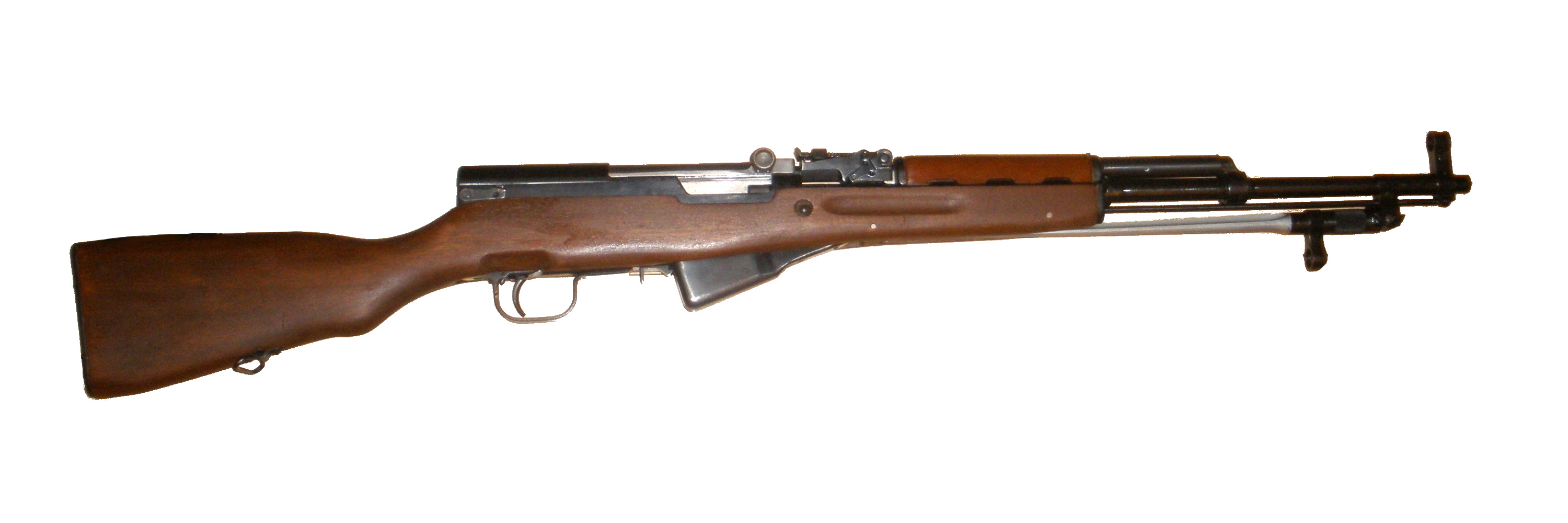
Nothing in the SKS is clever. That is the first thing to understand about it, and the last thing most people say about it. It has a gas piston that does not touch the bolt, a bolt that tilts instead of turning, a magazine that will not come off, a bayonet that will not come off either, and a trigger group that drops into your hand when you push one latch. Every one of those choices was made by a designer who had already spent fifteen years building more ambitious rifles and had learned what happens to them in mud.
SKS owners commonly re-stock these rifles, because the wood on a hundred-dollar surplus rifle is usually the worst part of it, and because the SKS is one of the very few military rifles where you can strip the furniture off with a punch and a screwdriver and put it back before dinner. That is the practical half of this dive, and it starts at Vol 13.
The other half is the history, and the history is stranger than the rifle deserves.
1.1 The Argument This Dive Makes
Three claims run through all seventeen volumes.
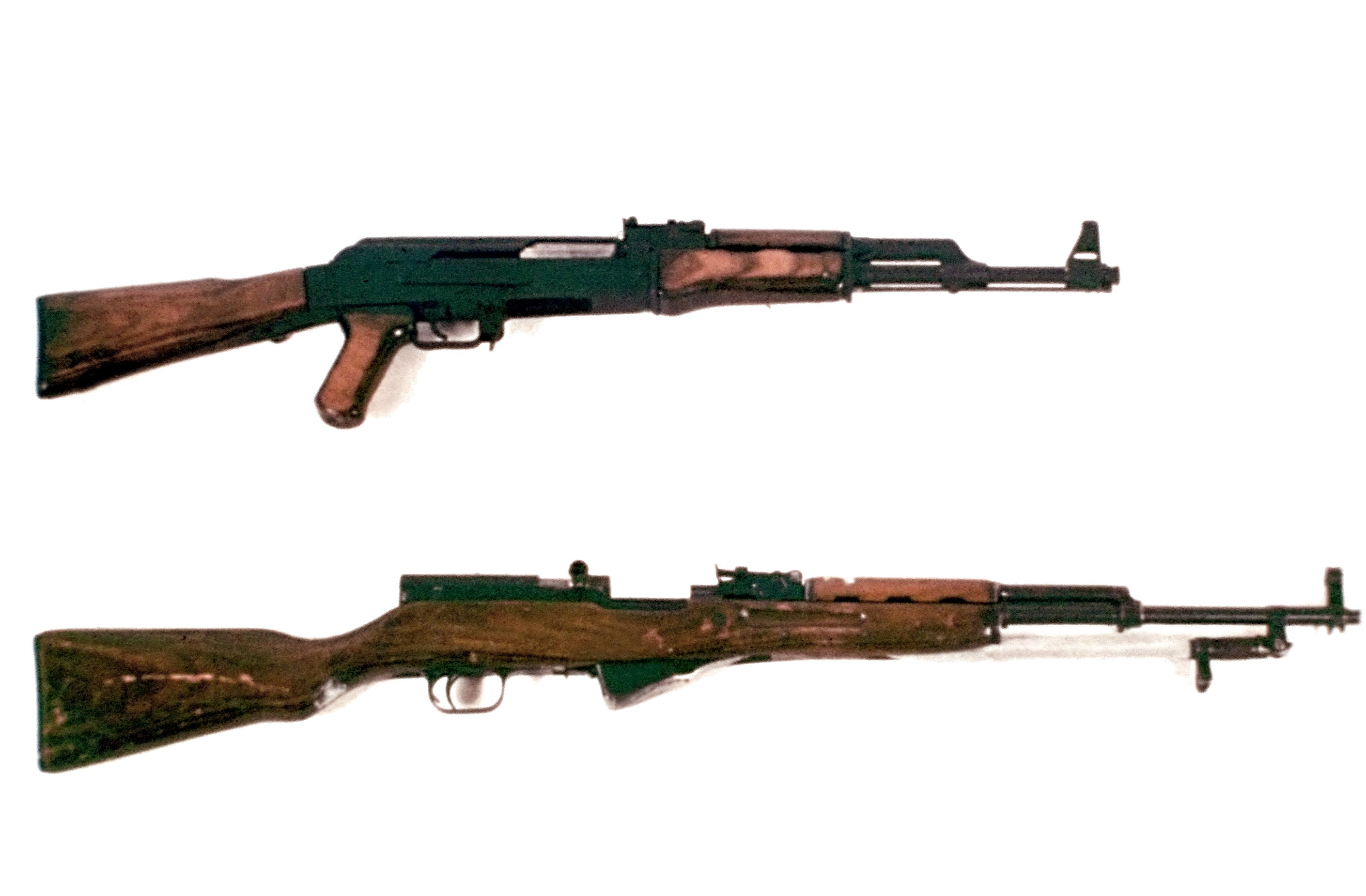
The SKS was superseded before most of them were built. The rifle was adopted in 1949. The AK-47 was adopted in the same period and by 1955 was being issued alongside it in the same units, sometimes to the same men — as one of the sources this dive is built on records in detail. The Soviet Army treated the SKS as the rifleman’s weapon and the AK as the squad leader’s, which is a polite way of saying the new thing had not arrived in quantity yet. Within a decade the Soviet Union stopped making the SKS entirely. Two and a bit million rifles, nine years, done.
And then it was built for another forty years by everybody else. China alone made more than nine million and had something like eighty factories tooled for it. Yugoslavia built it into 1989 with a grenade launcher on the muzzle. Romania, Albania, East Germany, North Korea and North Vietnam all made their own. The rifle the Soviets abandoned as an interim measure became the standard infantry arm of half the world’s client states, and it is still standing at the Tomb of the Unknown Soldier in Moscow because it is the best-looking rifle the Soviets ever made and it drills beautifully.
Its most interesting decade is the one where almost nobody outside the USSR knew it existed. From 1949 to about 1955 the SKS was a classified weapon. Not “restricted” — classified, issued only in two military districts, kept in the arms room under a duty soldier, and on the range attended by a second man whose entire job was to catch the fired cases in his hat. Vol 5 is built on two declassified CIA reports that show exactly what Western intelligence had, and exactly what it got wrong.
1.2 What It Is, in One Table
Table 1 — 1.2 What It Is, in One Table
| Designation | Samozaryadnyy Karabin sistemy Simonova, SKS-45; GAU index 56-A-231 |
| Designer | Sergei Gavrilovich Simonov |
| Adopted | 1949 (trials batch 1946–47) |
| Cartridge | 7.62×39 mm M43 |
| Operation | Gas, short-stroke piston, tilting bolt, semi-automatic only |
| Barrel | 521 mm (20.5 in), four grooves, right-hand twist, chrome-lined on most variants |
| Muzzle velocity | 735 m/s (2,410 ft/s) |
| Magazine | Fixed 10-round box, charged from stripper clips |
| Weight | 3.85 kg (8.5 lb) empty |
| Length | 1,020 mm bayonet folded, about 1,260 mm extended |
| Sights | Hooded post front; tangent rear, “П” battle setting plus 100–1,000 m |
| Practical rate | 35–40 rounds per minute |
| Soviet production | Tula 1949–58, Izhevsk 1953–54; about 2.7 million |
| Worldwide | Commonly estimated 5–15 million across all makers |
1.3 Why a Tilting Bolt and a Short-Stroke Piston
Both choices are inherited, and both are about dirt.
Simonov’s AVS-36 — the rifle that made his name, adopted in 1936 — had a complex vertically-moving locking block and a muzzle brake that beat the shooter’s ears in. It was replaced within two years. His response was the SVS-38, which threw out the lockwork and replaced it with a bolt that simply tips: the rear of the bolt drops into a recess in the receiver floor to lock, and a cam on the carrier lifts it out to unlock. There is one moving locking surface and it is enormous. The SVS-38 lost its trial, but that locking system is what the SKS uses, and it is what the PTRS-41 anti-tank rifle uses in 14.5 mm.
The short-stroke piston is the same instinct. The piston sits over the barrel, gets hit by gas through a port of about 2.4 mm, travels a short way, whacks a spring-returned rod, and stops. It is not attached to the bolt carrier. Nothing that touches the powder gas travels the full length of the action, so nothing that fouls has to move very far. Vol 9 takes the mechanism apart properly.
Simonov also deliberately built the rifle loose. Clearances are generous, fits are sloppy by the standards of a Garand or a Tokarev, and that is on purpose: a rifle with room in it does not seize when it is dirty. The AK-47 inherited the same philosophy, and the SKS is where it was proven.
1.4 The Reading Order
Volumes 2 through 4 are the origin: the designer, the cartridge, and what actually happened in 1944, which is not what the internet says happened.
Volume 5 is the one to read first if only one gets read. It is the secrecy story, built on two declassified CIA information reports, and it includes the hand-drawn memory sketches that the Agency was working from.
Volumes 6 through 8 are identification — Soviet, Chinese, and everybody else. If you are standing in a shop trying to work out what you are holding, that is where to go.
Volumes 9 through 12 are the mechanical core: how it works, how to field strip it, how to bench strip it, and the one genuine safety issue this rifle has.
Volumes 13 through 16 are the modification half — furniture, sights and optics, magazines and triggers, and what actually improves the way it shoots. Volume 13 is where the Magpul question gets answered, and the answer surprises people.
Volume 17 is the legal posture, values, and a cheatsheet.
1.5 One Thing to Get Out of the Way Now
Magpul does not make anything for the SKS. Not a stock, not a chassis, not a handguard, not a magazine, not a rail. Their catalogue was checked directly while this was written, and the search returns no results at all.
It looks like they do, because the search box then offers you helpful suggestions with names like “sks moe stock” and “SKS M4 Telescoping Pistol Grip Stock” — and those are query echoes generated from what people type, not products. It is a very easy thing to misread, and a lot of secondhand listings have misread it.
Magpul furniture absolutely can end up on an SKS. It gets there through a third-party chassis that gives the rifle an AR-15 grip screw, a mil-spec buffer tube, or M-LOK slots — and then the Magpul part bolts to the chassis, not to the rifle. That distinction matters for fit, for cost, and for the law, and Vol 13 works through it.
Comments (0)