The SKS · Volume 11
Bench Strip — Bolt, Trigger Group, Gas System, Magazine
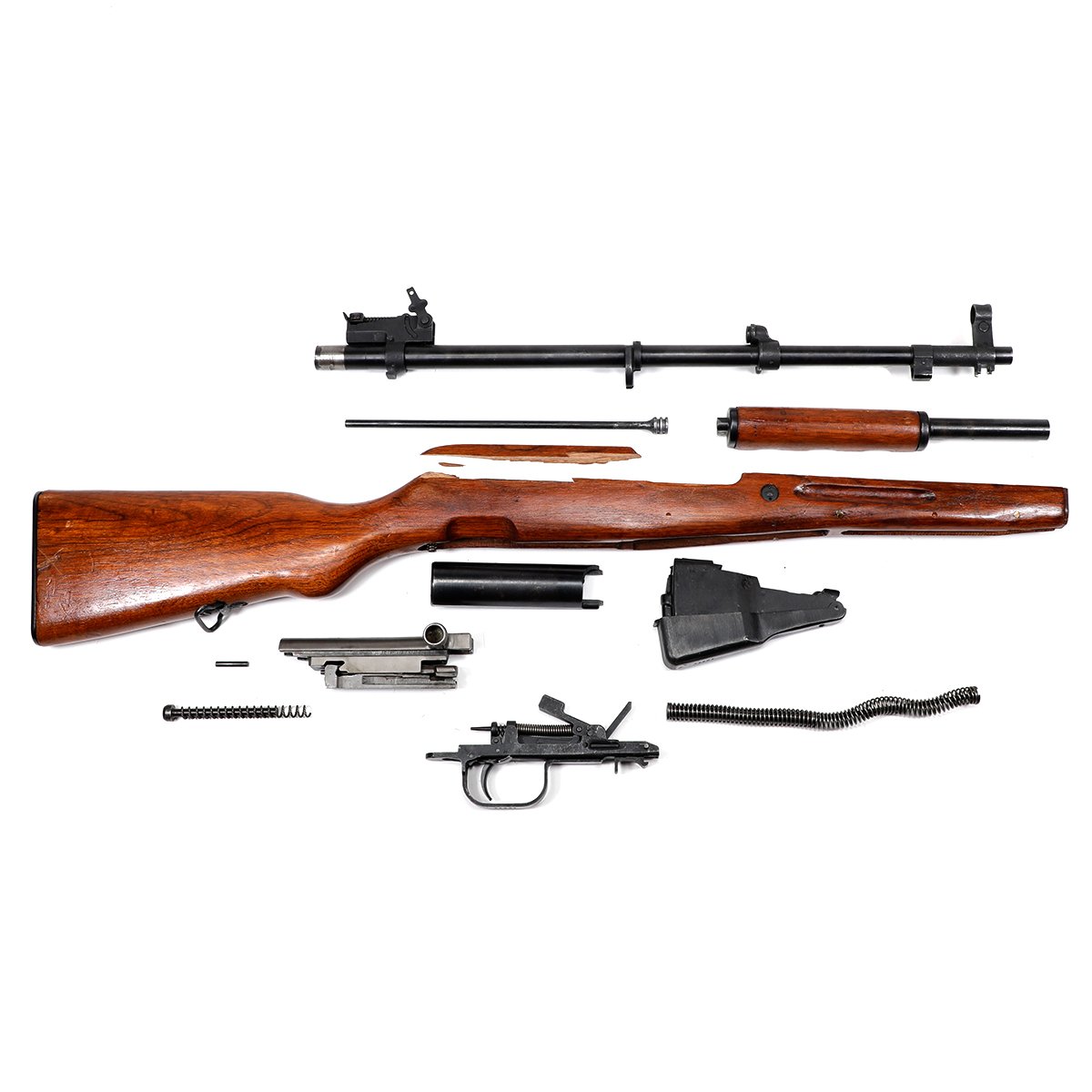
Field stripping gets you six groups. Bench stripping opens those groups, and on this rifle you will do it for exactly two reasons: to get five decades of cosmoline out of a firing-pin channel, and to fit or repair something.
Cosmoline is the usual one. A rifle that spent forty years in a crate has grease that has turned to varnish in every blind hole, and the field strip does not reach the places that matter most.
11.1 What You Need
A 1/16 inch or 1.5 mm pin punch, a small hammer, a bench block or a block of hardwood with a hole in it, a screwdriver that fits the front sight and stock screws, and a degreaser — mineral spirits, brake cleaner, or boiling water, all of which work and all of which have opinions attached.
No SKS-specific tools are required for anything in this volume except the front sight, which wants a front sight pusher (Vol 16).
11.2 The Bolt
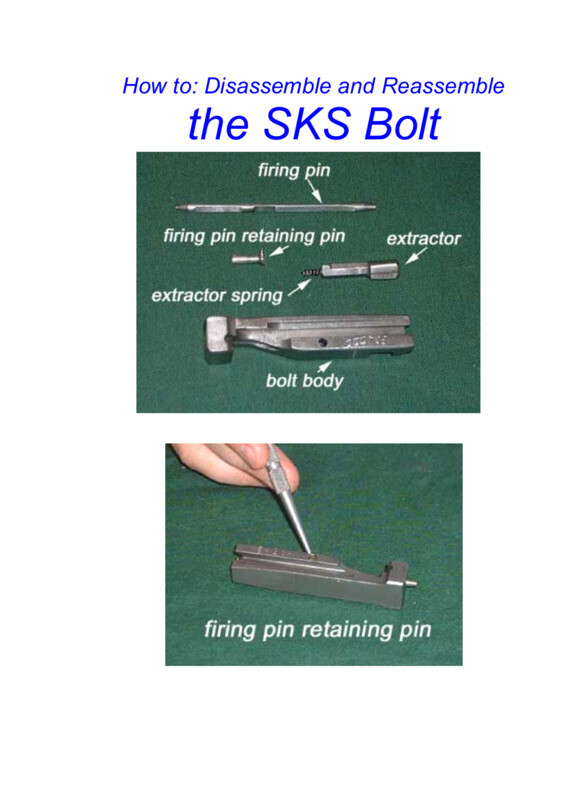
This is the important one, and it is four steps.
- Support the bolt in a bench block, firing-pin retaining pin uppermost. The retaining pin is a small cross pin through the side of the bolt body.
- Drift the retaining pin out with the punch. It is not tight. If it feels tight, you are hitting the wrong pin or the wrong direction — look before you swing harder.
- Tip the firing pin out of the rear of the bolt. It should slide. On a cosmoline rifle it very often will not, and that is precisely the fault you are here to fix.
- The extractor and its spring come out of the side of the bolt once the retaining pin is clear. Watch the spring; it is small and it is a coil under compression.
11.2.1 The firing pin is triangular, and it has one correct orientation
This is the single most important sentence in this volume.
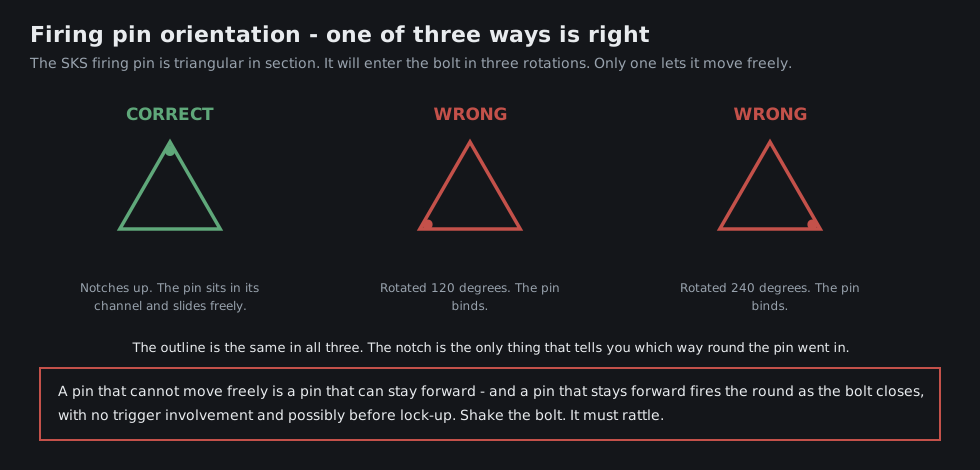
The SKS firing pin has a triangular cross-section. It will physically go into the bolt in three rotational positions. Only one of them is correct — notches up.
Installed in either of the two wrong orientations, the pin does not sit properly in its channel, does not move freely, and materially raises the chance of a slam fire. Vol 12 is entirely about that failure and why it matters.
11.2.2 Cleaning the channel
Get the channel clean and then leave it dry. Not oiled.
An oiled firing-pin channel collects fouling and turns it into the same paste that cosmoline turns into. The pin needs to move freely, not to be lubricated, and a dry channel stays free longer than a wet one.
Methods that work:
- Boiling water poured through the bolt body, which melts cosmoline out and takes it with it. Dry immediately and thoroughly, then oil the outside of the bolt and not the channel.
- Brake cleaner or an aerosol solvent, sprayed into the channel from the rear, shaken, drained, and repeated several times until what comes out is clear.
- Mechanical: a pipe cleaner or a patch on a wire, after the solvent has done the softening.
The test at the end is simple and it is the same test you should do every time you clean the rifle: shake the bolt. The firing pin must rattle. Audibly, freely, both directions.
11.3 The Trigger Group
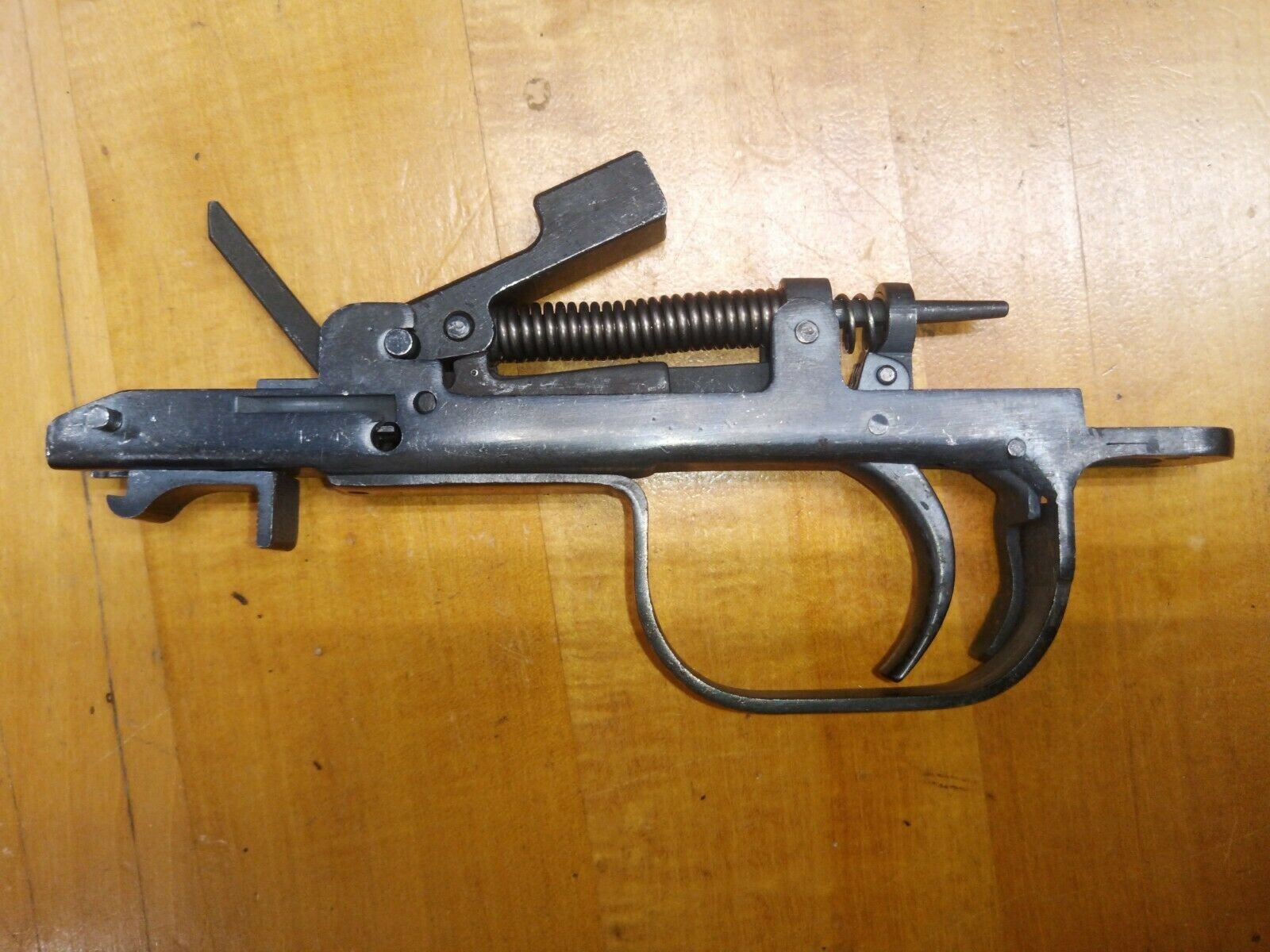
You can strip the trigger group with the same punch, but think first about whether you need to.
Do it if: you are fitting a reduced-power spring set, you have a genuine malfunction, or the group is full of grease.
Don’t do it if: you just want it clean and it works. The group can be degreased as an assembly perfectly well, and reassembling it is fiddlier than taking it apart. The hammer spring in particular is strong and the legs of it have to be indexed correctly.
If you go in: the hammer spring is the part that wants to escape, so control it. The sear and disconnector live under the hammer axis and their relationship is the whole function of the group — note how they sit before you disturb them, because the reassembly diagram in your head is more useful than any photograph.
The safety is a trigger block. It stops the trigger from moving. It does not block the sear and it does not block the firing pin, which is a distinction that matters for Vol 12: the safety does not prevent a slam fire, because a slam fire does not involve the trigger at all.
11.4 The Gas System
The gas tube, piston and extension come apart in the field strip (Vol 10 § 10.6 and § 10.7). Bench work on the gas system means:
The gas block. It is pinned to the barrel and it stays there. Do not attempt to drive it off unless you are doing barrel work; the front sight base, gas block and bayonet lug are all located relative to each other and to the bore, and putting them back correctly is a job with consequences.
The gas port. About 2.4 mm, and it can carbon up. If a rifle short-strokes — cycles weakly, fails to lock the bolt back on an empty magazine, or fails to eject cleanly — a fouled gas port is the first thing to check, and it is checked by looking at it with the piston out and a light.
The piston. Clean, dry, no burrs. A piston with a mushroomed face from decades of being hit should be replaced rather than dressed.
The upper handguard. Cracked handguards are the single most common cosmetic defect on any SKS. The wood is thin, it is right over the gas tube, and it takes the heat. It is a cheap part and replacing it is a five-minute job.
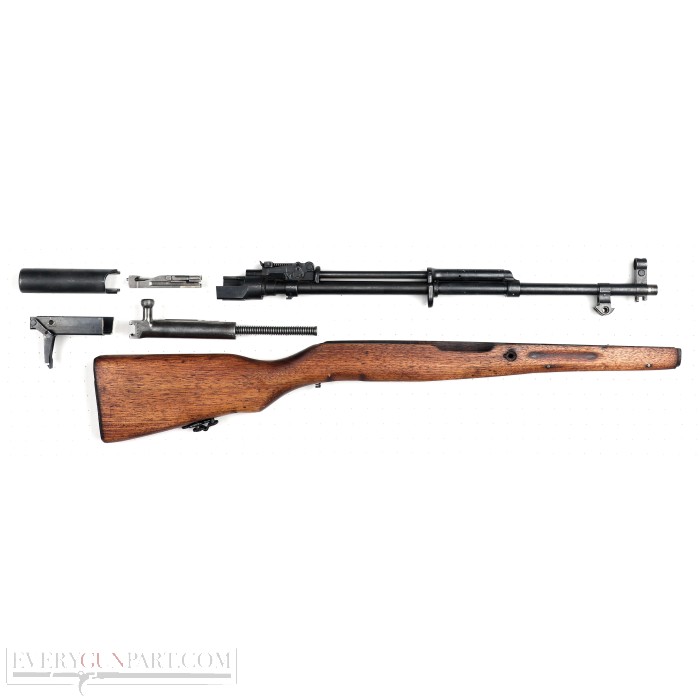
11.5 The Magazine
The fixed magazine is a box with a follower, a spring and a floorplate, and it is retained in the rifle by the trigger group and its own hinge.
Two jobs come up:
Cleaning. Cosmoline in a magazine body causes exactly the failures you would expect. It comes apart with the floorplate.
The follower stud. The bolt hold-open is a stud on the follower. If a rifle will not lock the bolt back on an empty magazine, and the gas system is fine, look at that stud — it can be worn, bent, or missing on a rifle that has been through a detachable-magazine conversion and back.
11.6 The Stock and Furniture
The barrelled action lifts out of the stock with the trigger group and magazine removed. Nothing else holds it.
There is usually a stock ferrule or band screw near the front and a buttplate with the cleaning-kit trap behind it. On some patterns the sling swivels are separate.
That is genuinely all there is, and it is why this rifle is such a good candidate for re-stocking. There is no bedding, no action screw torque spec, no pillar, and no accuracy consequence to worry about from the joint — Vol 13 and Vol 16 both come back to this.
11.7 The Bayonet
The bayonet pivots on a lug under the barrel and is held by a spring-loaded detent at each end of its travel.
Removing it is a real job — usually a pin or a screw at the pivot, plus the lug — and it is the most common reason people give up on an aftermarket stock halfway through. Several stocks require the bayonet to come off; several are sold in “bayonet cut” and “no bayonet” versions specifically to avoid that.
⚠ Removing a bayonet lug is not automatically a neutral act in law. It is one of the features that determines a rifle’s import classification, and it interacts with the parts-count rule in Vol 17. Removing it is generally the safe direction — the factory SKS-M had it deleted for exactly that reason — but adding features is where the trouble lives.
11.8 What to Replace, and What Not To
Table 1 — 11.8 What to Replace, and What Not To
| Part | Replace when | Notes |
|---|---|---|
| Firing pin | Chipped tip, or you are set on a sprung pin | Read Vol 12 first — a clean channel fixes almost everything |
| Extractor / spring | Failures to extract that survive a clean chamber | Cheap, common |
| Recoil spring | Weak cycling with a clean gas system | Cheap; a reasonable first thing to try on a tired rifle |
| Gas piston | Mushroomed face | Do not dress it back |
| Upper handguard | Cracked | Almost every one is; purely cosmetic unless it is loose |
| Hammer / sear springs | Only for a deliberate trigger job | Lighter springs cause light strikes on hard surplus primers |
| Magazine follower | No bolt hold-open, stud damaged | Often the fix after a conversion is reversed |
| Bolt | Never, casually | The bolt is fitted to the receiver; a mismatched bolt is a headspace question, and the hub’s headspace dive is where that gets taken seriously |
That last row deserves emphasis. Do not swap bolts between SKS rifles. The bolt and the receiver were fitted together, the serial number is etched on the bolt for exactly that reason — the 1955 CIA source noted it — and swapping one in is a headspace change made blind. If you have a rifle with a mismatched bolt, that is a rifle to gauge before you shoot it.
Comments (0)