The SKS · Volume 17
Law, Values, and the Cheatsheet
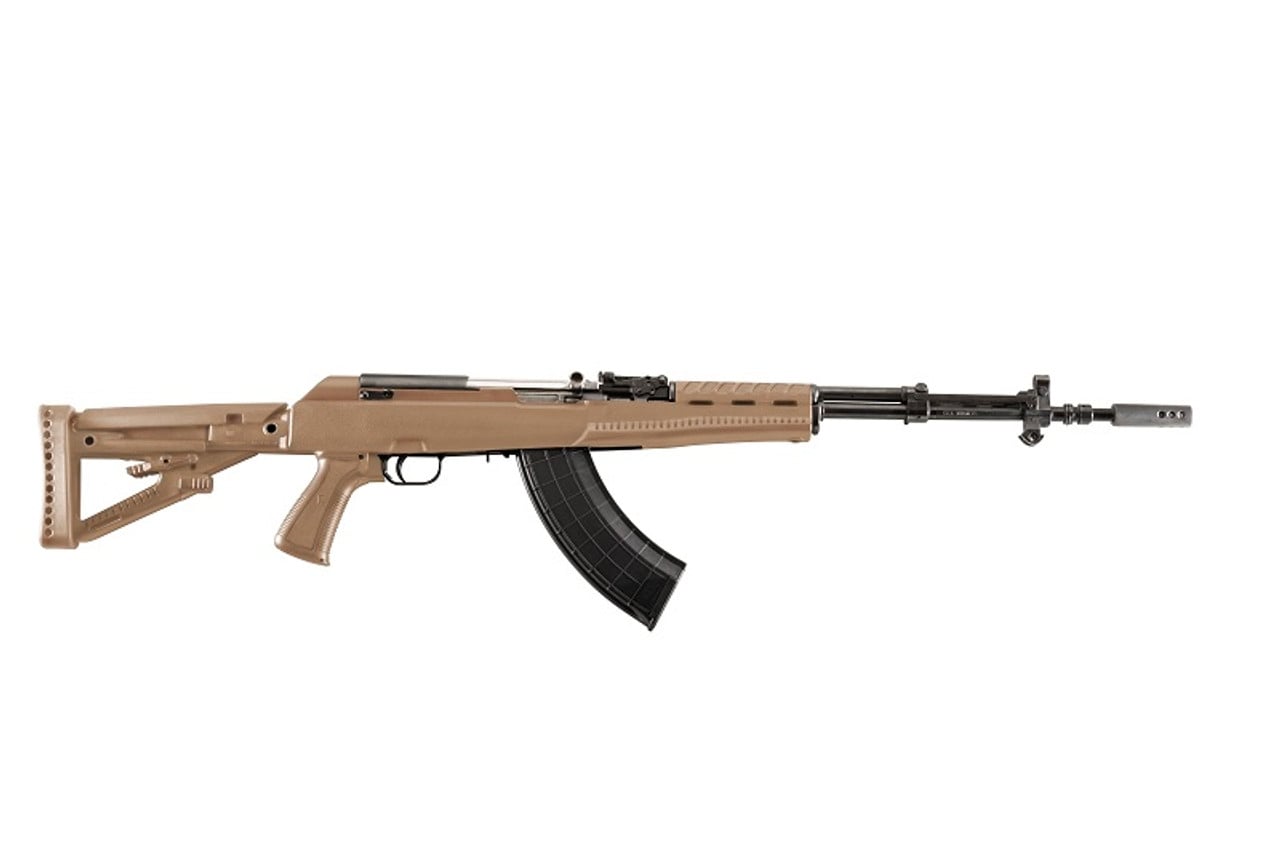
Legal posture first, then values, then a cheatsheet. Nothing here is legal advice, laws change, and the hub’s legal-posture notes apply before anything in this volume does. What this volume tries to do is tell you which questions to ask, because on this rifle the traps are specific and predictable.
17.1 Import History, Because It Is Why Yours Exists
Vol 7 § 7.7 covers this in detail. The short version:
- Before the late 1980s — Vietnam bring-backs only.
- c. 1984 to 26 May 1994 — millions of Chinese Type 56 rifles, Norinco and Polytech, retailing as low as about $70.
- 26 May 1994 — the Clinton administration excluded most Norinco and Polytech arms from China’s renewed MFN status. Chinese imports end.
- 1994 to 1998 — Russian rifles fill the gap after the collapse of the USSR. Almost every Russian SKS in the country came through this four-year window.
- After 1998 — Yugoslav, Romanian, Albanian surplus.
- Now — no new Chinese or Russian rifles are coming.
The consequence for a buyer: the supply is fixed and shrinking. Every SKS in the United States is already here.
17.2 The Imported-Parts Count
This is the live federal issue on this rifle and it catches people constantly, because the two most popular modifications are both on the list.
The rule, in outline: a semi-automatic rifle assembled from imported parts, that is not classified as particularly suitable for sporting purposes, may not contain more than ten imported parts from a list of twenty specified components. If you assemble such a rifle with more than ten imported parts on that list, you have a problem.
An imported SKS in factory configuration is not an assembled rifle in this sense and is fine as it sits. The question arises when you change it.
Two very common changes are the ones that raise it:
- A pistol grip — which is what nearly every aftermarket stock and chassis has.
- A detachable magazine — which brings the magazine body, follower and floorplate onto the count as three separate listed parts.
Do both, and an imported rifle is very likely over the line unless imported parts have been swapped for US-made ones.
How compliance is normally reached: count the listed parts that are imported, then replace enough of them with US-made equivalents to get the imported count to ten or fewer. In practice the parts people replace are the stock, the pistol grip, the magazine body, the follower, the floorplate, the trigger group, the hammer, the sear and the disconnector — which is exactly why US-made SKS trigger groups and US-made magazine bodies are marketed the way they are.
Two cautions worth stating plainly:
⚠ Counts differ between variants. The commonly-cited numbers put a standard SKS at fourteen listed parts in factory form and the Yugoslav M59/66 at fifteen — the difference being the grenade launcher. So the number of parts you have to change is not the same for every rifle. Count yours; do not use somebody else’s arithmetic.
⚠ A threaded barrel is also a listed feature consideration. Vol 15 § 15.5. If you are having a muzzle threaded on an imported rifle, that decision belongs in the same conversation as the stock and the magazine.
The hub’s STEN dive carries the canonical treatment of the twenty-part count, worked through in detail with the reasoning, and that is the right place to go before making changes. This volume is a pointer, not a substitute.
17.3 The Fixed-Magazine Question, and State Law
Federal aside, several states regulate rifles by feature — detachable magazine capacity, pistol grips, adjustable stocks, flash hiders, threaded barrels — and an SKS can move between categories depending on what you bolt to it.
An SKS in factory configuration, with its fixed ten-round magazine and no pistol grip, is one of the least restricted centrefire semi-automatic rifles in the country and is legal in places where very little else with a detachable magazine is.
Convert it and you may have built a different rifle in the eyes of your state. The conversion that is most attractive — pistol grip stock plus a 30-round detachable magazine — is precisely the combination that feature-based state laws are written around.
Because the SKS is cheap and the conversion parts are cheap, this trap catches people who would never make the equivalent mistake on an expensive rifle.
Check your own state before you buy the parts, not after. Michigan, for example, is not a feature-law state, and that is not true of a lot of other places people shoot.
17.4 Canada, Briefly
Worth a note because the SKS is arguably more popular there than here — some Canadians call it “Canada’s rifle.”
It is classified non-restricted and can be owned with a Possession and Acquisition Licence, which puts it in the same bracket as a hunting rifle. Magazines are limited to five rounds by Canadian legislation, which is a very different constraint than anything in US law and means the fixed ten-round magazine is normally pinned.
17.5 What They Cost
Rough recent figures. Treat these as a ranking rather than a price list, because the market on surplus arms moves.
Table 1 — 17.5 What They Cost
| Variant | Rough condition-dependent range | Notes |
|---|---|---|
| Soviet Tula | $1,000–$2,000+ | The reference rifle; matching numbers is most of the value |
| Soviet Izhevsk | Premium over Tula | Two years of production only |
| Soviet 1949 Tula | Well above both | Spike bayonet, sprung firing pin, hand-etched markings |
| Chinese Type 56, generic | $400–$450 | The shooter’s choice; millions were imported |
| Chinese Sino-Soviet, early milled | Premium | Best-made Type 56 |
| Chinese stamped receiver | Substantial premium if genuine | Over-claimed; verify (Vol 7 § 7.3) |
| Chinese SKS-D / SKS-M | Premium | The factory detachable-magazine rifles |
| Yugoslav M59/66 | Around Chinese money, often better condition | Check the bore — no chrome lining |
| Romanian M56 | Rising, can approach Russian | Frequently mis-sold as Russian |
| Albanian 56-1 | Above other non-Russians | Rarest commonly available variant; often rough |
| East German Karabiner-S | High | Short production, mostly bring-backs |
| North Korean / North Vietnamese | Very high | Essentially all bring-backs |
| Polish ksS | Very high | Soviet rifle, Polish stock; no Polish manufacture exists |
Where the value is: matching numbers, an original bayonet, original furniture, an unpitted bore, and honest provenance. A refurbished rifle with force-matched numbers is not a fake, but it is worth less than an unrefurbished one, and a rifle whose original wood is in a box in somebody’s garage is worth less than one wearing it.
17.6 Buying Checklist
Ten things, in the order to do them in a shop:
- Look down the bore. Bright rifling, no pitting. On a Yugoslav this is the whole decision.
- Check the crown for dings and rod wear.
- Check the numbers — receiver, bolt, bolt carrier, trigger group, magazine, bayonet. Note electro-pencilled or force-matched numbers.
- Strip the bolt if you are allowed to, or at least shake it. The firing pin must rattle (Vol 12).
- Work the action. It should be smooth-ish and it should lock open on the empty follower.
- Function check the safety and the disconnector (Vol 10 § 10.11).
- Identify the variant from the marks (Vol 8 § 8.8). Know what you are being sold.
- Yugoslav: put the grenade sight down and confirm the gas system is set to cycle.
- Look for conversion damage — a rifle that has had a detachable magazine and been put back is a rifle whose magazine catch area and follower deserve a look.
- Ask what happened to the original wood if it is wearing plastic.
17.7 Cheatsheet
17.7.1 Specifications
Table 2 — Specifications
| Cartridge | 7.62×39 mm M43 |
| Operation | Gas, short-stroke piston, tilting bolt, semi-auto only |
| Barrel | 521 mm / 20.5 in, four grooves, RH twist |
| Muzzle velocity | 735 m/s / 2,410 ft/s |
| Magazine | Fixed 10-round, stripper-clip charged |
| Weight | 3.85 kg / 8.5 lb |
| Length | 1,020 mm folded / ~1,260 mm bayonet extended |
| Sights | Hooded post front; tangent rear, П + 100–1,000 m; no rear windage |
| Battle setting | П (postoyannyy) = 300 m |
| Gas port | ~2.4 mm |
| Practical rate | 35–40 rpm |
| Realistic accuracy | 2–4 MOA |
17.7.2 Field strip, in order
Clear (magazine open first) → cover retaining lever up and out → cover off, thumb on it → recoil spring assembly → bolt carrier and bolt → gas tube lever up 45° → gas tube and handguard → piston and extension → safety on, trigger-group latch, push forward then lift rear → magazine → stock.
17.7.3 The four things that will bite you
- The recoil spring launches the receiver cover. Keep a thumb on it.
- The firing pin must rattle. No rattle, no loading. And it goes back notches up.
- The safety does not stop a slam fire. It blocks the trigger only.
- A Yugo with the grenade sight up has its gas shut off. That is not a fault.
17.7.4 Identification, fastest tell
Tula = arrow in a star · Izhevsk = arrow in triangle in circle · Chinese = framed factory code on the left receiver · Yugoslav = 22 mm spigot and grenade ladder, no chrome bore · Romanian = plain arrow-in-triangle, left receiver · Albanian = full-length handguard, AK charging handle, two holes in the buttplate · East German = sling slot through the stock, no cleaning rod · North Vietnamese = star with a centred 1.
17.7.5 The corrections this dive exists to make
- It did not fight in the Second World War. Fifty trial rifles, thirty-seven to the front, no combat use, a bad August 1944 report.
- The 1944 trial rifles were 7.62×41, not ×39. The case was shortened in 1947–48.
- The CIA thought it was select-fire in 1953 and thought it loaded from underneath. Both wrong; both corrected by 1955.
- The cartridge was classified too. A second soldier per shooter, catching brass in his garrison cap.
- The manual was not classified. Twenty pages, orderly-room reading file, any private.
- Magpul makes nothing for this rifle. The search suggestions are not products.
- The sprung firing pin was the original, deleted as a simplification in about 1951.
- You cannot bed an SKS, because there is nothing to bed. A stock swap changes the shooter, not the rifle.
- The rear sight has no windage. If yours has never been zeroed for windage, it cannot have been.
17.7.6 Where to spend, in order
Front sight tool → ammunition testing → clean the bolt and trigger group → aperture rear sight → recrown if needed → springs → then an optic on a mount that pins to the receiver → then a stock with an adjustable comb.
Comments (0)