M1 Garand · Volume 7
Springfield 2450021 — Parts, Dates and Value
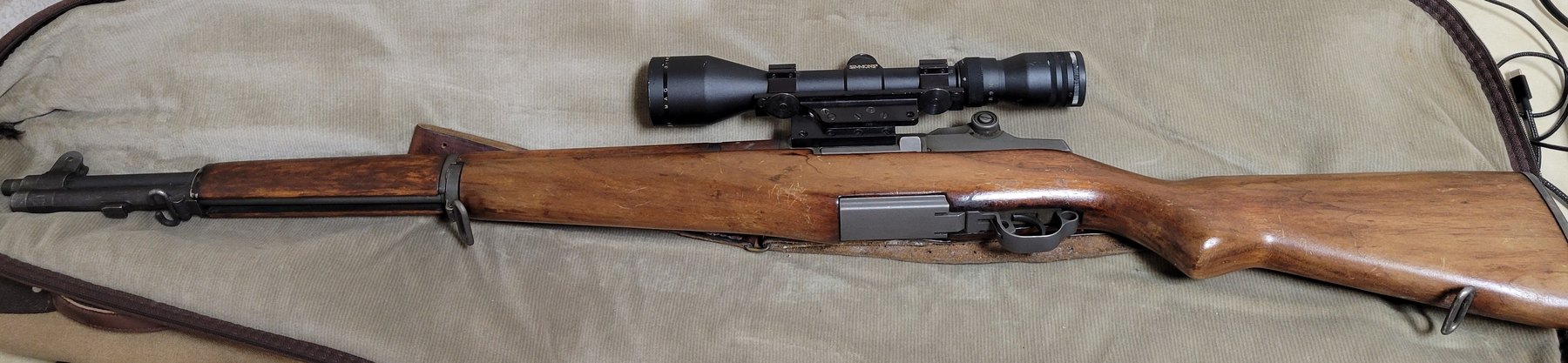
The rifle documented here was acquired in September 2026 as what seemed an ordinary rebuilt M1. It is a rebuilt M1. It is also a wartime Springfield receiver carrying a serial number from a block the Army assigned to Winchester, in the stretch where the two factories are documented to have stamped the same numbers. Almost everything bolted to that receiver has been replaced at least once since it left Springfield, the receiver itself has been drilled for a scope, and the sling is a reproduction.
The first thing on this page is the table that answers the obvious questions: every part on this rifle, when it was made, whether it belongs on a January 1944 Springfield, and whether it raises or lowers the value. The rest of the volume is the evidence behind each line, with a photograph of every marking.
7.1 At a Glance — Parts, Dates and Value
“Right for this receiver” means right for a Springfield made about January 1944 — not proof the part left the factory with it, which nothing on the rifle can show. Collector value and shooter value are kept in separate columns, because on this rifle they often point opposite ways.
Table 1 — At a Glance — Parts, Dates and Value
| Part | What’s on this rifle | When it was made | Right for this receiver? | Collector value | Shooter value |
|---|---|---|---|---|---|
| Receiver | Springfield 2450021; drawing D 28291 32; heat lot 053, diamond, C; no “A” | About January 1944 | Yes — it’s the rifle | Raises. A wartime Springfield. The duplicate-serial band is a real, documented curiosity, but no sale was found showing it’s worth a premium | No effect |
| Holes in the receiver | Three tapped holes in the left wall, for a commercial side mount | After its service life; exact date unknown | No — and permanent | Lowers, a lot. Collector opinion runs from “drops the value in half” to “destroys any collector value.” Plugging them doesn’t fix it | No effect; it’s what allows a scope to be mounted |
| Trigger housing | D28290-12-SA | 1943–44 (March 1943–May 1944 by one dealer; January 1943–August 1944 by another) | Yes | Raises a little. About $43 as a part | No effect |
| Hammer | C46008-7 SA | May 1943–August 1944 (the dealer’s own page conflicts with itself) | Probably | Raises a little. About $28 as a part | No effect |
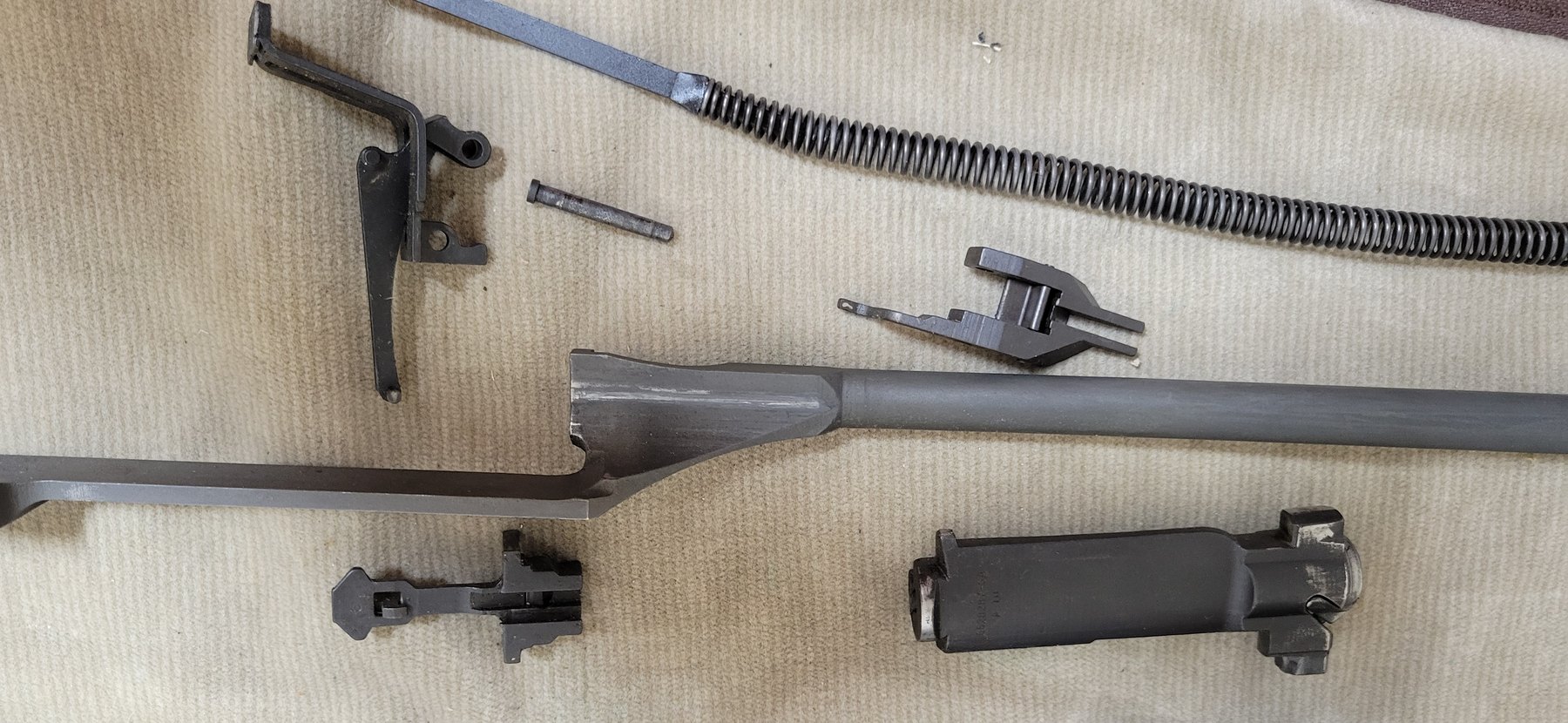
| Bolt | 6528287-SA, lot A-10 | 1950s — post-war Springfield | No | Lowers — not correct for 1944 | No effect; what matters is lug wear and headspace |
| Operating rod | 7790722-RA, stamped NM | Late 1950s — Remington | No | Lowers — not correct, though an NM rod is worth a little on its own | Raises a little. A cut post-war rod, and legal in as-issued matches |
| Barrel | FA D6535448 10-00 .30-06 — Fulton Armory, made by Criterion | October 2000 | No — commercial | Lowers | Raises, if it gauges well (Vol 10) |
| Stock | Walnut, no inspector’s cartouche found | Unknown | Unknown — sanded or replaced | Lowers | No effect, as long as it fits tight |
| Buttplate and butt trap | Checkered plate and trapdoor, two empty wells | Unknown; checkered is reported as the wartime pattern | Consistent — matches collectors’ descriptions of a Springfield plate (low confidence) | Little effect | No effect; the empty trap wants a period kit (Vol 15) |
| Sling | M1907-pattern reproduction, two-rivet brass hooks | Modern reproduction | No — and brass hardware is wrong for 1944 anyway | No effect | Fine if the leather is sound |
| Scope and mount | Simmons 3–10× “44 Mag” Wide Angle on a Simmons side mount | 1990s–2000s (estimated) | No | Lowers — it comes with the holes | Mixed: a useful optic, but the rifle’s no longer “as issued” |
| Import marks | None found | — | — | Raises (by their absence) | No effect |
7.1.1 What That Adds Up To
In collector’s language it’s a shooter-grade, commercially rebarreled rifle on a wartime Springfield receiver, drilled and tapped — and its one genuinely collectable fact, the serial number, is a curiosity rather than a documented premium.
No comparable sale turned up for a rifle set up exactly like this, so any number is a bracket built from anchors, not an appraisal. The anchors, all checked in September 2026:
- Ceiling: the Civilian Marksmanship Program’s Expert Grade — a government receiver with a new commercial barrel and stock, not drilled — was in stock at $1,150 plus shipping.
- An auction estimate: in February 2025 Rock Island Auction estimated $1,200–1,800 for a drilled-and-tapped Springfield M1 wearing a collectable military M84 scope. The sale price wasn’t public, and a Simmons is not an M84.
- The haircut: collector commentary that a scope on a non-sniper M1 roughly halves its value.
Put together, that places this rifle at something like $600 to $1,150 as it sits. That’s low confidence, and not a figure to quote to a buyer without a proper appraisal.
If it were ever sold, the honest description is: “Springfield Armory M1, receiver 2450021 (about January 1944, in the Springfield/Winchester duplicate-serial band), commercially rebarreled 2000, post-war bolt, NM operating rod, drilled and tapped for a side mount.”
7.1.2 A Legal Note That Follows From This
The federal curio-and-relic classification covers firearms 50 or more years old, and ATF’s long-standing position is that surplus military rifles qualify “in their original military configuration.” A 2000-dated commercial barrel and a drilled receiver make that hard to claim for this rifle. It changes nothing about owning it; it only matters for transactions under a collector’s license. Vol 17 has the detail.
7.2 The Receiver
7.2.1 The heel
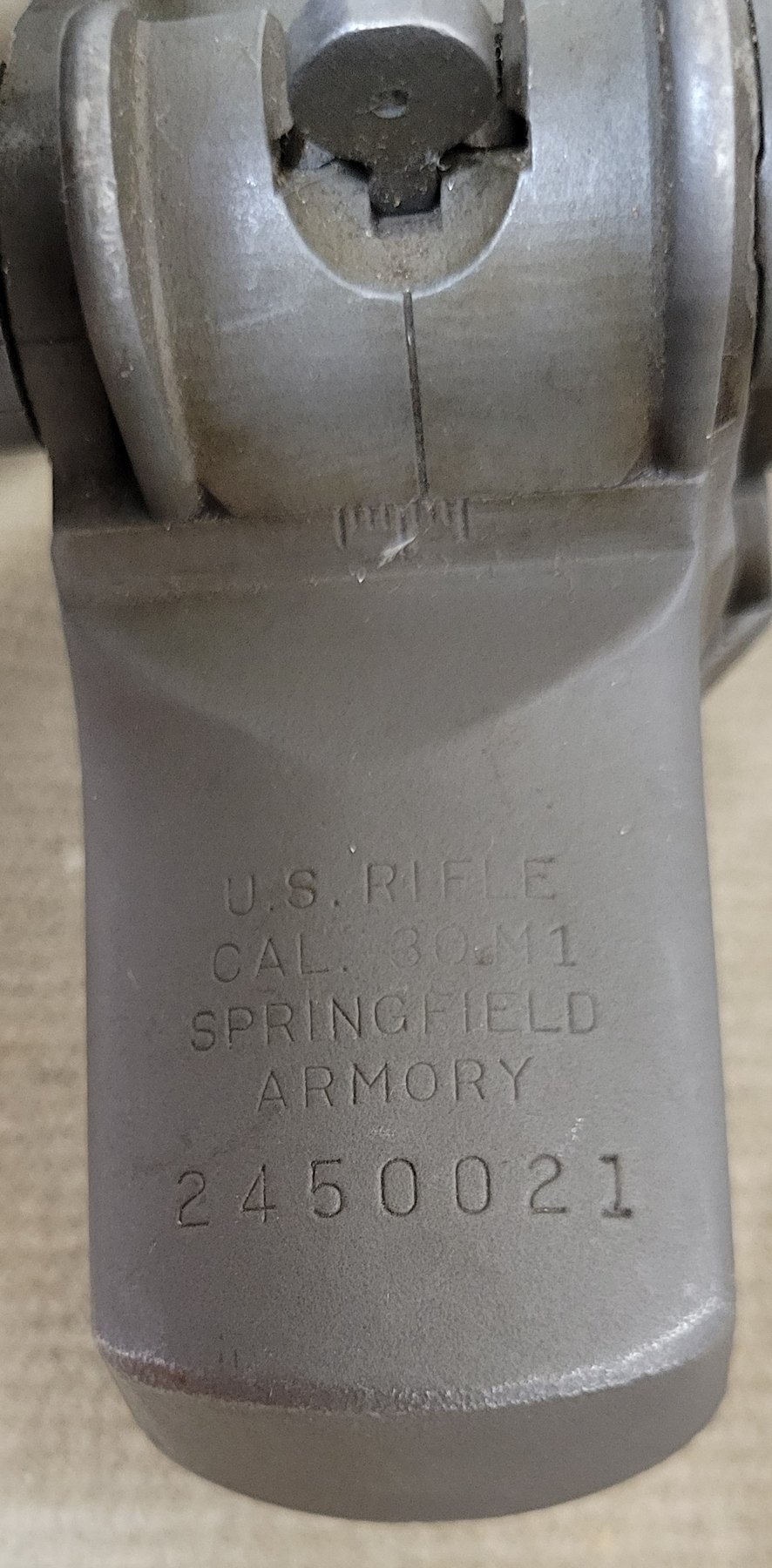
The heel stamp is the standard wartime Springfield format. The maker’s name on the heel — not the number — is what tells a Springfield from a Winchester, and this one says Springfield.
7.2.2 Where 2,450,021 falls
Vol 3 lays out the evidence in full. The short form:
- The Army’s assigned-range table gives 2,305,850–2,655,849 to Winchester.
- Springfield’s own month-end serials jump from 2,305,849 at the end of December 1943 to 2,543,412 at the end of January 1944 — inside Winchester’s block — in a month Springfield built 122,001 rifles.
- If those January rifles were numbered consecutively back from the month-end figure, they ran from about 2,421,400 to 2,543,412. This receiver sits comfortably inside that range. That is an interpretation of the table, not a production record, but it is the only reading under which Springfield’s numbers make sense.
- A Springfield rifle and a Winchester rifle both numbered 2445470 were photographed in the July 1960 American Rifleman. This rifle is 4,551 numbers above that pair.
- Winchester’s own 2,450,021, if it survives, would have been made in about June 1944.
So the best estimate for this receiver is January 1944, with a Winchester twin made about five months later. The absence of an “A” is expected: the Army only marked duplicates it discovered, which usually meant both rifles turned up in the same unit’s records. Most were never caught.
7.2.3 The right leg — drawing number and heat lot
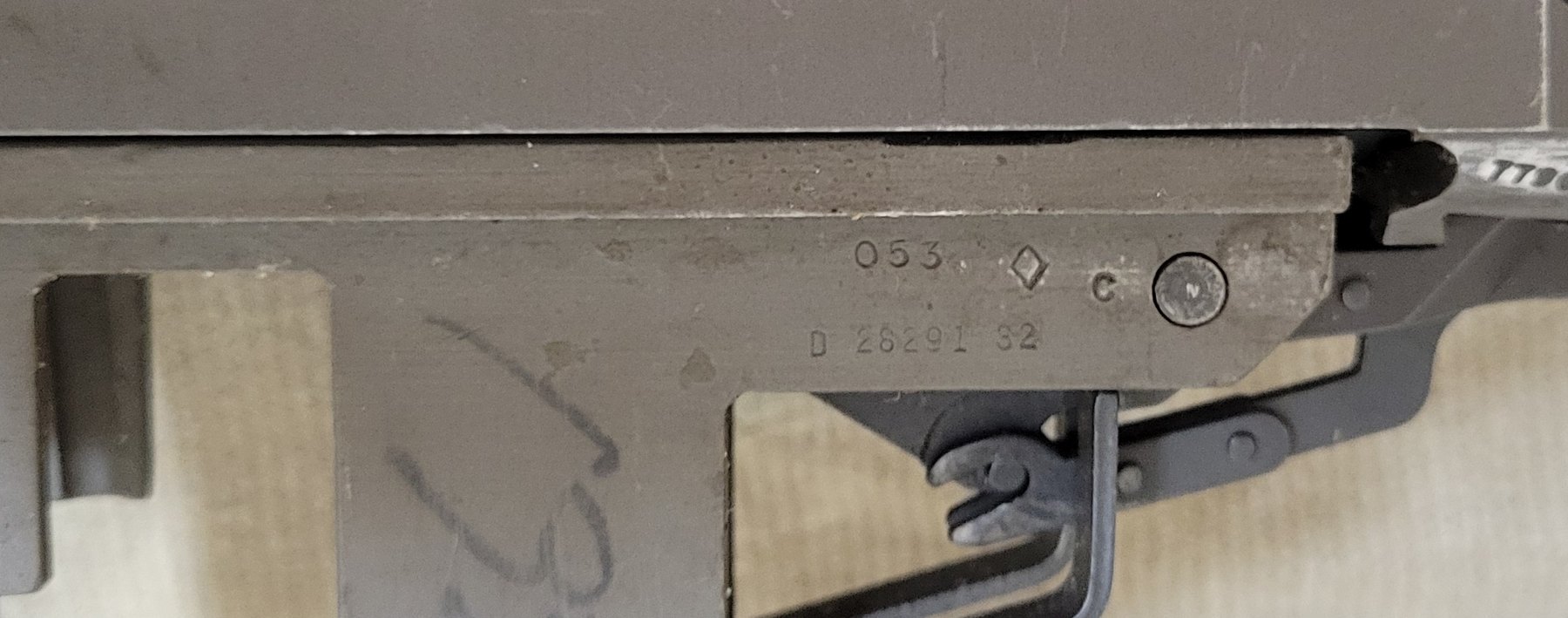
- D 28291 32 is the receiver drawing number, revision 32. Forum references report revision 32 on Springfield receivers in roughly the 2.3 to 2.85 million serial range; revision 17 is documented only up to serial 1,500,000 (April 1943). A revision-32 drawing number is consistent with a January 1944 receiver. That dating is medium confidence — it comes from collectors, not an Ordnance document.
- The diamond is reported as the mark for 8620 steel, which Springfield used for receivers after July 1942.
- 053 is almost certainly the heat lot. No documented meaning for C could be found, and none is guessed here.
- There is no “SA” after the drawing number. Whether revision-32 receivers normally carry it could not be confirmed.
7.2.4 The holes
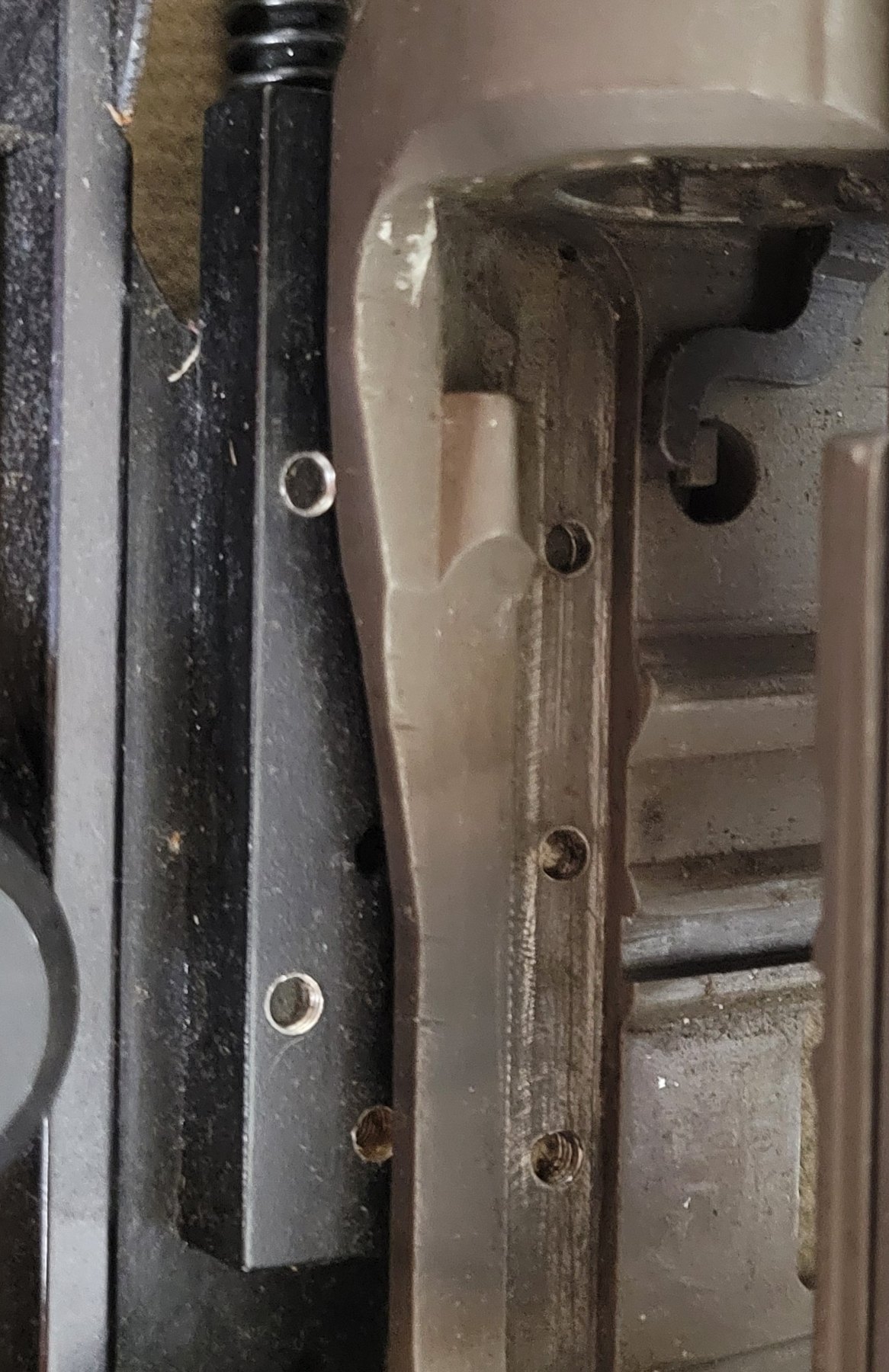
This is the single most important fact about the rifle’s value. The receiver has been drilled and tapped with three holes for a commercial side mount. The military M1C sniper rifle’s Griffin & Howe mount used five holes — “three of the holes were threaded for screws and two were for taper pins,” as Canfield describes it — so this is not an M1C conversion, and no collector will read it as one. It is a civilian scope installation.
It is also permanent. Screws can fill the holes, but they are still holes. Welding them closed puts heat into a heat-treated receiver, and “re-weld” receivers are their own discounted category. No source was found that says plugging restores value. The honest thing is to leave them and disclose them.
7.3 The Trigger Group
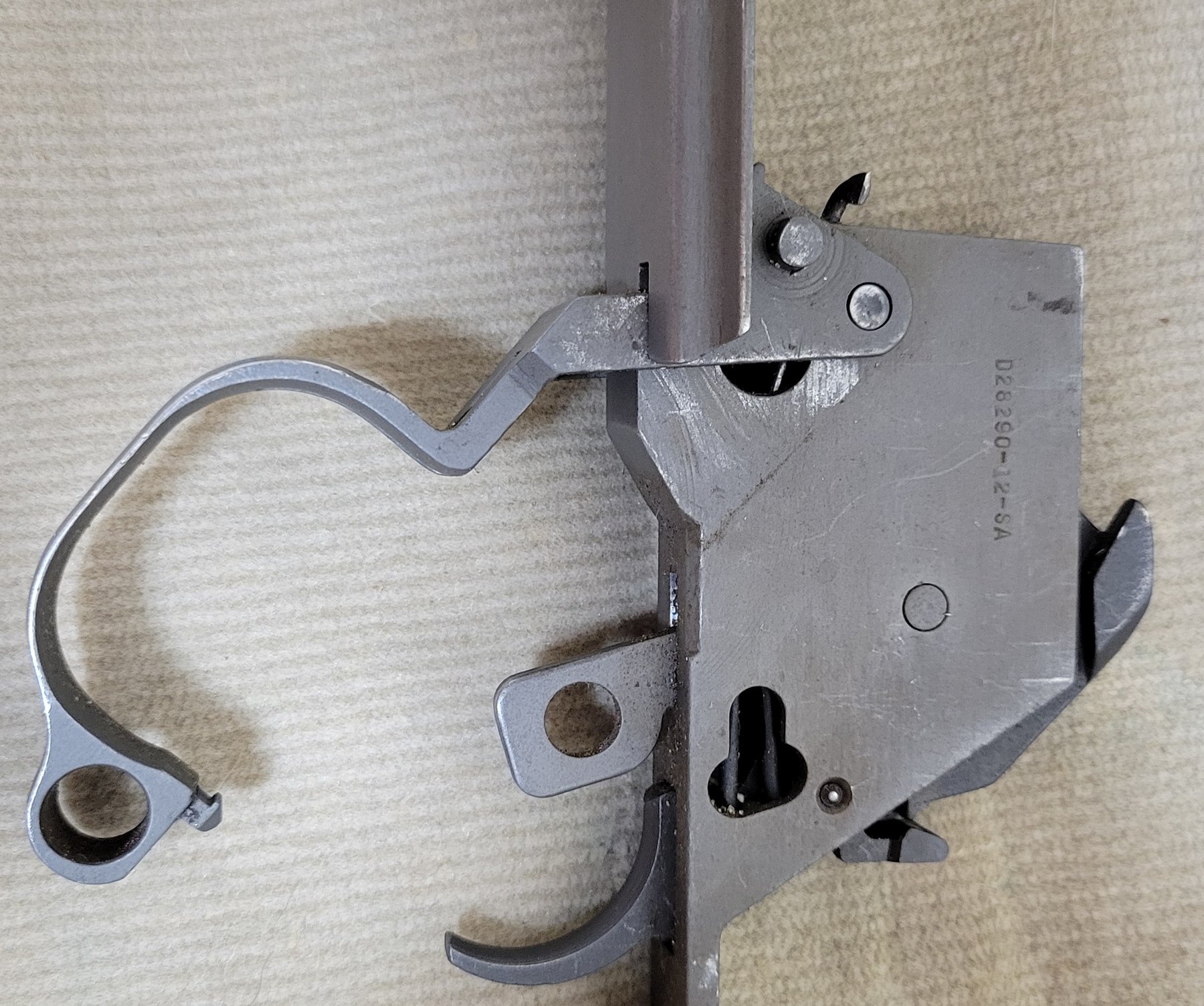
D28290-12-SA is a Springfield trigger housing. One dealer dates the -12 revision to March 1943–May 1944; another gives January 1943–August 1944. Either way it is the right period for a January 1944 receiver.
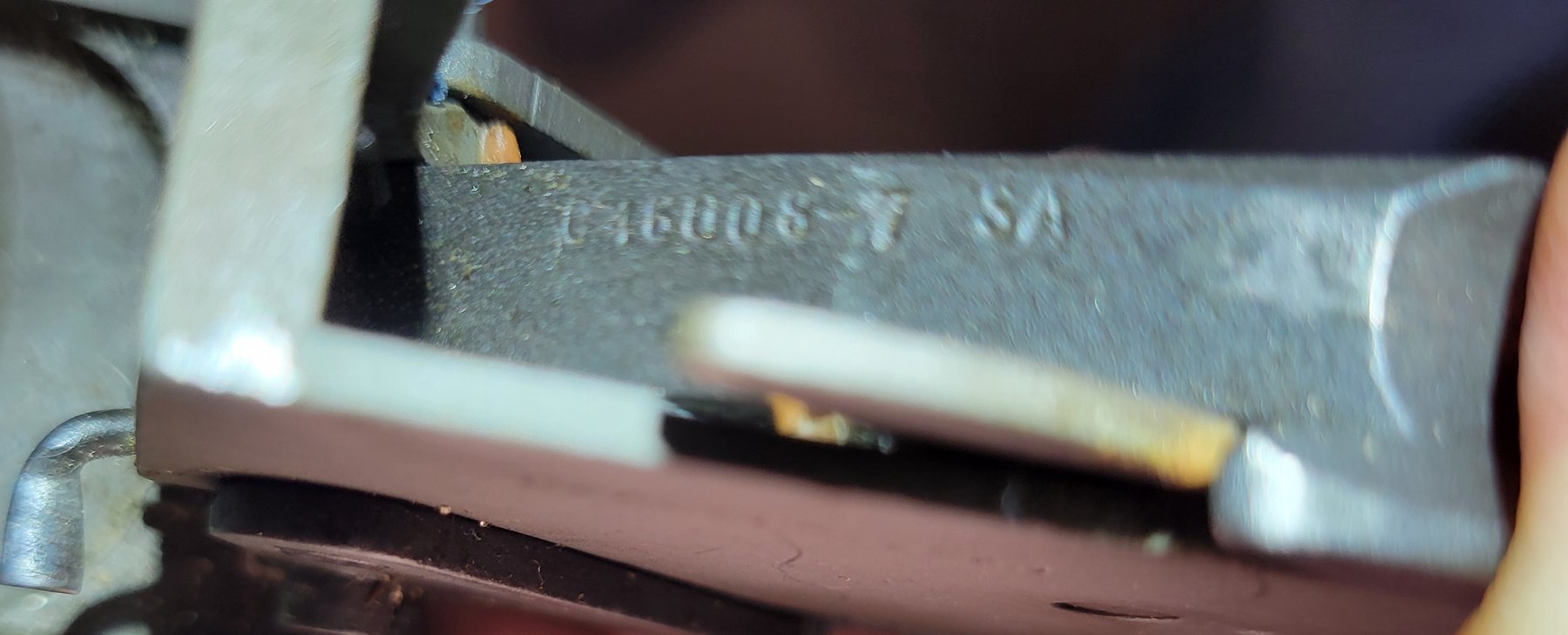
C46008-7 SA is a Springfield hammer. The same dealer gives May 1943 through August 1944 for this revision — and, on the same page, a serial range starting at 3,051,952, which is Springfield’s July 1944 figure and does not agree with a May 1943 start. The date range is the more trustworthy figure, but the conflict is worth noting.
There is no way to tell whether the housing and hammer have been with this receiver since 1944 or were reunited with it in a rebuild. Nothing on the parts records that. What can be said is that the receiver, housing and hammer are all wartime Springfield parts of consistent date — which is not the same as the rifle being “correct.”
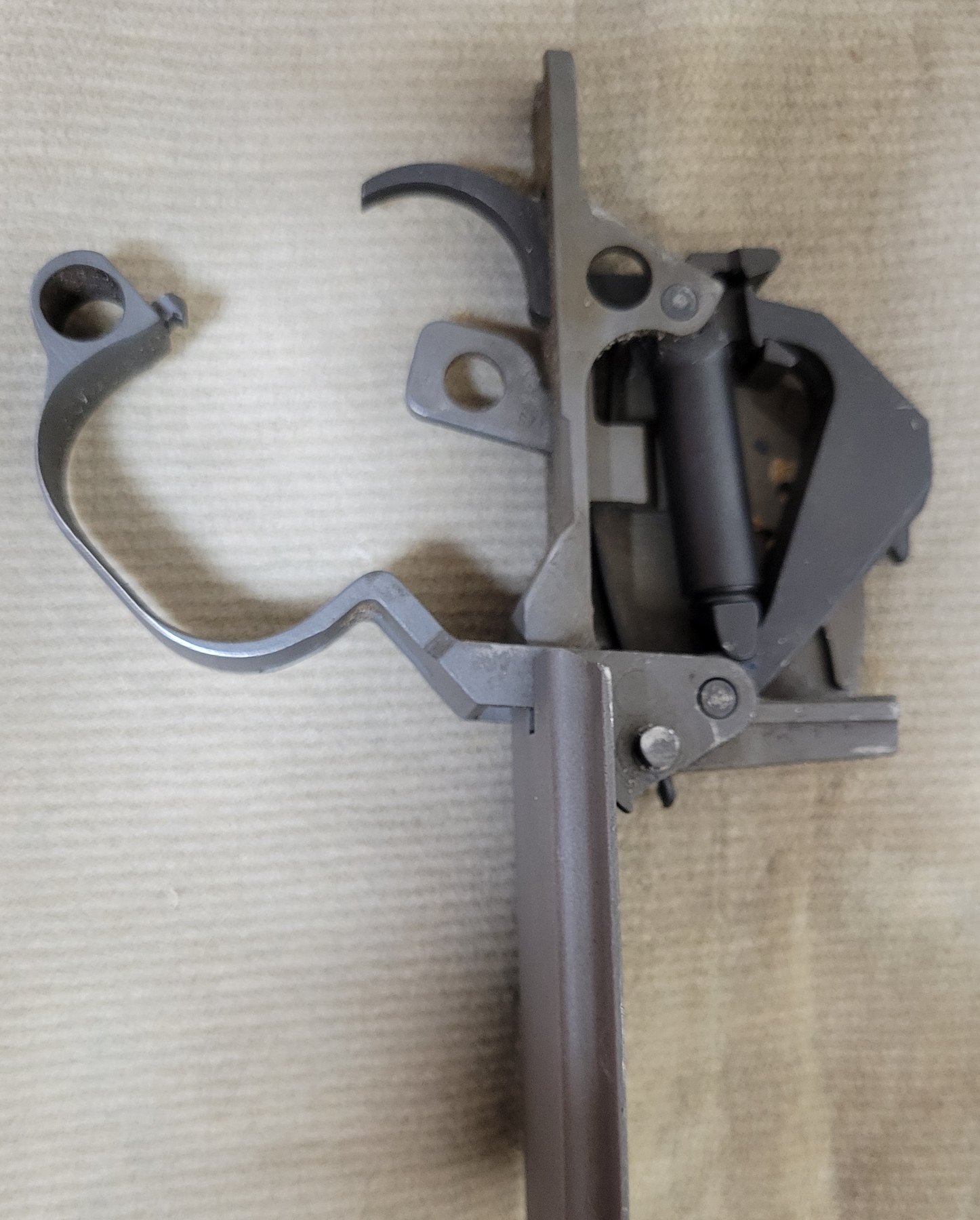
The safety was checked for a part number and none was found. No source was found on how M1 safeties were marked, so nothing is read into that.
7.4 The Bolt
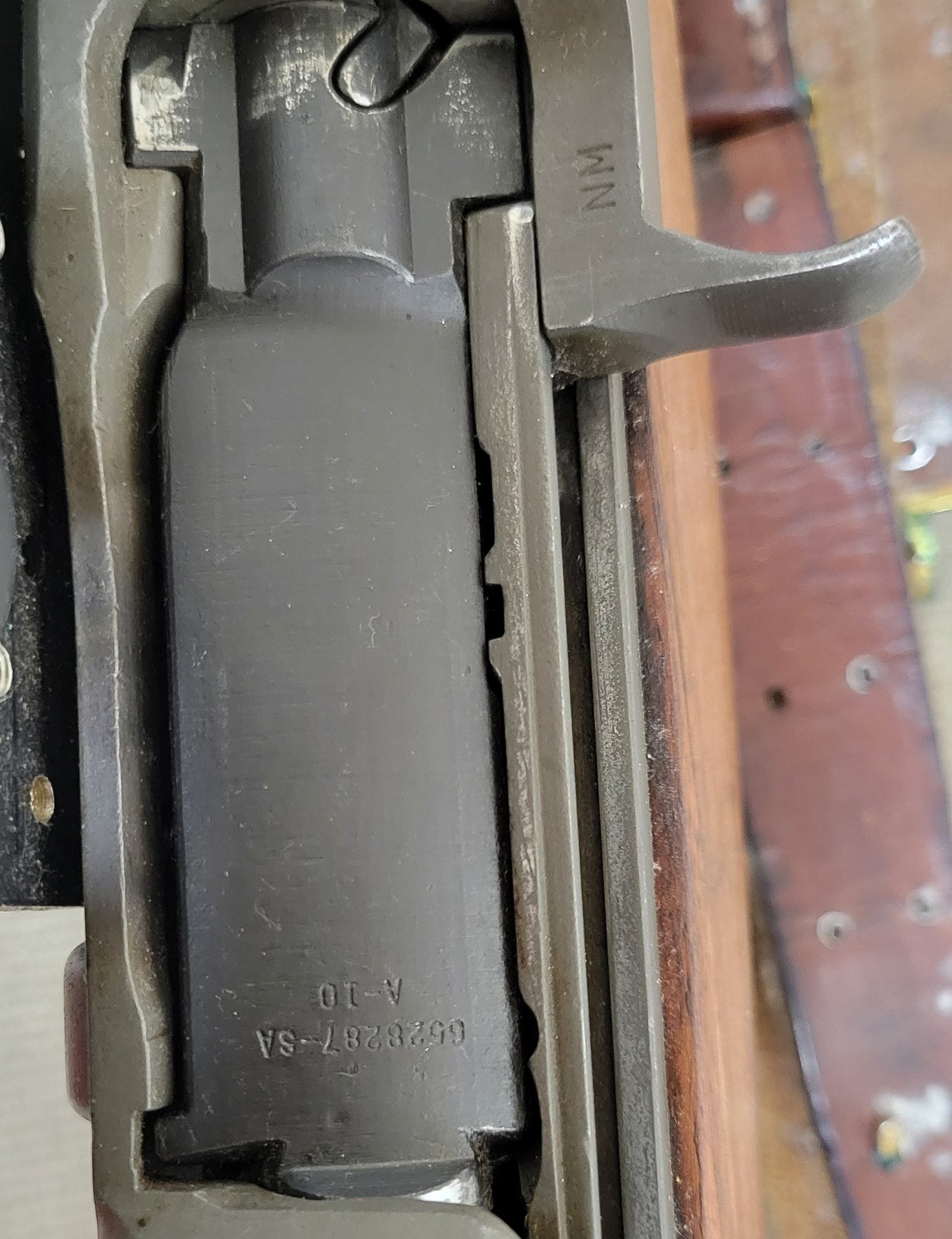
6528287-SA is a post-war Springfield bolt drawing number. Wartime bolts are marked with the D28287 drawing number; the seven-digit 65-series numbers are 1950s. One dealer dates revisions A15 and A16 to 1955–57, and associates this drawing’s heat lots with 4.2-million and 5.3–5.8-million serial ranges — all post-1952 production. No date for A-10 specifically was found.
For shooting it does not matter: it is a government bolt, and what counts is lug wear and headspace, which Vol 10 covers.
7.5 The Operating Rod
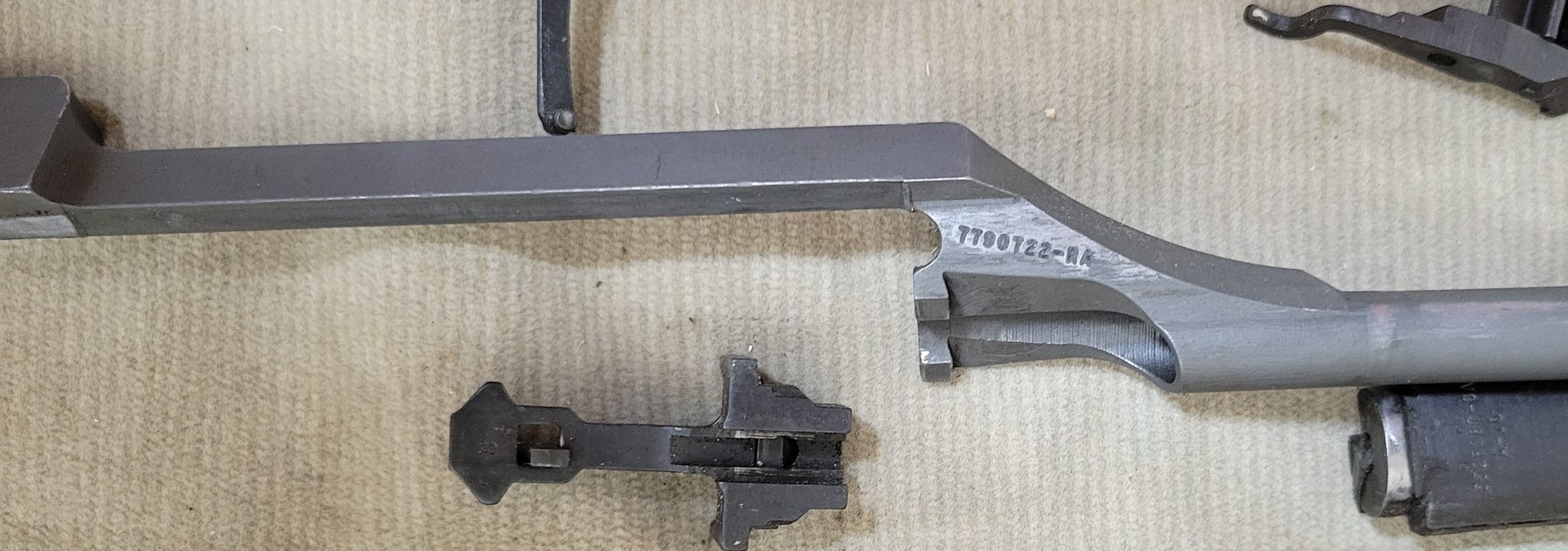
7790722-RA, with NM stamped on the handle, is the final operating-rod design, made by Remington in the late 1950s. The NM stamp means the rod’s piston was gauged for National Match rifles; Fulton Armory notes that 7790722 rods stamped NM and unstamped are otherwise identical. It has the stress-relief cut that post-war rods carry, which matters: wartime rods without it could crack where the handle meets the tube.
It is not correct for a 1944 rifle. It is a good rod to shoot with, and it is legal in the Civilian Marksmanship Program’s as-issued matches, which allow “rifles with NM operating rods.”
7.6 The Barrel
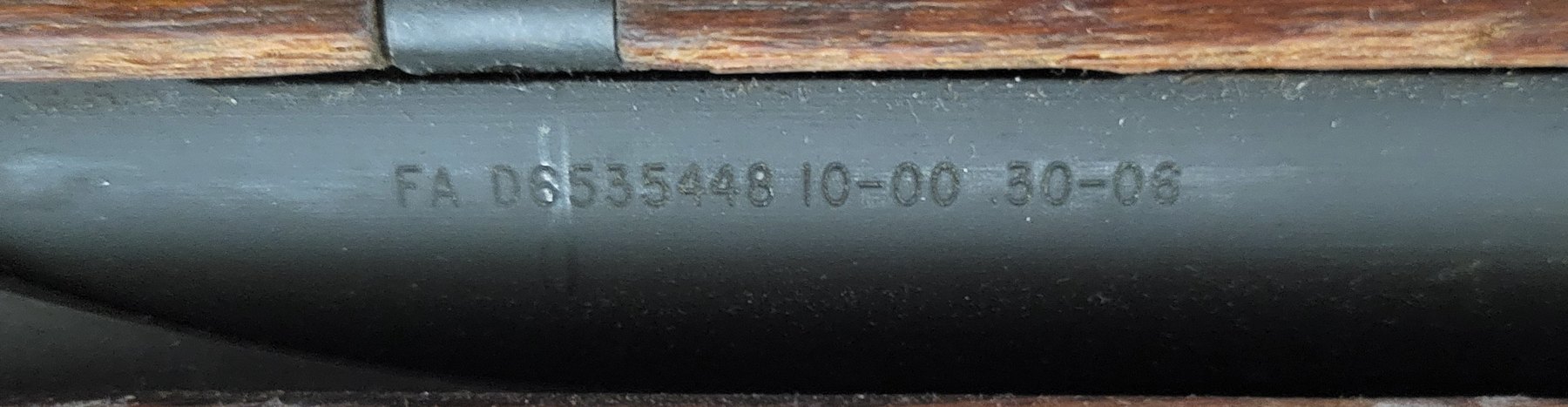
FA D6535448 10-00 .30-06 is a commercial replacement barrel. D6535448 is the military drawing number for the M1 barrel; FA is Fulton Armory, whose barrels are made by Criterion; 10-00 is the date, October 2000. No government M1 barrel was ever marked “.30-06.” “FA” is read from the marking format rather than confirmed with the maker, so that identification is very likely rather than certain.
Fulton Armory currently sells the same class of barrel — GI contour, match-quality, chambered short so a gunsmith can finish the headspace — for about $295. For a shooter, a good commercial barrel is a positive. For a collector it takes the rifle out of consideration.
7.7 The Stock
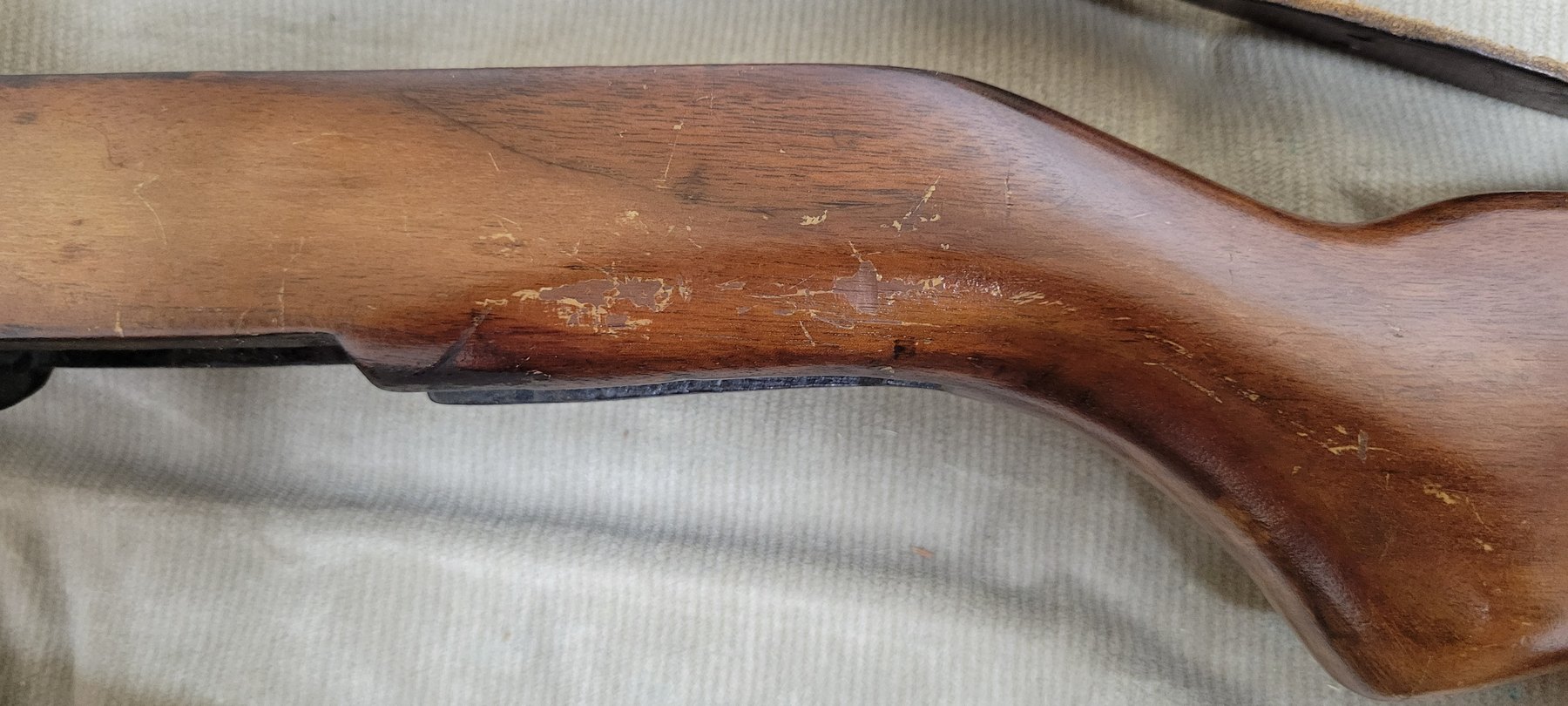
The stock is walnut, with an oil finish and plenty of honest wear, and no inspector’s cartouche could be found on the left side or under the grip. Either it has been sanded or it is a replacement. The wood alone does not say which.
7.7.1 The buttplate and butt trap
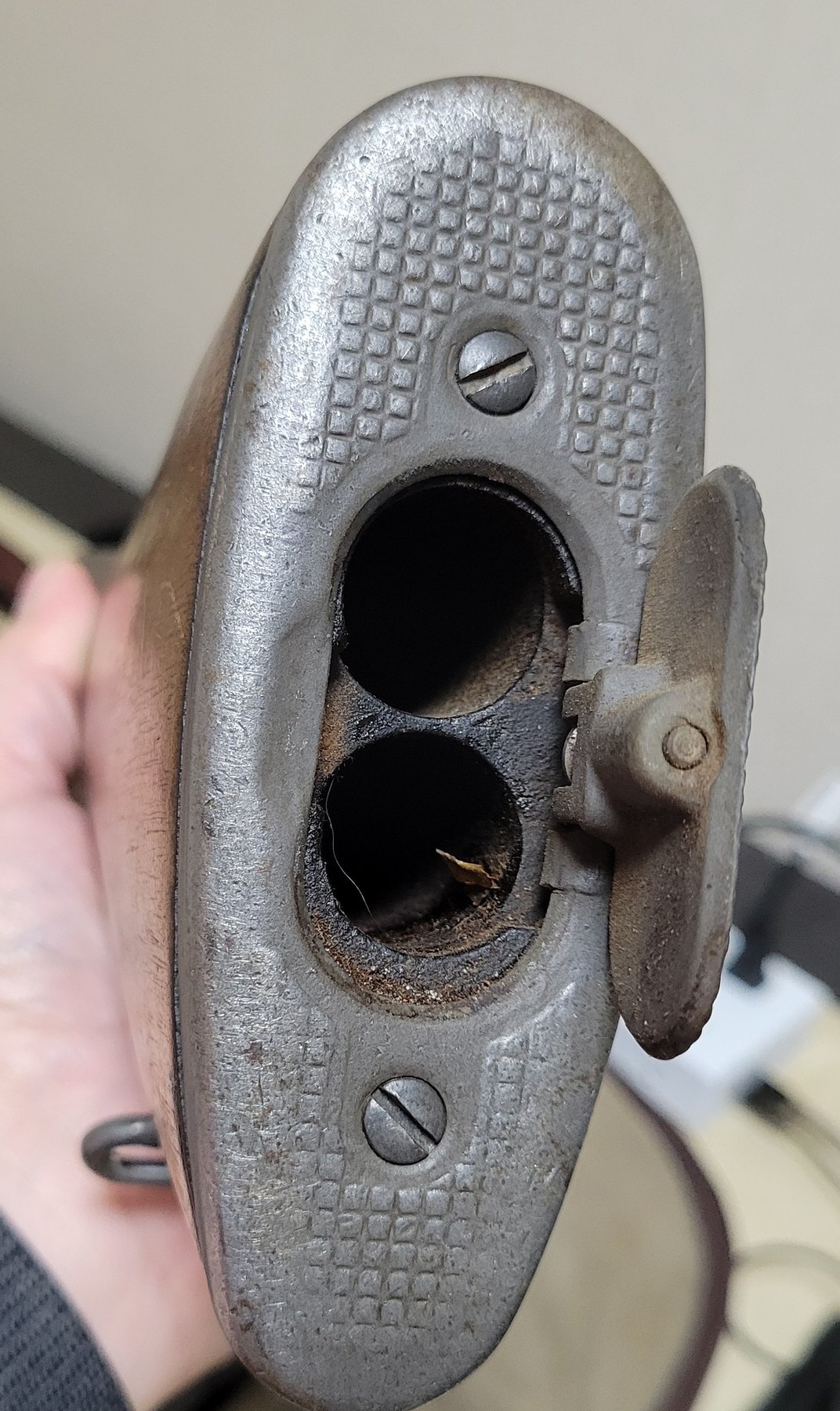
The butt trap is original M1 design, not a later addition. The Army’s 1941 maintenance manual says the earliest rifles had “a plain butt plate mounted flat on the butt and without trap,” and that on later rifles the “hinged trap cover of the butt plate allows access to the two wells in the butt.” A Springfield receiver from the turn of 1944 should have exactly this: a recessed buttplate with a trap and two wells. On this rifle both wells were empty. Vol 15 covers what went in them in 1944 — which is not the kit most dealers sell as “WWII.”
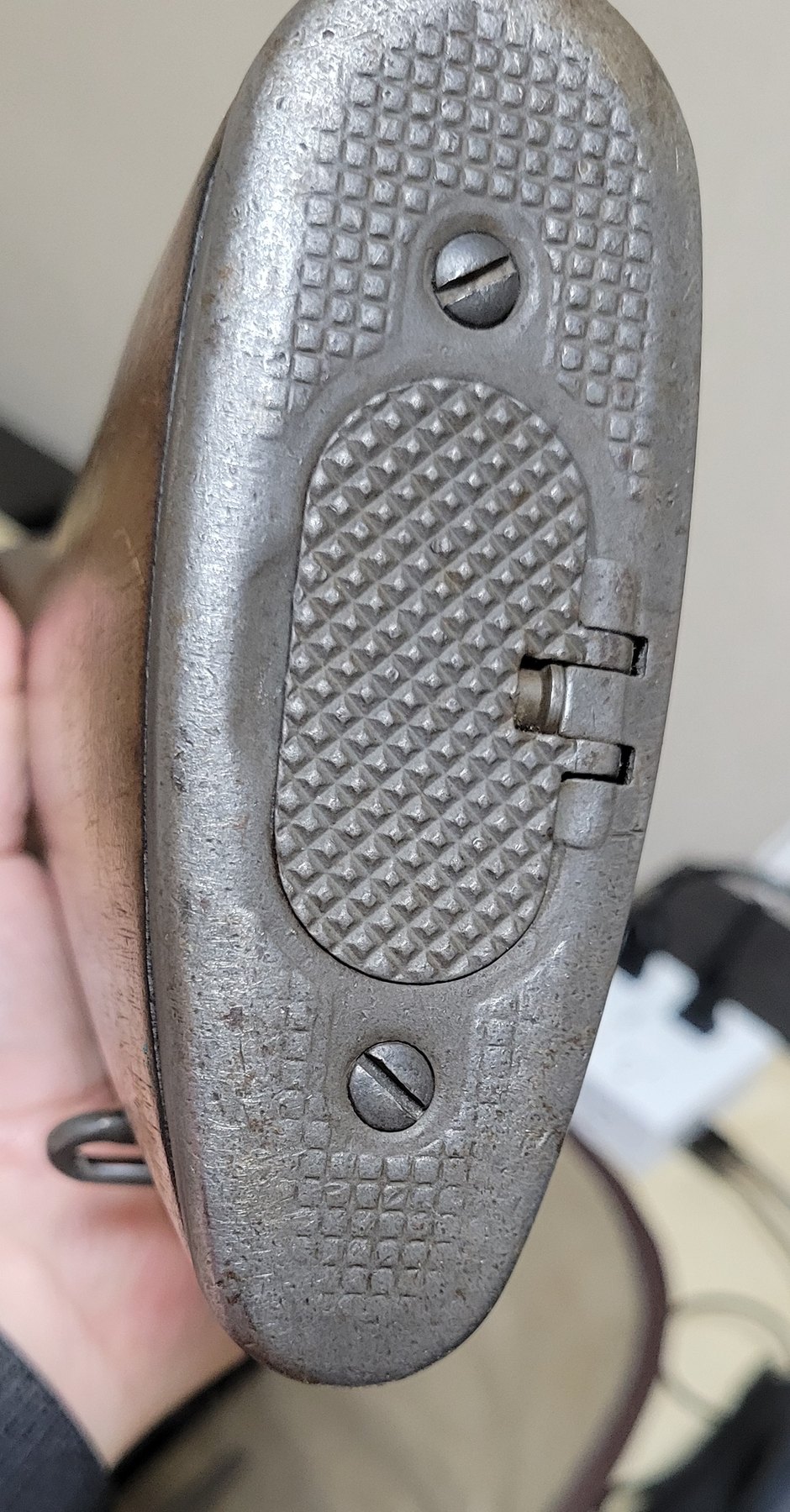
The buttplate is checkered, with a checkered trapdoor. Its checkering squares end square rather than coming to a point, and the raised bulge around the trapdoor’s hinge pin is rounded and blends into the plate. Both features match how collectors describe a Springfield buttplate. Those descriptions come from collector forums rather than a reference book, so the plate is consistent with Springfield, not proven. One rule that circulates, “square plunger means wartime, round means post-war,” turned up only as an unsourced snippet, so it has not been used. Vol 15 has the buttplate types.
7.8 The Sling
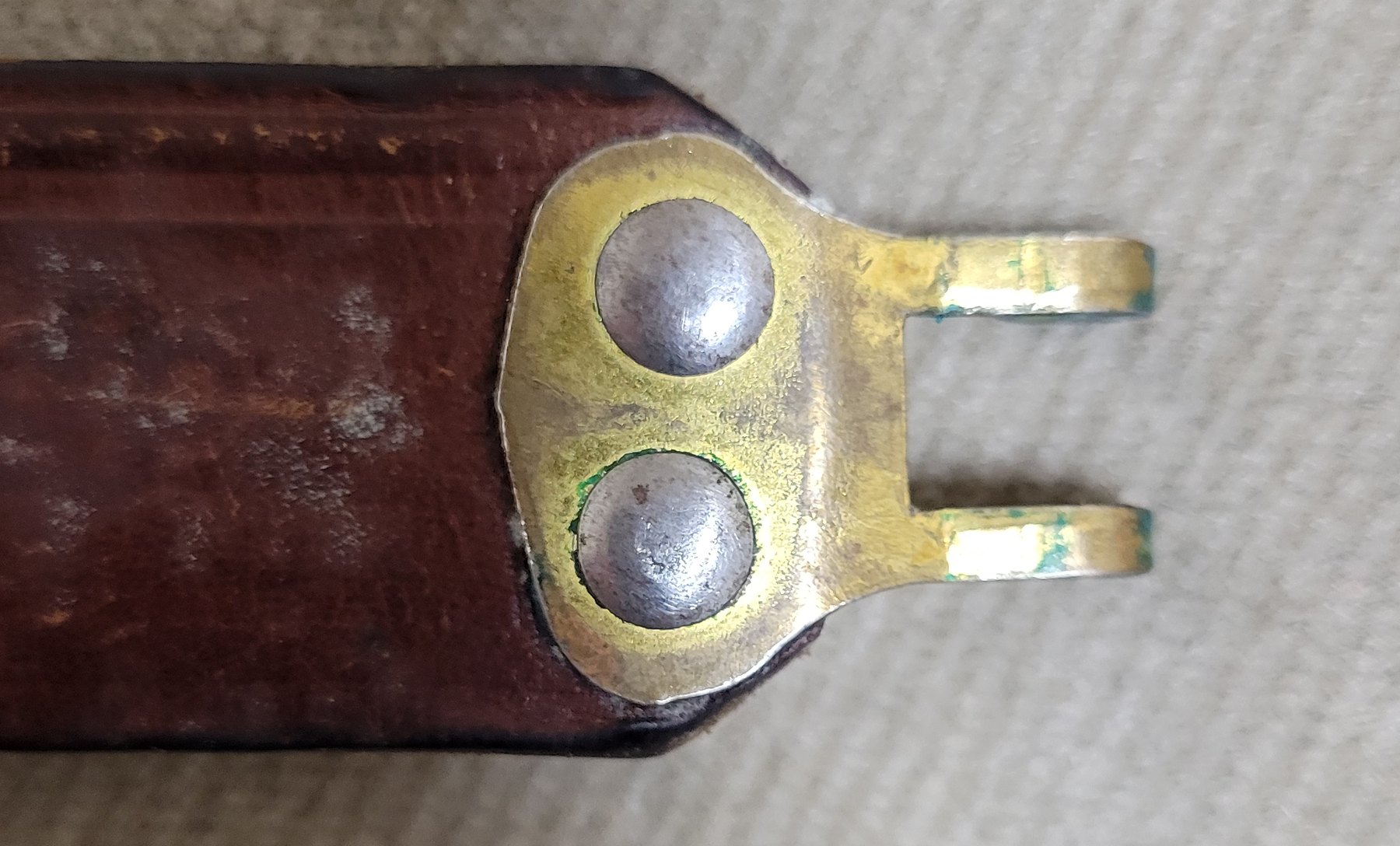
The sling is an M1907-pattern leather sling, and it is a reproduction. An original M1907’s claw hooks are each held by three bevel-headed rivets; these have two dome-headed rivets, with split-ring washers behind them, in bare brass with no chemical darkening, on dyed leather. Originals were undyed vegetable-tanned leather that darkened with oil and use.
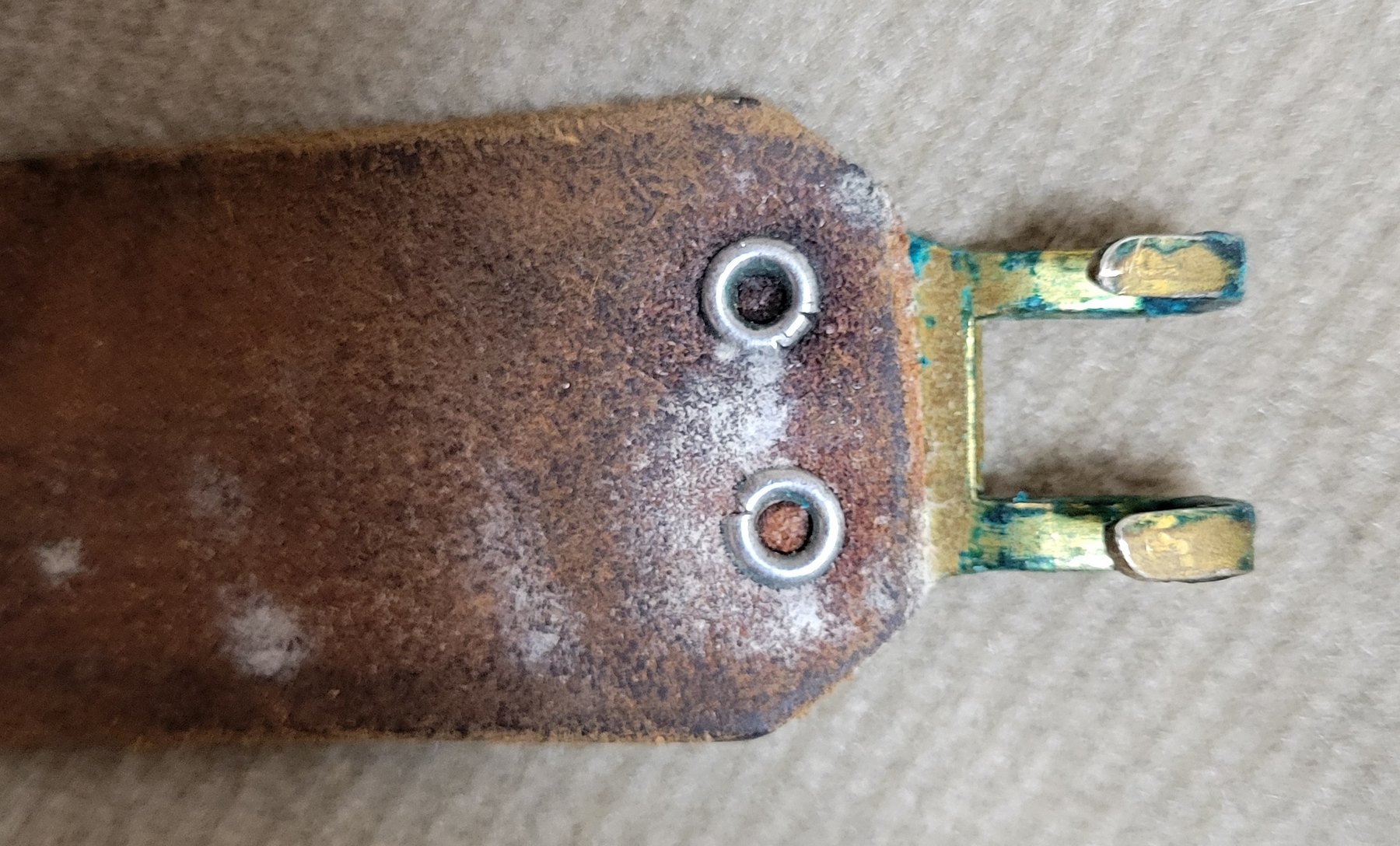
Even an original brass-hardware sling would not be right for this rifle. Brass was declared a war-critical material in 1942 and slings went to Parkerized steel hardware; a rifle made at the turn of 1944 would have carried a steel-hardware M1907 or, very commonly, a cotton web M1923 sling. Vol 15.
7.9 The Scope and Mount
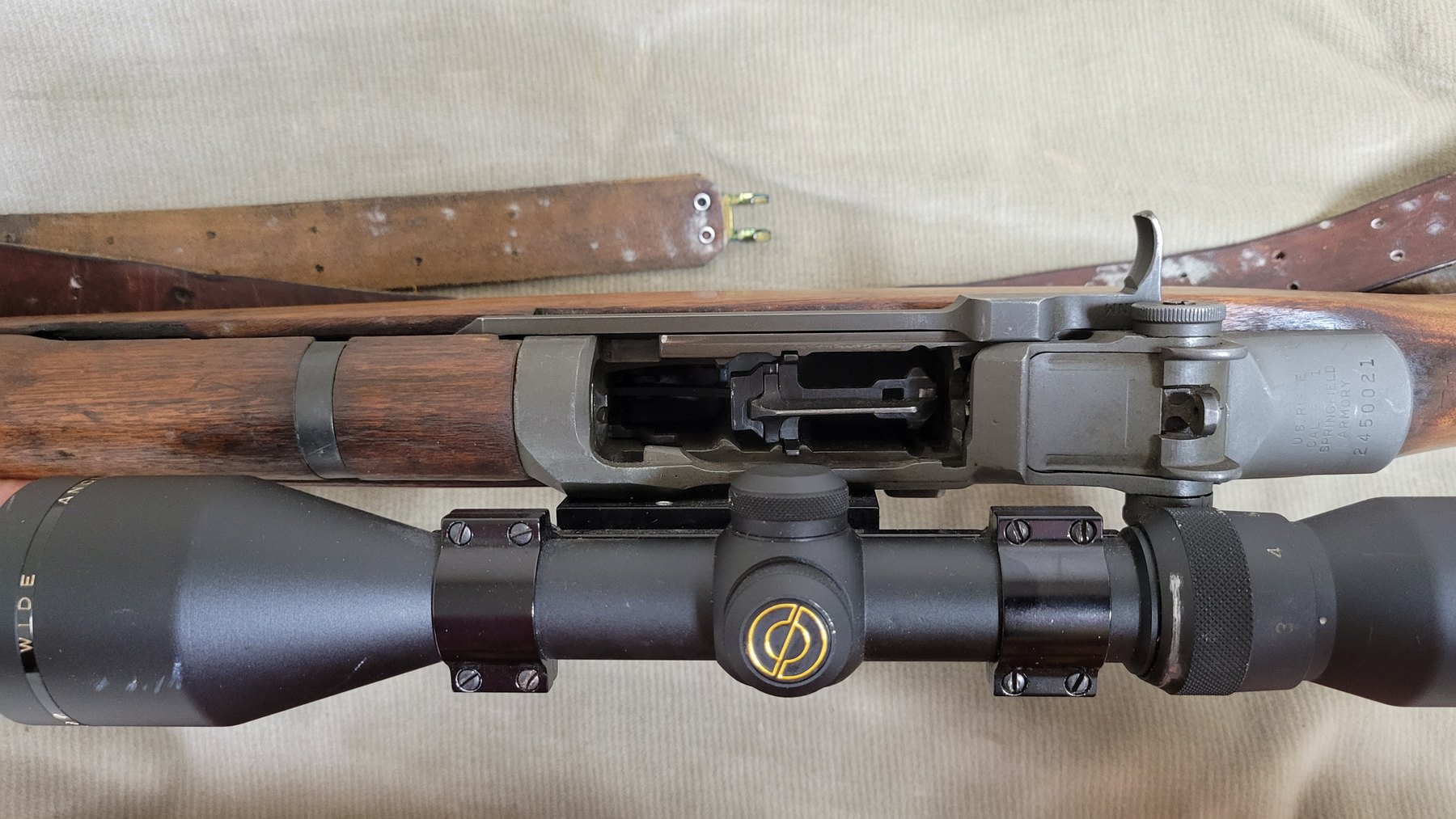
The optic is a Simmons 3–10× from the “44 Mag” Wide Angle line, on a side mount whose rail is also stamped SIMMONS. The mount’s bar screws into the three tapped holes, and the scope sits offset to the left, which keeps the top of the receiver clear for loading and ejection — the problem with any scope over an M1.
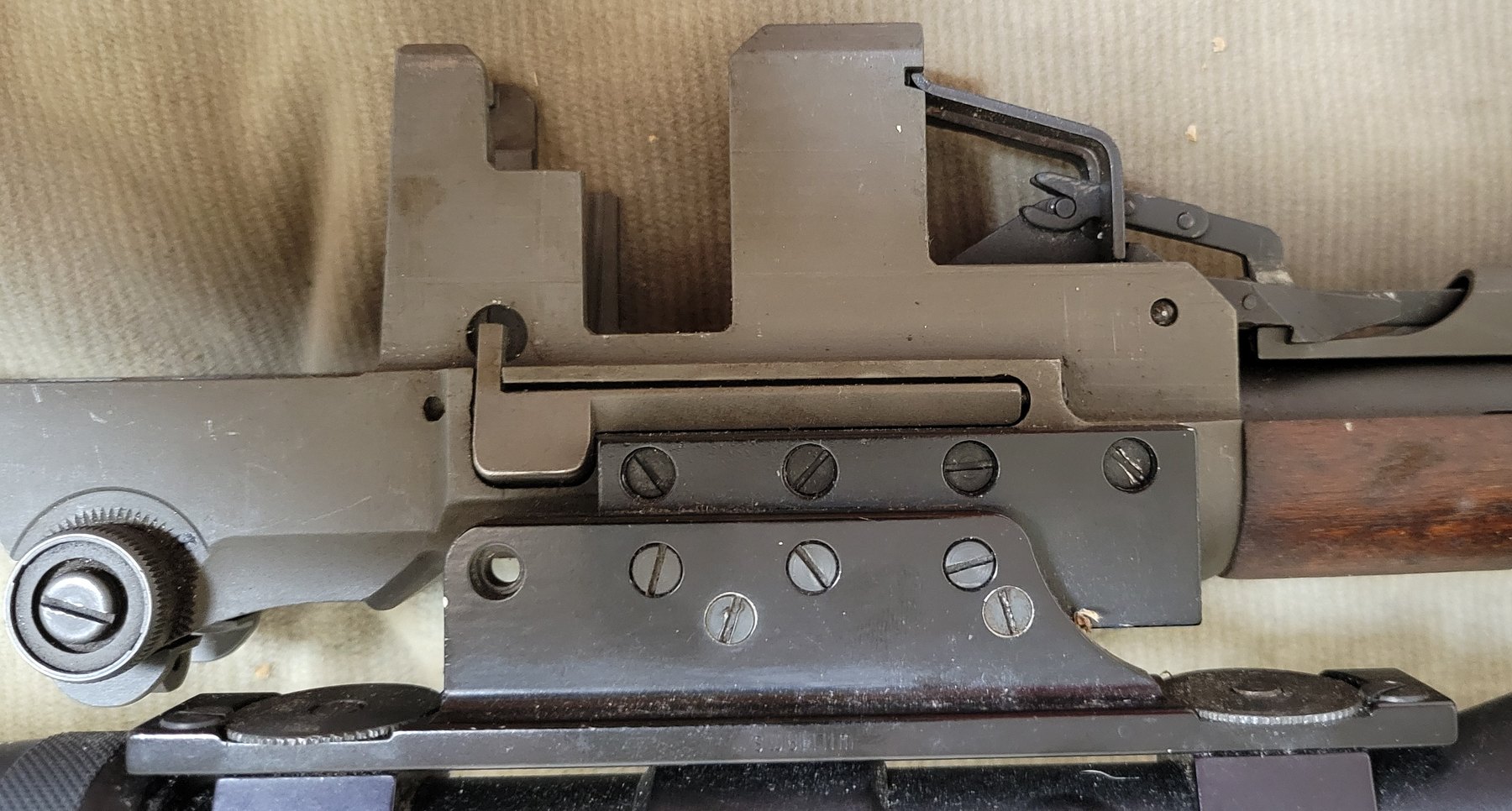
Neither the scope nor the mount has collector value, and together with the holes they are the main reason the rifle’s value sits where it does.
7.10 Everything Out
7.11 Still to Photograph and Measure
- The bolt’s side stamps, under a raking light.
- The gas cylinder and rear sight markings.
- A throat-erosion and muzzle-erosion gauge reading — the two numbers that say what the barrel is actually worth (Vol 10).
Sources
- National Park Service, Springfield Armory National Historic Site, M1 serial-number ranges and monthly serials.
- Scott A. Duff, “Seeing Double: Duplicate Serial Number – Springfield Armory and Winchester M1 Rifles” (2022).
- Bruce N. Canfield, “The M1C Garand Sniper Rifle,” American Rifleman.
- Packrats Collectibles (ammogarand.com), part listings for D28290-12-SA, C46008-7 SA and 6528287-SA, checked September 2026.
- Fulton Armory, “Everything you wanted to know about M1 Garand operating rods,” and barrel listings.
- Civilian Marksmanship Program, M1 Garand grades and prices, checked September 14, 2026; CMP Games Rules (2025), rule 5.2.
- Rock Island Auction Company lot description, February 22, 2025 (via Invaluable).
- At The Front, “The M1907 Sling.”
- 27 CFR 478.11, “Curios or relics.”
Comments (0)