M1 Garand · Volume 13
The Best Ammunition for Each Job
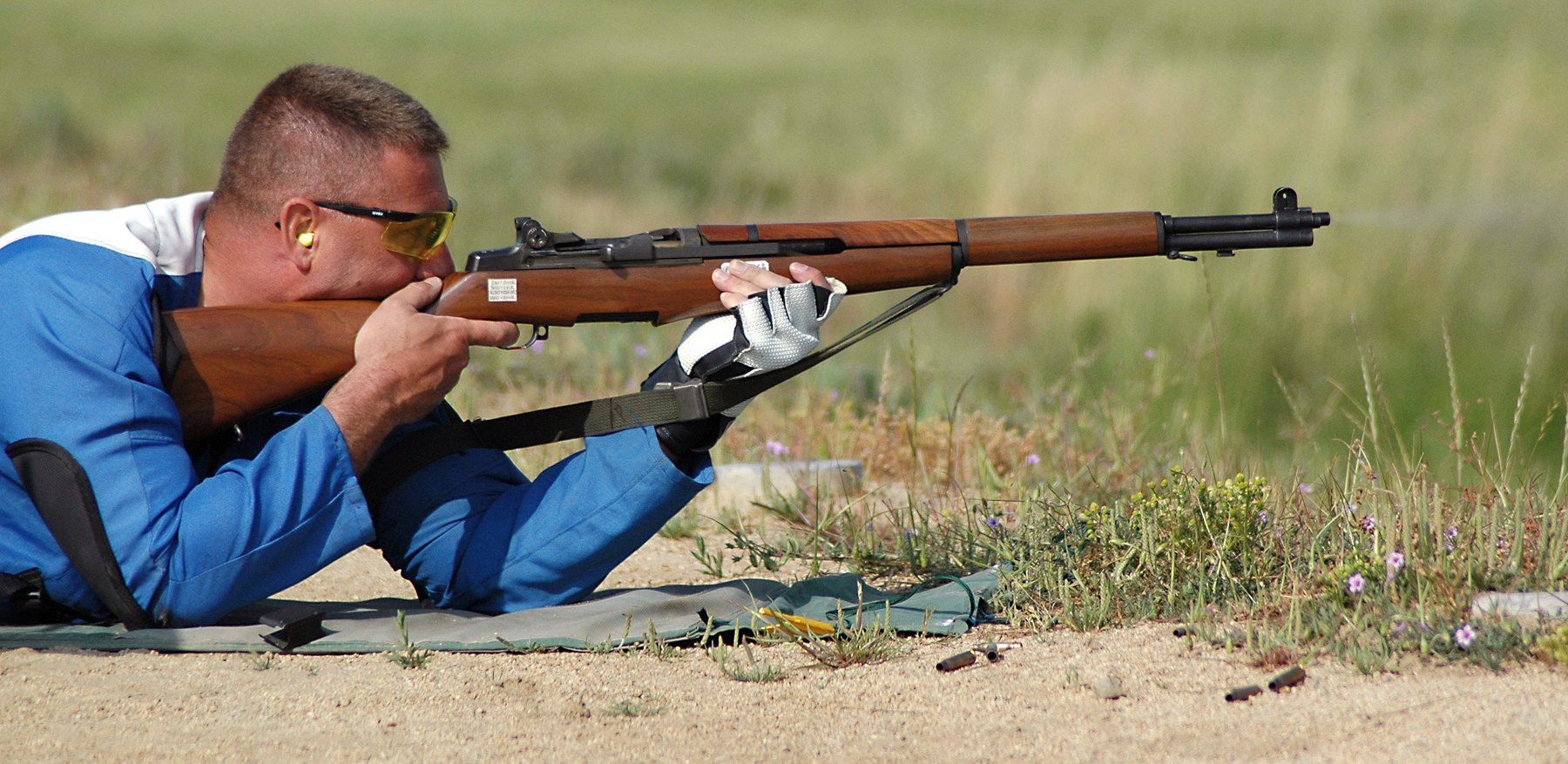
Vol 12 explains why the M1 is particular. This volume is the practical answer: what to buy or load for each thing you might actually do with the rifle. Everything here was checked against the maker’s own page or published load data in September 2026, and the text says so wherever a product was out of stock, backordered, or could not be confirmed as still in production.
One rule runs through all of it. A load is only as good as the lot you are holding. As Garand Gear put it after testing commercial ammunition, makers “can change the load at any time and without warning.” A box marked for the M1 is a maker’s statement that it was loaded with the rifle in mind. It is not a guarantee about every future lot of every other load on the shelf next to it.
13.1 The Short Answer
Table 1 — The Short Answer
| Job | First choice | Also good | Gas plug needed? |
|---|---|---|---|
| Range and practice | Federal American Eagle AE3006M1, 150-gr FMJ | PPU PP3006G; Sellier & Bellot SB3006M2A; Winchester WIN3006M2 | No |
| CMP John C. Garand match | CMP/Creedmoor 150-gr Berger or 167-gr Scenar | Hornady 168-gr ELD Match “M1 Garand” (#81171); handloads | No — adjustable plugs are illegal |
| Deer | Handloads from Hodgdon’s M1 data with a 150–165-gr expanding bullet | Steinel 150-gr InterLock “M1 Garand” (backordered) | No for these; yes for ordinary factory hunting loads |
| Elk | Handloads: 180-gr Sierra SPBT from Hodgdon’s M1 data | Factory 180-gr hunting loads with a ported or adjustable plug | No for the handload; yes for factory |
| Long range on iron sights | 168–175-gr match bullets | Hornady #81171; CMP/Creedmoor 150 Berger | No |
| Historical shooting | Non-corrosive surplus M2 (1952 and later) | M72 Match if you can bear to shoot it | No |
13.2 Range and Practice
For clip-fed practice, buy a load the maker says is for the M1. Four did in September 2026:
Table 2 — For clip-fed practice, buy a load the maker says is for the M1. Four did in September 2026
| Load | Bullet | Velocity (maker) | What the maker says | Price seen |
|---|---|---|---|---|
| Federal American Eagle AE3006M1 | 150-gr FMJ | 2,740 ft/s | Imagery captioned “For M1 Garand Use” | $39.99 per 20 (Federal) |
| Prvi Partizan PP3006G | 150-gr FMJ | 2,745 ft/s (retailer) | “M1 Garand” in the product name | $26.69 per 20 (Graf & Sons) |
| Sellier & Bellot SB3006M2A | 150-gr FMJ | 2,700 ft/s (23.5-in barrel) | “(for M1 Garand)” in the product title | not checked |
| Winchester WIN3006M2 | 150-gr ball | 2,740 ft/s (retailer) | “loaded to the original specifications of M2 ball” | not checked |
The mistake to avoid: Federal’s ordinary American Eagle .30-06, AE3006N, is a 150-grain FMJ boattail at 2,910 ft/s — a full-power commercial load in nearly identical packaging. The Garand load is AE3006M1. Read the code, not the picture.
Hornady has also sold a 150-grain FMJ “M1 Garand” load, #81130. Retailers still list it, but it could not be found on Hornady’s own site, so treat it as possibly discontinued.
Surplus: Greek HXP — 150-grain M2-type ball, non-corrosive, boxer-primed and reloadable, often packed on en-bloc clips in bandoleers — was the Garand shooter’s favorite surplus and is now mostly gone. Treat older Korean “KA” headstamp ammunition as corrosive, and approach Pakistani POF .30-06 with caution; its reputation among Garand shooters is poor, though only forum sources were found.
13.3 The John C. Garand Match
The CMP’s John C. Garand match is an as-issued match, and people are often surprised by what its rules do and do not say.
The course is 200 yards, not 600. It is fired on the SR target at 200 yards (or the reduced SR-1 at 100): sighters and ten shots prone slow fire, ten shots prone rapid fire from standing in 80 seconds, and ten shots standing slow fire.
The ammunition rule is short. Rule 5.3.3 of the CMP Games Rules (2025 edition):
“Competitors may use any safe ammunition. Handloads are permitted. No tracer, armor piercing or incendiary-type ammunition or projectiles may be used.”
There is no bullet-weight limit and no requirement that ammunition be marketed as M1-safe. Choosing gas-safe ammunition is your responsibility. The CMP separately says adjustable gas-cylinder lock screws are not legal in the match. This summary is based on the 2025 rulebook; check the current edition before you shoot.
The rifle has to be as issued. Trigger pull at least 4.5 pounds, weight no more than 9.75 pounds, government parts or commercial parts “of the exact same weight and dimensions,” and no glass bedding or National Match sights — though rifles “with NM operating rods or NM gas cylinders may be used.” The NM operating rod on the rifle documented in Vol 7 is fine. Its scope and mount would have to come off, and the match director should be asked about the tapped holes before assuming the receiver passes.
Rapid fire starts with two rounds. Rule 5.4.4(c): “place a clip and two rounds in the magazine,” close the bolt on an empty chamber, fire two, then “reload with a full clip of eight rounds.” You need two rounds in a clip — not necessarily a two-round clip.
13.3.1 Match loads
Table 3 — Match loads
| Load | Bullet | Velocity | Notes |
|---|---|---|---|
| CMP/Creedmoor Sports | 150-gr Berger OTM, Lapua brass, Vihtavuori powder | 2,500 ft/s (launch article) | “engineered for proper performance in the M1 Garand rifle and approved by the CMP”; $175.20 per 100 on sale, limited quantity |
| CMP/Creedmoor Sports | 167-gr Lapua Scenar | not published | ”a pressure profile suitable for classic gas-operated rifles”; $156.00 per 100 on sale |
| Hornady #81171 | 168-gr ELD Match, “M1 Garand,” Vintage Match line | 2,710 ft/s (24-in barrel) | Hornady’s 2008 release described the original A-MAX version as “purpose built to provide accurate, safe and ultra reliable functioning for the M1 Garand”; the bullet has since changed to ELD Match |
| Handload | 168-gr Sierra MatchKing over 46.0–47.0 gr IMR 4895 | about 2,640 ft/s | a widely used match load |
| Handload — M72 duplicate | 175-gr Sierra MatchKing over 46.5 gr IMR 4895, Federal 210M primer, 3.34-in overall length | 2,657 ft/s | Shooting Sports USA, 2018 |
Federal’s Gold Medal Match 168-grain (GM3006M) is an excellent cartridge, but Federal’s page does not mention the M1 or gas guns at all, so it is not listed here as a Garand load.
13.4 Deer
13.4.1 Check your state first
For Michigan hunters, two rules matter for an M1, and neither could be confirmed against the Department of Natural Resources’ own pages, which would not load. Check them in the current Michigan Hunting Digest before the season:
- Capacity. The Wildlife Conservation Order, as summarized, makes it unlawful to hunt with a semi-automatic rifle that can hold more than six rounds in the barrel and magazine combined. A standard M1 holds eight in the clip and one in the chamber. Whether a five-round clip makes the rifle compliant turns on how “can hold” is read, and that is a question for the DNR, not for this volume.
- The zone. The DNR announced that the Limited Firearms Deer Zone would be eliminated beginning in 2026, allowing all legal firearms — including bottleneck rifle cartridges like .30-06 — across the Lower Peninsula.
13.4.2 Loads
Exactly one factory expanding load was found that its maker markets for the M1:
- Steinel Ammunition, M1 Garand M2 Ball 150-gr Hornady InterLock soft point — 2,640 ft/s, “optimized for the M1 Garand.” About 2,320 ft·lb at the muzzle by calculation. On backorder in September 2026, at $40.77 per 20.
That contradicts the frequently repeated claim that no factory hunting ammunition is made for the M1 — though it is a small maker’s product and not always in stock.
Ordinary factory 150-grain soft points — Federal Power-Shok, Winchester Power-Point, Remington Core-Lokt and the like — are full-power loads at around 2,900 ft/s. Garand Gear’s tests included them, but their brand-by-brand verdicts are published only as charts, which could not be read reliably. The recommended approach: if you want to hunt with ordinary factory ammunition, fit a ported or adjustable gas plug.
Handloads from Hodgdon’s published M1 data are the most controlled route:
Table 4 — Handloads from Hodgdon's published M1 data are the most controlled route
| Bullet | Powder | Start | Maximum | Velocity at max | Pressure at max |
|---|---|---|---|---|---|
| 150-gr Nosler E-Tip | IMR 4895 | — | 48.0 gr | 2,767 ft/s | 52,400 psi |
| 165-gr Hornady GMX | IMR 4895 | 44.4 gr | 46.2 gr | 2,654 ft/s | 52,200 psi |
| 165-gr Sierra SPBT | IMR 4064 | — | 49.7 gr | 2,782 ft/s | 52,100 psi |
13.5 Elk
The strongest documented option without a gas plug is a handload. Hodgdon’s M1 table gives a 180-grain Sierra Spitzer Boat Tail over IMR 4895: 45.0 grains to start, 46.2 grains maximum, 2,605 ft/s, 52,400 psi, 3.300-inch overall length. That is about 2,710 ft·lb at the muzzle.
Factory 180-grain hunting loads should be treated as plug-required. One published test ran Winchester’s 180-grain Power-Point through a Schuster adjustable plug closed about one turn from open; Garand Gear says its ported plug held 180-, 210- and 220-grain loads below M2 Ball’s peak pressure.
No energy threshold for elk is given here. The figures that circulate — 1,500 foot-pounds at the animal, 2,000 preferred — come from forums and retailer blogs, not from a wildlife agency, and bullet construction and shot placement matter more than a single number. A well-constructed 165- to 180-grain bullet from an M1, at sensible range, is an elk cartridge.
13.6 Long Range on Iron Sights
- Sight adjustments: standard M1 sights move one minute of angle per click in both elevation and windage. National Match rear sights give half-minute windage; later hooded NM apertures also gave half-minute elevation.
- The range drum is calibrated for M2 Ball. With any other load, zero at a known distance and build your own elevation table.
- Heavier, higher-ballistic-coefficient match bullets hold up in the wind better than flat-base M2 Ball. The CMP and Creedmoor’s published comparison for their 150-grain Berger load: 37.8 inches of drift at 600 yards in a 10-mph crosswind, against 39.5 inches for M2 Ball.
- Hornady’s 168-grain ELD M1 load is still doing 1,920 ft/s at 500 yards from a 24-inch barrel, well supersonic.
Clicks-per-distance figures circulate — “+11 clicks from 300 to 600” and the like — but they depend on the rifle, the load and the shooter. Compute or shoot a drop table for your own load rather than trust one.
13.7 Historical Shooting
Surplus M2 Ball and M72 Match are still around, singly and on clips, at collector prices. The rules:
- Assume anything made before 1952 is corrosive — 1953 for St. Louis. The lot table is in Vol 12.
- Clean the gas system as well as the bore after corrosive ammunition, with a water-based cleaner first.
- Do not shoot tracer, armor-piercing or incendiary at a CMP match, and check your range’s rules before shooting them anywhere.
13.8 Handloading for the M1
This is the envelope the published sources actually support.
Bullets. 150 to 175 grains is the consensus. Hodgdon publishes M1 data for 180 grains as well.
Powders. The traditional band is IMR 4895, H4895 and IMR 4064. Sierra, Handloader and Hodgdon also list Varget, Reloder 15, Accurate 2495, Vihtavuori N140, BL-C(2) and IMR 4166. Hornady lists Vihtavuori N150, while a technical contact quoted by Handloader called N150 “too slow to be comfortably recommended in a Garand” — a genuine disagreement. Nothing from the IMR 4350 class or slower appears in any M1-specific list checked for this dive.
Pressure. Hodgdon’s M1 maxima top out around 52,000–53,000 psi on the rows measured in psi, and around 44,000–44,800 CUP on the rows measured in CUP — about 88 percent of the SAAMI maximum in each system. Note that Hodgdon’s own 150-grain maximum over IMR 4895 runs to 2,915 ft/s, well above M2 Ball; loading to M2 velocity is a conservative choice, not the powder maker’s ceiling.
Selected rows from Hodgdon’s “M1 Garand Service Rifle Load Data”:
Table 5 — Selected rows from Hodgdon's "M1 Garand Service Rifle Load Data"
| Bullet | Powder | Overall length | Start | Maximum |
|---|---|---|---|---|
| 150 Nosler Ballistic Tip | IMR 4895 | 3.250 in | 49.0 gr / 2,856 ft/s | 50.5 gr / 2,915 ft/s / 52,200 psi |
| 150 Nosler Ballistic Tip | Varget | 3.250 in | 47.0 gr / 2,808 ft/s | 47.8 gr / 2,842 ft/s / 44,100 CUP |
| 168 Hornady HPBT | IMR 4895 | 3.230 in | 48.0 gr / 2,719 ft/s | 49.0 gr / 2,763 ft/s / 52,500 psi |
| 168 Hornady HPBT | Varget | 3.230 in | 47.0 gr / 2,710 ft/s | 48.0 gr / 2,751 ft/s / 44,500 CUP |
| 175 Sierra HPBT | IMR 4895 | 3.300 in | 46.0 gr / 2,619 ft/s | 46.2 gr / 2,628 ft/s / 52,100 psi |
| 175 Sierra HPBT | IMR 4064 | 3.300 in | 46.5 gr / 2,626 ft/s | 46.9 gr / 2,641 ft/s / 52,800 psi |
| 180 Sierra SPBT | IMR 4895 | 3.300 in | 45.0 gr / 2,555 ft/s | 46.2 gr / 2,605 ft/s / 52,400 psi |
| 180 Sierra SPBT | Varget | 3.300 in | 44.0 gr / 2,533 ft/s | 45.0 gr / 2,576 ft/s / 44,500 CUP |
Hodgdon’s sheet does not state its test barrel or primer. Always work up from the starting load in the current published source, not from a table in a book about the rifle.
13.8.1 Primers and slam fires
The M1’s firing pin floats — there is no spring holding it back. When the bolt slams a round home, the pin’s inertia taps the primer. A sensitive or high primer can fire before the bolt locks. The rifle has two mechanical safeguards against firing out of battery (Vol 5), but the ammunition side is the handloader’s job.
- CCI #34 primers are made, in CCI’s words, to “military sensitivity specs that reduce the chance of a slam-fire when other factors go out of control.” That much is the maker’s statement. The frequent explanations about a harder cup or shorter anvil come from retailers, not CCI.
- Published M1 data does not always use them. Hornady’s M1 test data uses Winchester WLR primers; other well-known M1 loads use Federal 210 or 210M. So #34s are prudent advice for a floating-pin rifle, not a universal published practice.
- Seat primers fully. Wayne Faatz’s 1983 American Rifleman study of M1 slam fires found high primers — 0.005 to 0.010 inch above the case head — and cases that were a “wedge fit” in the chamber among the contributing causes.
13.8.2 Sizing and length
- Full-length size. Faatz: “make sure your resizing die is set so the cases freely enter the rifle chamber.” Check with a case gauge.
- Small-base dies are for tight chambers, not a requirement.
- Crimp is not required by any authoritative source found. The M72 Match cartridge was deliberately uncrimped; one factory M1 load uses a moderate roll crimp.
- Case length: trim to 2.484 inches; maximum 2.494.
- Overall length: keep it at or under about 3.30–3.34 inches so rounds fit the clip and magazine, and function-check a clip of dummies.
Headspace — what it is and how to measure it — has its own dive in this collection.
Sources
- Civilian Marksmanship Program, CMP Games Rules, 12th ed. (2025), rules 4.3.6, 5.2.1–5.2.2, 5.3.3–5.3.4 and 5.4.4; CMP store listings for Creedmoor Sports .30-06 ammunition, checked September 14, 2026.
- Maker pages checked September 14, 2026: Federal Premium (AE3006M1, AE3006N, GM3006M); Hornady (#81171); Sellier & Bellot (SB3006M2A); Winchester (WIN3006M2); Steinel Ammunition (M1 Garand M2 Ball 150-gr FMJBT and 150-gr soft point); Graf & Sons (PPU PP3006G).
- Hornady press release, June 2, 2008.
- Shooting Sports USA: “Creedmoor Sports, CMP Partner on New .30-06 Match Ammo for the M1 Garand”; Art Merrill, “Tips on How to Duplicate 1950s-Era .30-06 M72 Match Load” (2018).
- Hodgdon Powder Company, “M1 Garand Service Rifle Load Data.”
- Sierra Bullets, Reloading Manual, 6th ed., p. 668; Hornady Handbook of Cartridge Reloading, M1 Garand section (via loaddata.com).
- Handloader magazine, “M1 Garand Handloads.”
- Wayne Faatz, “M1 Garand Slam-Fires: Potential Causes & Solutions,” American Rifleman (October 1983; online 2020).
- CCI #34 primer description (via Graf & Sons).
- Garand Gear, “The M1 Garand and Commercial Ammunition”; Jordan Michaels, GunsAmerica Digest (2019).
- Fulton Armory, “How do I sight in my M1 Garand?”
- Michigan Department of Natural Resources, Wildlife Conservation Order and 2026 deer regulations news release (May 15, 2026), as summarized — not verified against the source pages.
Comments (0)