M1 Garand · Volume 15
Period Accessories — Slings, Belts, Clips, the Butt-Trap Kit, Grenade Launching
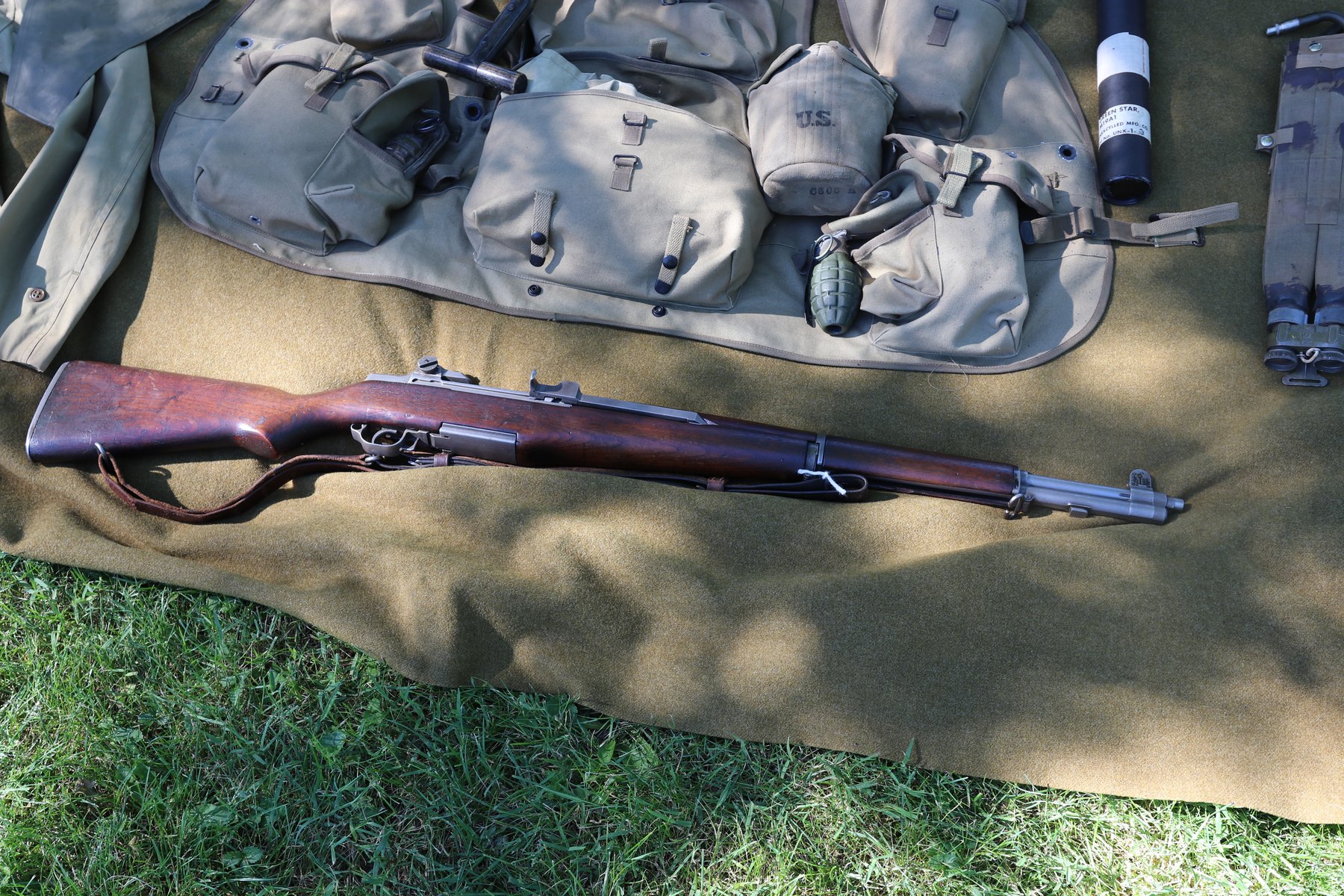
A rifleman in early 1944 carried more than the rifle: a sling, a cartridge belt, often a cloth bandoleer, a bayonet and scabbard, and — in two holes bored into the butt — the tools to keep the rifle running. Some riflemen carried a grenade launcher. This volume is that kit, what was correct for a rifle made around the turn of 1944, and how to tell originals from the reproductions that dominate the market. Bayonets have their own volume, Vol 14.
The most useful finding in it is about the butt trap. The sectional cleaning rod in a canvas case that is sold everywhere as the “WWII buttstock cleaning kit” is post-war. The Army’s own wartime manuals say the two wells held something else.
15.1 The Butt-Trap Kit
15.1.1 Was the trap original?
Yes. The Army’s 1941 maintenance manual:
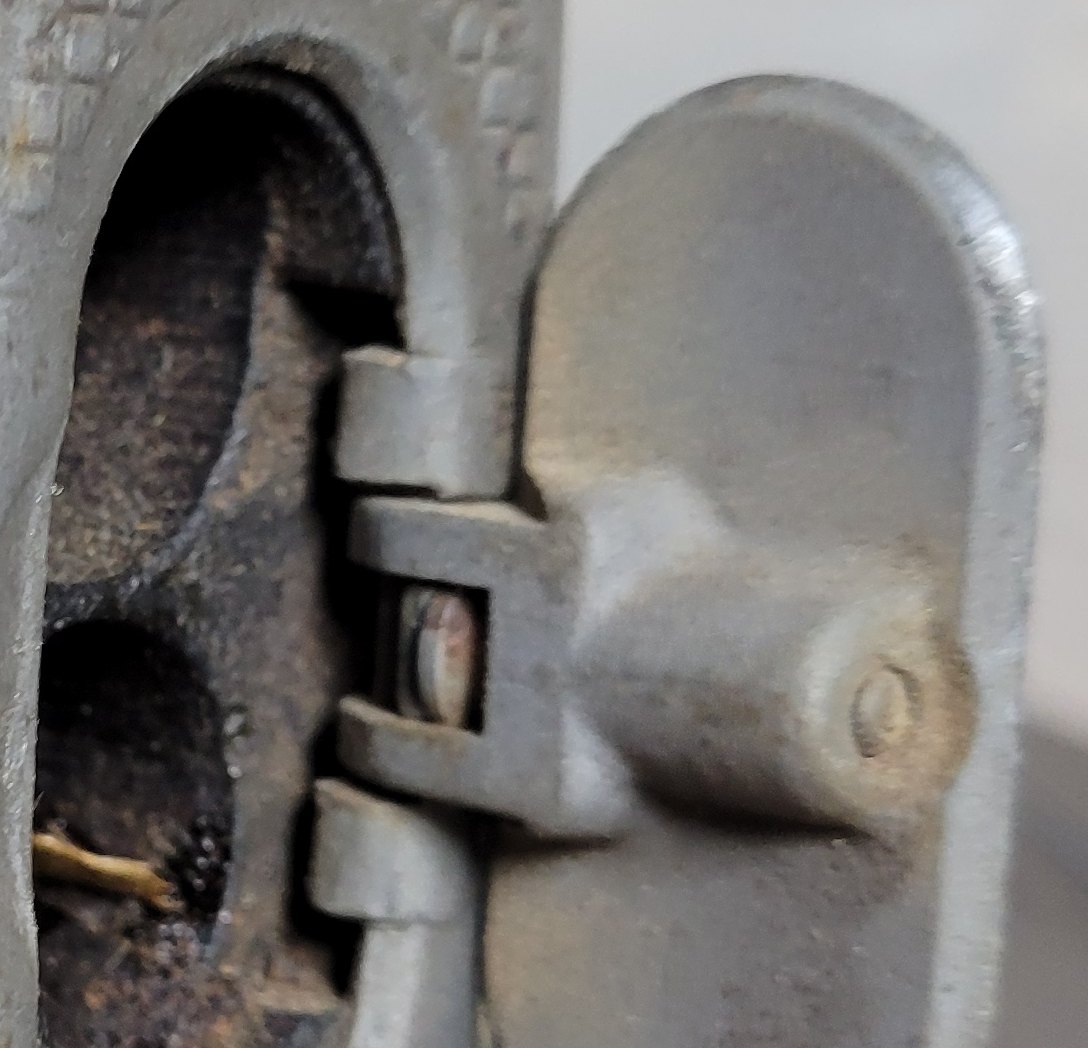
“Earlier type rifles have a plain butt plate mounted flat on the butt and without trap. The butt plate of later type rifles is recessed, and the butt set into the plate. The hinged trap cover of the butt plate allows access to the two wells in the butt…”
Only the very earliest rifles lacked it. A Springfield receiver from the turn of 1944 should have a recessed buttplate with a trap and two wells, as Springfield 2450021 does.
15.1.2 What went in it in 1944
The same 1941 manual says the wells were for “carrying combination tool, M3, and oiler and thong,” and its inspection check is “Check for combination tool M3, oiler and thong in butt well.”
The November 1942 manual, as changed in May 1943, adds one item: check that “the combination tool, oiler, thong case, and container of rifle grease are in the butt well,” with a note that rifle grease was “to be issued in a small plastic container carried in the rifle butt recess along with the combination tool and oiler.”
What those parts are:
- The oiler and thong case — “a cylindrical tube threaded at both ends to take the caps. One end of the case holds the lubricating oil. The threaded cap for this end has a rod which is used as a dropper. The other end of the case holds the brush and thong which is used for cleaning the bore of the rifle when the Cleaning Rod M3 and Cleaning Brush M2 are not available.” (1942 manual.) The thong end held the tip, weight, thong and brush — a pull-through.
- The combination tool, M3 — a chamber-cleaning tool with a screwdriver blade and a handle with a notched blade. It tightens the gas cylinder lock screw, takes the bolt apart, adjusts the rear sight nut, drifts pins, and has a hooked lug that serves as a hand extractor.
- The small plastic container of rifle grease, from 1942–43.
The wartime Cleaning Rod M3 was not in the butt. It was two sections with a swivel handle, carried separately.
15.1.3 What came later
The 1965 field manual describes the post-war kit: “M10 cleaning rod (4 sections with handle and plastic buffer),” a bore brush, a lubricant case, a chamber brush and a cleaning rod case, all stored in the stock. That is the four-piece rod in a canvas sleeve, and the plastic two-compartment oiler that goes with it — dated by one specialist dealer to 1945 onward.
15.1.4 What to put in the rifle documented in Vol 7
For a rifle made around the turn of 1944, the correct butt-trap set is:
- A two-ended metal oiler and thong case — threaded at both ends, a dropper rod in the oil-end cap, with a pull-through thong, weight, tip and brush in the other end.
- A combination tool M3.
- Optionally, a small plastic rifle-grease container of the 1942–43 pattern.
Not the four-section M10 rod in a canvas case, and not the plastic two-compartment oiler, however they are labeled. When shopping, read the description for the words “oiler and thong” and “M3,” and look at the pictures: a metal tube with caps at both ends is the wartime pattern.
Two cautions. Dealer descriptions of wartime kits disagree with each other and with the manuals, and one widely read retailer article describes a “brass oiler,” “M3”-marked rod sections and other details that could not be reconciled with the manuals, so it is not relied on here. And no reliable tells were found for reproduction metal oilers specifically; buy from a dealer who states clearly whether a piece is original or new-made.
15.1.5 Buttplates
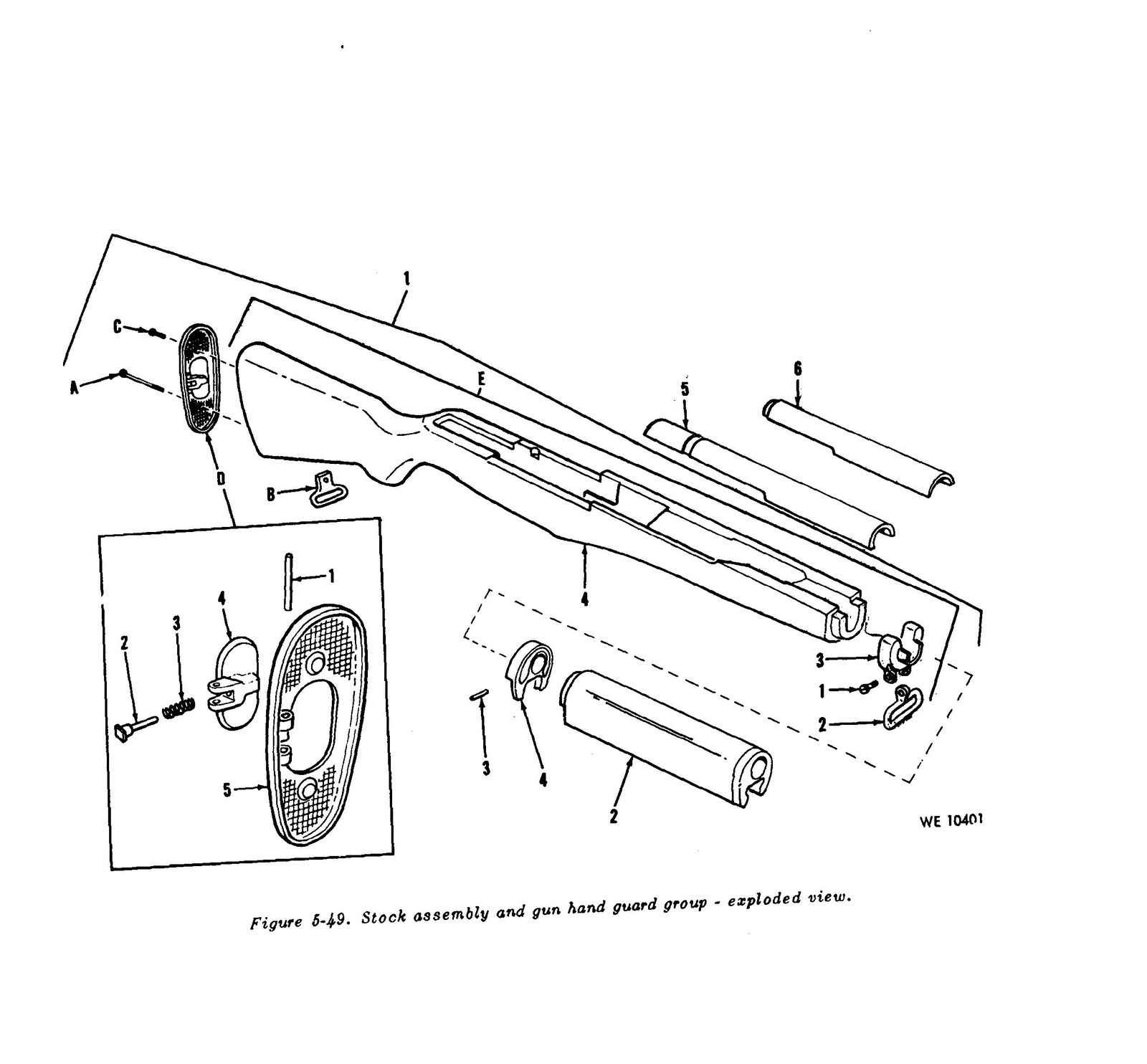
Buttplate identification by maker is the weakest-sourced area in this dive; the specialist forums where it is documented were not readable when this was written, and the reference books were not available. What collectors report, at low to medium confidence:
- Springfield: no pointed ends to the checkering and no prominent border around it; a rounder bulge above the trap hinge.
- Winchester: checkering that comes to a sharp point, especially around the trap; “2S” marked inside.
- Post-war (KMT, for H&R and International Harvester): a flatter, more defined hinge bulge.
- Checkered versus grooved: the consensus is that wartime buttplates are checkered and grooved plates are post-war. The date of the change could not be confirmed.
15.2 Slings
15.2.1 The M1907 leather sling
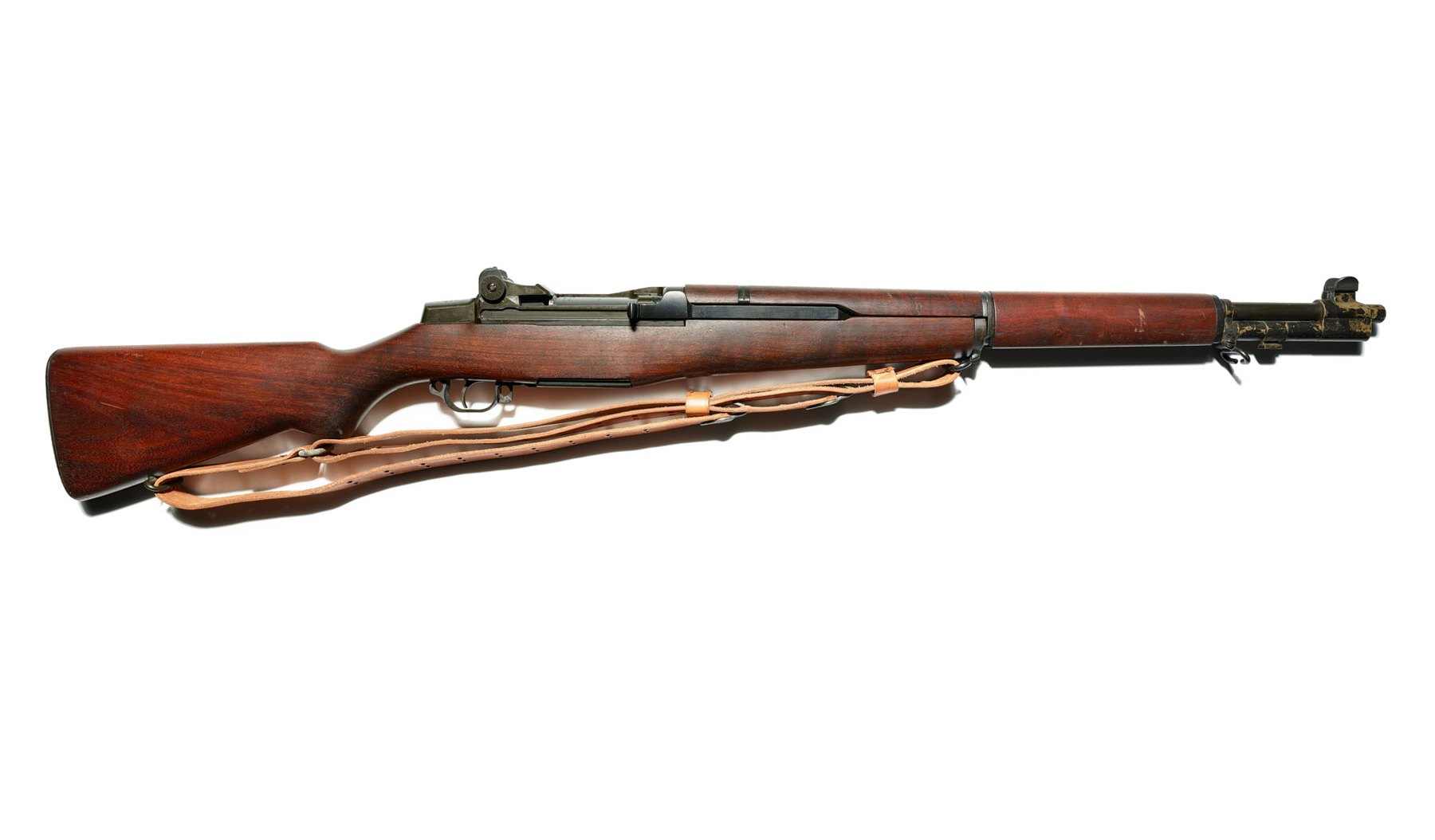
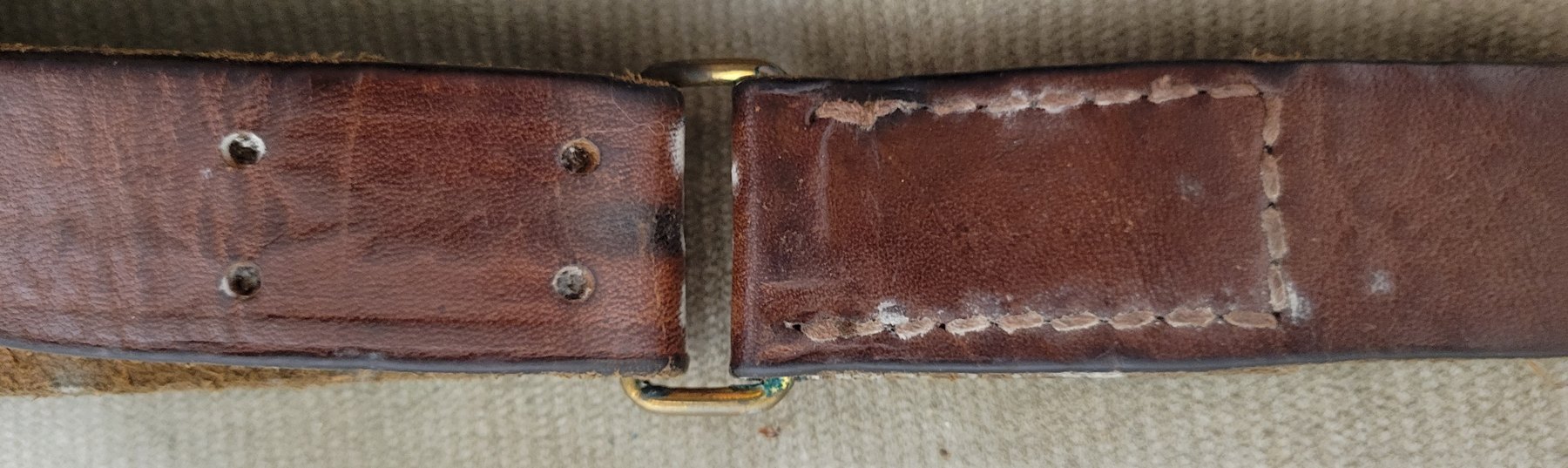
The Army’s standard. The 1941 and 1942 maintenance manuals cover the “Gun Sling M1907” and its inspection — strap leather, rivets, hooks, keepers and hole wear — with a warning: “Punching new holes will weaken the strap.”
Hardware: brass until 1942, when brass was declared a critical material, then blackened or Parkerized steel. A sling dated 1943 or later should have steel hardware; a 1942 sling can have either. Unissued originals are a pale tan — “in the pink” — and darkened with oil and use.
How to fit it, from the 1951 field manual: thread the feed end of the long strap through the upper keeper; put the upper hook “in the third or fourth pair of holes near the feed end of the long strap”; and engage the lower hook in the pair below. If the rear sling swivel sits too steeply to take the hook — common on original swivels — remove the lower buttplate screw so the swivel lifts, thread the sling, and replace the screw.
Reproduction markings you will see: “JQMD 1943” and “JT&L 1942” (imported, around $30), and “Kirkman 1942” (made in the United States, around $125). An M1907 with brass hardware and a 1943 date is suspect. The sling on Springfield 2450021 is a reproduction with two-rivet brass hooks (Vol 7).
15.2.2 Web slings
A cotton web sling was also used on wartime rifles. An original “late war” web sling is identified by ridged buckles and no dimple in the end cap; one was $49.95 at a specialist dealer in September 2026. The post-war “gun sling M1 (improved web)” is in the 1951 manual. The wartime web sling’s official designation could not be confirmed.
For the rifle documented in Vol 7: a 1943-dated M1907 leather sling with steel hardware is the textbook choice; a wartime khaki web sling is plausible.
15.3 Carrying Ammunition
15.3.1 The M1923 cartridge belt
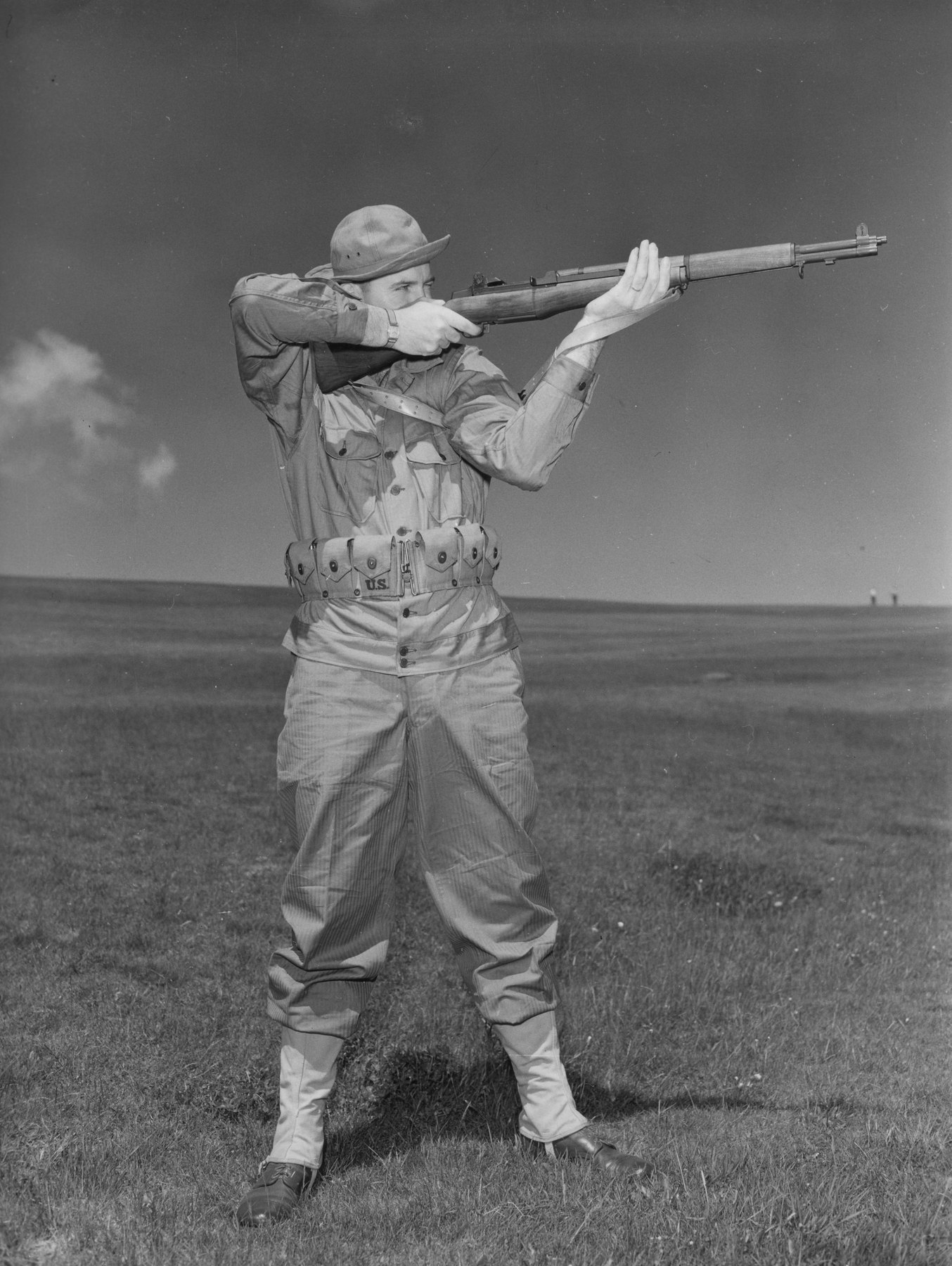
“Belt, Cartridge, Cal .30, Dismounted, M1923.” Ten pockets, each holding one eight-round clip — 80 rounds. The same pockets hold two five-round stripper clips for a Springfield. Lift-the-dot flaps; grommets along the lower edge carry the bayonet scabbard and canteen.
- Color: khaki (OD #3) about 1940–43; transitional two-tone belts 1942–44; green (OD #7) afterward.
- Hardware: zinc-alloy buckles as a wartime economy; brass again in the 1950s.
- Wartime belts kept straps inside the pockets for Springfield stripper clips until 1945 contracts.
- Originals are stamped with the maker and date — for example, “HINSON MFG. CO. 1943.”
- The Greek copy: smaller hooks and grommets, the buckle reversed with the male half on the left, reinforced flaps, no U.S. marks.
The CMP sold Garand belts until 2011–12 and no longer does. Reproductions were $35 to $125 in September 2026; original 1942–43 Hinson belts had sold for $250–295.
15.3.2 The cloth bandoleer
The 1941 field manual: “Bandoleers of ammunition for this rifle have six pockets” — six clips, 48 rounds — “and weigh 3½ pounds each.” They were disposable cotton, and reproductions are about $15.
15.4 Clips
The eight-round en-bloc clip is covered in Vol 12: wartime clips by makers such as Winchester carry collector prices, and new mil-spec clips are inexpensive. Load one by hand; the 1941 manual: “Insert eight rounds in the cartridge clip so that the base of each cartridge is close to the rear wall.”
15.5 Grenade Launching
15.5.1 The M7 launcher
The M7 is a 22 mm spigot tube that clamps to the muzzle, in production from 1943. The 1944 grenade manual describes exactly how it works on the M1:
“This launcher is secured on the M1 rifle by a latch which clamps in back of the bayonet lug. A valve screw, issued with the launcher, is substituted for the cylinder lock screw, and the stud in the launcher protrudes into the valve screw when the launcher is attached, opening the valve and providing for enough gas release to avoid damage to recoiling parts. The valve remains open as long as the launcher is attached to the rifle.”
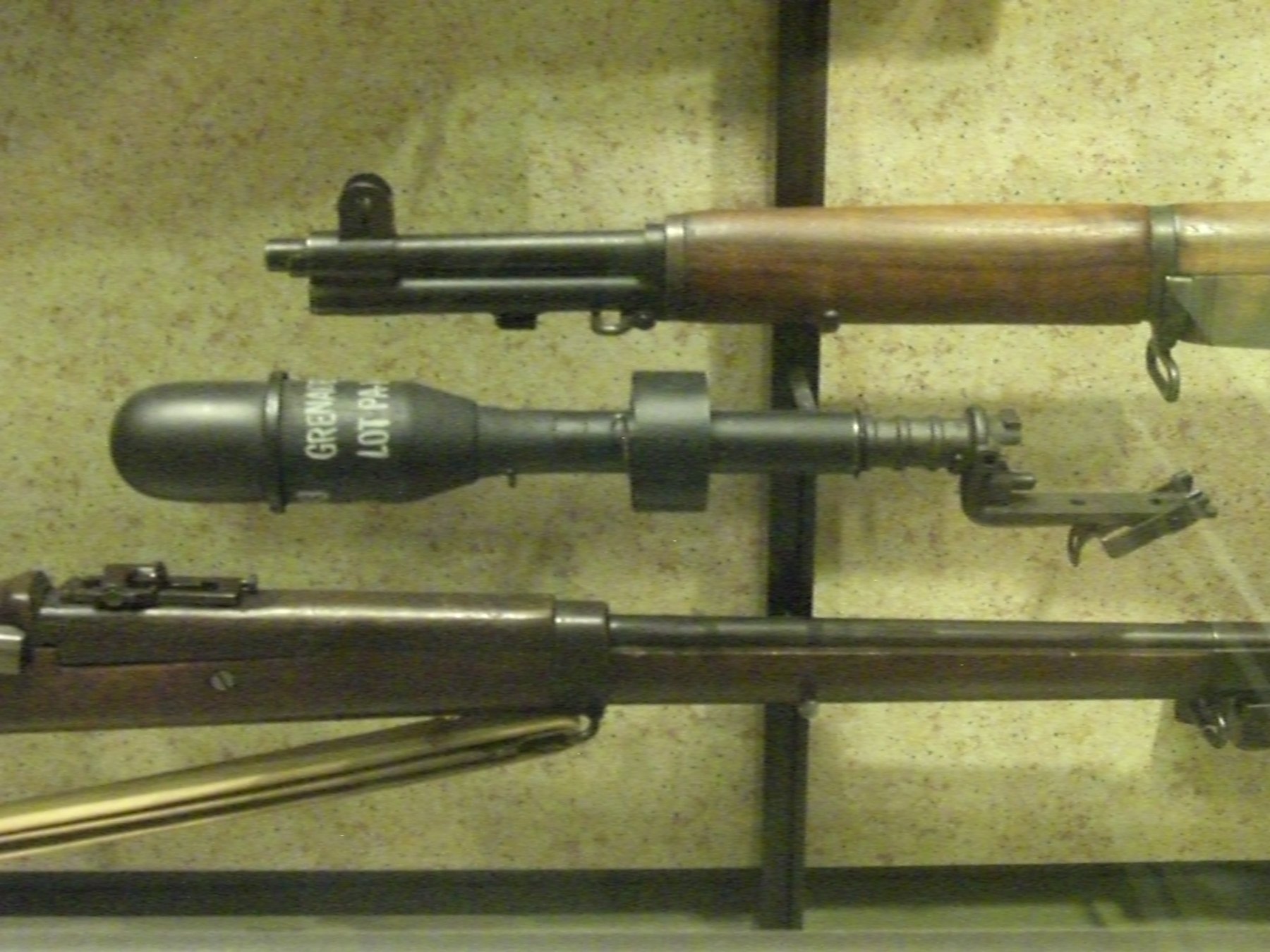
To fit it, from the same manual: clear the rifle; replace the gas cylinder lock screw with the valve screw; slip the launcher over the muzzle so its stud enters the hole in the valve screw; push it down until it meets the bayonet lug; and push the latch toward the receiver and up until it snaps into place.
With the launcher on, the rifle is a single-shot. “The open valve prevents the full recoil of the operating rod assembly. It is therefore necessary to retract the operating rod manually after each round.” The manual also called for a special operating rod spring on rifles used for grenade firing, and allowed ball ammunition to be fired with the launcher on “if necessity demands” — never with a grenade on the launcher, and not with a bayonet fixed. The zero changes (Vol 14).
Valve screws were issued one with each M7. Collectors report early markings running from unmarked, to a rolled “S,” to a script “S,” to “BS.” The self-closing poppet-valve screw came later.
Later launchers — the M7A1 (July 1945), M7A2 (1951) and M7A3 (1952) — kept the rifle semi-automatic by holding the gas system closed until the grenade fired. They are post-war. The plain M7 with a valve screw is the period launcher for the rifle documented in Vol 7.
Cartridges. Grenades were launched with the special rifle grenade cartridge, caliber .30, M3 — “neither ordinary blank ammunition nor service ammunition will be used.” An auxiliary cartridge M7, placed in the end of the launcher for extra range, carried the manual’s warning that the rifle “should not be fired from the shoulder.”
15.5.2 The M15 grenade sight
The 1944 manual: the M15 “consists of a mounting plate which is fastened to the left side of the stock by two wood screws and a sight bar assembly which snaps on the mounting plate.” The plate is graduated from 0 to 45 degrees; the bar carries a level vial.
Fitting one means drilling two holes in the left side of the stock. A wartime drilling template existed. Do not drill a correct wartime stock. Mount it on a spare or reproduction stock, or display it loose. A surplus stock that already carries M15 screw holes is a legitimate piece of history, not damage. New-old-stock M15 sights in their pouches were about $16 in September 2026.
15.5.3 Is it legal?
The launcher, the valve screw and the M15 sight are not regulated federally. ATF’s position, as published in its questions and answers: “Grenade and rocket launcher attachments for use on military-type rifles generally do not fall within the definition of destructive devices. However, the grenades and rockets used in these devices are generally within the definition of destructive devices.” That text was read through a search index because ATF’s site would not load; re-read the live page before relying on it.
Live rifle grenades are destructive devices under the National Firearms Act. The Act’s definition also covers “any combination of parts either designed or intended for use in converting any device into a destructive device,” which is the reason not to keep a launcher alongside anything that could be made into a live grenade. Inert, drilled display grenades are sold openly. Whether M3 grenade cartridges have any separate federal status was not established.
California lists a grenade launcher as an assault-weapon feature, but only for rifles without a fixed magazine; it does not reach the M1.
15.6 Other Accessories
- Winter trigger. A lever that let a mittened hand fire the rifle. The 1969 operator’s manual lists the “Kit, winter trigger” and says to use it “only in extreme cold operation and on authority of unit commander.” No primary source was found placing it in the Second World War; treat it as Korean-era and later.
- Sniper items — M81, M82 and M84 scopes, the M2 and T37 flash hiders, and the leather cheek pad — belong to the M1C and M1D. None is correct on a standard M1.
- Vehicle scabbard. A leather “jeep” scabbard, such as Boyt’s 1942 pattern, carried the rifle on jeeps and motorcycles. An original was $495 in September 2026.
- Also named in the manuals: a barrel reflector for bore inspection, a ruptured cartridge extractor, arm lockers and arm racks.
15.7 A Period Kit for a Rifle Made at the Turn of 1944
Table 1 — A Period Kit for a Rifle Made at the Turn of 1944
| Item | Correct for the period | Not correct | How it attaches |
|---|---|---|---|
| Bayonet | M1905 16-inch (dated 1942 or 1943, or a refurbished pre-war example), or M1 10-inch (new or converted) | M5, M5A1; M4 carbine bayonet | Ring over the muzzle; slot onto the gas cylinder lug (Vol 14) |
| Scabbard | M3 for the 16-inch; M7 or converted M7 for the 10-inch; M1910 still in use | M8A1 | Wire hook into the belt’s grommets |
| Sling | M1907 leather with steel hardware, dated 1942–44; wartime web | Brass hardware on a 1943 date; post-war web | Swivels; upper hook in the third or fourth pair of holes |
| Belt | M1923, khaki or two-tone, zinc buckles, maker and date stamp | Greek copy; 1950s green with brass | At the waist |
| Bandoleer | Six-pocket cloth, 48 rounds | — | Over the shoulder |
| Butt-trap kit | Two-ended metal oiler and thong case; combination tool M3; small plastic grease container | Four-section M10 rod in canvas; plastic two-compartment oiler | In the two wells behind the trapdoor |
| Grenade launcher | M7 with valve screw; M15 sight | M7A1, A2, A3 | Valve screw for the lock screw; latch behind the bayonet lug |
| Winter trigger | — | Post-war | — |
Sources
- U.S. War Department, TM 9-1275, U.S. Rifle, Cal. .30, M1 (December 1941; November 1942 with Change 1, May 1943), paragraphs 3, 7, 25–26, 42 and 59.
- U.S. War Department and Department of the Army, FM 23-5 (November 1941, 1951 and 1965 editions).
- U.S. War Department, FM 23-30, Hand and Rifle Grenades (February 1944), paragraph 30.
- U.S. Army, TM 9-1005-222-12 (1969), paragraph 2-14.
- William J. Ricca, “History of the M7A1, M7A2, and M7A3 Grenade Launchers” (Carbine Collectors Club).
- Civilian Marksmanship Program, “Garand Cartridge Belts.”
- At The Front, M1907 sling pages; World War Supply, sling listing.
- International Military Antiques, SARCO, Warstuff and AMS Militaria listings, checked September 14, 2026.
- Packrats Collectibles (ammogarand.com), cleaning kit listing.
- Bureau of Alcohol, Tobacco, Firearms and Explosives, “Are grenade and rocket launcher attachments destructive devices?” (read via search index); 26 U.S.C. § 5845(f); California Penal Code § 30515.
Comments (0)