M1 Garand · Volume 2
John Garand and the Road to 1936
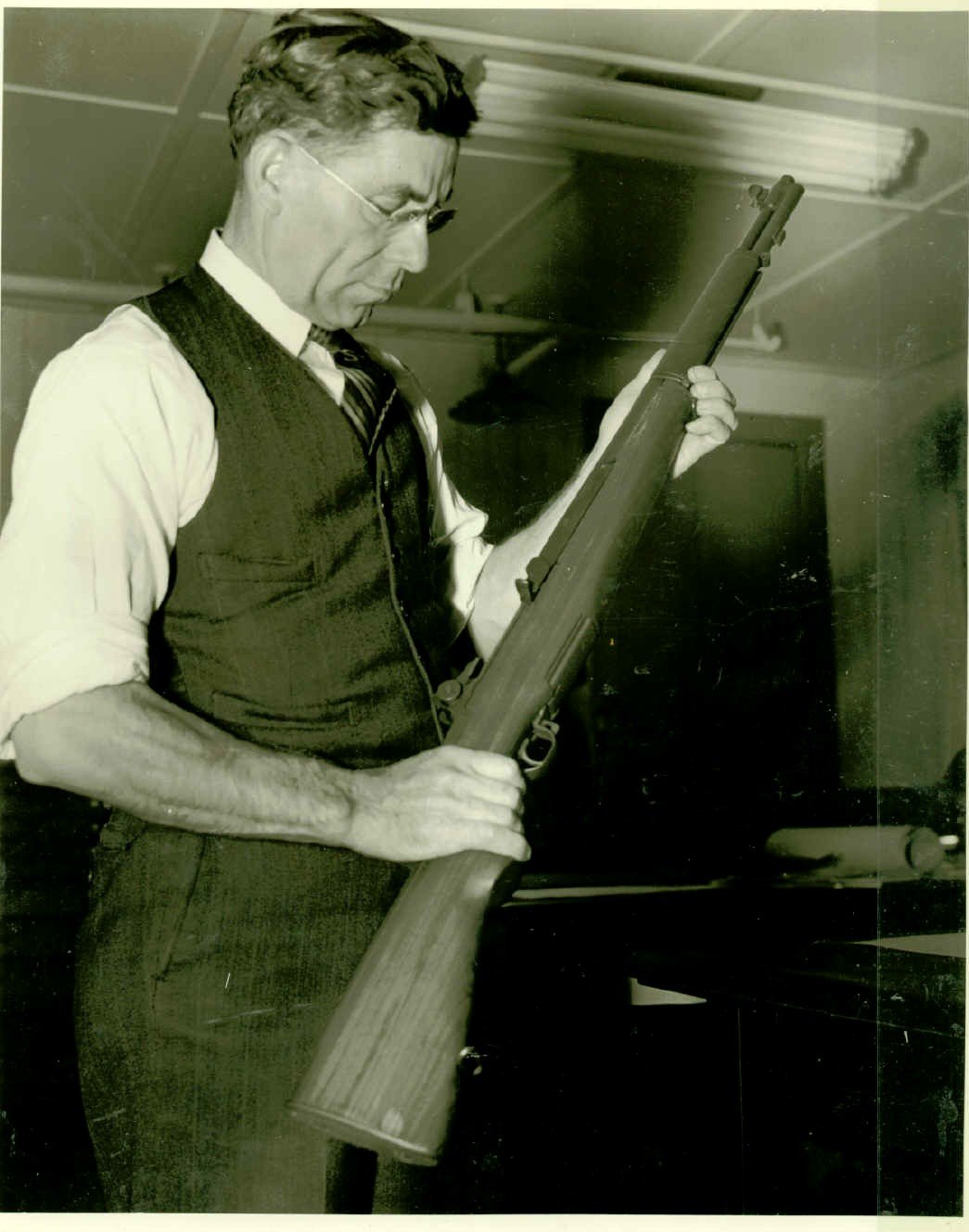
John Garand did not set out to design a service rifle. He set out to build a machine gun, had it turned down by the Army, and was steered into the one job in the country that would let him spend the rest of his working life on a single problem. The rifle that came out of that job was adopted in January 1936, and Garand’s pay had not changed once in the seventeen years it took.
This volume is the road from a bobbin boy in a Connecticut textile mill to the M1’s standardization. Vol 3 picks up the rifle in production and at war.
2.1 The Machinist
Garand was born on January 1, 1888, in St. Rémi, Quebec. The Arms Collectors’ bulletin that reproduces his diaries gives his birth name as Jean Cantius Garand. His family moved to Connecticut in 1898, after his mother died, and settled in Danielson.
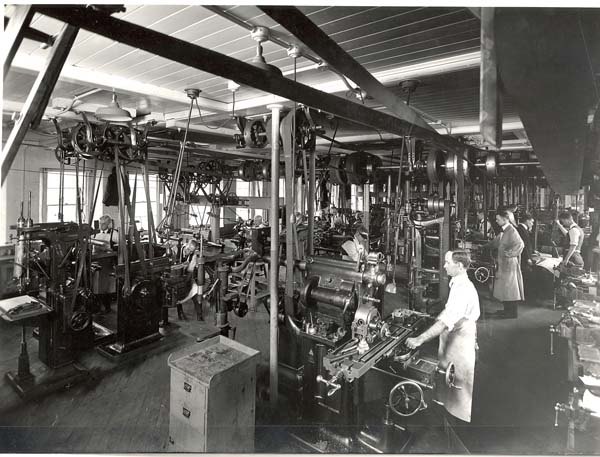
He left school young. The Park Service biography has him working as a bobbin boy in a textile mill by twelve; the collectors’ account puts him sweeping floors and changing bobbins at fourteen. Either way he was working in mills before he was a teenager, and by eighteen he was a tool and gauge maker at Brown & Sharpe in Providence. That is the part of his background that shows in every rifle he designed: he was a gauge man and a production man first, and a gun designer second.
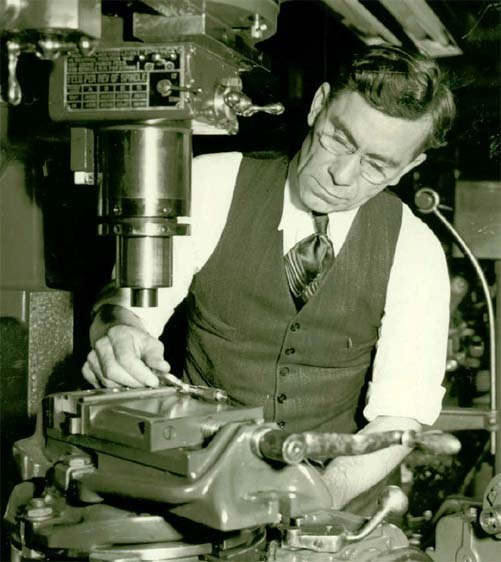
By 1915 he was a foreman and machine designer at a screw company. During the First World War he moved to New York to work for a micrometer maker, and in his own time he designed a fully automatic machine rifle, finished in June 1918. He sent it to the Navy. The Navy passed it to Army Ordnance, where it was turned down — by, among others, a Major Julian Hatcher, who would later write the standard book on the rifle Garand went on to design.
Ordnance did something useful with the rejection. It pointed Garand at the National Bureau of Standards, which hired him on August 16, 1918, as a “Master Gauge and Gun Experimenter” to build his gun. His diary entry for Saturday, April 5, 1919, reads, in his own abbreviated engineer’s hand: “First successful test of gun at the Bureau of Standards. Clearance = .012” Dwell = .337” Spring = .072” Music wire with ten coils 1 3/16” Dia.” A week later he demonstrated it at the War College.
On November 4, 1919, he started at Springfield Armory as a civil-service employee. His salary was $3,500 a year. It was not raised until after the M1 was adopted, sixteen years later.
2.2 The Primer-Actuated Rifles
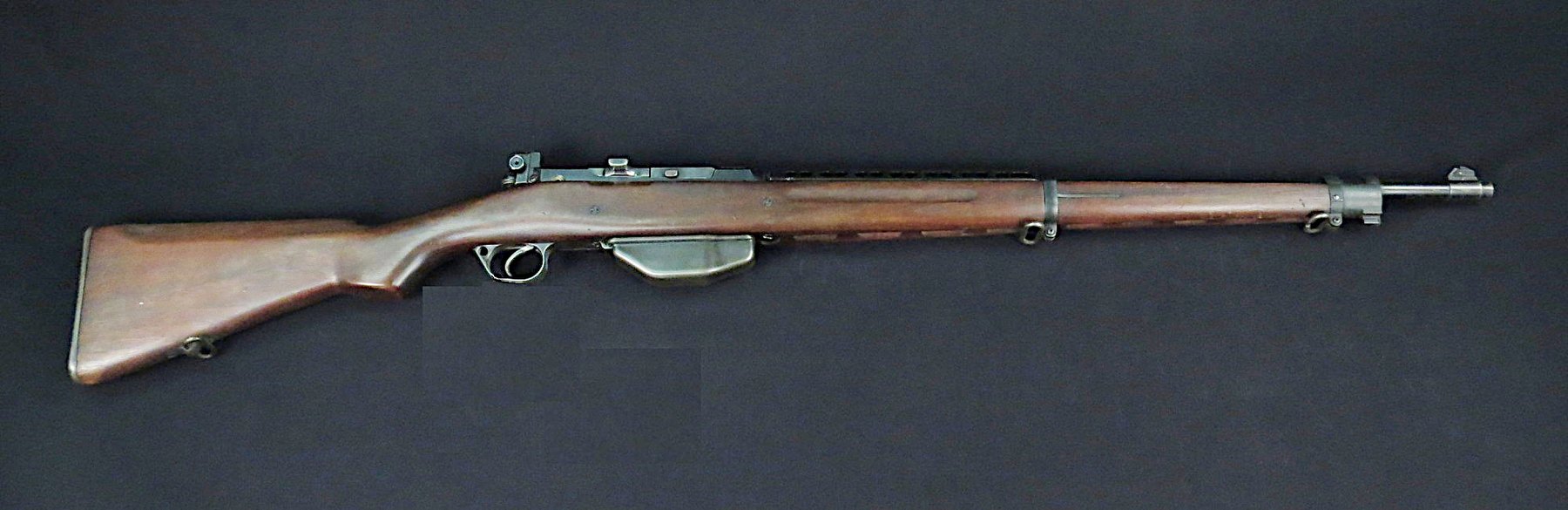
Garand’s first rifles at Springfield did not use gas at all. They were primer-actuated: a special cartridge whose primer moved rearward a slight fraction of an inch on firing, and that movement drove a tappet which also served as the firing pin. It is an elegant idea — the cartridge itself provides the impulse, with no port, piston or rod — and it depended entirely on ammunition built for it. Frankford Arsenal made experimental primer-actuated .30 cartridges for the program as late as January 1923.
The designs evolved quickly:
Table 1 — The designs evolved quickly
| Model | What it was |
|---|---|
| Bureau of Standards gun, 1919 | Primer-actuated, fully automatic |
| T1920 | Primer-actuated, turning bolt with locking lugs, 20- and 30-round magazines |
| Model 1921 | .30-06, five-round integral magazine, non-turning bolt locked by a hinged block; tested well in July 1922, pilot rifles to Fort Benning and Fort Riley that November; two made |
| ”Model 1924” | 24 rifles authorized by the Ordnance Committee on March 21, 1923; Garand’s diary records testing at Fort Benning from May 25, 1925 |
The naming of that 1923–24 batch is muddled in the literature — some sources call them M1922s and reserve “M1924” for an improved version. The naming here follows the collectors’ bulletin that reproduces Garand’s diary, and is flagged as the less certain of the two.
The primer-actuated approach did not survive the Army’s own ammunition. Military .30-06 was changing, and a rifle that relied on primer set-back was hostage to exactly how primers were seated and crimped in cartridges made by the million. Garand moved to gas.
2.3 The .276 Pedersen, and a Rifle That Won
The serious competition in the late 1920s was not another American gas gun. It was John Pedersen’s T1, a delayed-blowback, toggle-locked rifle chambered for a new, smaller cartridge Pedersen had designed: the .276. The Army was genuinely considering changing calibers.
The evaluation was thorough and, in one respect, notorious. In 1928 the caliber board shot anesthetized pigs with both .276 and .30-06 to compare wounding. Trials the following year brought in submissions from Colt-Browning, Garand, Holek, Pedersen, Rheinmetall, Thompson and White. The result was a recommendation to resume work on a .30-caliber gas-operated Garand, and a .30-caliber T1E1 was ordered on November 14, 1929.
Garand’s patent, U.S. 1,892,141, “Semiautomatic rifle,” was filed on April 21, 1930, and issued on December 27, 1932.
In parallel, Springfield built twenty T3E2 rifles — Garand’s gas-operated design in .276 — and they were field-tested against twenty Pedersen T1s. The .276 Garand was the clear winner of the early-1931 trials. The lone .30-caliber T1E1 was withdrawn from the same trials with a cracked bolt on October 9, 1931. On January 4, 1932, a meeting recommended adopting the .276 and building about 125 T3E2 rifles for further testing.
2.3.1 Why the rifle has an en-bloc clip
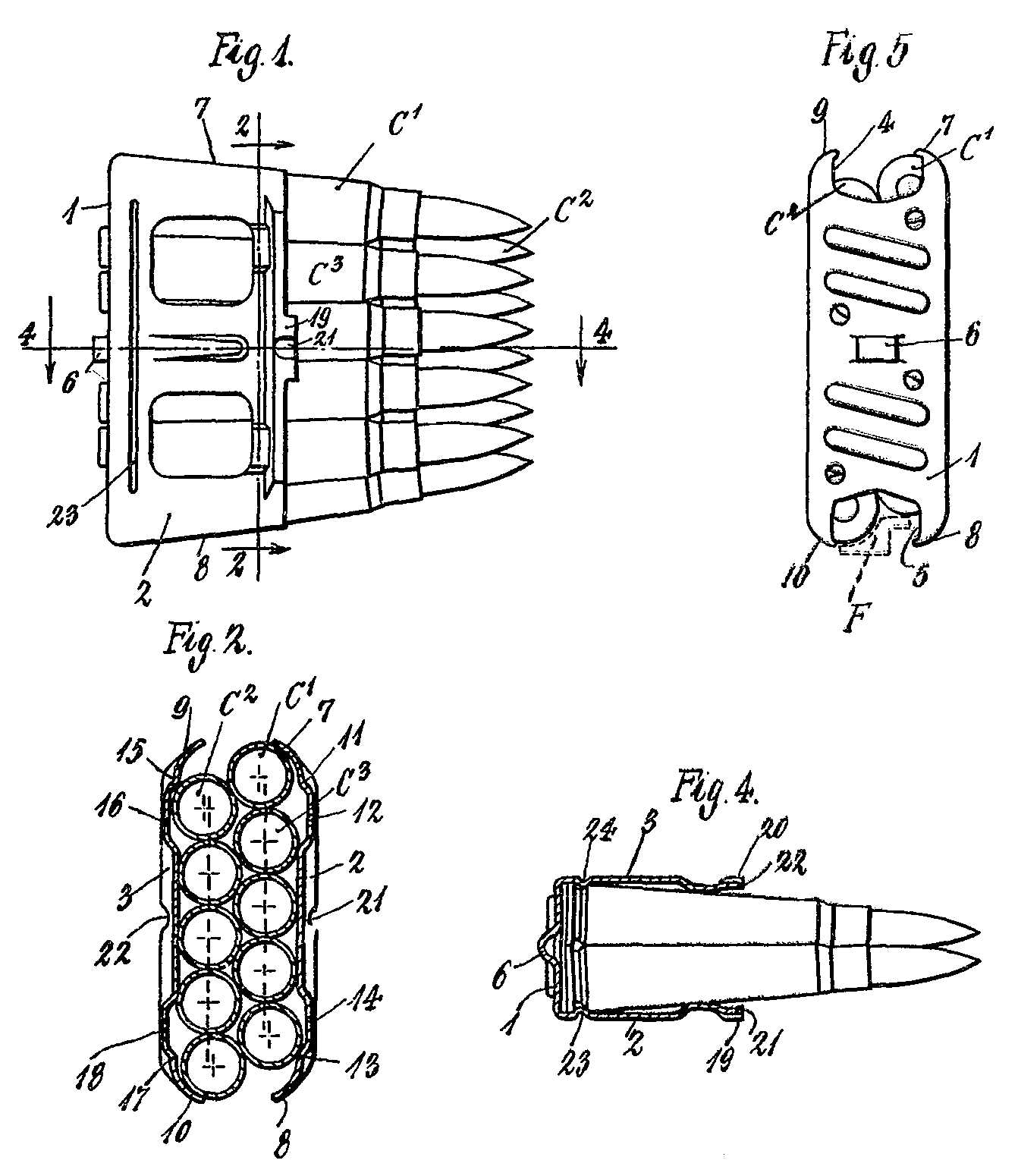
The feature every M1 owner has an opinion about — the eight-round en-bloc clip that goes into the rifle with the ammunition and comes out with a ping — was not Garand’s preference. His early prototypes used detachable box magazines of 20 to 40 rounds. The requirement came from the Army. An Ordnance Board specification of February 1, 1921, reads:
“must be designed that the magazine while in position in the rifle may be fed from clips. The magazine may be detachable, but this is not considered desirable.”
The .276 T3E2 carried ten rounds in its en-bloc clip. When the rifle went back to .30-06, the fatter cartridge brought the clip down to eight.
2.4 MacArthur’s Decision
The .276 had won on the range. It lost in the Chief of Staff’s office.
In early 1932, General Douglas MacArthur disapproved the change of caliber. The reason usually given, and supported across the sources consulted for this dive, is logistics: the Army sat on an enormous stock of .30-06 ball ammunition from the First World War, the Browning Automatic Rifle and every Browning machine gun were .30-06, and a new cartridge meant a new stockpile at a time when there was no money for one. The most careful summaries say MacArthur’s decision was taken “in part” because of the ammunition stocks, and one account treats the veto as the formalization of a decision the Army was already leaning toward. Multiple calibers in service was the fear either way.
The same year, the Secretary of the Navy asked for Marine Corps field trials of the experimental rifle. MacArthur denied that too.
The practical consequence, which no one in 1932 could have fully appreciated, is that the rifle that went to war nine years later fired the same cartridge as everything else an American rifle company carried. The consequence for the rifle itself is that it had to be redesigned around a longer, more powerful round, and its en-bloc clip lost two cartridges.
2.5 From T1E2 to M1
Work went back to the .30-caliber gas gun. In March 1932 Springfield was ordered to build 80 “Model Shop” rifles in the improved T1E2 configuration, plus tooling.
There are two dates that are both correctly called the start of the M1, and they are not the same event:
- August 3, 1933 — the T1E2 was redesignated “U.S. Semi-automatic Rifle, Caliber .30, M1.” That is when the name appeared.
- January 9, 1936 — the rifle was standardized as “U.S. Rifle, Semiautomatic, Caliber .30, M1.” That is the adoption. “Semiautomatic” was soon dropped from the name.
Sources that say the M1 was “adopted in 1933” are conflating the two.
In between, the 80 model shop rifles were completed in August 1934 and sent to Aberdeen Proving Ground; field trials began that year; and on November 7, 1935, the rifle was cleared for procurement. The Springfield serial-number table still carries a line for them: 1932–1934, 80 pre-production models.
2.6 How the Army Treated Him
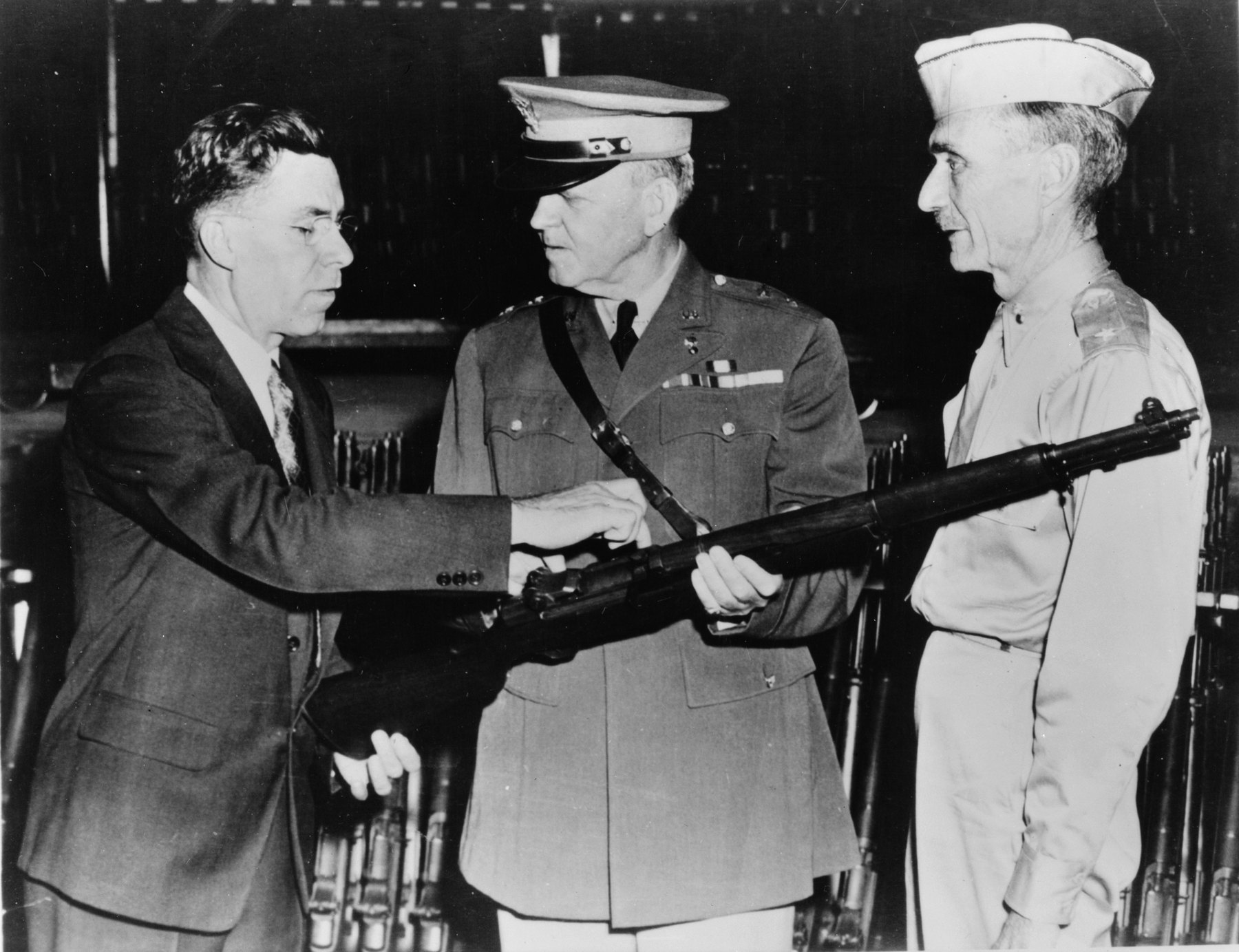
Garand was a government employee, and everything he designed at Springfield belonged to the government. That was the arrangement from the start. What happened after adoption is harder to read.
Julian Hatcher — the officer who had rejected Garand’s machine rifle in 1918, and who became his friend — wrote in The Book of the Garand (1948):
“as soon as Garand’s design had been officially adopted, he was treated very much as though he had been an outside inventor whose patent had been bought … one officer of high rank gravely recommended that in view of the shortage of appropriation he be dropped from the payroll to save his $3,500 salary. I am glad to be able to state that this proposal was received in the Ordnance Office with indignation, and it was considered monstrous that anyone could consider so lightly the obligation of the Government to a man who had faithfully given sixteen years of his life to the rifle’s development.”
He was never paid a royalty. Private bills to award him $100,000 were introduced in Congress in 1941, 1962 and 1973, and none was acted on; the War Department and later the Army opposed them. Garand later claimed a commercial arrangement with Winchester had been drafted at one point. Bruce Canfield, going through the files of Winchester vice president Edwin Pugsley, found nothing to support it and numerous documents showing Garand had assigned his rights to the government. The Park Service biography’s line that he gave the design up royalty-free out of patriotism is, on the evidence, an oversimplification: he assigned his rights as an employee was required to, later sought compensation, and Congress declined.
Two small things from the collectors’ bulletin that reproduces his papers are worth keeping:
- In 1971, a woman in Helena, Montana, named Dorothy Jerome read about him in a tabloid and mailed him one dollar, “my family’s share of what is due you.”
- Serial number 1,000,000, made at Springfield in November 1942, was presented to Garand at his retirement dinner on April 30, 1953. When his son sold it in 1999, the family interviewed prospective buyers and did not sell to the highest bidder.
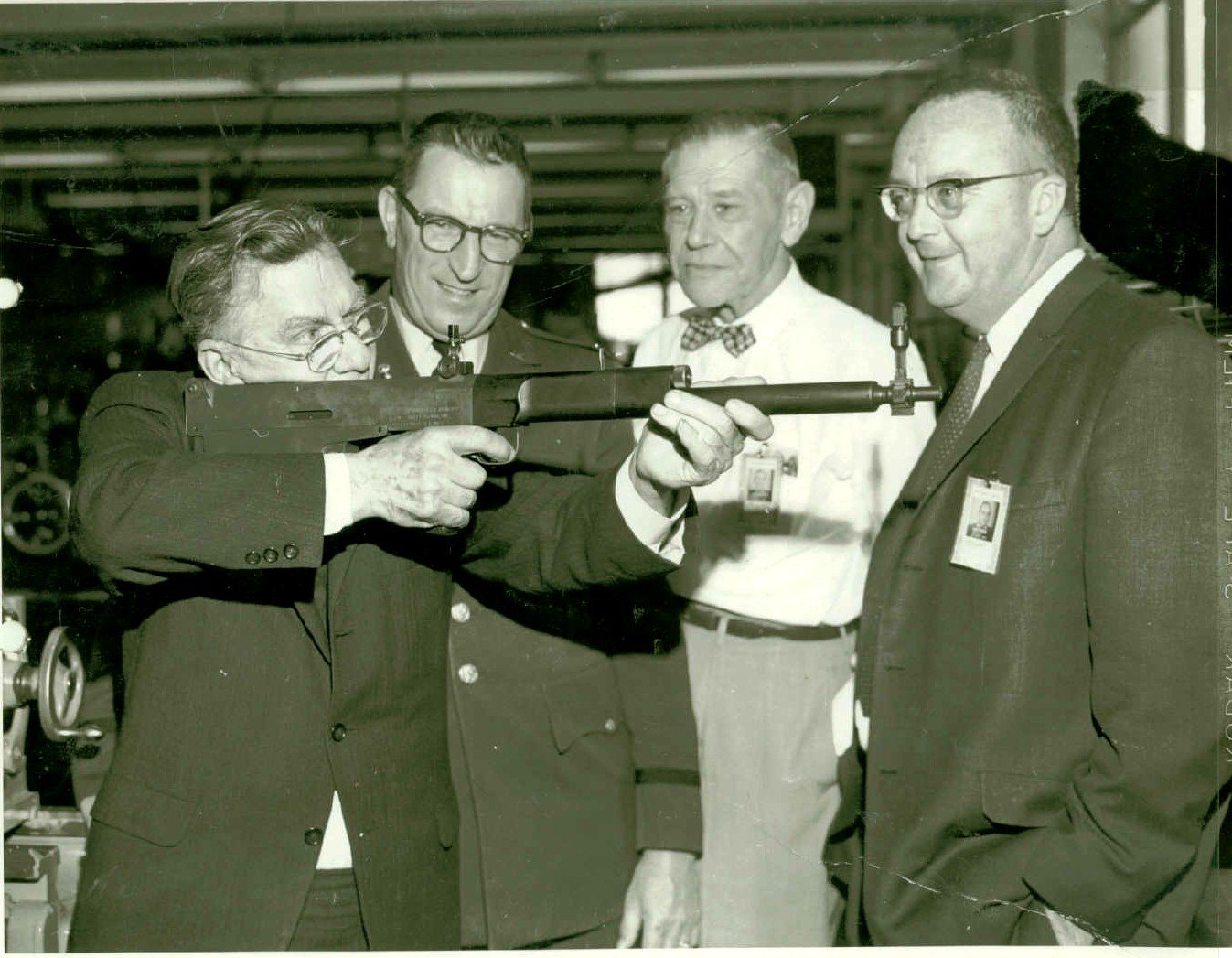
Garand retired from Springfield Armory in 1953 — one source says 1954, but the dated retirement dinner favors 1953 — and died on February 16, 1974, at 86. He is buried in Springfield.
2.7 How to Say It
Hatcher, his friend, footnoted the first page of his book: “Pronounced with the G hard as in go and the stress on the first syllable, to rhyme with parent (except that the final sound is d instead of t).” Garand’s son Richard told a collector in 1999 that both he and his father said “gar-AND.” Garand himself answered the question in American Rifleman in September 1943; that page was not examined for this dive, so the two contradictory witnesses are left standing.
Sources
- Allan D. Cors, “John C. Garand’s Rifles: His Very Own,” American Society of Arms Collectors Bulletin 101, pp. 2–14 — reproduces Garand’s diary entries, the private bills, and the Jerome letter.
- Julian S. Hatcher, The Book of the Garand (Infantry Journal Press, 1948), p. 1 (pronunciation), p. 31 (hire and salary), p. 120 (the payroll quotation), as quoted by Cors.
- National Park Service, Springfield Armory National Historic Site, “John C. Garand” biography, and “U.S. Rifle M1 Garand Serial Number Ranges.”
- Bruce N. Canfield, “The En Bloc Clip: Don’t Blame John Garand” and “The First Garands,” American Rifleman.
- U.S. Patent 1,892,141, J. C. Garand, “Semiautomatic rifle,” filed April 21, 1930, issued December 27, 1932.
- Andrew Stolinski, “Marines & The M1 Garand: The First 400,” American Rifleman.
- Forgotten Weapons, “T3E2 Trials .276-Caliber Garand”; The Firearm Blog, “The .276 Garand That Almost Was, the T3E2” (2016); Michael Taylor, “On the Development of the M1 Garand,” ACOUP (2023).
Comments (0)