Daisy · Volume 9
The Catalog Beyond the Red Ryder
The Red Ryder gets the film, the anniversaries, and the folklore. It does not get the longest production run, the most interesting designer, or the strangest chapter in Daisy’s history. Those belong elsewhere in a catalogue that ran from cast-iron wire-stock guns of the 1880s through a Colt Single Action Army copy that fired steel balls, and ended — briefly and unsuccessfully — with actual .22 rimfire rifles built in Arkansas in the late 1980s.
9.1 The Model 25: Sixty-Four Years, and a Nomenclature Trap
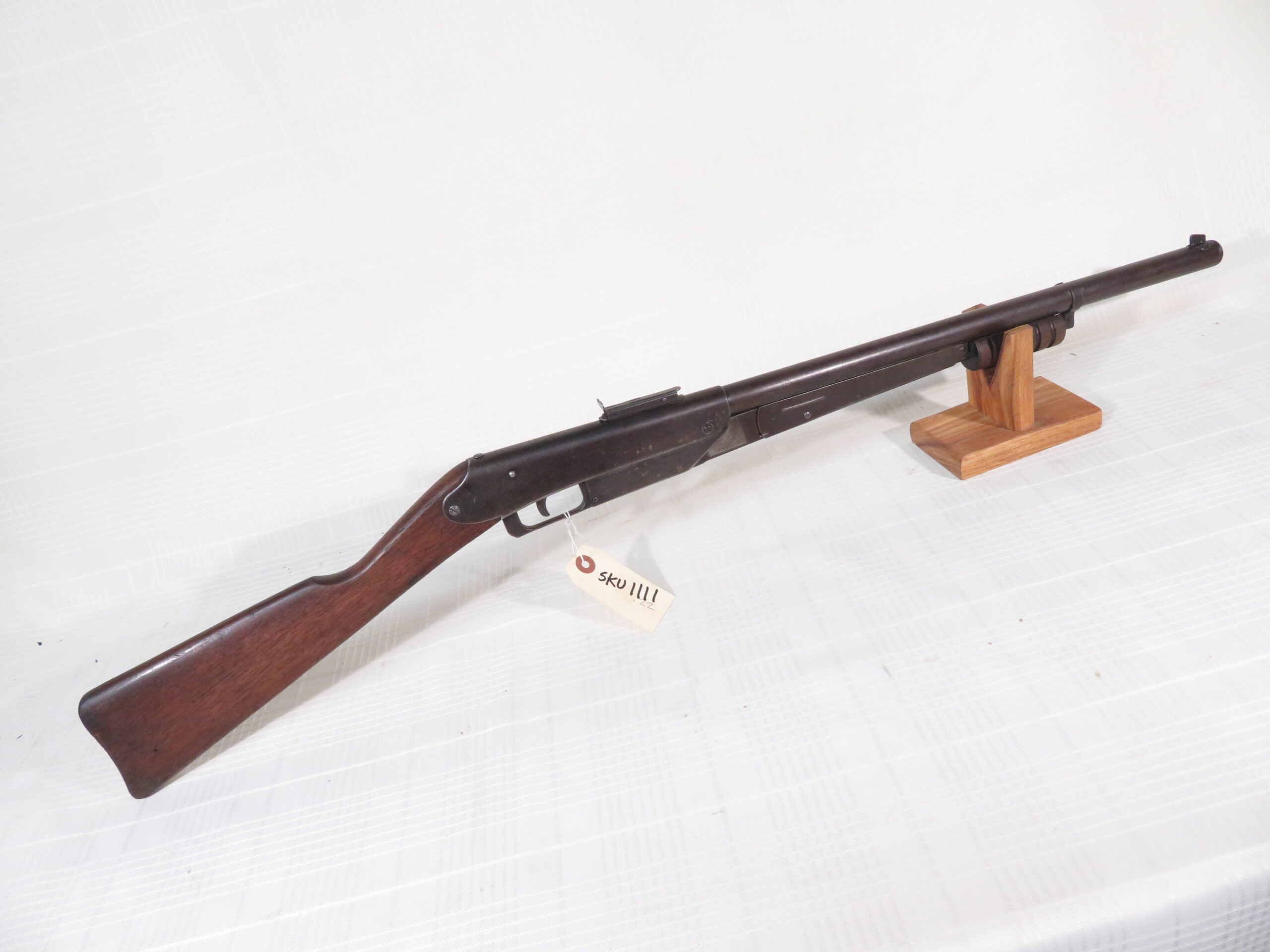
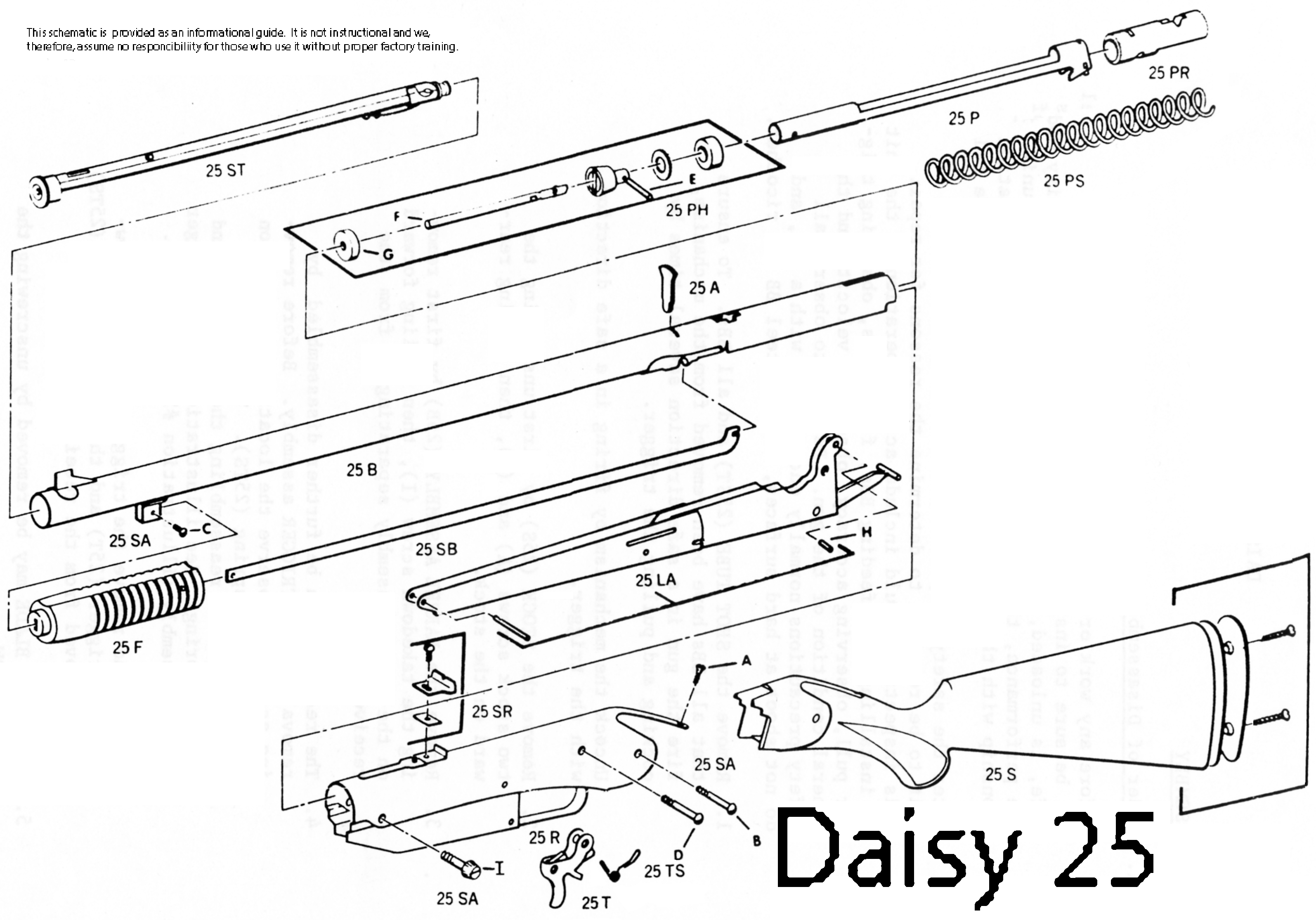
The No. 25 slide-action ran from 1914 to 1978, continuously except for the war years, and was built at both Plymouth, Michigan and Rogers, Arkansas.1 That is sixty-four years of production for one design, which puts it ahead of almost anything else in the American sporting-goods catalogue.
It is styled after a pump shotgun, with a “trombone” slide under the barrel, and it holds 50 BBs — a deliberately modest reservoir against the thousand-shot lever guns Daisy also sold. Rated velocity is around 350 fps.1
The trap is the word “pump.” The Model 25 is a slide-action spring-piston gun, not a pneumatic. One pull of the slide compresses the mainspring; the gun then fires the same catapult-plus-air-blast cycle described in Volume 5. “Pump” describes the shooter’s hand motion during cocking, not the powerplant.2 This trips up a great deal of writing about the gun, including writing that is otherwise careful, because the word carries a strong association with multi-pump pneumatics like the Powerline 880 — which genuinely are pneumatic, and which are a completely different machine.
The designer is the best story in the catalogue. Charles F. Lefever was a St. Louis gunsmith and the grandson of the founder of the Lefever Arms Company — one of the great American double-shotgun houses. He brought the pump-action BB-gun design to Daisy and remained a Daisy employee until 1953.1 A man with that surname could have spent his career on high-grade side-by-sides. He spent it on a fifty-cent boy’s gun that outsold everything his grandfather ever built.
Sales figures are impressive and should be flagged as company-reported: roughly 15 million by 1957 and 20 million by 1980, by some accounts, with the numbers varying between tellings.3 The gun has been revived repeatedly — a commemorative collector’s edition in 1986, a return to regular production in 2009, and a Centennial edition around 2014 — and it remains a current catalogue item.4 One resides in the NRA Museum collection.5
9.2 The 1894 and the Spittin’ Image Line
Daisy’s other great styling exercise was the “Spittin’ Image” line: air guns built as visual near-twins of famous firearms. The Model 1894 is a close copy of the Winchester Model 94 lever-action carbine, produced 1961 to 1986 and also sold as the 1894 Western Carbine, with one variant carrying the name “Lever Matic.”6
There is a small conflict in the sources worth flagging rather than resolving silently. One source calls the 1894 “the first Spittin’ Image BB gun Daisy made,” while Tom Gaylord states that the Model 179 pistol of 1960 was the first.7 Since 1960 precedes 1961, Gaylord is almost certainly right, and the likeliest reading is that the 1894 was the first Spittin’ Image rifle while the 179 was the first Spittin’ Image gun of any kind. Both sources are probably describing the same fact from different angles.
A claim that circulates about the 1894 should not be repeated: that it became “the best-selling BB gun in Daisy history.” That title is far more commonly given to the Red Ryder or the Model 25, the claim is single-sourced, and the research behind this series could not establish it. In fact none of the three “best-selling” claims can be settled from public sources; the honest position is that Daisy’s internal figures would be needed and are not available.
9.3 The Model 179 Six-Gun
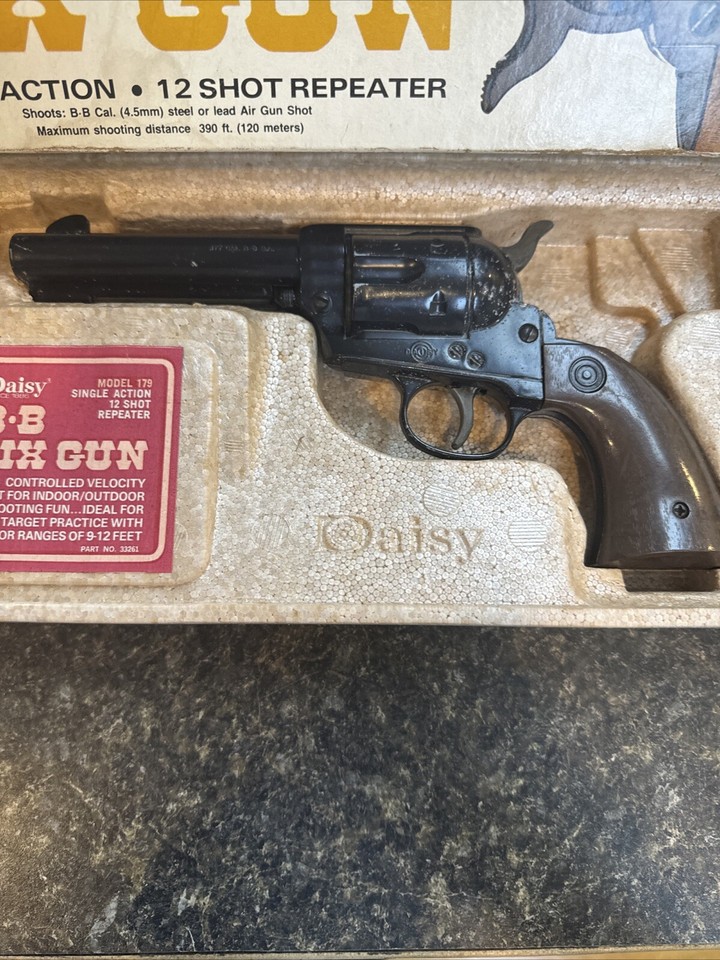
The Model 179 arrived in 1960: a spring-piston BB pistol copied from the Colt Single Action Army, with the loading-gate look of the original, and the first of the Spittin’ Image guns.7 It was sold in presentation boxed sets paired with a matching rifle — which is exactly the merchandising instinct that produced the Buck Jones and Red Ryder guns a generation earlier, applied to a cowboy silhouette rather than a licensed personality.
9.4 The Buck: A Red Ryder, Shrunk
The Model 105 Buck is Daisy’s current entry-level youth lever gun and, functionally, a shortened Red Ryder — same spring-piston lever powerplant, shorter stock, no lariat ring.8
Its specifications are worth recording precisely because they define what a modern “first gun” is meant to be: 29.8 inches overall, 1.6 pounds, an 11-inch length of pull, a 400-BB capacity, up to 350 fps, blade front and fixed open rear sights, a crossbolt trigger-block safety, and a marketed age of ten and up.8 The eleven-inch length of pull is the load-bearing number there — it is a child’s arm, and the whole gun is designed around it.
9.5 The Cast-Iron Era
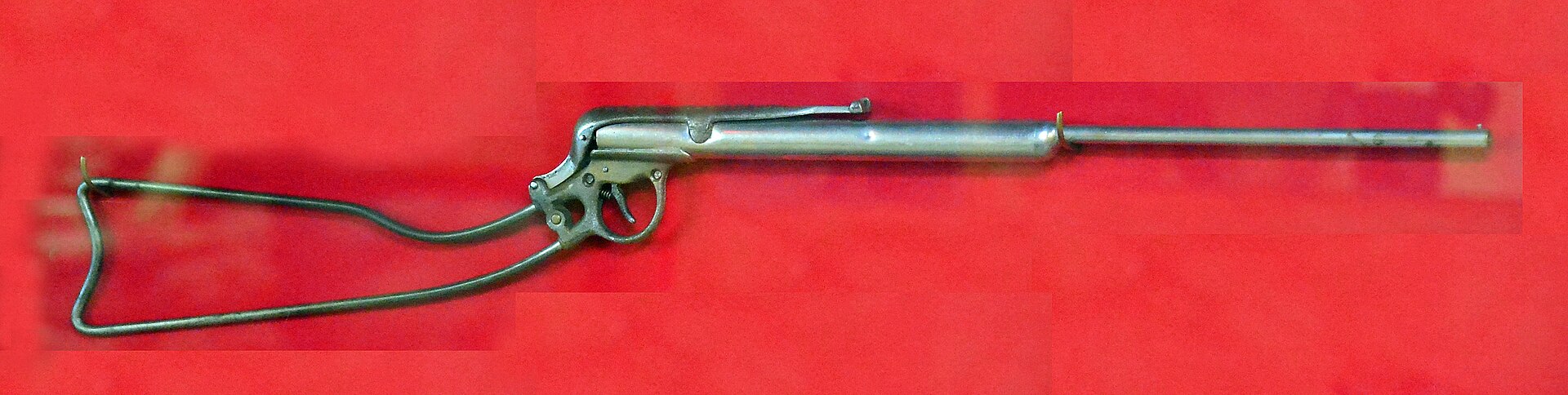
At the other end of the catalogue sit the guns that started it. The earliest Daisys, from 1888 through roughly the 1890s and 1900s, used cast-iron frames with wire or cast stocks, and the wire-stock first gun is the benchmark against which every serious Daisy collection is measured.9 Volumes 2 and 3 take the company history up in detail; the mechanical point to carry here is that cast iron persisted far longer than one might expect. The first-variant Red Ryder of 1940 and 1941 still had a cast-iron lever, and the transition to cast aluminium did not arrive until around 1950. A Model 1904 sits in the NRA Museum collection as a representative of the period.10
9.6 The Model 99: A Gap, Stated Plainly
The Model 99 is generally described in collector circles as a target or Champion-grade lever BB gun of the 1960s and 1970s, with peep sights, positioned a step above the standard youth guns.
That description is offered here only to say what the gun is reputed to be. The research behind this series could not source the Model 99 adequately. Searches returned nothing citable — no factory literature, no dated production record, no museum entry. Settling it would take a Blue Book of Airguns lookup or a well-sourced DaisyTalk thread.
Rather than fill the space with plausible-sounding invention, this series leaves it open. A reader who wants the Model 99 will have to go to the Blue Book, and that is a better outcome than a confident paragraph assembled from nothing.
9.7 The Rimfire Venture, 1987 to 1991
The strangest chapter in the catalogue is the one in which the world’s largest maker of BB guns decided to make actual firearms.
From 1987, Daisy fielded a line of .22 Long Rifle rifles:11
Table 1 — The Rimfire Venture, 1987 to 1991
| Model | Action | Furniture |
|---|---|---|
| Model 8 (1987) | Single-shot bolt | — |
| Legacy 2201 / 2211 | Single-shot bolt | 2201 wood, 2211 polymer |
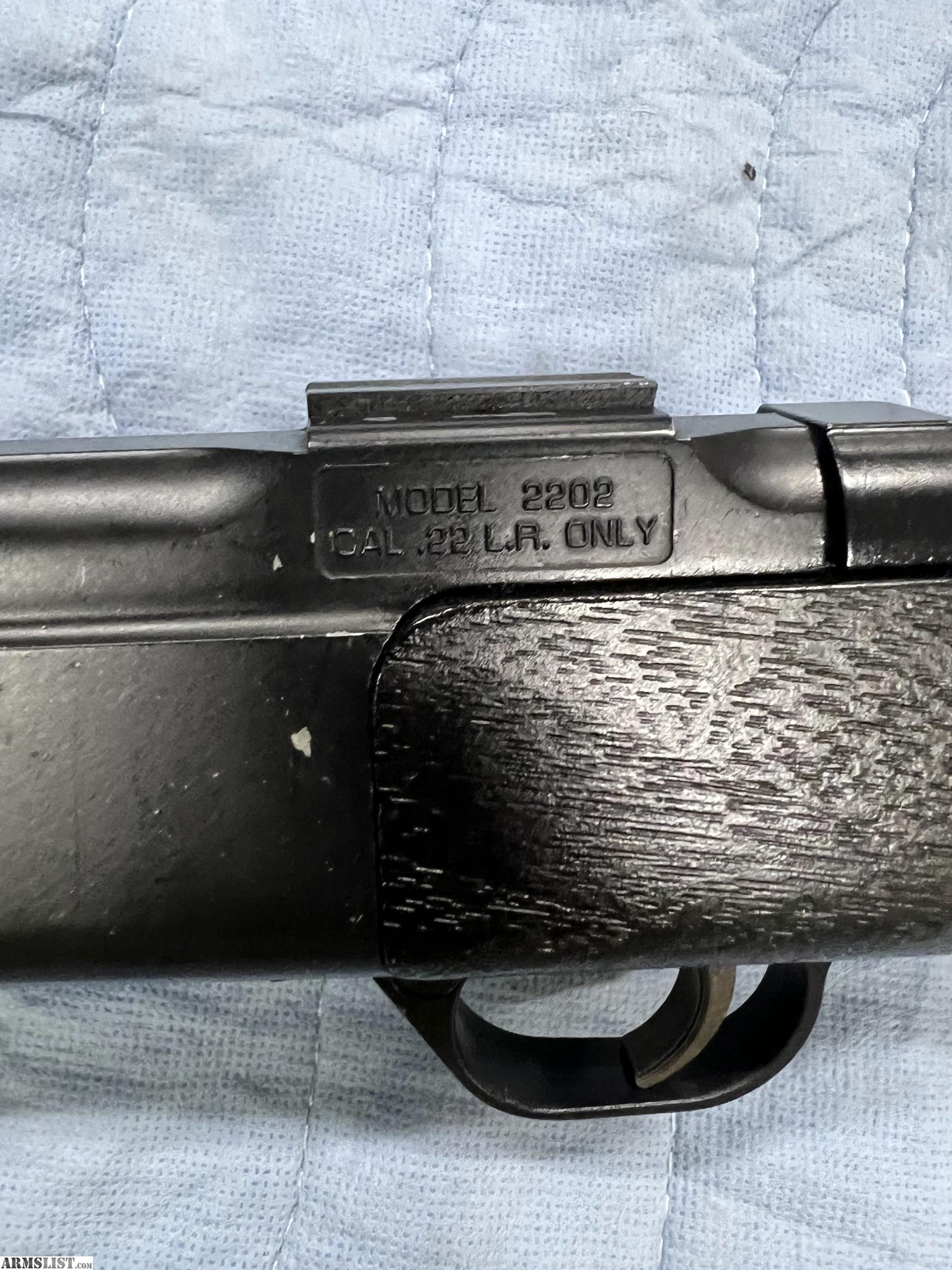
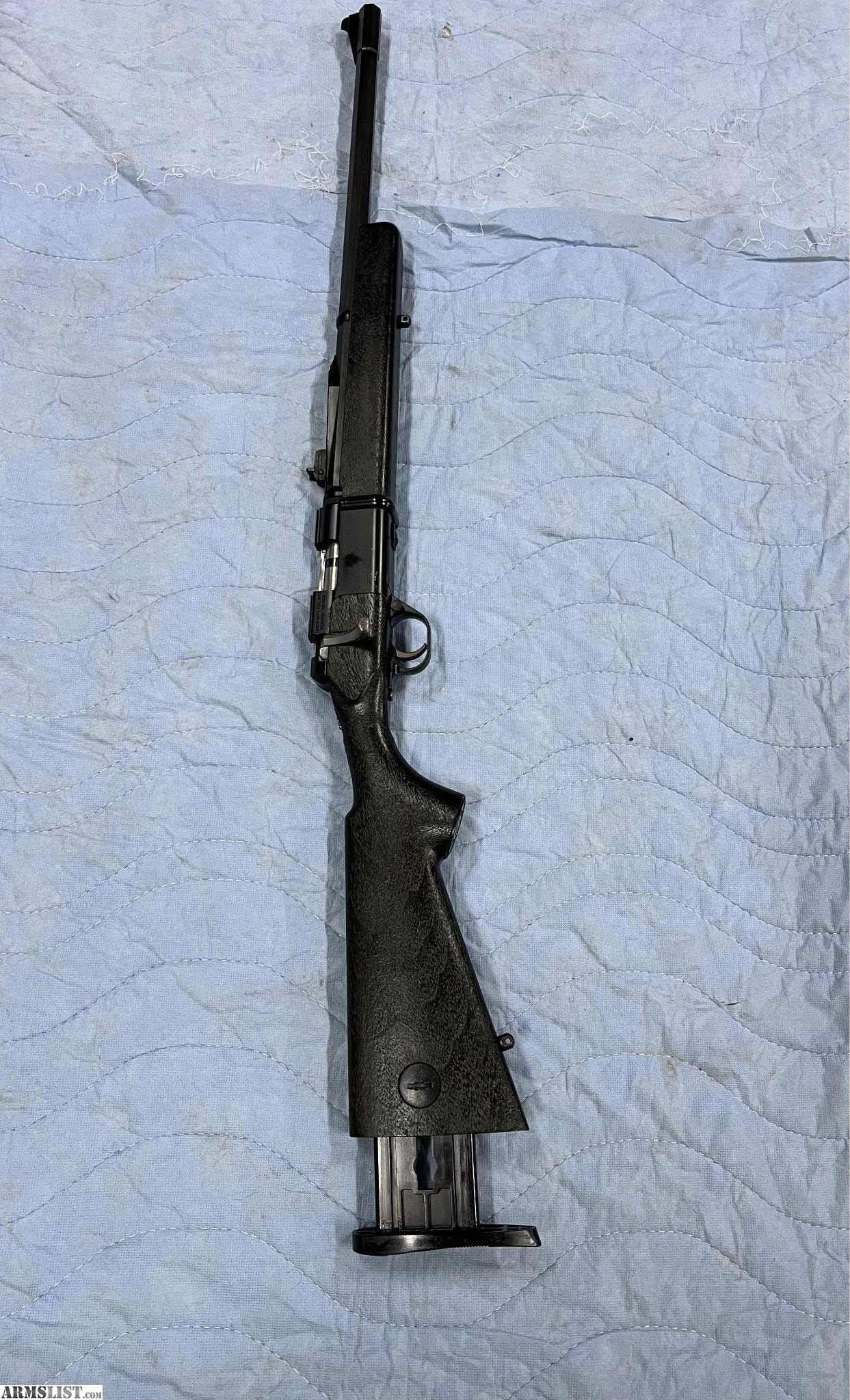
| Legacy 2202 / 2212 | Bolt-action, Ruger 10/22-style 10-shot rotary magazine | 2202 wood, 2212 polymer |
| Legacy 2203 / 2213 | Semi-automatic, 7-round magazine | 2203 wood, 2213 polymer |
The pattern is consistent: each model number pair differs only in wood versus synthetic furniture. The magazine choice on the 2202 and 2212 is telling — a Ruger 10/22-style rotary magazine in a bolt gun, which is to say Daisy building to the ammunition-feed standard already established by the rifle it was competing against.
And that is why it failed. Daisy walked into a late-1980s .22 LR market owned by the Marlin 60 and the Ruger 10/22, two rifles with decades of dealer relationships, aftermarket support, and consumer trust. Meanwhile its own customer base — parents buying a child’s first air rifle — did not follow it into rimfire, because the whole point of buying a BB gun is that it is not a rimfire. Daisy was a stranger at both ends of the transaction. The venture was done by 1991.11 The bolt guns bring roughly $250 in good condition today.
One date correction: Wikipedia describes the rimfire line as “briefly produced in 1988.” The fuller trade sources give 1987 to 1991, and the Wikipedia window is too narrow.11
The rimfire venture was not, however, the first time Daisy left the air-gun business. That had happened twenty years earlier, with a rifle that fired a caseless .22 cartridge ignited by the heat of compressed air, and it ended not in a sales slump but in a federal classification. Volumes 11 through 15 take up the V/L.
9.8 Bibliography
Footnotes
-
Wikipedia, “Daisy Model 25,” https://en.wikipedia.org/wiki/Daisy_Model_25 ; DaisyKing, “The No. 25 Pump Gun,” http://daisyking.com/history/PumpGuns/TheNo25PumpGun.htm (confidence: high for production dates, the Lefever attribution, capacity, and velocity). ↩ ↩2 ↩3
-
Pyramyd Air, Daisy Model 25 product classification. https://www.pyramydair.com/product/daisy-model-25-pump-action-bb-gun?m=2057 (confidence: high). ↩
-
Sales figures as above — Daisy-sourced and varying between tellings (confidence: medium; company-reported). ↩
-
Daisy, Model 25 Pump BB Gun, https://daisy.com/product/model-25-pump-bb-gun/ ; Shooting Times, “Daisy Model 25 Centennial BB gun,” https://www.shootingtimes.com/editorial/daisy-model-25-centennial-bb-gun/482194 ; Shoot On, “The Daisy Model 25: 108 years and counting,” https://shoot-on.com/the-daisy-model-25-108-years-and-counting/ (confidence: medium/high). ↩
-
NRA Museum, Daisy Model 25 slide-action air rifle. https://www.nramuseum.org/guns/the-galleries/for-the-fun-of-it/case-48-airguns/daisy-model-25-slide-action-air-rifle-(1).aspx ↩
-
Airguns of Arizona, “My old Daisy Model 1894 Spittin’ Image BB rifle,” September 2020, https://www.airgunsofarizona.com/blog/2020/09/my-old-daisy-model-1894-spittin-image-bb-rifle.html ; Pyramyd Air, “Daisy 1894 Western Carbine, Part 1,” February 2015, https://www.pyramydair.com/blog/2015/02/daisy-1894-western-carbine-part-1/ ; NRA Museum, https://www.nramuseum.org/guns/the-galleries/for-the-fun-of-it/case-48-airguns/daisy-model-1894-lever-matic-repeating-air-rifle.aspx (confidence: medium on the 1961–1986 dates). ↩
-
Tom Gaylord, “Daisy’s 179 BB pistol, Part 1,” Pyramyd Air blog, March 2017. https://www.pyramydair.com/blog/2017/03/daisys-179-bb-pistol-part-1/ (confidence: high on the 179; medium on resolving the first-Spittin’-Image conflict). The “best-selling BB gun in Daisy history” claim for the 1894 is single-sourced and UNVERIFIED. ↩ ↩2
-
Daisy, Buck Model 105 Youth BB Air Rifle, https://daisy.com/product/buck-model-105-youth-bb-air-rifle/ ; Pyramyd Air, “Daisy Model 105 Buck BB gun, Part 1,” July 2019, https://www.pyramydair.com/blog/2019/07/daisy-model-105-buck-bb-gun-part-1/ (confidence: high on specifications; medium on the shrunken-Red-Ryder characterisation). ↩ ↩2
-
Pyramyd Air, “Daisy wire stock first BB gun, Part 1,” January 2010. https://www.pyramydair.com/blog/2010/01/daisy-wire-stock-first-bb-gun-part-1/ (confidence: medium). ↩
-
NRA Museum, Daisy Model 1904 air rifle. https://www.nramuseum.org/guns/the-galleries/for-the-fun-of-it/case-48-airguns/daisy-model-1904-air-rifle.aspx ↩
-
Guns.com, “We remember when Daisy used to make .22 LR rifles,” June 2021, https://www.guns.com/news/2021/06/09/we-remember-when-daisy-used-to-make-22lr-rifles ; The Firearm Blog, “The Rimfire Report: Daisy 2202 .22 LR rifle,” https://www.thefirearmblog.com/blog/the-rimfire-report-daisy-2202-22-lr-rifle-bb-to-rimfire-44820130 ; Blue Book of Airguns, https://bluebookofgunvalues.com/products/daisy-rifles-bolt-action-disc-legacy-models-2202-2212 (confidence: medium/high). Wikipedia’s “briefly produced in 1988” is too narrow. ↩ ↩2 ↩3
Comments (0)