Daisy · Volume 16
Safety, Litigation, and the Regulation of BB Guns
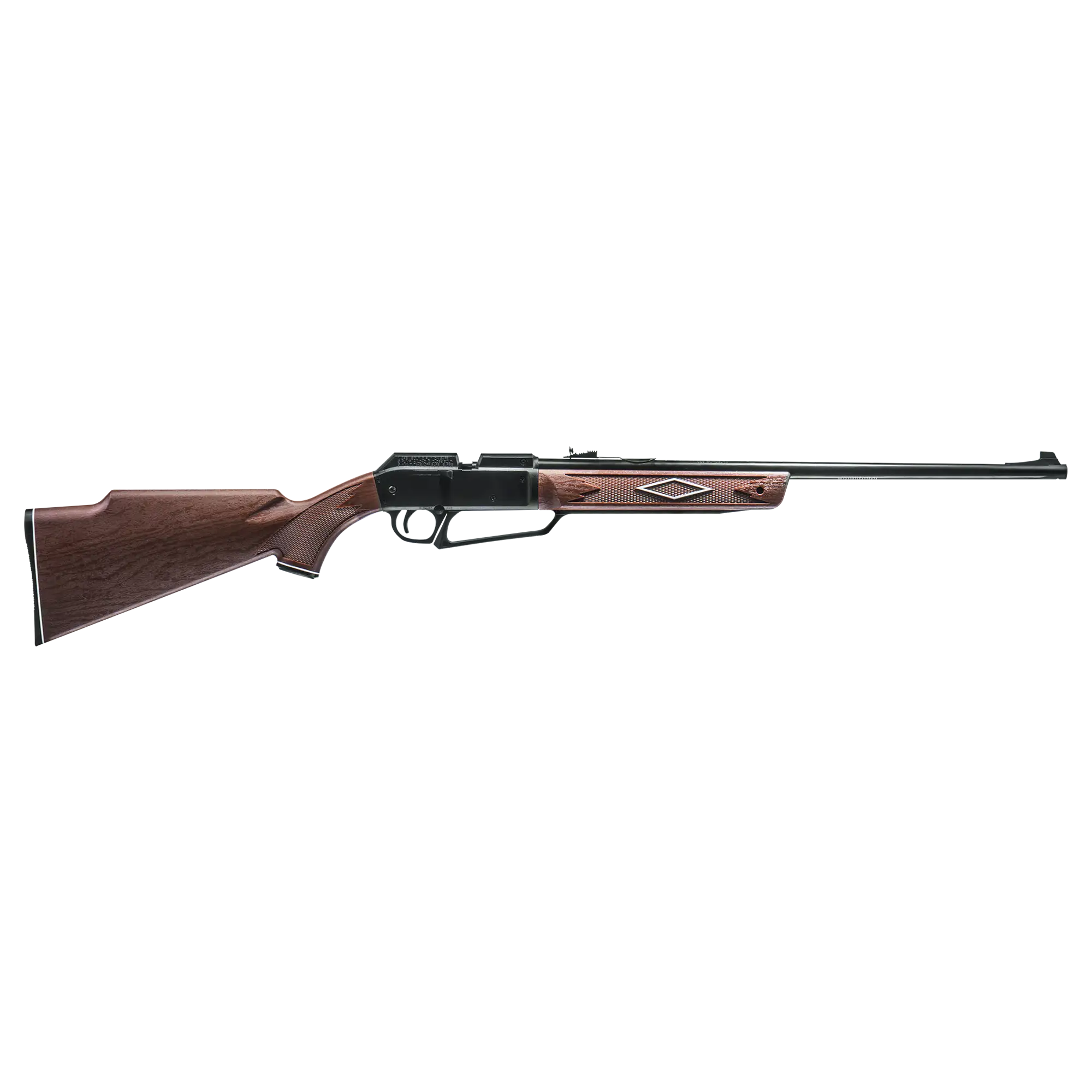
BB guns occupy an awkward legal space. They are not firearms under federal law, so the Bureau of Alcohol, Tobacco, Firearms and Explosives has nothing to say about them. They are consumer products, which puts them under the Consumer Product Safety Commission. And they are, unmistakably, weapons capable of killing a child. That combination produced one of the more instructive regulatory fights in American consumer-product history: a case in which the CPSC took the rare step of filing an administrative complaint against a manufacturer, sought a recall of seven and a half million guns, and ultimately lost. Understanding why it lost — and what it cost each side — is the substance of this volume.
16.1 The defect
The Powerline line was introduced in 1972.1 The models at issue were the 856 and the 880, pneumatic guns fed from a gravity magazine.
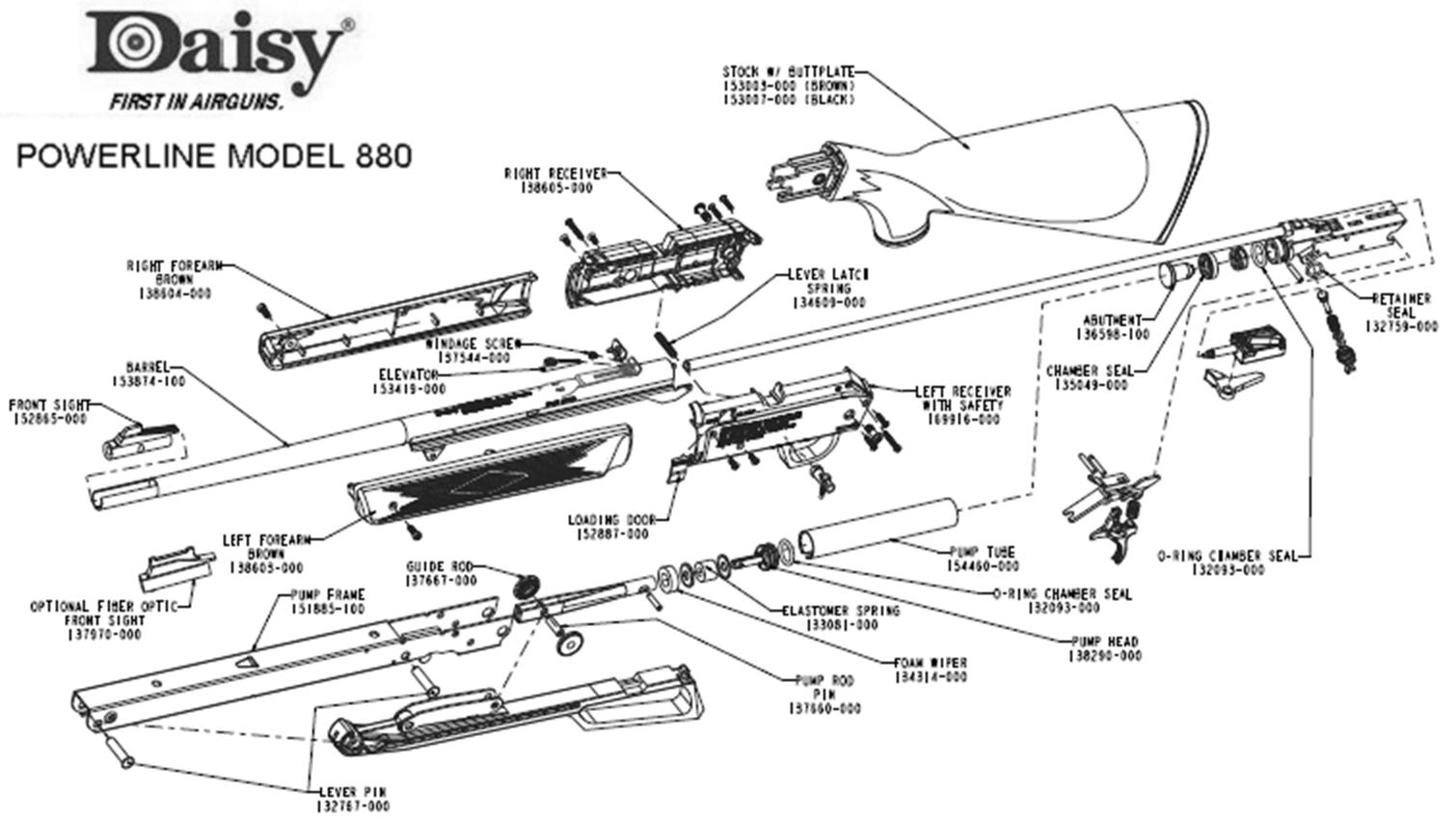
The defect mechanism is specific and it is nasty. BBs could become lodged or trapped in the magazine in such a way that the gun looked and sounded empty when it was not. Shake it and nothing rattles. Point it and pull the trigger and it fires. The guns also had only a manual safety, with no automatic safety device.2 CPSC staff estimated that a fix — including the addition of an automatic safety — would cost roughly $2 per airgun.2
The crux of the whole story, and the part almost always omitted, is why the action came thirty years after the product launched. A CPSC spokesman explained that this was “the first time we’ve been able to demonstrate and replicate the defect of the BB getting lodged.”3 Earlier investigations had failed to reproduce it. A defect that occurs intermittently, in a mass-market product, in the hands of children, and that leaves no evidence after the fact, is exactly the sort of defect a regulator cannot act on until somebody in a lab makes it happen on demand. Once it was reproducible, the case became possible.
16.2 The case that triggered it
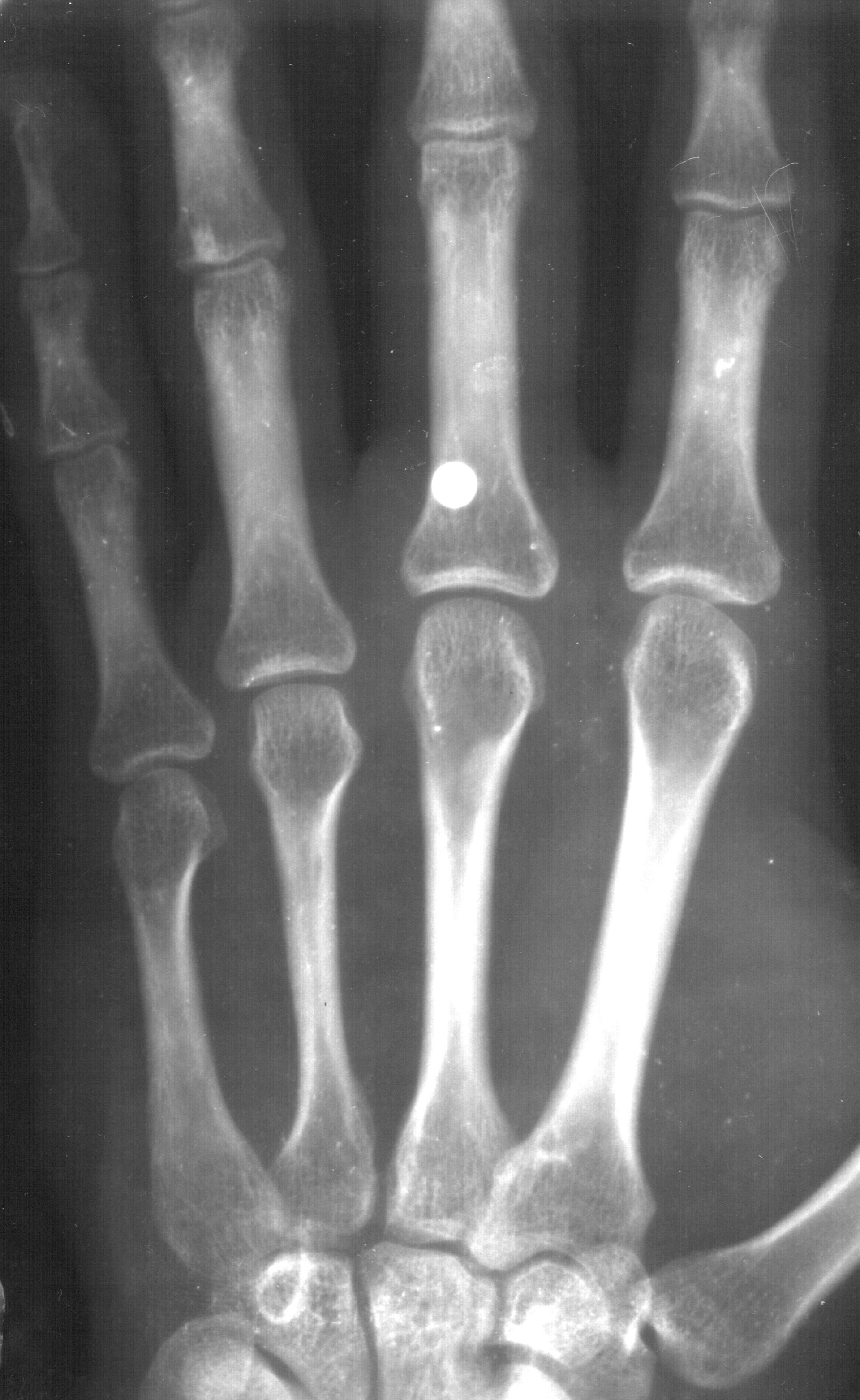
On 22 May 1999, John Tucker Mahoney received a Model 856 Powerline for his sixteenth birthday. A friend, believing the gun to be empty, fired it at his head at close range. A BB that had been lodged in the magazine struck his skull and severed an artery in his brain.4
In February 2001, Daisy settled the resulting product-liability suit for approximately $18 million.4 That figure — one plaintiff, one gun, one settlement — is the number to hold in mind through everything that follows.
16.3 The CPSC action
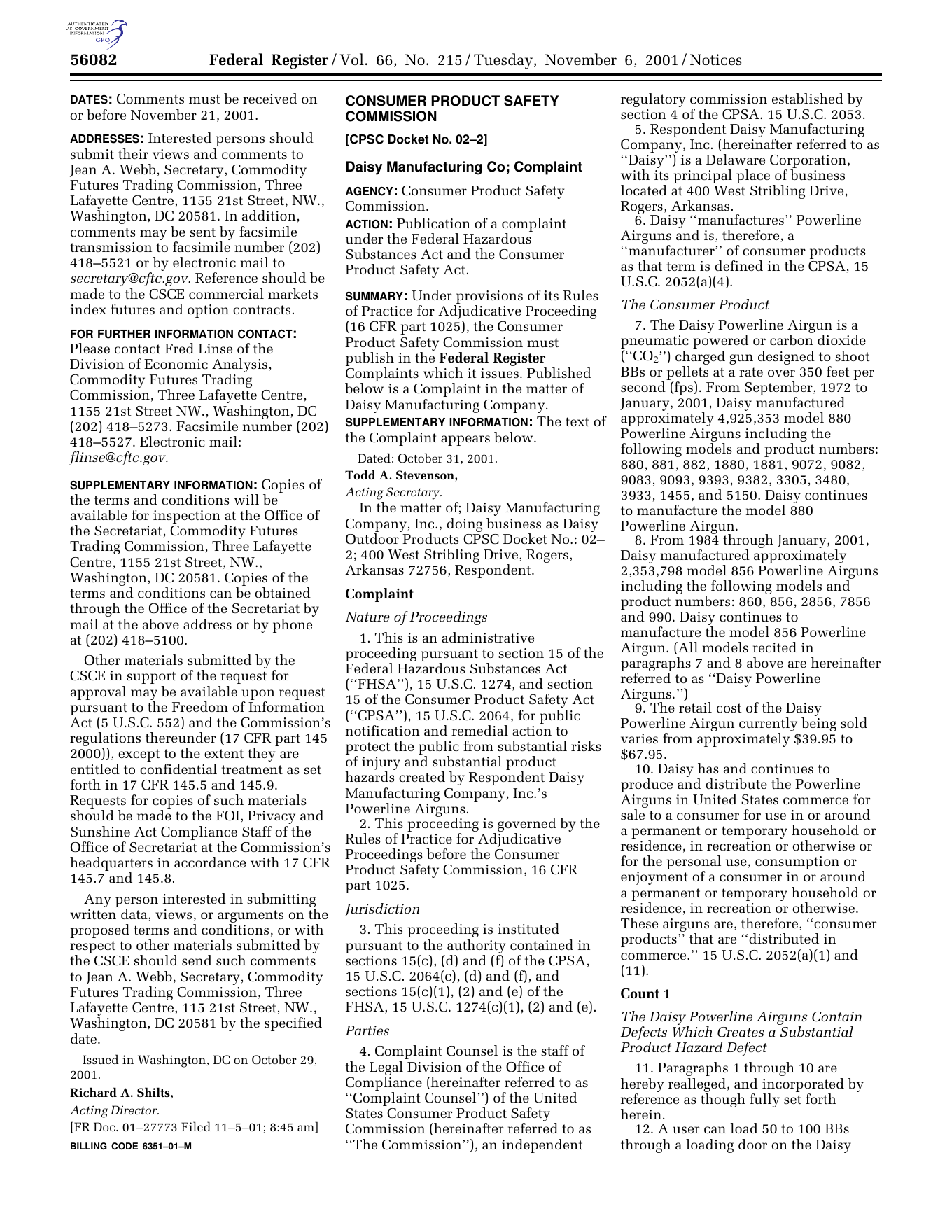
The Commission filed its administrative complaint on 30 October 2001, and the complaint was published in the Federal Register on 6 November 2001.53
A dating note is required here, because this action is misdated almost everywhere. CPSC’s own newsroom hosts the “CPSC Files Lawsuit Against Daisy Manufacturing Co.” release under both a /2002/ and a /2003/ URL path, and secondary accounts have accordingly placed the filing in 2002 or 2003.2 The action originates in late 2001. Anything that says otherwise is following a URL rather than a docket.
The Commission sought a recall of 7.5 million Powerline airguns across the 880 and 856 models. It alleged at least 15 deaths and 171 serious injuries, with about 80 percent of those killed or injured being children under 16. Daisy had refused a voluntary recall, which is what made the administrative complaint necessary — it is a relatively rare and aggressive step, reserved for exactly that situation.2
The industry’s position at the time is best captured by the NRA’s response, which held that the deaths and injuries reflected human error rather than a product defect, and that the record was “a pretty good safety record. Last year, we had 30 deaths from shopping carts.”3 That is a firearms-safety-doctrine argument — never point a gun at anyone, treat every gun as loaded — applied to a product-defect question. Both propositions can be true simultaneously: the friend should not have pointed the gun, and the gun should not have been able to conceal a round. The two sides were arguing past each other, and that mismatch is a large part of why the fight ran as long as it did.
16.4 The outcome, and the arithmetic
In November 2003, the Commission voted 2 to 1 to drop its recall demand and settle.6
The settlement terms, as reported: no recall; Daisy agreed to more and larger safety warnings and to a $1.5 million, five-year education campaign.7 The precise wording of the settlement could not be verified in the research behind this series — the CPSC release could not be retrieved directly and the terms above come through search extraction. That gap should be treated as real. Anyone relying on the exact obligations Daisy accepted needs the document itself.
The numbers, set side by side, are the clearest statement of what happened:
Table 1 — The numbers, set side by side, are the clearest statement of what happened
| Item | Amount |
|---|---|
| Education campaign Daisy agreed to, over five years | $1.5 million |
| Engineering fix CPSC sought, at ~$2 per gun across 7.5 million guns | ~$15 million |
| The Mahoney settlement, one plaintiff, February 2001 | ~$18 million |
The arithmetic on the middle row is this series’ own, done on sourced figures. Daisy paid, in the regulatory settlement, roughly a tenth of what fixing the guns would have cost, and less than a tenth of what it had already paid to a single injured plaintiff two and a half years earlier. Whatever else the 2003 vote was, it was not expensive for Daisy.
The political context deserves the same honesty. The 2-1 vote came from a Commission under new leadership, and the outcome was contentious and drew criticism. But the identities of the majority and dissenting commissioners, and the dissent’s reasoning, could not be established — the relevant press coverage was unavailable during research. This is a genuine and frustrating gap, because the dissent is very likely the sharpest contemporaneous critique of the settlement that exists, and it is not summarized here because it could not be read.
16.5 Where BB guns sit in law
There is no federal regulation of BB guns as firearms. They fall under CPSC jurisdiction as consumer products, which is precisely why the 2001 action took the shape it did: an administrative complaint seeking a recall was the only real instrument available.8
At the state level the picture is patchwork. Only two states — New Jersey and Rhode Island — define all non-powder guns as “firearms.”8 In New Jersey, BB and paintball guns are firearms and the full weight of firearms law applies; the statutory definition reaches spring, elastic, CO2, and compressed-air guns ejecting a missile under three-eighths of an inch in diameter, and possession generally requires a New Jersey Firearms Identification Card absent an exemption.9 Illinois takes a different approach, excluding from its firearm definition non-powder guns of .18 caliber or less and with muzzle velocity under 700 fps — which means a high-power .177 or a .22 pellet rifle can be a firearm in Illinois while a Red Ryder is not.
Michigan matters most for this series, since Daisy was a Michigan company for its first seventy-six years and Plymouth is local ground. Michigan excludes from its firearm definition smoothbore rifles or handguns designed and manufactured exclusively to propel BBs not exceeding .177 caliber by gas or air. Note both limits — smoothbore and .177 — because a rifled pellet gun may fall outside the exclusion. That said, this is stated here with an explicit warning: Michigan’s air-gun law was amended in 2015, secondary sources on it are frequently stale, and the current statutory text was not verified against live MCL in the research behind this series. A related claim seen in one source — that Michigan treats airsoft guns as firearms requiring a license — conflicts with the 2015 liberalization and looks like stale reporting; it is not repeated here as fact. Anyone in Michigan making a decision that depends on this should read the current statute rather than this paragraph.
16.6 Consolidation
The regulatory story has a coda that changes its character. On 30 April 2024, Daisy Manufacturing Company acquired Crosman, and with it the Benjamin brand, from Velocity Outdoor. The combined house now holds Daisy, Red Ryder, Crosman, Benjamin, BSA, GAMO, and Winchester air guns.1011
For a century, any account of American air guns was an account of a rivalry: Daisy the mass-market BB gun of Michigan and then Arkansas, Crosman the pneumatic and pellet specialist of New York. That framing is now obsolete. What remains as genuine competition is largely import-side — Umarex, Air Venturi, Hatsan, Sig Sauer Airguns, and the Weihrauch and Diana lines — and that observation is general market knowledge rather than a sourced claim in this series.
The industrial-history point is that the American air-gun industry has consolidated toward near-monopoly under private-equity ownership. That has a direct bearing on everything above. Product-safety regulation of a lightly-regulated consumer category depends heavily on competitive pressure and on the possibility that one manufacturer will differentiate itself on safety. When the two firms that defined the category for a hundred years share an owner, and that owner is a fund, the number of parties with an independent commercial interest in raising the safety floor drops to something close to zero. The CPSC route remains open, and the 2003 vote is a fair indication of how much force it carries.
16.7 Bibliography
Footnotes
-
Encyclopedia.com, “Daisy Outdoor Products, Inc.” — Powerline line introduced 1972. https://www.encyclopedia.com/books/politics-and-business-magazines/daisy-outdoor-products-inc (confidence: medium). ↩
-
CPSC news release, “CPSC Files Lawsuit Against Daisy Manufacturing Co. To Recall Two Models of Daisy’s Powerline Airguns Due to Defects.” https://www.cpsc.gov/Newsroom/News-Releases/2002/CPSC-Files-Lawsuit-Against-Daisy-Manufacturing-Co-To-Recall-Two-Models-of-Daisys-Powerline-Airguns-Due-to-Defects (confidence: high on the defect mechanism, the 7.5 million-unit scope, and the 15 deaths / 171 injuries figures; note that CPSC hosts this release under both /2002/ and /2003/ paths, which is the source of the widespread misdating). ↩ ↩2 ↩3 ↩4
-
HealthDay, “CPSC Sues to Force BB Gun Recall” — the 30 October 2001 filing, the “first time we’ve been able to demonstrate and replicate the defect” quote, and the NRA response. https://www.healthday.com/health-news/public-health/cpsc-sues-to-force-bb-gun-recall-404597.html (confidence: medium-high). ↩ ↩2 ↩3
-
Wikipedia, “Daisy Outdoor Products” — the Mahoney injury of 22 May 1999 and the approximately $18 million February 2001 settlement. https://en.wikipedia.org/wiki/Daisy_Outdoor_Products (confidence: medium-high; one of the few directly-cited claims in that article). ↩ ↩2
-
Federal Register, “Daisy Manufacturing Co.; Complaint,” published 6 November 2001. https://www.federalregister.gov/documents/2001/11/06/01-27872/daisy-manufacturing-co-complaint (confidence: high). ↩
-
Washington Post, “Safety Panel Drops Recall Order to Maker of BB Guns,” 15 November 2003. https://www.washingtonpost.com/archive/business/2003/11/15/safety-panel-drops-recall-order-to-maker-of-bb-guns/ (confidence: high on the 2-1 vote; direct fetch returned 403, so the commissioner breakdown and the dissent’s reasoning could not be read). ↩
-
CPSC news release, “CPSC, Daisy Manufacturing Co. Settle Lawsuit Concerning Powerline Airguns.” https://www.cpsc.gov/Newsroom/News-Releases/2004/CPSC-Daisy-Manufacturing-Co-Settle-Lawsuit-Concerning-Powerline-Airguns (confidence: medium-high on the substance; direct fetch failed and the exact settlement wording is unverified). ↩
-
Giffords Law Center, “Non-Powder Guns” policy summary — no federal firearm regulation of BB guns; New Jersey and Rhode Island as the only states defining all non-powder guns as firearms; the Illinois and Michigan definitional carve-outs. https://giffords.org/lawcenter/gun-laws/policy-areas/child-consumer-safety/non-powder-toy-guns/ (confidence: medium-high on the two-state claim; medium on the state-specific text, and the Michigan text specifically is not verified against current MCL). ↩ ↩2
-
New Jersey firearms-law practitioner summary of BB guns under NJ law. https://www.njgunlawyers.com/page.php?here=BB-Guns (confidence: medium-high). ↩
-
SGB Online, “Daisy Manufacturing Acquires Compass Diversified’s Crosman Air Gun Division,” 30 April 2024. https://sgbonline.com/daisy-manufacturing-acquires-compass-diversifieds-crosman-air-gun-division/ (confidence: medium-high). ↩
-
Robert W. Baird transaction record for the Crosman divestiture. https://www.rwbaird.com/transactions/investment-banking/dealcard/6341/ (confidence: medium-high). ↩
Comments (0)