Daisy · Volume 2
Plymouth Iron Windmill to Daisy, 1882-1895
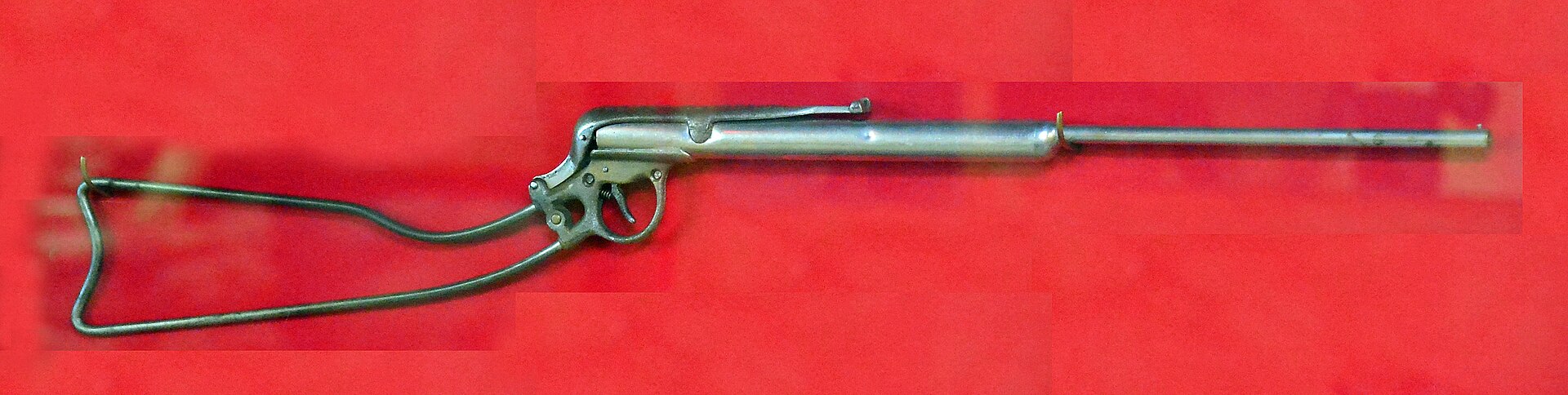
The founding story of Daisy is one of the best-loved origin myths in American manufacturing: a failing windmill company in a small Michigan town, a watchmaker’s clever toy, a manager who fires it into a wastebasket and blurts out a piece of period slang that becomes a brand name. It is a charming story. It is also, on the evidence available, unverifiable — and the shape of that unverifiability is more interesting than the anecdote itself. This volume does two things at once. It lays out what can actually be documented about Plymouth, Michigan between 1882 and 1895, and it walks through why the famous part cannot be nailed down. For a reader in southeast Michigan, this is local history: Plymouth is in Wayne County, roughly twenty-five miles from Detroit, and the company that became the largest maker of BB guns in the world spent its first seventy-six years there.
2.1 A watchmaker and a windmill
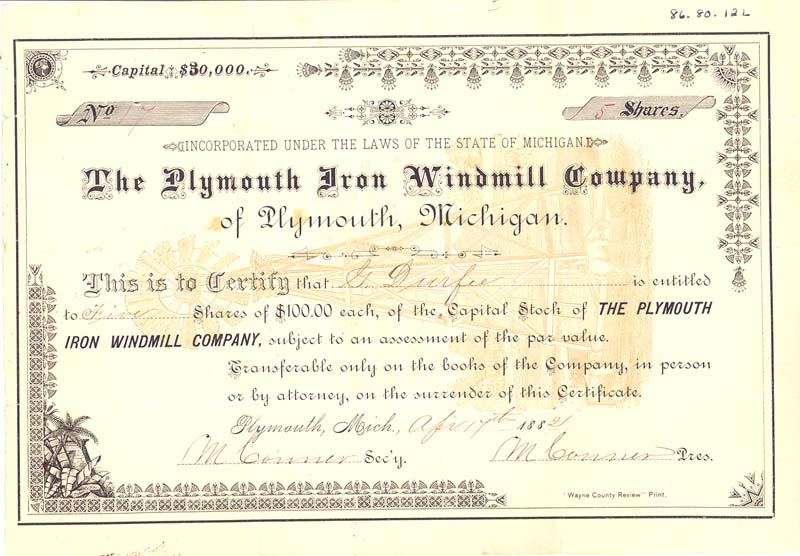
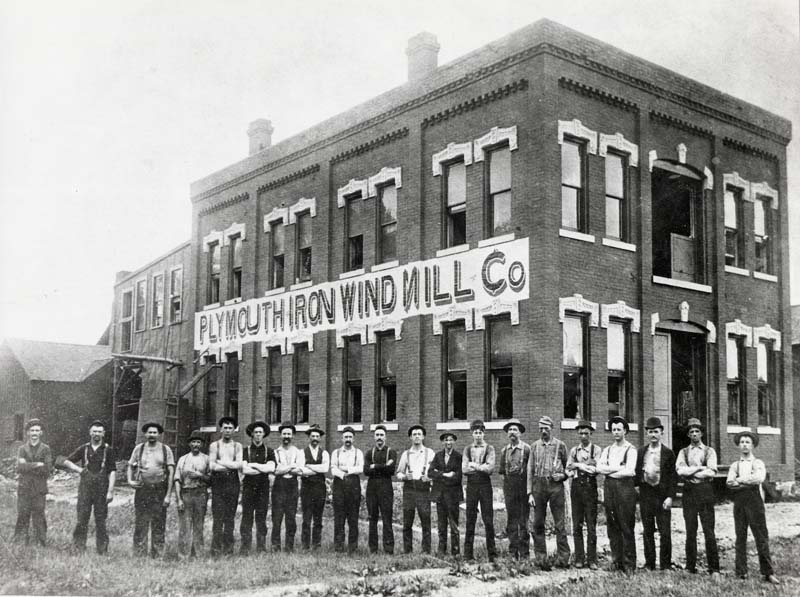
Clarence J. Hamilton was a watchmaker and watch repairman who moved from Ohio to Plymouth in the late 1870s. Around 1880 he invented a vane-less windmill, and in 1882 the Plymouth Iron Windmill Company was organized to manufacture it. The Plymouth Historical Museum’s archival finding aid for the company records states this flatly and without ornament: the firm “was organized in 1882 for the manufacture of an iron windmill invented by Clarence J. Hamilton of Plymouth.”1 That is an independent local-archive description written by people holding the actual records, and it is the strongest single sentence available about the company’s beginning.
Around that spine the secondary sources add detail of varying reliability. The Encyclopedia of Arkansas gives a specific incorporation date of 9 January 1882, and other business-history references put the capitalization at $30,000 in stock; both are worth reporting but neither is archive-backed, so they should be held at medium confidence.23 Hamilton is reported to have built a two-story building of roughly eight thousand square feet for windmill production — widely repeated, but from a single lineage of sources. The Daisy Airgun Museum’s own history is an outlier in dating the start of farm-windmill manufacture to 1884, which most likely reflects first shipments rather than incorporation.4 The reading that reconciles everything is: invention around 1880, incorporation in 1882, volume production by about 1884.
2.2 Why a windmill company needed something else to sell
The windmill did not sell well, and the reason usually given is a mechanical one rather than a commercial one: an all-steel mill was heavy and impractical to haul by wagon across the farm country of southern Michigan, northern Indiana, and Ohio. That explanation is plausible and internally consistent, but it comes through company lore rather than an independent record, so it deserves a hedge.5 By the mid-1880s the business was struggling.
Here the record thins and the folklore thickens. Multiple sources describe a board vote in January 1888 to liquidate the company, defeated because Lewis Cass Hough — the general manager — cast the deciding vote against it.6 No corporate minute book, court filing, or contemporary newspaper account confirming that vote surfaced in the research behind this series. The “one vote saved the company” detail has exactly the dramatic shape a family memoirist supplies, and it should be read as a claim of low-to-medium confidence rather than as a documented event.
2.3 Three Plymouth air-rifle companies, routinely collapsed into one
Before going near the naming story, a correction has to be made that fixes a great deal of downstream confusion. In the late 1880s there were three separate air-rifle concerns operating in Plymouth, Michigan, and secondary sources conflate them constantly.
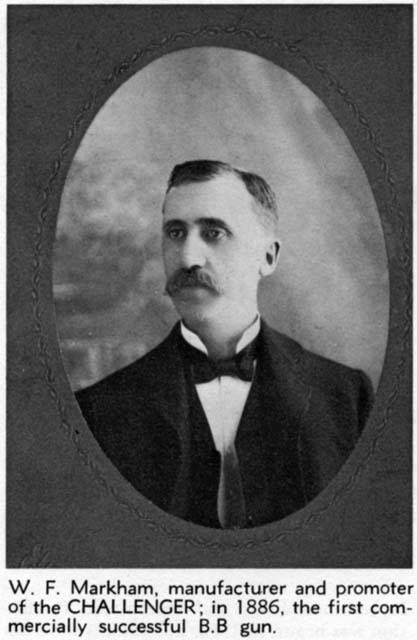
The Markham Air Rifle Company was established in July 1886 and produced the Model 1886 “Chicago,” a largely wooden air rifle. The NRA Museum catalogues it under Markham’s name.7 This is Daisy’s crosstown competitor and its gun — the frequently seen framing that Daisy’s story begins in 1886 is simply the Markham date attached to the wrong firm.
The Plymouth Air Rifle Company was a separate concern that Hamilton himself ran, by Daisy’s own account “around the corner,” making a wooden airgun to compete with Markham before the all-metal design existed. The Blue Book of Gun Values lists Plymouth Air Rifle Company as a distinct maker.89 Wikipedia’s attribution of Daisy’s origin to the Plymouth Air Rifle Company is an error born of these two firms sharing a town, a decade, and a founder.
The Plymouth Iron Windmill Company is the one that becomes Daisy. Hamilton presented an all-metal air rifle to its board on 6 March 1888, and the NRA Museum catalogues the resulting gun as the Daisy Air Rifle Co. Model 1888.10 The all-metal construction is the genuine technical innovation and the reason the story goes the way it does: metal frames could be cast and stamped, which meant they could be made cheaply, identically, and in quantity, while competitors were still cutting and fitting wood. Plymouth in the late 1880s was, briefly, the Detroit of BB guns.
2.4 “Boy, that’s a daisy!”
The claim is this: Lewis Cass Hough test-fired Hamilton’s prototype — into a wastebasket, then through a shingle, depending on the telling — and exclaimed in period slang, “Boy, that’s a daisy!” The word stuck to the product, and eventually to the company.
The name is fact. The anecdote explaining it is folklore, and five separate observations point the same way.
First and most importantly, Daisy itself will not assert it. The company’s own about page prefixes the episode with the words “According to company legend.”11 When a firm declines to state its own founding miracle flatly on its own website, that is the single most informative datum available. Wikipedia hedges the same way with “according to company lore,” and Arkansas’s state tourism site writes that Hough “allegedly” called it a daisy.1213
Second, the quote is unstable across retellings. At least four wordings circulate: “Boy, that’s a Daisy!”, “Boy, it’s a daisy!”, “Boy, Clarence, that’s a daisy!”, and the bare “a daisy.”1112313 Documented utterances — things recorded in minutes, in a letter, in contemporary press — do not drift like that. Folklore does. This is inference rather than proof, but it is strong inference, and it is the classic marker.
Third, the local archive omits the story entirely. The Plymouth Historical Museum’s finding aid abstract, written by professional archivists holding five manuscript boxes of the company’s own records, says only: “In 1888, Hamilton invented the Daisy Air Rifle.” No Hough. No quote.1 An argument from silence is weak in general and meaningful in particular, and this is the particular case where it carries weight: these are the people with the papers.
Fourth, there is a plausible single origin point for the whole tradition. Cass S. Hough — born in Plymouth in 1904, grandson of Lewis Cass Hough, and himself a Daisy president and chairman — wrote the company history It’s a Daisy! in 1976.14 That is a descendant and an executive, writing eighty-eight years after the event, in a book whose title is the quote. Nearly every apparently independent retelling since, including museum, encyclopedia, tourism, and enthusiast sources, runs downstream of it. What looks like corroboration across many sources is largely citation circularity.
Fifth — and this cuts the other way — the word choice is period-plausible. “Daisy” was genuine 1880s American slang for something excellent or first-rate. Whatever happened in that room, nobody had to invent the usage.
Two Houghs get conflated as well, and keeping them apart is worth the effort: Lewis Cass Hough, the general manager of 1888 and the figure in the anecdote, who died in 1902; and Cass S. Hough, his grandson, born 1904, Daisy president by 1938, a USAAF officer in the Second World War, later chairman, and the author of the 1976 history.414 Lewis’s son E. C. Hough served as secretary-treasurer after 1902. Three generations of one family managed this company, which is itself a reason to expect a burnished founding narrative rather than a documentary one.
None of this makes the story worthless. It makes it a different kind of artifact: not a record of what happened in a Michigan machine shop in 1888, but a record of how a family firm chose to remember itself, and of how durable a good sentence can be when nobody has any particular reason to check it.
2.5 The premium, the pivot, and the rename
The companion legend is that the board decided to give an air rifle away free with every windmill purchase, and that farmers turned out to want the gun far more than the mill. Daisy attaches “according to company legend” directly to this decision as well.11 The strategy as such is asserted by the Encyclopedia of Arkansas and by Wikipedia, and premium-with-purchase was a genuinely common American marketing tactic in that period, so the story is commercially plausible.2 What could not be found in the research behind this series is the artifact that would settle it: any surviving 1888-1890 windmill advertisement, catalog page, price list, dealer circular, or invoice actually offering the gun as a premium. Absent that, the premium story rests on the same 1976 memoir lineage as the naming story. The Plymouth Historical Museum’s Record Group 13 is the obvious place to go looking.
The pivot itself is better documented, and it happened in two stages that popular accounts compress into one. The gun went to the board on 6 March 1888. The directors approved air guns as the principal product, phasing out windmills, in January 1889, and by 1889 air-rifle production had essentially replaced iron windmills.3 The formal change of corporate identity came six years later: windmill manufacture ceased and the firm became the Daisy Manufacturing Company in 1895, with one source specifying January of that year.11123
In between, the company began to look like a real business. By 1890 it reportedly employed about twenty-five people producing roughly fifty thousand units a year.4 Charles “Uncle Charlie” Bennett was hired as the first salesman in 1891 and is said to have secured a ten-thousand-unit order from a Chicago distributor within two days — a figure that has the same sales-legend cadence as the wastebasket and deserves the same skepticism.4 Bennett did become general manager after Hough’s death in 1902 and led the company for a very long time.
So: a Michigan windmill firm, organized in 1882 to build a product nobody could conveniently haul home, was saved by a watchmaker’s toy and formally renamed after it in 1895. That much is on the record. The sentence everyone remembers is not.
2.6 Bibliography
Footnotes
-
Plymouth Historical Museum, Record Group 13 — Daisy Manufacturing Company finding aid. https://plymouthhistory.org/wp-content/uploads/2024/08/RG-13-Daisy-Manufacturing-Company-Finding-Aid.pdf (confidence: high; independent local-archive description, not company PR). ↩ ↩2 ↩3
-
Encyclopedia of Arkansas, “Daisy Outdoor Products.” https://encyclopediaofarkansas.net/entries/daisy-outdoor-products-2735/ (confidence: medium on the 9 January 1882 incorporation date). ↩ ↩2 ↩3
-
Encyclopedia.com, “Daisy Outdoor Products, Inc.” https://www.encyclopedia.com/books/politics-and-business-magazines/daisy-outdoor-products-inc (confidence: medium; source of the $30,000 capitalization, the January 1889 board decision, the January 1895 rename, and one variant of the quote). ↩ ↩2 ↩3 ↩4
-
Daisy Airgun Museum, history page. https://daisymuseum.com/history/ (confidence: medium; company-adjacent, and the source of the 1884 outlier date, the 1890 employment/production figures, and the Bennett story). ↩ ↩2 ↩3 ↩4
-
Daisy, “About Us.” https://daisy.com/about-us/ (confidence: medium on the haulage explanation; sourced to company lore). ↩
-
Wikipedia, “Daisy Outdoor Products.” https://en.wikipedia.org/wiki/Daisy_Outdoor_Products (confidence: low-medium on the January 1888 liquidation vote; no primary corroboration found). ↩
-
NRA Museum, Markham Air Rifle Company Model 1886 air rifle. https://www.nramuseum.org/guns/the-galleries/for-the-fun-of-it/case-48-airguns/markham-air-rifle-company-model-1886-air-rifle.aspx (confidence: high). ↩
-
Daisy, “About Us” — the Plymouth Air Rifle Company as a separate Hamilton venture. https://daisy.com/about-us/ (confidence: medium-high). ↩
-
Blue Book of Gun Values, Plymouth Air Rifle Company. https://bluebookofgunvalues.com/airguns/manufacturers/plymouth-air-rifle-company (confidence: medium-high; lists it as a distinct maker). ↩
-
NRA Museum, Daisy Air Rifle Co. Model 1888 air rifle. https://www.nramuseum.org/guns/the-galleries/for-the-fun-of-it/case-48-airguns/daisy-air-rifle-co-model-1888-air-rifle.aspx (confidence: high). ↩
-
Daisy, “About Us” — uses the phrase “According to company legend” for both the naming and the windmill-premium decision. https://daisy.com/about-us/ (confidence: high; this hedge is the single most important datum in this volume). ↩ ↩2 ↩3 ↩4
-
Wikipedia, “Daisy Outdoor Products” — “according to company lore.” https://en.wikipedia.org/wiki/Daisy_Outdoor_Products (confidence: high on the hedge). ↩ ↩2
-
Arkansas.com, “The Story of Daisy BB Guns: 10 Things to Know” — Hough “allegedly” called it a daisy. https://www.arkansas.com/plan-your-trip/plan/trip-ideas-itineraries/the-story-of-daisy-bb-guns-10-things-to-know (confidence: high on the hedge). ↩ ↩2
-
Cass S. Hough, It’s a Daisy! (1976; 30th-anniversary reprint 2006). Authorship and date confidence: high; the inference that this is the propagation point for the anecdote: high but inferential. Biographical details via https://daisymuseum.com/history/ (confidence: medium-high). ↩ ↩2
Comments (0)