Hand Mortars · Volume 15
Law, Safety and the Verdict
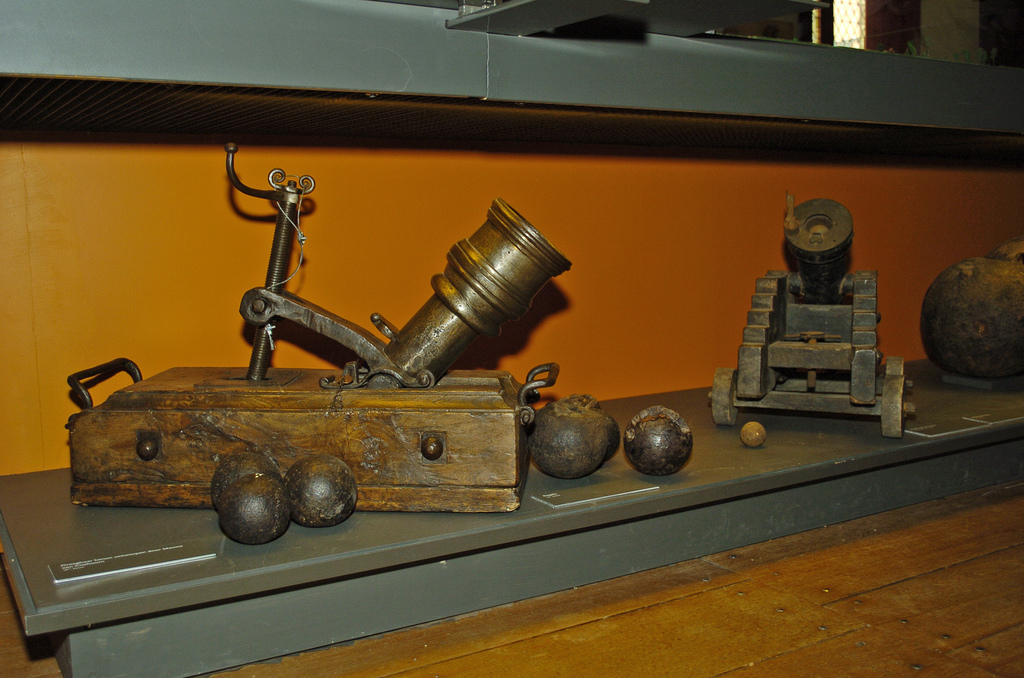
None of this is legal advice. It is a map of where the questions are, drawn from the statutes and ATF’s own published positions, so that you know what to ask a lawyer and what to ask ATF. For a Michigan shooter, both the federal and the Michigan answers matter.
15.1 The gun
Read § 5845(f) cold and a hand mortar looks like a problem. A destructive device includes any weapon that expels a projectile by the action of an explosive and has a bore of more than one-half inch. A 2½ inch bore is five times that.
Two things pull it back.
First, the antique exemption. Muzzleloading arms manufactured in or before 1898, and replicas thereof, that are not capable of firing fixed ammunition, are antiques and fall outside both the Gun Control Act and the National Firearms Act. ATF applies this expressly to muzzleloading cannon - which is the closest analogue on the books to a big-bore muzzleloading launcher.
Second, and more directly, § 5845(f)(3) excludes:
any device which is neither designed nor redesigned for use as a weapon … [and] any device, although originally designed for use as a weapon, which is redesigned for use as a signaling, pyrotechnic, line throwing, safety, or similar device.
That is the statute naming, in order, three of the four historical uses of a hand mortar. Volume 6 is not a curiosity; it is the legal argument.
The practical read: a muzzleloading, black-powder, non-fixed-ammunition hand mortar used to throw inert balls or commercial pyrotechnics sits in the same place as a muzzleloading cannon or a signal mortar. If you care about the answer, get it in writing. An ATF classification letter is free, it is specific to your item, and it is the only thing worth relying on. Send them photographs, dimensions, chamber and bore, and a description of intended use.
15.2 The projectile - this is the actual line
Everything above concerns the tube. The tube is the easy part.
A grenade is itself a destructive device under § 5845(f)(1), independently of what launches it. Making one is a federal felony without the appropriate registration and explosives licensing. There is no antique exemption for a bomb. There is no “it’s a reproduction” argument for a bomb.
SOLANCO on the Muzzleloading Forum said it as well as anyone will:
I am a fan of explosive projectiles. But not enough of a fan to serve prison time for it.
So the rule for this dive, stated once and meant:
- Inert projectiles. Tennis balls, lacrosse balls, wads.
- Commercially manufactured, legally purchased consumer fireworks.
- Nothing else. No shell you built, no charge you compounded, no fused ball of any description.
Note that the fused-tennis-ball reenactment load in Volume 13 is described there as documented historical practice and not as a recommendation, for exactly this reason and for the flour-dust reason WKD raised in the same conversation.
15.3 Black powder
ATF’s position: commercially manufactured black powder in quantities not exceeding 50 pounds is exempt from the explosives regulations when intended solely for sporting, recreational or cultural purposes in antique firearms. That covers ordinary muzzleloading practice. Storage above that threshold, or powder held for other purposes, is a different conversation.
15.4 Michigan fireworks law
The Michigan Fireworks Safety Act, MCL 28.451 et seq.
- Consumer fireworks are legal in Michigan. Local governments may adopt ordinances restricting dates and times, but may not prohibit use during a statutory list of windows.
- The protected windows for 2026, all 11:00 a.m. to 11:45 p.m. unless noted:
- the Saturday and Sunday before Memorial Day
- June 29, July 1, July 2, July 3 and July 4
- July 5, only if it falls on a Friday or Saturday
- the Saturday and Sunday before Labor Day
- New Year’s Eve from 11:00 a.m. until 1:00 a.m. on New Year’s Day
- Location: no consumer fireworks on public property, school property, church property, or the property of another person without that person’s or organisation’s express permission. Streets, roads and public parks are out.
- Check your township or city ordinance. Michigan defers the calendar to local government, so the statutory windows are a floor, not the whole answer.
15.5 Range and event realities
- Reenactment events generally prohibit launching any projectile. Grenadier1758: “be aware that the launching of a projectile is usually prohibited. Similar grenades used at a tactical reenactment caused great consternation among the safety officers.” If you want to demonstrate one, clear it with the event well in advance and expect a no.
- Private land, cleared downrange area, water on hand, two-person crew. Volumes 13 and 14 have the detail.
- Insurance. Worth a phone call before the first shot, not after.
15.6 The verdict
15.6.1 Should you own one?
Yes, if you want an object with a genuinely strange history that almost nobody knows about, that is the direct ancestor of the M79, that connects a siege trench to a queen’s fireworks display, and that will be the only one at any event you take it to.
15.6.2 What should you actually buy?
Table 1 — What should you actually buy?
| If your goal is | Buy | Cost |
|---|---|---|
| To own the history | An original at auction. Rock Island is the realistic US route; do Volume 10’s five checks | $6,500-$9,500 for a good one |
| To shoot one this year | Veteran Arms finished repro, or Loyalist Arms if you want it inspected and the touch hole drilled first | ~$790 new; ~$750-$1,495 used |
| To build one | The Rifle Shoppe 819, parts set with the assembled lock | $1,275 |
| To build the hard way | The Rifle Shoppe 819 with lock castings | $975 |
| The best finished object | A custom build on a Ben Coogle bronze barrel | ~$1,400 documented |
And the specific recommendation for the plan above - buy originals, build a couple from kits - is that this is the right approach for this particular object, more so than for most. An original hand mortar has an unknown three-hundred-year service history, a thin bronze muzzle wall, and frequently a cracked hammer neck. It should hang on the wall. The reproduction is the one that gets planted in the ground on the third of July.
Order the 819 parts set with the assembled lock and the Veteran Arms gun at the same time. The Veteran Arms will arrive first - eventually - and it will teach you what the object does while the parts set is still in the queue.
15.6.3 The five things to remember
- Butt on the ground, not on the shoulder. Volume 5. One reenactor has already run the experiment for you.
- Never pre-light a fuse; fuse points away from the charge. The blow-by does the work, and it has since 1650.
- 80 to 120 grains for a modern repro with a light ball. Start at 60 and work up. Measure your own ranges - the published figures disagree by a factor of three.
- The line is the projectile, not the gun. Inert or commercial. Never anything you built.
- Date the lock, not the caption. The frizzen bridle told the truth about the “1780 Moynat” when the label did not.
Sources
26 U.S.C. § 5845(f), and § 5845(f)(3) in particular; 27 CFR § 479.11; ATF, Black Powder guidance and Top 10 Frequently Asked Firearms Questions; Michigan Fireworks Safety Act, MCL 28.451 et seq., MCL 28.454 and MCL 28.462; the Muzzleloading Forum threads 113282, 113322, 113803 and 174346 (Grenadier1758, WKD, SOLANCO, dave_person); The Rifle Shoppe catalog page 819; veteranarms.com; mg34.com; Rock Island Auction lot 1173.
Comments (0)