Hand Mortars · Volume 14
Firing Fireworks From a Hand Mortar
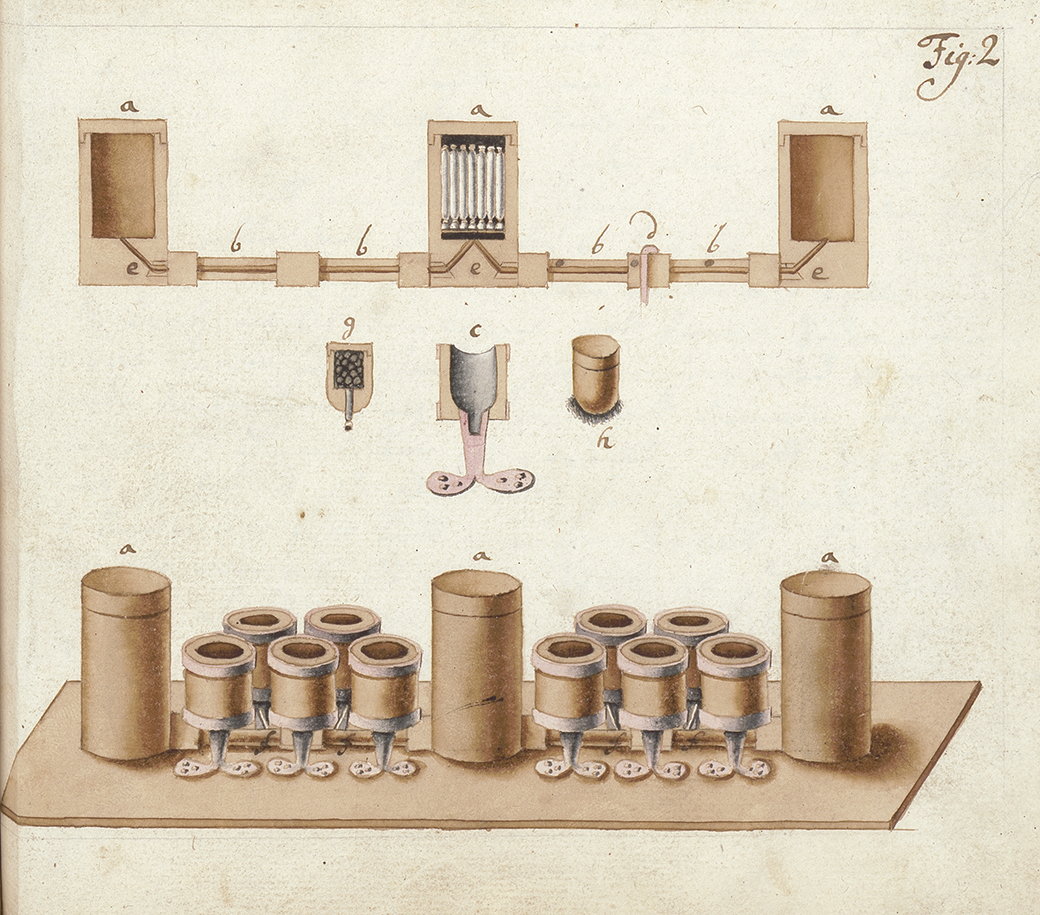
That plate is a hand mortar’s family portrait. Ten small tubes on a board, fuse-trained to fire in sequence, throwing light shells for a display - and each of those tubes, given a shoulder stock and a lock, is the gun this dive is about.
This is the use that has an unbroken three-hundred-year history, the use the statute explicitly recognises, and the use that a reproduction hand mortar is genuinely good at. It is also the use that most deserves detail, so it gets it here.
14.1 The ground rules, once, at the top
Commercially manufactured, legally purchased consumer fireworks only. Nothing homemade. Nothing modified. No shell you built, no lift charge you compounded, no fuse you improvised.
This is not squeamishness. It is that the moment a projectile contains an explosive charge and a fuse, it stops being a firework and becomes something the federal government has a specific and unforgiving name for. Volume 15 covers exactly where that line sits. Staying on the legal side of it also happens to be the safe side, which is not a coincidence.
The historical reenactment practice of a fused tennis ball packed with powder and flour is described in Volume 13 as history. It is not what this volume is about.
14.2 Why a hand mortar suits this at all
Three reasons, and they are all consequences of the anatomy in Volume 4:
The bore is right. At 2½ inches it is in the same family as the tubes consumer reloadable shells are made for. That is not luck - consumer shell sizing descends from the same tradition the hand mortar came out of.
The stepped chamber protects the shell. A paper shell sitting directly on a full-bore charge would be crushed before it moved. The high-low chamber, which exists so the gun could throw a hollow iron grenade without deforming it, does exactly the same job for a paper case. This is the single most important reason a hand mortar works for this and an improvised pipe does not.
It is aimable and it is portable. A stocked, ground-braced launcher with a lock lets you set an elevation, hold it, and fire on command. A tube in a rack does not.
14.3 What you can put in it
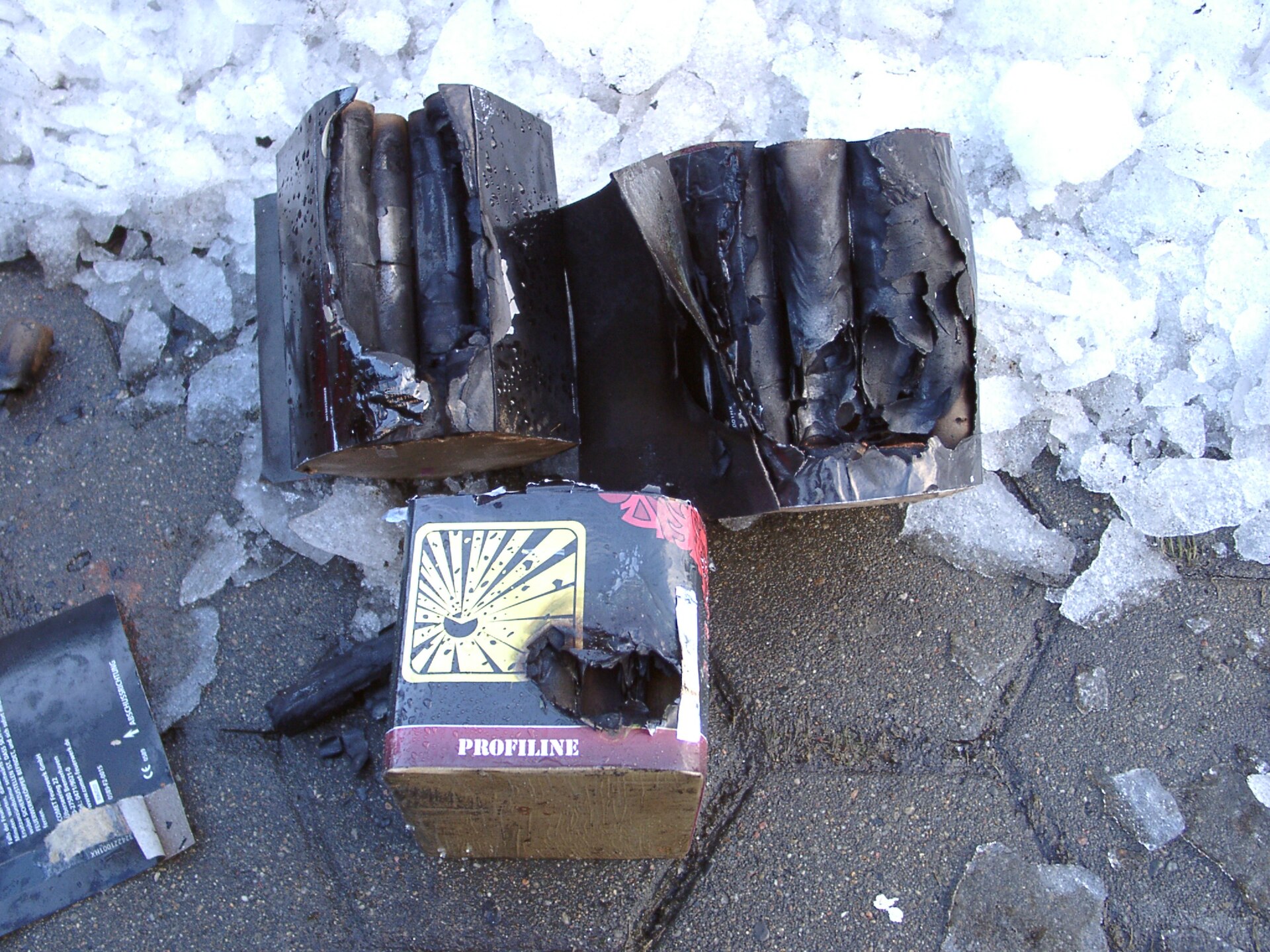
That photograph is worth studying because it shows what consumer pyrotechnics are actually made of: thick-walled paper tubes, glued into a base, each holding a lift charge and a shell. It is a disposable mortar battery. Everything about how it works is the same as your gun, minus the bronze and the lock.
Reloadable artillery shells - the kind sold as a box of shells plus a tube - are the natural fit. They are designed to be dropped into a tube and lifted by a charge, the shell diameter is matched to a standard tube size, and each shell arrives with its own lift charge attached and its own fuse.
Sizing matters, both ways. A shell too small for the bore will let the lift gas blow past it and go nowhere. A shell that has to be forced is worse. Measure the bore of your gun with calipers before you buy anything, and match the shell to it. If your gun’s bore falls between standard shell sizes, that is a reason to reconsider, not a reason to improvise.
The one contemporary voice on this is WKD on the Muzzleloading Forum, describing what an experienced hand-mortar shooter does with fireworks: “If you like to live dangerously try fireworks ‘carnival’ balls the kind you drop in a tube but make sure you load with the fuse facing away and let the main charge ignite them and shoot them off at night.”
Note the two conditions in that sentence, because they are the whole technique.
14.4 Fuse orientation - the rule that carries over
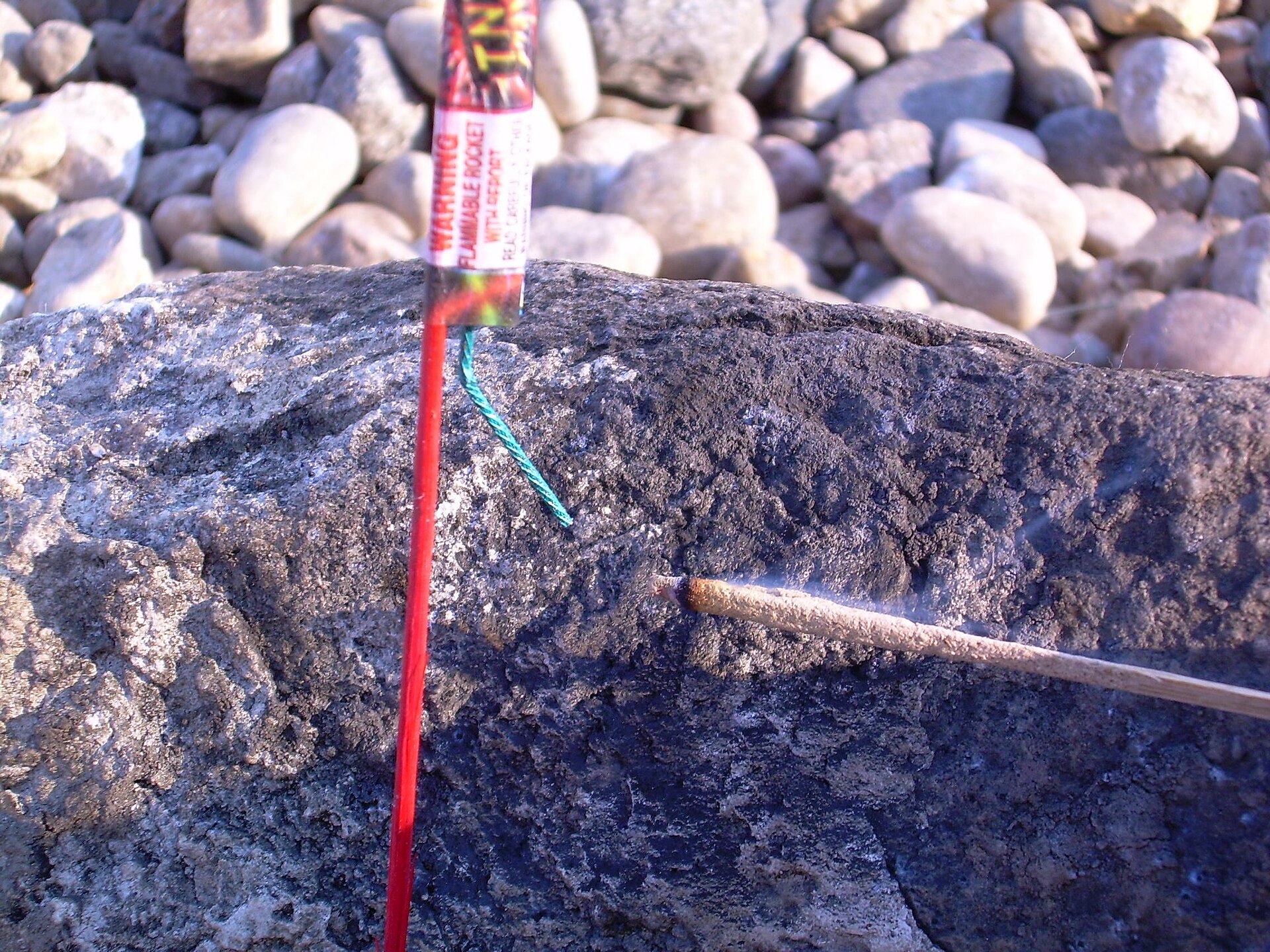
Fuse away from the launching charge. Always. This is the same rule as Volume 5’s grenade rule and for the same physical reason: the launching charge’s blow-by lights the fuse as the projectile leaves the cup, and if the fuse is pointed at the charge, the blast can drive it into the shell and function it in the bore.
Both of the practitioners quoted in this dive - WKD on fireworks, Grenadier1758 on grenades - independently give the same instruction. It is not a stylistic preference.
And you do not light anything by hand. The charge lights the shell. That is what a mortar does. The green visco in the photograph above is what your shell will arrive with; on a hand mortar it is there to be ignited by blow-by, not by a punk.
14.5 The drill
Everything from Volume 13 applies, plus these:
- Fire at night, in a place you have walked in daylight. WKD’s “shoot them off at night” is not just for effect: you cannot track a shell you cannot see, and you cannot spot a dud where it lands.
- Bore clear, and cool. Between shots, check the bore for burning residue. Consumer shells shed paper and it stays lit. The eighteenth-century advice to shake out debris between rounds still applies, and it applies more to a gun you are holding.
- Charge in the chamber, measured. Start conservative - a consumer shell comes with its own lift charge and needs far less help than a lacrosse ball. Work up only if it is genuinely not clearing.
- Shell in, fuse up and out.
- Butt planted, angle set, body clear of the axis. Straight up is not the answer. A near-vertical shot puts the burst - and the fallout - over your own head. Angle it downrange over the clear area, the way the eighteenth-century batteries in the lead figure are canted.
- Fire, and watch it all the way. Note where the burst happened and where anything came down.
- Between rounds, wait. Consumer practice is to allow at least three-quarters of a minute before reloading a tube. On a bronze gun that heats and holds heat, wait longer.
14.5.1 Duds
Do not look into the muzzle. Do not tip it toward you. Do not go and pick up a dud that has landed.
For a shell that does not fire: wait a full minute at minimum with the muzzle in a safe direction, then, without putting any part of yourself over the bore, roll the shell out the way Volume 13 describes for an inert ball. If it will not come, leave the gun where it is, pointed safely, and wait considerably longer before doing anything else.
For a shell that launched and did not burst: mark where it went and deal with it in daylight, soaked.
14.6 The setup
- A firing position with a hundred yards of clear ground downrange, minimum, and more overhead. You are launching something that bursts and then rains.
- Water on hand. A bucket and a hose, not a bottle.
- No dry grass, no overhanging trees, no roofs. The lesson from Warwick in 1572 - fireworks flying “into the midst of the town to the great peril and fear of the inhabitants” - has been available for four hundred and fifty years and gets relearned every summer.
- Nobody downrange, and nobody beside the shooter except the loader.
- Eye protection, ear protection, gloves, cotton or wool. Not fleece.
- Everything not being fired stays boxed and closed, away from the firing point. Consumer fireworks are supposed to stay in their original packaging until they are used, and mixing product from different packages is how people get surprised.
14.7 Michigan, specifically
For shooters in Michigan, the Michigan Fireworks Safety Act sets the calendar. Volume 15 gives the full statutory detail; the short version for planning a shoot:
- Consumer fireworks are legal, and local governments may restrict dates and times but may not prohibit them on a statutory list of days.
- For 2026 those protected windows are 11:00 a.m. to 11:45 p.m. on the Saturday and Sunday before Memorial Day; June 29 and July 1, 2, 3 and 4; July 5 if it falls on a Friday or Saturday; and the Saturday and Sunday before Labor Day - plus New Year’s Eve from 11:00 a.m. until 1:00 a.m.
- Not on public property, school property, church property, or anyone else’s property without express permission. Not on streets, roads or in public parks.
- Check the township or city ordinance. Michigan hands dates and times to local government.
Which, for a private range on private land on the third of July, is a workable answer.
14.8 The picture you are after
The eighteenth-century plate at the top of this volume shows a battery firing in sequence into a night sky. The design drawing in Volume 8 shows what the audience saw. The Girandola at Castel Sant’Angelo shows what everyone was aiming at.
A single stocked mortar, planted in the ground, throwing one shell at a time, is the small end of that tradition - and it is the end an individual can actually stand behind.
Sources
The Muzzleloading Forum threads 113803 and 113322 (WKD, Grenadier1758, Glenn Osborne); Forgotten Weapons, “Flintlock Hand Mortar”; Rock Island Auction lot 1173; eighteenth-century firework construction plates via the National Archives; Skylighter and consumer-fireworks reloadable-shell practice; Michigan Fireworks Safety Act, MCL 28.451 et seq., 28.454 and 28.462; Stratford Observer, “Historic fireworks in Warwickshire.”
Comments (0)