LiPo Batteries · Volume 1
Why a Battery, and Which Chemistry
What a pack changes in a recoil light gun, and the four chemistries a builder can choose from: LiPo pouch, Li-ion cylinder, LiFePO4 and NiMH, with the numbers from their own datasheets
A wired recoil light gun takes its kick from a wall brick. The brick is sized so that one solenoid pulse sits below the bottom of its over-current trip band, and the gun’s whole power design follows from that one constraint (Power Supplies Vol 2). Put a battery in the gun instead and almost every one of those constraints changes sign. This volume says what changes, which of the planned builds need a pack at all, and which battery chemistry is worth considering, using each chemistry’s own datasheet numbers rather than forum folklore.
1.1 What a Battery Changes
The supply stops being the limit. A 60 W brick is a current limit with a cable attached. A small lithium pack is the opposite: the 450 mAh 6S pack this dive ends up recommending is labelled 80C, which is a nominal 36 A, against a regulated coil current of 1 to 2.5 A (Solenoid Recoil Vol 8). The trip band that shapes every brick decision is gone. What limits sustained autofire on a battery is the coil’s own heating (Solenoid Recoil Vol 4), so the firmware’s thermal cut-off matters more on battery than on a brick, not less.
The safety device disappears with it. Ultimarc’s AimTrak documentation relies on the brick’s current limit as its protection (Power Supplies Vol 1). A pack offers no such limit. A short anywhere after the pack is fed by a source that can push well over 100 A (Volume 3), so a fuse and a pack protector are not optional in a battery gun (Volume 4).
Energy is plentiful; volume is not. Volume 3 works the numbers: even the smallest common 6S pack holds roughly 30,000 to 45,000 shots’ worth of energy at the solenoid energies the Solenoid Recoil model gives. A light gun is not a drone. The pack is chosen for its voltage window and its size, not its capacity or its C rating.
The rail floats. A battery-fed coil rail has no connection to mains earth. The ground-shift mechanism behind most “the gun resets when it fires” reports (Power Supplies Vol 5) needs a second return path through an earthed brick and the PC; a pack removes one end of it.
Regenerated energy has somewhere to go. When the regulated stage coasts at the end of a shot, the coil returns its stored energy, about 0.06 J in the Solenoid Recoil model, to the rail (Reference Electronics Vol 5). A brick cannot sink it, so the board’s bulk capacitor takes it. A pack can absorb it, unless the pack protector has opened its charge switch (Volume 4).
The gun becomes a lithium-battery product. A pack has to be charged, stored, kept away from heat and puncture, and, if a kit is ever sold, shipped under the dangerous-goods rules (Volume 7).
1.2 Which Builds Need One
The category plan has three connectivity architectures, each its own dive (plan decision 3):
Table 1 — The category plan has three connectivity architectures, each its own dive (plan decision 3)
| Architecture | Data | Recoil power | Needs a pack? |
|---|---|---|---|
| Fully Wired | USB | 24 V brick, through one GX plug at the magazine base plate (D31) | No |
| Wireless Power Only | USB cable | Pack in the gun | Yes, recoil only |
| Fully Wireless | Radio (the ESP32-S3 dongle trial, D25) | Pack in the gun | Yes, recoil and logic |
The first build is wired: the printed MP7 (D35) on the 24 V brick (D14, D17). So this dive is not on the first build’s critical path. It exists so that the pack can be designed in now, as a space and a set of decisions, rather than squeezed in later. The carrier board’s V_SOL net already takes 18 to 28 V from anywhere (Reference Electronics Vol 8); a pack that sits in that window drops onto the same net as the brick.
In the wireless-power-only build, the Pico still runs from USB and only the coil and port stages run from the pack. In the fully wireless build, the pack also feeds the logic, through a small buck regulator (Volume 3).
1.3 Four Chemistries in One Table
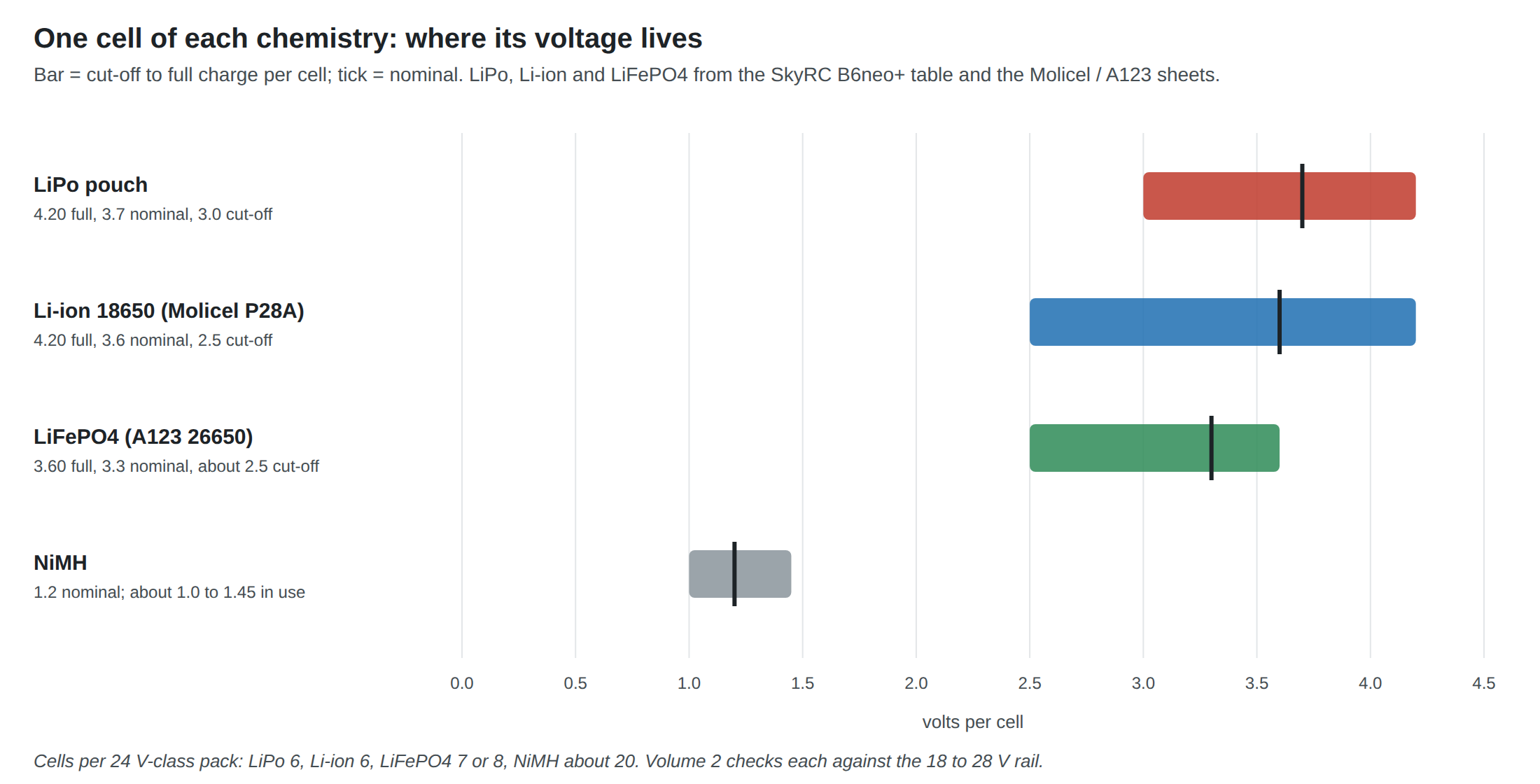
Table 2 — 1.3 Four Chemistries in One Table
| LiPo pouch | Li-ion cylinder | LiFePO4 | NiMH | |
|---|---|---|---|---|
| Example used here | GNB and Tattu 6S hobby packs | Molicel INR-18650-P28A | A123 ANR26650M1-B | generic |
| Nominal, per cell | 3.7 V | 3.6 V | 3.3 V | 1.2 V |
| Full charge, per cell | 4.2 V (4.15–4.25 settable) | 4.2 V | 3.6 V (3.58–3.70 settable) | not a voltage-terminated charge |
| Cut-off, per cell | 3.0 V | 2.5 V (datasheet) | about 2.5 V; not in the 2011 sheet | about 1.0 V |
| Storage, per cell | 3.75–3.90 V | 3.70–3.85 V | 3.25–3.40 V | — |
| Cells for a 24 V-class pack | 6 | 6 | 7 or 8 | about 20 |
| Case | soft pouch, heat-sealed foil | steel can with vent | steel can | steel can |
| Energy, from the examples | 125–130 Wh/kg (whole pack, label Wh over listed mass) | 219 Wh/kg (cell, datasheet) | about 109 Wh/kg (2.5 Ah × 3.3 V over 76 g) | — |
Nominal, settable charge and storage voltages are from the SkyRC B6neo+ manual’s “Standard Battery Parameters” table, which is what a hobby charger actually applies.1 The Li-ion figures are the Molicel data sheet’s;2 the LiFePO4 figures A123’s.3 The LiPo energy figures are computed from the two packs’ labels and listed masses (Volume 7). They are whole-pack figures including wires and wrap, so they are not comparable with the cell-only Li-ion figure, which is the point: a small pouch pack carries proportionally more packaging.
1.4 LiPo Pouch Packs
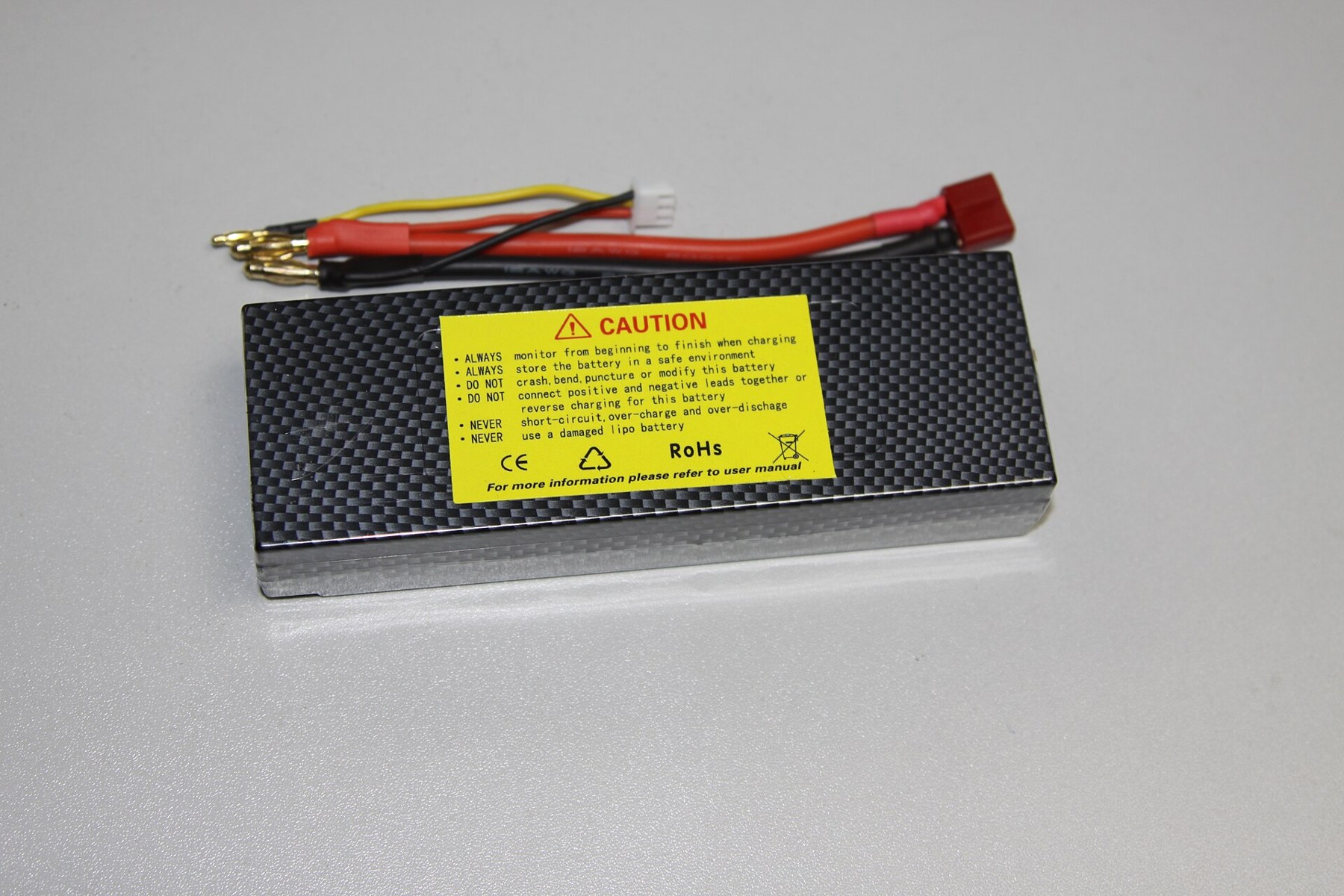
The hobby “LiPo” is a lithium-ion cell in a heat-sealed foil pouch instead of a metal can. Grepow, a pouch-cell maker, gives the standard figures plainly: “The charging cut-off voltage of the 3.7V battery is 4.2V”, and “the discharge cut-off voltage is 3.0V”.4 Hobby packs are built from cells in series (the “S” count) with a main lead (XT30 on the small packs) and a balance lead carrying every cell junction, so the charger can see and equalise each cell.
What makes them attractive here:
- They are made in exactly the right size class. The FPV drone market builds 6S packs of 450 to 650 mAh for small quadcopters. A 6S pack is the one cell count that sits in the 24 V-class rail without a converter (Volume 2), and a “long type” 6S 450 mAh pack is 17 mm thick (Volume 7).
- They are cheap and stocked. About $24 to $25 for a 6S 450 to 650 mAh pack, as of 19 October 2026 (Volume 7).
- Their current ratings are irrelevant. They are built to deliver tens of amps. Volume 3 shows the light gun asks for a few.
What counts against them:
- No protection inside. A hobby pack is bare cells and wires: no fuse, no over-discharge cut-off, no temperature sensing. All of that has to be in the gun (Volume 4).
- The pouch is the enclosure. A foil pouch has no vent and no crush strength. Over-charge “causes lithium plating, gas generation, swelling, overheating, accelerated aging”,4 and the gas inflates the pouch. A swollen pouch is a retired pouch (Volume 6).
1.5 Li-ion Cylindrical Cells
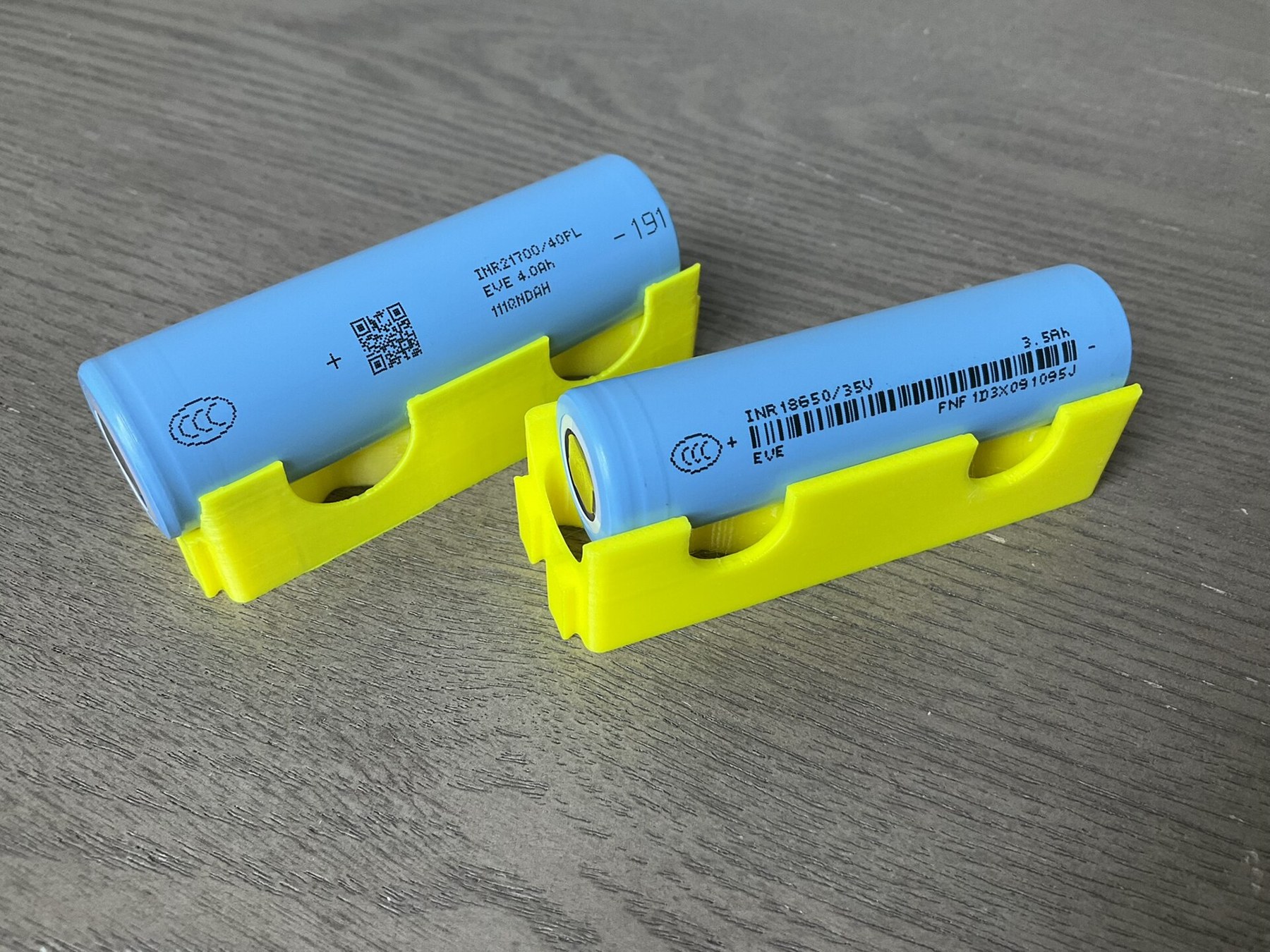
The cylindrical cell is the same chemistry family in a steel can with a crimped cap, a vent and, in most cells, a current-interrupt device. Molicel’s INR-18650-P28A is a good reference because its data sheet is short and complete:2
Table 3 — 1.5 Li-ion Cylindrical Cells
| Parameter | Molicel INR-18650-P28A |
|---|---|
| Capacity | 2800 mAh typical, 2700 mAh minimum (10.3 / 9.56 Wh) |
| Voltage | 3.6 V nominal; charge to 4.2 V; discharge to 2.5 V |
| Charge current | 2.8 A standard, 8.4 A maximum |
| Discharge current | 35 A maximum |
| Internal resistance | 20 mΩ maximum at 1 kHz; 20 mΩ DC (10 A, 1 s) |
| Temperature | charge 0 to 60 °C; discharge −40 to 60 °C |
| Size and mass | 18.6 mm maximum diameter, 65.2 mm maximum height, 46 g |
| Energy density | 589 Wh/l, 219 Wh/kg |
Six of these in series make a 6S1P pack of 61.8 Wh, six times what the gun needs (Volume 3), and six 18 × 65 mm cylinders are a lot harder to place in an MP7 than one flat pack (Volume 6). The cylinder’s advantages are mechanical and supply-chain ones: a can resists a crush, vents in a controlled direction, and comes with a manufacturer’s data sheet and a UN 38.3 test summary, which matters for a kit (Volume 7). A cylindrical pack is a pack someone has to build: spot-welded nickel strip, a protector board and a holder. That is a lab task the bench can do, not a purchase.
One trap: the cell’s 2.5 V floor is below what the rail needs. Six cells at 2.5 V is 15 V, under the rail’s 18 V floor, so a 6S Li-ion pack in this gun is stopped at 3.0 V per cell by the gun, not at 2.5 V by the cell (Volume 2).
1.6 LiFePO4
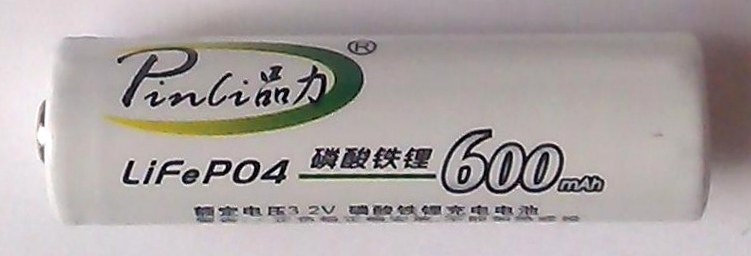
Lithium iron phosphate trades energy for robustness. A123’s ANR26650M1-B data sheet (MD100113-01, 2011) gives 2.5 Ah at 3.3 V nominal, charging “1C to 3.6V CCCV”, 70 A continuous and 120 A for 10 seconds, more than a thousand full-depth cycles at a 10C discharge, in a 26 × 65 mm can of 76 g.3 That is about 109 Wh/kg, half the Molicel cell’s. The phosphate cathode is the reason the chemistry is favoured where abuse tolerance matters; A123’s own headline is “excellent abuse tolerance”. This dive repeats that as the maker’s claim, not as a measured comparison.
Two properties decide whether it suits a light gun:
- The voltage is flat. Most of a LiFePO4 cell’s discharge happens on a plateau near its nominal voltage, which is attractive for a fixed-voltage solenoid drive. Under the regulated stage (D13) a flat rail matters much less, because the kick is set by current, not voltage (Solenoid Recoil Vol 8).
- The cell count is awkward. At 3.3 V nominal, 24 V-class means seven or eight cells, and Volume 2 shows that only seven fit the 18 to 28 V window, with a cut-off of 2.6 V per cell. Common hobby chargers stop at 6S (Volume 5).
The cut-off voltage did not appear in the A123 sheet revision read for this dive; 2.0 to 2.5 V is the figure retailers and older sheets carry, and the SkyRC charger’s LiFe discharge range is 2.6 to 3.0 V per cell.1
1.7 NiMH
NiMH is 1.2 V per cell nominal.1 A 24 V-class pack is about twenty cells, which is roughly the volume of the whole printed MP7’s spare space before anything else goes in. NiMH’s charge is ended by detecting the cell’s own behaviour (a small voltage drop or a temperature rise), not by a voltage limit, so it cannot simply be topped up from a fixed rail. It appears in the MP7 world only as the 7.2 V stick battery of the Tokyo Marui and Sport electric donors (MP7 Donor Build Vol 1), where it drives a 7.2 V motor and would need a boost converter to reach the recoil rail. It is listed here to be ruled out.
1.8 What the Choice Turns On
Four questions decide the chemistry, and Volumes 2 to 6 take them in turn:
- Does the pack’s voltage window sit inside 18 to 28 V without a converter? 6S LiPo and 6S Li-ion do; 7S LiFePO4 does with a 2.6 V cut-off; everything else needs a boost converter or breaks the 28 V ceiling (Volume 2).
- Can it deliver the pulse without a sag that costs kick? All of them can, by a wide margin (Volume 3).
- Can it be protected and charged with parts and chargers that exist? 6S is the top of every common hobby charger’s range; 7S is not (Volumes 4, 5).
- Does it fit, and is it safe, inside a PETG shell near a hot coil? This is the hardest one and it is not settled until the magazine is measured (Volume 6).
The short answer, argued in full in Volume 7, is a 6S LiPo pouch pack of about 450 mAh for the first battery build, behind a fuse, a pack protector and a soft-start rail switch, charged out of the gun on a bench charger.
1.9 What This Dive Covers, and What It Leaves to Others
Table 4 — 1.9 What This Dive Covers, and What It Leaves to Others
| Volume | Subject |
|---|---|
| 1 | Why a battery, and the four chemistries (this volume) |
| 2 | Cell count against the 24 V-class rail: 5S, 6S, 7S, LiFePO4, and the boost alternative |
| 3 | Current, C rating, sag and runtime, with worked numbers |
| 4 | Protection: fuse, pack protector, rail switch, temperature |
| 5 | Charging: out of the gun, through the gun, and over USB-C PD |
| 6 | A pack inside a printed gun: failure modes, heat, venting, storage, and where it fits in the MP7 |
| 7 | The picks with prices, the bench procedure, and shipping packs in a kit |
Owned elsewhere and linked, not repeated: wall bricks, boost converters and capacitor banks (Power Supplies); the coil, its currents and its heat (Solenoid Recoil); the regulated stage and the carrier (Reference Electronics); the gun’s internal layout (MP7 Printed Build); PD contracts and trigger chips (USB-C Power Delivery, planned); the rumble motor (Motors and Rumble) and the port actuator (Moving Ejection Port); and the law of selling a kit (Licensing, IP and Kits, planned).
Footnotes
-
SkyRC, B6neo+ Instruction Manual, v1.20, “Standard Battery Parameters” and warnings. https://cdn.shopify.com/s/files/1/1052/4162/files/B6neo_Instruction_Manual.pdf (read 2026-10-19). ↩ ↩2 ↩3
-
Molicel, Product Data Sheet, Lithium-Ion Rechargeable Battery, Model INR-18650-P28A, copy hosted by Rose Batteries, https://www.rosebatteries.com/hubfs/INR18650P28A-V2-80093.pdf (read 2026-10-19). Another revision circulating gives a 2600 mAh minimum and 6.0 A maximum charge; this dive uses the sheet read. ↩ ↩2
-
A123 Systems, Nanophosphate High Power Lithium Ion Cell ANR26650M1-B, MD100113-01, 2011, copy at https://piekarz.pl/pdf/49579 (read 2026-10-19). ↩ ↩2
-
Grepow, “What is the charging voltage of 3.7V lithium battery?”, Editorial: JOE, 29 September 2020. https://www.grepow.com/blog/the-charging-voltage-of-3-7v-lithium-battery.html (read 2026-10-19). ↩ ↩2
Comments (0)