The .45-70 Government · Volume 2
1873 — The Trapdoor, the .50-70, and What the Name Means
The .45-70’s name is a specification, not a label. Read it correctly and it tells you the whole story of where the cartridge came from and why its modern performance has nothing to do with what it says.
2.1 The Name Is a Black-Powder Recipe
The full original designation was .45-70-405, and each number is a measurement:
Table 1 — The full original designation was .45-70-405, and each number is a measurement
| Field | Meaning | Value |
|---|---|---|
| .45 | Nominal bullet diameter | .458 in actual |
| 70 | Volume of black powder, in grains | 70 gr |
| 405 | Bullet weight, in grains | 405 gr lead |
This was the standard American naming convention of the era — the same scheme behind the .45-90, the .50-70, the .38-55. It works because with black powder, charge weight and case capacity are essentially the same thing: the case is full, the powder is bulky, and there is only one sensible amount of it.
The convention broke the moment smokeless powder arrived, and that break is why the name is now actively misleading. A modern .45-70 load contains nothing like 70 grains of anything. Volume 4’s high-tier loads run charges less than half that weight and produce more than double the pressure. The name records what the cartridge was in 1873 and has told you nothing useful about its contents since about 1895.
Commercially it was often sold simply as the “.45 Government” cartridge, which is at least honest about what it does not specify.
2.2 What It Replaced, and Why
The .45-70 was adopted to replace the .50-70 Government, itself adopted in 1866 — one year after the Civil War ended — as a stop-gap.
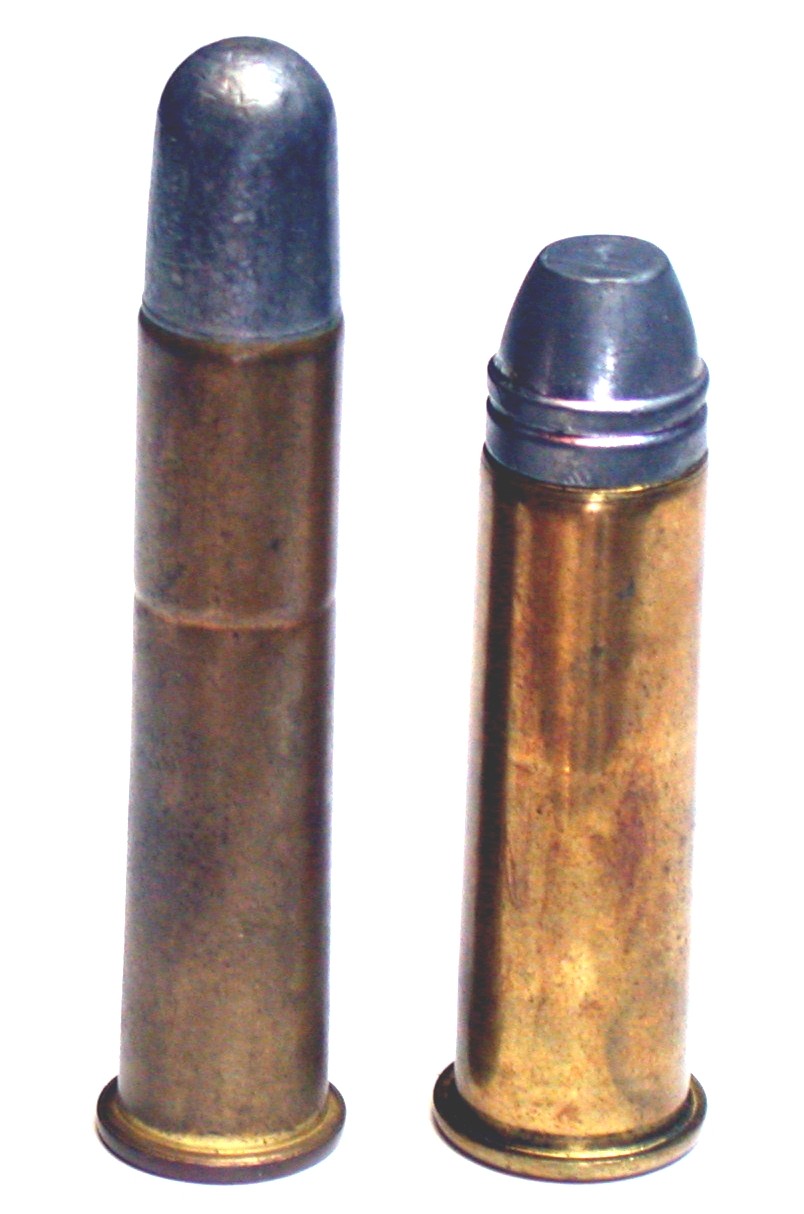
The .45-70 was chosen because it was ballistically superior to the .50-70. The logic is the same logic Volume 12 uses about sectional density: a smaller-diameter, longer bullet of similar weight carries its velocity better and penetrates deeper than a fat short one. Dropping from .50 to .45 calibre while keeping the bullet heavy is a straightforward improvement in sectional density, and the Army took it.
That is worth registering because it cuts against the modern instinct that bigger bore is always better. In 1873 the US Army deliberately went down in calibre to get better ballistics — and then in 2026 the subsonic shooter deliberately wants the biggest bore available, because at 900 fps the physics inverts. Volume 12 works through why both decisions are correct in their own context.
2.3 The Rifle It Was Built Around
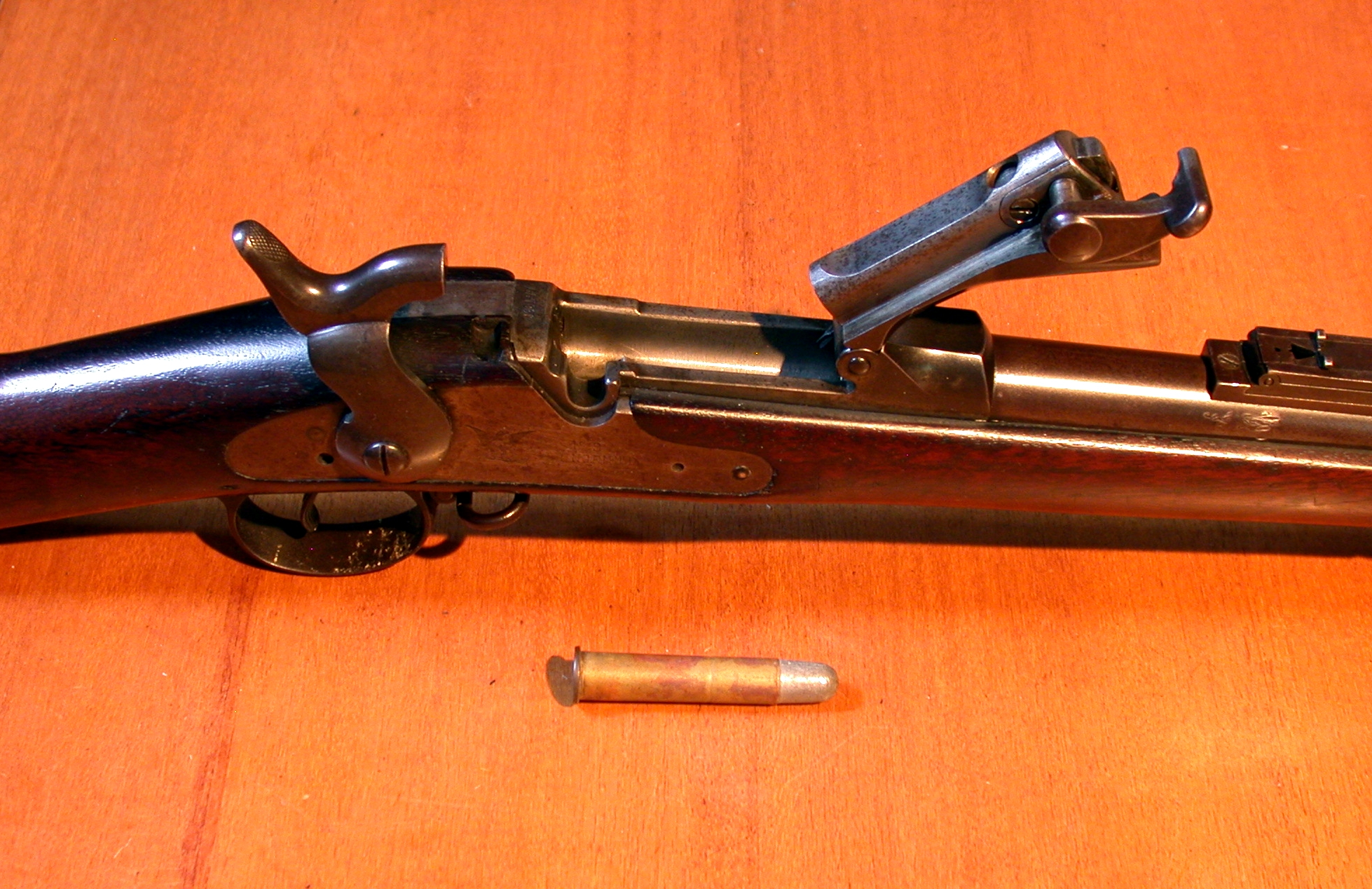
The Springfield Model 1873 — the “Trapdoor,” named for the hinged breechblock that flips forward and up to expose the chamber. Slightly modified versions of the Model 1870 rifle and carbine were approved for adoption in 1873 chambered for the new cartridge.
The Trapdoor matters to this dive for one reason and it is a safety reason: it is a weak action by any modern standard. The breechblock is a hinged flap held by a cam latch. It was entirely adequate for 70 grains of black powder generating perhaps 18,000 psi, and it is nowhere near adequate for what a modern lever action or a Ruger No. 1 will take.
Every original Trapdoor still in existence is over 130 years old, and a meaningful number of them are still shot. That is the entire reason the .45-70 has a pressure-tier problem, and Volume 4 is about the consequences.
2023 marked the 150th anniversary of the design, which is a reasonable measure of how well the original bet paid off.
2.4 Why It Survived
Military cartridges usually die when the army moves on. The .45-70 was replaced in US service by the .30-40 Krag in the 1890s and should have followed the .50-70 into obscurity. It did not, for three reasons that still operate:
It was everywhere. Enormous quantities of rifles and ammunition entered civilian hands. A cartridge with that much installed base takes generations to die.
It killed things very effectively at the ranges people actually shoot. A 405-grain .458 bullet is a serious tool inside 150 yards regardless of what year it is, and the American hunting tradition that grew up around lever actions in thick country never needed more.
It had enormous unused headroom. The case is physically large and was designed around a low-pressure propellant. Put smokeless powder in it and a strong action behind it, and the same cartridge produces performance the 1873 designers could not have reached. The .45-70 is one of very few cartridges whose modern high-pressure loadings are more than double its original working pressure and still fit the original chamber.
That last point is the cartridge’s blessing and its hazard in one sentence, and it is why the next two volumes exist.
2.5 The Third Career
The modern revival that concerns this dive is more recent and narrower: the .45-70 as a suppressed subsonic cartridge.
Nothing was redesigned for it. The requirements simply happened to line up:
- A heavy bullet — because at subsonic velocity, mass is one of only two things you have left.
- A large frontal area — .458 inches, the other one.
- A large case running at low pressure with fast powder — which is what a suppressor wants, because less total gas volume and cleaner-burning powder both make a can work better.
- Naturally low velocity — the cartridge’s factory loadings already sit closer to the sound barrier than almost any other rifle round, so getting under it costs less performance than it would anywhere else.
An 1873 black-powder cartridge is well suited to a 2026 application that did not exist when it was designed, because the design constraints of black powder and the design constraints of subsonic ammunition point in the same direction. That is a genuinely satisfying accident and it is the reason the rest of this dive is worth writing.
2.6 Bibliography
- Wikipedia, “.45-70” and “.50-70 Government” — designation, adoption dates, the replacement rationale.
- Military Wiki, “.45-70” — the .45-70-405 designation and the three-field naming convention.
- American Rifleman, “150 Years Of The ‘Trapdoor Springfield’” — anniversary coverage and Model 1873 adoption history.
- True West Magazine, “The 1873 Trapdoor Springfield — One Model, Many Changes.”
- GUNSweek.com, “Springfield 1873 ‘Trapdoor’.”
- American Rifleman, “The .45-70 Gov’t: History, Performance & Handloading.”
- ANSI/SAAMI Z299.4-2015 — modern dimensional specification (see Volume 3).
Comments (0)