A History of Muzzleloaders · Volume 3
The Matchlock: The First Firearm Lock, and the Age of the Musketeer
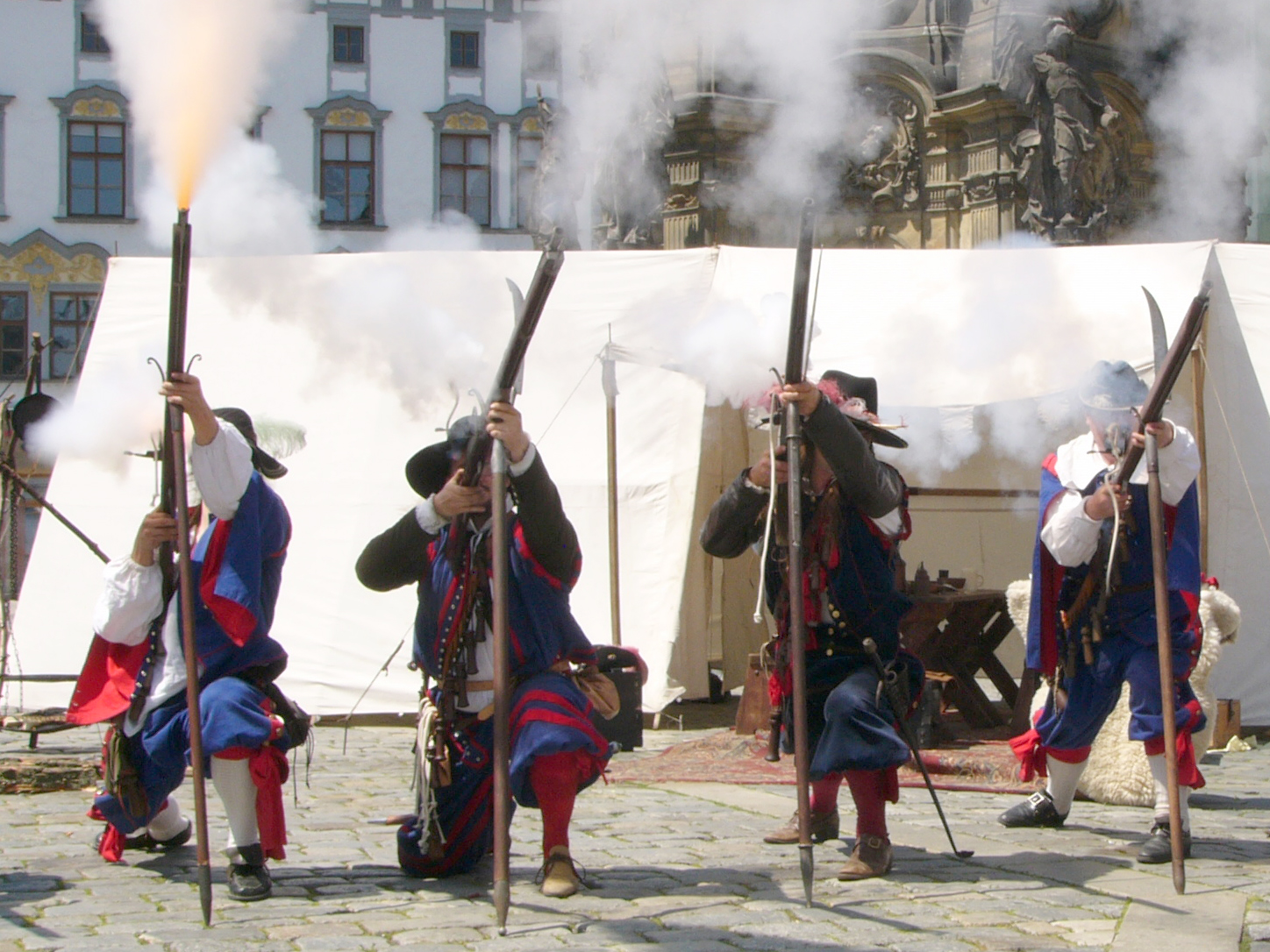
The hand cannon left one problem unsolved above all others: the fire had to be brought to the powder by hand, which meant a gun could never be properly aimed and never fired quickly. The matchlock is the answer to that problem, and it is the hinge on which the whole history turns — the first true lock, the first mechanism that held the fire ready on the gun and delivered it to the powder when the shooter pulled a lever. With both hands now free to hold and aim the weapon, the firearm stopped being a novelty and became infantry’s primary weapon for the better part of two centuries.
3.1 The serpentine: a bent lever that changed war
The mechanism is almost embarrassingly simple, which is exactly why it worked. A length of slow-burning cord — the match — is clamped into an S- or Z-shaped pivoting arm called the serpentine. The shooter keeps the match lit at one end. When he pulls the trigger or lever, the serpentine swings down and plunges the glowing tip of the match into the flash pan, a small dished shelf of priming powder beside the touch hole. The priming flares, fire runs through the touch hole into the main charge, and the gun fires. Release the lever and a spring lifts the serpentine clear so the match doesn’t burn down into the pan.
This serpentine lock was the earliest lock mechanism ever fitted to a firearm, developed in the first half of the fifteenth century — the serpentine lever appears around 1411, within a couple of decades of the Tannenberg hand cannon. Before it, as Volume 2 described, handguns were fired from the chest while the free hand steered a hot pricker to the touch hole. After it, a soldier could shoulder the gun, sight down the barrel with both hands, and simply squeeze. That single change is the birth of the aimed shot.
The slow match itself was a small technology worth understanding. It is a loosely woven cotton or hemp rope treated to smolder steadily rather than flame. A sixteenth-century recipe runs: boil the cord in lye, saturate it with saltpeter, then beat it and dry it in the shade — an alkaline soak, a nitrate saturation, and a slow controlled drying. Done right, the cord creeps along at a glowing coal that a musketeer could keep alive for hours, often lit at both ends for insurance.
3.2 From arquebus to musket
The shoulder gun evolved names as it evolved size. The lighter fifteenth- and sixteenth-century form was the arquebus (or harquebus); the heavier, harder-hitting sixteenth- and seventeenth-century weapon was the musket, often so heavy it was fired from a forked rest; between them sat the caliver, a lighter arm of standardized bore. Whatever the name, the matchlock shoulder gun did something no earlier weapon had managed: it displaced both the crossbow and the pike as the primary infantry weapon across Europe. A crossbow took strength and long practice; a longbow took a lifetime. A matchlock took a few weeks of drill.
That is the matchlock’s real claim to greatness. It was cheap, simple, robust, and repairable by a village blacksmith. It could be mass-issued to conscript infantry with minimal training, and a formation of such men could shatter the mounted, armored aristocracy that had dominated European war for centuries. Not elegant, but decisive: the matchlock, more than any clever lock that came after it, is what put firepower into the hands of the common soldier and ended the age of the knight.
3.3 The weaknesses that never went away
For all that, the matchlock was a deeply flawed instrument, and its flaws all trace back to that one glowing cord. It was slow. The lit match betrayed the shooter’s position at night — a row of orange coals in the dark tells the enemy exactly where the line stands. Worst of all, rain or wind killed it: a gust could scatter the priming or blow the coal out, and a downpour extinguished the match and dampened the powder, turning an army of muskets into an army of clubs. And carrying a live coal inches from loose powder and paper cartridges made every matchlock formation a slow-motion fire hazard. These are not small complaints; they are the specific problems that every later lock — wheellock, flintlock, percussion — was invented to escape.
3.4 Volley fire: turning a slow gun into continuous fire
A single matchlock is a slow, single-shot weapon. The genius of the age was tactical, not mechanical: if one man reloads in a minute, then organize the men in ranks so that while some fire, others are reloading, and fire never stops. Two societies arrived at this idea more or less independently.
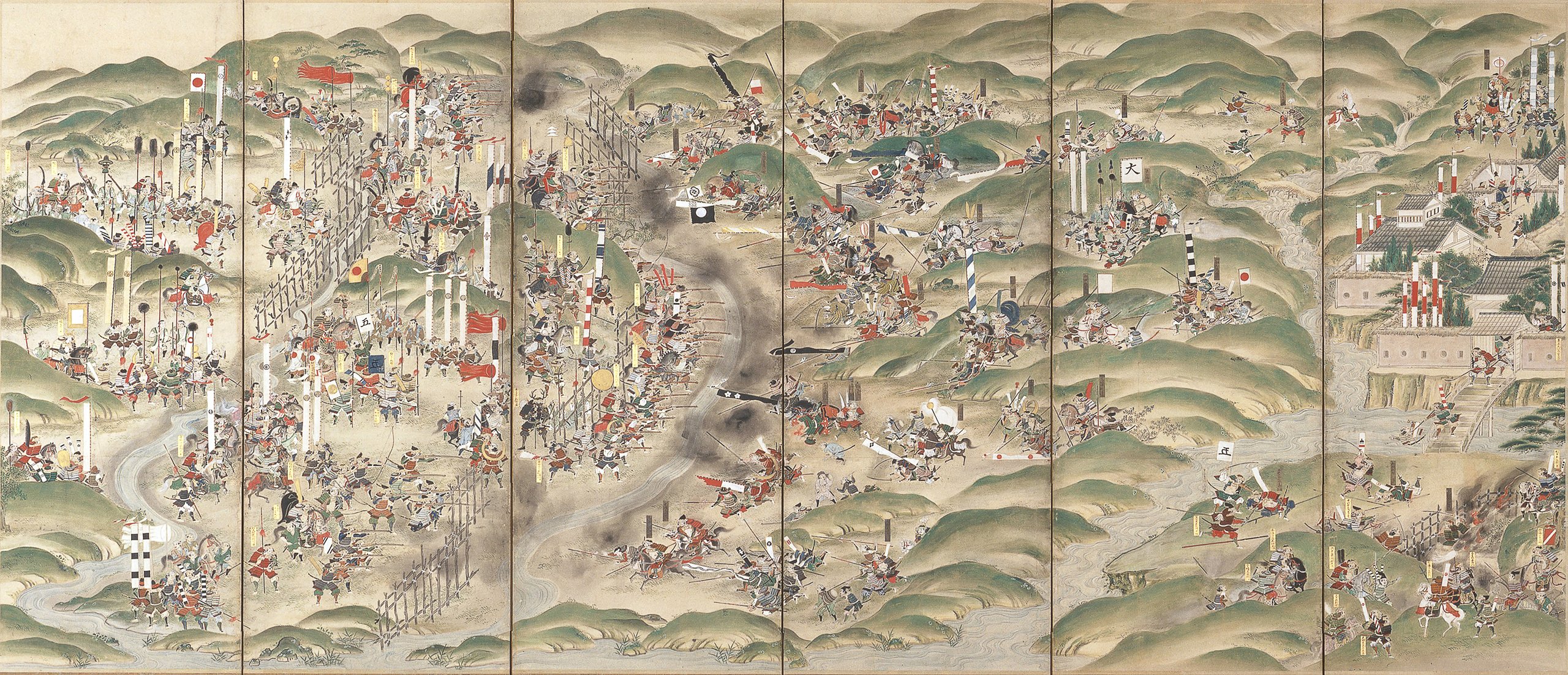
In Japan, the matchlock arrived by accident and spread like fire. Portuguese traders brought the arquebus ashore at Tanegashima island in 1543; Japanese smiths copied it so eagerly that the gun took the island’s name — tanegashima — and was being mass-produced domestically within a decade. At the Battle of Nagashino in 1575, Oda Nobunaga fielded roughly 3,000 matchlocks behind a wooden palisade and fired them in successive volleys of rotating ranks — one rank fires while the others reload — cutting apart the famous Takeda cavalry charges that had terrorized his rivals. It is one of the most vivid demonstrations in history of what disciplined firepower does to shock cavalry.
In Europe, the same insight was formalized as the countermarch. In 1594, William Louis of Nassau described the technique in a letter — ranks fire, then file to the rear to reload while fresh ranks step forward — and his cousin Maurice of Nassau drilled the Dutch army in it through the 1590s. The result was a continuous, disciplined rolling fire that revolutionized European infantry. The Dutch and the Japanese had reached essentially the same solution to the same problem, on opposite sides of the world, within twenty years of each other — a good measure of how universal the matchlock’s promise, and its limitation, really were.
Sources
Wikipedia (Matchlock; Serpentine lock; Volley fire; Tanegashima); Boise Gun Club handbook essays on the arquebus and on slow-match history; period screen painting of the Battle of Nagashino and re-enactor imagery via Wikimedia Commons.
Comments (0)