A History of Muzzleloaders · Volume 10
Around the World: Tanegashima, Toradar, Jezail & the Trade Gun
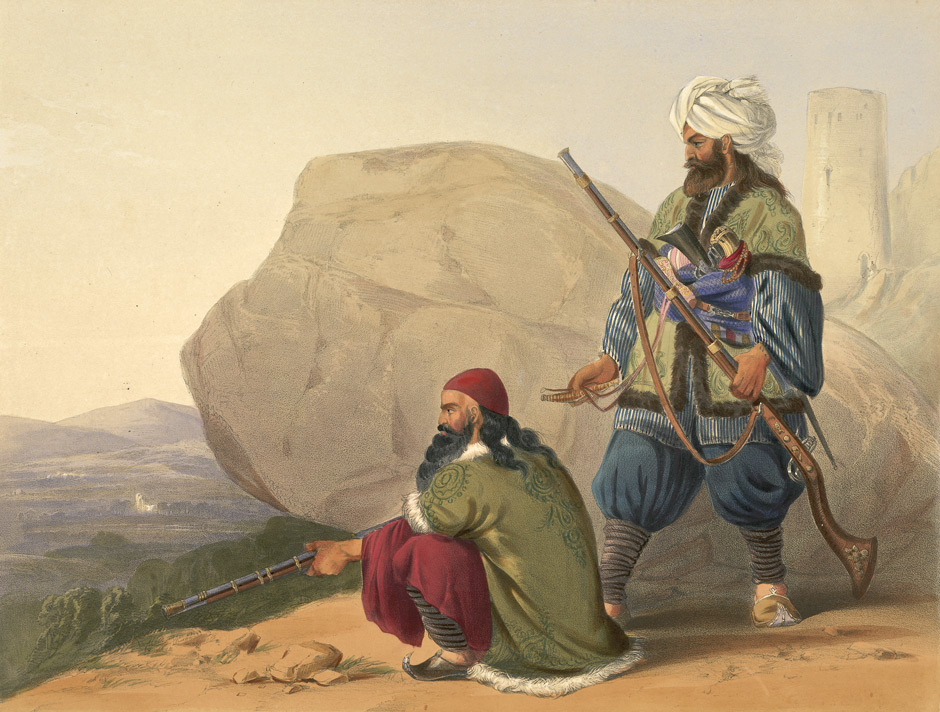
It is easy to tell the story of the muzzleloader as a European one — Brown Bess and Charleville, redcoats and grenadiers, volleys in a Flanders field. But that is only the loudest chapter. The muzzle-loading gun was a genuinely global technology, and for centuries the same basic mechanisms armed samurai on the plains of Honshū, Mughal infantry in the Deccan, Janissaries at the walls of Vienna, tribesmen in the Hindu Kush, and hunters across West Africa. Some of those regional forms were faithful copies of a European original; others were shrewd local adaptations that outperformed the imports. A few are still being fired today.
10.1 Japan: the tanegashima and the country that put the gun down
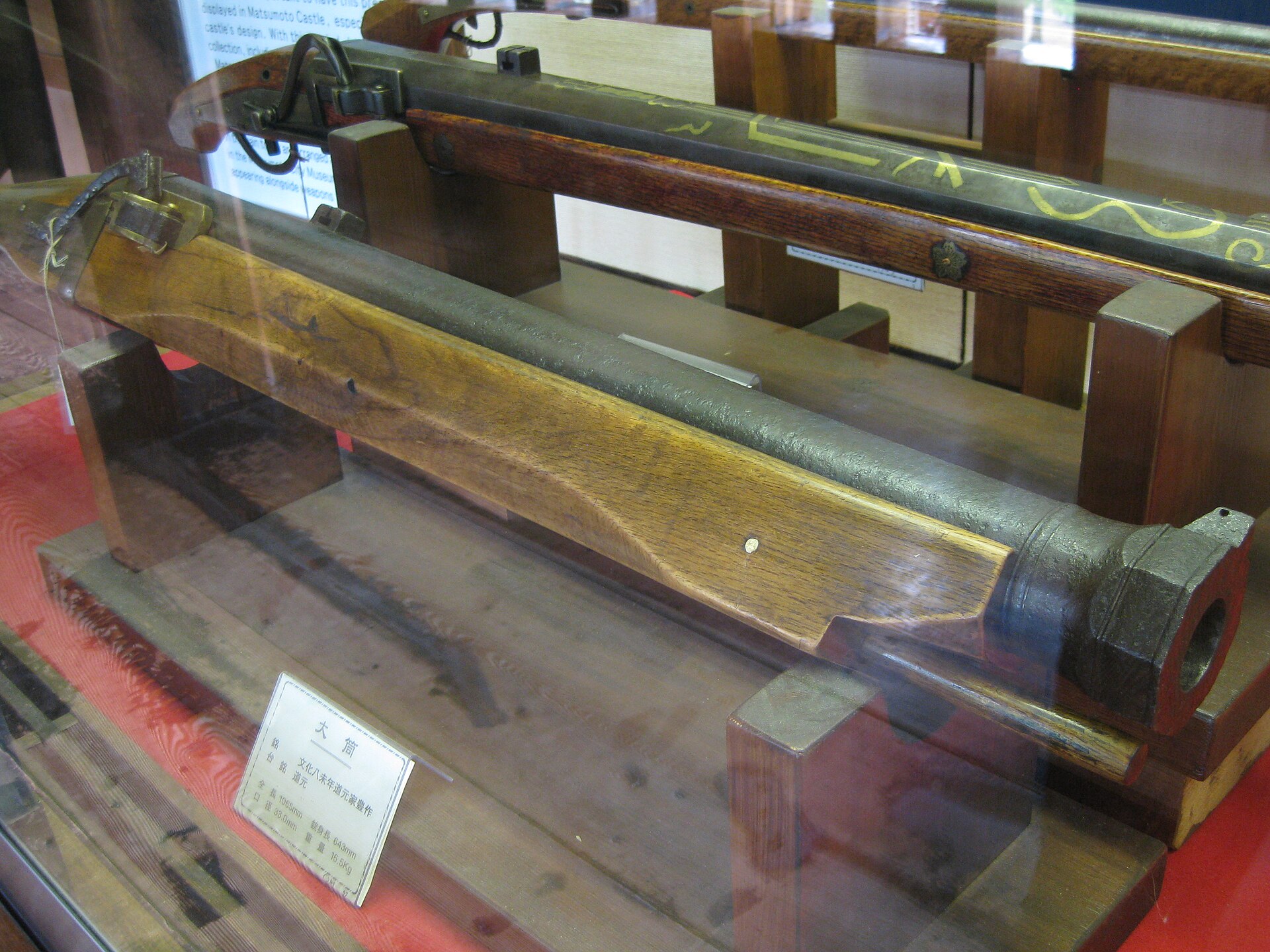
The gun reached Japan by accident. In 1543 a Chinese junk carrying Portuguese traders was blown ashore at the island of Tanegashima, and the lord Tanegashima Tokitaka had his craftsmen copy the matchlock arquebuses aboard. The Japanese named the weapon after the island. Adoption was astonishingly fast: by some accounts more than 300,000 tanegashima were made within a decade, arming both samurai and the lower-ranked ashigaru foot soldiers, and transforming Japanese warfare in a single generation.
The high-water mark came at Nagashino in 1575, where Oda Nobunaga is traditionally said to have massed 3,000 gunners behind palisades and fired them in rotating volleys, shattering the famous Takeda cavalry charges. It is one of the earliest and most decisive demonstrations of volley-fire tactics anywhere in the world — and, strikingly, the Japanese worked it out independently of the Dutch, who formalized their own countermarch two decades later.
What makes Japan unique is what came next. Under the long Tokugawa peace (1603–1868), with no great wars to fight, demand for firearms and the innovation that follows it declined sharply. Japan did not forget how to make guns; it simply, and largely deliberately, turned away from them — the most-cited historical case of a society choosing to set the gun aside.
10.2 India: the toradar, kept because it was cheap
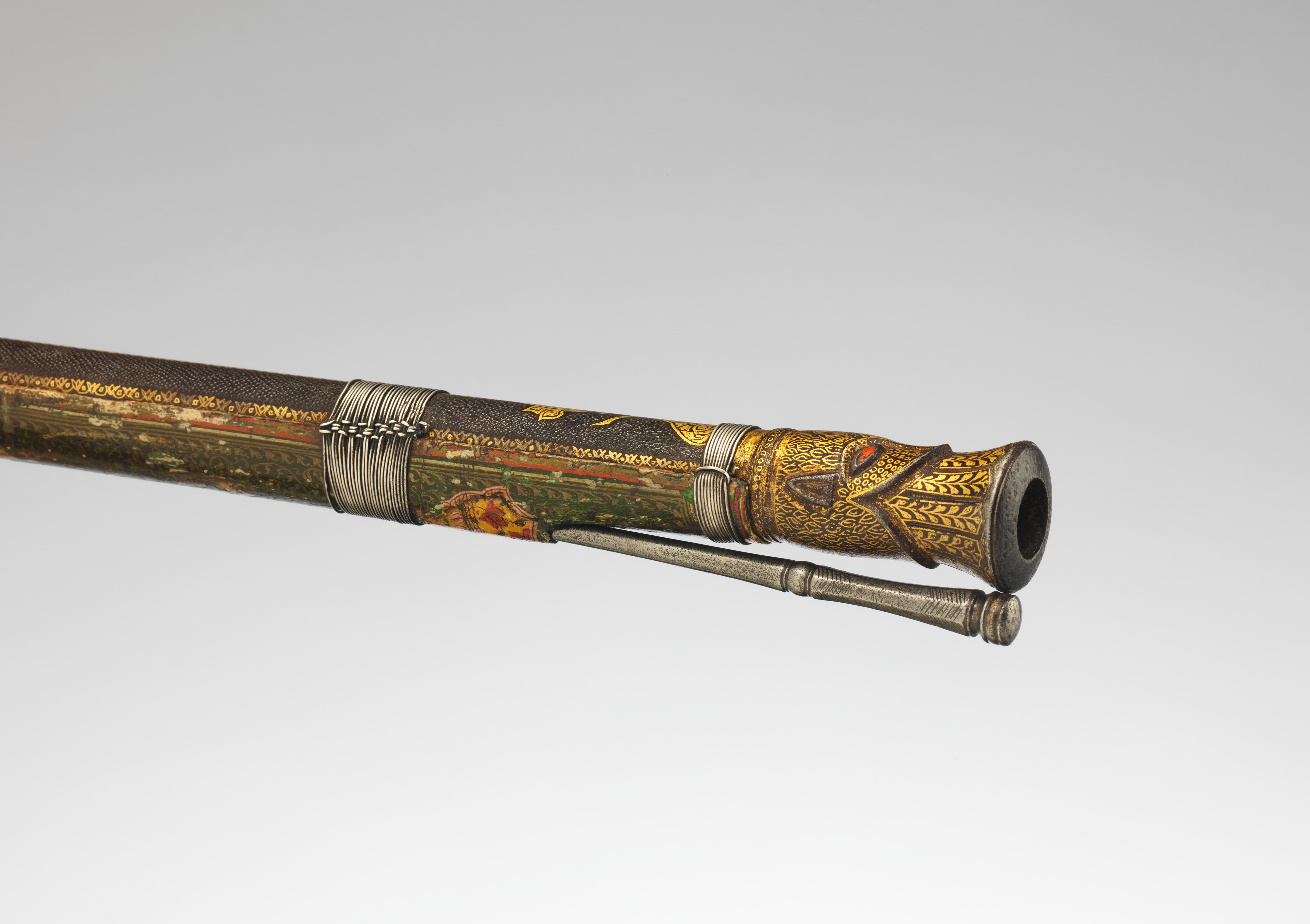
Firearms arrived in northern India in quantity with Babur, founder of the Mughal empire, who used them heavily in his conquests, and native armorers copied the Portuguese matchlock soon after 1498. The result was the toradar, the South Asian matchlock of the Mughal era. Its stock is far simpler than the fishtail European butt and too slender to shoulder, so it was fired braced under the arm.
The interesting thing about the toradar is its longevity. Long after Europe had moved on to the flintlock and then the percussion cap, Indian gunmakers kept building matchlocks — well into the mid-nineteenth century — for the plain reason that a matchlock was cheaper and easier to make than a wheellock or a flintlock. Where the toradar was decorated, it was decorated lavishly: gold-chased barrels, chiseled beast-head muzzles. Simplicity of mechanism did not mean poverty of craft.
10.3 The Ottoman and Mediterranean world: the miquelet tüfek and the moukhala
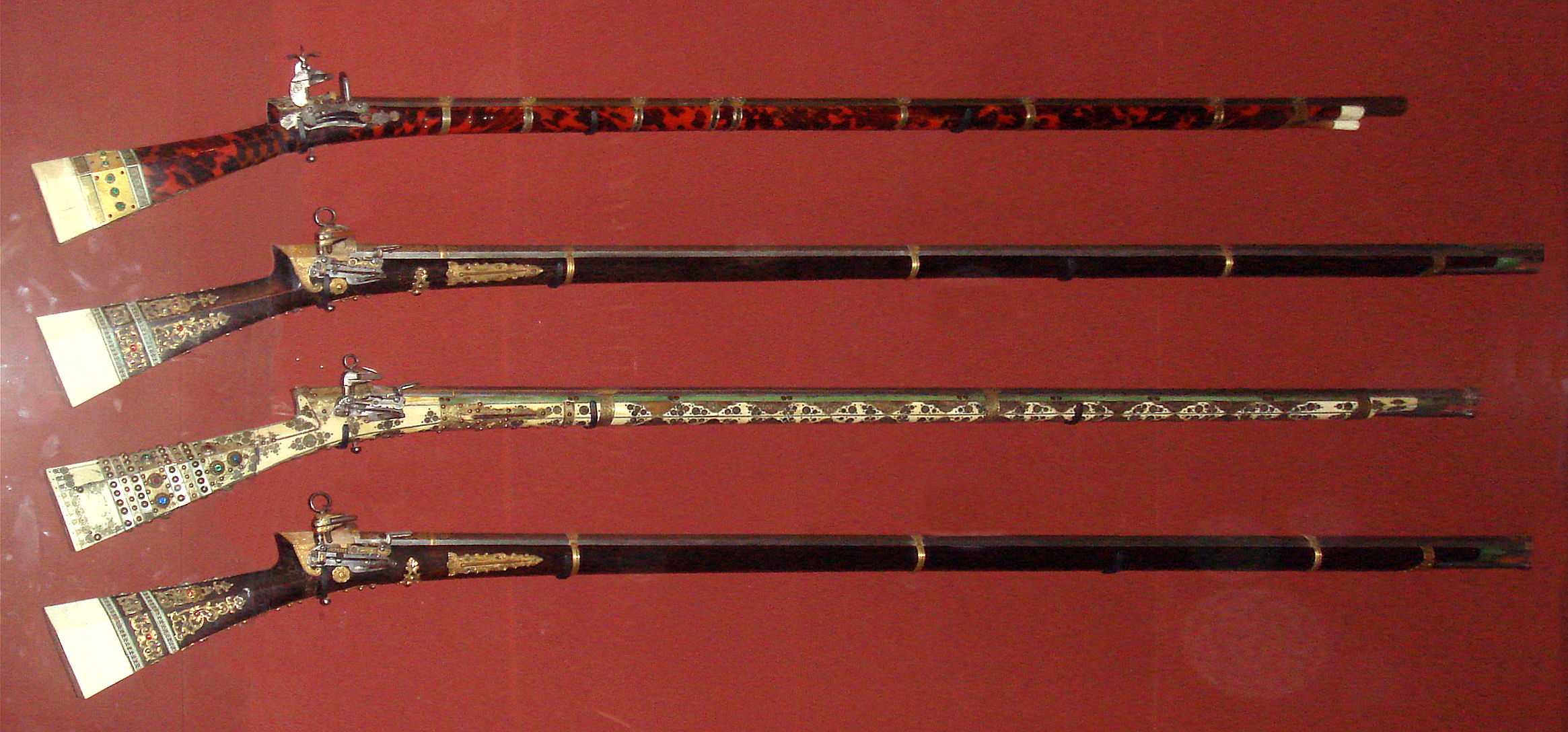
Across the Spanish, Portuguese, and Ottoman empires — through Italy, Greece, the Balkans, North Africa, and the Caucasus — the dominant spark lock was not the French flintlock but the miquelet, the “Mediterranean lock,” distinguished by a strong external mainspring bearing on the cock. In Ottoman hands it armed the long tüfek musket and the shishane rifle, carried by Janissaries in siege and skirmish from the seventeenth century onward. Balkan-provincial tüfeks made around 1800 are famous for their extravagant gold and silver inlay.
The same lock traveled west along the Barbary coast as the moukhala, the “Kabyle musket” of Algeria and Morocco — a very long arm, some near six feet, its stock and barrel encrusted with silver, coral, ivory, and brass. These were weapons meant to be seen as much as fired.
10.4 Afghanistan: the jezail, the poor man’s long-range rifle
Of all the world’s muzzleloaders, the jezail may be the one that most embarrassed a great power. It was a long-barreled matchlock or flintlock — thirty to forty-eight inches or more — often rifled, with a distinctive curved stock that let a man fire it braced from horseback. Its lock was frequently scavenged from a captured British Brown Bess. And it out-shot that Brown Bess badly: the jezail had roughly twice the effective range of the standard British musket, a genuine poor man’s long-range rifle assembled from cheap parts and hard-won marksmanship.
That advantage turned catastrophic for Britain in the 1842 retreat from Kabul, when Afghan fighters lined the cliff tops and defiles and picked off redcoats one by one, staying comfortably beyond the range at which the short British muskets could reply. The retreat became one of the worst disasters in British military history, and the jezail was a large part of why.
10.5 Africa and North America: the trade gun and the Dane gun
At the opposite end from the ornate tüfek sat the cheapest muzzleloader of all: the trade gun. The North American “Northwest gun” (also “Mackinaw gun,” “Hudson’s Bay fuke”) was a light, plain smoothbore with an oversized bow-shaped trigger guard sized for a mittened hand. It appeared around 1775 and became enormously popular in the fur trade — the Hudson’s Bay Company alone had imported some 46,000 by 1781 — and its features were so standardized that Native buyers refused any gun lacking the familiar rounded lock plate, the big trigger guard, and the “London” stamp.
The same class of cheap English flintlock musket, made by firms such as Barnett, flowed into West Africa, where the “Dane gun” tradition took root. Unlike almost every other weapon in this volume, that tradition never entirely ended: cheap flintlock trade guns are still made and fired for hunting and ceremony across parts of West Africa today.
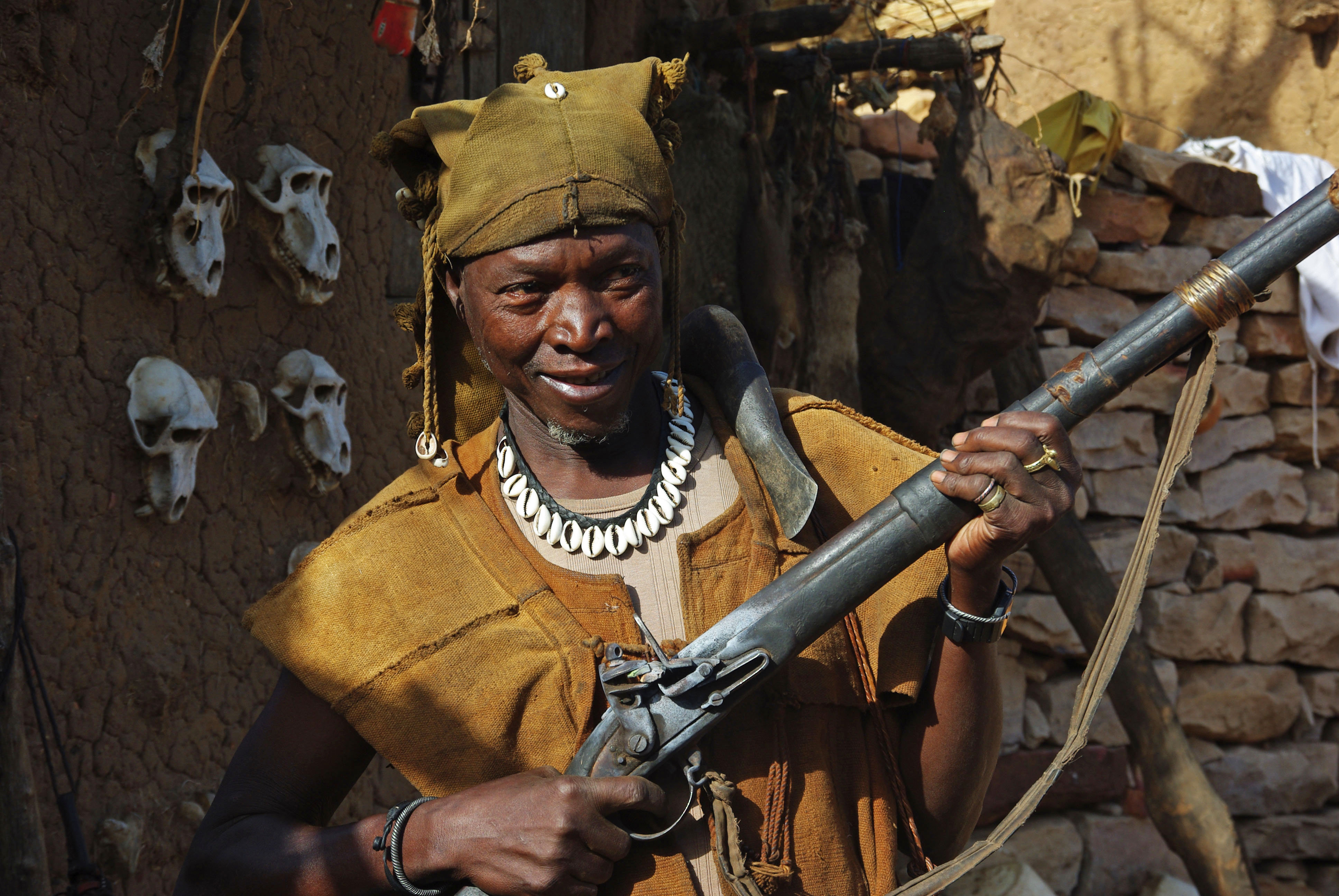
The lesson of this volume is the one the whole series keeps returning to: the muzzleloader was never one gun or one continent’s story. It was a family of answers to the same problem, shaped by what each society could afford, needed, and chose.
Sources
Wikipedia (Tanegashima, Toradar, Miquelet lock, Moukahla, Jezail, trade gun, Bird gun); Military History Fandom; War History Online; World History Encyclopedia; National Park Service (Fort Vancouver); Athlon Outdoors; Oregon History Project.
Comments (0)