A History of Muzzleloaders · Volume 11
The Percussion Cap: The Last Great Leap
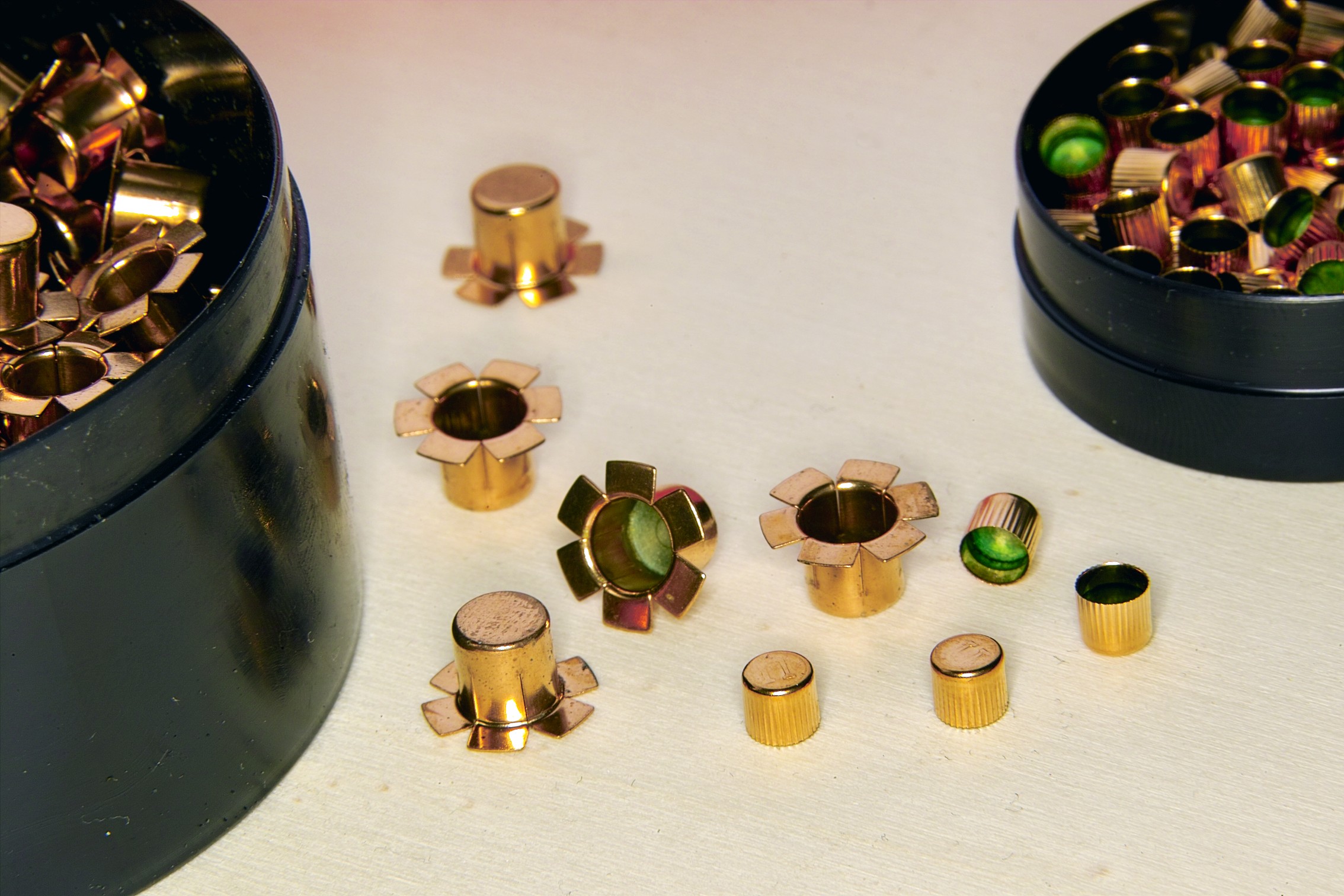
For nearly two centuries the flintlock had been the answer. It was reliable enough for war, cheap enough to mass-issue, and safe enough to carry. But it was never quite good enough, and every soldier and hunter knew the ways it failed. The flint threw its sparks into an open pan of priming powder, exposed to the sky; a heavy rain or a damp morning could soak it dead. There was a visible flash and a fraction-of-a-second delay between the pull of the trigger and the shot — the “flash in the pan” that warned an animal before the ball arrived. And misfires were simply a fact of the flintlock’s life. The percussion cap fixed all of it, and it started, appropriately, with a frustrated bird hunter.
11.1 Forsyth and the flash that scared the ducks
The Reverend Alexander John Forsyth of Belhelvie, in Aberdeenshire, was a Scottish minister and a keen wildfowler, and he was tired of watching ducks flare off the water in the instant between his flintlock’s pan-flash and its report. That puff of smoke and light was giving him away. In 1807 he patented a radically different idea: instead of a spark igniting loose priming powder, ignite the charge with a fulminating compound — a shock-sensitive chemical that detonated when struck by a hammer rather than lit by a spark. It removed the warning flash and shortened the lock time to almost nothing.
Forsyth’s early “scent-bottle” lock was clever but fiddly. The idea was sound, though, and his patent held until 1821 — which is part of why the modern form of the invention only took off after it expired.
11.2 Shaw’s copper cap
The breakthrough that made percussion practical for everyone was the little copper cap itself, and the credit for it usually goes to Joshua Shaw, an English-born American artist and inventor. Shaw developed the metallic copper percussion cap around 1814 and patented it in 1822. The design is beautifully simple: a small copper cup holds a charge of fulminate (fulminate of mercury and potassium chlorate, often with a little ground glass to sharpen the friction), and it fits snugly over a hollow steel nipple screwed into the breech of the barrel. Pull the trigger, the hammer falls and crushes the cap, and a jet of flame shoots down through the nipple and into the main powder charge. That basic architecture — a small primer, a nipple, a flash channel — is still, in a modernized form, how essentially every gun on Earth fires today.

11.3 Why percussion beat flint
The advantages were not marginal; they were decisive, and they fell into three plain categories.
- All weather. A sealed copper cap over an enclosed nipple was far less vulnerable to rain and damp than an open flint pan full of loose powder. A caplock would fire on a wet morning that would leave a flintlock silent. For a hunter or a soldier, that alone was worth the change.
- Faster and surer ignition. The lock time — the interval between the hammer’s release and the shot — was shorter and more consistent, because the flame started right at the breech instead of having to flash across from an external pan.
- Far fewer misfires. Between the sealed priming, the shorter flame path, and the elimination of the flint that could wear, chip, or slip, the percussion system simply failed to fire much less often than flint ever had.
Faster, drier, and more reliable, with fewer moving parts to go wrong — percussion was better on every axis that mattered.
11.4 The great conversion era
Here is the detail that makes the percussion cap such an elegant chapter in this story: it changed only the lock. The barrel, the stock, the whole rest of the gun could stay exactly as it was. That meant the world did not have to throw away its flintlocks — it could convert them.
Through the 1820s, 1830s, and 1840s, enormous numbers of existing flintlock muskets were rebuilt for percussion rather than scrapped. The usual method was to remove the frizzen and pan and either fit a “drum and nipple” into the old touch-hole or braze on a new bolster to carry the nipple, then swap the flint cock for a percussion hammer. Armies did it wholesale to their stockpiles; gunsmiths did it one gun at a time for private owners. The reach of the idea was global — even Japanese matchlocks were eventually converted to caplock ignition in the Meiji era. By the 1840s percussion had become the military standard across the Western world, and the flint pan, after two and a half centuries of service in one form or another, was finished.
It was, in the end, the last great leap in ignition the muzzleloader would ever need. The next great leap — the Minié ball — would be about loading, and it would arrive within a few short years, turning the reliable, all-weather percussion rifle into the deadliest muzzleloader ever carried into battle.
Sources
Wikipedia (Percussion cap); Scientific American (Joshua Shaw); Guinness World Records; Britannica.
Comments (0)