A History of Muzzleloaders · Volume 12
The Minié Ball & the Rifle-Musket: Muzzleloading's Deadly Peak
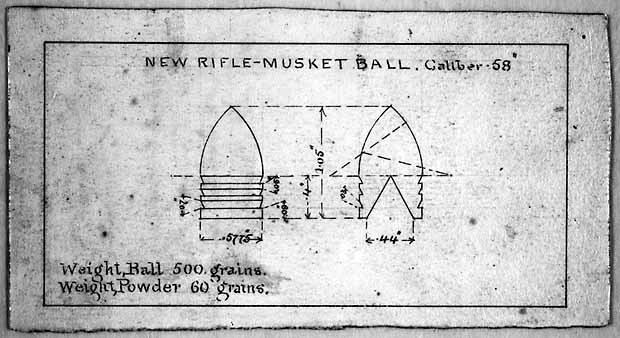
For three hundred years the battlefield lived with a maddening compromise. The smoothbore musket was fast to load but wildly inaccurate — good against a man only to fifty or seventy-five yards. The rifle was deadly accurate to several hundred yards, but its ball had to be rammed down tight against the rifling grooves, so it loaded slowly and fouled quickly. You could have accuracy or you could have speed. You could not have both, and so the world’s armies chose speed and fought shoulder to shoulder in lines, trusting volume of fire over aim. Then, in 1849, a French army officer solved the problem that had stood since the invention of rifling — and in doing so he built the most lethal muzzleloader ever made.
12.1 Minié’s hollow-base bullet
The insight of Claude-Étienne Minié in 1849 was to stop fighting the fouled, tight-fitting ball and instead make a bullet that loaded loose and sealed afterward. His Minié ball was not a ball at all but a cylindro-conical lead bullet with a hollow base, cast undersized — noticeably smaller than the bore. Because it was undersized, it dropped easily all the way down a rifled barrel, even one already fouled from previous shots, as quickly as a musket ball down a smoothbore. Then, at the instant of firing, the expanding powder gas slammed into that hollow base and flared its skirt outward to bite into the rifling, sealing the bore and taking up the spin on the way out.
That was the whole trick, and it was revolutionary. For the first time a muzzle-loading rifle could be loaded as fast as a smoothbore musket — no more forcing a patched ball down the grooves — while delivering rifle accuracy and range, effective well beyond three hundred and even five hundred yards. Every line infantryman could now be a rifleman.
12.2 The rifle-musket
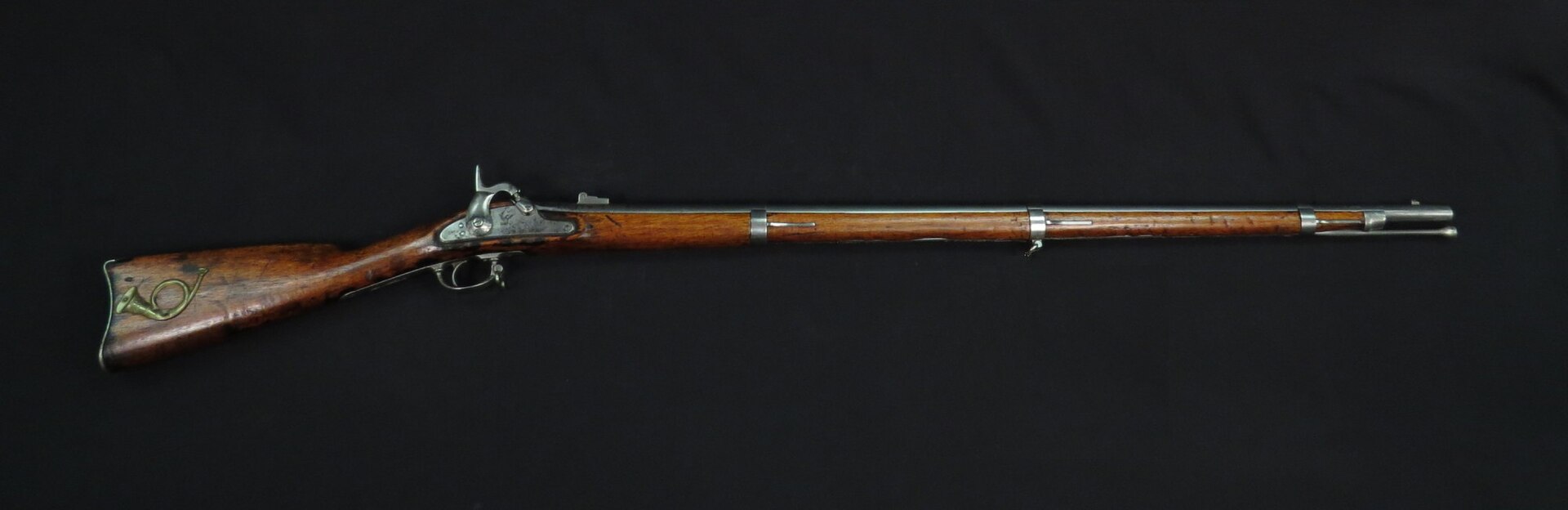
The weapon this bullet created was the rifle-musket: a full-length rifled infantry arm that replaced the smoothbore musket outright. Two of them define the era.
- The British Pattern 1853 Enfield (P53), a .577-caliber rifle-musket first issued in early 1855, which the British used to devastating effect against Russia in the Crimean War (1853–1856).
- The U.S. Springfield Model 1855 and its wartime successor the Model 1861, in the new regulation .58 caliber, built around James H. Burton’s Harpers Ferry Minié design. The Model 1861 was the standard Union infantry arm of the American Civil War.
12.3 The slaughter: technology against tactics
Here the story turns grim, because the rifle-musket arrived in the hands of generals who had learned their trade in the age of the smoothbore. The soft lead Minié ball did terrible things to the human body: it flattened and tumbled on impact, shattering bone and tearing wounds far worse than a round musket ball. Together the rifle-musket and the Minié ball are credited with roughly 90 percent of the more than 200,000 killed and 400,000 wounded in the American Civil War.
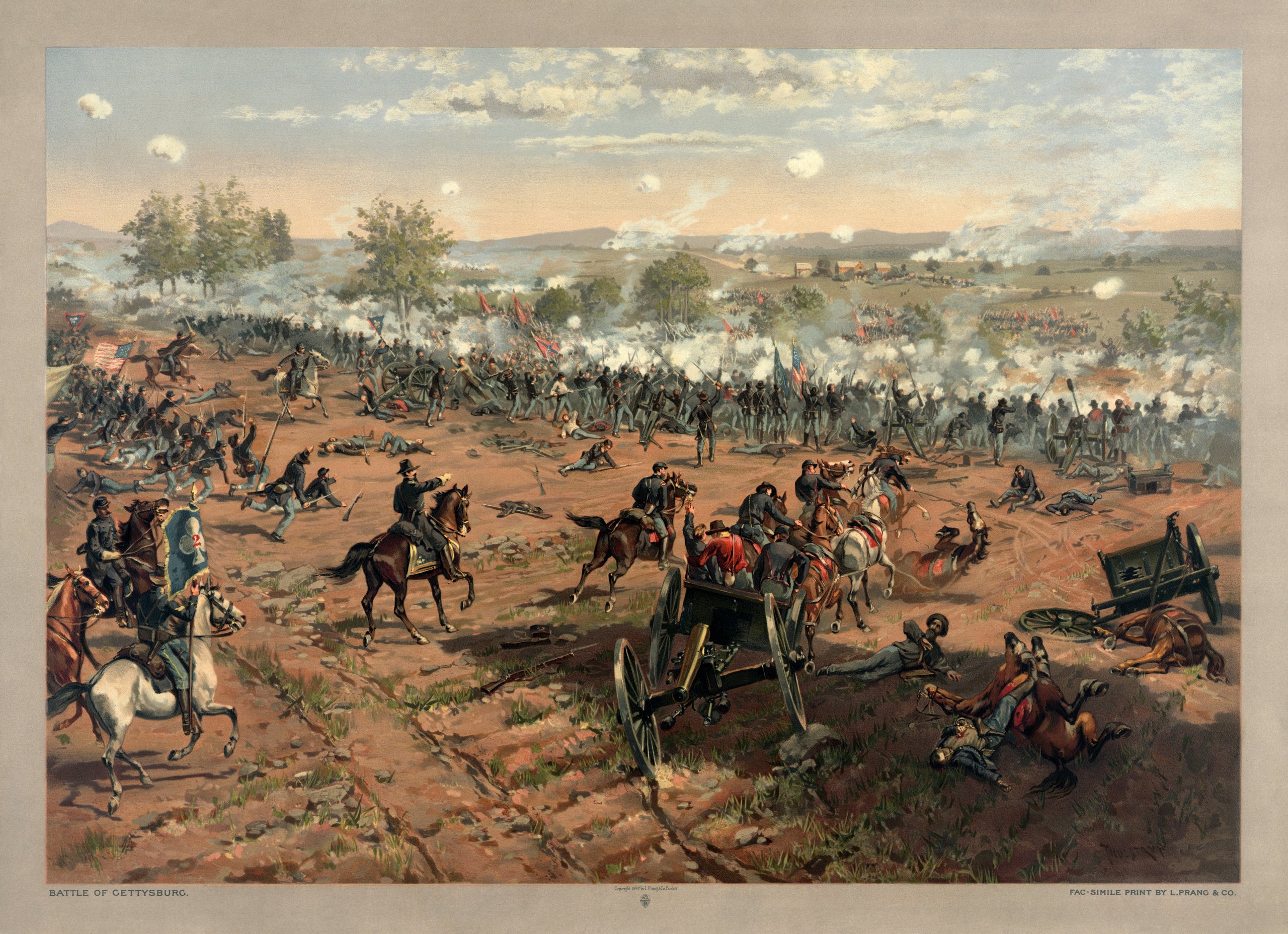
The reason was a mismatch between what the weapon could do and how officers still used it. Commanders trained in Napoleonic doctrine ordered close-order frontal assaults across open ground — the same maneuver that, a generation earlier, could carry an attacker to within a hundred yards in relative safety, because a smoothbore line could not hit reliably beyond that. Now the defenders could hit accurately at three or four hundred yards. Attackers were cut down long before they closed. The tactics had not caught up to the technology, and the result was industrial-scale killing on fields like the one below.
12.4 The cruelest irony in the whole story
The rifle-musket was the summit of five hundred years of muzzle-loading development. It was rifled, it was accurate to ranges the old musketeers could only dream of, it fired reliably in the rain thanks to the percussion cap, and it could be loaded and fired as fast as any smoothbore. It was, in every measurable way, the best muzzleloader ever built, and it was mass-issued to entire armies.
And it reached that lethal peak in the single decade — roughly 1855 to 1865 — during which it was made obsolete. The same years that saw the Minié rifle-musket carpet the fields of the Crimea and Virginia with dead also saw the perfection of the self-contained metallic cartridge and the breech-loading rifle. The muzzleloader climbed to the very top of its craft and found the breechloader already waiting there. Technically brilliant, humanly catastrophic, and obsolete almost as soon as it was supreme — the rifle-musket is the muzzleloader’s magnificent, terrible last word. Volume 14 tells the story of what replaced it.
Sources
Wikipedia (Minié ball, Springfield Model 1861, Pattern 1853 Enfield); Britannica (Claude-Étienne Minié); HistoryNet; History.com; NRA Museum.
Comments (0)