Henry SPD HUSH · Volume 8
.30-30 Winchester — Two Boxes of Ammunition Wide
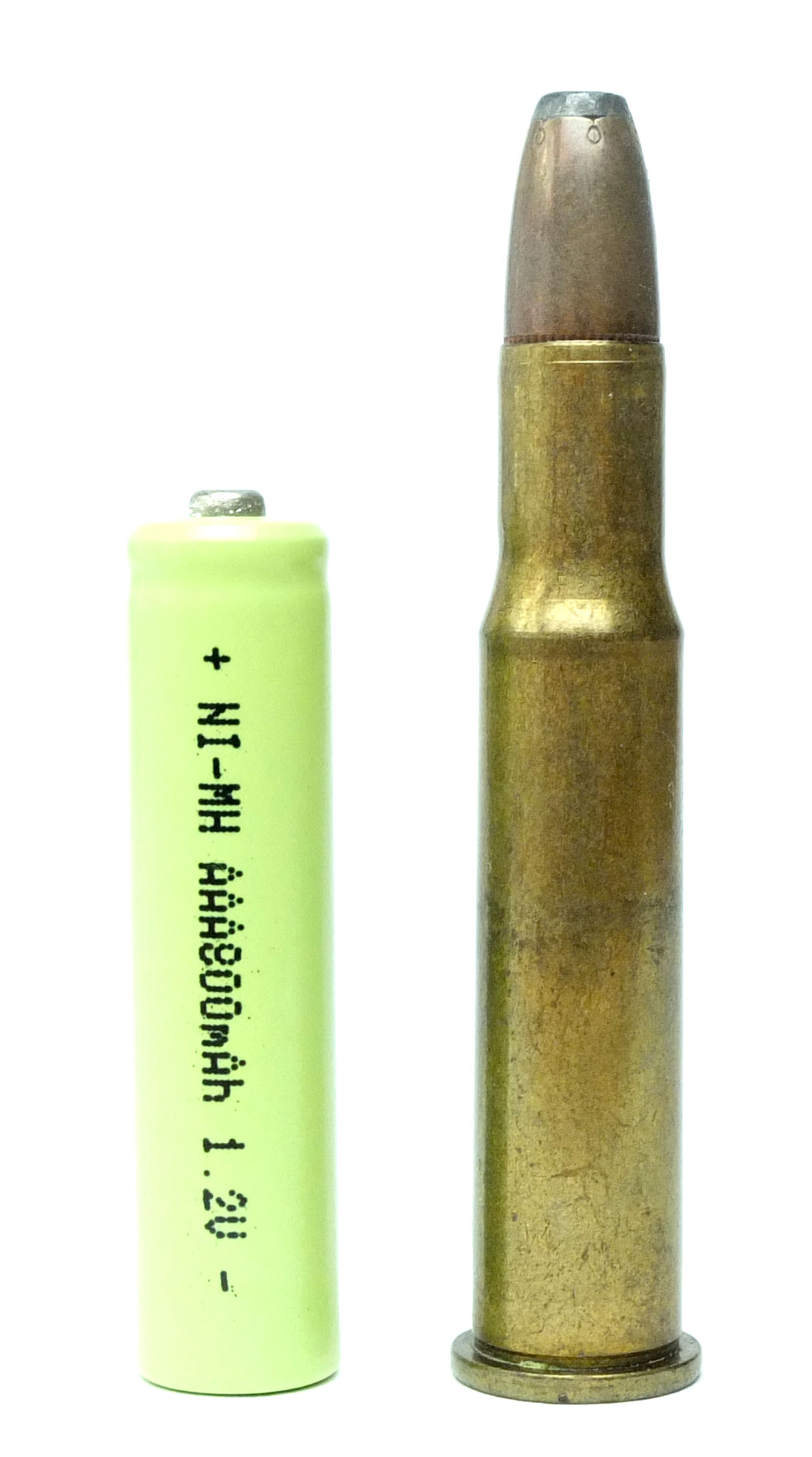
Model H009H · 1:12 twist · 4 + 1 · 7.0 lb · 35.25 in
The .30-30 is the first of the two genuine rifle cartridges in the series, and it is the one where the relationship between the ammunition and the rifle is most interesting — because the factory subsonic loads and the rifle’s twist rate agree with each other exactly, and that is not a coincidence.
It is also the model with the narrowest quiet capability of the five. Not the weakest — that is the .357 — but the narrowest. It works, and it works on about two boxes of ammunition.
8.1 Factory .30-30 Is Supersonic and Always Will Be
Ordinary .30-30 hunting ammunition runs in the 2,200–2,400 fps class. Nothing about a 16.5-inch barrel changes that meaningfully, and no load selection within the normal catalogue gets it under 1,125 fps, let alone under the 1,074 that a Michigan November morning demands.
So on factory ammunition the .30-30 HUSH is a comfortable rifle: blast gone, flash gone, recoil down, hearing safe, and cracking loudly. That is a perfectly good deer rifle and a substantial improvement on an unsuppressed one. It is not what the series is named for.
8.2 But There Is a Real Factory Subsonic, and It Is Purpose-Built
This is what separates the .30-30 from the .357. Two major manufacturers load a purpose-designed subsonic .30-30, and they are not target-only curiosities:
Hornady 175 gr Sub-X Subsonic — 1,050 fps (quoted from a 24-inch barrel). The bullet is the interesting part: a polymer Flex Tip seated over a large hollow-point cavity, with long grooves cut in the gilding-metal jacket. On impact the Flex Tip is driven back into the cavity and forces the grooved jacket to split open. Hornady rate it to expand reliably down to 900 fps impact velocity.1
Federal 170 gr subsonic target soft point — 1,000 fps.2
The Hornady load is the one that matters for hunting, because expansion at 900 fps is a genuinely hard engineering problem. A conventional expanding bullet designed for 2,200 fps impact simply does not open at 1,000 — it behaves like a solid, and a .308 solid at subsonic velocity through a deer is a poor outcome for everyone. Sub-X exists because the ordinary answer does not work down here.
8.3 The Twist Rate Is the Story
🔴 The HUSH’s .30-30 barrel is 1:12, and that number decides what you can and cannot do with this rifle.
Volume 4 established the mechanism: spin comes from velocity, so dropping from 2,200 fps to 1,050 fps in the same barrel costs about 22 % of the gyroscopic stability factor. A twist that is entirely adequate for a 170-grain bullet at 2,200 fps is working much closer to its limit at 1,050.
The subsonic handloading literature is consistent about where that limit falls:
- General guidance for .30 calibre: 1:12 and slower should not be used with subsonic loads heavier than about 190 grains.
- Specific to .30-30: “in the 12 twist of most .30-30s, any bullet longer than the 170s is likely to deal you fits at times.”3
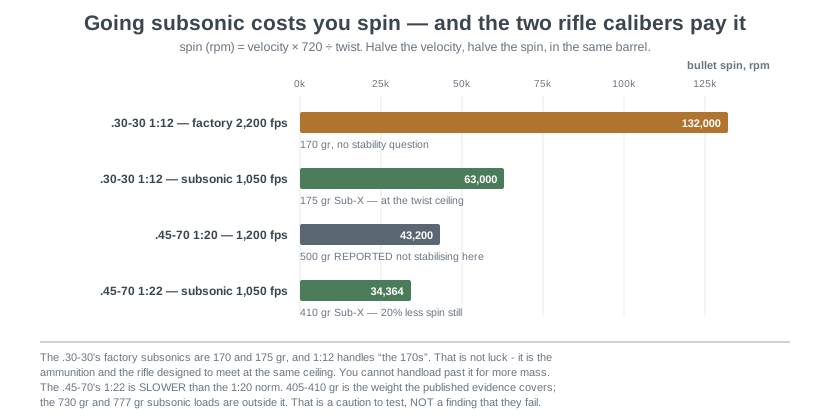
⭐ Now put the two facts together. The factory subsonic loads are 170 and 175 grains. The 1:12 ceiling is “the 170s.” Those are the same number.
That is not a coincidence and it is not luck. It is Hornady and Federal designing subsonic ammunition for the enormous installed base of 1:12 .30-30 lever guns, and building right up to what that twist will hold. The rifle and the ammunition were designed to meet at the same place, from opposite directions.
The practical consequence is a hard ceiling. In every other subsonic cartridge the standard advice is “go heavier for more mass” — it is exactly what Volume 5 recommends for .45 Colt and Volume 9 for .45-70. In the .30-30 you cannot. Load a 200-grain subsonic .30 calibre bullet and the twist will not hold it. The two factory loads are not a starting point you improve on; they are the ceiling with the paint already on it.
8.4 The Second Constraint: The Tube Magazine
Independently of twist, the tubular magazine constrains what bullet shapes you can use at all.
Cartridges in a tube sit nose-to-primer. Under recoil, a pointed bullet resting on the primer of the round in front of it is a chain-fire hazard — the classic reason .30-30 has been a flat-nose and round-nose cartridge for 130 years. It is also why .30-30’s ballistic coefficients have always been dreadful, which historically capped its effective range far below what the cartridge could otherwise do.
Hornady’s FTX / Flex Tip was the fix: a spire point with a soft elastomer tip that deforms harmlessly against the primer ahead of it in the magazine and resumes shape in the chamber. It is the same tip technology that makes the Sub-X work, doing a completely different job.
⚠ One reviewer reported a feeding hang-up with it in this rifle. American Hunter noted “a slight hangup when chambering the Hornady LEVERevolution,” with the pointed tips catching the barrel shank.4 That was on the .45-70 model, it is one reviewer with one rifle, and it should not be generalised into a defect — but it is the kind of thing worth checking on your own gun with your own ammunition before a hunt, because the whole point of a Flex Tip is that it is supposed to be transparent.
At subsonic velocities the aerodynamic argument for a pointed bullet largely evaporates anyway — you are shooting inside 100 yards at a thousand feet per second, and ballistic coefficient is not what is limiting you. Flat nose is fine here.
8.5 What You Actually Get
175 grains at 1,050 fps:
175 × 1,050² ÷ 450,240 = ≈ 429 ft-lb
Better than the .38 Special’s 387. Well behind the .44 Special’s 602 and the .45 Colt’s 612. Less than half the .45-70’s thousand-plus.
And it does that through 0.0745 in² of frontal area — the smallest in the series by a wide margin, 45 % of the .45-70’s.
What .30-30 has that the pistol calibers do not is sectional density: 0.264 for the 175-grain bullet, against 0.191 for a .44 Special and 0.175 for a .45 Colt. It is a long, narrow bullet, and it penetrates better than its energy figure suggests. On a deer at 60 yards with a bullet that actually expands at that velocity, that combination works — and Hornady built Sub-X specifically so that it would.
8.6 The Verdict
The .30-30 HUSH is a fine suppressed deer rifle with a very narrow quiet window.
Its strengths are real: it is the most conventional, most available, cheapest-to-feed rifle cartridge in the series; it has factory subsonic ammunition engineered for exactly this job by two major makers; and on full-power loads it is simply a good short suppressed .30-30, which is a thing plenty of people want.
Its limits are equally real and worth stating plainly:
- Two loads. The quiet capability is Hornady 175 gr Sub-X and Federal 170 gr, and that is essentially the list.
- No handloading path upward. The 1:12 twist closes the door that every other cartridge here leaves open.
- The least frontal area in the series, which at subsonic velocity is the currency that matters most.
If you want a suppressed lever gun that is quiet and hits hard, this is not it — Volume 9 is. If you want a compact suppressed .30-30 that can also go genuinely quiet on two specific boxes when you need it to, this does that well and nothing else in the series does it as cheaply.
8.7 Bibliography
- Henry Repeating Arms, SPD HUSH Series specification table — H009H figures.
- Wide Open Spaces and GunsAmerica coverage of Hornady LEVERevolution / FTX — tubular-magazine chain-fire background and the elastomer-tip solution.
- Stability, energy, frontal-area and sectional-density figures computed as set out in Volume 4.
Footnotes
-
Hornady, “30-30 Win 175 gr Sub-X Subsonic” product page; American Hunter, “Review: Hornady Subsonic .30-30 Winchester Ammo” — 1,050 fps from a 24-inch barrel, expansion down to 900 fps impact, Flex Tip over hollow cavity with grooved jacket. ↩
-
SSUSA, “New: Federal Subsonic Rifle Target Loads” — .30-30 Winchester 170 gr target soft point at 1,000 fps. ↩
-
Cast Bullet Association and Sniper’s Hide subsonic-twist discussions — the 190 gr limit for 1:12 and slower, and the “.30-30 beyond the 170s” observation. ↩
-
American Hunter, “Hardware Review: Henry SPD HUSH” — LEVERevolution chambering hang-up, .45-70 model. ↩
Comments (0)