Henry SPD HUSH · Volume 7
.44 Magnum / .44 Special — Where the Dual Chambering Pays Off
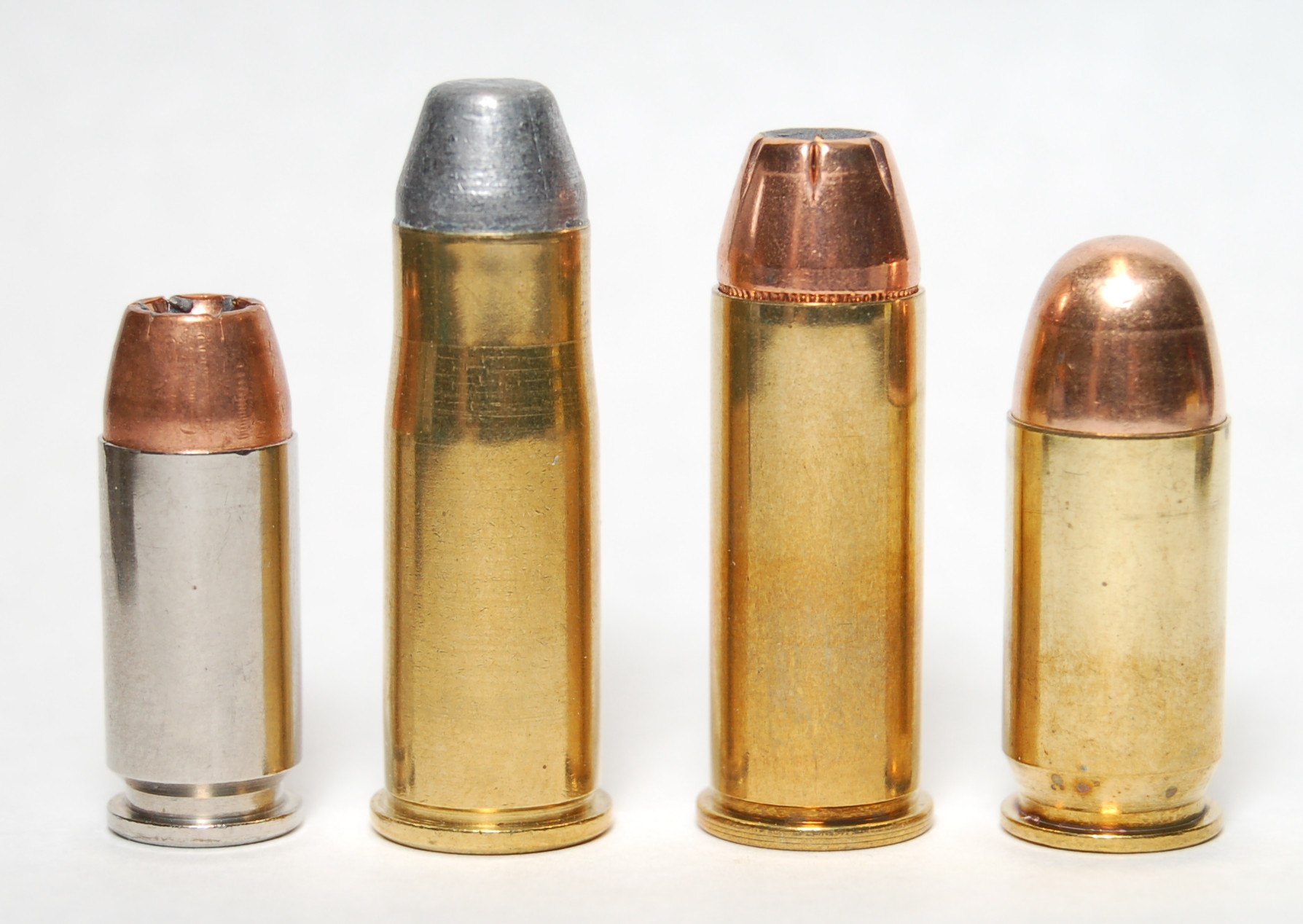
Model H012H · 1:16 twist · 7 + 1 · 6.9 lb · 34.29 in
The .357 model and the .44 model look like the same idea at different sizes. They are not, and the difference is the point of this volume: the .44 is the model where a magnum/special dual chambering actually does the job the pairing is supposed to do.
7.1 The Magnum Half — Comfortable, and Substantial
.44 Magnum from a 16.5-inch barrel is supersonic, and unlike the .357 the numbers here are well documented and consistent across sources.
- 240 grains at around 1,500 fps from a 16.5-inch barrel — factory loads, chronographed.1
- 180-grain Remington jacketed flat point at 1,860 fps from the same length.1
- Handload reports of ~1,500 fps from a 16-inch Trapper with 23 grains of IMR4227.1
- Community rule of thumb: add about 400 fps to 4-inch revolver data for a carbine.1
So it cracks, and it is not close to the line. As with every supersonic load in this dive, a suppressor still buys you the blast, the flash, most of the concussion and a chunk of the recoil — a genuinely different rifle to shoot, just not a quiet one. At 1,500 fps a 240-grain bullet carries about 1,200 ft-lb, which is real hunting performance out to sensible lever-gun distances.
7.2 The Special Half — And Why It Has Margin Where .38 Did Not
.44 Special is nominally 246 grains at 750–900 fps from a revolver.
Apply the same carbine gain that caught the .45 Colt out in Volume 5 and the .38 Special in Volume 6 — and here it does not catch you out, because the starting point is low enough and the bullet heavy enough that there is room. Standard .44 Special has headroom below the line even after the barrel adds its couple of hundred feet per second, and it still has margin at 20 °F when the threshold drops to 1,074 fps.
That is the whole argument for this model over the .357 one. Same rifle, same weight class, same price, one bore size up — and the quiet load goes from marginal and weak to comfortable and useful.
⚠ The instruction has not changed: chronograph it out of this barrel in the cold. .44 Special has more margin than .38 Special, not infinite margin, and some of the modern heavier “cowboy” and defensive loadings run warmer than the classic figure suggests.
7.3 What You Get for the Bore Size
Set the two dual-chambered pistol-caliber models side by side on their quiet loads:
Table 1 — Set the two dual-chambered pistol-caliber models side by side on their quiet loads
| .38 Special (Vol 6) | .44 Special | |
|---|---|---|
| Bullet | 158 gr | 246 gr |
| Diameter | .357 in | .429 in |
| Frontal area | 0.1004 in² | 0.1446 in² — 44 % more |
| Energy at 1,050 fps | ~387 ft-lb | ~602 ft-lb — 56 % more |
| Sectional density | 0.177 | 0.191 |
| Subsonic margin | Thin; verify carefully | Comfortable |
Fifty-six percent more energy through forty-four percent more frontal area, for six-tenths of a pound of extra rifle and no change in anything else. That is the best value-per-trade-off in the entire series.
Against the .45 Colt (Volume 5) the .44 Special is close but slightly behind — 602 ft-lb against 612, 0.1446 in² against 0.1605 — and the .45 Colt gets there without needing a second cartridge name. What the .44 model gives back is the magnum, and that is not nothing.
7.4 The Case for This Being the Right One
On balance, this is the model most people should buy, and the reasoning is about how a rifle actually gets used rather than about peak numbers.
One rifle, two genuinely different jobs, both factory-supported. Load .44 Special for a quiet evening, for close work, for anything where the crack matters. Load .44 Magnum when you need 1,200 ft-lb at 100 yards and you are willing to accept a comfortable-not-quiet rifle. Neither is a compromise version of the other; both are the real thing.
The .357 model promises the same and does not deliver it, because its quiet half is too weak to be a serious tool and its loud half is a cartridge you would not have chosen for the purpose.
The .45 Colt model does not promise it at all — it is one cartridge, done well, with no loud option to step up to.
The .30-30 and .45-70 models are the reverse — excellent loud rifles with a narrow, specific quiet capability bolted on, and both come with a twist question the pistol calibers do not have.
7.5 No Twist Question, and Why That Matters More Than It Sounds
1:16 firing a short, heavy-for-its-length .429 bullet at velocities the bullet was designed for. Nothing in Volume 4’s stability discussion applies here at all.
That is worth a sentence of its own because it is the quiet advantage the pistol-caliber HUSH models have over the rifle-caliber ones. In .30-30 and .45-70 the interesting question is “will this subsonic bullet stabilise?” and the answer constrains what you can load. In .44 the question does not arise. You are free to choose bullets on terminal performance alone, which is the only axis that matters at these velocities.
7.6 Practical Notes
- Both cartridges feed from the same tube. .44 Special is shorter than .44 Magnum; Henry’s tube and carrier handle the length difference, which is the normal expectation for a magnum-chambered lever gun. If you are mixing them in one tube, do not — pick a load and fill the magazine with it, because a mixed tube in a hunting rifle is a way to be surprised by recoil and point of impact at the worst moment.
- Cast lead .44 Special is cheap and fouls a can. Same note as the .45 Colt. Coated or jacketed if you shoot volume through a suppressor.
- A .45-bore can covers it — .429 goes through a .45 can with clearance to spare, at the usual over-bore decibel cost. See Volume 11.
- 6.9 lb makes it the heaviest of the five, half a pound up on the .45 Colt and .357 models, and the same frame. That weight is in the barrel and it is not a bad thing on the magnum loads.
7.7 The Verdict
The .44 Magnum / .44 Special HUSH is the most complete rifle in the series. It is not the quietest-hitting — the .45-70 is, decisively. It is not the lightest or handiest — the .45 Colt is. It is the one where both ammunition options are worth having, where the quiet load has real mass behind it, and where nothing about the twist or the barrel length constrains what you can feed it.
If you are buying one HUSH and you do not have a specific reason to buy a different one, buy this one.
7.8 Bibliography
- Henry Repeating Arms, SPD HUSH Series specification table — H012H figures.
- Ballistic Studies, “.44 Remington Magnum” — cartridge overview and velocity ranges.
- Frontal-area, sectional-density and kinetic-energy figures computed from nominal bullet diameters and KE = grains × fps² ÷ 450,240.
- Subsonic threshold values as computed in Volume 4.
Comments (0)