Henry SPD HUSH · Volume 5
.45 Colt — The Best of the Five, and the Trap
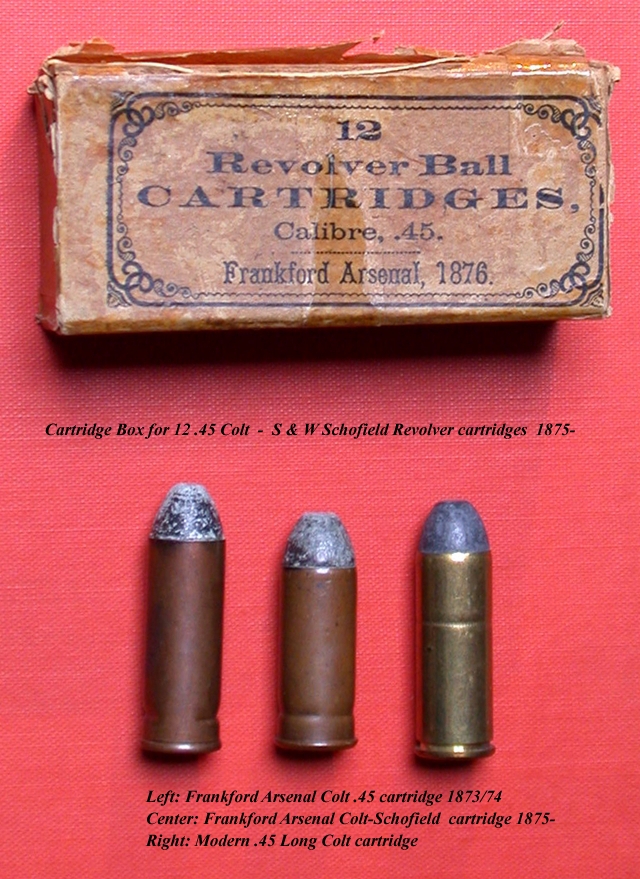
Model H012CH · 1:16 twist · 7 + 1 · 6.4 lb · 34.29 in
On paper the .45 Colt is the obvious answer. It is the cartridge people reach for when they want a quiet lever gun, it needs no exotic ammunition, and a 250-grain bullet of .452 inch at a thousand feet per second is a genuinely serious subsonic package. Most of that holds up.
The part that does not hold up is the reason this volume is here — and it is the single most important correction to take away from the whole dive.
5.1 Why It Looks Perfect
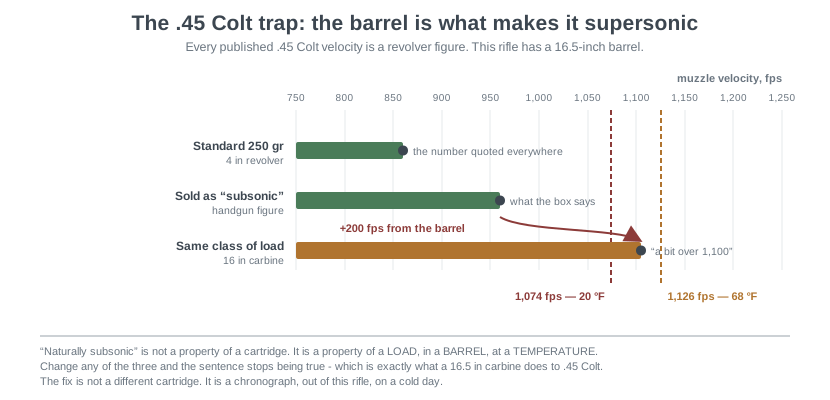
Standard .45 Colt is a 250-grain bullet at around 860 fps. That is the figure quoted everywhere, and against the 1,125 fps textbook sound barrier it has 265 fps of headroom. No load development, no specialist ammunition, no compromise: buy a box of ordinary .45 Colt and it is subsonic.
The bullet is the part that matters. At subsonic velocity the only things that do work downrange are mass and frontal area — there is no velocity left to trade. And .45 Colt has both: 250 to 300 grains through .452 inch, which is 0.1605 square inches of frontal area, second only to the .45-70 in this lineup.
At 1,050 fps a 250-grain bullet carries about 612 ft-lb; a 300-grain, about 666 ft-lb at 1,000 fps. That is a real, quiet, close-range hunting and defensive cartridge, not a novelty.
And unlike the .357 and .44 models, there is no magnum sibling in the chamber to tempt you. The .45 Colt HUSH does one thing.
5.2 The Trap
🔴 Every velocity figure in the section above was measured in a revolver. This rifle has a 16.5-inch barrel.
A pistol cartridge fired from a carbine burns powder that a short barrel wastes, and it gains velocity — a lot of it. The .45 Colt is not the biggest gainer in the family, but it gains enough to matter here. One levergun-community chronograph report has a single load doing “just over 900 fps in a four-inch Smith sixgun, and a bit over 1,100 out of a Winchester Trapper” — and the Trapper is a 16-inch barrel, essentially this rifle.1
That is a gain of roughly 200 feet per second, and it lands the load at the sound barrier.
It gets worse when you read the marketing. Factory .45 Colt sold specifically as subsonic is quoted around 960 fps — which is a handgun number. Add carbine gain to that and you are at approximately 1,160 fps: over the line, out of a rifle, on ammunition that says “subsonic” on the box.
And then Volume 4 arrives with the second half of the bill. At 20 °F the threshold is not 1,125 fps but 1,074. A load that is marginal in July is not marginal in November; it simply cracks.
5.3 The Principle Behind the Trap
This is worth stating in general form, because it applies to three of the five chamberings and it is the most commonly repeated error in the subsonic literature:
“Naturally subsonic” is not a property of a cartridge. It is a property of a particular load, in a particular barrel, at a particular air temperature.
The .45 Colt is not a subsonic cartridge. A given .45 Colt load in a 4-inch revolver on a warm day is subsonic, and the sentence stops being true when you change any of the three variables. Ammunition marketing routinely writes the short version, because the short version is what fits on a box.
The same error, in the other direction, is why the .44 Special chapter is more optimistic than you would expect and why the .38 Special chapter is less so.
5.4 What to Actually Do
Chronograph it. Out of this rifle. In the cold.
There is no substitute and no lookup table that will answer it for you, because the two decisive variables — what your barrel does with that load, and what the air temperature is on the day — are both yours. Nobody publishes the number and nobody can.
Practically:
- Buy heavy and slow, not light and fast. A 300-grain bullet at 900 fps has more margin and more energy than a 250-grain at 1,050. In .45 Colt the heavy bullet is the strictly better subsonic choice, which is not true of every cartridge.
- Avoid the “cowboy action” light loads for the opposite reason — they are usually soft cast lead at modest velocity, which is fine acoustically but fouls a suppressor faster than jacketed or coated bullets. Lead fouling in a can is cumulative and tedious.
- Chronograph at the coldest temperature you will hunt. If you can only test in warm weather, subtract: the threshold falls about 50 fps between 68 °F and 20 °F, so leave that much margin.
- Re-chronograph if you change lots. Pistol-cartridge factory ammunition is not held to rifle-ammunition velocity consistency, and you are shooting near a cliff edge.
5.5 Where It Lands
With the velocity verified, the .45 Colt HUSH is the best-handling rifle of the five and the second-best performer:
- 6.4 lb, the lightest in the series, and 34.29 inches — the shortest.
- 7 + 1 rounds, the highest capacity of the five.
- 1:16 twist firing a short, stubby bullet designed at these velocities. No stability question at all, unlike the .30-30 and .45-70.
- Recoil that a new shooter can handle all afternoon.
- A .45-bore can covers it, and the same can covers the .44 model.
It gives up only to the .45-70, and only on terminal effect — 612 ft-lb against a thousand. What it gets back is three-quarters of a pound less rifle, three more rounds, and no twist question hanging over the ammunition.
If you want one HUSH and you want it to be pleasant, this is the model. If you want one HUSH and you want it to hit like a truck, Volume 9 is the answer. Volume 10 sets the two against each other properly.
5.6 The Honest Caveat
No .45 Colt load was chronographed out of a 16.5-inch HUSH for this dive, and as far as can be found, nobody has published such a result either. The 1,100 fps Trapper figure is one shooter’s chronograph on one load in a different rifle of a similar barrel length, cited as such.
The claim made with confidence is the direction and the rough magnitude — a couple of hundred feet per second from revolver to carbine, enough to put a nominally subsonic load at or over the line. The claim not being made is that any specific box of .45 Colt will crack out of this rifle. That is the measurement, and the measurement is why this volume exists.
5.7 Bibliography
- Ammo.com and Gunners Den .45 Colt ballistics tables — 250 gr at ~860 fps standard.
- Underwood Ammunition and Minuteman Ammunition .45 Colt product pages — factory loads marketed as subsonic at approximately 960 fps.
- Henry Repeating Arms, SPD HUSH Series specification table — H012CH figures.
- Speed-of-sound values as computed in Volume 4.
Footnotes
-
Paco Kelly’s Leverguns community forum, “.45 Colt velocity increase from handgun to rifle” — chronograph report, ~900 fps from a 4-inch revolver and just over 1,100 fps from a 16-inch Winchester Trapper. ↩
Comments (0)