The .22 Rimfire · Volume 8
The Match Houses — What You Are Actually Buying at Four Dollars a Round
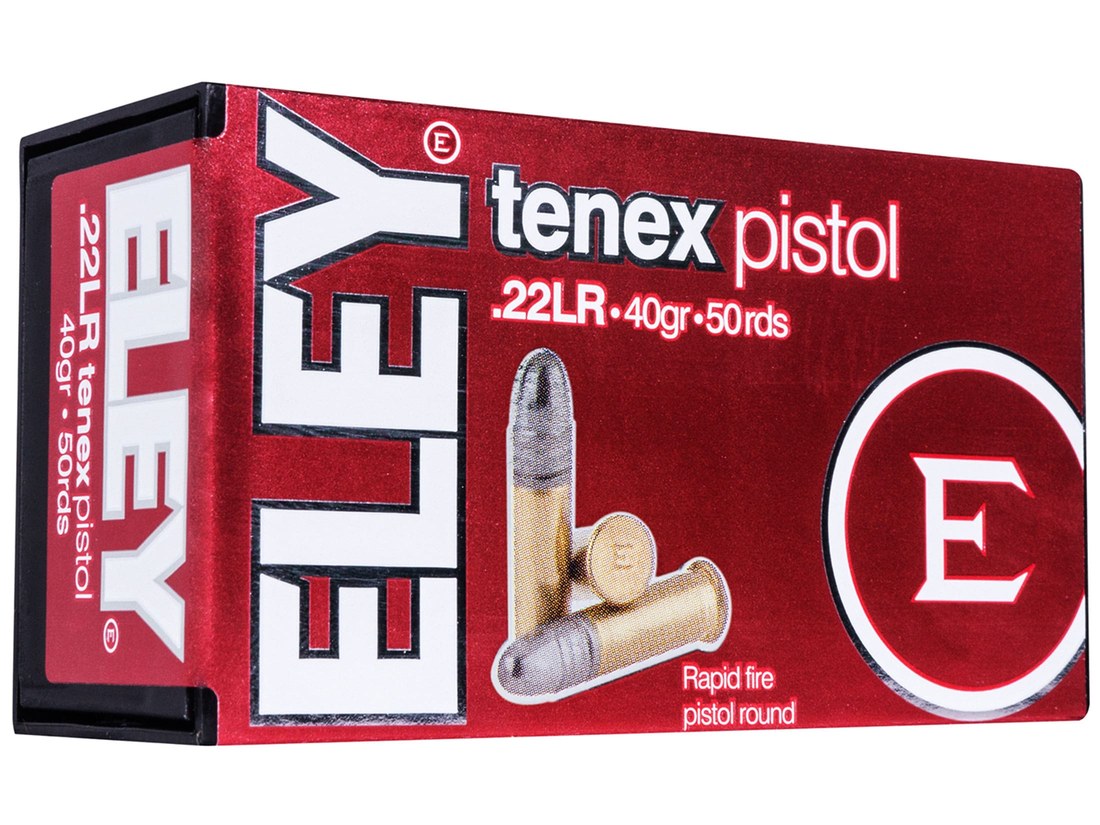
Four companies make ammunition that wins Olympic medals with this cartridge: Lapua (with its sibling brand SK), Eley, RWS, and — at a lower price point but genuinely in the conversation — Federal. Between them they define what a .22 LR can do when nobody is counting cents.
The single most useful thing to understand about all of them is the argument from Volume 3 §3.2: at the top of the market, you are not buying a better recipe. You are buying a better-measured sample of the same recipe.
8.1 Lapua and SK
Where: Lapua and SK rimfire are made in the same plant — Nammo Schönebeck, Germany — on different production lines.1 The relationship between the brands is widely misunderstood, and the misunderstanding is usually phrased as “SK is Lapua’s rejects.” That is not what the sources describe. SK is the entry and mid tier; Lapua is the match tier — different lines, different specifications, in one facility.1
The Lapua ladder is Center-X, Midas+, and X-Act, in ascending order of price. The reported relationship between them is the striking part: all three use the same bullets, cases, priming compound and propellant. They are separated by measured performance in factory test rifles, with Midas+ being the Center-X lots that shot better on average.1
That claim carries a flag. It is the consistent account of the shooting community and of Lapua’s US distributor; it is not a Lapua engineering document, and this series presents it as the community/distributor account rather than as established fact. But it is almost certainly directionally right, because it is exactly what the rest of Lapua’s business model implies.
The lot-testing infrastructure is that business model made concrete. Lapua runs Rimfire Performance Centers; the western US facility has operated in Mesa, Arizona since 2012, is run by Capstone Precision Group, and is modelled on the Schönebeck service centre. You bring or ship a rifle, and they test lots at 50 and 100 metres simultaneously — typically eight lots per rifle, with promising lots re-shot to confirm.2 You then buy that lot, in bulk, and hoard it.
Think about what that service implies. A company that believed its product was uniform across lots would have no reason to build a building where customers come to discover which lot their rifle prefers. The test centre is Lapua’s own admission that lot-to-lot variation is real and is larger than the difference between adjacent grades, and the well-known corollary follows: a good lot of Center-X will beat a bad lot of X-Act in your rifle. That is the single most expensive lesson in competitive rimfire, and it is available for the price of a range trip.
The SK ladder — Standard Plus, Rifle Match, Long Range Match, Pistol Match and the rest — is where most of the value lives. SK Standard Plus in particular is the round that a great many serious shooters use for practice and a fair number use for competition, at a fraction of the Lapua price.
8.2 Eley
Where: England. Eley is the most transparent of the match houses about its process, and Volume 3 draws heavily on its published account. To restate the parts that matter:
- Cases formed to uniform length from a tightly controlled brass alloy, so each charge burns in a controlled volume.
- The signature EPS flat-nose profile, which Eley says pulls the centre of pressure forward, aerodynamically stabilising the projectile — a manufacturer’s claim, presented as such.
- Small lot quantities for match grades, so anomalies are caught before they become a production run.
- High-speed electronic visual inspection and Six Sigma statistical process control.
- Testing on four test barrels, five 10-shot groups, scored by mean radial dispersion — with a cited record of 2.64 mm mean radius — and by radial standard deviation from x-y plotting.
- Moulded packaging so bullet noses never touch anything in transit.
- A batch-testing service: 10-shot screening per batch, 30-shot confirmation on the selected batches, producing a 40-shot group size and consolidated score through proprietary analysis software.3
The ladder: Tenex at the top (with a dedicated Tenex Pistol variant), then Match, Team, Club, Sport, and the subsonic hunting loads below that.
Where Eley sits relative to Lapua: they are genuine peers, they trade wins, and which one a given rifle prefers is a property of the rifle rather than of the brands. The flat-nose EPS profile is Eley’s most distinctive engineering signature and gives a cleaner, more gaugeable hole in paper — which matters if you are being scored by a plug gauge.
One thing this series will not tell you is who owns Eley. It could not be established in the sources consulted, and an unsourced guess about corporate ownership is exactly the kind of confident-sounding filler this dive exists to avoid.
8.3 RWS
Where: Fürth, Germany, at the site that was Dynamit Nobel, then RUAG Ammotec, and since 31 July 2022 has been wholly owned by Beretta Holding. Norma and Geco are made at the same site — which means the three brands are siblings in the way CCI and Federal are siblings, and for the same reason.4
The two loads that define RWS are worth understanding because they are a clean illustration of purpose-built match design:
- R50 — the standard-conditions match load, and one of the most respected 50-metre rounds ever made.
- R100 — the biathlon and cold-weather load, loaded slightly faster to compensate for the velocity a round loses when it is cold.4
That second one is the interesting engineering. A biathlete’s ammunition rides in a rifle on their back in sub-freezing conditions, and propellant burns slower cold. Rather than telling the shooter to re-zero, RWS builds a load whose room-temperature velocity is deliberately high so that its cold velocity lands where the R50’s warm velocity does. That is a level of application-specific tuning nothing in the volume market attempts.
8.4 Federal Gold Medal
The American entry, loaded in Anoka, Minnesota: Gold Medal Match, Gold Medal Target (711B) and Gold Medal Ultra Match, all 40 grain at 1,080 fps.5 Ultra Match retains a following from 1990s silhouette competition.
Gold Medal does not generally win against Tenex or X-Act at the top of international competition. What it does is sit at a meaningfully lower price with genuinely match-grade consistency, which makes it the right answer for a large middle of the market: club competition, serious practice, and anyone whose rifle happens to like it. Given Volume 3’s point about gun/ammo pairing, “happens to like it” is not a small category.
8.5 What the Money Actually Buys
Cutting through the marketing, the match houses are buying you four things:
- Velocity consistency. SD below 15 fps, and below 10 fps at the top — tighter than most handloaded centerfire.6
- Dimensional and priming uniformity, achieved through small lots and process control rather than through inspection, because rimfire priming cannot be inspected after assembly.
- Bullet form consistency, including where the driving bands sit relative to the case mouth — which sets bullet jump, a first-order accuracy variable.6
- Sorting and traceability. The lot number is the product. Everything else is table stakes.
And the thing they cannot buy you: a guarantee that it will work in your rifle. That is why every one of them either operates or supports a lot-testing service.
8.6 A Practical Ladder
For someone deciding where on this scale to be:
Table 1 — For someone deciding where on this scale to be
| Use | Sensible tier |
|---|---|
| Casual practice, cans, semi-auto volume | Volume makers (Volume 7) |
| Serious practice, club matches, 50 yd bolt-gun work | SK Standard Plus / SK Rifle Match, Federal Gold Medal, Norma |
| Competition where score is being kept | Lapua Center-X, Eley Match/Team, RWS R50 |
| Top-level competition, or a rifle good enough to show the difference | Lapua Midas+ / X-Act, Eley Tenex |
Two rules that beat everything in that table:
Do not buy match ammunition for a rifle that cannot show the difference. A factory sporter with a sporting chamber and a 6 lb trigger will not resolve Center-X from Standard Plus, and the money is better spent on trigger time.
Buy the lot, not the grade. Once you have a rifle worth feeding, one afternoon of comparative testing — or one visit to a test centre — will do more for your groups than moving up two price tiers blind. Then buy that lot number in quantity, because it will not be there next year.
8.7 Bibliography
Footnotes
-
Lapua and SK rimfire made at Nammo Schönebeck, Germany, on different production lines; SK the entry/mid tier and Lapua the match tier; Center-X, Midas+ and X-Act reported to share bullets, cases, priming compound and propellant, separated by measured performance in factory test rifles, with Midas+ the better-shooting Center-X lots. https://www.rimfirecentral.com/threads/sk-vs-lapua.1318473/ ; https://www.targettalk.org/viewtopic.php?t=25527 ; https://bulletcentral.com/lapua/ ; https://www.rimfirecentral.com/threads/is-sk-ammo-rejects-from-lapua.1233285/ (confidence: medium — consistent community and distributor account, not a Lapua engineering document; flagged as such in the text). ↩ ↩2 ↩3
-
Lapua Rimfire Performance Center West, Mesa, Arizona, operating since 2012, run by Capstone Precision Group, modelled on the Schönebeck service centre; testing at 50 and 100 m simultaneously, typically eight lots per rifle, promising lots re-tested; rifles may be shipped in. https://www.lapua.com/support/rimfire-test-shooting/ ; https://www.capstonepg.com/rpc/ ; https://rimfiretest.com/about/ ; https://www.nrafamily.org/content/lapua-rimfire-performance-centers-precision-shooting-s-open-secret/ (confidence: high on existence, location and operating model; fees and lot counts change and are not quoted here as current). ↩
-
Eley’s published manufacturing and QC account: uniform case length from a tightly controlled brass alloy; the EPS flat-nose centre-of-pressure claim; small lot quantities; high-speed electronic visual inspection; Six Sigma; four test barrels firing five 10-shot groups scored by mean radius (record 2.64 mm) and radial standard deviation; moulded packaging; batch-testing service of 10-shot screening plus 30-shot confirmation for a 40-shot score. https://eley.co.uk/how-eley-achieve-olympic-accuracy-with-its-22lr-ammunition/ ; https://eley.co.uk/eley-tenex/ ; https://eley.co.uk/eley-tenex-pistol/ (confidence: high that this is Eley’s stated process; it is the manufacturer’s own marketing-adjacent description and is presented as such). ↩
-
RWS, Geco and Norma produced at Fürth, Germany — formerly Dynamit Nobel, then RUAG Ammotec; Beretta Holding took full ownership 31 July 2022. R50 as the standard-conditions match load and R100 as the biathlon/cold-weather load loaded slightly faster to offset cold-induced velocity loss. https://calibremag.ca/beretta-buys-norma-rws-rottweil-geco/ ; https://www.rimfirecentral.com/threads/rws-r50-vs-r100.586676/ ; https://www.rimfirecentral.com/threads/what-happened-to-geco-ammo.1262833/ (confidence: high on ownership and site; medium on the R50/R100 characterisation, which is a consistent community account matching the products’ stated purpose). ↩ ↩2
-
Federal Gold Medal Match / Target (711B) / Ultra Match, 40 gr at 1,080 fps, loaded at Anoka, Minnesota; Ultra Match’s silhouette-competition following. https://www.federalpremium.com/rimfire/gold-medal/gold-medal-match/11-922A.html ; https://www.rimfirecentral.com/threads/federal-gold-medal-ultra-match.1267005/ (confidence: high on specifications; the historical reputation note is anecdotal and flagged as such). ↩
-
Match ammunition SD typically below 15 fps and at or below 10 fps exceptionally; bullet form and overall length variation, and driving-band placement relative to the case mouth, determining jump. https://www.accurateshooter.com/guns-of-week/22lr-rimfire-ammo-comparison-test/ ; https://kurtthegunsmith.com/the-pursuit-of-rimfire-accuracy-part-two-match-ammo/ ; https://www.ssaa.org.au/stories/ammunition-accurate-ammo-for-rimfires.html (confidence: high). ↩ ↩2
Comments (0)