The .22 Rimfire · Volume 1
Overview — Why the Smallest Cartridge Is the Hardest One to Get Right
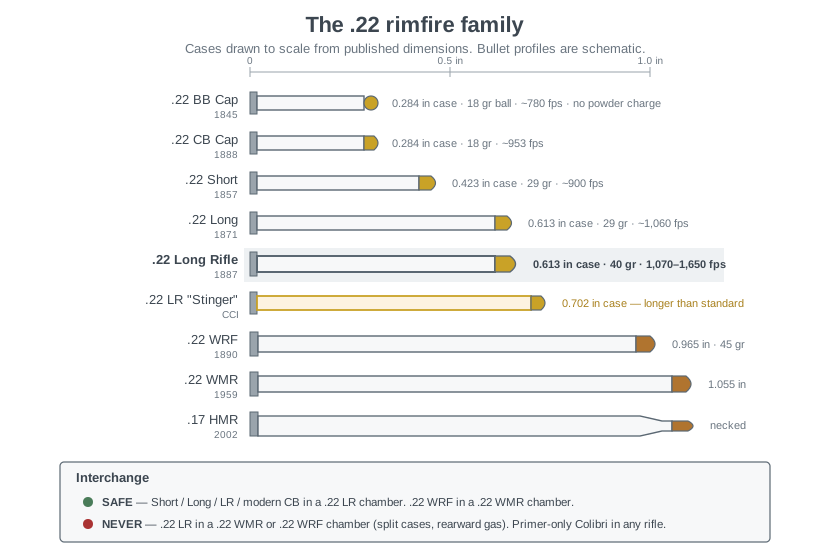
The .22 Long Rifle is the cartridge everyone thinks they already understand. It is the first round most shooters ever fired, it costs a few cents, and it is small enough that the whole thing looks like it could only support a paragraph of engineering. That impression is wrong in an interesting way. The .22 LR is a 139-year-old blackpowder-era case carrying a heeled, outside-lubricated lead bullet, primed by a compound that is spun into a fold of thin brass rather than seated as a separate component, and it is the only cartridge in common use where the ammunition — not the rifle, not the shooter — is usually the limiting factor on accuracy. That last fact is why an Olympic smallbore shooter will pay four dollars a round and drive to Arizona to find out which lot number their particular rifle likes.
This series is written for someone who already shoots, already reloads centerfire, and wants the actual engineering: what the manufacturers really do differently, which numbers hold up, which pieces of received wisdom fall apart under a source check, and what any of it means for the three jobs that matter — punching paper, killing small game cleanly, and knocking cans over cheaply. It also takes seriously a fourth job that has quietly become the most common reason to buy a .22 at all: feeding a suppressor.
1.1 What This Series Covers
Volume 2 lays out the whole rimfire family — BB Cap, CB, Short, Long, Long Rifle, WRF, WMR, .17 HM2, .17 HMR — with dimensions, and with the safety rules about what can and cannot be fired in what. Volume 3 is how a rimfire cartridge is actually manufactured, and the six levers a factory can pull to make one shoot better; everything in the manufacturer volumes later rests on it. Volume 4 is internal ballistics: pressure, powder burn, twist, chamber types, and the barrel-length finding that surprises most people. Volume 5 is external ballistics — velocity classes, trajectory, wind, and an honest treatment of the transonic argument. Volume 6 is terminal performance and what it means on squirrels, rabbits, and everything else people actually shoot.
Volumes 7 and 8 are the manufacturer analysis, split deliberately: the volume makers (CCI, Federal, Winchester, Remington, Aguila, and the rest) and the match houses (Lapua/SK, Eley, RWS, and Federal’s match line) are solving different problems with different economics, and judging one by the other’s criteria produces nonsense. Volume 9 turns all of it into ammunition shortlists — first by job, then gun by gun for a worked example battery. Volume 10 is suppressors: the physics, the ammunition selection, the fouling problem, and the legal position as of 2026. Volume 11 is a worked example rig — a suppressed Ruger 10/22 Takedown carried backpacking — and includes the worked solution to making a BDC reticle read correctly both suppressed and unsuppressed. Volume 12 is the laminate-ready cheatsheet.
1.1.1 A Worked Example Battery
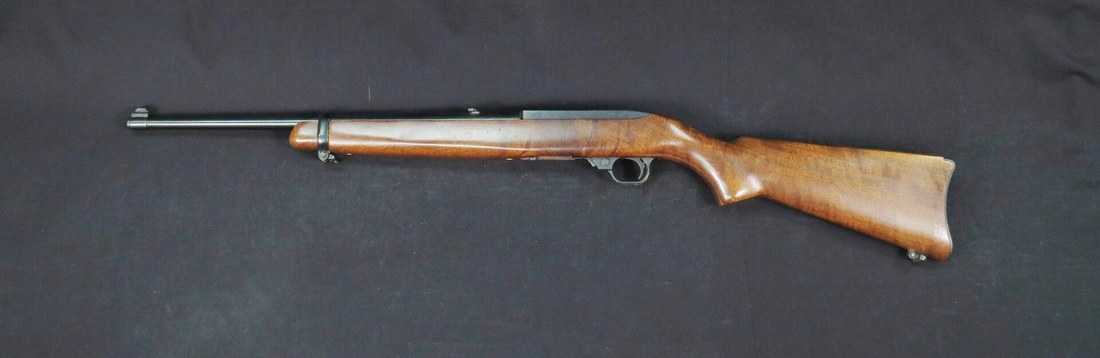
The general material stands on its own, but Volumes 9 and 11 get specific about a worked example battery: two Ruger 10/22s (a blued DSP and a stainless Takedown, both 18.5 in, both with KIDD triggers and bolt groups, Magpul Hunter X-22 stocks and Nikon P-Rimfire 2-7×32 BDC150 scopes), a Ruger Precision Rimfire 18 in under a Vortex Crossfire 4-12×40, a Ruger Mark III 5.5 in, a Ruger Mark IV, and a Smith & Wesson Model 41 5.5 in heavy barrel — with a Mack Brothers Lima suppressor that moves between all of them on 1/2×28 threads.
That battery turns out to be a good teaching set, because it spans the whole argument of this series: a hyper-velocity-intolerant target pistol, a bolt gun worth lot-testing, two semi-autos with factory sporting chambers that will eat anything, and a shared suppressor whose requirements fight all of the above.
1.2 The Corrections, Stated Up Front
Six things in the .22 literature are repeated confidently and are either wrong, unresolved, or more complicated than the usual telling. They recur throughout the series, so here they are first.
Hornady does not make .22 Long Rifle ammunition. This is worth saying because “CCI or Hornady” is a natural assumption for anyone who buys centerfire — Hornady is a serious, technically credible ammunition company. But its rimfire program is built around the two cartridges it invented: the .17 HMR (2002) and the .17 HM2 (2004), plus loaded .22 WMR. Hornady is a major player in rimfire; it is not a player in .22 LR.1 If your question is “which .22 LR to buy,” Hornady is not on the ballot. If your question is “what to shoot at a groundhog at 125 yards,” Hornady’s V-MAX .17 HMR very much is.
Velocity does not increase with barrel length in .22 LR — it peaks and then falls. Ballistics By The Inch measured ten loads in one-inch increments from 2 in to 18 in and found peak velocity at roughly 16 in ± 2 in, with gains past 16 in negligible and, in some loads, negative.2 A 24-inch match barrel is not a velocity decision. Volume 4 works through why.
The .22 LR is not reloadable, and that is structural, not commercial. The priming compound is wet-charged directly into the rim cavity and distributed by spinning the case. There is no primer pocket to seat anything into.3 Every downstream consequence — why quality is a factory problem, why lot testing exists as an industry, why you cannot tune your way out of a bad batch — follows from that one manufacturing fact.
The claim that high-velocity .22 LR “goes unstable when it drops through the sound barrier” is not established. The transonic band is roughly 1,340 fps down to 890 fps, which means most high-velocity .22 LR starts inside that band and never transitions into it. A 1990 study by Robert McCoy is cited for the finding that .22 LR does not suffer the classic transonic instability in that range.4 What is well attested is that good subsonic match ammunition out-shoots bulk high-velocity ammunition at 50 and 100 yards. Those are two different claims, and the second does not prove the first — match ammunition is also better made in every other respect. Volume 5 presents both readings and declines to adjudicate.
Aguila is not made by Eley. The folklore is persistent and the sources that repeat it also contradict it. Aguila is made in Cuernavaca, Mexico by Industrias Tecnos, founded in 1961 in collaboration with Remington.5 Tecnos may use comparable machinery and priming technique; that is as far as the evidence goes. Volume 7 treats this properly.
Primer-only “Colibri”-class ammunition can lodge a bullet in a rifle barrel. Aguila’s Colibri and Super Colibri carry no powder charge at all — roughly 20 grains at 500–590 fps on priming impulse alone — and there are repeated, consistent reports of bullets stopping partway down a rifle barrel, in one account about two and a half inches from the muzzle.6 A barrel obstruction followed by a live round is the failure mode. Volume 2 gives the rule without hedging.
1.3 Why the .22 Rimfire Still Matters
Three reasons, and they are all engineering reasons rather than nostalgia.
The first is cost per trigger pull. A .22 LR round costs a fraction of any centerfire equivalent, and cheap trigger time is the only thing that has ever made anyone a better shooter. The second is noise and recoil budget — the .22 LR carries so little propellant that it can be made genuinely hearing-safe with a suppressor while remaining lethal on small game, which no centerfire cartridge manages nearly as gracefully. The third is that at the top end the .22 LR is a precision instrument: Olympic smallbore, rimfire benchrest, and NRL22 are contested with this cartridge, and the equipment and process refinement at that end is as serious as anything in centerfire.
Those three uses pull the design in different directions, which is why the ammunition aisle has forty options that all say “.22 LR” on the box and behave nothing alike. Sorting that out is the point of the series.
1.4 A Note on Sourcing
Every quantitative claim below carries a footnote, and where the underlying research reached only medium confidence — or could not verify something at all — the prose says so rather than laundering a guess into a fact. Several things in this series are genuinely contested within the shooting community, and where that is true you get both positions and no false verdict. Footnotes resting on thin or contested evidence carry their own confidence note, and where a claim is deliberately not asserted the prose says so outright rather than leaving the silence to be read as agreement.
1.5 Bibliography
Footnotes
-
Hornady’s rimfire line is .17 HMR, .17 HM2, .17 WSM and .22 WMR; searches of Hornady’s own rimfire catalogue return no .22 LR product. .17 HMR introduced 2002 by Hornady; .17 HM2 introduced 2004. https://www.hornady.com/ammunition/rimfire/17-hmr-17-gr-v-max ; https://en.wikipedia.org/wiki/.17_HM2 ; https://www.americanhunter.org/content/behind-the-bullet-17-mach-2/ (confidence: high on the .17 cartridges’ provenance; high-but-negative on the .22 LR absence — an absence of catalogue evidence, which is the strongest available form of this claim). ↩
-
Ballistics By The Inch .22 LR test matrix, 2–18 in in one-inch steps across ten loads; peak at ~16 in ± 2 in, negligible gains beyond. Worked example: standard velocity 1,149 fps at 14 in, 1,157 fps at 16 in, 1,138 fps at 20 in. https://www.firearmwiki.com/wiki/.22_LR_Velocity_By_Barrel_Length (reporting BBTI); https://en.wikipedia.org/wiki/Ballistics_by_the_Inch (confidence: high on the curve shape; medium on any single tabulated value). ↩
-
Rimfire priming: wet mix placed directly in the hollow rim cavity, distributed by spinning the case. https://nij.ojp.gov/nij-hosted-online-training-courses/firearms-examiner-training/module-05/primer-manufacture ; https://en.wikipedia.org/wiki/.22_BB (confidence: high). ↩
-
Transonic band ~1,340–890 fps; McCoy (1990) cited for .22 LR not exhibiting classic transonic instability in that range. https://www.canadiangunnutz.com/forum/threads/long-range-22lr-300-yards-transonic-zone-ammo-characteristics-and-quality.2224229/page-2 ; https://en.wikipedia.org/wiki/.22_Long_Rifle (confidence: medium — the McCoy attribution is reported second-hand and was not read in the original). ↩
-
Aguila is manufactured by Industrias Tecnos, S.A. de C.V., Cuernavaca, Morelos, founded 1961 as Cartuchos Deportivos de México in collaboration with Remington, renamed 1978. https://en.wikipedia.org/wiki/Aguila_Ammunition ; https://www.aguilaammo.com/about/ (confidence: high). The Eley-affiliation claim is contradicted within the forum sources that repeat it: https://www.rimfirecentral.com/threads/aguila-eley-prime.509925/ (confidence: low — not asserted). ↩
-
Aguila Colibri / Super Colibri, primer-only, ~20 gr at ~500–590 fps; repeated reports of bullets lodging in rifle barrels, one about 2.5 in from the muzzle. https://www.rimfirecentral.com/threads/warning-avoid-aguila-super-colibri-in-long-barrels.569313/ ; https://www.marlinowners.com/threads/aquila-22lr-colibri-safe-for-a-rifle.160384/ (confidence: medium on individual reports; high that the hazard is real and repeatedly documented). ↩
Comments (0)